Short answer: This article explains the key facts, eligibility issues, settlement factors, deadlines, and source-backed updates related to this legal topic. Results vary by case facts, evidence, jurisdiction, and representation.
Dangerous 1970s Playground Equipment: Nostalgia With a Hidden Cost
Looking Back at Dangerous 1970s Playground Equipment — When Recess Really Was Risky
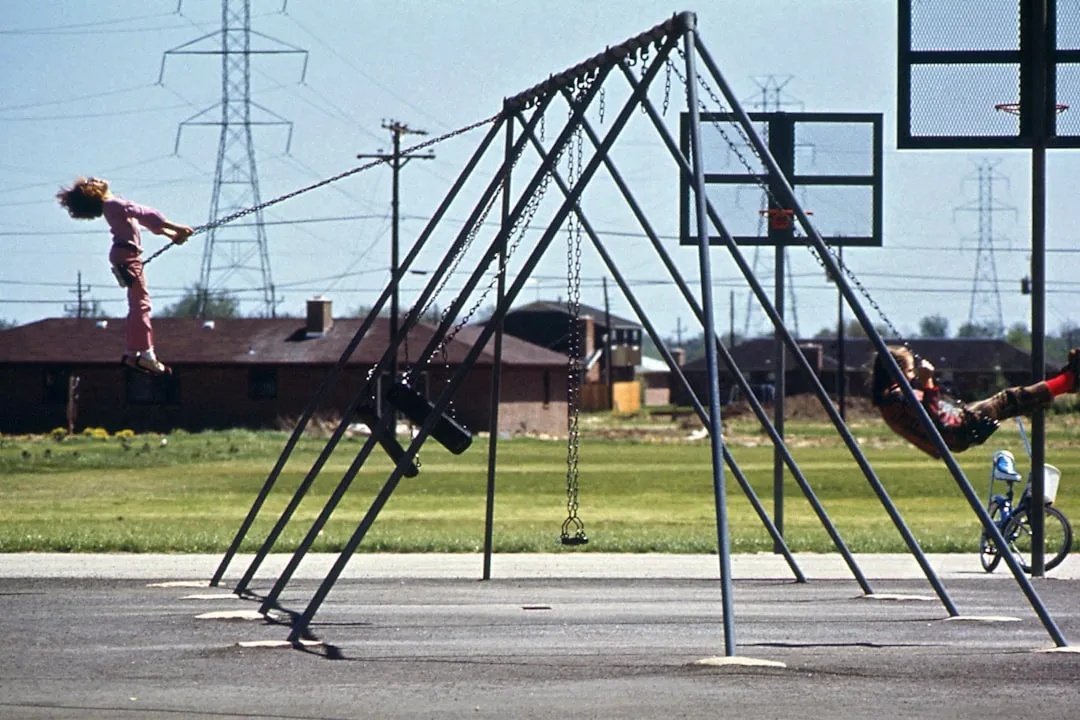
For children of the 1970s, dangerous 1970s playground equipment was simply what a park looked like: tall steel frames, slides hot enough to sting, and merry-go-rounds that spun riders off, all anchored in concrete or hard-packed dirt.
A fast overview of the riskiest pieces from that period:
| Equipment | Primary Hazard |
|---|---|
| Metal merry-go-rounds | Riders thrown off by spinning force, crushed limbs, head trauma |
| Tall steel slides | Burns from hot metal, long falls, landing on concrete |
| Wooden seesaws and log-style swings | Jarring spine impacts, splinters, arsenic-based CCA wood treatment |
| Animal-shaped and group swings | Blunt impact injuries, risk of strangulation |
| Monkey bars and hanging rings | Falls, broken bones, nothing soft underneath |
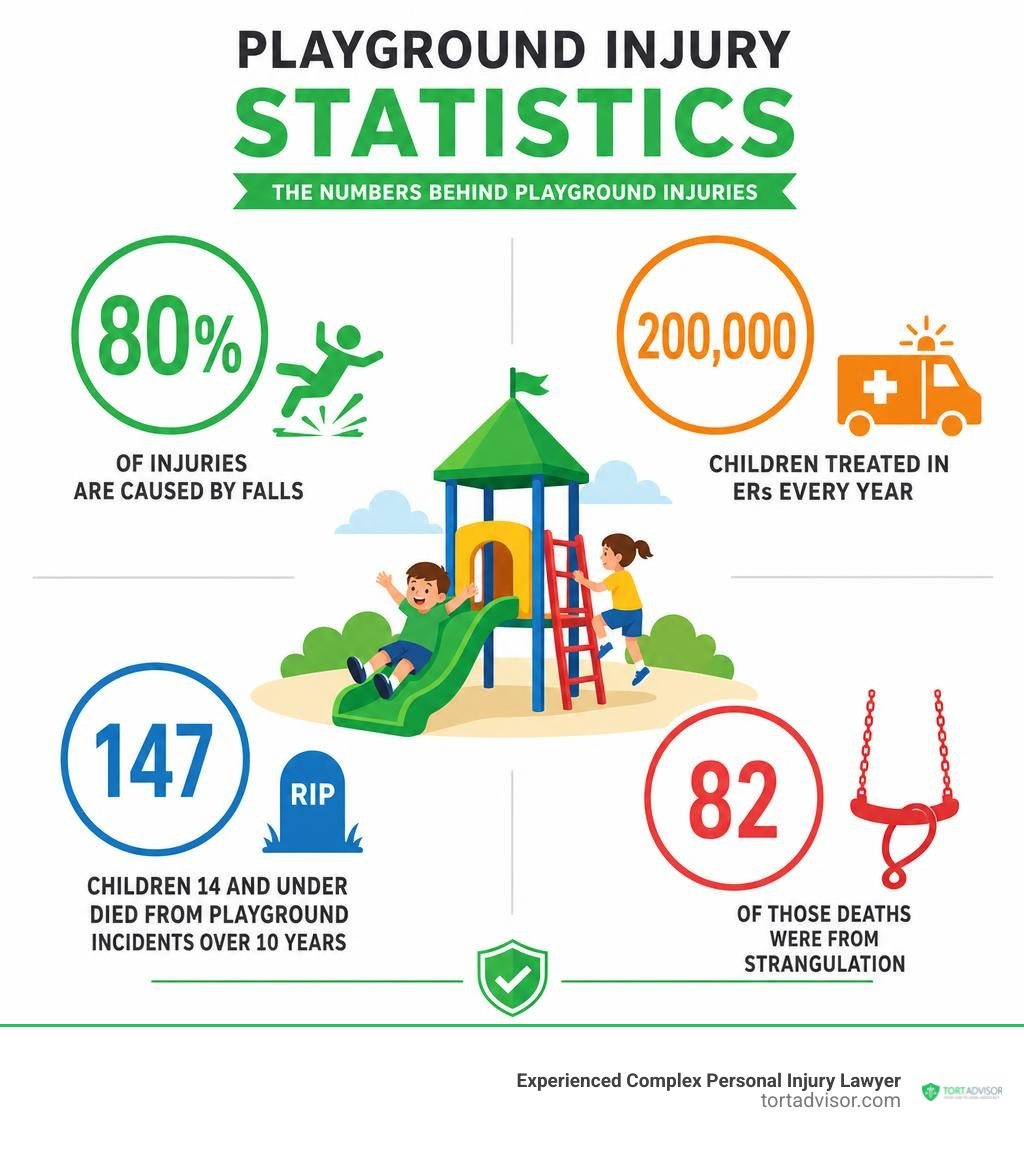
The statistics are sobering. U.S. emergency departments still treat over 200,000 children annually for injuries tied to playgrounds, and about 80% of them stem from falls. Across one ten-year span, 147 children 14 and younger died in playground incidents — 82 of them from strangulation.
In the 1970s, the danger was higher still. Federal safety standards did not exist, nobody installed shock-absorbing ground cover, and equipment was not divided by age. Children played on bare metal, wood and concrete.
This guide explains what made those vintage playgrounds so hazardous, how safety rules transformed them, and what legal options a family has if a child is hurt on unsafe equipment today.
I’m Mason Arnao. As a dad of two, I care deeply about dangerous playground equipment and the legal protections families are owed when carelessness leads to injury. My experience in data systems and online research gives me a careful, evidence-first way of explaining complicated subjects — including playground safety and injury law — in language anyone can follow.
Key terms related to dangerous playground equipment:
The Worst Offenders: 5 Pieces of Dangerous 1970s Playground Equipment
A trip to the neighborhood park fifty years ago meant stepping into what amounted to an unregulated engineering experiment. Plenty of play areas were filled with heavy steel rigs designed with no thought for physics, children’s bodies or cushioning a fall. The essay Who Killed The American Playground? looks at how these shared spaces were once shaped by a very high appetite for risk.

Boomers and Gen-Xers may remember this equipment fondly, even proudly, but many of these designs were genuinely dangerous. Here are the five worst examples from the period.
1. Steel Merry-Go-Rounds: The Spinning Hazard
The old-school merry-go-round was a massive steel platform powered by nothing but children pushing and centrifugal force. The game was to spin it faster and faster until somebody flew off into the dirt — or onto pavement.
These spinning platforms carried several serious risks:
- Being Thrown Off: Once the wheel picked up speed, kids lost their grip and were flung outward.
- Crush and Pinch Zones: The gap between the moving deck and the ground was infamous for catching arms and legs. A child who fell could be pulled under the heavy spinning steel.
- Head and Body Impacts: Being hit by a rapidly turning 1,500-pound steel disc led to untold concussions and broken bones.
Courts later confronted these pinch-point dangers in cases such as Tagliere v. Western Springs Park Dist. (Tagliere v. Western Springs Park Dist., 944 N.E.2d 884, 408 Ill.App.3d 235, 348 Ill.Dec. 643 (Ill. App. 2011)) – vLex United States , which illustrated how missing components or neglected upkeep on moving equipment can leave concealed gaps capable of crushing a child’s foot or ankle.
2. Sky-High Steel Slides: The Burn Risk
Slides back then bore little resemblance to today’s short plastic chutes of about 6 feet. They were tall, shadeless runs of galvanized steel that frequently stood 12 to 15 feet high.
They posed two main threats:
- Serious Burns: In summer sunlight, a bare metal slide turned into a hot plate, easily getting hot enough to inflict second- or third-degree burns on bare skin.
- Dangerous Drops: The top platforms had no enclosed guardrails, so one misstep could mean a fall of more than ten feet onto hard ground.
Badly designed slides can still cause serious harm when the run-out is too short or the angle too steep. In Australia, a new slide was closed after several users reportedly suffered serious fractures; coverage includes Appin’s Toggerai Park slides shut after alleged broken bones | Illawarra Mercury | Wollongong, NSW and a later article, New slide at popular playground suddenly shut down following an incident just days after it was given a politician’s thumbs-up | Daily Mail Online .
3. Wooden Seesaws and Log Swings: Splinters and Spinal Jolts
A typical 1970s seesaw was a thick wooden board balanced on a steel pivot, and it was well known for compressing young spines. When the rider at ground level hopped off without warning, the child up top slammed straight down onto hard earth.
Many of these sets were also built from pressure-treated lumber. Up until the early 2000s, that wood was preserved with Chromated Copper Arsenate (CCA), which contains inorganic arsenic. The chemical gradually migrated to the wood’s surface, so children could be exposed to a carcinogen just by touching it.
Under premises liability law, failing to keep proper surfacing depth or to warn families about hazards has fueled lawsuits for decades. One notable case, Walters v. Shire of Wakool (2003) VSC 492 (17 December 2003) , examined a local council’s failure to keep cushioned soft-fall material beneath raised equipment, which led to serious orthopedic injuries.
4. Animal-Shaped Swings and Group Gliders
Most injuries on backyard playsets involve swings. During the 1970s, many home and park sets included heavy cast-iron animal swings or steel gliders built for several children at once.
Those heavy units swung like battering rams. A child who stepped into the path of a moving glider could be struck hard enough to suffer a brain injury or internal bleeding. The bare chains had no protective covers, so fingers got pinched, and loose clothing or drawstrings could catch and cause strangulation.
If a manufacturer sold equipment with built-in design defects, a family may be able to bring a product liability personal injury claim to hold that company responsible.
5. Lofty Monkey Bars and Gymnastic Rings
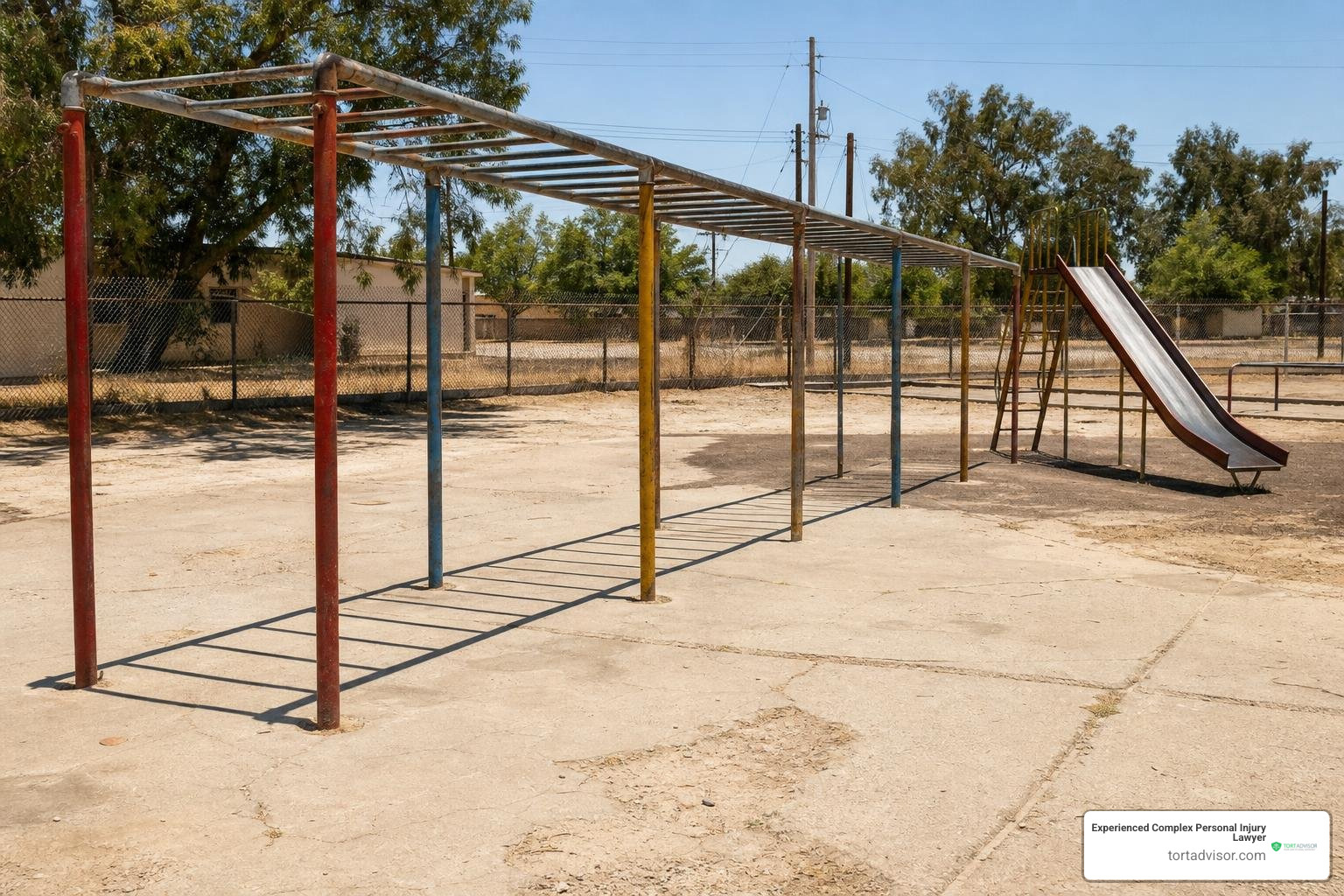
Seventies-era monkey bars and rings were frequently hung well above the ground with no platforms in between, forcing kids to cross long spans using only arm strength above unforgiving surfaces.
Climbing equipment is the most hazardous category on public playgrounds, and falls from it often led to compound fractures, dislocated shoulders and serious concussions. If a poorly designed or badly built climber seriously injured your child, speaking with defective product lawyers is an important step toward recovering medical costs and paying for long-term care.
What Made 1970s Playgrounds So Hazardous
The danger came from more than the dangerous playground equipment alone — the whole way these play spaces were conceived made them risky.
What Dangerous Playground Equipment Left Behind
Older playgrounds were designed to be tough and easy to maintain, not to protect a falling child. A tumble from a 10-foot set of monkey bars met ground with no give at all, so ordinary slips could turn into traumatic brain injuries, lasting spinal damage or bad fractures. These dangers are far better understood now, as our product liability injury guide 2026 explains.
No Shock-Absorbing Ground Cover
The ground itself was the biggest hazard on vintage playgrounds. Equipment typically stood over asphalt, concrete, hard clay or lawn. Grass and dirt look forgiving, but weather and constant foot traffic compact them until they are nearly as hard as pavement.
The Consumer Product Safety Commission’s Public Playground Safety Handbook warns that falling onto a hard surface from more than a few feet can cause life-threatening head injuries. Current standards call for a minimum of 12 inches of loose-fill material, such as engineered wood fiber or shredded rubber, or poured-in-place rubber surfacing to soften a fall.

How Safety Rules Transformed the Playground
Moving from the free-for-all parks of the last century to today’s carefully engineered play spaces took time. The shift came from years of pediatric safety studies, pressure from parents and firm regulatory standards.
How CPSC, EPA and ADA Rules Shape Playgrounds
Playground design is now closely regulated to protect children. Pediatric practices and safety groups stress choosing equipment suited to a child’s age, as noted by Playground Safety | Pediatric Health Associates (PHA) | Connecticut .
Important regulatory turning points:
- EPA Ends CCA Wood Use: Early in the 2000s, the EPA phased out arsenic-treated lumber for homes and playgrounds, removing a significant toxic exposure.
- CPSC Guidance: The agency set firm height limits, called for “use zones” (open space around each piece) and banned risky items such as animal-figure swings and free-swinging ropes.
- ADA Requirements: The Americans with Disabilities Act required public playgrounds to be usable by children of all abilities, which helped make poured rubber surfacing common.
Today’s installers in states such as Alaska, Arizona, Arkansas and Delaware must build play areas that meet these safety and accessibility rules. Examples of how the standards are applied appear on sites from a Playground Installer in Alaska , Commercial Playground Equipment in Arizona & Southern Nevada , Little Rock, Arkansas Playground Equipment and Installation and Delaware Playground Equipment and Installation .
Are Today’s Playgrounds “Too Safe”?
Safety rules have sharply cut serious head injuries and deaths, but they have also started an argument. Some critics say modern playgrounds are bland, low plastic structures that no longer challenge kids.
The column California kids need more dangerous playgrounds: Joe … discusses child development experts’ view that “risky play” helps children learn to judge danger, gain physical confidence and build motor skills. Designers today aim for a balance: remove deadly hazards such as concrete landings and strangulation points while keeping play exciting and demanding.
Who Can Be Held Liable for Playground Equipment Injuries Today?
A child’s playground injury today is seldom written off as “just kids being kids.” When a design defect, neglected maintenance or poor supervision caused the harm, more than one party may be legally responsible.
If your family is dealing with the fallout of a serious playground accident, learning why you need a defective product injury lawyer after an accident can help you safeguard your rights and pursue the compensation your child’s recovery requires.
Spotting Unsafe Equipment in Today’s Parks
Modern equipment can turn hazardous when it is neglected. Property owners and park districts are responsible for routine inspections that catch:
- Heavy Wear: Rusty chains, cracked plastic parts and splintering wood.
- Absent Hardware: Loose or missing bolts that weaken the structure.
- Worn-Away Surfacing: Spots beneath swings or slides where mulch has been kicked aside, leaving hard ground exposed.
Purchasing or keeping substandard equipment carries real risk, as explained in Risks of Buying Used Commercial Playground Equipment . When local governments ignore hazards, residents sometimes see favorite play areas abruptly removed to limit liability, as described in ‘Outrage’ as play equipment is removed from popular park in Cornwall – Cornwall Live .
Legal Options When Play Equipment Is Defective
Responsibility for a playground injury usually falls under one of three theories:
- Product Liability: When a design flaw or manufacturing mistake made the equipment defective, the maker may be strictly liable. Our defective product lawyer guide walks through how these claims work.
- Premises Liability: A school, daycare or city that knew about a hazard — a broken swing or worn surfacing, for example — and did not fix it may be sued for negligence.
- Negligent Supervision: When a daycare worker or school monitor did not watch children properly and a preventable injury followed, they may bear part of the responsibility.
These cases call for experienced legal help. Families frequently turn to attorneys for defective products or top-rated attorneys for product liability and personal lawsuits to put together a solid claim.
Playground Safety and Injury FAQs
Which playground equipment causes the most injuries today?
Old metal merry-go-rounds have largely disappeared, but climbing structures such as tall monkey bars and rope climbers are still the top source of injuries at public playgrounds. At home, swings account for the most injuries, and trampolines used without trained supervision cause many serious bone and head injuries.
What can parents do to reduce playground injuries?
A helpful tool is the S.A.F.E. framework from the National Program for Playground Safety:
- Supervision: Watch children actively the entire time.
- Age-appropriateness: Keep toddlers in their own areas, away from tall climbers.
- Footing: Make sure there is enough soft, protective surfacing underneath.
- Equipment maintenance: Skip playgrounds with rust, broken pieces or exposed concrete footings.
Also keep kids out of drawstring hoodies, bike helmets and necklaces while they play, since these can cause strangulation on equipment.
What steps should I take if my child gets hurt at a public playground?
Get your child medical attention first. Once they are cared for, photograph and video the specific equipment or hazard involved. Report what happened to the park owner or school district, and talk with a professional about whether you need legal help. For a broader look at your options, see our personal injury lawyer ultimate guide.
Not sure what to do next? These guides can help you figure out:
- Do I need a personal injury lawyer?
- What can a personal injury lawyer do for you?
- Ways to locate a catastrophic injury lawyer near me or an injury lawyer close to me.
Conclusion
The rough-and-tumble playgrounds of the 1970s may bring back warm memories of a more daring childhood, yet they also caused many serious injuries that never needed to happen. Modern rules, better materials and cushioned surfacing have made play areas much safer, letting kids explore and build strength without life-threatening risks.
When manufacturers, schools or cities neglect those safety standards, children are the ones who get hurt. Legal Lawsuit is a legal-information resource that helps families understand their options and connect with experienced attorneys in our network. If dangerous playground equipment injured your child, a free, confidential case review can put you in touch with defective product lawyers who pursue accountability and the compensation your family needs.
Related Posts
Quick Answer: The Boy Scouts of America (BSA) filed for Chapter 11 bankruptcy in 2020 after facing tens of thousands [...]
Quick Answer: Survivors of sexual abuse by Catholic priests, nuns, or other Church personnel may be able to file a [...]
Quick Answer: Clergy abuse settlements vary enormously based on the severity of the abuse, the strength of evidence that the [...]