
Short answer: This article explains the key facts, eligibility issues, settlement factors, deadlines, and source-backed updates related to this legal topic. Results vary by case facts, evidence, jurisdiction, and representation.
Hurt by a Faulty Product? Why a Defective Product Injury Lawyer Matters
📋 Table of Contents
- When a Product Hurts You, You Need a Defective Product Injury Lawyer
- Understanding Product Liability and Strict Liability
- The Three Main Types of Product Defects
- Who Can Be Held Liable for Your Injuries?
- Proving Your Case with a Defective Product Injury Lawyer
- Compensation and Legal Steps After an Accident
- Frequently Asked Questions about Defective Product Injury Lawyers
- Conclusion
A defective product injury lawyer helps injured people hold manufacturers, distributors and retailers responsible when a flawed product causes harm — usually without charging anything upfront.
The key points to know first:
- You may have a claim if a product hurt you because of a design flaw, a manufacturing mistake or missing warnings
- More than one party may be responsible — the maker, the seller and companies in between
- Proving carelessness is often unnecessary — under strict liability, showing the defect can be enough
- Damages may cover medical costs, missed pay, pain and suffering and other losses
- Deadlines matter — many states allow about 2–3 years to file, so don’t wait
- Contingency fees are standard — no fee is owed unless the case succeeds
The U.S. Consumer Product Safety Commission reports that close to 30 million people are hurt each year by unsafe or defective products. Faulty auto parts, exploding vape batteries, contaminated medicines and toys that pose choking risks are just a few examples of everyday items that can cause serious, life-altering harm.
The catch is that the companies behind these products fight back hard, hiring aggressive lawyers to protect their profits. Taking them on by yourself puts you at a real disadvantage.
That is exactly why the right legal help makes such a difference.
I’m Mason Arnao. My background is in technology, data systems and digital marketing, but I have spent years researching and writing about complicated legal subjects — including cases handled by a defective product injury lawyer — so ordinary people can understand their rights. Here is a plain-language explanation of what to expect and how to protect yourself.
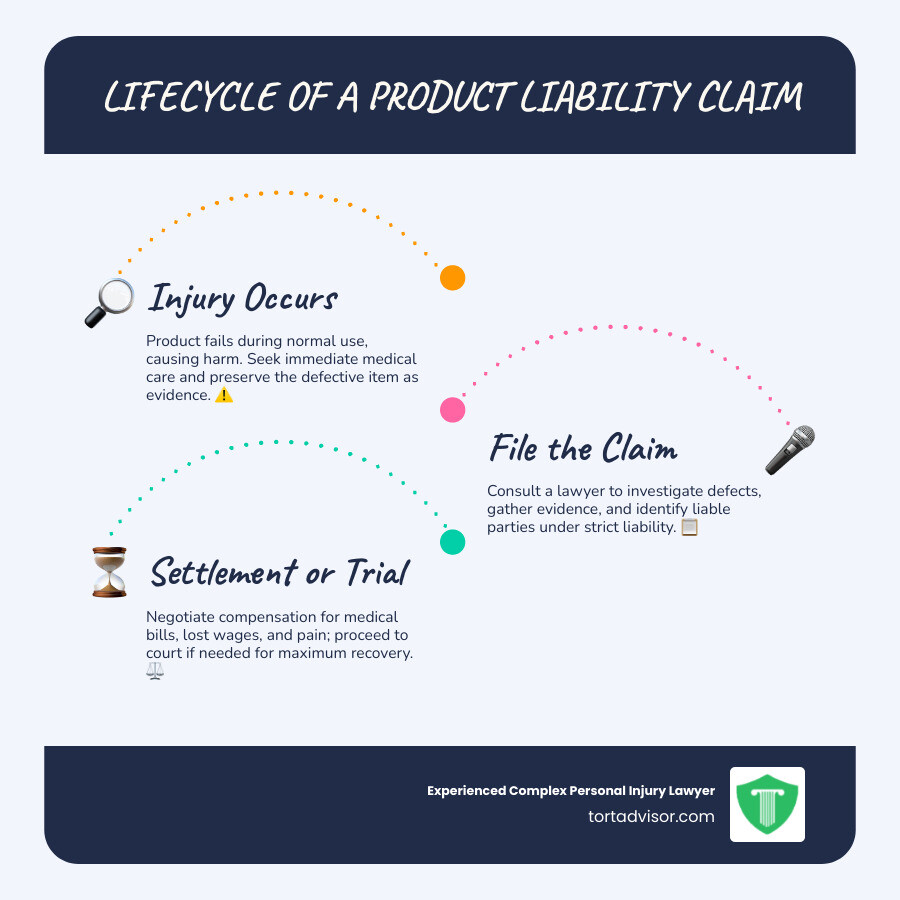
Product Liability and Strict Liability, Explained
Buying a toaster, a car or a prescription comes with an unspoken guarantee that the item will not explode, poison you or fall apart when used normally. Legally, that expectation is the territory of product liability.
Product liability law makes the companies that manufacture and sell products answerable when those products injure people. It is about more than a factory slip-up; it is a legal duty of care that businesses owe consumers. For a closer look at the fundamentals, see our more info about product liability personal injury.
State laws set the framework. In Texas, for example, the Texas Product Liability Act provides that a manufacturer may be liable when a product is “unreasonably dangerous.” These claims generally rely on three legal theories:
- Negligence: The company was careless in how it designed or built the product.
- Breach of Warranty: The product did not meet a specific promise — say, a car advertised at 30 mpg that gets 10, or a “waterproof” watch that quits in the rain.
- Strict Liability: Often the most powerful theory.
How Strict Liability Differs From Negligence
Strict liability works strongly in consumers’ favor. In an ordinary negligence claim, you must show the company was careless and pinpoint the mistake. Under strict liability, the question moves away from the company’s conduct and onto the product.
When a defect in the product caused your injury, the company can often be held liable no matter how careful it says it was. A spotless factory and meticulous engineers do not matter if the product itself is dangerous.
Rules vary by state. New York product liability standards, for example, set particular requirements for showing a product was not “reasonably safe.” A defective product injury lawyer knows these local differences, which matters because the approach that works in a Manhattan courtroom may differ from one in Dallas or Miami.
How Consumer Safety Agencies Fit In
Consumers have some backup against dangerous products, since several federal agencies serve as watchdogs:
- CPSC (Consumer Product Safety Commission): Covers products from coffee makers to cribs. Its data shows tens of thousands of children are hurt or killed each year by defective appliances, car seats and strollers.
- FDA (Food and Drug Administration): Oversees the safety of food and medicine.
- NHTSA (National Highway Traffic Safety Administration): Handles the big airbag and tire recalls that make headlines.
Watching national recall lists and safety alerts is wise, but a product does not need to be recalled for you to have a claim. Many recalls come only after enough injury lawsuits pressure a company to act.
The Three Main Kinds of Product Defects
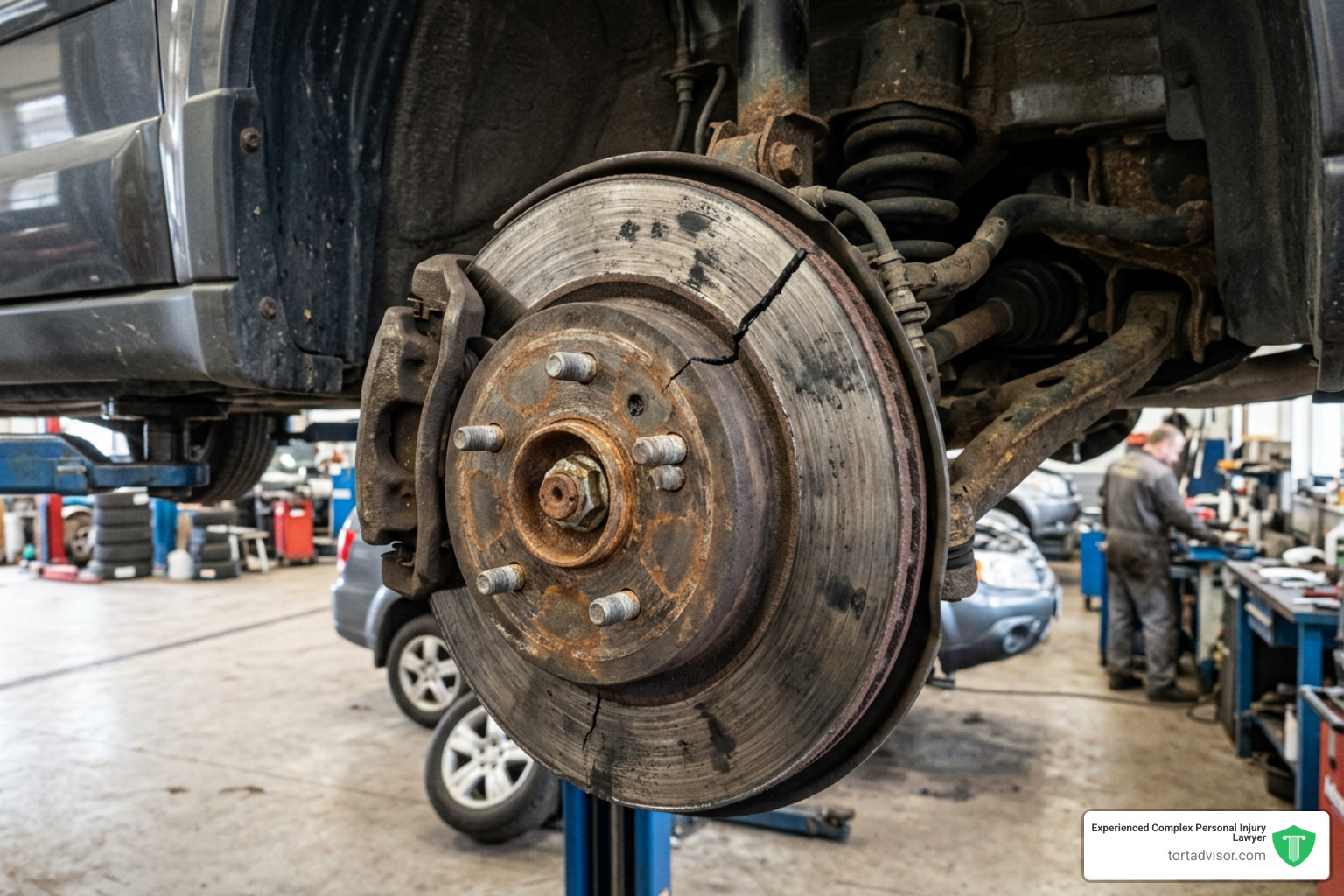
Every claim depends on identifying how the product failed, which usually fits one of three categories:
| Defect Type | Definition | Example |
|---|---|---|
| Design Defect | The design itself is flawed, so every unit made is hazardous. | An SUV built with a high center of gravity that makes rollovers more likely. |
| Manufacturing Defect | The design is sound, but an error occurred during production. | One batch of bicycles shipped without a critical bolt. |
| Marketing Defect | The product works, but adequate instructions or warnings are missing. | A strong cleaning chemical sold without telling users to wear gloves or a mask. |
Everyday Examples of Defective Products
Defective product claims arise in nearly every industry. Frequent examples include:
- Dangerous Drugs: Medicines that trigger heart attacks or strokes not disclosed as side effects. See this dangerous drug legal information for more.
- Medical Devices: Defective hip implants, pacemakers or hernia mesh.
- Vehicle Defects: Airbags that deploy with excessive force or brakes that give out.
- Children’s Products: Toys with small parts that cause choking or electronics that ignite. In Georgia, an Atlanta Product Liability Attorney can help with these local claims.
Spotting Warning and Marketing Defects
A product can be defective without being broken. When a company knows a drug can cause a particular injury but conceals it to protect sales, that is a marketing defect, often called “failure to warn.”
Picture a space heater sold without a “keep away from curtains” warning that then starts a fire; the maker may be liable for the missing instructions. If a product hurt you without disclosing the risk, speaking with a New Jersey Defective Product Injury Attorney (or a lawyer in your own state) is the best way to find out whether you have a failure-to-warn claim.
Who May Be Responsible for Your Injuries?
Deciding whom to sue is one of the trickiest parts of these cases, and it is seldom only the brand on the label. The “stream of commerce” is long, and claims can often reach anyone along the supply chain:
- The Manufacturer: The company that designed and built the product.
- Component Makers: If faulty brakes trace back to a bad sensor, the sensor’s maker may share liability.
- Wholesalers and Distributors: The intermediaries that moved the product to market.
- The Retailer: The store that sold it, which has its own duty not to sell dangerous goods even though it did not make them.
Whether you are working with a Product Liability Lawyer New Mexico or one in Florida, the aim is to find every party that shares responsibility so your recovery is as complete as possible.
Liability for Dangerous Drugs and Medical Devices
Cases against large drug companies are especially hard-fought, because these companies have deep pockets and contest every point. FDA approval does not give them a free pass. Problems frequently surface only during “post-market surveillance” — in plain terms, after real patients start getting hurt.
That pattern shows up in litigation such as Bair Hugger Lawsuits (surgical warming blankets) and the Hernia Mesh Lawsuit, where the alleged defect may be a design that lets bacteria spread or materials the body rejects.
When Retailers and Distributors Are Responsible
It may seem odd to sue a store that only stocked the item. In many states, though, a retailer that knew or should have known a product was dangerous can be held responsible. Some states offer a “sealed container defense” that shields sellers of products packaged in a way they could not reasonably inspect.
Deadlines are critical as well. The Maryland statute of limitations, for instance, generally allows three years from the injury to file. Miss it, and the strength of the defect no longer matters — the right to sue is gone.
How a Defective Product Injury Lawyer Proves Your Case
Showing a product was defective takes more than a photo of the broken item. Strong attorneys prepare each case as if it will go to a jury, even when settlement is the likely outcome. That preparation involves:
- Expert Witnesses: Engineers, physicians and safety specialists explain why the product failed.
- Engineering Analysis: Close review of design documents and production records.
- Preserving Evidence: This is critical. Keep the product! Discarding it can mean discarding your case.
Our Defective Product Lawyer Guide walks through the process step by step.
Reasons to Hire a Defective Product Injury Lawyer
Handy as you may be with home projects, a product liability claim is not a DIY job. These cases require:
- Technical Knowledge: Understanding the science of a lithium-ion battery fire or a dangerous drug interaction.
- Financial Resources: These claims are costly, and product liability firms typically advance the cost of experts and testing.
- Courtroom Strategy: Knowing how to answer the large defense teams corporations bring.
Still deciding? Read what can a personal injury lawyer do for you to see everything an attorney can handle.
Defenses Manufacturers Commonly Raise
Companies rarely just pay; they often try to shift the blame to you. Typical defenses include:
- Misuse: Claiming you used the product in a way it was never meant for — like trimming hedges with a lawnmower.
- Modification: Claiming you altered the product after purchase.
- Assumption of Risk: Arguing you knew the danger and used it anyway.
- Comparative Negligence: Arguing you were partly responsible for your own injury.
Experienced Attorneys for Defective Products know how to anticipate these arguments and counter them early.
Damages and Next Steps After a Product Injury
A product injury claim seeks far more than a refund — it aims to make you whole. Recoverable damages can include:
- Medical Costs: Surgeries already done and therapy still ahead.
- Lost Income: Pay you missed while unable to work.
- Pain and Suffering: The physical pain and emotional toll of the injury.
- Punitive Damages: Occasionally, when a company acted with extreme disregard — such as selling a car it knew could catch fire — a court may add damages as punishment.
Every case is different, and outcomes depend on the severity of the injury, the strength of the evidence and the parties involved. If cost is a concern, the answer to how much does a personal injury lawyer cost is usually straightforward: product injury attorneys typically work on contingency.
What to Do Right After a Product Injury
If a product hurts you or a family member, take these four steps right away:
- Get Medical Care: Your health comes first, and your medical records become key evidence.
- Keep the Product: Store it safely. Don’t clean it, repair it or mail it back to the company for a “refund.”
- Record Everything: Photograph the product, your injuries and the scene, and save the receipt and packaging if you can.
- Don’t Give Insurer Statements: The company’s adjuster is looking for comments that could weaken your claim.
For help choosing the right attorney, see our finding best injury lawyer guide.
How Damages Are Calculated in a Product Injury Claim
Attorneys tally economic damages (losses with a receipt, such as hospital bills) and non-economic damages (losses without a price tag, such as reduced enjoyment of life). They also project future care costs — if you will need a wheelchair for decades, that expense should be accounted for now.
For readers in the New York–New Jersey area, our Jersey City Defective Product Injury Guide explains how local courts often approach these calculations.
Defective Product Injury Lawyer FAQs
What is the deadline to file a product liability claim?
It depends on your state’s statute of limitations, which typically falls between 2 and 4 years. Many states apply a discovery rule, starting the clock only when you learn (or reasonably should have learned) that the product caused your injury — common in medical cases where harm appears years later. Learn more about the overall process of Personal Injury Lawsuits.
Does it help if the product was already recalled?
A recall can be strong evidence because it shows the manufacturer acknowledged a problem. It does not guarantee a win, though — you still must show that the recalled defect is what caused your injury. Check the CPSC recall database to see whether your product appears.
Can I afford a lawyer for a defective product claim?
Most likely, yes. Product injury attorneys generally use contingency fee agreements, advancing costs such as experts, filing fees and research, and collecting a fee only if the case succeeds. That lets ordinary people take on major corporations without putting their savings at risk. Learn more about Trusted Personal Injury Attorneys.
Conclusion
Legal Lawsuit believes nobody should suffer because a company cut corners. As a legal-information site, we help injured people understand their rights and connect with experienced attorneys in our network who handle complex product liability cases.
Our goal is straightforward: to help you find capable legal help quickly, so an attorney can pursue the full compensation your claim supports while you focus on recovering.
Don’t let a careless manufacturer avoid responsibility. Contact a Defective Product Lawyer today for a free, confidential case review.
Related Posts
Quick Answer: The Boy Scouts of America (BSA) filed for Chapter 11 bankruptcy in 2020 after facing tens of thousands [...]
Quick Answer: Survivors of sexual abuse by Catholic priests, nuns, or other Church personnel may be able to file a [...]
Quick Answer: Clergy abuse settlements vary enormously based on the severity of the abuse, the strength of evidence that the [...]