
Short answer: This article explains the key facts, eligibility issues, settlement factors, deadlines, and source-backed updates related to this legal topic. Results vary by case facts, evidence, jurisdiction, and representation.
In This Guide
When a Defective Product Lawyer Can Help
A defective product lawyer pursues manufacturers and sellers whose products injure people, seeking payment for medical costs, missed income and pain and suffering.
Signs you may need a defective product lawyer:
- A product broke or malfunctioned during ordinary use and hurt you
- The product came without adequate warnings about known hazards
- A manufacturing error or flawed design caused your injury
- The product failed to work as promised and someone was hurt
- You are facing complicated liability rules and a company’s legal department
Buying a product means trusting it is safe. Yet defective products injure enormous numbers of Americans every year, and the harm can be permanent, coming from anything from a failed medical implant to a hazardous toy.
Product liability law is designed to protect consumers by making manufacturers answer for unsafe products. Companies are frequently held strictly liable, which means you may only have to show that a defect caused your injury, not that the company was careless.
Manufacturers, though, have lawyers whose job is to avoid responsibility. They may argue you misused the product or knowingly took a risk, which is why an experienced advocate willing to stand up to large companies matters.
I’m Mason Arnao, and my goal is to help injured consumers find experienced defective product lawyers who will pursue the accountability they deserve.
Related defective product lawyer searches:
- Atlanta product liability attorney
- New Jersey defective product injury attorney
- Product liability and personal injury
Product Liability Basics
Product liability law protects you when goods cause harm. It makes manufacturers answer for products that are unreasonably dangerous in normal use. Nobody should need engineering knowledge to run a kitchen appliance safely; companies must make sure their products meet reasonable safety standards.
These laws reach both serious bodily injury and substantial property damage, with one aim: keeping dangerous goods away from consumers.
To see how product claims fit within injury law more broadly, explore our resources on personal injury lawsuits.
What Makes a Product Legally Defective?
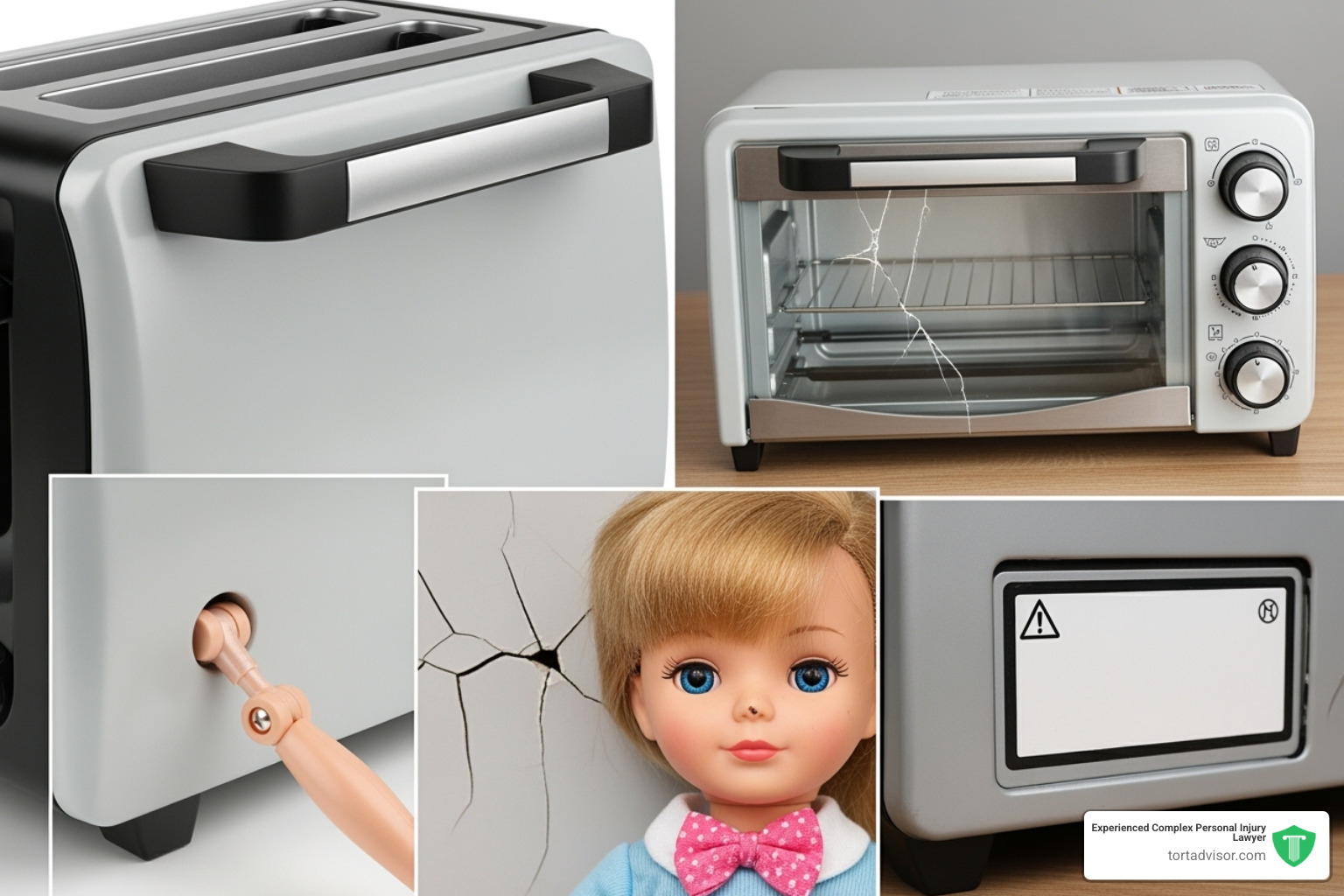
A product is defective when it falls short of reasonable safety expectations. Legally, the question is whether it is unreasonably dangerous when used as intended or in a way the maker should have foreseen.
Any product can be defective, including car parts, medical devices, toys and appliances. The law separates personal injury (bodily harm, pain and suffering) from economic loss (money losses such as the product’s price or property repairs). A capable defective product lawyer will make sure you pursue the right damages for your situation.
Three Kinds of Product Defects
Most product cases fit one of three categories, and each calls for its own legal approach:
Design defects are problems in the blueprint itself, so the product is dangerous even when built exactly to spec. Every unit made from that design is affected, such as a vehicle model that tends to roll over.
Manufacturing defects arise on the production line, making a safely designed item hazardous through an assembly mistake or contamination, typically in a particular batch.
Marketing defects, also called failure to warn, involve missing or inadequate warnings and instructions. The item may be well designed and built, but without the right information, people cannot use it safely.
An experienced defective product lawyer can pinpoint which defect applies and build the strongest possible case around it.
Legal Theories and Who Can Be Sued
Winning a claim means identifying who in the “chain of distribution,” from designer to retailer, bears legal responsibility. An experienced defective product lawyer will choose the right strategy for your facts.
| Legal Theory | Description |
|---|---|
| Negligence | Showing that a company in the distribution chain did not use reasonable care in designing, making or selling the product, and that this failure caused your injury. |
| Strict Liability | A consumer-friendly standard: you show the product was defective and caused harm, with no need to prove carelessness. California and Florida are among the states with strong strict liability rules. |
| Breach of Warranty | Centers on promises that were not kept, either an express warranty (a specific guarantee) or an implied warranty (unstated assurances that the product is safe and fit for use). |
Theories That Support a Product Liability Claim
Each theory offers a different route to compensation.
Negligence claims the company was careless, for example by testing poorly or not warning about known risks. You must show it owed a duty of care, breached that duty and caused your losses.
Strict liability evens the odds against big companies by holding manufacturers responsible for injuries from defective products no matter how careful they were, on the reasoning that they are best positioned to prevent defects.
Breach of warranty rests on broken promises. An express warranty is an explicit guarantee, like “100% safe,” while an implied warranty is the legal presumption that a product is fit for its ordinary purpose.
Who Can Be Held Responsible for a Defective Product?
Because several businesses in the distribution chain can be liable, injured people have more than one path to recovery. Possible defendants include:
- Manufacturers that make the product.
- Designers responsible for a flawed design.
- Wholesalers and distributors that move it through the supply chain.
- Retailers that sell it to the public.
- Suppliers of components whose parts render the finished product defective.
- Installers and repair technicians whose careless work adds to the hazard.
Attorneys in our network examine every link in that chain to find all responsible parties and pursue the fullest recovery available.
Hurt by a Defective Product? What to Do Next
A product injury can leave you feeling overwhelmed, but what you do right afterward can decide whether your claim succeeds. Protecting your health and your rights comes first. With a clear plan and an experienced defective product lawyer, you can seek accountability while you heal.
First Steps to Protect Your Health and Your Case
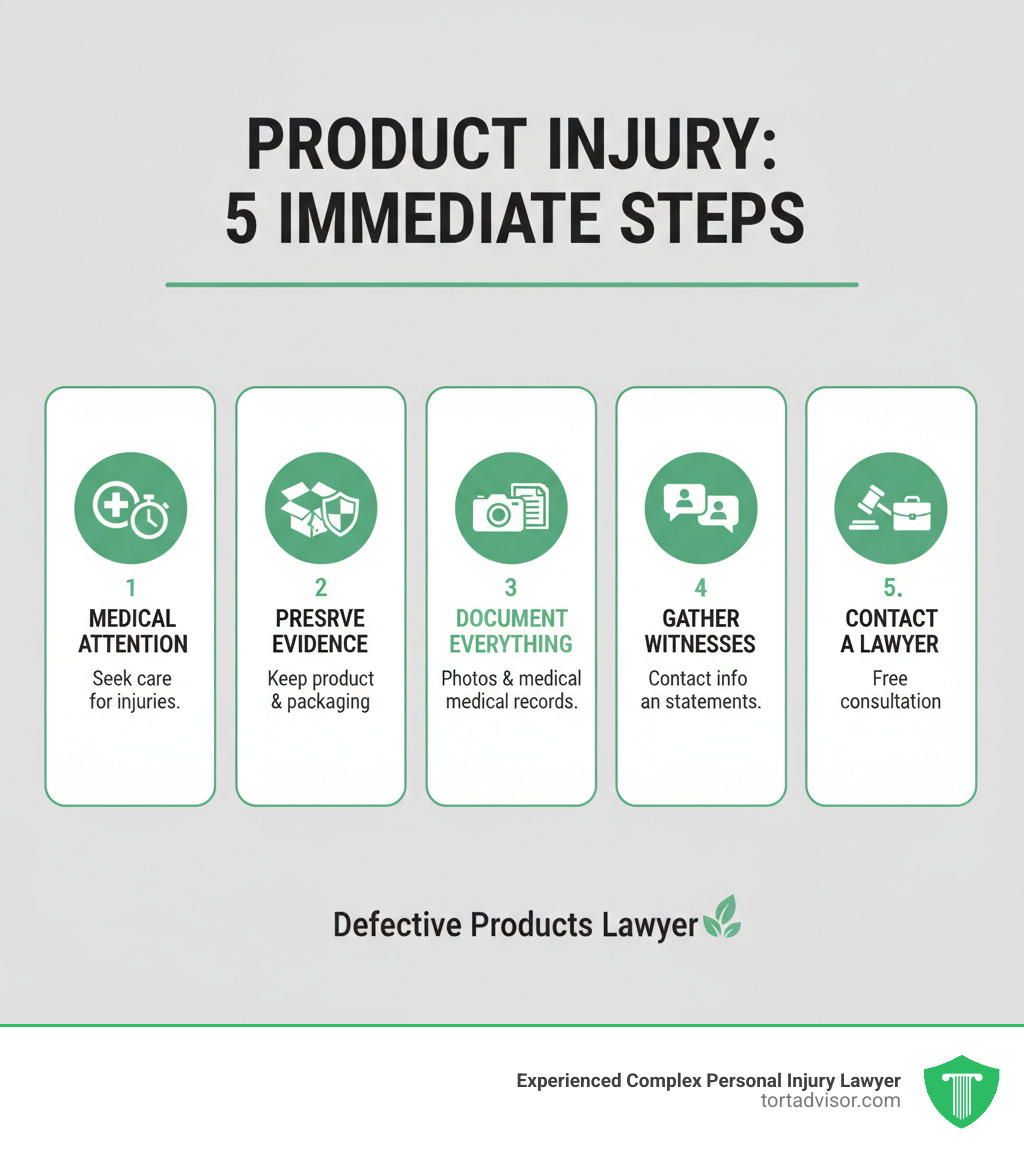
The early hours matter most. Take these steps to safeguard yourself and your claim:
- See a doctor promptly. Even for injuries that seem small, early medical records help connect your condition to the product.
- Keep the product as it is. Save it along with its packaging, manual and receipt, and do not repair or discard it; it is your key evidence.
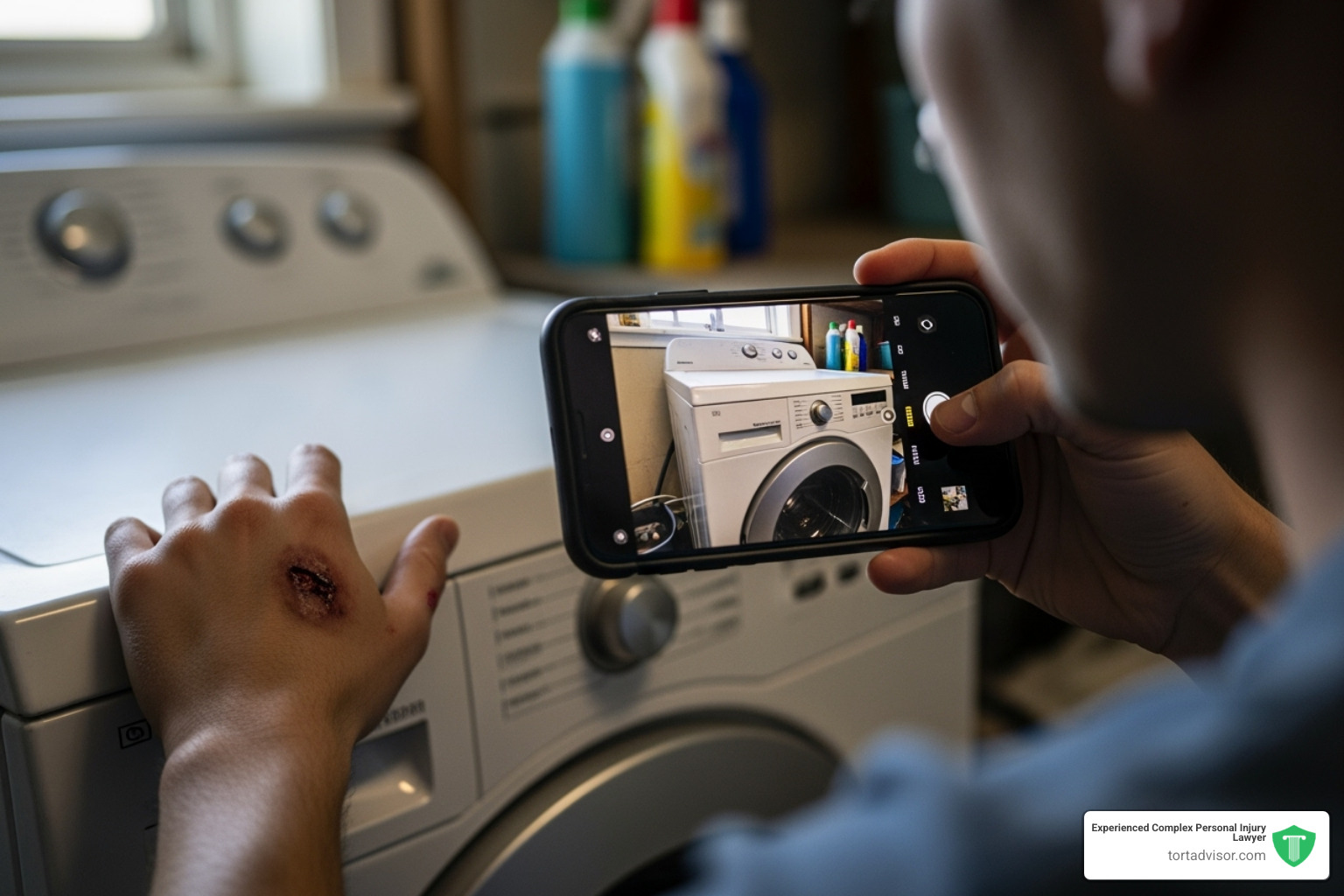
- Take pictures and video of the product, your injuries and where the incident happened.
- Write it down. Record the date, time and details while your memory is fresh.
- Collect witness details. Get contact information from anyone who saw the incident.
Why Evidence Decides Product Cases
Strong evidence is the backbone of a product liability claim, and your defective product lawyer will help collect and preserve it. Important evidence includes:
- The product itself: Experts can examine it to find out what failed.
- Medical records: An objective account of your injuries, care and outlook.
- Photos and video: Help a judge or jury see the defect and how badly you were hurt.
- Expert witnesses: Engineers, designers and doctors explain technical issues and tie the defect to your injury.
- Recall notices: A recall, such as one issued through the Consumer Product Safety Commission, can serve as an acknowledgment that the product has a problem.
Evidence can vanish fast, so act promptly and work with a legal team that knows how to preserve it.
How an Experienced Defective Product Lawyer Strengthens Your Claim
After a product injury, you are facing large companies whose lawyers exist to protect profits. An experienced defective product lawyer evens the odds with the knowledge, resources and persistence to pursue your rights.

A capable attorney develops a full case plan, beginning with a careful review and investigation. They bring in forensic engineers and medical experts, negotiate firmly against low offers and have the trial experience to go to court when needed.
Handling the Hard Parts With a Defective Product Lawyer
Product liability law is complicated and differs from state to state. An attorney is especially important for:
- Taking on corporate defense teams: They know how to answer arguments that shift blame to you or deny responsibility.
- Meeting deadlines: Every state enforces a statute of limitations, such as two years in California and, for many product claims, four in Florida. Miss it and the claim is gone.
- Retaining experts: Specialists are key to showing how a product failed and how seriously you were hurt.
- Weighing class actions: An attorney can tell you whether joining a class action or filing your own suit makes more sense.
Damages a Defective Product Lawyer Can Pursue
A skilled defective product lawyer will seek every category of compensation available, which may include:
- Medical costs: Past, current and future treatment related to the injury.
- Lost income: Pay for missed work and diminished future earning ability.
- Pain and suffering: For physical pain, emotional trauma and a lower quality of life.
- Emotional distress: For anxiety, depression or PTSD caused by the incident.
- Property damage: Repair or replacement of property the product damaged.
- Punitive damages: Awarded for especially egregious manufacturer conduct to punish it.
- Wrongful death: Lets surviving relatives recover funeral expenses, lost support and other losses.
An experienced attorney knows how to value each type of damage correctly and pursue the full amount.
Defective Product Claim FAQs
Clear answers are the starting point for protecting your rights. Here are responses to common questions about defective product claims.
What is the deadline for a defective product claim?
The filing deadline, or “statute of limitations,” depends on your state and is strictly applied. It often begins when you discover the injury. Typical examples are two years in California and three in Michigan; Florida has historically allowed four years for product liability claims, but it shortened its general negligence deadline to two years in 2023, so confirm which applies. Missing the deadline ends your right to compensation permanently, so contact a defective product lawyer right away.
Can I sue if the product has been recalled?
Yes. A recall can actually help, because it often amounts to the manufacturer acknowledging a defect. You may have a claim even if you were hurt before the recall was announced. Attorneys track notices from the Consumer Product Safety Commission and the National Highway Traffic Safety Administration to strengthen cases. Far from ending your claim, a recall often supports it.
What if I was partly to blame for my injury?
You may still recover. Most states use “comparative negligence.” In “pure comparative fault” states such as California, you can collect even if you were mostly at fault, with your award reduced by your share of blame. In “modified comparative fault” states, including Florida since 2023, you recover only if your fault falls below a set limit, usually 50% or 51%. An experienced defective product lawyer will push back on attempts to inflate your share of responsibility.
Taking the Next Step Toward Accountability
When a product breaks your trust and injures you, it violates the basic safety promise every manufacturer makes. Working with an experienced defective product lawyer is about more than money; it holds companies responsible and helps keep others from being hurt the same way.
An unexpected injury brings medical bills and financial strain, and that is why Legal Lawsuit exists. We help you connect with defective product lawyers in our network across the country who focus on product liability and have experience taking on large companies on behalf of injured consumers.
Timing matters. State filing deadlines can run out and key evidence can disappear, so do not risk your claim by waiting.
A free, confidential case review with an experienced attorney can clarify your options and what your claim may be worth. You do not have to deal with insurers trained to minimize payouts on your own; you deserve an advocate in your corner.
Connect with an experienced personal injury attorney through Legal Lawsuit and take your first step today.
Additional Resources
Related Posts
Quick Answer: The Boy Scouts of America (BSA) filed for Chapter 11 bankruptcy in 2020 after facing tens of thousands [...]
Quick Answer: Survivors of sexual abuse by Catholic priests, nuns, or other Church personnel may be able to file a [...]
Quick Answer: Clergy abuse settlements vary enormously based on the severity of the abuse, the strength of evidence that the [...]