Short answer: This article explains the key facts, eligibility issues, settlement factors, deadlines, and source-backed updates related to this legal topic. Results vary by case facts, evidence, jurisdiction, and representation.
In This Guide
- When Products Cause Pain: Understanding Your Rights
- The Building Blocks of a Successful Claim
- Identifying the Flaw: The Three Main Types of Product Defects
- The Legal Playbook: Theories for Your Product Liability Personal Injury Claim
- Your Action Plan: What to Do After a Product-Related Injury
- What’s at Stake? Damages and Common Defenses
- Frequently Asked Questions about Product Liability Claims
- Conclusion: Securing Justice for Your Injury
Hurt by a Defective Product? Your Rights in a Product Liability Personal Injury Case
Anyone who buys a product assumes it is safe to use. So what are your options when a kitchen gadget bursts or a prescription drug triggers side effects nobody mentioned? That is the job of product liability personal injury law: protecting consumers who are harmed by defective goods.
The Essentials of a Product Liability Personal Injury Claim:
- Responsible parties: Liability can extend to manufacturers, parts suppliers, distributors, and retailers.
- Defect categories: Flaws in manufacturing, flaws in design, and inadequate warnings.
- Ways to prove fault: Strict liability, negligence, and breach of warranty.
- Who may file: Purchasers are not the only ones protected – users, relatives, and even bystanders can have claims.
- Deadlines: Each state sets its own statute of limitations, and some are as brief as 1–2 years.
Product liability is the legal duty that every business in a product’s chain of production owes for harm the product causes — makers, assemblers, wholesalers, and stores alike. These claims draw on tort law, which deals with civil wrongs, and contract law, which governs warranties. Because the U.S. has no single federal product liability statute, each state applies its own rules, which is a big reason these cases are complicated.
Product liability claims hold companies accountable, push manufacturers to put safety first, and pay injured people for what they have lost. When a product hurts someone, these laws shift the financial burden to the business responsible so the injured person can recover and move forward.
Related product liability personal injury guides:
What You Must Prove to Win
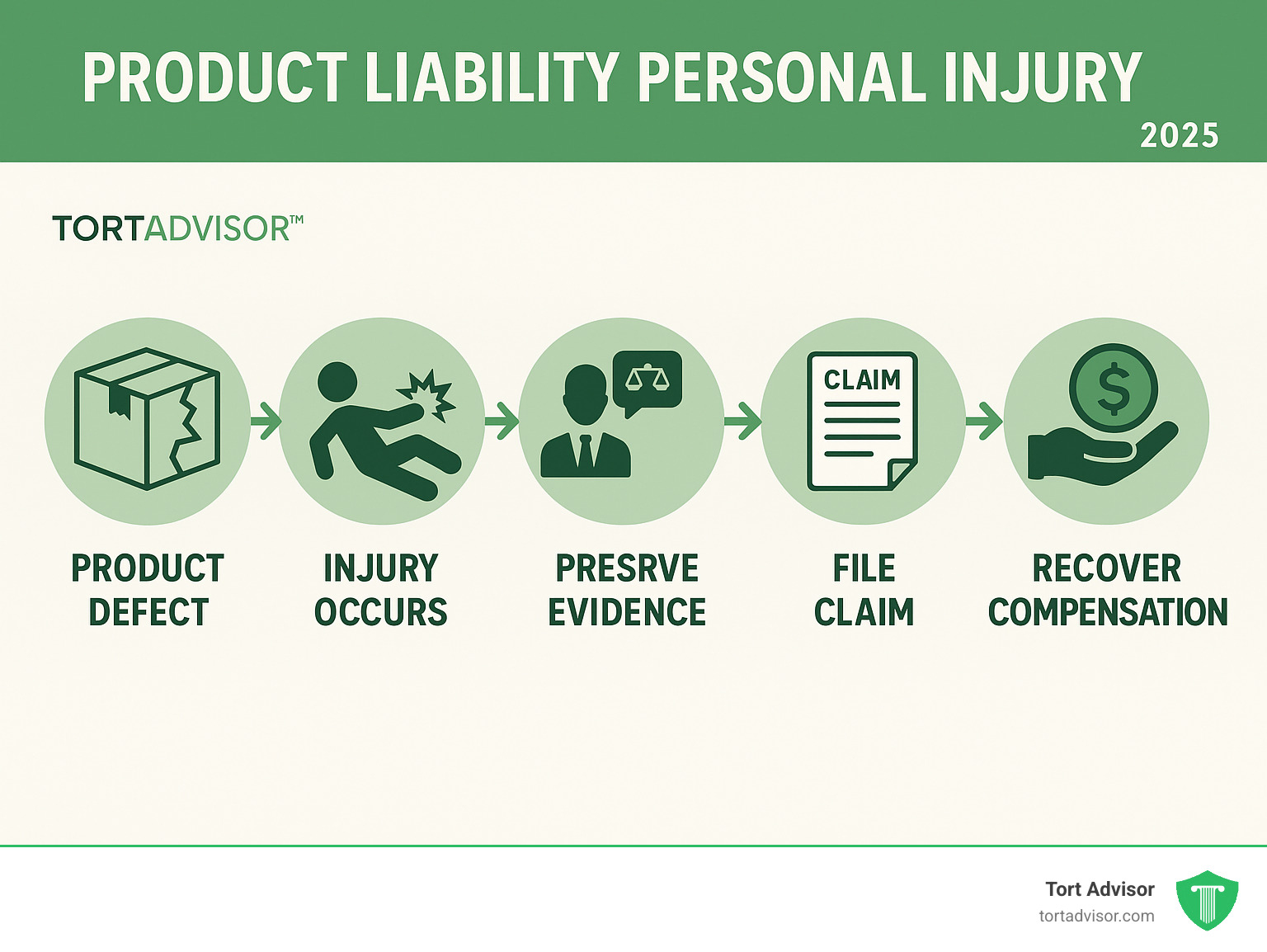
A winning product liability personal injury case rests on a few core elements. As the plaintiff, you carry the burden of proof, but the standard is a “preponderance of the evidence” — you only have to show your version is more likely true than not. Protecting the evidence is essential: if you still have the product, do not discard, repair, or change it. It is usually the single most valuable piece of proof you have.
Each claim has to show three things: the product was defective, you were actually harmed, and that defect caused the harm.
Element One: The Product Was Defective
You need to show the defect existed when the product left the manufacturer’s hands. Defects come in three forms: manufacturing defects (mistakes made in production), design defects (the whole product line is unsafe by design), and marketing defects (missing or inadequate warnings and instructions). What matters is proving the product was unreasonably dangerous because of the defect. Large-scale litigation such as the talcum powder lawsuits and Roundup lawsuits shows how one defect can injure thousands of people.
Element Two: You Were Actually Harmed
Without a real injury or loss, there is no claim, and the harm needs to be documented. Compensatory damages pay for what you lost — economic damages like medical costs and missed wages, and non-economic damages like pain and suffering. Treatment records, pay stubs, and a personal injury diary all carry weight. Occasionally, courts award punitive damages to punish outrageous conduct. Under the purely economic loss rule, a product that simply stops working, without injuring anyone or damaging other property, usually cannot support a product liability claim.
Element Three: The Defect Caused the Harm
Linking the defect to your injury is called causation, and it has two pieces. Cause-in-fact asks whether the injury would have happened “but for” the defect. Proximate cause asks whether the injury was a foreseeable result of that defect. A crash caused by bad brakes is foreseeable; a strange, unrelated chain of events is not. Engineers and doctors frequently testify to prove this connection.
Who May File, and Who Can Be Named as a Defendant?
Anyone foreseeably harmed by a defective product may be able to bring a claim — the buyer, relatives, friends, and even people who just happened to be nearby. On the other side, potential defendants include manufacturers, component makers, assemblers, distributors, and retailers. Casting a wide net gives injured people more paths to compensation and encourages safety at every stage of the supply chain.
Spotting the Problem: Three Kinds of Product Defects
Most product liability personal injury claims involve one of three defect types, and knowing which one fits shapes the whole case. Courts commonly apply one of two tests. The Consumer Expectation Test asks whether the product was more dangerous than an ordinary buyer would anticipate. The Risk-Utility Test balances the product’s dangers against its usefulness and asks whether a safer, workable design was available. A Law360 article on defect tests describes courts’ growing reliance on risk-utility analysis.

Manufacturing Defects
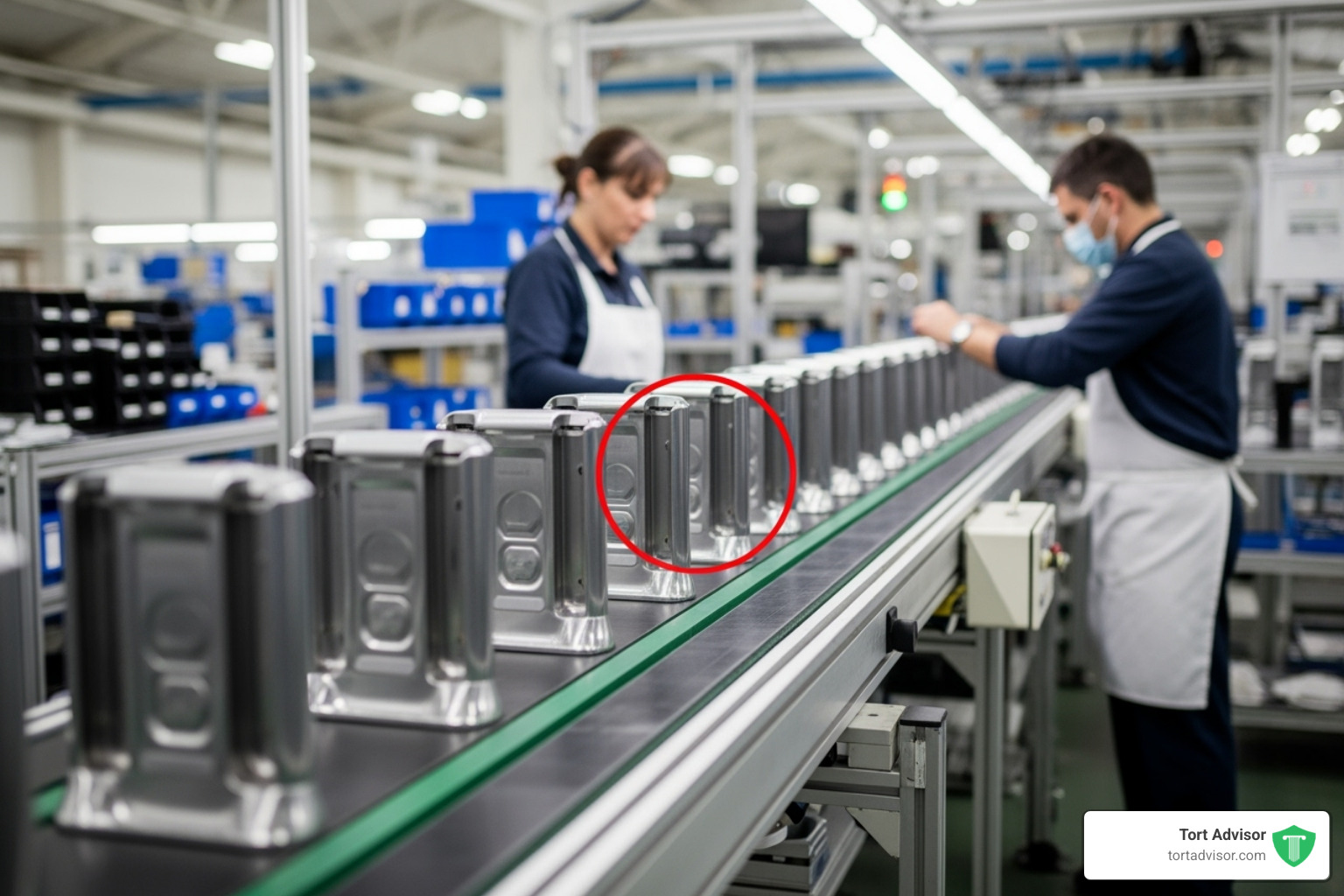
Manufacturing defects are isolated mistakes made on the production line that cause one item or batch to differ from its intended design. The design is fine; the execution is not. Contaminated food, a product shipped with parts missing, or a single appliance with bad wiring are common examples. The telltale sign is that the defective item fails to match the manufacturer’s own specs.
Design Defects
With a design defect, every unit in the line carries the danger. The product matches its blueprint perfectly — the blueprint is the problem. To prove it, injured people usually need to show that a safer, affordable, and practical design existed at the time. Furniture that tips over too easily and rollover-prone vehicles are familiar examples. Claims over Defective Medical Devices often fit here and typically depend on extensive expert testimony.
Failure to Warn (Marketing Defects)
Even a flawlessly designed and built product can be defective if it ships without proper warnings or directions. Manufacturers must alert buyers to dangers that are not obvious, provide clear instructions for safe use, and disclose known risks such as a drug’s side effects or a substance’s toxicity. To be adequate, a warning must be specific, easy to understand, and prominent enough to help people avoid injury.
Legal Strategies for a Product Liability Personal Injury Claim
Attorneys handling a product liability personal injury case commonly plead several theories at once. Because each theory has its own requirements, combining them improves the odds that at least one succeeds.
| Feature | Strict Liability | Negligence | Warranty Breach |
|---|---|---|---|
| Focus | Whether the product was defective | How the maker or seller behaved (careless conduct) | What was promised or guaranteed about the product |
| Elements to Prove | A defect existed, it made the product unreasonably dangerous, and it caused the injury | Duty, breach, causation, and damages | A warranty existed, it was broken, and the breach caused the injury |
| Does the Maker’s Knowledge Matter? | Not relevant | Yes (was their conduct reasonable?) | No (was the promise kept?) |
| Difficulty of Proof | Lower (show the defect and causation) | Higher (show a failure to use reasonable care) | Depends on the type of warranty |
| How Often It Is Used | Very often; the leading theory in most states | Often, particularly for design and warning defects | Rarely the main theory, but commonly added |
Strict Liability: Fault Not Required
Strict liability anchors today’s product liability law. It looks at the product, not at how the company behaved. If a business sells a defective, unreasonably dangerous product and someone is hurt, the business is responsible. You do not need to show carelessness — only that the defect existed when the product left the company’s control and that it caused your injury. The idea is that companies that profit from a product should absorb the cost of the harm it does. Cornell Law School’s overview of products liability offers more background.
Negligence: Showing the Company Was Careless
Negligence looks at what the defendant did or failed to do. You must show that the maker or seller did not use reasonable care and that this failure caused your injury. That means proving four elements: a duty of care existed, the defendant breached it (for instance, by cutting corners on safety testing), the breach caused your injury, and you suffered actual damages. Negligence is harder to prove than strict liability, but it can be very effective in design or warning cases where a company ignored risks it knew about.
Breach of Warranty: When a Promise Is Broken
Rooted in contract law, this theory is about broken promises regarding how safe a product is and how it will perform. Express warranties are explicit promises, written or spoken. Implied warranties exist automatically under the law. The implied warranty of merchantability means a product must be reasonably suited to its normal use, and the implied warranty of fitness for a particular purpose applies when a seller recommends a product for a specific need. If a product falls short of these standards and injures you, a warranty claim may be available.
What to Do After a Product Injures You
The decisions you make in the first hours and days after being hurt by a defective product can strongly affect your product liability personal injury case. These steps help protect both your health and your claim.
Step 1: Get Medical Care Right Away
Your well-being comes first. See a doctor promptly, even for injuries that seem small. Prompt care gets you treated and creates an official record tying your injury to the incident. Stick to your treatment plan, including follow-up visits and therapy, because insurers often point to gaps in care to argue an injury is minor.
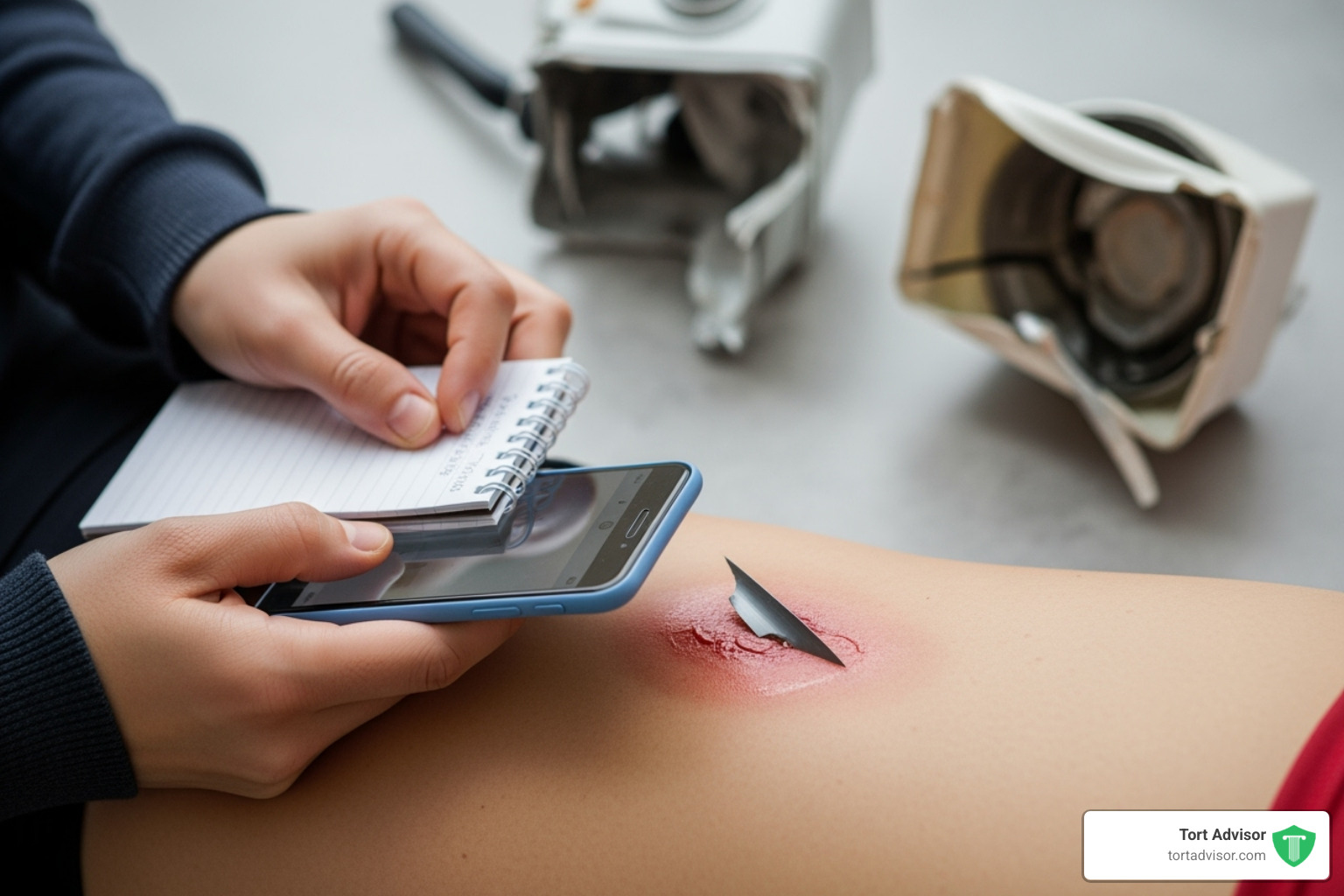
Step 2: Protect the Evidence
Nothing matters more as evidence than the product itself. Hold onto it exactly as it was when you were hurt, and do not fix or modify it, since that can wipe out key proof. Keep everything that came with it too — the box, manuals, warranty cards, and your receipt or other proof of purchase. These details can make a real difference.
Step 3: Record What Happened
Details slip away over time, so write them down now. Photograph and film your injuries, the product, and where the incident happened. Put your account in writing as soon as you can. Keep a daily log of pain, appointments, and how the injury limits your routine. Collect names and phone numbers of any witnesses. Our Personal Injury Lawsuits resources offer more help.
Step 4: Talk With an Experienced Attorney
Product cases are complicated, and the other side is usually a large company with a strong legal team. An experienced attorney helps you work through the process and protects your rights. Deadlines matter: every state has a statute of limitations, in some cases as short as one year, and missing it ends your right to sue permanently. An attorney can find every liable party, bring in the right experts, and build the strongest case. Not sure you need one? See Do I Need a Personal Injury Lawyer?
Compensation and the Defenses Manufacturers Raise
Before pursuing a product liability personal injury claim, it helps to know what you may be able to recover and how the manufacturer is likely to fight back. Companies often use every available tactic to limit what they pay, so these cases can take time, and skilled representation matters.
Types of Damages You May Recover
A lawsuit aims to compensate you for what you lost. Those damages generally fit into three groups:
- Economic Damages: Measurable financial losses such as current and future medical costs, missed pay, reduced ability to earn, and damaged property.
- Non-Economic Damages: Harms without a price tag, like pain and suffering, emotional distress, lost enjoyment of life, and scarring or disfigurement.
- Punitive Damages: Uncommon awards meant to punish especially reckless or malicious conduct and discourage others from doing the same.
The Insurance Information Institute reported a median product liability award of $1.5 million in 2017, a reminder of how serious these cases can be.
How Manufacturers Defend Product Liability Personal Injury Claims
Expect the manufacturer to raise several legal arguments. A skilled attorney anticipates these defenses and prepares to answer them.
- Statute of Limitations or Repose: The company may say the claim was filed too late. A statute of limitations runs from the injury date, while a statute of repose runs from the date the product was first sold.
- Misuse: The defense may argue you were hurt because you used the product in a way no one could foresee. If the misuse was foreseeable, though, the maker may still be liable for not warning against it.
- Assumption of Risk: The company argues you knew about the particular hazard and chose to accept it anyway.
- Comparative or Contributory Negligence: The defense claims your own carelessness played a role. In most states, your award is reduced by your share of fault; in a handful of states, any fault at all can block recovery.
Common Questions About Product Liability Claims
Questions come up quickly after a product liability personal injury. Below are answers to some of the ones people ask most.
Can I file a claim if the product that hurt me was recalled?
Yes. A recall can support your case because it shows the manufacturer acknowledged a problem. It does not guarantee success, though — you still have to show that the recalled defect caused your injury. Recalls often come only after people have already been hurt. The CPSC website lists current recalls, but your product does not need to be recalled for you to have a valid claim.
What if I lost the receipt or bought the item used?
You may still have a claim. Product liability personal injury law asks whether the product was defective when it left the manufacturer, not how it came to you. Gift, yard-sale find, or lost receipt — other evidence such as the product, its packaging, or witness accounts can support your case.
What is the deadline to file a product liability personal injury claim?
This matters a great deal. Each state imposes a statute of limitations, sometimes as short as one year from the injury, and missing it permanently ends your right to compensation. Some states add a statute of repose that sets a hard cutoff tied to when the product was made. Because these deadlines are so strict, reach out to an attorney as early as you can.
Next Steps Toward Justice for Your Injury
Recovering from a serious injury caused by a defective product is hard, especially with medical bills, missed income, and ongoing pain. A product liability personal injury claim can provide the money you need to move forward.
These cases turn on state-specific law, technical proof, and corporate defendants with deep pockets, so they call for an attorney with focused experience.
Legal Lawsuit is a legal-information site that helps injured people understand product liability personal injury claims and connect with experienced attorneys in our network who know how to build strong cases against major manufacturers, starting with a free, confidential case review.
Don’t wait — filing deadlines are strict and evidence can be lost. If a defective product injured you or someone you love, start today. Get trusted help with your Personal Injury Lawsuit and have an experienced attorney review your options.
Related Posts
Quick Answer: The Boy Scouts of America (BSA) filed for Chapter 11 bankruptcy in 2020 after facing tens of thousands [...]
Quick Answer: Survivors of sexual abuse by Catholic priests, nuns, or other Church personnel may be able to file a [...]
Quick Answer: Clergy abuse settlements vary enormously based on the severity of the abuse, the strength of evidence that the [...]