

Short answer: This article explains the key facts, eligibility issues, settlement factors, deadlines, and source-backed updates related to this legal topic. Results vary by case facts, evidence, jurisdiction, and representation.
What You Will Find Here
- When Consumer Trust Meets Corporate Negligence
- Understanding Product Defects: When Good Products Go Bad
- The Legal Framework of a Product Liability Claim
- Why You Need Experienced Defective Product Lawyers
- Common Culprits: Examples of Defective Product Cases
- Frequently Asked Questions about Defective Product Lawyers
- Conclusion: Taking the Next Step Towards Justice
When a Company’s Carelessness Breaks Consumer Trust
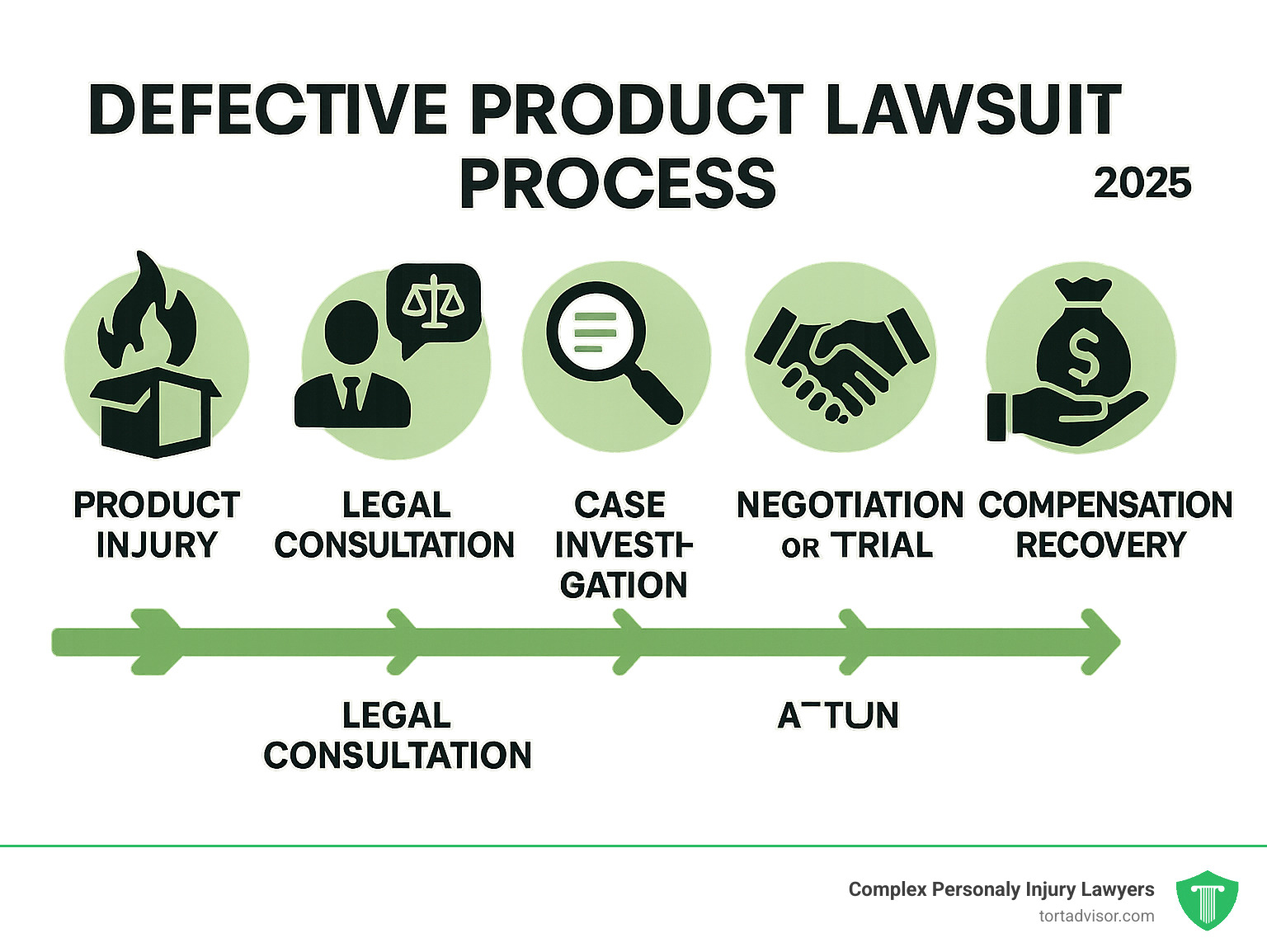
This defective product lawyers guide explains how defective product lawyers make manufacturers, distributors, and sellers answer for injuries their products cause. These attorneys take on claims involving flawed designs, production mistakes, and missing warnings that result in serious harm or death.
What these attorneys typically do:
- Review your situation to see whether you have a viable claim
- Collect proof such as medical records, the product itself, and expert opinions
- Negotiate with the company’s legal team toward a settlement
- Take your case to court against large manufacturers when needed
- Seek payment for medical costs, missed income, and pain and suffering
We all assume the things we buy won’t hurt us, yet that assumption is broken far too often. Consumer products injure huge numbers of Americans every year, and some of those injuries are fatal. Exploding airbags and tainted infant formula are reminders that a defective product can make an ordinary day dangerous.
Once a product fails and someone is hurt, the injured person is suddenly up against a well-funded corporation in a complicated legal fight. That is where defective product lawyers come in, evening the odds and pursuing the compensation you are owed.
I’m Mason Arnao. Working with legal technology has let me see how these attorneys rely on advanced case management and evidence tracking to build strong claims against large companies. This guide shares what I have learned about how they resolve product liability cases.
Key terms related to defective product lawyers:
- product liability personal injury
- product liability lawyer New Mexico
- product liability lawyer new york
Product Defects Explained: How Safe-Looking Products Become Dangerous
A defect can turn a familiar household item into a real hazard. Product liability law steps in when a company fails to sell a safe product. A product is unreasonably dangerous when its risks outweigh its benefits or when it is less safe than an ordinary buyer would expect.
These laws extend responsibility beyond the manufacturer to the whole supply chain. That means distributors and retailers can be liable too, so every business that helped put the hazardous product in your hands can be held to account.
The Three Categories of Product Defects
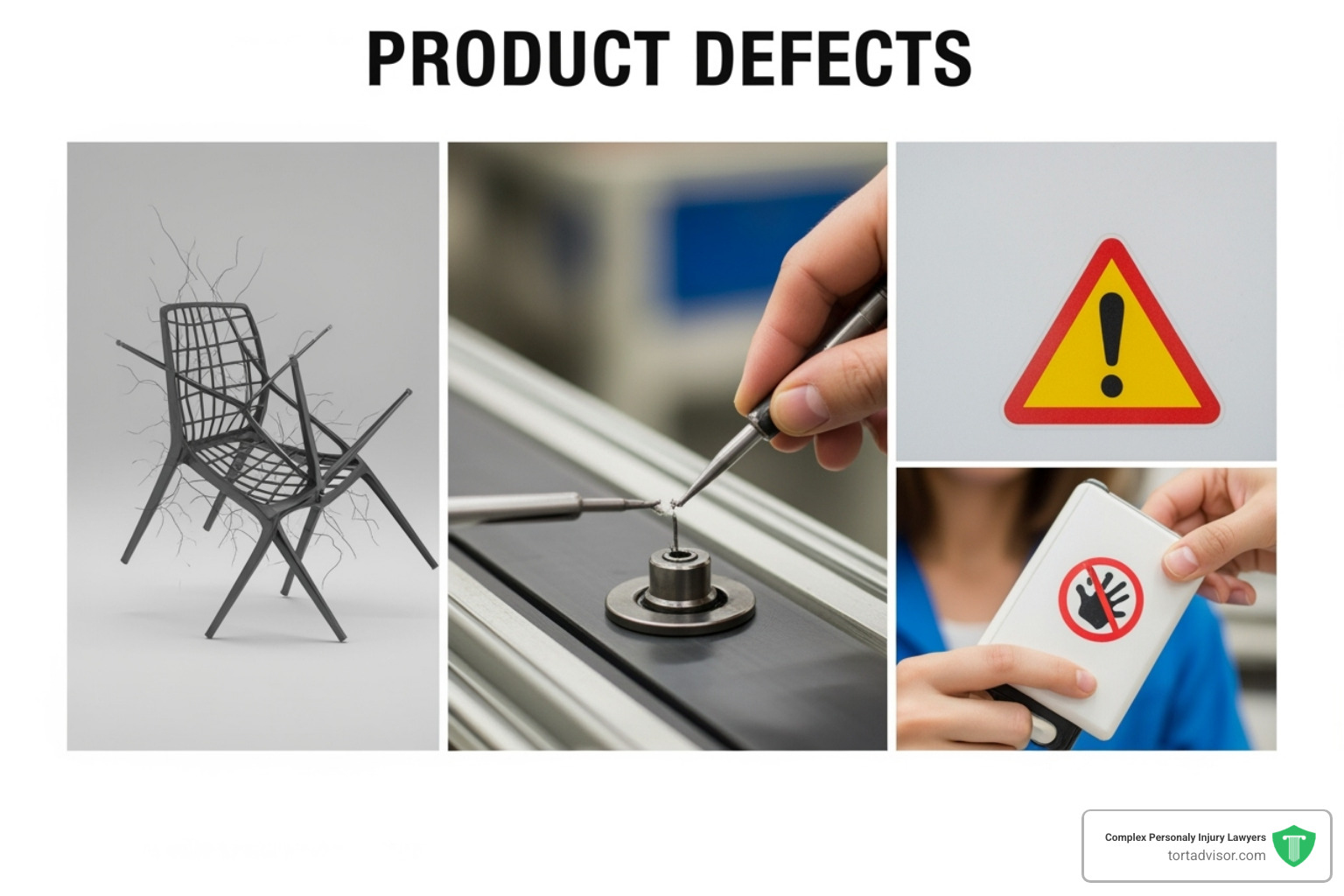
Defective product lawyers sort claims into three categories, and each calls for its own legal approach.
Design defects are flaws built into the plan that make every unit in a product line unsafe, even when each one is made correctly. Winning usually requires showing that a safer alternative design was workable at the time. Common examples are top-heavy vehicles that roll over easily and toys with pieces that snap off and create choking risks.
Manufacturing defects are mistakes on the production line that make a safely designed product dangerous. They usually affect certain batches rather than the whole line and often stem from lapses in quality control. Any product that departs from its design specifications can be hazardous — think tainted food lots, bad wiring in an appliance, or faulty brakes on one particular car.
Marketing defects, also called failure to warn, arise when a product carries hidden risks that the company did not disclose. Nothing may be physically wrong with the item, but it is dangerous because buyers were not given proper instructions or adequate warnings about non-obvious hazards, particularly where misuse is foreseeable. Examples include missing allergen labels on food, drug labels that omit side effects, and misleading e-cigarette marketing that downplays health risks.
The Legal Theories Behind a Product Liability Case
After an injury from a hazardous product, defective product lawyers rely on well-established legal approaches to hold companies responsible. Most cases are built on one or more of three main theories.
| Legal Theory | What Must Be Shown |
|---|---|
| Strict Liability | The company is liable whether or not it was careless. The case centers on the defect and the resulting injury, not on what the manufacturer intended or how careful it was. |
| Negligence | The manufacturer or seller owed a duty of care, failed to meet it, and that failure caused the injury. Specific careless conduct must be shown. |
| Warranty Breach | The product did not meet an express warranty (a specific promise from the seller) or an implied warranty (a basic expectation of quality or fitness for a purpose). |
How Strict Liability, Negligence, and Warranty Claims Differ
Strict liability is one of the strongest tools injured consumers have. Carelessness does not need to be proven; the question is whether the product was unreasonably dangerous. If it was defective when it left the manufacturer and injured you during normal use, the company can be liable. The reasoning is that businesses profiting from a product should cover the cost of the harm it causes. Some states, such as Illinois, apply a consumer-user contemplation test that asks whether the product was as safe as a reasonable person would expect.
Negligence looks at how the manufacturer behaved. The injured person must show the company was careless — cutting corners, ignoring known risks, or skipping proper testing. This theory is especially effective when evidence shows a company knew about a danger and put profits ahead of safety.
Breach of warranty claims say the product did not deliver on what was promised, either expressly or by implication. An express warranty is a specific statement, such as “guaranteed safe.” An implied warranty is the unstated expectation that a product is safe for its normal use.
What a Recall Means for Your Case
A recall amounts to the manufacturer acknowledging that its product poses a danger, and that can be strong evidence. Many recalls are overseen by the Consumer Product Safety Commission (CPSC), which posts recent recall details on its website. A recall does not guarantee success, though; you still need to show that the defect caused your injury. Your right to pursue compensation continues after a recall.
Filing Deadlines (Statutes of Limitations)
Timing is crucial. Each state sets a statute of limitations, a firm cutoff for filing suit, and missing it ends your right to sue. Deadlines differ by state and usually begin on the date of injury. Under the “discovery rule,” the clock may instead start when you learned (or reasonably should have learned) that the product caused your injury. Because these rules are technical and unforgiving, talk with defective product lawyers right away. An attorney in your state can explain the deadlines that apply to you, including wrongful death deadlines, which are often different.
Why Experienced Defective Product Lawyers Make a Difference
After a product injury, you face an uneven contest against big companies with enormous legal budgets. Defective product lawyers bring the knowledge and resources needed to take on those companies and pursue fair compensation. Going it alone puts you at a serious disadvantage.

What an Attorney Does in Your Case
A capable defective product lawyer serves as your advocate, investigator, and protector, building a full strategy that includes:
- Investigating the Defect: Reviewing production records, design documents, and quality control procedures, often alongside forensic experts, to identify exactly what failed.
- Collecting Evidence: Gathering medical records, preserving the product, locating proof of purchase, and obtaining witness statements.
- Managing Legal Procedures: Handling complicated filings and strict deadlines so the case is not thrown out on a technicality.
- Dealing With Insurers: Taking over communication with adjusters and guarding against tactics meant to shrink or deny your claim.
- Going to Court: Presenting a persuasive case to a judge and jury if a fair settlement cannot be reached.
Our article “Do I Need a Personal Injury Lawyer?” can help you decide.
Why Expert Witnesses Carry So Much Weight
Product cases usually involve technical questions, and expert witnesses translate those questions for a jury.
- Engineers examine the design or manufacturing process, explain in everyday language how the product failed, and show that a safer, practical alternative was available.
- Doctors and other medical experts connect the product to your injuries and testify about your diagnosis, treatment, and long-term outlook.
- Industry experts explain applicable regulations and customary practices, showing where the manufacturer fell below accepted safety standards.
Grounded in data and experience, their testimony is key to proving causation and making the manufacturer answer for the harm.
The Evidence That Proves a Product Claim
Strong claims rest on strong evidence. The most important items include:
- The product itself: Keep it in the condition it was in after the incident; it is often the most important evidence you have.
- Medical records and bills: They show how badly you were hurt and what treatment has cost.
- Proof of purchase: Receipts or card statements tie you to the product.
- Photos and video: Capture the product, the scene, and your injuries.
- Witness accounts: Independent observers can confirm what happened.
- Records of lost income: Pay stubs and employer records show the financial hit.
If a vehicle was involved, see our guide “How to Report a Motor Vehicle Accident.” Collecting all of this evidence is demanding work that defective product lawyers take on so you can concentrate on healing.
Frequent Offenders: Defective Product Case Examples
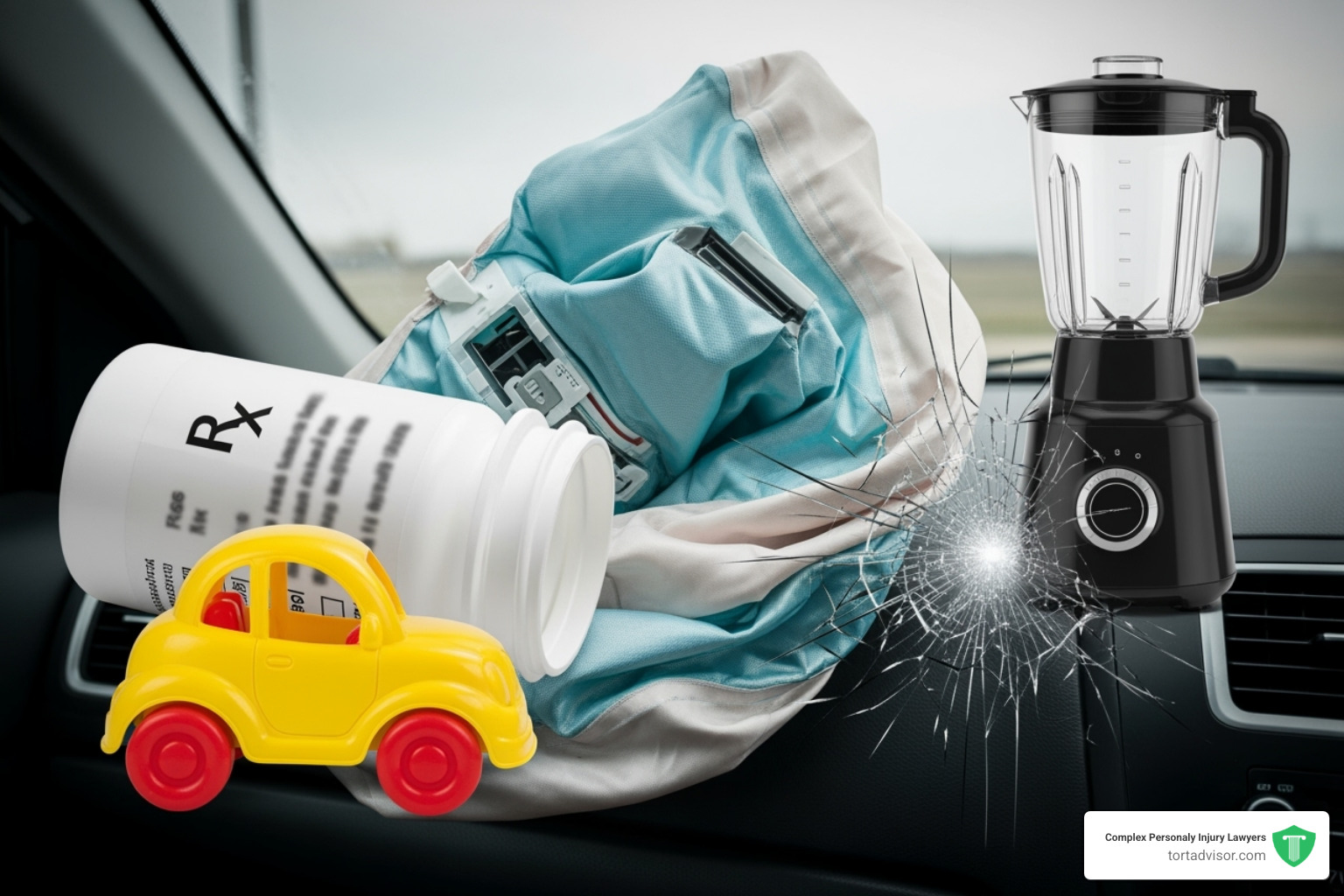
Hazardous products are often hiding in plain view. Defective product lawyers take on claims involving many everyday items that caused harm no one expected. Knowing the common categories can help you spot a possible claim.
Medical Devices and Medications
Products designed to help people heal sometimes cause serious injury. Lawsuits have involved:
- Hip and knee implants that fail early, including Exactech, DePuy Synthes, Zimmer Nexgen, and Stryker Refresh devices, leading to painful revision surgery.
- Hernia mesh linked to chronic pain, infection, and organ damage.
- IVC filters that break apart and move, puncturing veins and organs.
- Surgical warming blankets, which the Bair Hugger Lawsuit alleges may raise infection risk.
- Prescription drugs with serious side effects, such as the Ozempic Lawsuit over gastroparesis, Depo Provera Lawsuits tied to bone loss, and Talcum Powder Lawsuits alleging an ovarian cancer link.
Hazardous Consumer and Household Products
Ordinary products can carry hidden risks:
- AFFF firefighting foam has been associated with cancer among firefighters and service members.
- Roundup weed killer is alleged to cause non-Hodgkin lymphoma.
- Infant formulas such as Enfamil have been tied to NEC, a deadly intestinal disease in premature babies.
- E-cigarettes have exploded and caused severe burns, and they have been linked to lung damage.
- The Video Game Addiction Lawsuit claims certain games are deliberately designed to be addictive.
Defective Vehicle Parts
Vehicle defects frequently cause sudden, catastrophic crashes:
- Airbag defects, including the Takata scandal, involved inflators that ruptured and sprayed metal fragments.
- Brake failures can cause serious collisions when a driver suddenly cannot stop.
- Defective tires that blow out at highway speed have caused many rollover crashes.
- Seatbelt failures can make a minor crash deadly.
- Faulty ignition switches, such as those in certain GM vehicles, could cut the engine while driving and disable safety features.
Defects like these can cause the kinds of car accident injuries that permanently change lives.
Questions People Ask About Defective Product Lawyers
A product injury raises plenty of questions. Below are answers to several of the most common.
What compensation is available in a defective product lawsuit?
Damages are meant to make up for what you have lost. They generally include:
- Economic Damages: Measurable losses like current and future medical costs, missed wages, and damaged property.
- Non-Economic Damages: Payment for harm that is harder to measure, such as pain, emotional distress, and lost enjoyment of life.
- Punitive Damages: Occasionally awarded in cases of extreme misconduct to punish the company and deter others.
No two cases are alike, though the Insurance Information Institute has noted that product liability awards can be large. An attorney can assess what your particular claim may be worth.
How is an individual product liability claim different from a class action?
A product liability claim is your own lawsuit over your specific injuries and losses, tailored to your circumstances.
A class action lawsuit groups together many people who were harmed in similar, often smaller, ways by the same product. It is an efficient approach when thousands of people share the same type of harm.
Sometimes similar individual lawsuits are combined into multidistrict litigation (MDL) to streamline pretrial steps. An attorney can tell you which route fits your situation, and Legal Lawsuit can help you connect with attorneys in our network who handle mass tort cases.
What should I do right after a product injures me?
The steps you take early can protect both your health and your claim.
- Get Medical Care: Your health comes first. Have a doctor evaluate you even if the injury seems minor, which also documents it.
- Keep the Product: Do not discard, fix, or alter it. Hold onto it along with the packaging, manuals, and receipts — all are important evidence.
- Record the Details: Photograph the product, the scene, and your injuries, and write down what happened, when, and who saw it.
- Avoid Insurer Interviews: Politely refuse to give a recorded statement to the manufacturer’s insurer, whose job is to protect the company, not you.
- Talk to an Attorney: Reach out to experienced defective product lawyers as early as possible. They can begin investigating and keep you within every legal deadline while you recover.
Your Next Step Toward Justice
When a defective product breaks your trust and injures you, the effects can be overwhelming — rising medical bills, lost income, and the emotional strain of a life upended by a company’s carelessness. The law gives you a way to hold that company responsible.
Defective product lawyers know that every case represents a person whose life was disrupted. Pursuing a claim helps you recover your losses and tells manufacturers that cutting corners on consumer safety has consequences.
Facing a powerful corporate legal team by yourself is intimidating. An experienced attorney evens the odds and protects your rights while you heal.
Strict deadlines and the risk of lost evidence make speed important. The sooner you speak with a qualified attorney, the stronger your claim is likely to be.
Legal Lawsuit is a legal-information site that helps injured people understand their options and connect with experienced product liability attorneys in our network. If a dangerous product harmed you, you don’t have to face it alone — request a free, confidential case review to have a qualified attorney look at your situation.
Your path to justice can begin today. Take that first step now.
Related Posts
Quick Answer: The Boy Scouts of America (BSA) filed for Chapter 11 bankruptcy in 2020 after facing tens of thousands [...]
Quick Answer: Survivors of sexual abuse by Catholic priests, nuns, or other Church personnel may be able to file a [...]
Quick Answer: Clergy abuse settlements vary enormously based on the severity of the abuse, the strength of evidence that the [...]

