Short answer: This article explains the key facts, eligibility issues, settlement factors, deadlines, and source-backed updates related to this legal topic. Results vary by case facts, evidence, jurisdiction, and representation.
Product Liability Injury Rights: What Injured Consumers Should Know
After a Dangerous Product Hurts You
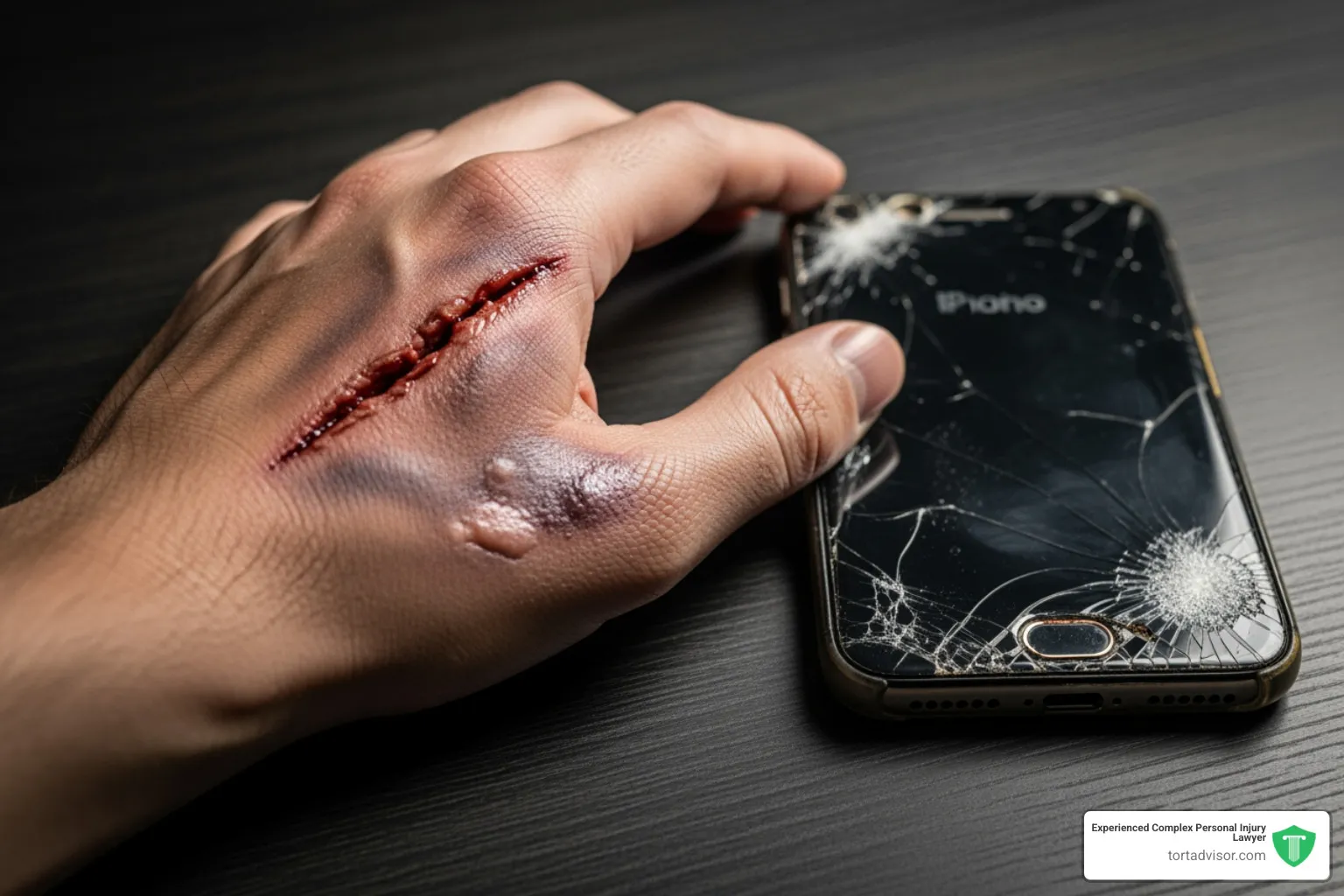
A product liability injury happens when a product that is defective or unreasonably dangerous hurts the person using it. The harm can be anything from a small cut to a life-changing injury or a death. Companies that put unsafe products on the market can be made to pay for the damage those products cause.
Product Liability Injury Rights at a Glance:
- What qualifies: Harm caused by a product’s flawed design, a manufacturing mistake or missing warnings
- Who may be responsible: Makers, part suppliers, distributors, wholesalers and sellers
- Three defect categories: Design, manufacturing and marketing (failure to warn)
- Legal grounds: Strict liability, negligence or breach of warranty
- What you can recover: Medical costs, lost pay, pain and suffering and other losses
- Cost to start: Most product liability attorneys charge nothing unless they recover money
Thousands of people in the U.S. are hurt every year by products they assumed were safe. Product liability law exists to protect them and to make companies answer for the harm.
Pursuing a claim can feel like too much while you are juggling treatment and bills, especially when the other side is a large company with its own legal department.
I’m Mason Arnao. My background is in technology, and for years I have built systems that help injured people reach attorneys who handle complex product liability injury cases. That work has shown me how these claims develop and what consumers need to know to protect their rights.
How Product Liability Law Works
You have a right to expect that what you buy is reasonably safe. When it is not and you are hurt, product liability law lets you hold companies in the production and sales chain responsible, including the maker, parts suppliers, assemblers, wholesalers and the store that sold it.
For centuries the rule was caveat emptor, or “buyer beware,” which left injured people with little recourse. Major court decisions in the 1900s changed that, holding manufacturers responsible when their products harmed anyone who could foreseeably use them. Those rulings are the basis of today’s consumer protections. This introduction to product liability law explains the framework in more detail.
The Legal Grounds for a Claim
Most product liability injury claims are built on tort law, contract law, state statutes or a combination of them.
Tort law, which covers civil wrongs that cause harm, is the usual route. Its two main theories are strict liability and negligence, and both treat injury from a defective product as a wrong that deserves compensation.
Contract law enters through breach of warranty. An express warranty is a specific promise the seller made about the product, while implied warranties are promises the law reads into every sale, such as being fit for ordinary use. If a product breaks those promises and someone is hurt, a claim may follow.
State statutes add another layer. There is no single federal product liability law, so many states have passed their own rules on top of the common law.
Knowing these options helps an attorney pick the strongest theory for your situation. For a broader overview, see our guide to personal injury lawsuits.
Strict Liability Compared With Negligence
Which theory applies can shape the whole case.
Strict liability is one of the strongest protections consumers have. You do not have to prove the company was careless, only that the product was defective and the defect caused your injury. The focus is the product, not the company’s conduct, because manufacturers are best placed to make products safe.
Negligence looks at the company’s conduct. In a product liability injury case, you must show the company owed a duty of care, breached it through carelessness, that the breach caused your injury and that you suffered damages.
Put simply, negligence asks whether the company acted carelessly; strict liability asks whether the product was defective. An attorney can tell you which offers the better path.
The Three Types of Product Defects
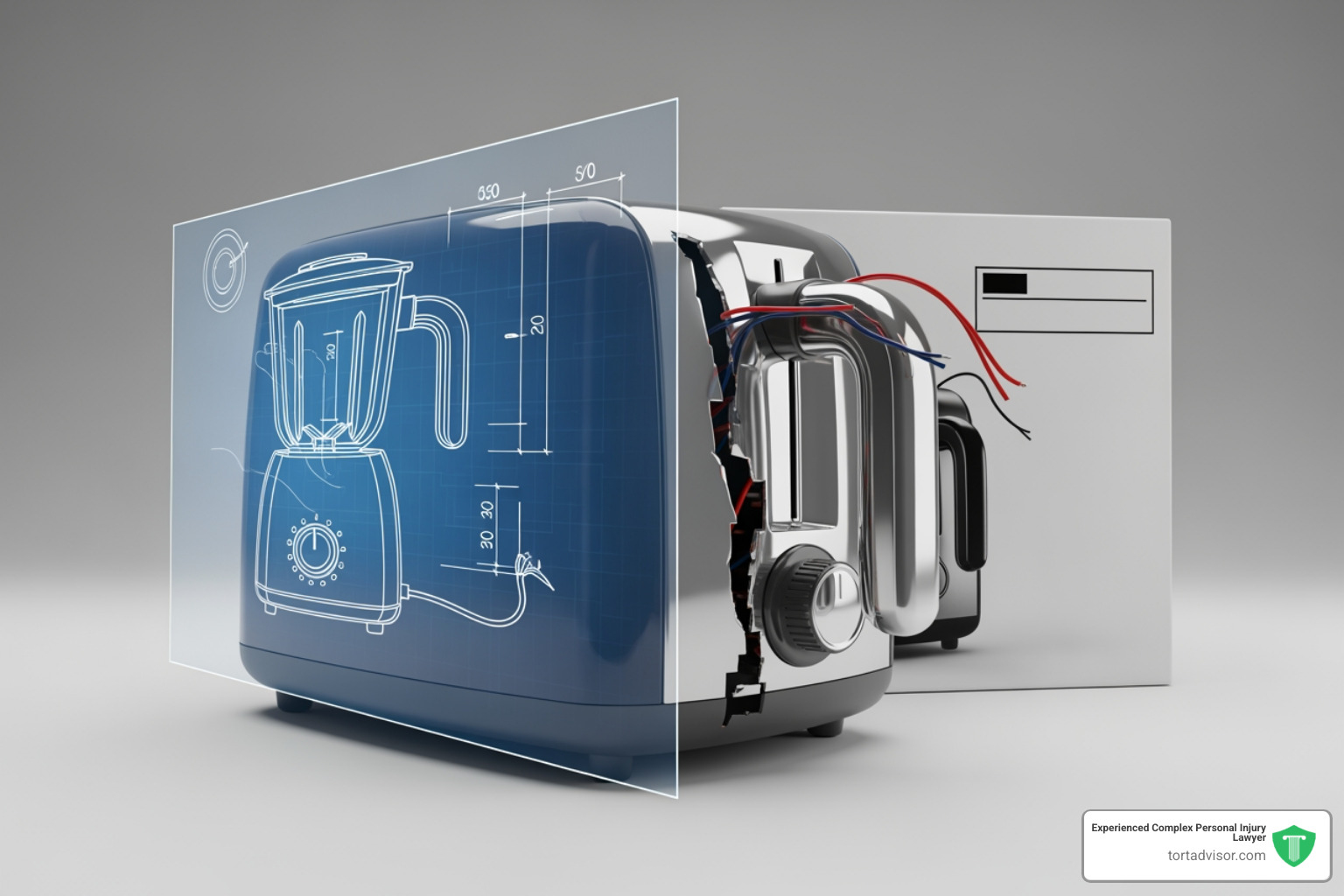
Nearly every product liability injury traces back to one of three kinds of defects, and identifying the right one points to who is responsible.
Design Defects
A design defect is built into the plan for the product, so every unit is dangerous before a single one is made. The Ford Pinto, whose fuel tank placement made it prone to rupture in rear-end crashes, is the textbook example.
Courts usually apply one of two tests. The risk-utility test weighs dangers against benefits and asks whether a safer, practical design was available. The consumer expectation test asks whether the product was more dangerous than an ordinary user would expect. Commentary on the risk-utility trend shows how courts have shifted. Vehicles and medical devices see many design claims, and a dangerous drug attorney can assess whether a medication’s formula was defectively designed.
Manufacturing Defects
A manufacturing defect is a production error. The design is sound, but a particular unit or batch came out wrong because of poor-quality materials, a missing component, faulty assembly or contamination.
What matters is that the product departs from its intended design, which can make these claims easier to prove since the bad unit can be compared with a correct one. Medical equipment is especially prone to these errors, as our Bair Hugger lawsuit guide shows, and they can lead to serious product liability injury claims.
Failure-to-Warn (Marketing) Defects
A marketing defect exists when a company does not give adequate warnings or instructions about risks a user would not notice on their own. Manufacturers must warn about risks they can reasonably foresee.
That includes unclear directions and weak warnings that fail to explain the danger. The well-known McDonald’s coffee case, in which a customer was badly burned by coffee served far hotter than expected, is often cited as an example of a concealed hazard. Even simple products need adequate labels when they carry hidden risks, such as cancer concerns tied to certain chemicals. Our guide to Monsanto Roundup lawsuits shows how warning failures can produce thousands of claims.
How to Build a Product Liability Injury Claim
A strong product liability injury claim needs solid evidence and a clear strategy. Civil cases use the “preponderance of the evidence” standard, meaning the claim must be shown to be more likely true than not. That is easier to meet than the criminal standard, but it still takes convincing proof.
Who Can Be Held Responsible?
Liability can reach anyone in the product’s chain of distribution, so more than one company may have to pay, including:
- Manufacturers that designed and made the product.
- Parts makers that supplied a defective component.
- Distributors and wholesalers that moved it to stores.
- Sellers that sold it to the public.
Naming every responsible party improves the odds of recovering full compensation.
What You Must Prove in a Product Liability Injury Case
Every claim has to establish four basic points:
- A defect existed. The product had a design, manufacturing or warning defect when it left the defendant’s hands.
- You were hurt. There must be real physical injury or property damage.
- The defect caused the harm. The flaw must be directly linked to your injury.
- You had losses. Such as medical bills, missed income and pain and suffering.
Gathering this proof is essential. See what evidence you need to prove your case.
Defenses Companies Commonly Raise
Manufacturers have lawyers whose job is to defeat product liability injury claims. Expect arguments such as:
- Filing deadline: That you sued too late. A separate statute of repose can bar claims a set number of years after the product was first sold, regardless of when you were hurt.
- Alteration: That you changed the product after buying it and the change caused the injury.
- Misuse: That you used the product in a way no one could have expected.
- Comparative fault: That even if a defect existed, your own carelessness contributed, which in many states reduces your recovery by your share of fault.
- Assumption of risk: That you knew about the specific danger and used the product anyway.
What to Do After a Product Injures You
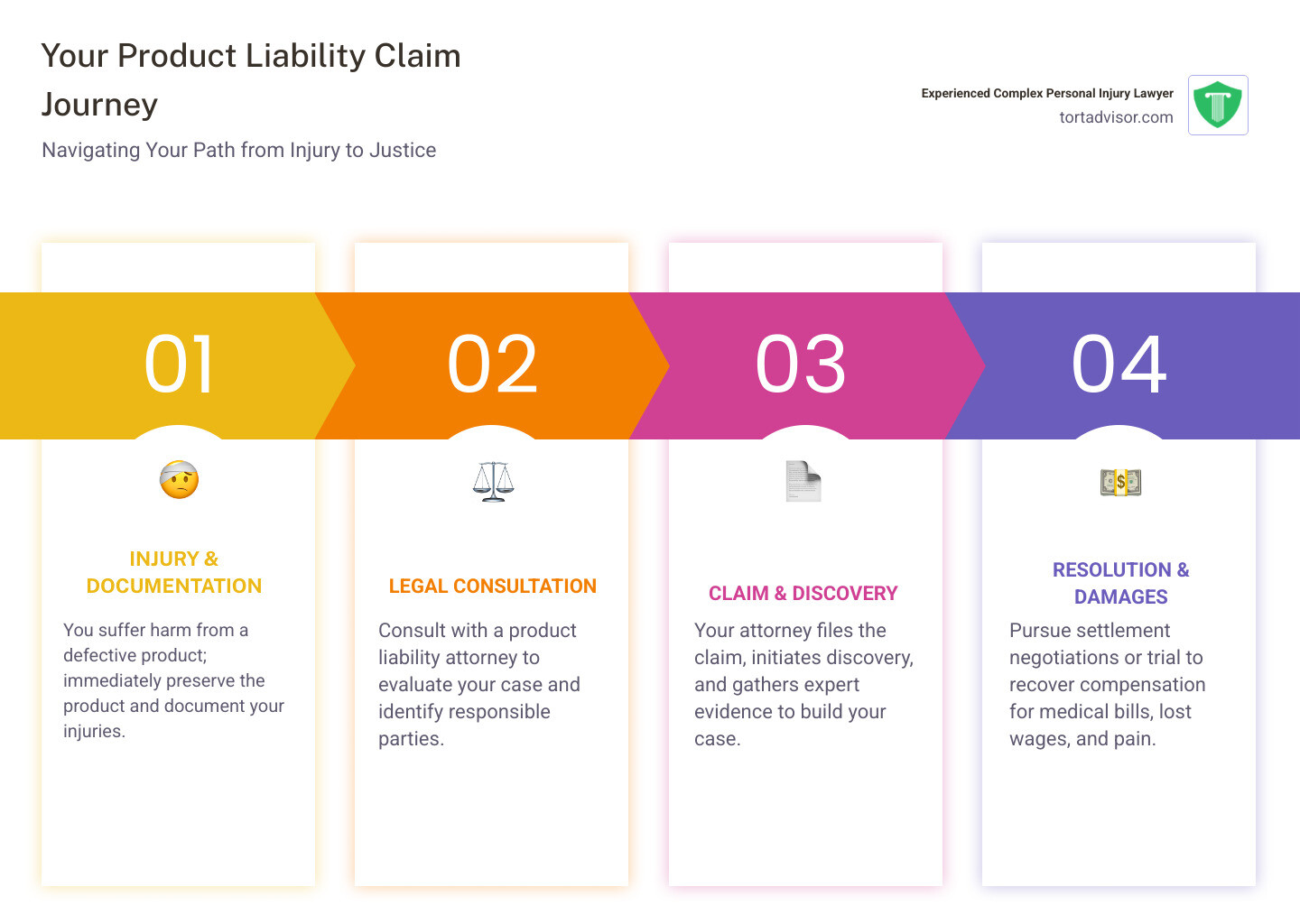
Right after an injury, pain and shock make it hard to think. Yet what you do in the first hours and days can decide whether you recover fair compensation, so protecting your rights starts immediately.

First Steps to Protect Your Claim
Each of these steps lays groundwork for your case, even if you are hurting or scared.
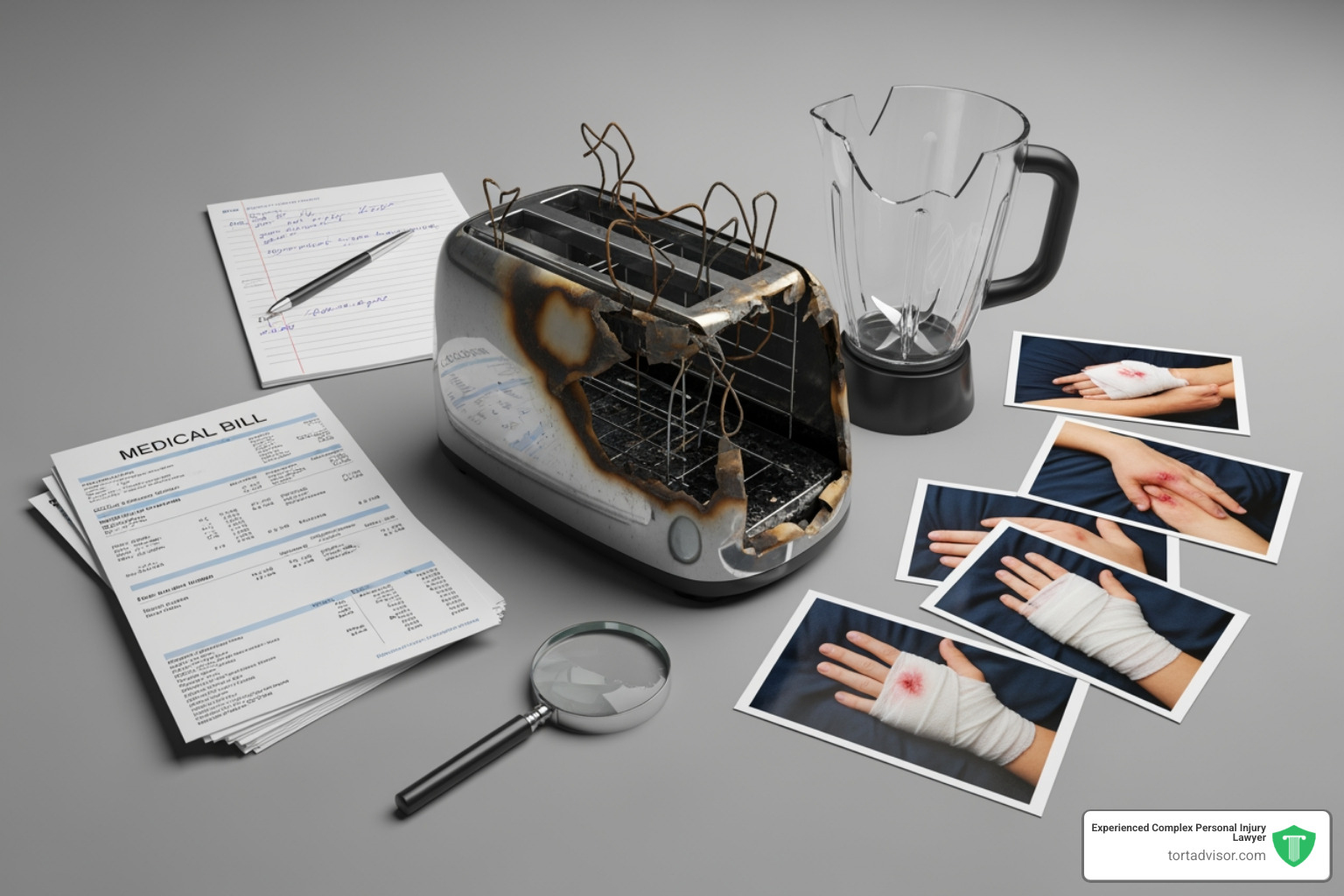
Get medical care right away. Even if the injury seems minor, see a doctor. Some serious injuries take time to show symptoms, and a gap between the incident and treatment gives insurers a reason to argue you were not badly hurt or that something else caused it. Your medical records become the official account of your injuries, so they should start immediately and be complete.
Keep the product. Throwing it away is one of the most common and costly mistakes. It is the central piece of evidence, so do not repair it, clean it or discard it, even if it is burned or broken. Experts can examine it to show exactly what failed. Store it somewhere safe where it will not be damaged further.
Write everything down. Record what you remember while it is fresh: where you were, the time, how you were using the product and what happened next. Save every related document, including medical bills, pharmacy receipts, therapy invoices and even parking stubs from appointments, and keep track of missed workdays and lost pay. These records translate into real value in your claim.
Take photos and video. Photograph your injuries from several angles and keep documenting as they heal or fail to heal. Capture the product from every side, the scene of the incident and any damage to your home or vehicle. Video can show context and scale that still photos miss.
Do not give statements to the company’s insurer on your own. Adjusters may sound sympathetic and ask for a quick recorded statement, but their job is to limit what the company pays, and your words can be used to shrink your claim. Tell them an attorney will be in touch, then speak with one, and never sign anything they send without legal review.
For a step-by-step walkthrough, see our defective product injury attorney guide.
Compensation Available in a Product Liability Claim
Damages in a product liability injury case are meant to restore as much of your life as money can. The law recognizes two broad types of loss, and knowing both shows the full scope of what a claim can include.
Compensatory damages repay you for what the defective product took. Some are easy to total because they come with bills: medical costs from the ambulance and surgery to medication, rehab and future care, and lost income for paychecks missed during recovery, plus reduced earning ability if you cannot return to the same work.
Other losses have no receipt but are just as real. Pain and suffering covers physical pain. Emotional distress covers anxiety, depression or trauma after the injury. Loss of enjoyment of life applies when you can no longer do activities you loved or keep up with your family. And when an injury strains a marriage, a spouse may have a claim for loss of consortium.
When a company’s conduct was especially reckless, such as knowingly selling a dangerous product for profit, a court may also award punitive damages. These punish the wrongdoer rather than compensate the victim. Some states cap them; Florida, for instance, generally limits punitive damages to the greater of three times compensatory damages or $500,000, with exceptions for the most egregious conduct.
Valuing future losses and non-economic harm usually takes expert input, and an attorney will use every available tool to make sure the claim reflects the injury’s full impact. For certain claim types, tools such as our hernia mesh settlement calculator explain the factors that affect value.
How a Product Liability Injury Attorney Helps
Taking on a manufacturer alone puts you at a serious disadvantage. You would be facing a company with deep resources and lawyers whose full-time job is to deny or reduce claims like yours, so having an experienced advocate matters.
It usually starts with a free case evaluation. An attorney listens to what happened, reviews your records and gives an honest view of whether you have a strong claim. Most product liability lawyers work on contingency, so you pay nothing upfront and owe a fee only if money is recovered.
The attorney’s investigation goes far beyond what most people can do alone: preserving evidence properly, obtaining purchase and manufacturing records, searching for prior complaints about the same product, interviewing witnesses and working with experts who can reconstruct the incident.
The right experts often decide these cases. Engineers can take a product apart and explain the failure, design specialists can show a safer alternative existed, and doctors can testify about the extent of your injuries and your outlook. These experts are costly, and contingency-fee attorneys typically advance those costs.
Finding every responsible party takes careful tracing. Was it the maker, a parts supplier, a distributor that stored the product poorly or a seller that ignored known problems? An attorney follows the full chain of commerce so that everyone who shares the blame is held to account.
During negotiation, your attorney deals with the company’s lawyers and insurers so you do not have to. Experienced counsel recognizes lowball offers and should advise settling only when an offer fairly reflects the claim’s full value.
If talks fail, the case may go to trial, where your attorney presents evidence and expert testimony and explains to a jury what you have been through. Courtroom experience matters in these cases.
Product liability cases can take time, and a good attorney-client relationship works like a team. To see what that support looks like, read what a personal injury lawyer can do for you.
Product Liability Claim FAQs
Here are answers to questions people often ask before pursuing a product liability injury claim.
What is the deadline to file a product liability lawsuit?
Act quickly. Every state sets a statute of limitations for these claims, commonly two to three years from the injury or from when you reasonably should have discovered it.
Many states also have a statute of repose, an outer limit often around 10 to 12 years after the product was first sold. Missing either deadline, even by a day, can end your right to compensation, so speak with an attorney promptly. See how long you have to file a lawsuit for more.
Can I still recover if I was partly to blame?
Usually, yes. Most states follow some form of comparative fault, which lowers your award by your share of responsibility. If you were found 20% at fault on a $100,000 award, for example, you would receive $80,000.
Some states, including Florida, use modified comparative fault, which bars recovery if you are more than 50% responsible. A handful still apply contributory negligence, where any fault at all can block recovery. Let an attorney review the facts before assuming you have no case.
What does a product liability lawyer cost?
You generally need no money upfront. Almost all lawyers in this field use a contingency fee arrangement.
This means:
- No payment is due at the start.
- The first consultation is free and carries no obligation.
- The lawyer is paid only if the case produces a settlement or verdict.
The fee is an agreed percentage of what is recovered, and if nothing is recovered you owe no attorney fee. That lets anyone take on a large company regardless of their finances. Learn more in how much a personal injury lawyer costs.
Getting Help With a Product Liability Claim
An injury from a defective product can upend your life, but you have rights, and the law can hold companies responsible for a product liability injury.
These cases are technical and often pit you against companies with large legal teams. Trying to manage a claim while recovering can put a fair outcome at risk.
Timing matters too. Deadlines are strict and evidence can disappear, so acting early is important.
Legal Lawsuit helps by explaining your options in plain language and connecting you with independent attorneys who handle product liability cases against major manufacturers.
Starting is easy. The case review is free and confidential, and attorneys in our network typically work on contingency, so there is no fee unless money is recovered.
A product that should have been safe disrupted your life. With the right attorney, you do not have to face the manufacturer alone.
Visit our guide to defective product attorneys to connect with a lawyer who handles product liability injury cases and can protect your rights.
Related Posts
Quick Answer: The Boy Scouts of America (BSA) filed for Chapter 11 bankruptcy in 2020 after facing tens of thousands [...]
Quick Answer: Survivors of sexual abuse by Catholic priests, nuns, or other Church personnel may be able to file a [...]
Quick Answer: Clergy abuse settlements vary enormously based on the severity of the abuse, the strength of evidence that the [...]