
Short answer: This article explains the key facts, eligibility issues, settlement factors, deadlines, and source-backed updates related to this legal topic. Results vary by case facts, evidence, jurisdiction, and representation.
Why Hiring a Product Safety Attorney May Be Your Smartest Business Move
A product safety attorney is a lawyer who keeps manufacturers, importers, distributors, and retailers on the right side of consumer product safety law, and who defends them if a problem surfaces.
At a glance, here is what that work covers:
| Typical Responsibilities | Examples |
|---|---|
| Regulatory compliance | Testing, certification, labeling, and CPSC reporting |
| Product recalls | Managing both voluntary and mandatory recalls |
| Government investigations | Answering CPSC civil penalty inquiries |
| Warnings and labels | Writing clear, legally sound product instructions |
| Emerging hazards | Lithium-ion batteries, PFAS chemicals, Reese’s Law |
| International imports | Cross-border recalls, Health Canada, customs holds |
Pressure on consumer product companies has never been higher. Over roughly the last ten years, a string of well-publicized recalls prompted Congress to enact broad new laws that raised safety standards. Mistakes can bring civil penalties, expensive recalls, and lasting harm to a brand.
Large manufacturer or small shop, working through the Consumer Product Safety Commission (CPSC) and its many rules is not a job to take on without help.
I’m Mason Arnao, a technology entrepreneur and internet marketer who has spent more than 15 years helping businesses make sense of complicated legal and regulatory subjects online, including how a product safety attorney shields companies from expensive compliance mistakes. My work in data systems and lead generation shapes how I turn heavy legal material into plain, practical guidance for both business owners and consumers.
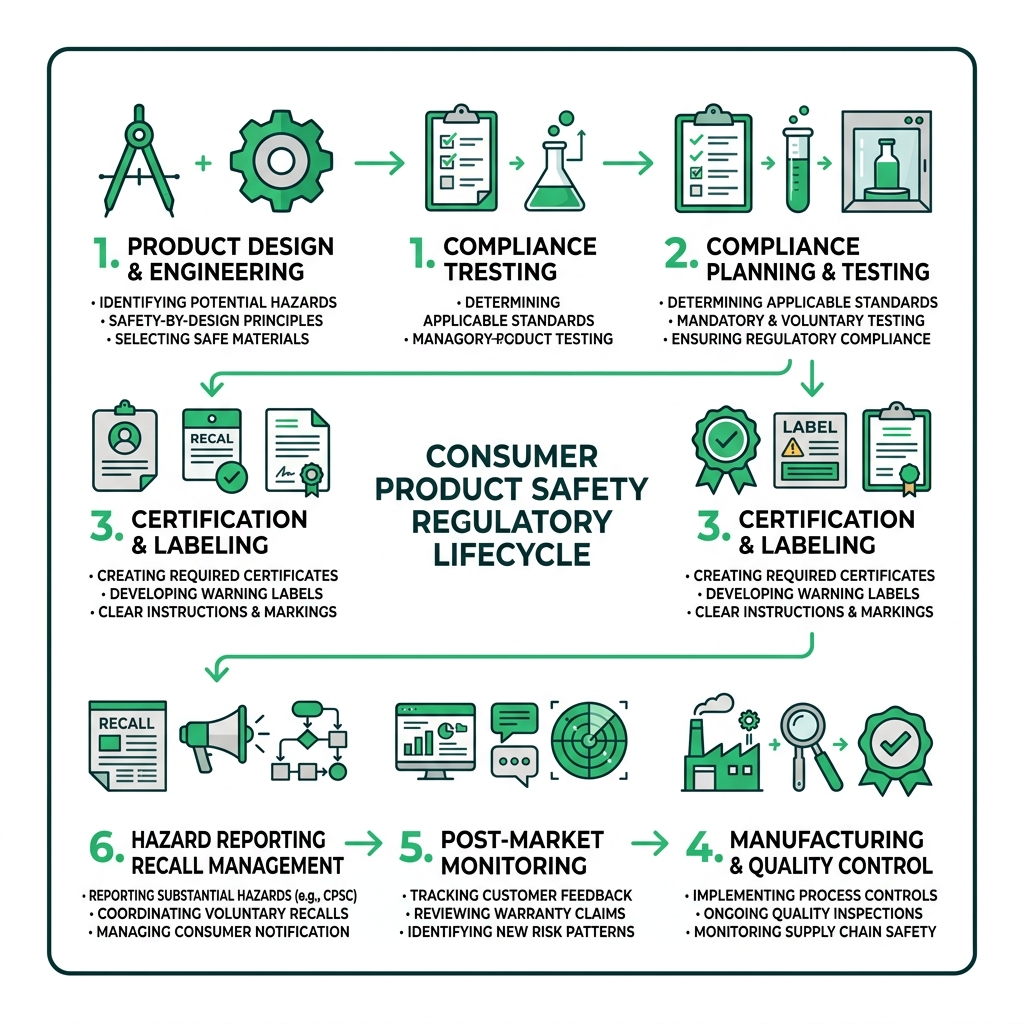
Related product safety attorney topics:
How a Product Safety Attorney Reduces Risk
With consumer goods, preventing a problem costs far less than defending a lawsuit. Too many companies wait until a federal investigator shows up before calling a lawyer. A product safety attorney works ahead of trouble, helping catch hazards before a product lands in a family’s kitchen or a child’s bedroom.
A handful of major laws set the rules. The Consumer Product Safety Act (CPSA) carries the most weight, joined by the Federal Hazardous Substances Act (FHSA) and the Poison Prevention Packaging Act (PPPA). If all those acronyms feel overwhelming, that reaction is completely fair.
A core responsibility is handling Section 15(b) of the CPSA, which requires companies to promptly report possible safety hazards. Missing the CPSC’s tight reporting windows on your own product can trigger civil penalties in the millions. The aim is a true compliance culture, with safety built into every stage of a product’s life. To see what happens when this goes wrong, read our Product Injury Lawyer Complete Guide.

Compliance Reviews and Staff Training
A compliance audit is essentially a checkup for your company. Regular reviews of factories and internal processes are a smart habit. The point isn’t paperwork; it’s making sure engineers, marketing staff, and executives share the same understanding of safety.
Typical tasks for a product safety attorney include:
- Building company-wide compliance programs.
- Auditing manufacturing sites worldwide, sometimes across several continents.
- Training employees so they know the exact steps to take when an incident report arrives.
- Setting E-Discovery protocols so safety records and communications are kept and organized correctly.
Warnings, Labels, and Product Instructions
Hair dryers carry “Do Not Use in Bathtub” warnings for a reason. Obvious as they seem, labels like that usually reflect careful legal review. A product safety attorney checks warnings, labels, and instructions against FHSA and PPPA requirements.
Marketing defects, such as not warning about a hidden danger, are among the top drivers of lawsuits. An attorney can help write instructions and warranty terms that protect users and reduce exposure. That step helps head off Product Liability Personal Injury claims that can grow out of a single gap in a user manual.
Handling CPSC Investigations and Recalls
Once the CPSC gets involved, time matters. A “timeliness inquiry” asking why a defect wasn’t reported sooner and a formal civil penalty investigation both carry serious consequences.
Responding to Federal Investigations
A CPSC letter about a possible hazard calls for a precise, careful response. A product safety attorney typically helps with:
- Answering incident reports and Section 15(b) inquiries.
- Managing Freedom of Information Act (FOIA) requests so confidential business details aren’t disclosed to competitors or the public.
- Negotiating with agency staff toward a good result.
Leadership matters too. Who heads the U.S. Consumer Product Safety Commission can shift the regulatory climate businesses operate in.
Recalls and Corrective Action Plans
A recall hurts any brand, but it doesn’t have to end one. Plenty of companies use the CPSC’s Fast Track Program, a faster voluntary recall route that offers certain procedural advantages. A product safety attorney manages these corrective action plans, makes sure the recall actually works, and watches national recall lists to see how similar problems are being handled. For the practical side, see our Defective Product Lawyer Guide.
Imports and International Product Safety
Global supply chains mean your products probably cross borders, and that adds another layer of complexity.
- Customs holds: When the CPSC suspects a shipment falls short of safety standards, it can stop it at the port. An attorney can work to get it released.
- International alignment: Counsel can advise on meeting Health Canada, EU, and Asian requirements so products move smoothly between markets.
- Updated cosmetics rules: The Modernization of Cosmetics Regulation Act (MoCRA) adds facility listing requirements. Keeping ahead of these changes is important, as recent regulatory updates on facility listing and cosmetic registration show.
What to Look for in Legal Counsel
Lawyers differ widely. When choosing a product safety attorney, a law degree is only the starting point; you want someone who understands how products are designed and made.
Compliance Defense vs. Injury Claims
Know which side of a case a lawyer works on. Both matter, but the jobs are quite different:
| Feature | Defense/Compliance Attorney | Plaintiff (Injury) Attorney |
|---|---|---|
| Primary Goal | Avoid lawsuits and stay compliant with regulations. | Win compensation for people hurt by products. |
| Client Base | Importers, retailers, and manufacturers. | Injured people and their families. |
| Key Skill | Working through CPSC, FDA, and NHTSA rules. | Going to court and proving a defect. |
| Typical Fee | Hourly rate or retainer. | Contingency (a share of any recovery). |
If a product injured you, the lawyers described in our guide to Attorneys for Defective Products are the right fit.
Why a Product Safety Attorney’s Experience Counts
Attorneys with government-side experience are worth seeking out. Former CPSC Commissioners, senior lawyers from the Office of Compliance, or a former Small Business Ombudsman understand how agency staff think and what they focus on during an investigation. That inside knowledge, carried into private practice, can be a major advantage in negotiations.
Industry-Specific Expertise
Safety rules vary by product. A lawyer who knows household appliances well may not be ideal for children’s products, which face some of the toughest standards anywhere. Look for counsel experienced in:
- Micromobility: scooters and e-bikes.
- Products for infants: for example, the first federal safety standards for infant nursing pillows.
- Electronics and power tools: fire hazards and UL standards.
Keeping Up With New Hazards and Regulations
Technology moves quickly and the law races to catch up. A strong product safety attorney tracks emerging litigation trends before they become crises.
Lithium-Ion Batteries and PFAS: How a Product Safety Attorney Helps
Right now, two issues dominate compliance worries: PFAS and lithium-ion batteries.
- Lithium-ion batteries: They power everything from lawnmowers to phones. Their fire risk has the CPSC stepping up enforcement, and anyone selling tech products should follow recent legislative activity on these batteries closely.
- PFAS (“forever chemicals”): These turn up in thousands of products. With bans spreading quickly and research tying them to reproductive harm, companies need a plan for chemical disclosure. The issue often overlaps with toxic tort work like that handled by a Paraquat Lawsuit Attorney.
- Reese’s Law: This law guards children against swallowing button cell batteries. Products that use them must meet UL 4200A standards now.
Digital Products and Today’s Standards
Product safety now reaches well beyond physical goods into the digital space.
- Kids Online Safety Act (KOSA): Shapes how online platforms deal with minors.
- Internet of Things (IoT): Connected smart devices create fresh risks if they fail or get hacked.
- Viral social media problems: If a product spreads online for dangerous reasons, such as a risky TikTok challenge, a product safety attorney helps handle the fallout and the CPSC response. Recent cases involving social media platforms show how fast these situations can grow.
Product Safety Attorney FAQs
How does product safety differ from product liability?
Product safety centers on regulation and prevention, keeping a product safe before it’s sold. Product liability centers on litigation and compensation after someone is injured. A product safety attorney generally works on the first to avoid the second.
What does a product safety attorney cost?
Businesses seeking compliance or defense help usually pay hourly or a monthly retainer. Injured consumers typically hire on contingency, so the lawyer is paid only if the case succeeds.
When must a company tell the CPSC about a defect?
The CPSC expects a report within 24 hours of getting information that reasonably supports a conclusion that a product has a defect that could create a substantial hazard, or that it creates an unreasonable risk of serious injury or death. That standard is demanding and the window is short, so having counsel ready to call is critical.
Conclusion
Ultimately, bringing on a product safety attorney protects two assets: the people who buy your products and your company’s good name. A strong regulatory plan focused on avoiding litigation helps your business succeed in a crowded, complicated market.
Port detention, CPSC inquiry, or simply wanting airtight labels on a new product, the right lawyer changes the outcome. Legal Lawsuit helps businesses and individuals find experienced attorneys who can guide them through these issues.
If a defective product hurt you, act promptly. Talk With Experienced Defective Product Lawyers to learn your options and protect your rights. Attorneys in our network serve New York, Chicago, Florida, California, and communities nationwide, and a free, confidential case review is the first step.
Additional Resources
Related Posts
Quick Answer: The Boy Scouts of America (BSA) filed for Chapter 11 bankruptcy in 2020 after facing tens of thousands [...]
Quick Answer: Survivors of sexual abuse by Catholic priests, nuns, or other Church personnel may be able to file a [...]
Quick Answer: Clergy abuse settlements vary enormously based on the severity of the abuse, the strength of evidence that the [...]