

Short answer: This article explains the key facts, eligibility issues, settlement factors, deadlines, and source-backed updates related to this legal topic. Results vary by case facts, evidence, jurisdiction, and representation.
In This Guide
What Can a Personal Injury Lawyer Do After an Accident?
What can a personal injury lawyer do for you after a serious accident? Here is the short answer:
A personal injury attorney can:
- Look into what happened and collect key evidence
- Figure out what your claim is really worth, future costs included
- Handle the legal process and hit every important deadline
- Deal with insurers and push for full compensation
- Take your case to court when a fair settlement is not offered
- Charge on contingency – no fee unless money is recovered for you
A car crash, a slip and fall or an accident at work can upend your life in seconds. What follows can feel crushing: medical bills, missed paychecks and ongoing pain. Insurers have entire teams devoted to keeping payouts low, which puts you at a real disadvantage if you deal with them by yourself.
An experienced personal injury lawyer evens the odds by protecting your rights and pressing for the compensation you are owed. Research has suggested that people who hire a lawyer tend to recover more than those who do not.
I’m Mason Arnao. Working in technology and business operations, I have watched complicated systems overwhelm people who lack good guidance. The legal process after an accident is no different, which is why it helps to understand what a personal injury lawyer can do for you. Experience has taught me how much a capable advocate matters when the process gets complicated.
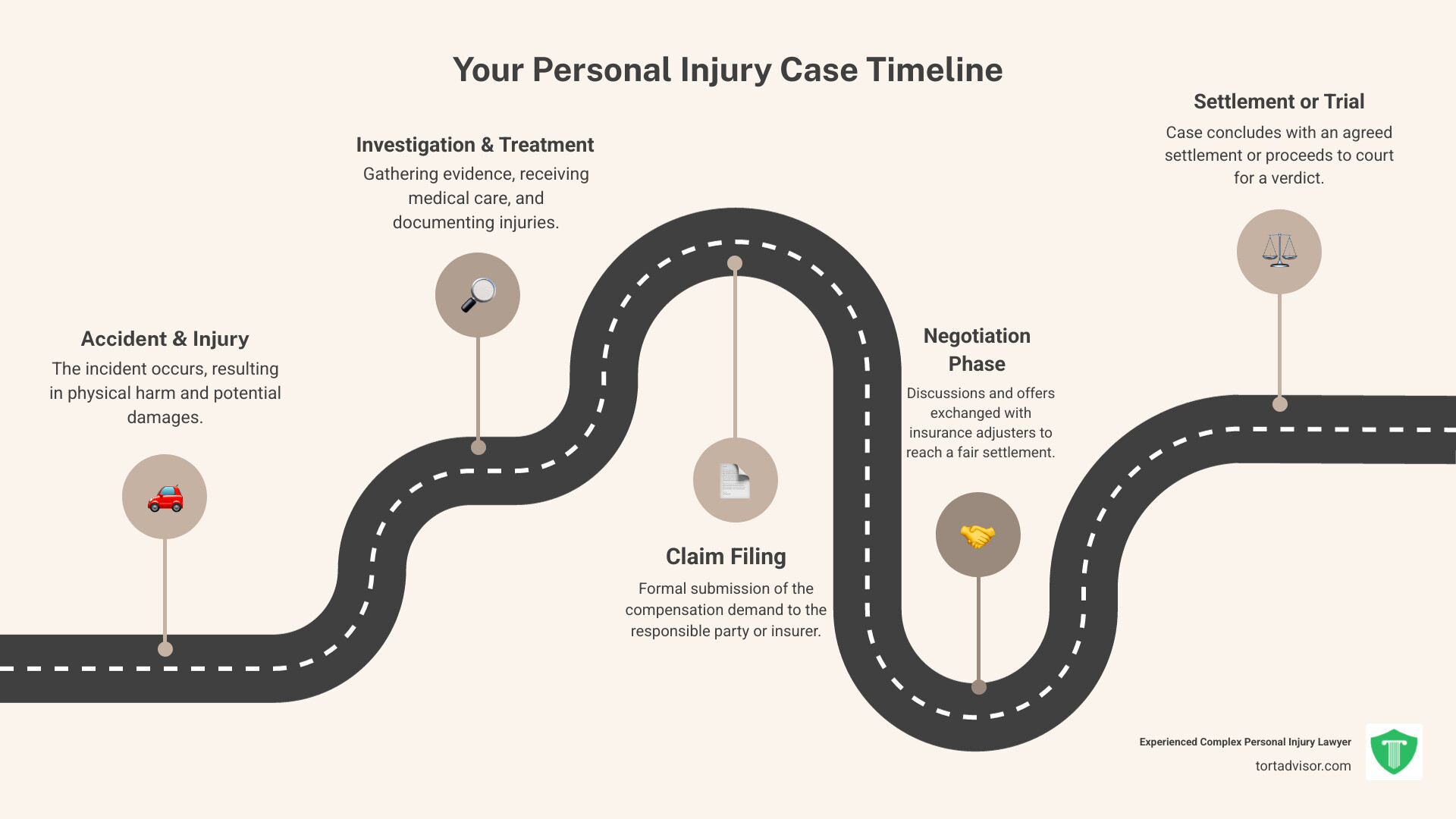
Related reading on what a personal injury lawyer can do:
- How to find a good personal injury lawyer
- How much does a personal injury lawyer cost
- How to talk to a personal injury lawyer
What a Personal Injury Lawyer’s Job Actually Is
If someone else’s conduct injured you, it is natural to ask what a personal injury lawyer can do. The answer starts with personal injury law, also known as tort law, which is designed to protect people who are harmed.
This area of law offers legal representation for injured people by sorting out who caused the injury and what compensation is owed. A personal injury lawyer acts as your advocate, protecting your rights and pursuing the money you are entitled to.
Most personal injury claims rest on one of two theories: negligence or intentional harm.
Negligence is the basis for most claims. It applies when someone is hurt because another person or business did not take reasonable care. If a store leaves a spill it knew about and you fall, that failure to act is negligence. This guide to negligence explains the concept in more detail.
Intentional harm covers injuries caused on purpose, such as pushing someone so hard they break a leg. These cases, called intentional torts, are less frequent but just as serious. Read more about what an intentional tort is.
In either type of case, the attorney’s aim is to prove fault and establish legal liability so the person or company responsible pays for your losses.
Types of Cases Personal Injury Lawyers Handle
Personal injury law reaches many kinds of incidents. These are among the most common:

Car accident claims frequently involve tangled insurance issues, disputes over who was at fault and complicated damage figures. A lawyer makes sure every cost, from the ambulance ride to physical therapy, is counted.
Slip and fall claims fall under premises liability, when an owner does not keep property reasonably safe. An attorney digs into why you fell to show the owner was negligent.
Medical malpractice happens when a provider’s care falls below accepted standards and causes harm. Proving negligence and causation in these cases takes both medical and legal know-how.
Work injuries may involve workers’ compensation as well as lawsuits against third parties. Construction accidents are especially complicated, as the Construction Injury Lawyer Ultimate Guide explains.
Defective product claims hold manufacturers and sellers responsible for injuries caused by faulty goods by showing the product was dangerously designed or made.
Brain injury claims often involve lifelong care needs, so attorneys seek compensation for both present and future costs. See the Brain Injury Attorneys Near Me resource for focused guidance.
Wrongful death claims arise from heartbreaking losses. Attorneys help families whose loved one died because of negligence pursue accountability and compensation for funeral expenses, lost income and their grief.
Lawyers also take on specialized matters such as mass torts involving widespread harm. The Water Contamination Lawsuit Attorney page covers claims arising from environmental negligence.
Whatever happened, the goal is thorough representation and full compensation for everything you have lost.
Want a quick number? Try the 60-second personal injury settlement calculator for an instant estimate.
What Can a Personal Injury Lawyer Do for You? Step by Step
Filing a claim after you are hurt can seem intimidating. A personal injury lawyer takes over the whole process, bringing legal skill and dedicated advocacy. They protect your rights, balance the power gap with insurers and work to get you as much as the law allows. The guide Do I Need a Personal Injury Lawyer? can help you decide.
Here is how the process usually unfolds.
Step 1: Investigating the Accident and Gathering Evidence
Strong claims rest on careful investigation, and this is one of the clearest ways a lawyer adds value. Think of the attorney as a detective collecting every piece of information that supports your case.

An investigation typically covers:
- Police Reports: Reviewing the report for findings on fault, contributing causes and officers’ first impressions.
- Witness Accounts: Tracking down and interviewing witnesses who back up your version of events, and using tools such as subpoenas for evidence to obtain statements and video.
- Medical Records: Gathering your records to show how badly you were hurt and tie those injuries directly to the accident.
- Expert Witnesses: Bringing in specialists such as accident reconstructionists, physicians and economists whose opinions strengthen the claim.
- Reconstruction: In serious crashes, reconstruction experts use scientific methods to show how the collision happened.
- Saving Evidence: Moving fast to secure surveillance video, maintenance logs and similar proof before it disappears.
A well-resourced legal team can investigate thoroughly so nothing important is missed.
Step 2: Putting an Accurate Value on Your Claim
Undervaluing a claim is a frequent and costly error. An attorney accounts for every category of damages so you do not accept less than the case is worth.
Damages fall into two broad groups:
- Economic Damages: Concrete financial losses, counting both current bills and future costs, such as:
- Medical Costs, Past and Future
- Lost Pay and Reduced Earning Ability
- Property Damage
- Non-Economic Damages: Losses that are harder to put a price on but often make up a large share of a recovery. Lawyers use recognized legal methods to value them, as described in this guide on calculating non-economic damages. They include:
- Physical Pain and Suffering
- Emotional Distress
- Loss of Companionship (Consortium)
- Reduced Quality of Life
Your attorney works with you and with experts to document every loss and build the strongest possible valuation.
Step 3: Managing the Legal Process From Start to Finish
Court rules and procedures are complicated. One of the most practical things a personal injury lawyer does is guide you through every procedural step.
That work includes:
- Preparing Filings: Drafting everything from demand letters to court pleadings and filing it correctly to prevent delays or dismissal.
- Tracking Deadlines: Watching every deadline, especially the statute of limitations, the cutoff for filing suit. Miss it and your claim may be barred. Read statutes of limitations explained.
- Litigation Steps: Getting each case ready as though it will be tried, including discovery, depositions and pretrial conferences.
- Handling Communication: Serving as your one point of contact with insurers, defense lawyers and medical providers, which keeps pressure off you while you recover. See How to Talk to a Personal Injury Lawyer: Tips.
Negotiating for the Compensation You Deserve
Insurance companies are businesses that profit by paying less. Their adjusters and attorneys work to shrink what they owe and may use your financial strain and stress to their advantage.
This is where a lawyer shifts the balance. Insurers tend to take a represented claim more seriously because they know the attorney understands their playbook, will reject lowball offers and is ready to go to court.

Experience matters at the bargaining table. A seasoned attorney spots common insurer tactics, like pushing a quick settlement, shifting blame to you or making insultingly low offers.
The strategy is deliberate. When a lowball offer arrives, the lawyer responds with a full demand package: the evidence, expert opinions, detailed damage figures and a clear account of how the accident changed your life.
A credible threat of litigation is real leverage. Trials are costly and uncertain for insurance companies, and the chance of a large jury verdict often makes them more reasonable, particularly when they believe your attorney will actually go to trial.
The large majority of claims end in out-of-court settlements, often estimated at more than 90%. Settling usually means faster payment and less stress, and experienced attorneys know how to reach a fair figure without drawn-out proceedings.
Good lawyers still negotiate from strength. Preparing each case for trial from the outset makes their bargaining position stronger and keeps them ready if trial becomes necessary.
When talks break down, the attorney can provide courtroom representation, presenting your case to a judge and jury and pursuing every dollar you are owed. Skilled advocacy can make a meaningful difference in the outcome, and you should not have to go up against professional insurance negotiators while you are still healing.
How Personal Injury Lawyers Get Paid
“How can I pay a lawyer when I can hardly cover my medical bills?” Worry about cost keeps many injured people from getting help. Fortunately, the way personal injury lawyers are paid makes good representation available no matter what your finances look like.
Most personal injury attorneys charge a contingency fee, so there is nothing to pay upfront. The firm typically advances the early costs of investigating and building the claim.
The arrangement is straightforward: the lawyer is paid only if you recover money. If there is no settlement or favorable verdict, you owe no attorney fee, which ties the lawyer’s interests to yours.
When a case succeeds, the fee is a share of the settlement or award, often about one-third. The ABA’s guidance on contingency fees explains these agreements in more depth.
Know the difference between attorney fees and case costs. Even with a contingency fee, expenses such as filing fees, expert fees and investigation costs can come up. A trustworthy attorney will be fully transparent about how those costs are handled before work begins.
Contingency fees make legal help financially accessible and level the field, giving you strong representation against big insurers without hourly bills, so you can concentrate on getting better.
For a complete look at fees and costs, read How Much Does a Personal Injury Lawyer Cost?.
Hiring a Personal Injury Lawyer: FAQs
Feeling flooded with questions after an accident is completely normal. Below are answers to the ones injured people ask most.
When should I hire a personal injury lawyer?
As soon as possible after the accident. Evidence can vanish and memories fade quickly. Reach out to a lawyer right away if you are badly hurt, fault is disputed or an insurer is giving you trouble.
In those early days, an attorney can lock down evidence, talk to witnesses and keep you from making costly missteps. Adjusters often call quickly looking for statements that can be used against you, and letting a lawyer handle those conversations from day one helps protect your compensation.
Will my case end up in court?
Probably not. Most personal injury claims settle without a trial, often estimated at more than 90%, because trials are costly and unpredictable for both sides.
Even so, a good personal injury lawyer prepares every case as if it will be tried. That gives real leverage in negotiations, since the insurer knows the attorney is ready for court, and if a fair offer never comes, your lawyer can take the case before a judge and jury.
Will I recover more with a lawyer?
Often, yes. Research has suggested that represented claimants tend to receive larger settlements than people who handle claims on their own. Adjusters are trained negotiators whose job is to save their company money, and they understand what your claim is worth even if you do not.
A personal injury lawyer closes that knowledge gap. They calculate the full value of the claim, including harder-to-measure losses like future treatment, lost earning capacity and pain and suffering, and they know how to answer the tactics insurers use to cut payouts, all while you focus on healing.
The key takeaway: you do not have to handle this by yourself. Legal Lawsuit offers a free, confidential case review and can connect you with experienced attorneys in our network who know exactly what a personal injury lawyer can do and are ready to pursue the compensation you deserve.
You Don’t Have to Handle This Alone
Following a serious injury, you should not have to juggle growing bills, lost income and legal fights on your own. The real answer to what a personal injury lawyer can do is simple: serve as your strongest advocate, bringing the expertise needed to stand up to insurance companies.
Representation can lead to better compensation, and it also brings less stress and peace of mind so you can concentrate on recovery. Your attorney handles the details, from negotiations through trial preparation.
Putting your recovery first is easier when a professional is protecting your interests. A lawyer tracks deadlines, pushes back on lowball offers and helps you avoid expensive mistakes, so you can focus on getting well.
Legal Lawsuit knows how much it matters to find the right attorney. That is why Legal Lawsuit connects injured people with experienced attorneys in our network who focus on personal injury law, so you can get strong representation through a free, confidential case review.
Recovery does not have to be a fight you take on alone. Find an attorney for your case who will stand with you, advocate for you and help you move forward.
Want to learn more? See how a personal injury lawyer can help with your claim and take the first step toward the compensation and peace of mind you deserve.
Related Posts
Quick Answer: The Boy Scouts of America (BSA) filed for Chapter 11 bankruptcy in 2020 after facing tens of thousands [...]
Quick Answer: Survivors of sexual abuse by Catholic priests, nuns, or other Church personnel may be able to file a [...]
Quick Answer: Clergy abuse settlements vary enormously based on the severity of the abuse, the strength of evidence that the [...]

