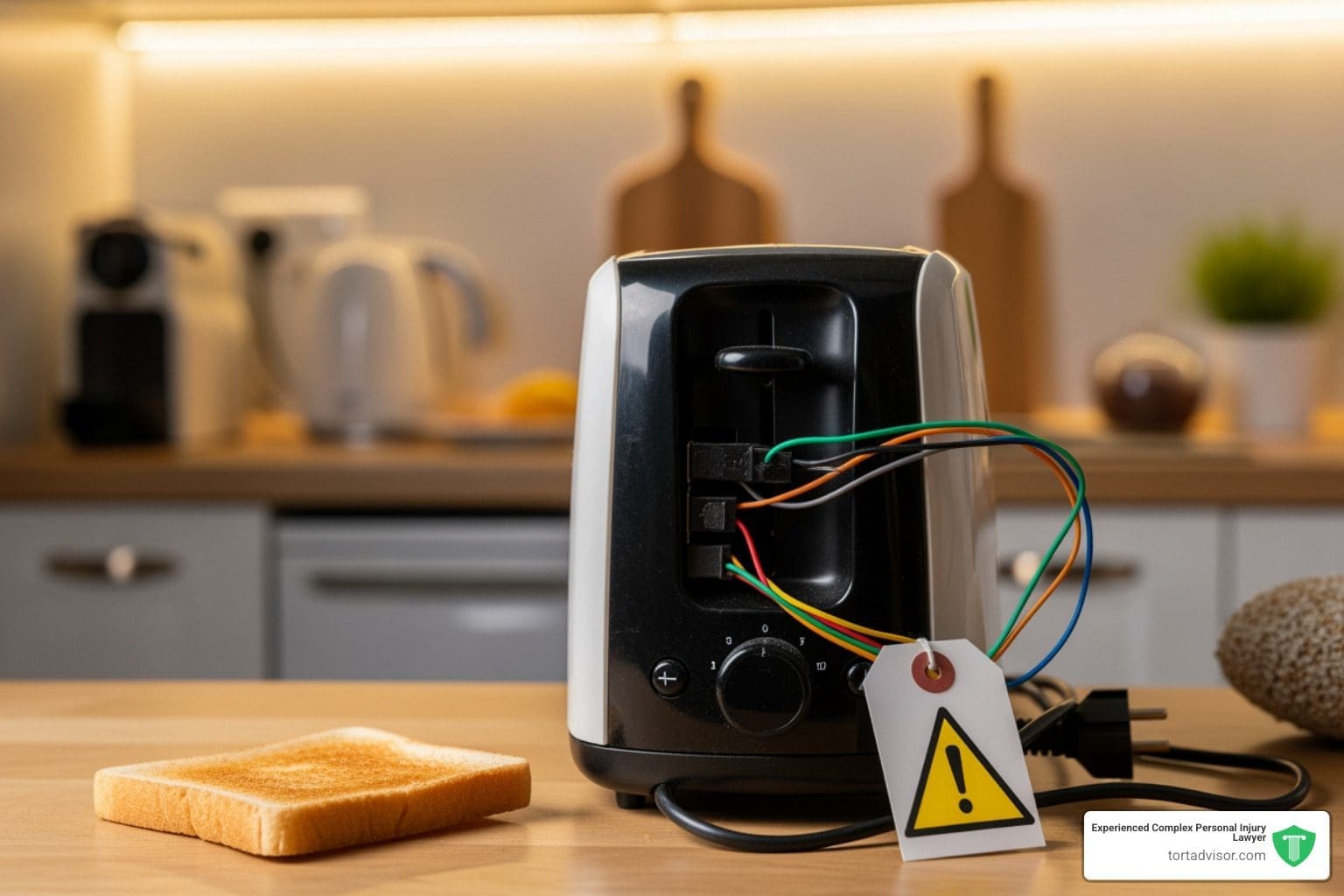
Short answer: This article explains the key facts, eligibility issues, settlement factors, deadlines, and source-backed updates related to this legal topic. Results vary by case facts, evidence, jurisdiction, and representation.
In This Guide
Product Injury Claim Basics: Your Options When a Product Hurts You
Understanding product injury claim basics starts with knowing what a product injury lawyer does: this attorney focuses on helping people hurt by dangerous or defective goods recover compensation from the manufacturers, distributors and retailers responsible for design flaws, production mistakes or missing safety warnings.
Key takeaways:
- No Win, No Fee: You typically owe nothing unless money is recovered.
- Several Possible Defendants: Makers, designers, distributors and stores may all share responsibility.
- Strict Liability: In many cases you must show only that the product was defective and caused harm, not that the company was careless.
- Filing Deadlines: Every state sets a firm time limit, such as two years in California.
Frequent culprits include vehicle parts, medical devices, children’s toys and home appliances.
Buyers reasonably expect the products they purchase to be safe, yet unsafe products injure and kill large numbers of people in the United States every year. Product liability law protects consumers by making manufacturers and sellers answer for harm their products cause, and these claims call for specialized legal knowledge.
Below, Legal Lawsuit explains what product injury lawyers do, how cases are built, who can be liable and what compensation may be available.
How Product Liability Law Works
Product liability law is the body of rules that holds businesses responsible when their products hurt people. Manufacturers, distributors and retailers can be liable for injuries caused by defective goods. If the blade of a brand-new blender breaks loose and cuts you, for example, this area of law gives you a way to make the responsible companies pay your medical bills and other losses, and it pushes companies to make everyday products safe for normal use.
To go further, you can read more about how state laws treat manufacturing and design defects.
Strict Liability vs. Negligence in Product Injury Claims
Most product claims rely on one of two legal theories: strict liability or negligence.
Strict liability tends to favor injured consumers. You do not have to show the manufacturer was careless, only that the product was defective and that defect caused your injury. The question is the condition of the product, not how the company behaved. California and many other states apply strict liability to defective product cases, which helps balance the scales between individuals and big corporations.
Negligence means showing the manufacturer or seller did not use reasonable care and that this failure injured you. A company that knew about a choking hazard but never recalled the product may have been negligent. You must show the company owed consumers a duty of safety, breached it and caused your injury and losses. A product injury lawyer can decide which theory fits your case best.
| Feature | Strict Liability | Negligence |
|---|---|---|
| Must You Prove Fault? | No – the defect itself is the focus | Yes – you must show the defendant was careless |
| Focus | The product and what made it defective | How the defendant acted and how it failed its duty of care |
| Causation | The defect led directly to the injury | The breach led directly to the injury |
| How Hard to Prove | Usually easier for the injured person | Often harder, since careless conduct must be shown |
Breach of Warranty Claims
A third route is breach of warranty, meaning the seller broke a promise about how the product would perform or its quality.
- Express Warranties: Explicit promises in ads or on the box. A ladder sold as holding 300 pounds that buckles under 200 breaches an express warranty.
- Implied Warranties: Guarantees the law reads into a sale. The “implied warranty of merchantability” means a product must work for its ordinary use (a coffee maker should not start a fire), and the “implied warranty of fitness for a particular purpose” applies when a seller recommends a product for a specific use you described.
If a product that falls short of these warranties injures you, you may have a claim. Defective product attorneys can explain your rights, and Legal Lawsuit can connect you with attorneys in our network who handle these cases.
Who Is Liable and the Most Common Product Defects
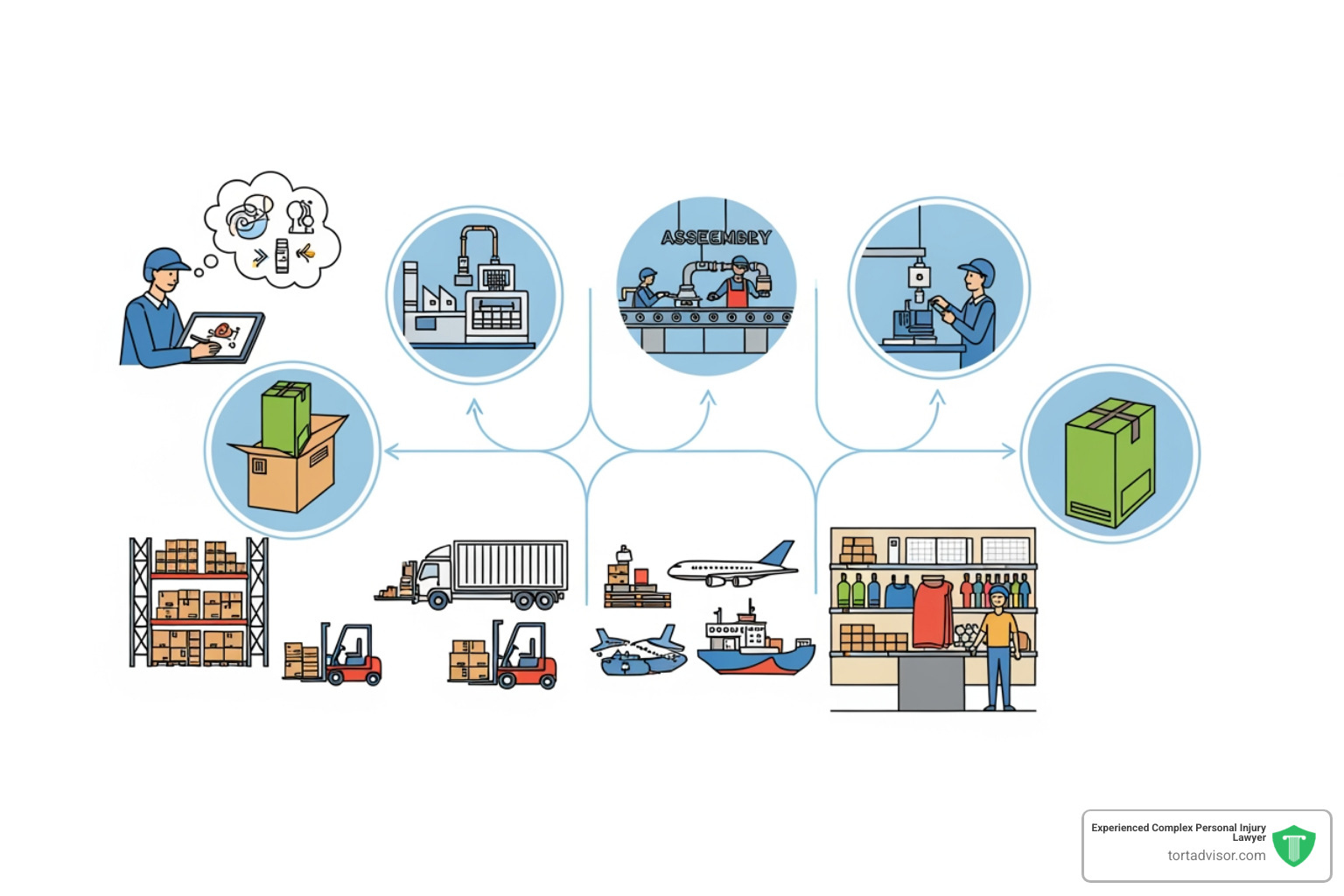
Responsibility for a defective product can reach past the manufacturer to anyone in the “chain of distribution,” so the various businesses that handled a product before you bought it can be held accountable for its safety.
Who Can Be Responsible for a Dangerous Product?
A product injury lawyer looks at every company that played a role in getting the product into your hands, including:
- Designers: When the design itself was flawed.
- Manufacturers: Both the final assembler and the makers of component parts.
- Distributors and Wholesalers: Businesses that move goods from factories to stores.
- Retailers: The store that sold the item.
- Hospitals or Physicians: When they supplied or recommended a defective medical device.
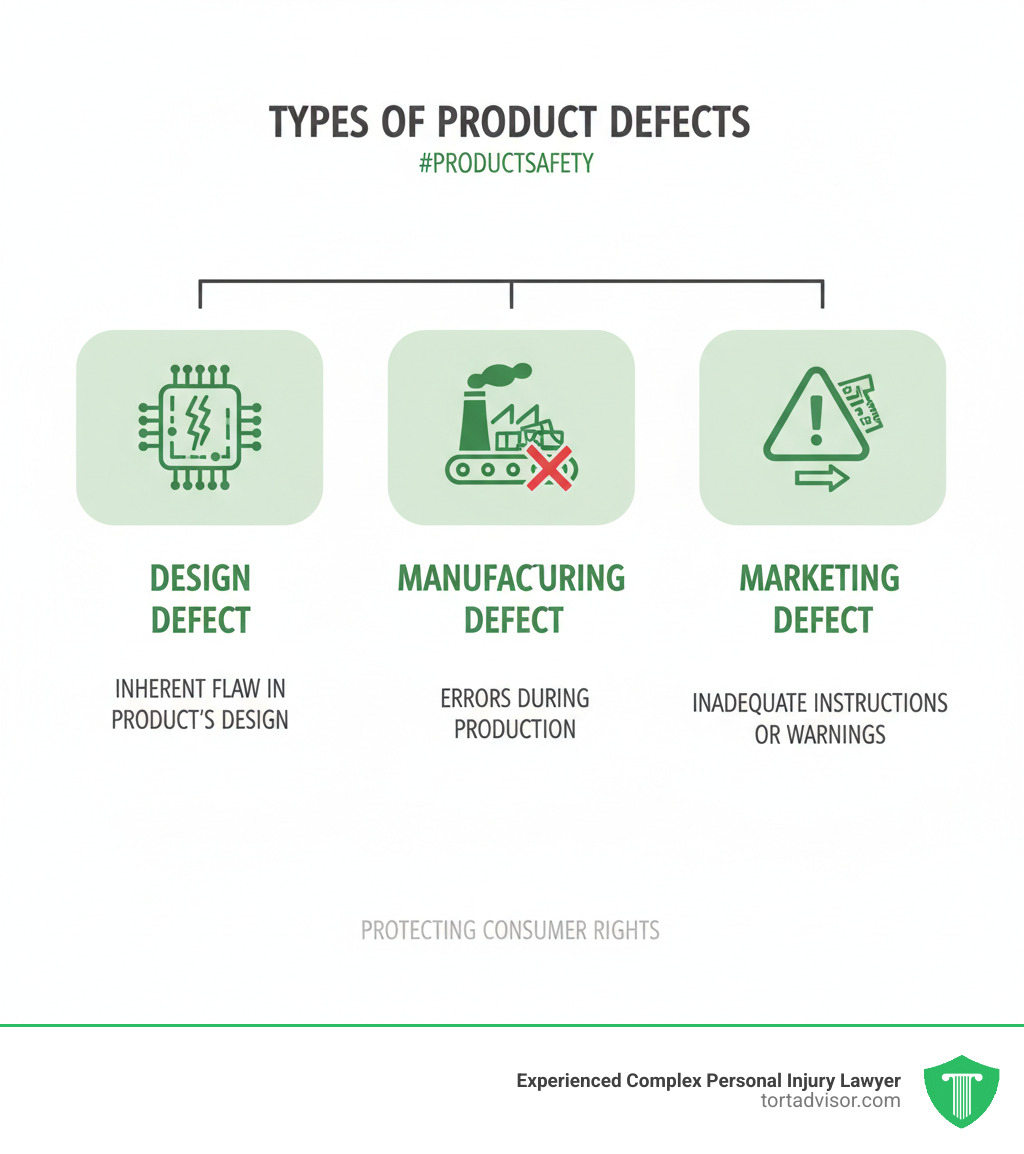
Three Kinds of Product Defects
Defects generally fall into three groups:
- Design Defects: The design itself makes the product dangerous, so every unit shares the flaw, such as a top-heavy vehicle model that tends to roll over.
- Manufacturing Defects: A production mistake makes a particular unit or batch unsafe even though the design is sound, like a run of toys accidentally painted with lead paint.
- Marketing Defects (Failure to Warn): The product lacks proper instructions or warnings about its risks, as with a strong cleaning chemical sold without any skin irritation warning.
The Most Frequent Defective Product Claims
Any product can be defective, but certain categories come up again and again:
- Vehicle Parts: Faulty airbags, brakes, tires and ignition switches.
- Medical Devices: Defective implants, surgical instruments and diagnostic equipment, which make up a significant share of product liability litigation.
- Children’s Products and Toys: Choking hazards, toxic materials and unstable designs, cases that defective product attorneys handle with special care.
- Home Appliances: Blenders that explode, wiring that sparks fires and furniture that collapses.
- Prescription Drugs: Medications with hidden side effects or contamination during manufacturing.
- Other Frequent Claims: Tainted food, farm chemicals such as Roundup weed killer and electronics whose batteries explode.
Product liability makes up a meaningful portion of civil litigation in the U.S. If you were hurt, an experienced product liability attorney near you can help.
How a Product Injury Lawyer Builds Your Claim

Putting together a strong product liability case is detailed work that a capable product injury lawyer takes on for you: collecting evidence, working with experts and negotiating with big companies. Most of these cases settle without a trial, but your attorney needs to be ready for court to get the best result.
What to Do After a Defective Product Injures You
What you do right after the injury can make or break your claim.
- Get Medical Care: Your health comes first, and medical records are key proof connecting the injury to the product.
- Keep the Product: Do not discard, change or fix it. It is the single most important piece of evidence.
- Record the Details: Photograph and video the product, the scene and your injuries, write down what happened and collect witness contact information.
- Save Paperwork: Hold on to receipts, medical bills and proof of lost wages.
- Stay Quiet: Do not talk to the manufacturer or its insurer, and avoid posting on social media, which can be used against you.
- Call an Attorney Right Away: A lawyer can protect your rights, make sure you meet every deadline and show you how to file the claim properly.
Proving the Defective Product Caused Your Injury
To succeed, your attorney has to establish causation by proving four things:
- The product had a defect.
- The defect was present when the product left the defendant’s hands.
- The defect directly caused your injury.
- You suffered real losses, such as medical costs or lost pay.
Courts often apply the Consumer Expectation Test, which asks whether the product was as safe as an ordinary consumer would reasonably expect, so understanding that test matters. Manufacturers sometimes argue the product was misused, but that defense is limited when the use was foreseeable.
What Compensation Is Available in a Product Injury Claim?
Product liability recoveries can be significant because these injuries are often serious. What a claim is worth depends on the severity of the injury, the cost of past and future care, lost income and the strength of the evidence.
- Economic Damages: Measurable money losses such as past and future medical costs, missed wages and lower earning capacity.
- Non-Economic Damages: Compensation for harms like pain and suffering, emotional distress and lost enjoyment of life.
- Punitive Damages: When conduct was extremely reckless or malicious, courts may impose punitive damages to punish the company and discourage repeat behavior.
Some product liability cases have produced very large recoveries. To learn more, see resources on product liability personal injury, and use Legal Lawsuit’s free, confidential case review to connect with attorneys in our network who handle these complex claims.
Filing Deadlines and Safety Regulations

Knowing the deadlines and safety rules that apply is essential to a successful claim. Miss a deadline and you may lose the right to compensation no matter how strong the case is.
What the Consumer Product Safety Commission (CPSC) Does
The Consumer Product Safety Commission (CPSC) is the federal agency charged with protecting the public from unreasonable product hazards. It:
- Creates both voluntary and mandatory safety standards.
- Bans products that cannot be made safe.
- Oversees recalls of dangerous products.
- Studies product hazards and educates consumers.
The CPSC concentrates on prevention and recalls, but its findings and reports can be strong evidence in a lawsuit. It also works with agencies such as OSHA to promote safety at home and at work.
Product Liability Statutes of Limitations
A statute of limitations is a firm cutoff for filing suit, and missing it ends your right to sue. The limits differ by state; California, for example, generally allows two years from the injury date.
A key exception is the “discovery rule,” which starts the clock when you discovered, or reasonably should have discovered, that a defective product caused your injury rather than on the injury date. That matters when health problems surface months or years later, as with toxic exposure or faulty medical devices.
Because these rules are complicated and vary by state, reach out to a product injury lawyer promptly to protect your claim. The Defective Product Lawyer Guide offers more help.
Common Questions About Product Injury Claims
Answers to the questions people ask most about hiring a lawyer after being hurt by a product.
What does a product injury lawyer charge?
Most product injury lawyers use a contingency fee, so there is nothing to pay upfront. The attorney is paid only if the case succeeds, usually as an agreed percentage of the settlement or verdict. This “no win, no fee” model gives you access to skilled counsel without financial risk, and attorneys in the Legal Lawsuit network offer a free case evaluation to talk through your options.
How do I choose a product injury lawyer?
Picking the right attorney matters. Look for:
- Focused Experience: A lawyer who concentrates on product liability rather than general injury work.
- Relevant Results: Ask about outcomes in similar cases; reputable attorneys are often willing to discuss past settlements and verdicts.
- Courtroom Readiness: Most cases settle, but a lawyer who is ready and willing to try the case often draws better offers.
- Adequate Resources: These cases are costly, so confirm the firm can pay for experts and investigation.
- Clear Communication: Choose someone responsive and caring who explains things plainly.
How long does a product liability case last?
It can take anywhere from a few months to several years, depending on how complex the case is, whether the defendant is willing to negotiate and whether it goes to trial. An attorney can give you a better estimate after reviewing your situation, and a long timeline should not stop you from pursuing justice.
Getting Help With Your Product Injury Claim
Recovering from an injury caused by a defective product can feel overwhelming, with medical bills, lost income and real pain piling up. You do not have to handle it alone.
As this guide explains, product liability cases are complicated: you have to identify every responsible party, understand the type of defect and prove your case against well-funded corporate lawyers. Above all, you must file before the statute of limitations runs out, which in California is usually just two years.
The right attorney makes a real difference. Legal Lawsuit is a legal-information site, not a law firm; through a free, confidential case review, we connect injured consumers with experienced product liability attorneys in our network who have the resources to pursue full compensation, whether your case involves a specific product or you simply need a defective product lawyer near you.
Most product injury lawyers charge on contingency, so you owe nothing unless money is recovered, and a free case evaluation carries no financial risk.
The companies behind your injury have lawyers looking out for them, and you deserve the same. Reach out today to start holding them accountable and to pursue the compensation you need to rebuild.
Additional Resources
Related Posts
Quick Answer: The Boy Scouts of America (BSA) filed for Chapter 11 bankruptcy in 2020 after facing tens of thousands [...]
Quick Answer: Survivors of sexual abuse by Catholic priests, nuns, or other Church personnel may be able to file a [...]
Quick Answer: Clergy abuse settlements vary enormously based on the severity of the abuse, the strength of evidence that the [...]