
Short answer: This article explains the key facts, eligibility issues, settlement factors, deadlines, and source-backed updates related to this legal topic. Results vary by case facts, evidence, jurisdiction, and representation.
📋 Table of Contents
- Your Guide to Making Your Voice Heard
- Step 1: Prepare Your Case Before You File
- Step 2: Find the Right Place to File Your Complaint
- Step 3: The Official Process of How to File a Complaint
- Step 4: After You Submit: The Complaint Lifecycle
- When a Complaint Isn’t Enough: Considering Legal Action
- Frequently Asked Questions about Filing Complaints
- Conclusion: Taking the Next Step Towards Resolution
How to File a Complaint That Gets Results
Learning how to file a complaint against a company or an employer the right way matters, because a well-built complaint gets answered while a sloppy one gets shelved. Here is the short version:
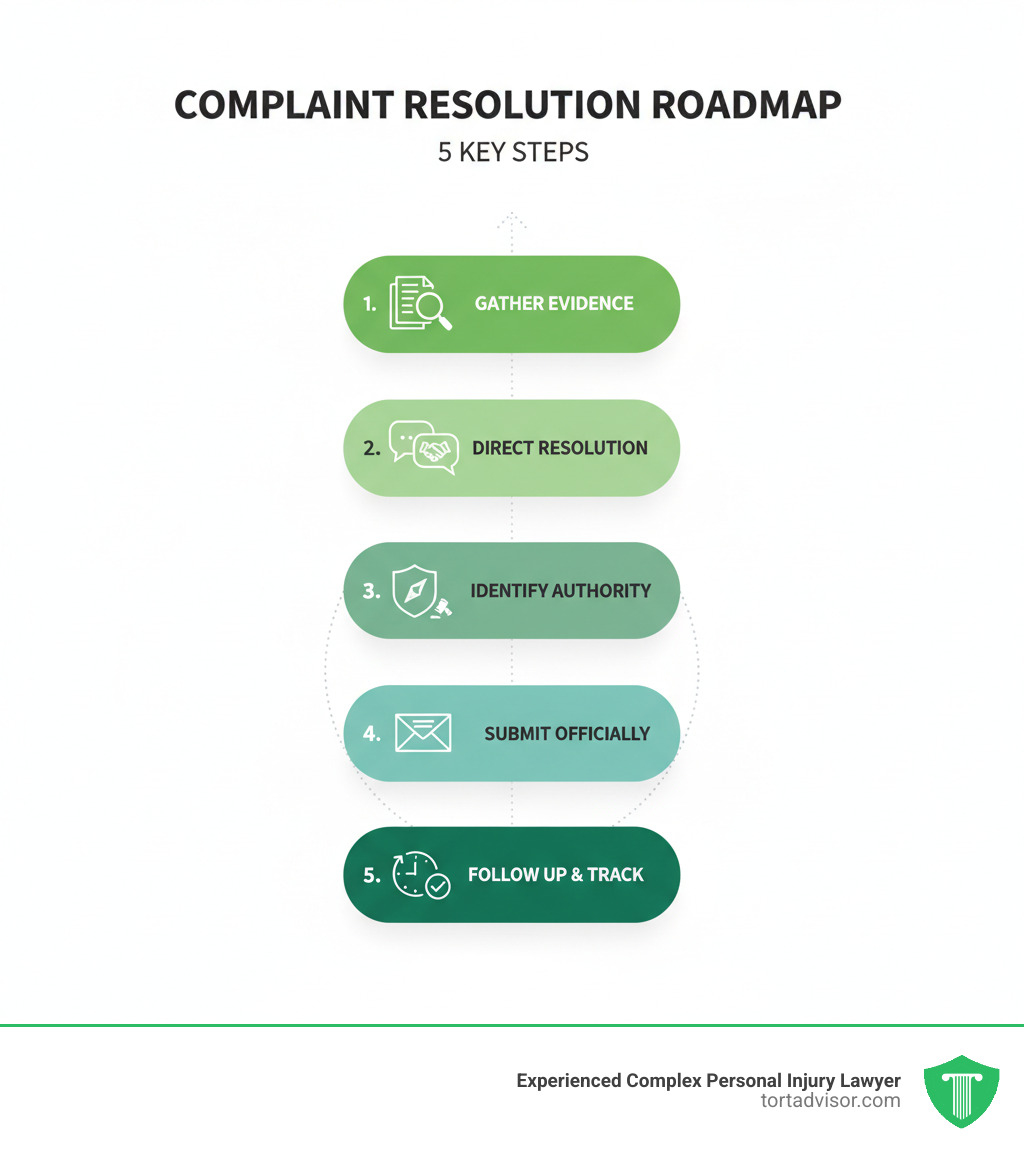
Five Steps to File a Complaint:
- Keep a paper trail – Save receipts, records and every message.
- Reach out to the company first – Let them try to fix it.
- Pick the correct agency – Send your complaint to the authority that handles that issue.
- Don’t wait – Many complaint types have filing deadlines.
- Stay on it – Monitor your complaint’s progress.
When the problem is a dangerous workplace, missing pay or a faulty product, a government agency is usually the first place to turn. OSHA, the Consumer Financial Protection Bureau (CFPB) and the Department of Transportation (DOT) all run straightforward systems for taking complaints.
Companies generally answer within 15 days when a complaint comes through an official channel such as the CFPB. Agencies also mine complaint data to identify patterns and crack down on repeat violators.
I’m Mason Arnao. What I’ve seen again and again is that solid records and the correct process make a huge difference in whether a complaint succeeds. Below, I’ll walk you through each step of how to file a complaint so you get heard.
Helpful terms for filing a complaint:
- do i need a personal injury lawyer
- what can a personal injury lawyer do for you
- how much does a personal injury lawyer cost
Step 1: Get Your Case Ready Before Filing

Strong complaints begin with groundwork. Before going to an agency, give the business a chance to make it right. A quick phone call or email often fixes things fast, and it shows you acted in good faith if you have to escalate later.
Throughout every conversation, write it all down. Build a timeline with dates, times and the names of people you dealt with. Hold on to every email, text message, receipt and contract. These records form the core of your complaint and carry far more weight than recollection.
You may not feel ready to act right away, and that is fine. What if I’m not ready to take legal action now? Take time to collect your thoughts.
What Details Should My Complaint Include?
Organization pays off when you file a complaint. Complete, clear details help an agency move your case along. Pull together:
- Your details: Full name, mailing address, phone number and email.
- The company’s details: Its full legal name, address, phone number and website.
- Dates and dollar figures: When the problem occurred and any money involved, such as payments or losses.
- What went wrong: A factual account in the order things happened. The CFPB advises keeping it clear and to the point.
- The fix you want: Say plainly what would resolve it, such as a refund, a replacement or an apology.
- Backup documents: Attach copies, never originals, of receipts, contracts and emails. Some agencies, including the CFPB, limit upload sizes.
- Photos or video: Pictures are especially convincing for defective products or property damage.
Complaints, Reviews and Tips: Know the Difference
A complaint, a review and a tip each do a different job, so it helps to know which one you need.
- A complaint formally asks an authority to look into your problem and help resolve it. The agency then reaches out to the business for a response through an official process.
- A review tells other shoppers about your experience in public. It may nudge a company, but no investigation follows.
- A tip reports possible misconduct without asking for a personal fix. Agencies use tips to see patterns and build cases against wrongdoers.
If you want your own problem solved, a formal complaint is the best route.
Step 2: Choose the Right Agency for Your Complaint
Where you send a complaint matters. The wrong agency means delays or nothing at all. Use this guide to match your issue with the right office.
Scams and Everyday Consumer Problems
- Your State Attorney General: A strong first stop for deceptive or unfair business practices. AG offices can mediate disputes or file legal action, and every state’s AG is easy to find online.
- Federal Trade Commission (FTC): Fraud and scams belong with the FTC. It does not settle individual disputes, but reports help it track down and shut down scammers. You can Report fraud to the FTC on its website.
- Adult Protective Services (APS): If an older adult or a person with a disability is being financially exploited or abused, contact the local APS office. The Eldercare Locator for senior-related issues can point you to the agency serving your area.
Banking, Credit and Other Financial Services
Trouble with a bank, credit card, loan or other financial product goes to the Consumer Financial Protection Bureau (CFPB), the federal agency set up to protect people in the financial marketplace.
The CFPB takes complaints on mortgages, credit cards, debt collectors, student loans and much more, and it gets results: most companies reply within 15 days. Your filing also feeds a database that helps protect other consumers. To begin, start a new CFPB complaint online.
Job Safety, Pay and Discrimination Complaints

Certain agencies step in when an employer breaks workplace laws.
- Occupational Safety and Health Administration (OSHA): OSHA deals with hazardous conditions and retaliation against workers who report them. According to OSHA, signed complaints are likelier to lead to an inspection. Read about your rights under whistleblower protection laws.
- Wage and Hour Division (WHD): Bring unpaid wages and overtime disputes to the WHD, which enforces federal pay laws and keeps investigations confidential.
Raising concerns at work can feel like a gamble. What if the abuse happened at work but I’m afraid of losing my job?
Industry-Specific Complaints: Airlines, Phone, Internet and More
Several industries answer to their own dedicated regulators.
- Department of Transportation (DOT): Airline trouble such as lost luggage, delays or discrimination goes to the DOT. Carriers must acknowledge a DOT complaint within 30 days and send a written reply within 60 days.
- Federal Communications Commission (FCC): Problems with phone and internet service, including robocalls and billing disputes, go to the FCC, which uses complaints to monitor consumer problems.
Not sure which agency fits? check out usa.gov for a full agency directory.
Step 3: How to File a Complaint Through Official Channels
Filing has never been easier. Most agencies now offer simple, accessible ways to file a complaint.
Which Filing Methods Can I Use?
Agencies typically give you several choices:
- Online forms are what most agencies, the CFPB included, rely on. They are quick, accept attachments and confirm receipt right away.
- Phone lines are another route. For instance, you can contact the WHD by phone, and a staff member will help you through the steps.
- Letters by mail still work. Send them certified with a return receipt so you can prove delivery.
- Walk-in visits to local OSHA and WHD offices give you face-to-face assistance.
Is There a Deadline to File?
Timing matters when you file a complaint. Let a deadline slip and you may lose the chance to get help. Cutoffs vary widely depending on the agency and the problem.
OSHA whistleblower complaints, for example, have deadlines from 30 to 180 days depending on the law involved, while OSHA safety complaints generally must be filed within 6 months. The CFPB is looser but gives you 60 days to answer a company’s response.
Your safest move is to file as early as you can, while evidence is fresh and every deadline is still open. You can learn more about filing deadlines and find out how long you have to file a lawsuit.
Is It Possible to File Anonymously?
Yes. Many agencies take anonymous complaints to shield people from retaliation.
The WHD keeps complaints confidential and will not reveal who filed or even that a complaint exists. OSHA allows anonymous reports, though it notes that a signed complaint is likelier to prompt an inspection since it is more credible.
Thanks to confidentiality rules, you can give your name to strengthen the complaint while the agency keeps it hidden from the employer or business.
Step 4: What Happens After You File
Filing is only the start. Knowing the stages that follow is part of knowing how to file a complaint that works.
What Happens Once My Complaint Is Submitted?
Your complaint opens a mediated exchange among you, the agency and the company.
- Agency Review: Staff confirm the agency has authority and that your complaint is complete, and may ask you for more details.
- Forwarding: The agency sends your complaint to the company as official notice, which businesses treat seriously.
- Response: The company must reply within a set period, such as 15 days for the CFPB and 60 days for airlines under DOT rules.
- Investigation: Some complaints lead to a full investigation, with the WHD interviewing workers and reviewing records, or the DOT closely examining discrimination claims.
How Do I Check on My Complaint?
Agencies usually assign a complaint ID or case number. Save it so you can check progress. Online portals and email notices update you at important points.
Questions? Reach out to the agency. You can, for instance, check the status of your CFPB complaint online. Keep involved and follow up if the expected response time passes without word.
What Results Can I Expect?
Outcomes can be concrete, like refunds and reimbursements, or take the form of corrected records, repairs, replacements or an apology. A complaint can even push a company to change its policies, which helps everyone.
Where a company keeps breaking the rules, agencies may take enforcement action, including fines or court injunctions.
Agency complaints usually do not pay for personal injuries. That generally requires legal action. Read about what kind of compensation could victims receive.
When Filing a Complaint Is Not Enough: Taking Legal Action
For serious harm or injuries, an agency complaint may fall short. Regulators enforce rules but generally cannot award money for medical costs, lost income or suffering. That is when a legal claim comes in.
Think of a complaint as asking the referee to call a foul. If you have already been badly hurt, court may be where you have to go for compensation.
Know Your Legal Rights
The law shields consumers and workers from carelessness and misconduct. Knowing those protections helps you judge whether a lawsuit makes sense.
- Consumer protection laws guard against defective products and unfair business conduct. If you are hurt or lose money, a lawsuit can recover your damages.
- Employee rights guarantee a safe job site and fair treatment. If an employer’s violation injures you or costs you money, you may have a case.
- You are entitled to a reasonably safe environment on business premises. If negligence causes an injury, such as a slip and fall, you can pursue compensation.
The legal system can be hard to navigate. If you were seriously injured, an attorney can review your situation and lay out your choices. Read Do I Need a Personal Injury Lawyer?
Going From a Complaint to a Lawsuit
Moving from a complaint to a lawsuit can make sense when the harm is serious or the agency route did not deliver.
- Personal injury claims arise when someone else’s negligence hurts you, as in car crashes or slip and falls, and seek money for medical bills, lost wages and pain and suffering.
- Product liability claims cover injuries from defective products. A recall will not pay your medical bills, but a lawsuit may.
- Wrongful termination or discrimination matters can become lawsuits when an EEOC complaint does not provide enough relief, letting you seek damages.
In short, an agency complaint enforces the rules, while a lawsuit pursues compensation for serious injuries and losses. An experienced attorney can tell you whether your claim is viable. See What Can a Personal Injury Lawyer Do For You?
How to File a Complaint: Common Questions
Answers to frequent questions about how to file a complaint:
What matters most in a complaint?
Above all, a clear, factual account of the problem. Describe what happened, what you have tried in order to fix it and what outcome you want. Attach supporting documents such as receipts or photos to back it up.
Could I be fired for reporting a workplace safety problem?
No. Employers are prohibited from retaliating against workers who complain about safety or wage violations, and robust whistleblower protection laws back you up. If you think you have been punished for speaking up, file a whistleblower complaint right away. Agencies treat retaliation seriously.
How is a complaint different from a lawsuit?
A complaint to a government agency asks it to investigate and enforce the rules. It may produce refunds or policy changes but rarely money for injuries. A lawsuit is a court case seeking financial damages for harm you suffered, as in a personal injury claim, and is the right tool when a complaint cannot cover the full extent of your losses. Our Personal Injury Lawyer Ultimate Guide explains more.
Next Steps Toward Resolving Your Problem
Knowing how to file a complaint well is really about defending your rights. With solid preparation and the right agency, you can hold a business accountable and get your issue resolved.
The CFPB, OSHA and DOT exist to help. They can investigate, mediate and enforce the rules, which narrows the gap between individuals and big organizations.
Still, a complaint has limits. Serious injuries, major financial losses and other substantial harm may call for legal action. Agency complaints enforce regulations; they do not compensate you personally for injuries. If you are dealing with medical bills, lost income or pain and suffering, a lawsuit may be the only way to be made whole.
Having the right legal help matters. Legal Lawsuit can connect you with experienced attorneys in our network who handle complex personal injury cases, so the process feels far less overwhelming.
With an experienced professional beside you, going from a complaint to a legal claim does not have to feel daunting. Attorneys in our network can review your situation, explain your rights and help you decide whether a lawsuit fits, starting with a free, confidential case review.
When you are ready to look at legal options, explore our guides to personal injury lawsuits. That next step could be what gets you the accountability and compensation you are owed.
You are not on your own. Whether you are filing a complaint or weighing a lawsuit, help is available.
Related Posts
Quick Answer: The Boy Scouts of America (BSA) filed for Chapter 11 bankruptcy in 2020 after facing tens of thousands [...]
Quick Answer: Survivors of sexual abuse by Catholic priests, nuns, or other Church personnel may be able to file a [...]
Quick Answer: Clergy abuse settlements vary enormously based on the severity of the abuse, the strength of evidence that the [...]