
Short answer: This article explains the key facts, eligibility issues, settlement factors, deadlines, and source-backed updates related to this legal topic. Results vary by case facts, evidence, jurisdiction, and representation.
In This Guide
How to Find a Good Personal Injury Lawyer: Why the Choice Matters
Figuring out how to find a good personal injury lawyer is one of the first and most important decisions after an injury. The system is complicated, and the attorney you pick can decide whether you receive fair compensation or absorb a serious financial hit. Legal Lawsuit’s guide walks you through choosing well.
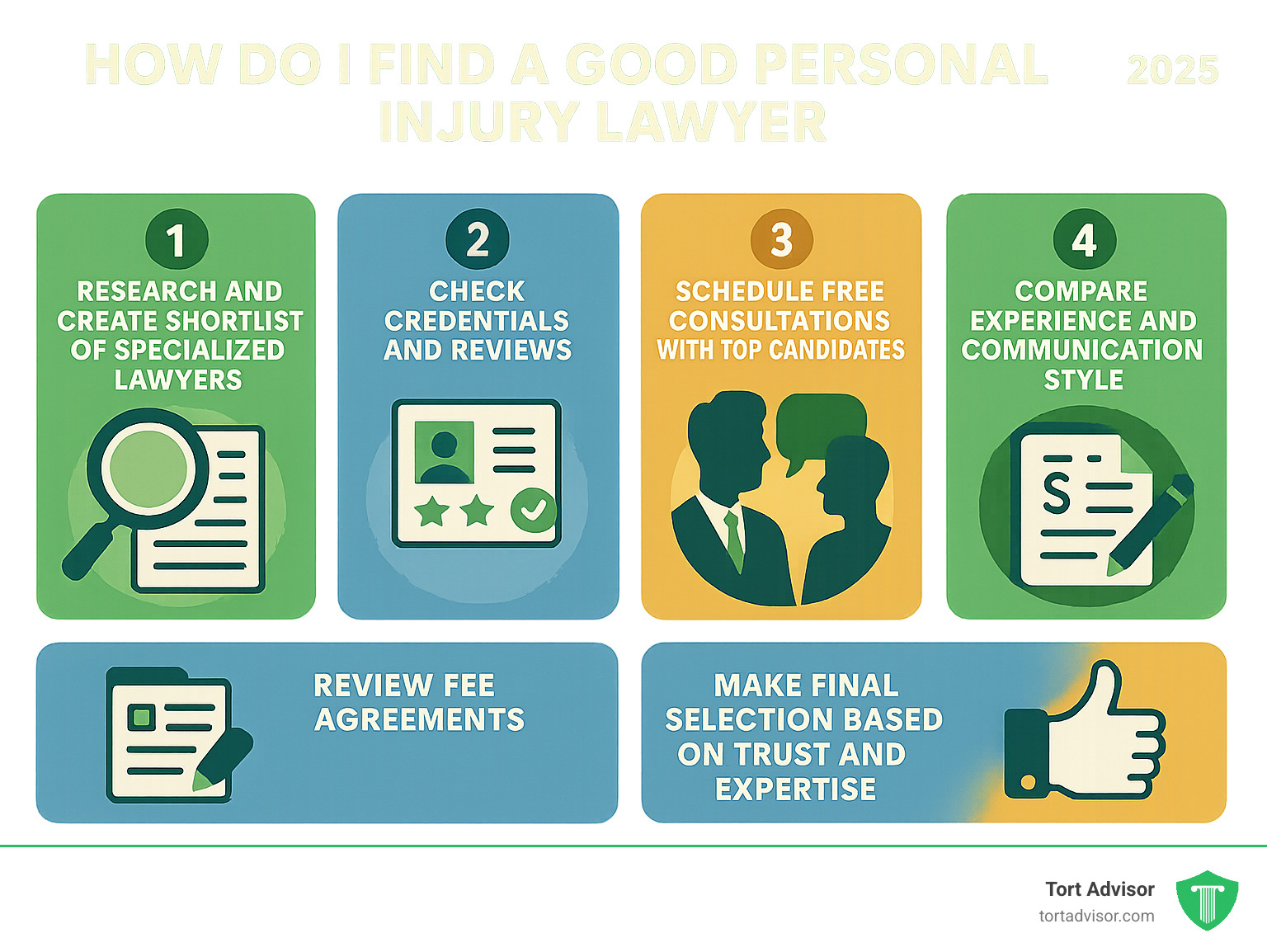
Steps to Finding a Strong Personal Injury Lawyer:
- Prioritize relevant experience – pick someone who regularly handles your kind of case
- Check credentials – confirm bar licensing and any discipline
- Read reviews with care – weigh peer ratings and verifiable results
- Use free consultations – talk with several lawyers to compare
- Understand the fee – look for contingency arrangements without upfront charges
- Gauge communication – choose someone responsive and clear
A lot rides on this choice. An often-cited Insurance Research Council study found that injury claimants with attorneys received about 3.5 times more in settlements on average than those without. Even so, many people hire the first name they see or the loudest advertiser instead of researching.
While you are juggling medical bills and missed paychecks, you need a lawyer who treats your case as more than a file number. The insurer has lawyers working to reduce your payout, and you deserve an equally capable advocate.
Working in legal technology has shown me that choosing the right lawyer takes a methodical approach, including knowing which warning signs to avoid and which qualities point to strong representation.
Step 1: Know What a Strong Personal Injury Lawyer Looks Like
As you learn how to find a good personal injury lawyer, it is easy to be impressed by a polished office or bold promises. What actually matters lies underneath.
Hiring an injury lawyer is a lot like picking a surgeon: you want a specialist who handles cases like yours every day, not a generalist.
Strong lawyers usually share a few traits: focused experience with your type of case, a real trial record, respect from other lawyers, clear communication, enough resources to take on insurers and firm ethical standards. Those qualities often separate a fair recovery from a disappointing one.

Why Case-Specific Experience Matters
Injury law is not uniform. A lawyer who excels in medical malpractice may not be the right fit for a car crash, because each type of claim has its own strategy and evidence.
After a car accident, for example, a capable lawyer knows to preserve the vehicle’s event data recorder, bring in accident reconstruction experts and watch for injuries that surface later. They understand common motor vehicle accident injuries and which evidence matters most.
Brain injury claims raise different issues, including complex medical proof and lifetime care costs, which is why dedicated brain injury attorneys exist. A qualified lawyer should be able to explain your case’s likely strengths and obstacles quickly; vague answers are a warning sign.
Checking Reputation and Results
Anyone can build an attractive website, but a good reputation comes from results. Look beyond the testimonials a firm chooses to feature.
Peer reputation carries weight, because other lawyers know who does good work. Client reviews help too, especially detailed ones about communication and how the case was handled; generic praise tells you little.
Bar status is essential. Check your state bar’s website to confirm the lawyer is licensed and has no disciplinary record.
The strongest lawyers are ready to try cases. High-volume “settlement mills” often push clients toward quick, low offers, while lawyers known for going to court tend to get better offers. Be wary of flashy ads and unrealistic promises; many of the best attorneys build their practices on referrals.
Step 2: Build Your Shortlist of Personal Injury Lawyers
A careful, organized search helps you make an informed decision instead of leaving it to chance.

Start by deciding what matters most to you, such as a particular practice focus, trial experience or location.
Where to Find Candidates
Where should you look for a good injury lawyer? Use several sources.
Reliable places to start:
- Referrals: ask trusted friends, relatives or professionals who have worked with an injury lawyer.
- State bar associations: many offer referral services and directories and let you check discipline records.
- Reputable directories: look for directories that include peer ratings and recognize professional accomplishment.
- Firm websites: once you have names, review practice areas, case results and attorney bios.
Your goal is a short list of lawyers to meet.
How to Find a Good Personal Injury Lawyer Online Without Being Misled
Online research is useful, but marketing can blur the picture. Avoid these common mistakes:
- Choosing by ad size: a big billboard says nothing about skill; focus on experience and results.
- Skipping the bar check: always confirm the lawyer is licensed and in good standing.
- Trusting vague reviews: favor specific, detailed accounts.
- Ignoring improper solicitation: unsolicited contact from a lawyer after your accident is a serious red flag and may violate ethics rules.
- Falling for “fast settlement” pitches: speed can mean settling for less than your claim is worth.
- Discussing your case publicly: keep your search and your case details off social media.
- Overlooking local knowledge: a lawyer familiar with your local courts and laws can be an advantage.
Step 3: Get the Most From Your Initial Consultation
With your shortlist ready, schedule consultations. Most injury lawyers offer them free, which gives you a chance to ask questions, judge how they communicate and decide whether they fit. This is where the question of how to find a good personal injury lawyer gets answered for your situation.
Bring your documents: police reports, medical records, proof of lost pay and any insurance correspondence. Being prepared lets the lawyer give a more accurate assessment.

Notice how the lawyer communicates. Do they listen, ask good questions and explain things plainly? Good lawyers are candid and realistic rather than promising big numbers. Your comfort and trust matter.
Fees and the Fee Agreement
How do injury lawyers charge, and what should you confirm? Ask directly; this conversation is important.
Most injury attorneys work on contingency, earning a fee only if they recover money for you, so anyone can pursue a claim regardless of finances. Cornell Law School explains the contingency fee model.
Points to confirm in a contingency agreement:
- The percentage: commonly between 25% and 40%, often around one-third. Ask whether it increases if the case goes to trial.
- Case costs: filing fees, experts and records are separate from the fee. Ask whether the firm advances them and how they are repaid.
- Before or after the fee: ask whether costs come out before or after the percentage is calculated. On a $100,000 settlement with $10,000 in costs and a 30% fee, deducting costs first gives the lawyer $27,000 and you $63,000; calculating the fee on the full amount gives the lawyer $30,000 and you $60,000.
- If you lose: you normally owe no fee, but confirm whether you would still owe case costs.
- Retainers: a genuine contingency agreement should not require an upfront payment for the lawyer’s time.
Knowing these details sets realistic expectations, much like understanding how recoveries are calculated in cases discussed in how much mass tort lawsuits receive.
Questions to Ask a Personal Injury Lawyer
Bring these questions to your consultation:
- “How many cases like mine have you handled, and how did they turn out?”
- “What are the strengths and weak spots in my case?” Expect an honest answer.
- “Who will work on my case day to day, and who do I contact?”
- “How often will you update me?”
- “How do you decide between settling and going to trial?” You want someone willing to go to court if needed.
- “How would you value my case?” They should explain the damages available, such as medical costs, lost pay and pain and suffering.
- “What are your fees, and how are costs handled?” Confirm it again.
- “What do you need from me next?”
The answers will help you find a lawyer who is right for you.
Choosing a Personal Injury Lawyer: FAQs
Common questions people ask while choosing an injury lawyer.
What if a lawyer turns down my case?
A declined case is not necessarily a verdict on its merits; it is often a business decision.
Lawyers may decline because:
- The likely recovery is small compared with the time and expense.
- Liability or evidence problems lower the chances of success.
- The case is outside their focus or their caseload is full.
- The filing deadline is too close or has passed.
You can politely ask why. Above all, get another opinion, since attorneys differ in perspective and resources, and one rejection does not end your options.
How much does communication matter?
A great deal. Clear, regular communication is key to your peace of mind during a stressful process.
Your lawyer should be reachable, return calls and emails promptly, explain each step without jargon and set honest expectations. That openness builds trust. Legal Lawsuit emphasizes connecting people with trusted personal injury attorneys who communicate well. If a lawyer is hard to reach even before you hire them, take that seriously.
What are the usual stages of an injury case?
Knowing the general path can reduce anxiety. Most injury cases follow a sequence like this:
- Consultation and investigation: once hired, the lawyer gathers evidence such as police reports, medical records and witness statements.
- Demand and negotiation: after damages are calculated, the lawyer sends a demand to the at-fault party’s insurer and negotiates.
- Lawsuit: if talks stall, the lawyer may recommend filing suit.
- Discovery: both sides exchange information through written questions, document requests and depositions.
- Mediation or arbitration: many cases go to mediation or arbitration before trial, and most injury claims settle before a verdict.
- Trial: if there is no settlement, a judge or jury decides, which is relatively uncommon.
- Resolution: after a settlement or verdict, funds are disbursed under your fee agreement. A skilled lawyer guiding you through personal injury lawsuits protects your rights at each stage.
Making the Final Call With Confidence
After your research and consultations, it is time to choose the lawyer who will represent you.
Ultimately, how to find a good personal injury lawyer comes down to finding the right partner for your situation, someone who will be your advocate and guide. The decision deserves the care you have given it.
Choosing based on relevant experience, results and communication puts you in control and lets you focus on healing while a capable professional pursues fair compensation.
The right lawyer understands how your injuries affect your life, knows how to value your claim, stands up to insurers and treats you as a person rather than a case number.
That Insurance Research Council finding is a reminder that qualified representation can substantially change the outcome, which can mean the difference between financial strain and the resources to rebuild.
Legal Lawsuit can connect you with independent attorneys who handle personal injury lawsuits for a free, confidential case review.
Your injury was not your choice, but your lawyer can be. Trust your research and your instincts in choosing the advocate who gives you confidence to move forward.
Related Posts
Quick Answer: The Boy Scouts of America (BSA) filed for Chapter 11 bankruptcy in 2020 after facing tens of thousands [...]
Quick Answer: Survivors of sexual abuse by Catholic priests, nuns, or other Church personnel may be able to file a [...]
Quick Answer: Clergy abuse settlements vary enormously based on the severity of the abuse, the strength of evidence that the [...]