
Short answer: This article explains the key facts, eligibility issues, settlement factors, deadlines, and source-backed updates related to this legal topic. Results vary by case facts, evidence, jurisdiction, and representation.
📋 Table of Contents
- Why Effective Communication With Your Lawyer Matters
- Before the Consultation: Setting the Stage for Success
- The Initial Consultation: How to Talk to a Personal Injury Lawyer and Get Answers
- Evaluating the Attorney: Is This the Right Fit for You?
- Frequently Asked Questions about Talking to a Personal Injury Lawyer
- Your Next Steps to Securing the Right Legal Help
How to Communicate With Your Lawyer — and Why It Shapes Your Case
Learning how to communicate with your lawyer well is one of the strongest foundations an injury claim can have. Medical bills pile up and recovery takes energy, so clear, steady contact with your attorney keeps mix-ups and missed details from hurting your case.
At a Glance – Talking With Your Personal Injury Attorney:
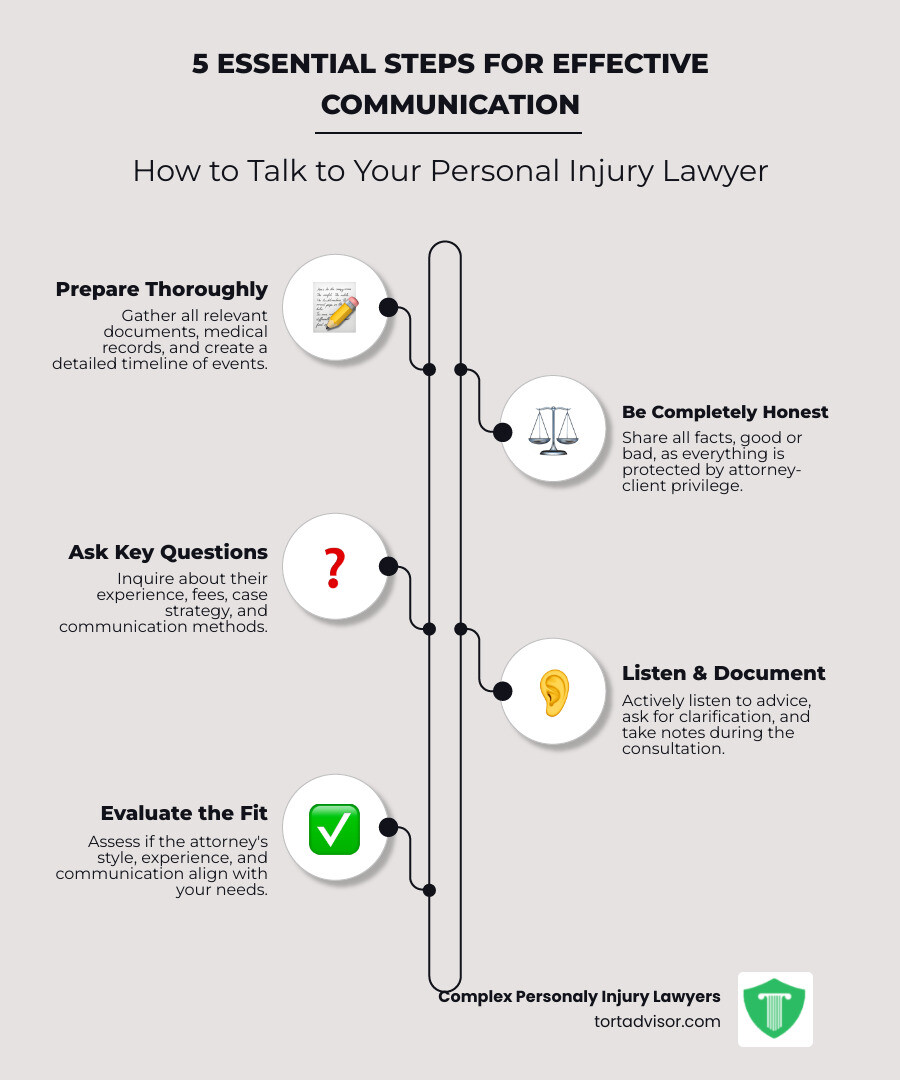
- Tell the whole truth – Include every fact, even the ones you worry could hurt you.
- Arrive organized – Bring medical records, the police report, photos and anything from the insurer.
- Ask pointed questions – Find out about experience, fees, expected timeline and strategy.
- Keep it factual – Describe what happened rather than how angry or upset it made you.
- Write things down – Record key points and action items during each meeting.
- Say how you want updates – Explain how often you expect to hear from them and the best way to reach you.
Free consultations are standard among personal injury attorneys and usually run somewhere between 15 and 60 minutes. The lawyer sizes up your claim while you decide whether they are someone you want on your side.
Many attorneys use a contingency fee arrangement (commonly 25-40% of the recovery), so there is no upfront charge and the fee is owed only if the case succeeds. Because their payment depends on your result, their incentives line up with yours.
Think of the consultation as an interview that runs both ways. You are not only asking for help — you are selecting the advocate who will protect your rights and steer you through a complicated process.
My work has always centered on helping people make sense of complicated systems, and I have seen how much clear communication matters when someone is navigating an injury claim and searching for the right lawyer.
More reading on how to talk to a personal injury lawyer:
- do i need a personal injury lawyer
- how do i find a good personal injury lawyer
- how much does a personal injury lawyer cost
Before the Consultation: Getting Ready for a Productive Meeting
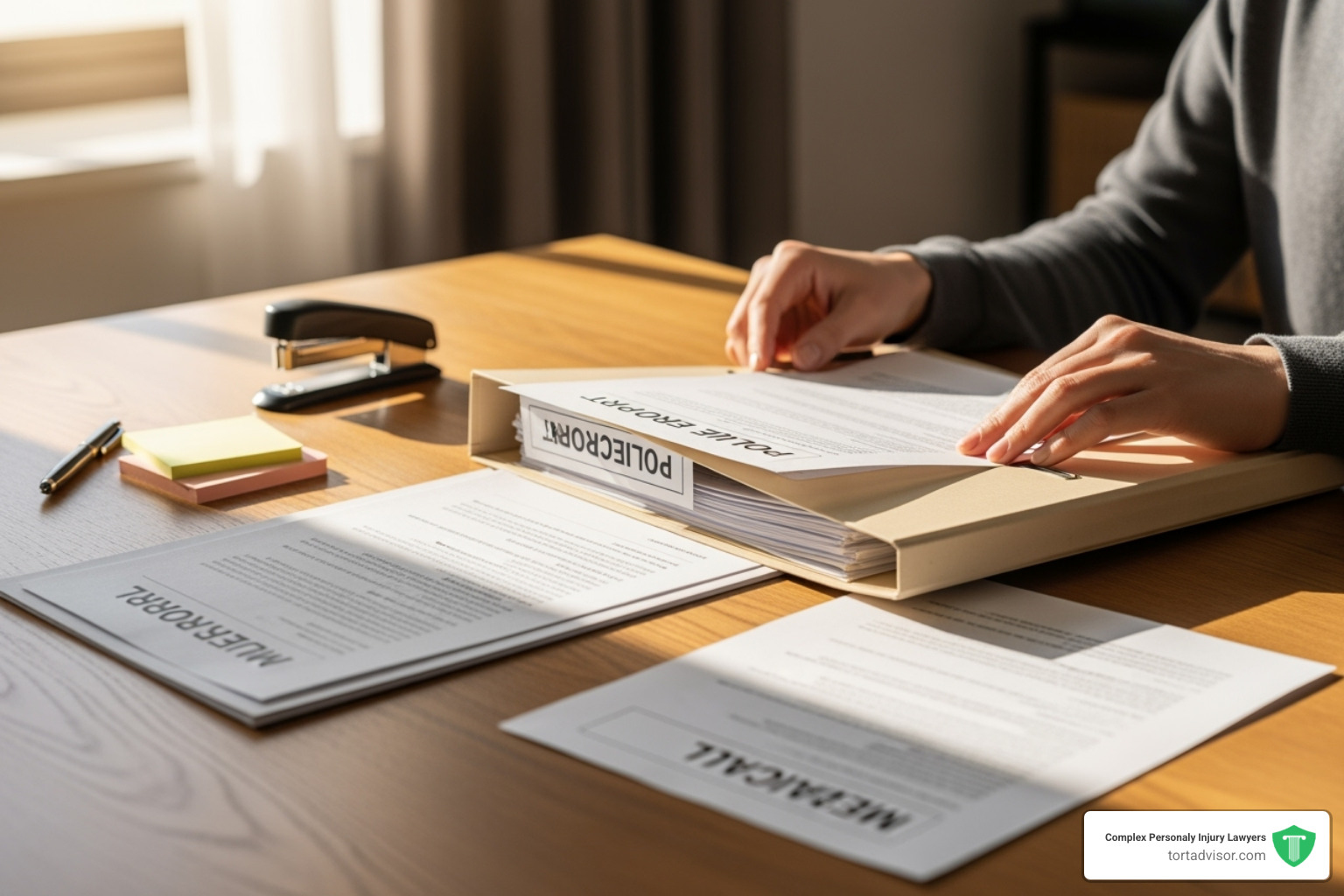
The first sit-down with an injury attorney is an interview in both directions: they judge the claim, and you judge whether they are the right advocate. Getting organized ahead of time makes the conversation far more useful, because the attorney can quickly understand the scope of the case, give reliable guidance and help you decide with confidence.
Documents to Bring to the First Meeting
Pulling together a thorough file matters. It lets the attorney see the complete and accurate picture of what happened.
- Police or incident reports give the official version of events, listing who was involved, what witnesses said and whether anyone was cited.
- Medical records and bills carry a lot of weight. Bring anything connected to the injury — ER visits, therapy notes, prescriptions — since these papers put a number on the financial harm and document how serious your damages are.
- Photos and video of the scene, the vehicles or property, and your injuries can be compelling evidence and often show details a written report leaves out.
- Insurer communications — letters, emails or notes from adjuster calls — reveal what has already been said about the claim.
- Pay stubs or other proof of income help document lost wages and reduced earning ability if you had to miss work.
- A written timeline keeps your thoughts in order and makes sure important details do not slip your mind during the meeting.
Not sure you even need an injury lawyer? Start with our guide: Do I Need a Personal Injury Lawyer?
What You Should Be Ready to Tell the Attorney
Your own account matters as much as the paperwork. The attorney needs to hear what happened in your words, with as many concrete facts as you can recall. What you say is covered by attorney-client privilege, so the lawyer cannot reveal it — which means you can speak openly.
Come prepared to discuss:
- A full account of the incident, including small details that may not seem important.
- Your injuries and medical care and how they have changed everyday life — physical limits, emotional strain, activities you can no longer enjoy. These “noneconomic damages” often make up a meaningful part of a settlement.
- Any earlier injuries or pre-existing conditions. A full medical history lets your attorney anticipate what the defense will argue.
- A candid description of anything you did that may have contributed. Sharing it gives the attorney the full view needed to judge the claim’s strengths and weak spots.
Openness pays off — the attorney is on your side, and your credibility weighs heavily in whether they accept the case.
Getting Ready for a Consultation by Phone
A phone consultation can work just as well as meeting face to face when you plan for it. Set yourself up so the call stays focused and professional.
- Choose a private, quiet spot so the conversation stays confidential and neither of you gets distracted.
- Keep your documents scanned or within reach on your computer.
- Use a dependable phone or computer with good reception.
- Have paper or a notes app open to capture key points and follow-up questions.
- Cut out interruptions by silencing alerts and telling others you are on an important call.
- Expect questions about your injuries, your doctors, the work you missed and your pay. The better organized you are, the more accurately the attorney can assess the claim.
The First Consultation: How to Communicate With a Personal Injury Lawyer and Get Real Answers

The first consultation lets you explain what happened, hear a professional’s view and judge whether this lawyer suits you. It is usually free and lasts roughly 15 to 60 minutes depending on how complex the claim is. Both sides are deciding on fit: the attorney weighs whether the case is winnable, and you weigh whether you can trust them with something this important.
Knowing how to talk to a personal injury lawyer in this meeting can change the outcome. Arrive prepared, keep to the facts and bring good questions.
Questions Worth Asking a Prospective Attorney
This is your chance to do the interviewing. Capable attorneys expect detailed questions and welcome them — after all, you may be working together for months or even years.
| Question | What the Answer Tells You |
|---|---|
| How much experience do you have with claims like mine? | Confirms they know this kind of case |
| How much of your practice is personal injury work? | Reveals their focus and depth |
| How have your settlements and trials gone? | Shows how they approach cases and how often they succeed |
| Who will work on my file each day? | Tells you who your main point of contact is |
| How and how often will you keep me updated? | Sets clear expectations for contact and availability |
| Where is my case strong, and where is it weak? | Gives you a grounded view of the claim |
| What might my case be worth? | Clarifies the range of possible results |
| Have you earned any relevant honors or certifications? | Signals credibility and peer recognition |
Request a frank read on what helps and hurts your claim. A trustworthy attorney will name the obstacles and describe how they would handle them. Anyone who guarantees victory or a particular payout should raise concern.
How Attorney Fees and Case Costs Work
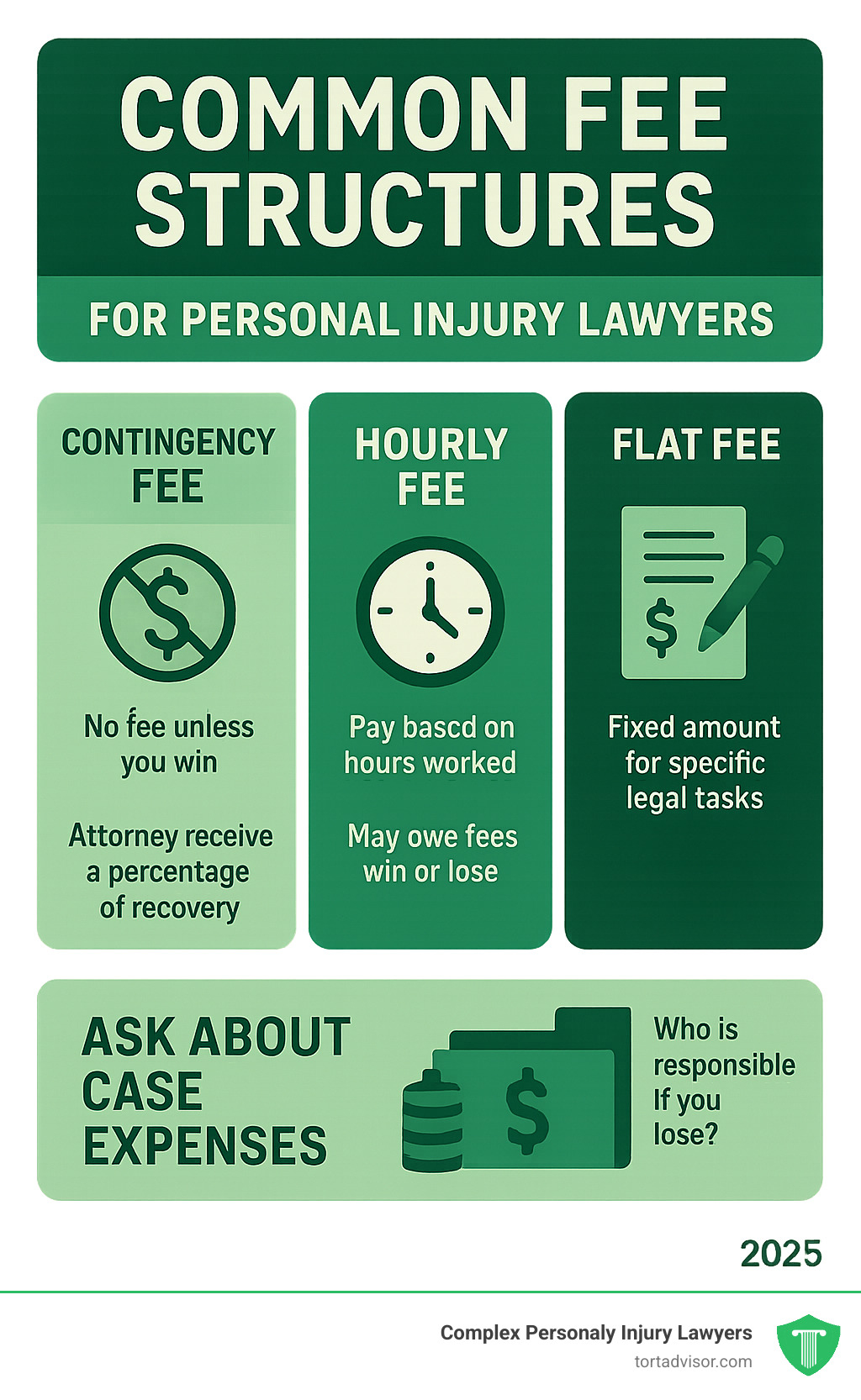
Contingency fees are the norm in personal injury law, so you typically pay nothing at the start and the lawyer is paid only if you recover — which puts their interests in line with yours. Fees commonly fall between 25% and 40% of the settlement or verdict.
Ask about case expenses too, such as court filing fees, expert witness charges and the cost of obtaining medical records. Find out who covers them and when they come out of the recovery. Some firms subtract costs before figuring their percentage; others subtract them afterward, and that choice can noticeably change what you take home. Also ask what happens to those costs if the case is lost — some attorneys absorb them, while others may ask you to repay them. Get clear answers before you sign.
Learn more here: How Much Does a Personal Injury Lawyer Cost?
Practical Tips for Communicating With Your Lawyer
- Listen closely and ask when something is unclear. When legal terms go over your head, ask for a plain-English version. A good lawyer is glad to explain.
- Don’t feel intimidated. Nobody knows your life and your injuries better than you do. Your questions matter, and you deserve to feel informed and at ease.
- Keep calm and focus on facts. An injury is upsetting, but clear and accurate information is what your attorney needs to build the case.
- Write things down. You will hear a lot in a short time, so record key points, next steps and answers. It also signals that you take the process seriously.
- Hold nothing back. Facts that seem unfavorable still need to be shared so they cannot blindside your case later. Privilege keeps those conversations confidential.
Choosing Your Attorney: Is This Lawyer the Right Match?

Once the consultation ends, the decision is yours. Credentials matter, but so does finding someone who understands your circumstances, explains things plainly and will push hard on your behalf. Listen to your instincts: Did you feel listened to? Did the lawyer seem truly engaged with your situation? First impressions often catch things that matter.
Signs a Personal Injury Lawyer Is a Good Fit
Look back on the consultation and ask yourself:
- Did you feel at ease and listened to? A strong attorney gives you undivided attention and treats your claim as important.
- Were explanations easy to follow? They should translate complicated legal ideas into everyday language. Walking out confused is a warning sign.
- Have they handled cases like yours? Lawyers who see similar claims regularly know the insurers’ usual tactics and how to push back.
- Do they respond promptly and communicate well? How they communicate at the consultation is usually how they will communicate for the rest of the case.
- Do you share the same goals? Make sure their strategy — fast settlement or trial preparation — fits what you want.
For help locating dependable representation, visit: Trusted Personal Injury Attorneys
Warning Signs When You Are Choosing a Lawyer
Part of knowing how to communicate with your lawyer is recognizing when to look elsewhere. Be cautious if you notice:
- A guaranteed win or a promised dollar figure. Injury cases have too many moving parts for any ethical lawyer to promise a result. Claims like that point to dishonesty or inexperience.
- Pressure to sign on the spot. A reputable lawyer lets you take time to read the agreement and decide freely.
- Sloppy communication or an unprofessional manner. If they seem distracted, dismissive or short with you now, consider how you will be treated once you have signed.
- Little curiosity about your story. Your lawyer should want every detail. Indifference now usually means your file will not get the attention it needs.
- Past discipline. Look up the attorney with your state bar to see whether there is a record of complaints or serious sanctions.
- Demands for money upfront. Because contingency arrangements are standard, a large upfront payment for a typical injury claim is out of the ordinary.
Trust the feeling that something is wrong. The right lawyer leaves you confident and well informed.
FAQs: How to Communicate With Your Personal Injury Lawyer
Questions are normal when you are thinking about hiring an injury attorney. Below are answers to the concerns people raise most often while figuring out how to talk to a personal injury lawyer.
Does honesty really matter that much when talking to an injury lawyer?
It matters enormously. Your attorney needs the full set of facts, favorable and unfavorable, to build the best case and anticipate the defense. Concealing something can wreck your credibility and sink the claim.
The good news: attorney-client privilege protects what you share. Those conversations stay confidential, so you can be candid without worry. Shading the truth helps nobody — least of all you.
What is a statute of limitations, and why does it matter?
A statute of limitations sets the deadline to file a lawsuit after you are hurt. The deadline depends on your state and the type of claim.
Missing it — even by one day — can permanently end your right to compensation, however strong the facts. That is why checking this deadline is one of the first things a lawyer does. Reaching out to an attorney soon after an injury is wise, since evidence gets lost and memories fade.
Should I still call a lawyer if I may have been partly to blame?
Yes. Worrying about shared fault is common, but it is still worth talking to a lawyer if you think you played a part. Just be upfront about what you did.
Many states use “comparative negligence” rules that let you recover even when you share some blame, with the award reduced by your share of fault. For instance, a person found 20% responsible could still collect 80% of their damages.
An honest picture lets your attorney plan how to keep the fault assigned to you as low as possible. Keeping worries to yourself does far more harm than raising them. Lawyers have often seen cases just like yours, but they can only help with the full story.
Next Steps Toward Finding the Right Legal Help
You now know how to get ready for — and communicate during — a meeting with an injury lawyer. The next move is finding the right advocate.
You understand why preparation matters, from collecting records to building a timeline, and you know that candid conversation, protected by privilege, is what strong cases are built on.
Because most injury lawyers work on contingency, cost should not stop you from getting help. Treat each consultation as a chance to interview the lawyer and look for someone who listens, explains clearly and has handled similar cases. If something seems off, keep searching.
Act promptly. Filing deadlines keep running and evidence can vanish. Even if you think you share some fault, your state’s rules may still allow a recovery.
Legal Lawsuit is a legal-information site that can connect you with carefully screened attorneys in our network who focus on personal injury cases. Through a free, confidential case review, you can talk with a lawyer who values clear communication and will explain each stage of the process.
It all begins with one conversation — and now you are ready to make it a productive one.
Take the next step toward an experienced attorney: Personal Injury Lawsuits
Related Posts
Quick Answer: The Boy Scouts of America (BSA) filed for Chapter 11 bankruptcy in 2020 after facing tens of thousands [...]
Quick Answer: Survivors of sexual abuse by Catholic priests, nuns, or other Church personnel may be able to file a [...]
Quick Answer: Clergy abuse settlements vary enormously based on the severity of the abuse, the strength of evidence that the [...]