
Short answer: This article explains the key facts, eligibility issues, settlement factors, deadlines, and source-backed updates related to this legal topic. Results vary by case facts, evidence, jurisdiction, and representation.
Why Choosing the Right Brain Injury Lawyer Shapes Your Recovery
Brain injury attorneys near me are lawyers who focus on helping traumatic brain injury (TBI) survivors recover money for medical care, lost income and lifelong support. When another person’s carelessness caused your TBI, these attorneys look into what happened, deal with the insurers and push for full compensation so you can concentrate on getting better.
Short Answer: How to Find Brain Injury Attorneys Near Me
1. Use focused directories – Seek out lawyers with real TBI case experience
2. Verify credentials – Look for board certification and Brain Injury Association involvement
3. Book free consultations – Most charge on contingency
4. Ask about past outcomes – Request examples of comparable TBI cases
5. Judge how they communicate – Pick someone who makes the law understandable
Nearly half a million people go to U.S. hospitals each year with head injuries. The Centers for Disease Control and Prevention (CDC) reports that car crashes are behind about 17% of TBI-related hospital stays, a leading cause though far from the only one. More troubling still, people with severe TBI are 2.4 times as likely to die by suicide as people without a head injury.
A brain injury changes the outlook for the whole family. Bills pile up while your capacity to work may be affected for good, and insurers often hurry to offer a low settlement before anyone knows how serious the injury really is.
Many brain injury lawyers provide free consultations and charge on contingency, so you owe nothing unless they win compensation for you.
Traumatic Brain Injury Explained: Causes, Symptoms and Long-Term Effects
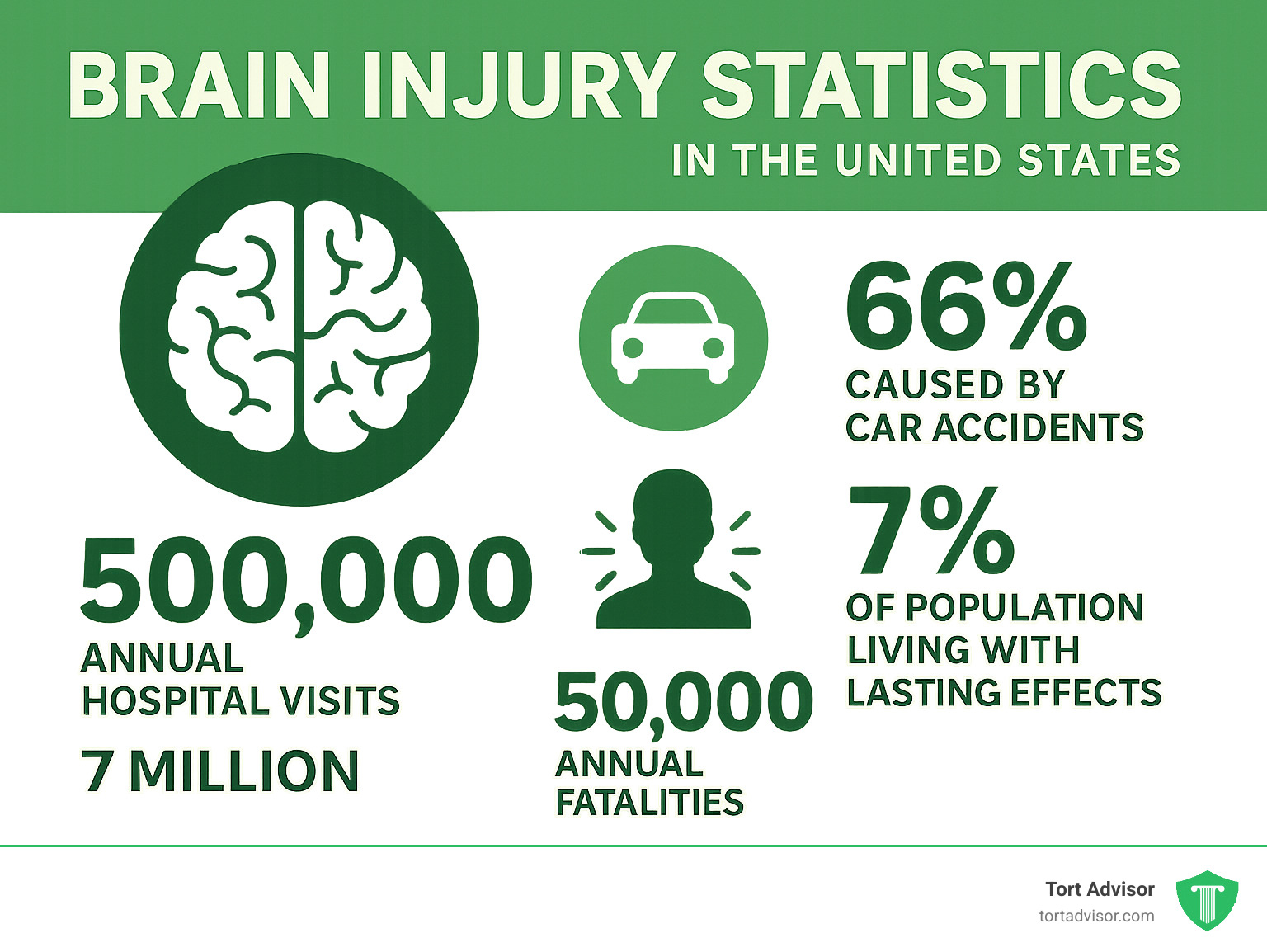
A traumatic brain injury occurs when an external force harms the brain, and it touches millions of households each year. About 7 million brain injuries occur in the U.S. every year, around 50,000 people die from TBIs annually, and nearly 7% of Americans live with lingering effects of a head injury.
Vehicle crashes play a big role, accounting for roughly 17% of TBI hospitalizations, per the CDC. Falls are the top cause overall, responsible for over 40% of TBIs, hitting older adults and small children hardest. Sports, workplace accidents and assaults make up most of the rest.
The head doesn’t have to strike anything for the brain to be badly hurt. A sudden whipping motion, like in a rear-end crash, can drive the brain into the skull and cause coup-contrecoup injuries on opposite sides of the brain.
Diffuse axonal injury happens when violent shaking shears the connections between brain cells, often leaving lasting trouble with thinking and memory. Even supposedly minor accidents can cause symptoms that linger for months or years.
Recovery can take months or years of work with a team of specialists, and lifetime costs can climb into the millions, which is exactly why insurers push fast settlements before the full impact is clear.
Crashes and Accidents That Often Cause TBIs
Rear-end crashes produce whiplash that can lead to secondary brain injury. T-bone collisions slam heads into side windows. Rollovers involve several points of impact, and pedestrian accidents and motorcycle wrecks frequently cause serious head trauma even with protective gear.
To learn more about crash injuries, read our guide to Common Motor Vehicle Accident Injuries.
Mild, Moderate and Severe TBI Compared
Mild TBI involves loss of consciousness for seconds to minutes and memory loss of less than 24 hours. Headaches, forgetfulness and mood shifts can still last for months.
Moderate TBI involves loss of consciousness for minutes to hours and memory loss of one to seven days. Scans often show abnormalities, and significant impairment is likely.
Severe TBI involves prolonged unconsciousness or coma and memory loss beyond seven days. Permanent disability is common and lifelong care is often needed.
What to Do Right After a Possible Head Injury
Get medical care right away, even if symptoms seem mild. Record everything while it’s fresh, including photos of the scene, your injuries and the vehicles. Collect witness details and keep all evidence. Tell your insurer about the accident, but avoid detailed recorded statements before getting legal advice.
Above all, don’t admit fault; let a proper investigation decide what happened. Reaching out to qualified brain injury attorneys near me early helps make sure key evidence isn’t lost and you don’t accept too little.
For in-depth medical information, see the Mayo Clinic’s traumatic brain injury resource.
When to Call Brain Injury Attorneys Near Me, and Why
Don’t wait until you’ve healed to contact brain injury attorneys near me. Evidence vanishes, witnesses forget and insurers use delay to their advantage.
Filing Deadlines Differ by State
– Most states allow two to three years for injury claims
– Minnesota generally allows two years from the date of injury
– Many states stop the clock for minors until they turn 18
– Discovery rules can extend deadlines when an injury wasn’t obvious at first
Preserving Evidence Matters
Scene evidence can be gone within days, and records can go missing if no one requests them promptly.
How Insurers Operate
Insurers often reach out quickly with settlement offers before the true extent of the injury is known, hoping to close the claim cheaply before brain injury symptoms fully emerge.
Free Consultations Lower the Barrier
Most brain injury lawyers offer free consultations and work on contingency, so expert advice costs nothing upfront.
Warning Signs It’s Time to Call a Brain Injury Attorney Now
A Late or Missed Diagnosis – You may have claims against both whoever caused the accident and the medical providers.
Growing Medical Bills – TBI treatment is costly; don’t let money pressure push you into settling early.
A Fast, Low Offer – An offer that arrives within days or weeks is probably far below what the claim is worth.
Disputes Over Partial Fault – If the insurer says you share the blame, you need a lawyer to protect your rights under comparative negligence rules.
How Brain Injury Lawyers Charge
Most brain injury lawyers use contingency fees:
– Nothing paid upfront
– The lawyer is paid only if you recover
– Fees commonly run about 33-40% of the recovery
– The firm usually advances case expenses
To learn more about how claims proceed, see our guide to Personal Injury Lawsuits.
How a Brain Injury Lawyer Builds a Strong Case
A capable brain injury attorney assembles a case that shows exactly how the accident occurred and how it has changed your life.

Investigating and Gathering Evidence
– Inspect and measure the accident scene
– Talk to witnesses while memories are fresh
– Get police reports and EMS records
– Obtain surveillance video from nearby businesses
– Bring in accident reconstruction experts if needed
Medical Records and Expert Testimony
TBI cases depend on testimony from medical specialists such as:
– Neurologists and neurosurgeons
– Neuropsychologists who test cognitive function
– Life care planners who project future needs
– Vocational experts who assess lost earning ability
Key Evidence in a TBI Claim
Medical Proof – EMS reports, hospital charts, imaging, neurological exams and treatment notes
Accident Records – Police reports, witness accounts, scene photos and reconstruction analysis
Proof of Impact – Work records, symptom journals, observations from family and changes in lifestyle
Dealing With the Insurance Company
Insurers employ whole teams to keep payouts low. Your attorney evens the odds by:
Handling All Contact – Every insurer communication goes through your lawyer
Writing Thorough Demand Letters – Laying out all the evidence persuasively
Managing Recorded Statements – Refusing harmful requests or preparing you carefully
Settling vs. Going to Trial
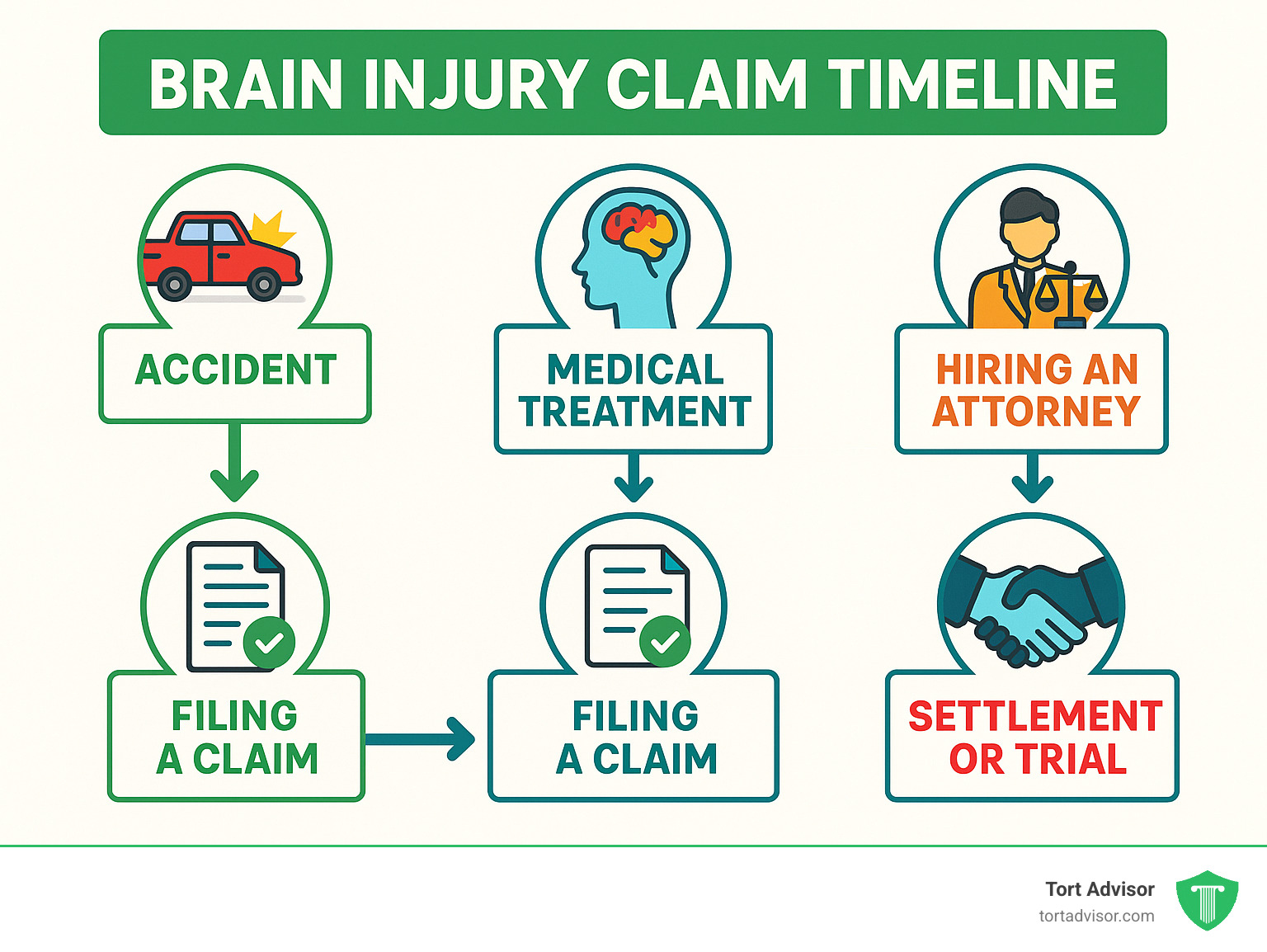
Most TBI cases resolve without a trial, but being ready for trial is what produces fair offers. Your lawyer will use mediation when it makes sense while preparing to litigate if negotiations break down.
Where gross negligence is involved, punitive damages may be possible. For background, see resources such as Minnesota’s punitive damage statute.
What Is a Brain Injury Claim Worth? Damages, Fault and Payment Options
Figuring out what your claim is worth is about protecting your family’s future, not just a number. Lifetime TBI care can cost millions, so getting the valuation right is critical when you work with brain injury attorneys near me.
TBI claims include two main types of damages: economic damages (expenses you can count) and non-economic damages (life changes that are harder to measure).
Economic damages cover medical bills now and in the future, lost pay and benefits, diminished earning ability, home modifications, in-home care and travel costs.
Non-economic damages cover pain and suffering, lost enjoyment of life and lost companionship, acknowledging how a brain injury affects relationships and everyday living.
Your age and life expectancy weigh heavily, since younger survivors lose decades of earning potential. Your job and income before the injury also matter a great deal, though even people with modest incomes can recover significant sums when severe injuries require lifelong care.
What Raises or Lowers Claim Value
Value Increasers:
– Liability that is clearly on the defendant
– Serious injuries backed by strong records
– A young victim with strong earning prospects
– Persuasive testimony from family
– Ample insurance coverage
Value Decreasers:
– Contested liability or shared fault
– Prior medical conditions
– Gaps in treatment
– Low insurance limits
– Unfavorable jurisdiction
What Drives Large TBI Settlements and Verdicts
Legal Lawsuit does not publish average TBI payouts, because every case is different. The largest outcomes tend to come from cases with catastrophic, permanent injuries, a clearly responsible defendant such as a transportation company or property owner, and ample insurance or corporate assets to pay a judgment.
More typical claims, such as a passenger hurt in a T-bone crash or a pedestrian struck by a rideshare driver, are valued on the documented medical costs, lost income and long-term care needs in that specific case.
For a closer look at how one claim was analyzed, see our case study on a passenger injured in a T-bone collision.
The highest-value claims usually involve young victims with severe, permanent disabilities, clear liability, heavy medical costs and major lost earning capacity.
Five Steps to Choosing the Best Local Brain Injury Lawyer
Picking the right brain injury attorneys near me can be the difference between a settlement that barely pays the bills and one that secures your family’s future.

Step 1: Build a Shortlist of Brain Injury Attorneys Near Me
Focus on lawyers who concentrate on brain injuries rather than general injury practice.
The Brain Injury Association of America’s Preferred Attorneys Program lists lawyers with proven TBI experience. The Super Lawyers directory includes only the top 5% of attorneys as chosen by peers, and Avvo ratings and reviews shed light on communication and case handling.
Personal referrals often produce the best fit. Ask other lawyers, doctors who treat brain injuries and support groups whom they recommend.
Step 2: Confirm Relevant Experience and Results
TBI claims demand medical know-how and established relationships with expert witnesses. Ask how many brain injury cases the lawyer has handled, what kinds and how comparable cases turned out.
Favor lawyers who have tried brain injury cases and won; insurers notice that.
Step 3: Weigh Resources and Communication
These cases require heavy upfront spending on experts. Ask whether the firm can advance costs without pressuring you to settle early.
Think about communication: How often will you get updates? Who will you talk to day to day? How fast do they reply?
Step 4: Go Over Strategy, Fees and Timing
Be clear on the fee, typically a 33-40% contingency, how expenses are handled and what happens if the case is lost.
Talk honestly about timing. TBI cases often take longer because the full extent of the injury may not be known for months or even years.
Step 5: Go With Your Gut and Sign the Agreement
Notice how the lawyer makes you feel. Do they listen closely? Explain things clearly? Speak honestly about strengths and weaknesses?
Openness is essential. Your lawyer should set realistic expectations and explain the fee agreement plainly.
Brain Injury Claim FAQs
What is the deadline to file a brain injury lawsuit?
Most states allow two to three years from the date of injury, but the details matter. Minnesota uses a two-year rule, and some states apply a “discovery rule” that extends the deadline when the brain injury wasn’t apparent right away.
Some situations have their own deadlines. Claims against government bodies may require notice within 30 to 180 days, and medical malpractice and product cases often follow separate timelines. Children receive added protection, with the clock usually not starting until age 18.
Don’t take chances with deadlines. Evidence disappears quickly, and insurers grow less cooperative over time.
Can I still recover if I was partly at fault?
In most states, yes, even if you contributed to the accident. Under comparative negligence, your recovery is reduced by your share of fault rather than wiped out. Being 20% at fault on a $1 million claim, for example, would still leave $800,000.
States using modified comparative negligence bar recovery once you reach 50% or 51% fault. Your attorney works to keep your share of fault low and your total damages fully documented.
Will my case settle or go to trial?
The overwhelming majority of injury cases, often estimated at around 95%, settle before trial. Settling brings certain compensation sooner and keeps medical details private.
A trial may be needed when an insurer disputes liability, makes an unreasonable offer or acts in bad faith. The credible possibility of trial is what drives settlement value, so attorneys ready for court tend to get better outcomes.
Next Steps After a Brain Injury
After a TBI, choosing the right brain injury attorneys near you is one of the most important decisions for your family’s future. With lifetime care costs that can reach millions and nearly half a million people hospitalized for head injuries each year, the challenges ahead are enormous.
Insurers count on you taking a quick, low offer before you understand your injury. Having the right legal team changes that dynamic.
The clock is running. Evidence fades, witnesses forget and filing deadlines draw closer, and every day of delay helps the insurer.
Legal Lawsuit was built because too many families have struggled with the legal side of a brain injury while coping with overwhelming medical and emotional strain. We connect people with experienced attorneys in our network who handle brain injury cases regularly, not lawyers who only occasionally take one.
Attorneys in our network practice across the country, understand that your case deserves focused experience, typically work on contingency and offer free first consultations.
Through Legal Lawsuit, you can be matched with attorneys who have the medical understanding to grasp complex injuries, the resources to retain strong experts and the trial experience to go to court when needed.
Your recovery is too important to leave to chance. Don’t let an insurer take advantage of you at a vulnerable moment. The right representation can mean the difference between drowning in medical bills and having what you need for rehabilitation and long-term care.
Ready to take the next step? Request a free, confidential case review from Legal Lawsuit, and we will connect you with experienced brain injury attorneys near me who can pursue the compensation you are owed while you focus on healing.
For a full overview of how injury claims work, read our guide: More info about personal injury legal help.
Your future is worth protecting. Let Legal Lawsuit help you find an advocate who gives you the best chance to rebuild after a traumatic brain injury.
Related Posts
Quick Answer: The Boy Scouts of America (BSA) filed for Chapter 11 bankruptcy in 2020 after facing tens of thousands [...]
Quick Answer: Survivors of sexual abuse by Catholic priests, nuns, or other Church personnel may be able to file a [...]
Quick Answer: Clergy abuse settlements vary enormously based on the severity of the abuse, the strength of evidence that the [...]