
Short answer: This article explains the key facts, eligibility issues, settlement factors, deadlines, and source-backed updates related to this legal topic. Results vary by case facts, evidence, jurisdiction, and representation.
Cosmetic Surgery Malpractice Lawyer Guide: When a Procedure Goes Wrong
In This Guide
A cosmetic surgery malpractice lawyer represents people hurt by a botched operation, a careless beauty treatment or an unqualified provider, and can pursue compensation for the harm.
Here is a quick look at what these attorneys handle and when it may make sense to call one:
| Question | Quick Answer |
|---|---|
| What kinds of cases do they take? | Surgical mistakes, failed implants, botched Botox or fillers, burns, scarring, nerve injury and similar harm |
| When is there a valid claim? | When a provider’s carelessness, not simply a disappointing result, caused the injury |
| Who may be responsible? | Surgeons, clinics and med spas, anesthesia providers, nurses and device makers |
| What can be recovered? | Medical bills, lost income, revision surgery, pain and suffering and emotional harm |
| What does it cost? | Most work on contingency, so there is usually nothing to pay upfront |
| What is the filing deadline? | Often two to three years from the injury or its discovery, depending on the state |
The International Society of Aesthetic Plastic Surgery has reported roughly 35 million cosmetic procedures worldwide in a single recent year, up about 40% over four years. More procedures mean more complications and more cases of genuine negligence, from permanent scars and disfigurement to infections, nerve damage and serious harm caused by unqualified providers. The physical and emotional effects can be severe, and the legal process is rarely simple.
A poor result is not automatically malpractice. But when a provider falls below the accepted standard of care, skips proper screening or never truly explains the risks before you agree, the law may give you a claim.
I’m Mason Arnao. My background is in technology, data systems and digital marketing, and I have spent years researching legal topics, including the work of cosmetic surgery malpractice lawyers, so people can understand their rights in plain English. The sections below explain how to assess your situation and what to do next.
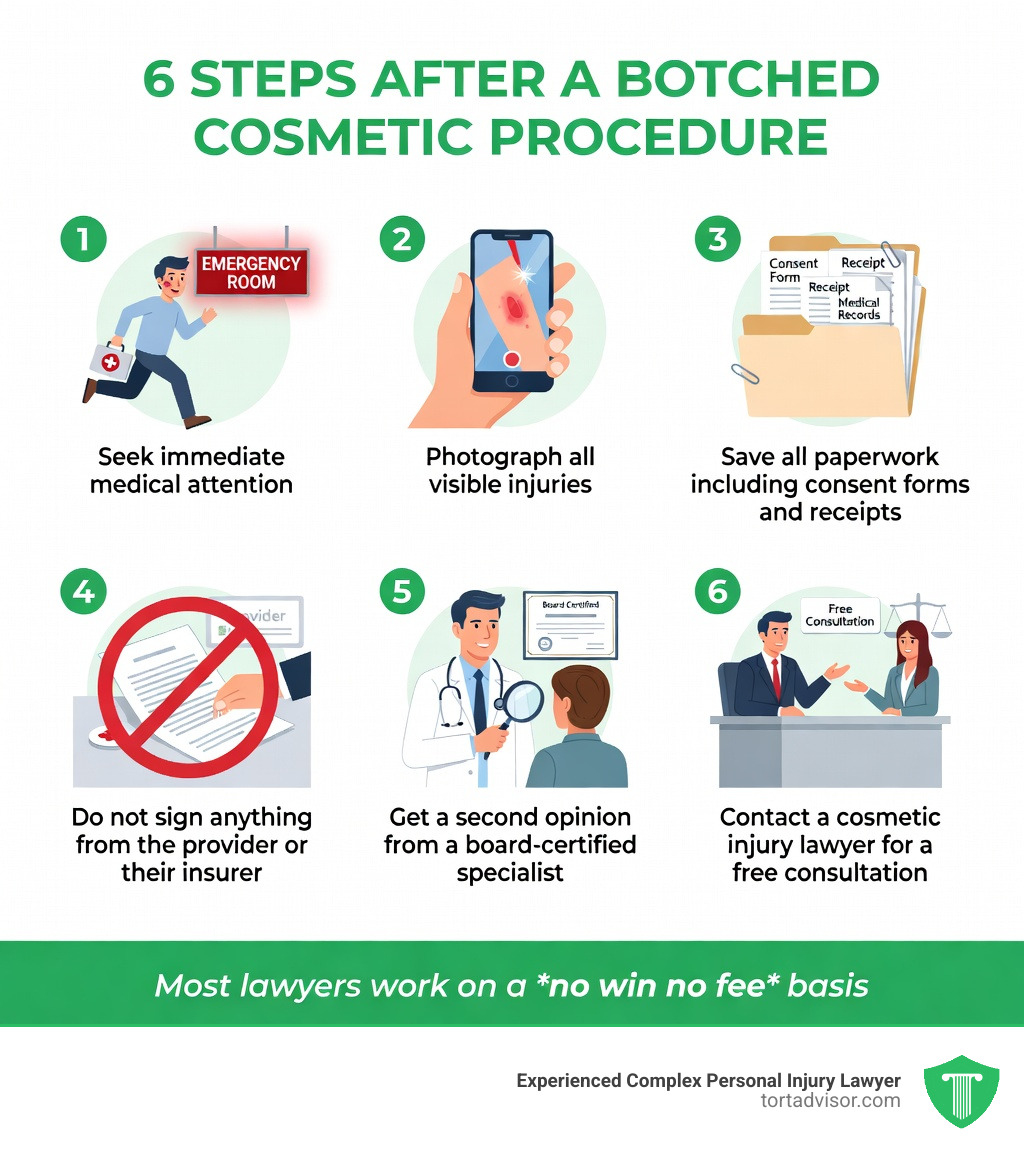
Related cosmetic surgery malpractice resources:
What Counts as Cosmetic Surgery Malpractice
Whether it is major surgery or a quick filler appointment, patients trust a provider with their body and their confidence. Legally, that provider owes a “duty of care,” meaning an obligation to deliver treatment that matches what a competent professional in the same field would provide.
Malpractice is a breach of that duty: a preventable error that a reasonable, qualified provider would not have made. Examples range from using contaminated instruments to performing a procedure the provider is not trained or licensed to do.
Before booking, check a surgeon’s credentials with the American Board of Plastic Surgery or, in Canada, the Canadian Society of Plastic Surgeons. These bodies define what competent care looks like, and when a provider falls short of it and you are hurt, that is negligence.

Why Informed Consent Matters
The consent forms you sign before a procedure are more than a formality. Informed consent requires the provider to explain:
- What the procedure actually involves.
- What results are realistic, not filtered-photo expectations.
- The particular risks and possible complications.
- Alternative treatments.
If a surgeon never warned you that an implant could rupture or cause systemic symptoms, and that is exactly what happened, the surgeon may be liable even if the operation itself went smoothly. If implants are behind your complications, our breast implant lawsuit guide explains who may qualify.
When a Disappointing Result Becomes Malpractice
Reality TV has made “botched” a household word, but the law separates an outcome you dislike from one you can sue over. Every cosmetic procedure carries risk, and sometimes the body heals poorly even after excellent surgery.
A bad result becomes malpractice when it stems from care that fell below the professional standard.
| Normal Surgical Risk | Actionable Negligence |
|---|---|
| Small, even scarring | Large, irregular or avoidable disfigurement |
| Short-term swelling or bruising | Lasting nerve injury or paralysis |
| An unforeseeable anesthesia reaction | Giving the wrong anesthesia dose |
| Not liking the aesthetic result | Operating on the wrong site or leaving an instrument inside |
Procedures and Injuries Behind Most Cosmetic Malpractice Claims
Cosmetic medicine now goes well beyond the classic facelift, and a cosmetic surgery malpractice lawyer may see claims from both surgical and non-surgical treatments.
The Brazilian Butt Lift (BBL) is among the riskiest procedures in wide use. It has been associated with a higher death rate than most cosmetic surgeries, largely from fat embolism, which occurs when fat enters a large vein and travels to the heart or lungs. Preventing it requires strict technique, and careless providers sometimes cut corners.
Other procedures that frequently lead to claims include:
- Breast augmentation: capsular contracture (scar tissue tightening around the implant), uneven results or infection.
- Rhinoplasty: trouble breathing or collapse of the nasal structure.
- Liposuction: punctured organs or severe contour irregularities.
- Botox and dermal fillers: although minimally invasive, these can cause vision loss, tissue death (necrosis) or granulomas when products are contaminated or injected improperly.
Why Cosmetic Cases Need a Specialized Attorney
Cosmetic malpractice cases demand medical and legal know-how that a generalist may not have, much as you would not hire a plumber to rewire a house.
An experienced cosmetic surgery malpractice lawyer knows how to counter “vanity bias,” the suggestion from insurers or jurors that a patient who chose elective surgery accepted whatever happened. Every patient is entitled to safe care, whether the procedure is a fracture repair or a tummy tuck.
Specialized attorneys also work with medical experts who can pinpoint where the provider went wrong, which matters especially with unlicensed practitioners. One widely reported case of a dangerous unlicensed cosmetic practice involved procedures performed in a basement. That was extreme, but many med spas let nurses or technicians perform treatments that legally require physician oversight.
Common Injuries in Botched Cosmetic Procedures
The harm from a botched procedure often goes far deeper than appearance, including:
- Lasting scars: worse than anything discussed during consent.
- Nerve injury: chronic pain, numbness or loss of facial movement.
- Skin necrosis: tissue that dies and darkens after its blood supply is cut off.
- Infections: including dangerous ones such as MRSA.
Sometimes the product, not the provider, is at fault. A malfunctioning laser or defective implant may support a product liability claim; see our guide to defective product liability.
Proving Negligence After a Botched Cosmetic Procedure
A successful claim requires a cosmetic surgery malpractice lawyer to establish four elements:
- Duty: the provider owed you a duty of care because you were their patient.
- Breach: the provider fell below the accepted standard of care.
- Causation: that failure caused your injury, not some earlier condition.
- Damages: you suffered real physical, emotional or financial harm.
Evidence That Strengthens a Cosmetic Malpractice Claim
If you think you have a case, keep every record you can, including:
- Photos: clear, dated images from before the procedure, right after, and as the injury develops.
- Medical records: pre-op evaluations and every post-op note.
- Messages: emails, texts and voicemails to and from the clinic.
- Witnesses: friends or family who saw your pain and recovery.
In implant cases, records may also point to silicone toxicity from breast implants, which can cause systemic symptoms a negligent provider may brush off.
Waivers, Defenses and Deadlines
Signing a waiver does not automatically end your right to sue. Waivers generally cover the known risks of a procedure, not gross negligence, recklessness or professional misconduct. A provider who works impaired or injects unapproved industrial silicone cannot hide behind a consent form.
Watch the statute of limitations closely. Many states give roughly two to three years from the injury or its discovery, and some set shorter windows for medical claims. Miss the deadline and the claim is usually lost for good.
Who Is Liable and What Victims Can Recover
More than one party may share the blame. Beyond the surgeon, a cosmetic surgery malpractice lawyer will also look at:
- The clinic or hospital: for poor staff screening or unsanitary conditions.
- The anesthesia provider: if you suffered a brain or heart injury during the procedure.
- Device makers: if instruments or implants were defective.
If you suspect a faulty device, read our product liability personal injury guide.
Compensation Available to Victims
Damages aim to restore what the injury took from you, and may include:
- Economic losses: medical bills, revision surgery (often more costly than the original procedure) and lost income.
- Non-economic losses: pain, emotional harm such as anxiety or depression from disfigurement, and reduced enjoyment of life.
- Punitive damages: occasionally awarded when a provider acted with malice or extreme recklessness.
Paying for a Cosmetic Malpractice Case
Corrective care can drain your savings, which is why most cosmetic surgery malpractice lawyers work on a contingency fee, sometimes called “no win, no fee.”
This means:
- Nothing is due upfront.
- The attorney typically advances expert and filing costs.
- The fee is a percentage of any recovery and is owed only if the case succeeds.
For a sense of the factors that affect value, try our breast implant settlement calculator, keeping in mind every case is different.
Cosmetic Malpractice FAQs
How long do I have to file a cosmetic surgery malpractice lawsuit?
It depends on the state. Many allow about two years for medical claims, while others, such as New York, allow somewhat longer. A “discovery rule” may extend the deadline when an injury, like a hidden infection, appears later. Talk to an attorney as soon as you suspect a problem.
Can I still sue if I signed a consent form or waiver?
Usually, yes. Consent forms address foreseeable risks, not negligent mistakes. If the provider fell below the standard of care, a waiver generally will not block a claim.
Who can be held responsible for a botched procedure?
Responsibility may rest with the surgeon, the anesthesia provider, nurses, the facility or the maker of a defective device or drug.
Conclusion
Legal Lawsuit believes no one should be left to cope alone with harm caused by a provider’s negligence. Wherever you live, we can explain your options in plain language and connect you with independent attorneys who handle medical malpractice and complex injury cases.
If you were injured, you do not have to handle it alone. Request a free, confidential case review to learn about your options.
Related Posts
Quick Answer: The Boy Scouts of America (BSA) filed for Chapter 11 bankruptcy in 2020 after facing tens of thousands [...]
Quick Answer: Survivors of sexual abuse by Catholic priests, nuns, or other Church personnel may be able to file a [...]
Quick Answer: Clergy abuse settlements vary enormously based on the severity of the abuse, the strength of evidence that the [...]