
Short answer: This article explains the key facts, eligibility issues, settlement factors, deadlines, and source-backed updates related to this legal topic. Results vary by case facts, evidence, jurisdiction, and representation.
Depo-Provera Lawsuit Updates: What You Should Know Now
📋 Table of Contents
- The Depo-Provera Lawsuit Updates You Need Right Now
- Understanding the Depo-Provera Lawsuit Update and Meningioma Risks
- Current Status of the Depo-Provera Multidistrict Litigation (MDL 3140)
- Eligibility and Evidence for a Depo-Provera Claim
- Potential Settlements and Compensation Tiers
- Frequently Asked Questions about Depo-Provera Brain Tumors
- Conclusion
Here is the short version of the Depo-Provera lawsuit updates people are looking for: At a Glance (as of early 2026):
| What’s Happening | Key Details |
|---|---|
| Cases filed | More than 2,100 in federal court as of February 2026 |
| MDL location | U.S. District Court, Northern District of Florida — Judge M. Casey Rodgers |
| MDL number | MDL 3140 |
| Core allegation | Pfizer allegedly did not warn U.S. patients about the risk of meningioma brain tumors |
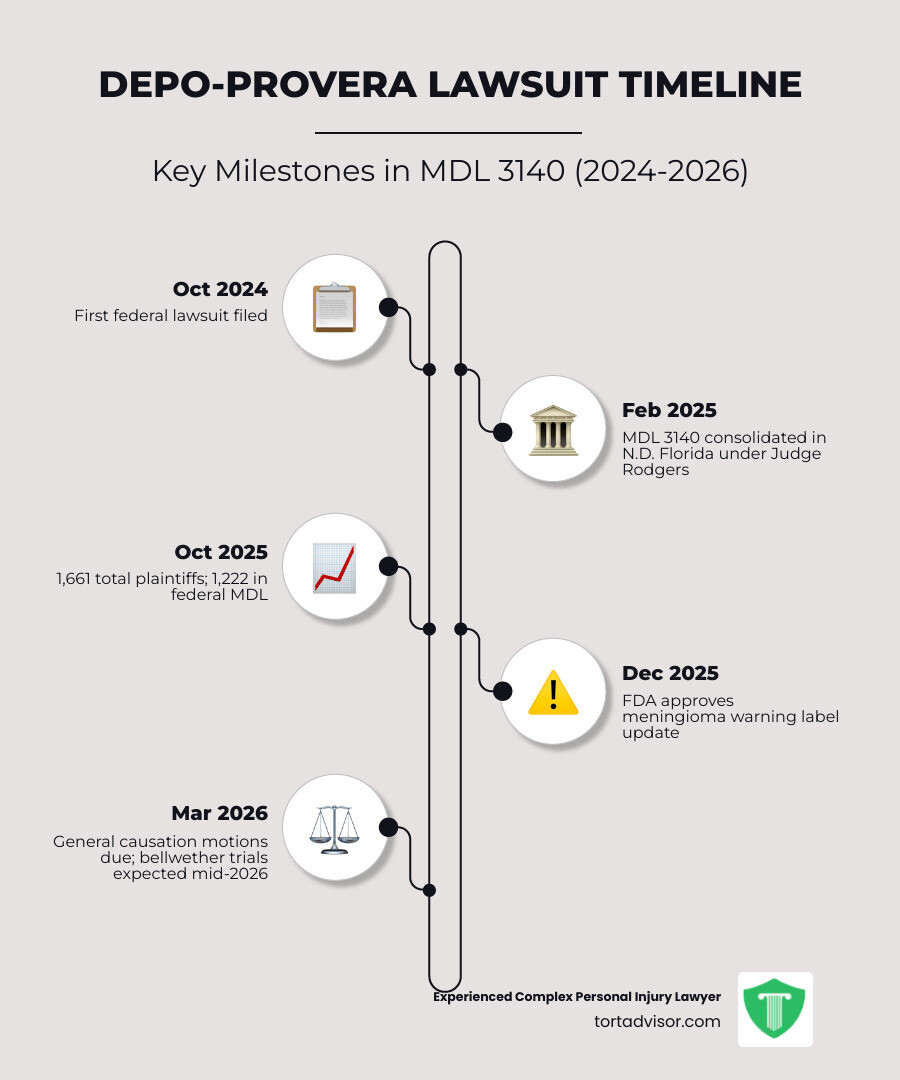
| U.S. label change | FDA approved a meningioma warning in December 2025 |
| Estimated settlements | Master Settlement Agreement signed July 2026; value will depend on tumor severity, treatment and lasting effects |
| Who may be eligible | People who used Depo-Provera for a year or more and were later diagnosed with a meningioma |
| Upcoming milestone | General causation motions were due March 22, 2026 |
Thousands of women who received the Depo-Provera contraceptive shot are suing Pfizer, alleging the company knew or should have known the drug increases the risk of meningioma brain tumors but failed to warn them. A major 2024 BMJ study found that women who used Depo-Provera for more than a year were 5.6 times as likely to develop a meningioma. Even so, the U.S. label went unchanged for years, while Canada added a meningioma warning as early as 2016. The litigation is accelerating: case counts jumped 122% in only two months between August and October 2025, and five pilot bellwether cases have been ordered forward, which could pave the way for a broader settlement. If you or a loved one used Depo-Provera and was later diagnosed with a brain tumor, this guide explains what is happening in the litigation now. I’m Mason Arnao. My work in data systems and online research helps me track complicated litigation like the Depo-Provera lawsuit updates and focus on what really matters. Below, I cover the latest court developments, who may qualify to file and what affects potential compensation.
Key terms in the Depo-Provera lawsuit updates:
Depo-Provera Lawsuit Updates and the Meningioma Risk
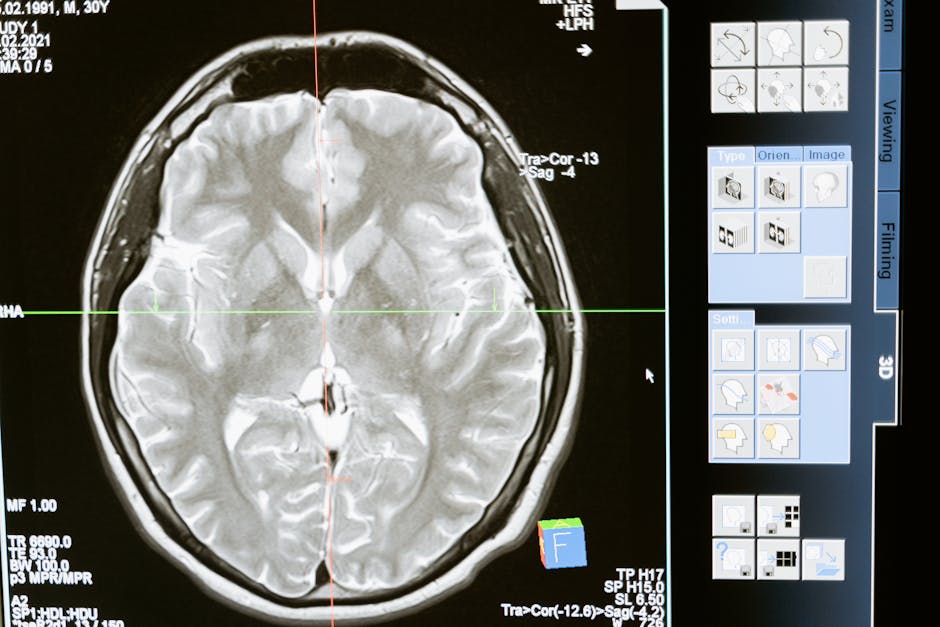
Every Depo-Provera lawsuit update revolves around one frightening diagnosis: intracranial meningioma. These are the most common primary brain tumors, making up roughly 40% of central nervous system tumors, but learning that a mass is growing inside your skull is still life-changing.
What the Research Shows
The connection between Depo-Provera (medroxyprogesterone acetate, or MPA) and brain tumors is more than a legal argument; it is grounded in substantial research on progestogens and meningioma risk.
- 2024 BMJ study: This large French analysis of more than 18,000 women who had meningioma surgery found that using injectable MPA for over a year was linked to a 5.6-fold higher risk of these tumors.
- 2025 Cleveland Clinic study: Published in JAMA Neurology and drawing on data from more than 10 million women, it reported a relative risk of 2.43 for long-term users and estimated one additional meningioma for every 1,100 women exposed to the shot.
- 2025 University of British Columbia study: UBC researchers found a 3.55-fold higher risk compared with other contraceptive methods.
Why Depo-Provera?
Meningiomas respond to hormones and often carry many progesterone receptors. Depo-Provera delivers a high dose of progestogen — 150 mg every three months — which may stimulate those receptors. Researchers have suspected a link since at least 1983, and Pfizer is accused of leaving the risk off U.S. labels while updating labels in other countries.
If you are worried about your own history, read more about the Depo Shot Brain Tumor link and our explainer, Does Depo Provera Cause Brain Tumors? The growing body of evidence points to a real association for many long-term users. For a closer look at the data, see this scientific study on MPA and meningioma safety.
Depo-Provera MDL 3140: Where the Litigation Stands
For a Depo-Provera lawsuit update on where the cases are and who is in charge: the Northern District of Florida. In February 2025, the Judicial Panel on Multidistrict Litigation (JPML) consolidated the federal cases into MDL 3140.
Who Is Running the Case
Judge M. Casey Rodgers presides. She also oversaw the enormous 3M earplug litigation, one of the largest mass torts ever, and that experience matters as this MDL grows rapidly.
Discovery and Pfizer’s Defense
The case is deep in discovery, when both sides exchange evidence. By mid-2025, Pfizer had produced roughly 1 million documents — more than 8 million pages. Pfizer’s main defense is federal preemption: it argues the FDA controls drug labels, so it could not add a warning without agency approval. Plaintiffs counter that Pfizer allegedly withheld the data the FDA needed to require a warning sooner, and many observers doubt the defense will succeed. To follow the history, see our Depo-Provera Lawsuit Updates 2025 and the Depo-Provera Class Action Lawsuit 2024 overview.
How Fast the MDL Is Growing
The jump in filings is one of the biggest stories in the latest Depo-Provera lawsuit updates.
Newest Depo-Provera Lawsuit Updates: Case Counts
As of February 2026, filings had passed 2,100, reflecting a wave of women who only recently learned of the possible connection between past birth control use and their neurological problems. Each is an individual claim within the Depo Provera Lawsuits, so every woman’s medical history and losses are evaluated separately.
How to Join the Depo-Provera Litigation
Think you may have a claim? It is likely not too late, but you should act. The discovery rule often helps: even if you were diagnosed years ago, the filing clock typically starts when you knew, or should have known, that Depo-Provera may have caused your injury, and because the key studies appeared in 2024 and 2025, many women are still within their window. Begin by confirming you meet the Depo-Provera Lawsuit Qualifications. If you do, your attorney will help complete the required Plaintiff Proof of Use/Injury Questionnaire through the BrownGreer MDL Centrality portal, which is mandatory to remain active in the MDL. Our Depo-Provera Lawsuit Eligibility 2025 guide can help you check where you stand.
Eligibility and Evidence for a Depo-Provera Claim
A strong claim needs more than suspicion — it needs documentation.
Basic Requirements
Intake rules differ somewhat from firm to firm, but the strongest claims generally involve:
- Use: At least two injections of brand-name Depo-Provera or an authorized generic (such as Greenstone or Prasco).
- Length of use: Generally a year or more, since the risk rises markedly after 12 months.
- Diagnosis: A confirmed brain or spinal meningioma.
Essential Evidence
Documents to collect:
- Pharmacy records: Showing you received the injections.
- Medical records: Especially operative reports if you had surgery.
- Imaging: MRI or CT scans showing the tumor’s size and location.
- Pathology reports: Confirming the tumor grade (I, II or III).
For a full checklist, see our Depo-Provera Lawsuit Criteria Guide and the Depo-Provera Injury Claim Complete Guide. The Depo-Provera Severe Side Effects Guide can also help you spot symptoms you may have missed.
How Depo-Provera Claims May Be Valued
The question everyone asks is what a case is worth. As of this update, Pfizer signed a Master Settlement Agreement for eligible MDL 3140 claims in July 2026, but the payout tiers and individual amounts have not been made public, so any specific dollar figure is speculation; what we can describe is how mass tort settlements are usually structured.
How Tiered Settlements Usually Work
Large MDL settlements are commonly divided into tiers according to how serious the injury is:
- Highest tier: Women who needed more than one brain surgery, have permanent disability such as vision loss or cognitive problems, or have Grade II or III (atypical or malignant) tumors would generally rank highest.
- Middle tier: Women who had a single successful surgery for a Grade I tumor but faced a long recovery and significant medical bills would typically fall here.
- Lower tier: “Watch and wait” cases where a tumor was found but surgery is not yet needed, or cases with mild lingering symptoms, would usually rank lower.
Damages You May Be Able to Claim
Compensation reflects how the tumor changed your life, not only the diagnosis itself. You may seek:
- Medical costs: Brain surgery and follow-up care can be extremely expensive.
- Lost income: Pay you missed while recovering.
- Pain and suffering: The emotional strain of a brain tumor diagnosis.
- Reduced quality of life: If you can no longer drive, work or care for your family.
See the Depo-Provera Settlement Amounts Lawsuit Guide for more, or explore the factors in your case with our Depo Provera Settlement Calculator. The Depo-Provera Lawsuit Compensation Guide 2025 offers additional context.
Depo-Provera Brain Tumor FAQs
What symptoms can a meningioma linked to Depo-Provera cause?
Because meningiomas grow slowly, symptoms tend to appear gradually. Watch for:
- Headaches that persist and worsen.
- Vision changes such as blurriness, double vision or lost peripheral vision.
- Hearing loss or ringing in the ears.
- Seizures.
- A reduced sense of smell.
- Weakness in an arm or leg.
If you used Depo-Provera and notice these symptoms, see a neurologist promptly. A complete list of Depo Provera Brain Tumor Symptoms is available, and these count among Depo-Provera severe side effects.
Has Depo-Provera been recalled?
No. As of early 2026, Depo-Provera has not been recalled, but the litigation has brought a major change: in December 2025, the FDA approved updated labeling that includes the meningioma risk. That follows years of boxed warnings about bone density loss, covered in our Depo-Provera Lawsuit Side Effects Guide. Plaintiffs in the Birth Control Shot Lawsuit see the label change as an acknowledgment that the risk is real.
What is the filing deadline?
It is one of the most frequent questions in any Depo-Provera lawsuit update. Deadlines differ by state, often 2 to 3 years, but the discovery rule generally helps: because the scientific link was not widely publicized until 2024, many courts may find the clock did not start until then. If Pfizer is found to have engaged in fraudulent concealment, deadlines could be extended further through equitable tolling. Don’t guess — see our Depo-Provera Lawsuit Payout Date Guide and the Depo-Provera Lawsuit News Ultimate Guide, and talk with an attorney.
Conclusion
The Depo-Provera lawsuit updates keep coming week after week. With more than 2,100 cases pending and bellwether trials expected in 2026, there is still time to pursue accountability from Pfizer. Legal Lawsuit believes no woman should have to trade reliable birth control for her long-term neurological health. As a legal-information site, we connect people with experienced attorneys in our network who handle complex drug litigation, whether you live in Alabama, California, Florida or anywhere else in the country. When you are ready, read our Depo Provera Lawsuit Complete Guide or request a free, confidential case review today.
Additional Resources
Related Posts
Quick Answer: The Boy Scouts of America (BSA) filed for Chapter 11 bankruptcy in 2020 after facing tens of thousands [...]
Quick Answer: Survivors of sexual abuse by Catholic priests, nuns, or other Church personnel may be able to file a [...]
Quick Answer: Clergy abuse settlements vary enormously based on the severity of the abuse, the strength of evidence that the [...]