Backseat Seat Belts in Florida: Rules and Claims
By Mason ArnaoPublished

By Mason ArnaoReviewed by Mason Arnao
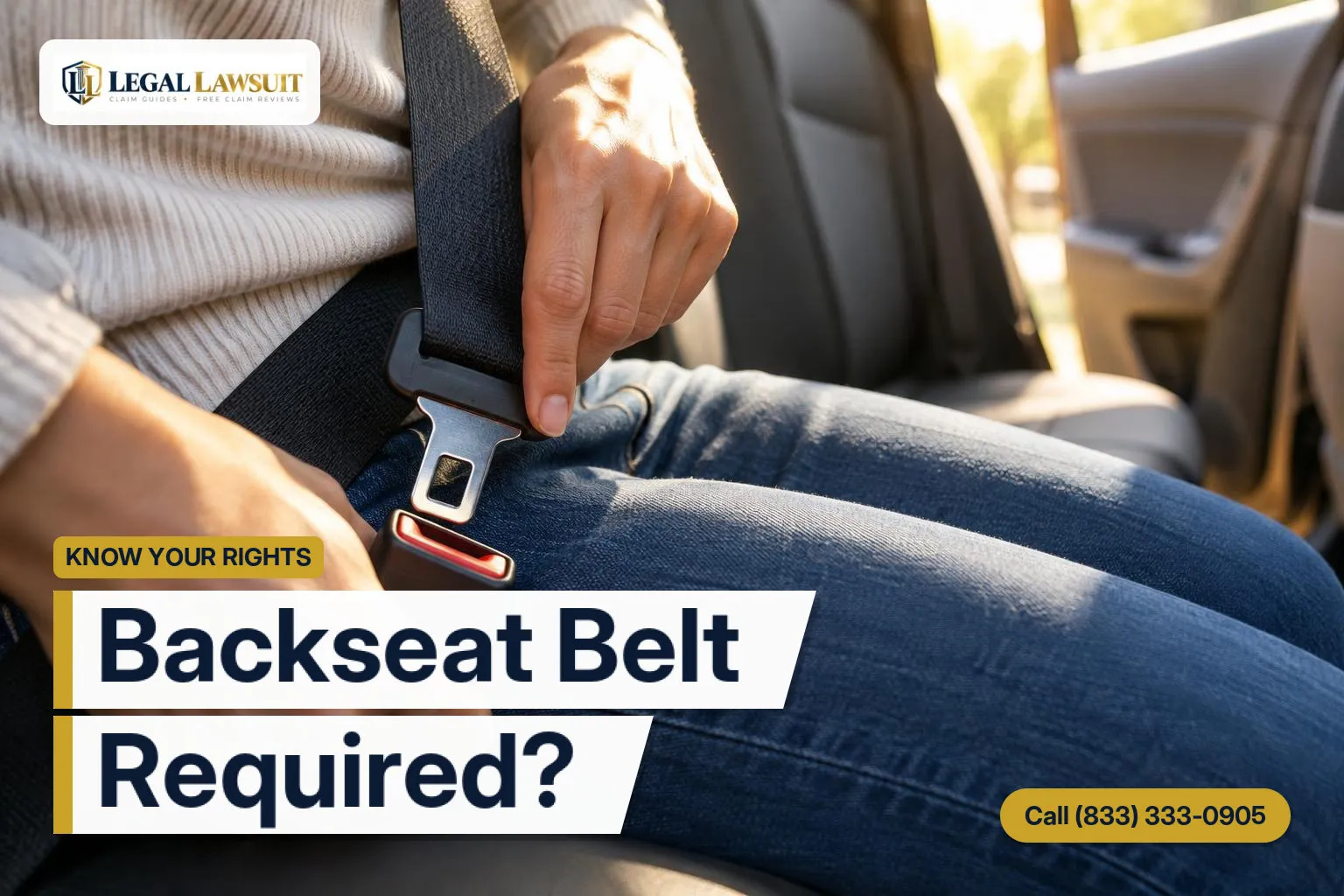
The rules for backseat seat belts in Florida generally do not require adults 18 or older to buckle up in the rear seat, but passengers under 18 must be properly restrained. If you are injured there, ask your insurer which personal injury protection (PIP) policy may cover you and how the requirement for qualifying initial care within 14 days affects your eligibility for medical benefits.
This guide explains why rear-seat buckling still matters, how to check a child’s separate restraint requirements, which PIP questions to ask, and what records to organize if the insurer questions belt use.
Does Florida require seat belts in the backseat?
Generally, no—if the backseat passenger is 18 or older. For ordinary passenger cars, Florida’s safety belt law requires drivers and front-seat passengers to wear seat belts, and it requires passengers younger than 18 to be restrained wherever they sit. It does not impose a general seat belt requirement on rear-seat passengers aged 18 or older. The law also includes vehicle and medical exceptions, so those general rules do not describe every situation.
The first distinction is between what the law requires and what makes a rear-seat ride safer. “Not generally required” answers the legal question for an adult in the backseat; it should not be read as advice to leave the belt unbuckled.
Start by identifying the passenger’s age and seating position rather than treating everyone in the car alike. If you are checking the rules for a child, make a separate restraint check instead of relying on the adult backseat answer. If you are sorting through an injury claim, keep the belt-requirement question separate from questions about insurance coverage and the circumstances of the crash.
Why buckle up when an adult rear-seat belt is not required?
The practical reason is safety: a seat belt helps keep you inside the vehicle during a crash. A distinction in legal requirements is not a reason to ride unbuckled.
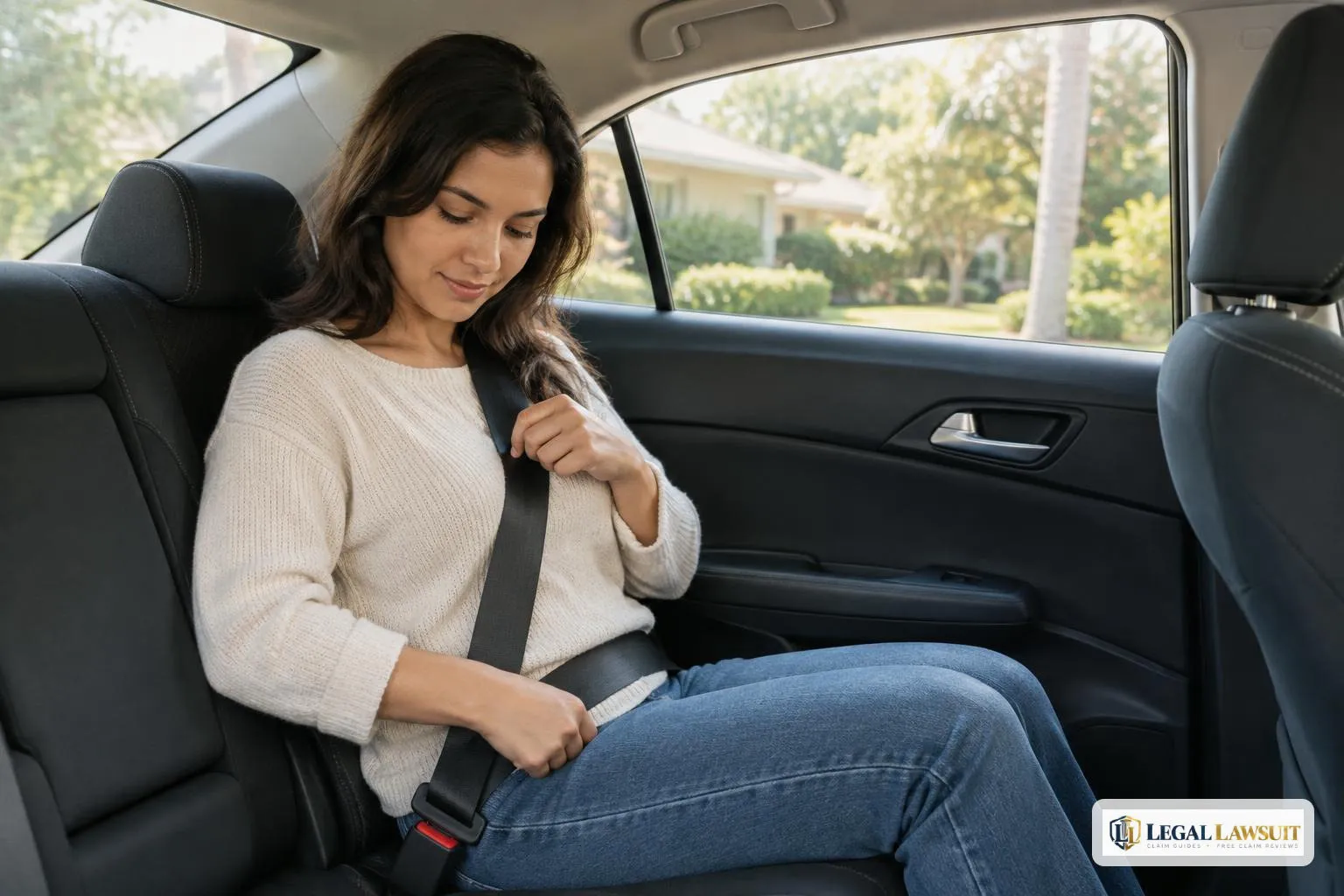
NHTSA’s rear-seat seat belt safety guidance recommends buckling up on every trip, in every seating position—including the backseat of a taxi or rideshare. The agency explains that belts help prevent occupants from being ejected during a crash. It also recommends placing the lap belt across your hips, below your stomach, and the shoulder belt across your chest, away from your neck.
Make that positioning check part of getting settled, before the car moves:
- Check the lap belt: Keep it low across your hips rather than over your stomach.
- Check the shoulder belt: Make sure it crosses your chest rather than resting against your neck.
- Keep the same routine: Buckle up whether you are riding in a personal car, taxi or rideshare.
These are safety recommendations, not a statement that Florida requires every adult rear-seat passenger to wear a belt. The useful takeaway is simple: check the belt’s position before the trip begins, rather than treating the adult legal distinction as a reason to skip it.
Children need a separate restraint check
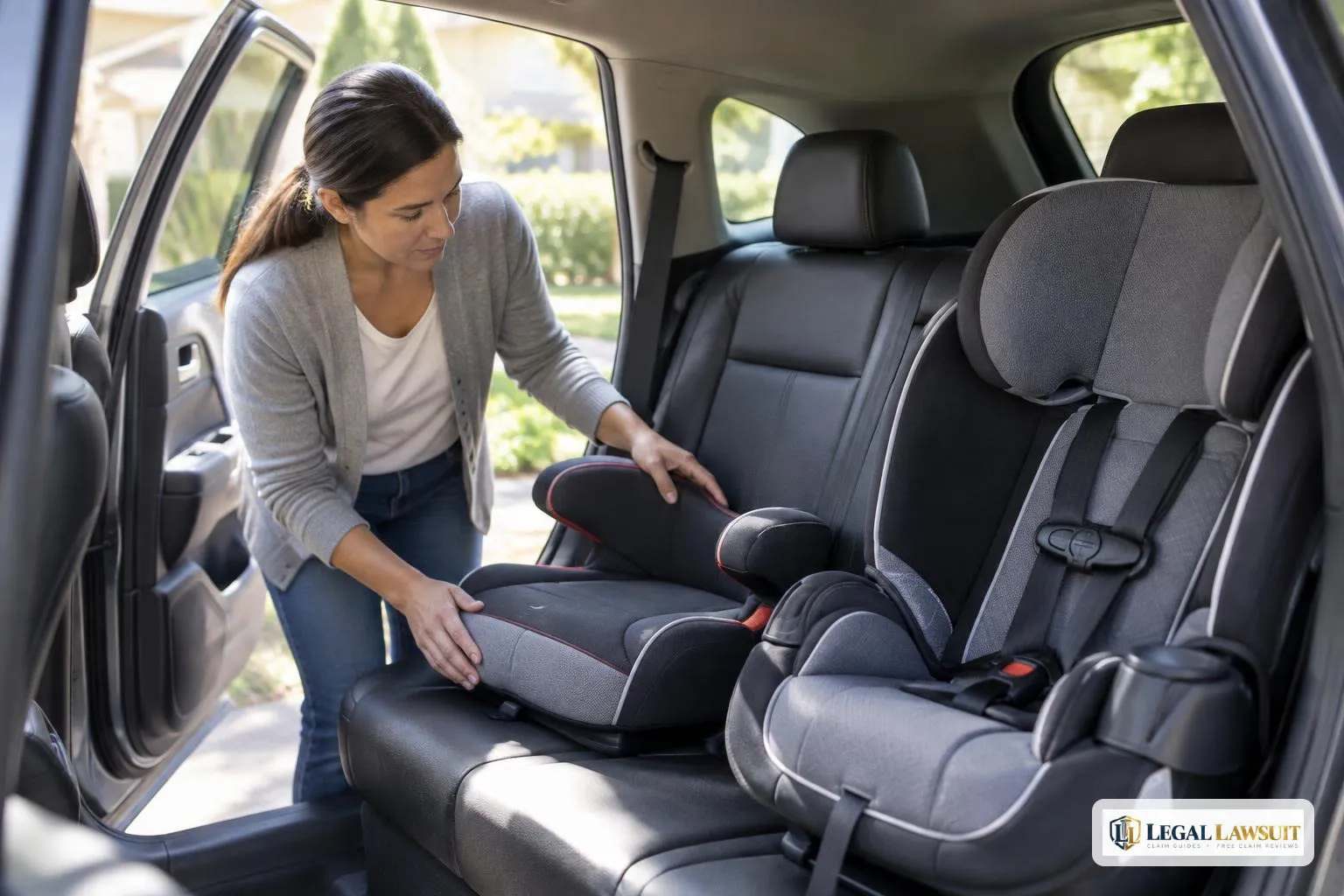
For a young child riding in the backseat, check the child-restraint requirements separately from the general seat belt rules. Florida generally requires a crash-tested, federally approved child restraint through age five, subject to statutory exceptions. Through age three, the restraint must be a separate carrier or a vehicle manufacturer’s integrated child seat. For ages four and five, a separate carrier, integrated child seat, or booster seat may be used. The law also provides a distinct protection in civil cases: failure to provide and use a child passenger restraint is not comparative negligence and is inadmissible as evidence in a civil negligence trial under Florida’s child restraint requirements and civil-evidence provision.
Keep the restraint requirement and the evidence protection separate. The civil-evidence provision does not remove the child-restraint requirement. If an insurer raises your child’s restraint use, keep its questions or explanation with your claim paperwork so you can discuss the specific issue with a lawyer.
For your family’s next ride, Legal Lawsuit’s guide to car seat safety precautions for children is a practical companion to these legal requirements.
Which PIP questions should an injured backseat passenger ask?
Start by asking which policy may cover you—not simply whether the car you rode in has insurance. Florida’s PIP statute includes passengers, subject to eligibility, exclusions, and payment-priority rules. For medical benefits, initial qualifying care must occur within 14 days after the accident. When a PIP insurer partially pays or rejects a claim, it must provide an itemized specification under Florida’s PIP coverage, initial-care, and claim-response provisions.
Before assuming the occupied vehicle’s insurer pays, ask whether your own policy or a policy held by someone in your household applies. Keep the policy question separate from any disagreement about rear-seat belt use. Useful questions for the insurer include:
- Which policy are you evaluating? Have you considered any applicable individual or household coverage?
- What information is missing? Ask for a specific list rather than guessing what to send.
- What exactly is disputed? Is it coverage, treatment, billing, or the account of belt use?
- Where is the itemized explanation? If payment was reduced or rejected, ask the insurer to identify its reasons.
For the broader process, see how to file a PIP claim in Florida. For timing details, use the separate guide to Florida’s PIP claim clock after a crash.
What to organize if the insurer questions belt use
Start with a factual account of what happened, rather than trying to predict the claim’s outcome from belt use alone. Keep your response focused on details you personally remember:
- Your seating position: Identify where you sat in the backseat.
- Belt use: State whether the belt was fastened. If you cannot remember, say so rather than guessing.
- Any buckle problem: Describe only what you personally observed, such as a latch that would not click. Separate that observation from any assumption about why it happened.
- Witnesses: Note who may have seen your seating position, belt use, or buckle problem, and keep their contact information if available.
Keep the insurer’s letters and emails together with available photographs, medical records, and the crash report. If you need help locating supporting material, see this guide to obtaining traffic camera footage and police reports. Clearly distinguish what each record shows from what you remember independently.
Ask the insurer to identify the facts and policy provisions supporting its position, preferably in writing. For a PIP claim, Florida law requires an insurer that partially pays or rejects a claim to provide an itemized specification of each item reduced, omitted, or declined. Keep that explanation with the related bills and correspondence.
If you still dispute the explanation, consider an individualized legal review rather than assuming belt use alone determines the result. For help organizing the broader insurance process, continue with Legal Lawsuit’s guide on how to file a car accident claim. Legal Lawsuit provides information and is not a law firm.
Frequently asked questions
Do adults have to wear seat belts in the backseat in Florida?
Generally, no. Florida does not impose a general seat-belt requirement on rear-seat passengers age 18 or older. Its seat-belt law requires belts for drivers, front-seat passengers and passengers under 18, subject to statutory exceptions. The adult rear-seat rule should not be confused with the requirements for children and teenagers.
Does Florida require teenagers to buckle up in the backseat?
Yes, if they are under 18, subject to the law’s exceptions. Florida’s under-18 restraint requirement applies regardless of seating position, so moving to the backseat does not remove that requirement. An 18- or 19-year-old falls under the adult rules rather than the under-18 passenger requirement.
Why should I buckle up in the backseat of a taxi or rideshare?
A seat belt helps keep you inside the vehicle during a crash. NHTSA recommends buckling up in every seat, including in taxis and rideshares. Place the lap belt across your hips, not your stomach, and the shoulder belt across the middle of your chest. Do not tuck the shoulder belt behind your back or under your arm.
What restraint does Florida require for a four- or five-year-old?
For children ages four and five, Florida generally requires a separate child carrier, an integrated child seat or a child booster seat. The statute includes limited exceptions allowing a safety belt instead, including certain gratuitous transportation, emergency transportation and documented medical circumstances. Do not assume an ordinary seat belt alone satisfies the requirement for every trip.
Which PIP policy might cover an injured rear-seat passenger?
Start by checking your own PIP coverage and any coverage through a relative living in your household. The vehicle owner’s policy may also be relevant, depending on your circumstances. Florida’s PIP law sets eligibility, exclusions and coverage-priority rules, so coverage is not determined by your seat alone. Ask the insurer which policy applies and what information it needs to evaluate your claim.
Sources
- Seat Belt Safety: Buckle Up America · National Highway Traffic Safety Administration
- 2026 Florida Statutes, Section 627.736 — Required personal injury protection benefits; exclusions; priority; claims · Florida Senate
This article is general information, not legal advice. Laws and deadlines vary by state and change over time; check the linked sources or speak with a licensed attorney about your situation.
Related Posts

Your car is repaired, but its history now lowers what it's worth. This guide explains who usually pays for that lost value, what proof insurers ask for, and how to submit the claim in writing.
An adjuster sent you a medical release to sign after your crash. Here is what a broad authorization can unlock, how a release to your own insurer differs from one to the other driver's insurer, how to narrow it, and how to get your records yourself under HIPAA.
Who covers your rental after a crash depends on fault, the coverage you bought, and whether your car is repaired or totaled. This guide covers the three ways a rental gets paid for, what limits the rental, and what to do while the other insurer is still deciding fault.