Diminished Value Claim After a Car Accident: How to File
By Mason ArnaoPublished

By Mason ArnaoReviewed by Mason Arnao
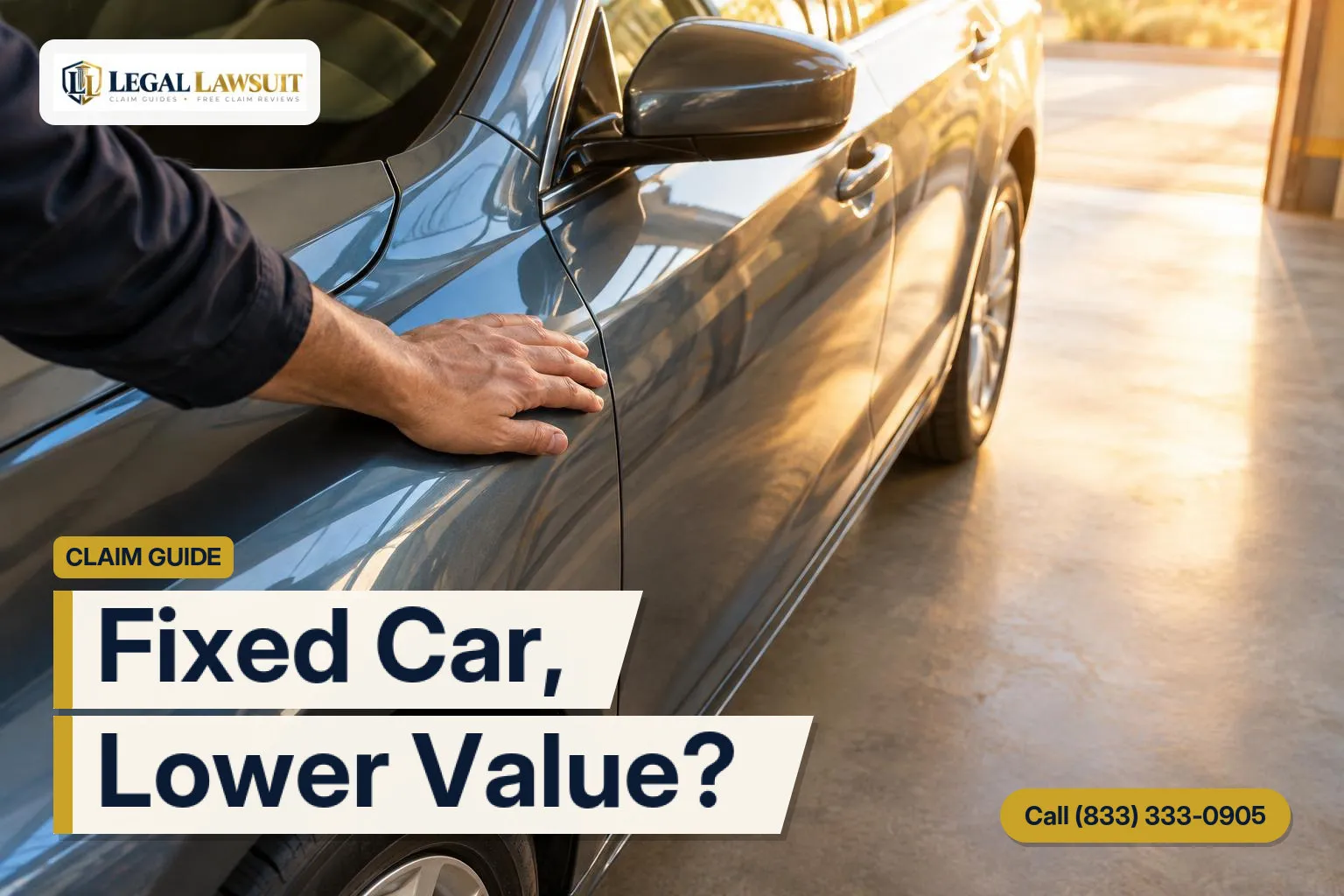
Often, yes. If another driver caused the crash, you can usually bring a diminished value claim after a car accident against that driver’s insurance company, asking it to pay for the market value your car lost even after a full repair. Washington’s insurance regulator notes that these claims are typically filed against the at-fault party’s insurer, are not paid automatically, and require proof of the lower value.
Whether you can recover depends on where you live and how your claim is set up. A Journal of Insurance Regulation review found that diminished value rules and policy exclusions vary from state to state. Many states allow recovery from the at-fault driver’s insurer, but claims under your own policy are treated differently. There is also no single required method for calculating the loss, so the evidence you gather matters.
This guide walks you through the process step by step. It explains what diminished value means once your car is already repaired and who pays: the other driver’s insurer or your own. It also covers why your state’s rules matter, what insurers ask for as proof, and how to put your claim in writing. Finally, it explains what to do if the offer is too low or the answer is no, including your right to file a complaint with your state’s insurance department.
What diminished value means when your car has already been repaired
Diminished value is the money your car lost in resale value because it now has an accident history, even after it has been fixed. Washington’s insurance regulator defines diminished value as the difference in market value between your car before the crash, undamaged, and the same car after it has been repaired. Two cars can look and drive the same, but buyers often pay less for the one with a crash on its record.
This is different from the repair bill. Repair costs pay to fix the damage. A diminished value claim asks for the value that remains lost after the repairs are done.
The three kinds of diminished value
Research published in the Journal of Insurance Regulation describes three categories:
- Inherent diminished value: the loss that remains because the car now has an accident history, even after a proper repair. Most people mean this kind when they talk about a diminished value claim.
- Immediate diminished value: the drop in value right after the crash, before any repairs are made.
- Repair-related diminished value: lost value caused by poor or incomplete repairs. This is a problem with the repair work, not with the accident history itself.
Repaired vs. totaled
A diminished value claim applies to a car that was repaired. If the insurer declared your car a total loss, the claim follows a different path. You can read more about how the property damage claim works when a car is totaled or repaired.
You have to ask for it
Do not expect diminished value to show up in your repair payment. Washington’s regulator says insurers do not pay it automatically. You have to ask for it and back up your request with proof that your car lost value.
Who pays: the at-fault driver’s insurer vs. your own policy
In most cases, you ask the other driver’s insurance company to pay for your car’s lost value, not your own. Which company you file with depends on the type of claim:
- Third-party claim: You file with the at-fault driver’s liability insurer, which covers damage that driver caused to others.
- First-party claim: You file with your own insurer, and what you can get depends on your own policy.
The two types are treated differently. A review of diminished value rules across the states found that many states allow recovery from the at-fault driver’s insurer. First-party coverage varies more, and some policies include language that excludes it.
Washington’s insurance regulator says diminished value claims are typically filed with the at-fault party’s insurer, not your own. It also notes that some policies don’t cover diminished value at all.
Texas example: The Texas Department of Insurance’s position is that an insurer is not obligated to pay its own policyholder for diminished value when the car has been completely repaired to its pre-damage condition. The same bulletin says an insurer may still owe lost market value to a third-party claimant. It may also owe its own policyholder under uninsured/underinsured motorist coverage.
Because the rules differ by state and by policy, read your own policy before you decide where to file. Look at the property damage, collision and uninsured/underinsured motorist sections, and check for any diminished value exclusion. If the other driver caused the crash, the usual route is to add diminished value to the property damage part of your claim. That means filing a car accident claim against the other driver’s insurer.
Why your state’s rules matter
Whether you can recover diminished value, and how much, depends heavily on where you live. No single nationwide rule applies. Research published in the Journal of Insurance Regulation’s review of automobile diminished value claims describes real differences among states, shaped by state statutes, court decisions and the wording of insurance policies.
Third-party vs. first-party claims
The same NAIC research notes that many states allow you to recover diminished value from the at-fault driver’s insurer (a third-party claim). Claims under your own policy (a first-party claim) are a different matter. Some states limit or exclude certain diminished value claims, and some policies include endorsements, which are added sections of policy language that specifically exclude diminished value. Before you file, read your policy and check for any endorsement that mentions diminished value or loss in market value.
No single valuation method
There is also no agreed standard for calculating lost value. The NAIC paper discusses formula-based approaches, including one commonly called 17c, alongside market-based appraisals that look at what comparable vehicles actually sell for. Because no method is universally accepted, the insurer’s estimate and your own may differ.
Where to check your state’s rules
Your state insurance department’s website is the best place to look for rules and consumer guidance that apply where you live. Look for:
- Bulletins or consumer guides that mention diminished value
- Information on how your state treats claims against your own insurer compared with the other driver’s insurer
- Contact details for a consumer help line if your situation is not covered
What insurers ask for to prove lost value
Expect to make the case yourself. Washington’s insurance regulator explains that diminished value is not paid automatically and that you must prove the claim with supporting documentation. It also notes that some owners hire a private company to document the lower value. Other states may handle this differently, but a well-organized file helps in any state.
Your core claim file
- Repair paperwork: the final repair invoice and every estimate, including any added estimates for hidden damage.
- Photos: pictures of the damage before repairs and of the finished work.
- Claim details: the claim number and the insurer’s written liability decision.
Proof of your car’s condition before the crash
- Maintenance and service records
- The mileage at the time of the accident
- Evidence that the car had no prior damage, such as earlier inspection records or a vehicle history report
An independent diminished value appraisal
An appraisal compares what your car was worth just before the crash with what it is worth after repair. Insurers and appraisers use different approaches, from formulas to individual appraisals, and there is no single standard valuation method. That makes it important for an appraisal to show its work. A credible appraisal usually:
- Identifies the vehicle by VIN, trim, options and mileage
- Reviews the repair invoice and photos to describe what was damaged and fixed
- Explains how it reached the pre-accident value and the post-repair value
- Uses comparable vehicles or market data rather than an unexplained number
- States the appraiser’s name and qualifications
Why timing matters
Diminished value is the value your car still lacks after it has been fixed. That means the loss can only be measured once repairs are finished. Wait for the final invoice and the completed repair before you order an appraisal. If the shop later finds more damage, update your file.
How to submit a diminished value claim in writing
Raise diminished value with the adjuster handling your property damage claim, then follow up with a written request that shows your number and how you reached it. Washington’s insurance regulator notes that diminished value isn’t paid automatically, requires proof, and is worth discussing with your claims adjuster. Putting the request in writing gives you a clear record of what you asked for and when.
- Tell the adjuster. Say plainly that you are seeking diminished value in addition to repairs. Ask how they want the request and documents sent.
- Send a written request by email or letter. Include:
- Your claim number and the insured’s name
- Your vehicle’s year, make, model, VIN and mileage
- The date repairs were completed and the shop that did them
- The amount you’re asking for and a short explanation of how you arrived at it
- Attachments: your appraisal or valuation report, the repair estimate, the final invoice and photos
- Keep copies of everything you send and receive. After each phone call, write down the date, who you spoke with and what was said.
- Read any release before you sign it. Release forms can be worded broadly. Before signing a property damage release, ask the adjuster in writing whether it covers diminished value. If it does, consider waiting until that part of your claim is settled.
For more on dealing with the adjuster on statements, releases and offers, see our separate guide.
A complete paper trail helps beyond the claim itself. If you ever need to escalate, state insurance departments ask complainants for a written account and supporting documents. The notes and copies you keep now will already be organized for that.
If the insurer offers too little or says no
A low offer or a denial does not have to be the final answer. Start by asking the adjuster, in writing, to explain how they valued your car and why they reached their decision. A written explanation shows you exactly what you need to respond to.
Answer each point with your evidence
Go through the insurer’s reasons one at a time and reply to each in writing:
- If they say there was no lost value: point to your repair records, the extent of the damage, and any appraisal you obtained.
- If they used a formula: research published by the NAIC describes formula approaches and independent appraisals as different ways to measure diminished value, with no single accepted standard. You can say so politely, then offer market evidence, such as comparable listings or dealer trade-in quotes for your car with and without its accident history.
- If they question your documents: ask which specific records they need and send copies, keeping the originals.
Our guides on what to do when a car insurer denies your claim and responding to a lowball settlement offer before you sign walk through these conversations in more detail.
Filing a complaint with your state
If you still can’t resolve the dispute, you have the right to file a complaint with your state department of insurance. The NAIC notes that delays, denials and unsatisfactory settlements are common reasons people do this, and it explains how to reach your state’s complaint page. Before you file, prepare:
- A short written account of what happened and when
- Your claim number and the adjuster’s name
- Copies of letters, emails, estimates, repair invoices and appraisals
When outside help makes sense
If the amount at stake is significant or the insurer’s position seems hard to challenge on your own, Legal Lawsuit can help you understand your options calmly, without promising any particular result.
California readers may also find TortAdvisor’s guide useful. It covers how an accident claim lawyer evaluates a case, how insurers approach it, and what California law allows you to recover.

Frequently asked questions
Can I file a diminished value claim with my own insurance company?
Sometimes, but it depends on your state and the wording of your policy. In Texas, for example, the state insurance department has said an insurer is not obligated to pay first-party diminished value when the car is completely repaired to its pre-damage condition, because the policy language doesn’t refer to diminished value. The same bulletin says an insurer may owe lost market value to third-party claimants and to people making uninsured or underinsured motorist claims.
If another driver was at fault, ask whether a claim against their insurer is an option. Before you file with your own insurer, read your policy for any wording about diminished value.
Will the insurer pay diminished value automatically after repairs?
No. Washington’s insurance regulator explains that diminished value is not paid automatically and requires proof and documentation. It also notes that some policies don’t cover it at all. In practice, you have to raise the claim yourself, in writing, and back it up with evidence that your repaired car is worth less than it was before the accident.
Is there one official formula for calculating diminished value?
No. A Journal of Insurance Regulation review found no single standard for valuing diminished value. It describes formula approaches and professional appraisals, and it notes that how these claims are handled varies from state to state. Two estimates for the same car can come out quite differently. Ask the adjuster to explain in writing how the insurer reached its figure so you can compare it with your own evidence.
Do I need an independent appraisal for a diminished value claim?
An appraisal isn’t always required, but you do need evidence. The Washington regulator’s guidance linked above also notes that some owners hire a private company to document the lower value. The insurance regulation review mentioned earlier lists appraisals as one of several ways to measure lost value. Before paying for an appraisal, talk with your adjuster about what kind of documentation they will review.
Where can I complain if the insurer won’t respond fairly?
You have the right to file a complaint with your state department of insurance. The NAIC lists delays, denials and unsatisfactory settlements among the common reasons people do, and it explains how to reach your state’s complaint page. Prepare a short written account of what happened, with dates. Gather supporting documents such as your claim letters, the insurer’s replies, repair records and any appraisal.
If you’d like help organizing your paperwork or understanding your next step, Legal Lawsuit’s plain-language guides walk you through the claim process.
Sources
- Automobile Diminished Value Claims (Journal of Insurance Regulation) · National Association of Insurance Commissioners (NAIC) · 2023-01-01
- Filing an auto insurance claim (Filing a diminished value claim after an accident) · Washington State Office of the Insurance Commissioner
- Commissioner's Bulletin # B-0027-00: Payment of Diminished Value to Policyholders · Texas Department of Insurance · 2000-04-06
- How to File a Complaint and Research Complaints Against Insurance Carriers · National Association of Insurance Commissioners (NAIC)
This article is general information, not legal advice. Laws and deadlines vary by state and change over time; check the linked sources or speak with a licensed attorney about your situation.
Related Posts

An adjuster sent you a medical release to sign after your crash. Here is what a broad authorization can unlock, how a release to your own insurer differs from one to the other driver's insurer, how to narrow it, and how to get your records yourself under HIPAA.
Who covers your rental after a crash depends on fault, the coverage you bought, and whether your car is repaired or totaled. This guide covers the three ways a rental gets paid for, what limits the rental, and what to do while the other insurer is still deciding fault.
Build a practical family plan for phone use, passengers and distractions before your teen drives. Find a separate path to claim guidance if a crash has already happened.