Rental Car After an Accident: Who Pays and for How Long
By Mason ArnaoPublished

By Mason ArnaoReviewed by Mason Arnao

If you’ve been searching “rental car after an accident who pays,” here’s the short answer: when another driver caused the crash, that driver’s insurer is usually the one to pay. In Texas, for example, it pays for the time it considers reasonable to repair your car. If that insurer won’t pay, or the crash was your fault, your own insurer covers a rental only if you bought rental reimbursement coverage, and most policies set a dollar limit on it.
If your car may be totaled, the rental period is tied to the insurer’s decision and offer rather than to repair time. In Oregon, the other driver’s insurer typically pays from the accident date until one or two days after its offer. In Illinois, the at-fault insurer pays rental costs based on its share of fault, for no longer than the normal repair time or until it makes a settlement offer. The details depend on your state’s rules and the wording of your own policy.
This guide covers both ways to get a rental paid for: through the at-fault driver’s insurer or through your own coverage. It explains what to do while the other insurer is still deciding fault, which limits can cut a rental short (daily caps, the type of car, and repair time), and how things change when a car is declared a total loss. It also shows you how to keep a simple, dated record so you can back up every request you make.
Who pays for your rental car after an accident: the short answer
If your car is in the shop or out of commission after a crash, there are three ways a rental usually gets paid for:
- The at-fault driver’s insurer, through a claim you file against that driver’s policy.
- Your own insurer, but only if your policy includes rental reimbursement coverage.
- You, up front, with a request to be paid back later. If you go this way, keep every receipt. Getting reimbursed depends on the coverage and fault questions explained below.
When another driver caused the crash, state insurance regulators point to that driver’s insurer as the one that pays. The Texas Department of Insurance, for example, explains that the other driver’s insurer pays for a rental for the time it considers reasonable for repairs. Notice that the insurer, not you, makes the first call on what counts as “reasonable.” That is why the rest of this guide focuses on how to document delays and push back when needed.
Your own policy works differently. According to the National Association of Insurance Commissioners, your insurer pays for a rental only if you paid for rental reimbursement coverage. Most policies also set a dollar limit. If you’re not sure whether you have this coverage, check your declarations page or ask your agent before you rent.
One important note: the rules differ from state to state. Your policy and your state’s insurance department set the details. The Texas, Oregon and Illinois examples in this guide show how things can work. They are not one national rule. If your state isn’t covered here, your state insurance department’s consumer pages are the best place to check what applies to you.
Route 1: Getting the at-fault driver’s insurer to pay
If another driver caused the crash, their liability insurer is usually the one that should cover your rental. You make a claim directly with that company (often called a third-party claim), and its adjuster decides how much of the rental it will pay and for how long. The specific rules depend on your state, so here is what three state insurance regulators say.
- Texas: The Texas Department of Insurance says the other driver’s insurer pays for a rental and you don’t pay a deductible on a claim against that company. You can keep the rental for the time that insurer considers reasonable to complete repairs.
- Oregon: Oregon’s insurance regulator says the other party’s insurer must pay you for loss of use if you can’t drive your vehicle. “Loss of use” is the legal term for being without your car. A rental is one common way it gets covered.
- Illinois: An Illinois regulation requires the at-fault insurer to reimburse rental costs in proportion to its share of the fault. If its driver is found only partly to blame, the insurer pays only that share of your rental costs.
Fault can matter in other states as well. Before you rent, ask the adjuster a few direct questions. Has the company accepted responsibility? Will it pay the rental company directly, or reimburse you afterward? How many days has it approved?
Keep in mind that the rental is only one piece of your claim. Vehicle repairs, medical bills, and other losses usually run through the same insurer. If you’re still sorting out the overall steps, our guide on how to file a car accident claim explains how the rental request fits into the full process.
Route 2: Using your own rental reimbursement coverage
Your own insurer will pay for a rental only if you bought rental reimbursement coverage. It is an optional add-on, so many policies don’t include it. According to the National Association of Insurance Commissioners’ auto insurance guide, most policies put a dollar limit on rental payments, and your exact rental rights are set out in your policy. The same guide notes that if the other driver has no insurance, your collision coverage or uninsured motorist property damage coverage may apply, but only if you bought it. If that’s your situation, our guide to filing an uninsured or underinsured motorist claim walks through that process.
In Texas, the Texas Department of Insurance explains that your own insurer pays a set amount per day, up to your policy’s limits. That works differently from a claim against the at-fault driver’s insurer, so it helps to know your numbers before you pick up a car.
How to check what your policy pays
- Find your declarations page. It’s usually the first page or two of your policy, or it’s in your insurer’s app or online account. Look for a line labeled “rental reimbursement” or “transportation expense.”
- Note two numbers: the daily limit (the most the insurer pays per day) and the maximum total or number of days it will pay.
- If you can’t find it, ask your agent or insurer directly. Ask whether you have the coverage, what the daily and total limits are, and whether you need to use a particular rental company.
- Compare the limit to actual rental prices. If the car you rent costs more per day than your limit, you may have to pay the difference yourself.
If you don’t see rental coverage on your declarations page, your own policy likely won’t pay for a rental. In that case, a claim against the at-fault driver’s insurer may be your main option.
When the other insurer hasn’t accepted fault yet
You may have to cover the first stretch yourself. Right after a crash, the other driver’s insurer often won’t approve a rental until it decides who caused the accident. Oregon’s insurance regulator notes that the other party’s insurer usually finishes its investigation before authorizing a rental. That can leave you without a car while you wait.
Your options during the gap
- Use your own rental coverage if you have it. Your insurer pays for a rental only if you bought rental reimbursement coverage, and most policies set a dollar limit. Check your policy before you book so you know your daily and total cap.
- Pay for a rental yourself and keep every receipt. If the other insurer later accepts responsibility, those receipts are what you’ll use to ask it to pay you back.
Why a split-fault finding matters
Fault isn’t always all-or-nothing. In Illinois, the at-fault insurer reimburses rental costs in proportion to its share of the fault. If the insurer decides you were partly responsible, it may repay only part of what you spent.
Get the approval in writing
Once the other insurer agrees to cover a rental, Oregon’s regulator recommends getting the name of the person who authorized it and asking for that authorization by letter or email. A written approval helps if questions come up later about what was promised.
If you paid out of pocket, list each rental charge clearly, with dates and amounts, when you put your claim in writing. Our guide to putting your rental costs in a demand letter walks through how to present them.
What limits the rental: caps, car type, and repair time
A rental is rarely open-ended. How much is paid, what kind of car you get, and how long it lasts all have limits, and those limits depend on which insurer is paying.
Dollar caps on your own coverage
If you use your own rental reimbursement coverage, most policies set a dollar limit, and your policy spells out your rental rights. In Texas, the state insurance department explains that your own insurer pays a set daily amount up to your policy limits. Check your declarations page for both numbers: the daily amount and the overall maximum. If you pick a pricier car, you may pay the difference yourself.
Car type
Don’t assume you’ll get a match for your own vehicle. In Illinois, the rules don’t specify what type of rental the at-fault insurer must provide, and it doesn’t have to match a specialty vehicle. If you drive something unusual, ask the adjuster up front what they will approve.
Repair time
Time limits are usually tied to repairs, not to how long the shop actually takes:
- Illinois: At most, the at-fault insurer reimburses for the time a repair would normally take, or until it makes a settlement offer on your car’s damage. It also pays in proportion to its share of fault, so a split-fault finding can reduce what it covers.
- Texas: The other driver’s insurer pays for the time it considers reasonable for repairs. If parts are delayed or the shop finds more damage, tell the adjuster right away, because the insurer may extend the rental.
Mention any delay as soon as you hear about it. Waiting until the rental ends leaves less room to ask for more time.
If your car is totaled: how the rental period changes
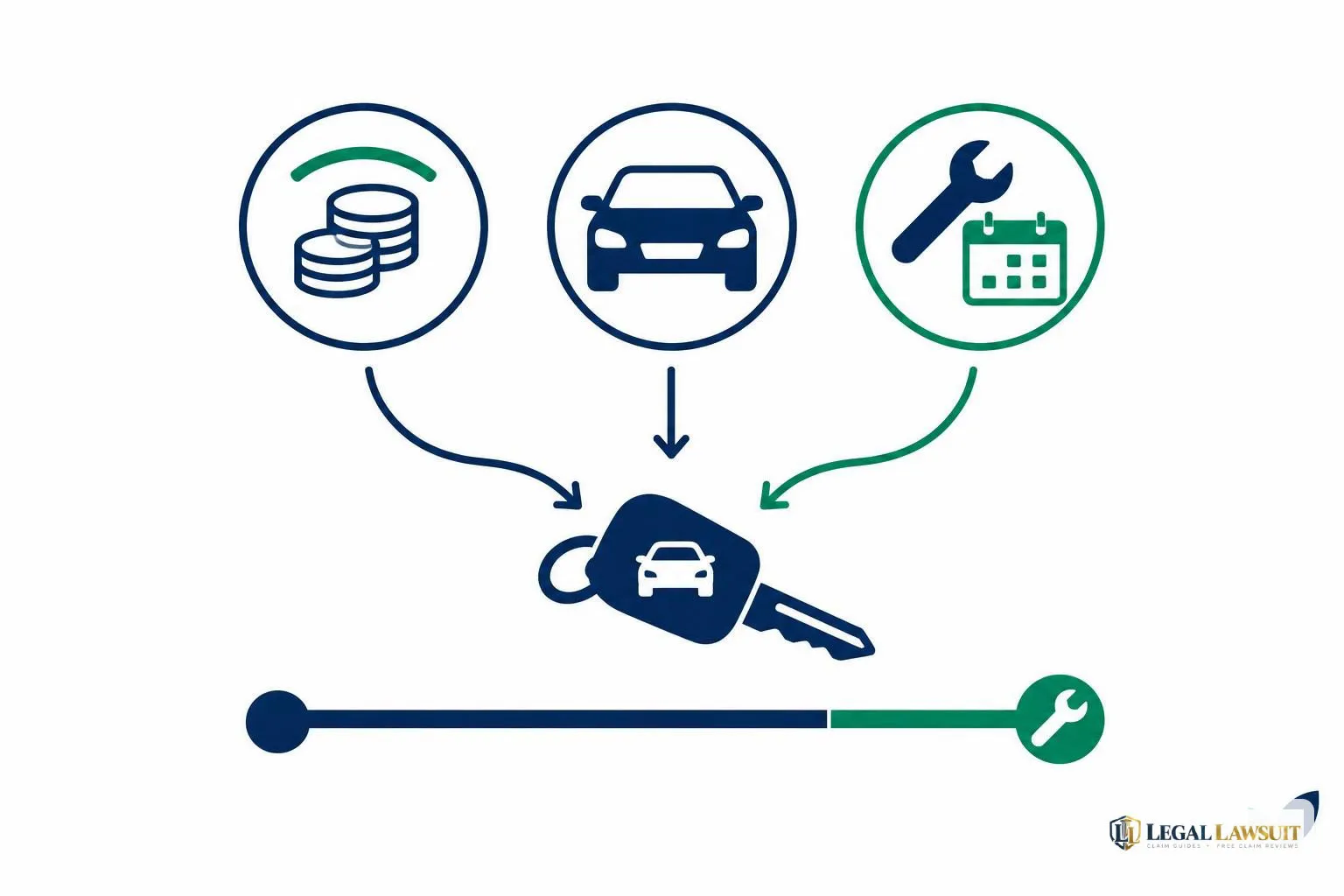
If the insurer decides your car is a total loss, the rental usually ends much sooner than it would during a repair. The clock stops tracking repair time and starts tracking the insurer’s decision and its offer on your car. How quickly the rental ends depends on your state.
- Texas: According to the state’s Texas Department of Insurance auto guide, if the insurer totals your car, it might stop paying for the rental a few days after telling you.
- Oregon: The Oregon Division of Financial Regulation’s totaled-vehicle guidance says the other party’s insurer pays loss of use for the reasonable time it takes to decide whether the car is a total loss. It typically pays from the accident date until one or two days after it makes an offer on the car.
- Illinois: The Illinois Department of Insurance explains that the at-fault insurer’s rental obligation can end when it makes a settlement offer on your car.
In practice, the rental may end before you have been paid or found a replacement vehicle. Many people learn this only after the rental has already stopped.
How to prepare
- Ask for the exact end date. Once the adjuster mentions a total loss, ask which day the rental coverage stops. Ask for that date in writing so there is no confusion later.
- Start arranging other transportation early. Begin looking at replacement vehicles, borrowing options, or other ways to get around as soon as a total loss seems likely. Don’t wait for the offer to arrive.
- Understand the offer before you respond. Because the offer can start the countdown on your rental, it helps to know ahead of time how the property damage claim works when a car is totaled. That includes how the insurer values the vehicle.
Keep a dated record of every call, approval, and receipt
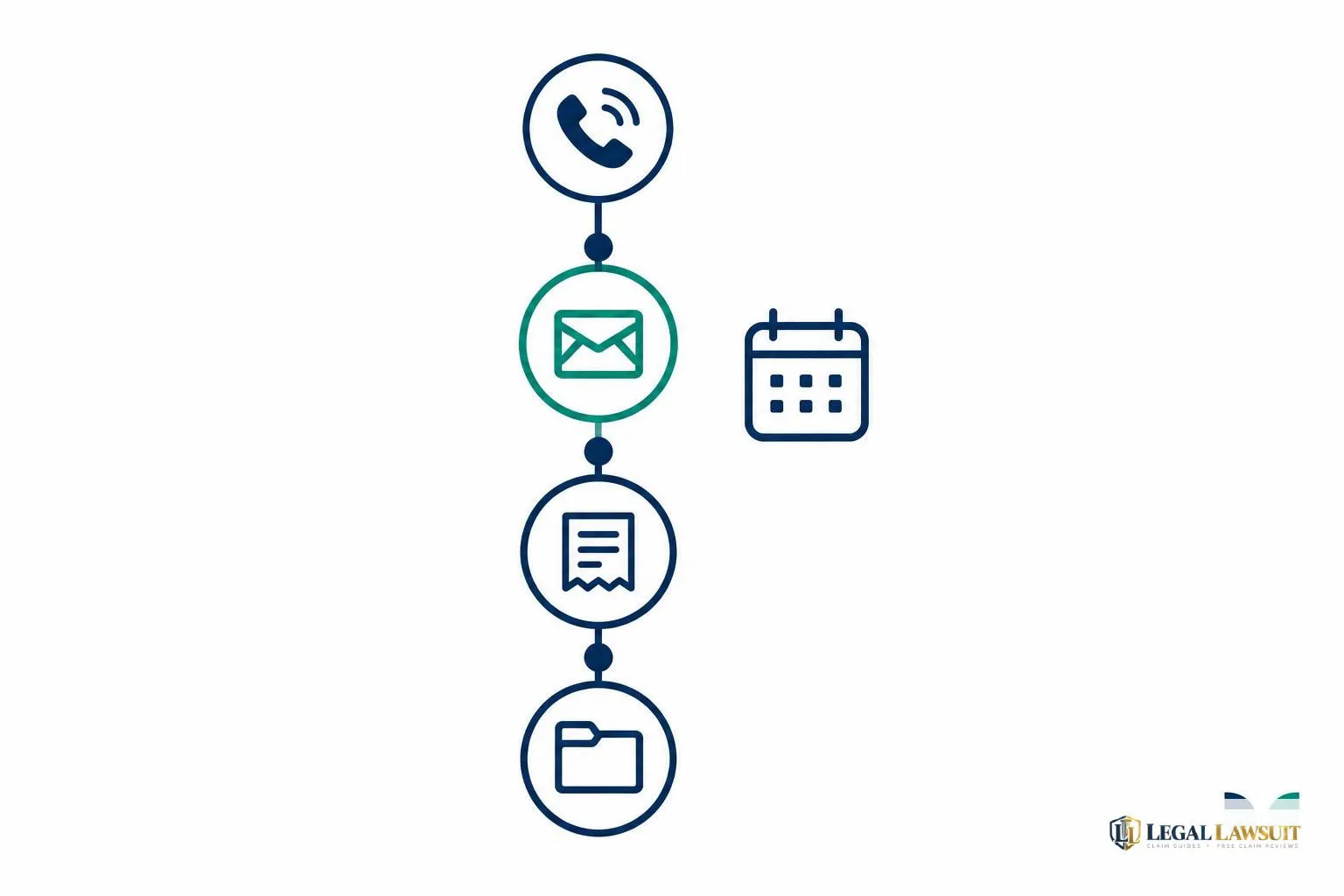
The simplest way to protect your rental claim is to write everything down as it happens. If a question comes up later about what was approved or when the rental should end, a dated record lets you answer with specifics instead of memory.
What to log after every call
- Date and time of the call or message
- Who you spoke with, including their name and the company they work for
- What they approved, such as the rental itself, a daily amount, or an extension
- Start and end dates of the rental as they described them
Don’t rely on a verbal “yes.” Oregon’s insurance regulator advises getting the name of the person who authorizes your rental and asking for that approval in writing. A letter or email works well. Save it with your other claim papers.
Paperwork to keep
- Rental agreements and every receipt
- Any notice that your car is a total loss or that the rental is ending
- The rental reimbursement section of your own policy, since your rental rights are set out in your policy
If payment stalls
Check whether your state requires the insurer to explain delays. In Illinois, for example, a property damage liability claim that stays unresolved for more than 60 days requires the insurer to give you a reasonable written explanation of the delay. If you still can’t get answers or payment, you can contact your state’s insurance department and share your log and documents. Legal Lawsuit’s guides can also help you understand the next step in your claim.
If someone died in the crash, the vehicle and rental questions become part of a larger claim the family handles. Our guide to filing a wrongful death claim after a fatal crash explains how that process works.
Frequently asked questions
Do I have to pay a deductible to get a rental from the other driver’s insurer?
In Texas, no. The state’s insurance regulator explains that you don’t pay a deductible when you file against another driver’s insurer. A deductible applies to claims under your own policy. If you use your own rental reimbursement coverage, check your policy to see what you’ll owe. Other states can handle this differently, so ask the adjuster to explain in writing how your claim works.
Can the rental be extended if the repair shop is waiting on parts?
Often, yes. In Texas, the other driver’s insurer pays for a rental for the time it considers reasonable for repairs. It may extend the rental if the shop is waiting on parts or finds more damage, but only if it knows about the delay. Tell the adjuster as soon as the shop tells you. Ask the shop for a short written note on the delay to back up your request.
Does the at-fault insurer have to give me the same kind of car I drive?
Not necessarily. Illinois rules for claims against another driver’s insurer don’t specify the type of rental vehicle, and specialty vehicles don’t have to be matched. If you depend on a certain kind of vehicle, such as one that seats your whole family, explain why to the adjuster and ask for a comparable rental. Get any agreement in writing.
How long does the rental last after my car is declared a total loss?
Usually not long after the insurer makes its offer. In Oregon, the other party’s insurer typically pays for a rental from the accident date until one or two days after its offer on your vehicle. Start looking for a replacement car as soon as the insurer says your car is a total loss. Write down the date and time you got the offer so you know when the rental is likely to end.
What if the driver who hit me has no insurance?
Your own policy may help, depending on what you bought. The NAIC says that collision or uninsured motorist property damage coverage may apply if it’s part of your policy. Your insurer pays for a rental only if you have rental reimbursement coverage, and most policies set a dollar limit. Read your declarations page or call your agent to find out which coverages you have.
Sources
- Auto Insurance (consumer page) · National Association of Insurance Commissioners
- Auto insurance guide · Texas Department of Insurance
- Totaled vehicle · Oregon Division of Financial Regulation
- Filing a Claim with Another Driver's Insurance Company · Illinois Department of Insurance
- tdi.texas.gov
This article is general information, not legal advice. Laws and deadlines vary by state and change over time; check the linked sources or speak with a licensed attorney about your situation.
Related Posts

An adjuster sent you a medical release to sign after your crash. Here is what a broad authorization can unlock, how a release to your own insurer differs from one to the other driver's insurer, how to narrow it, and how to get your records yourself under HIPAA.
Build a practical family plan for phone use, passengers and distractions before your teen drives. Find a separate path to claim guidance if a crash has already happened.
La ley de moverse al lado de Florida ya no protege solo a policías y ambulancias. Aquí verás qué vehículos y situaciones cubre según el estatuto 316.126, qué debe hacer cada conductor y qué conviene saber si te chocaron mientras estabas detenido en el arcén.