Obtaining Traffic Camera Footage and Police Reports
By Mason ArnaoUpdated

By Mason ArnaoReviewed by Mason Arnao
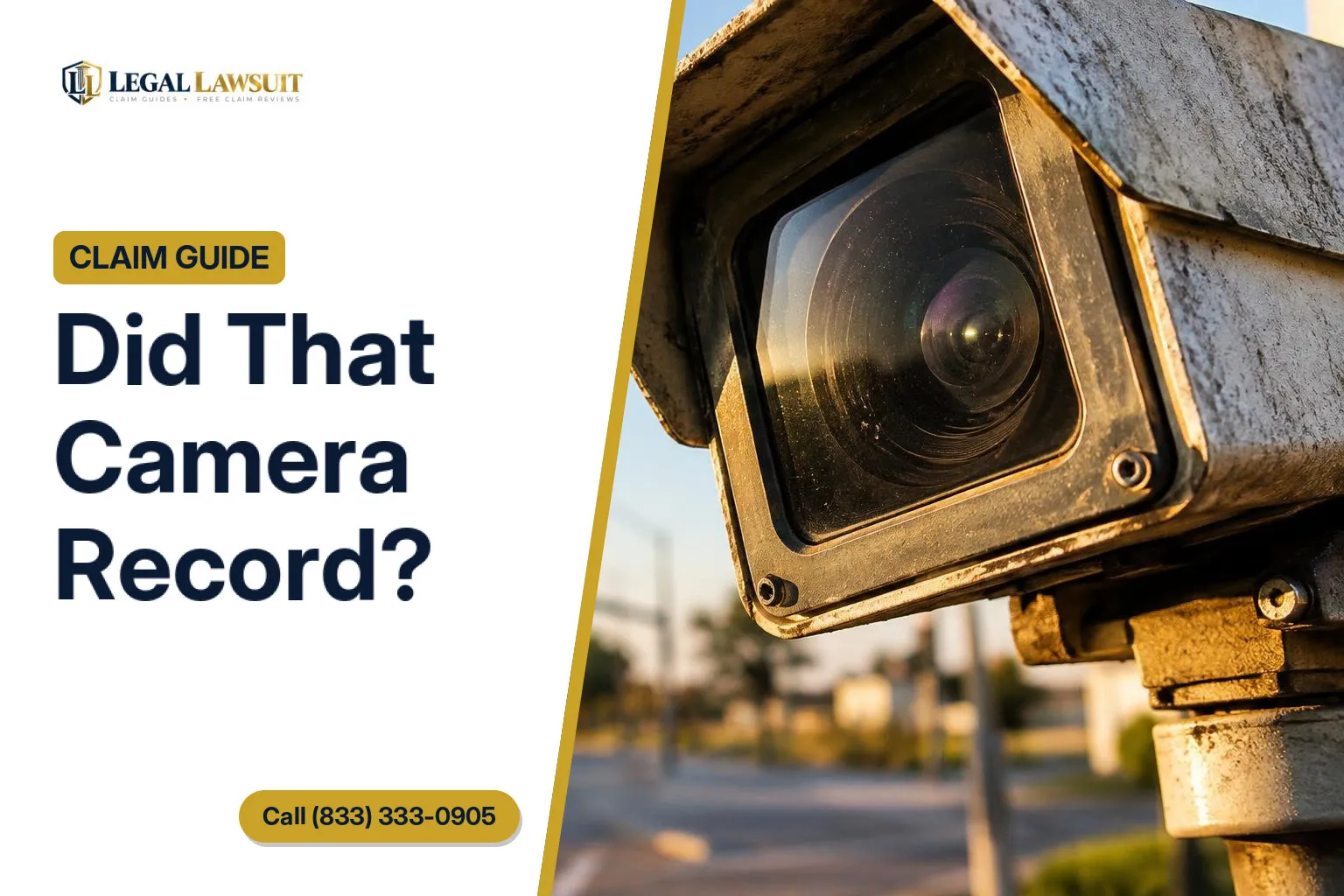
To get traffic camera footage and police reports for your accident, start with the office that holds each record and check its request process; Seattle’s records guide, for example, separates traffic-camera inquiries from police-report requests. If footage does not exist, ask for confirmation so you can focus on other records; if the report is restricted, check the requester eligibility and certification requirements, such as those listed on Florida’s crash-report request form.
This guide explains how to check whether a camera actually records, write a focused request for existing footage, and request the crash report. It also covers following up on delayed, incomplete or denied requests—and keeping your records search separate from your next insurance or legal claim step.
Start with the office that holds the records
To obtain traffic camera footage and a crash report, first identify who operates the camera and which agency prepared the report. Then check each office’s published records-request instructions. Treat these as separate searches: do not assume that the office handling the police report also holds the camera footage.
If you are unsure where to begin, ask the likely camera operator whether it holds existing footage for that location and whom to contact if it does not. For the crash report, start by identifying the reporting agency and looking for its report-request instructions. Confirming the correct office before submitting a detailed request can help you avoid sending it to an agency that does not hold the records.
Federal FOIA is not the route for state or local records. As the Justice Department’s explanation of federal FOIA’s scope makes clear, federal FOIA does not provide access to state or local government records or records held by private businesses. States have their own public-access statutes, so a federal FOIA request is not a substitute for checking the relevant state or local office’s process.
The steps below focus on obtaining existing footage and reports—not determining fault or valuing a claim. The jurisdiction-specific examples illustrate what to look for in an office’s instructions; they are not a single nationwide request procedure. Use them to prepare your questions, then follow the instructions published by the office that holds the records you need.
Check whether the traffic camera actually records
Before requesting footage, ask whether the camera records video or only provides a live view. A camera visible above an intersection—or a feed you can watch online—is a reason to ask, not confirmation that a recording exists.
Seattle offers a concrete example. Its transportation department provides real-time traffic-camera viewing but does not store, archive, maintain or record those images. The department also does not maintain red-light violation records, according to the city’s traffic-camera records guidance. In that example, a traffic-monitoring feed and red-light enforcement records are separate things; a request about one should not assume the same office holds the other.
Ask the camera operator or records office these questions before preparing a detailed request:
- Does this camera record? Specify whether you need a past recording rather than access to a live feed.
- Did it cover this location and direction? Give the intersection, nearby landmark and direction of travel.
- Is a recording for the requested time still held? Include the date and a focused time window.
- Which office handles requests? Ask where to send a request for that particular camera’s records.
If you want to ask about preservation, keep it a question to the custodian: “If a recording is still held, can you preserve the relevant segment while my records request is processed?” Do not treat that question as confirmation that footage exists or that deletion has stopped. Ask the office to confirm what, if anything, it can retain.
Write a focused request for existing footage
Describe the recording you want as precisely as you can. As a local example, Bellevue, Washington, asks requesters to identify specific records. If you do not know the record’s title, Bellevue’s instructions for identifying requested records recommend including the subject matter, dates, location, address and people involved. Use those details where relevant to help the office identify the footage you are seeking.
Optional wording to adapt: Follow the receiving agency’s instructions. This sample is not a required form or a promise that footage exists or will be released.
“I am requesting any existing camera recording showing [intersection or address], facing [direction], on [date] between [start time] and [end time, including time zone]. If your office does not hold this recording, please identify the appropriate custodian if known. Please tell me whether a recording for that period exists and whether any additional information is needed.”
Before sending, replace every bracketed field and check the date, camera direction and time zone. Keep the request focused on an existing recording rather than asking the office to reconstruct what happened.
Ask whether electronic delivery is available and whether any charges would apply before authorizing copies. Save the exact wording you submitted, along with any submission confirmation or request number, so you can refer to the same request when following up.

Request the crash report and check access requirements
Request the crash report separately from camera footage, and check which police-records service handles the material you need. For example, the Seattle police-report request routes distinguish front-counter services for initial or collision reports from a separate police records request center for more detailed police material. Choose the route that matches your request rather than assuming one request covers everything.
Before submitting, gather the crash date, location, names of involved parties, and report or agency case number if you know it. These identifying details appear on the Florida highway safety department’s crash-report request statement. The same form illustrates why access requirements matter:
- Florida requests within the first 60 days after filing: The form identifies eligible requester categories, including a party involved in the crash and that party’s legal representative. It does not require every involved driver to wait 60 days before requesting the report.
- Florida requests 60 days or later after filing: The form includes a separate permissible-use certification. The end of the initial period should not be treated as unrestricted access for everyone.
Use the Florida example as a reminder to check the instructions for the office holding your report—not as a nationwide access rule. Follow that custodian’s applicable identity, eligibility and certification instructions, and distinguish a request for the crash report from a request for additional investigative records.

If the response is delayed, incomplete or denied
Before choosing a follow-up step, ask what is holding up the request. A missing recording, a request that needs clarification and a decision to withhold access call for different questions.
- Was it sent to the wrong office? Ask whether the office holds the requested records or can identify a more appropriate contact.
- Does the record exist? Ask whether staff found any recording matching the location, date and time you provided.
- Is clarification needed? Ask which details would help staff identify the footage or report.
- Is access being withheld? Ask whether the response is a full or partial denial, rather than a notice that no matching record was found.
Bellevue example: Under Bellevue’s response and review procedures, a response may provide records, acknowledge receipt with an estimated response time, or deny the request. Its guidance identifies clarification, locating records and reviewing possible exemptions as reasons additional processing time may be needed. Bellevue also permits a written petition to its public records officer for review of a full or partial denial. That is Bellevue’s process, not a review route to assume applies everywhere.
For an unclear response, you can write: “Please clarify whether no responsive recording exists, the request needs more detail, or access is being withheld. If access is withheld, please identify the basis and the available review procedure.”
Keep the records request separate from your next claim step
Save the agency’s response alongside your original request and any records it provides. Keep a simple list of what you received and what remains unavailable, including any explanation the agency gave. This helps you distinguish a missing document from one that was never located or was withheld.
Keep follow-up correspondence in the same folder. For example, Bellevue describes several possible responses to a records request, including providing records, seeking clarification, estimating additional processing time or denying the request. Label each response so you can track what still needs attention without treating every reply as a completed request.
If an insurer is separately asking to interview you, see our guide to responding to an insurance recorded-statement request. Keep that request on a separate checklist from your efforts to obtain camera footage or a crash report.
Looking for a different kind of report?
Looking for a campus sexual-assault report rather than a crash report? See our guide to reporting sexual assault in college and pursuing a claim.
Optional next reading
For questions beyond this page’s records-request scope, you can browse the Legal Insights claim guides. Before deciding whether to share personal information through this site, read Legal Lawsuit’s Privacy Policy.
Keep researching on Legal Lawsuit
Frequently asked questions
Does a live traffic camera mean accident footage is available?
No. A live view does not necessarily mean a recording exists. For example, Seattle says its traffic cameras do not record footage and distinguishes them from red-light enforcement cameras. Before requesting video, ask which agency operates the camera and whether it recorded anything at the location and time of your crash.
Can I use federal FOIA to request a local police crash report?
No. Federal FOIA covers federal agency records, not state or local government records; states have their own public-access laws. For a local police crash report, start by identifying the police department or other state or local office holding it, rather than sending a federal FOIA request.
What details should I include in a traffic camera footage request?
Make the request specific: include the crash date, a narrow time window, the intersection or road segment, travel direction, and any camera identifier you have. Ask for existing recordings rather than a new reconstruction. Bellevue’s request guidance calls for identifying details that help staff locate the records. Keep a copy of your request so you can refer to its exact scope later.
Do Florida drivers involved in a crash have to wait 60 days to request the report?
No. Florida’s sworn-statement form includes parties involved in the crash among eligible requesters within 60 days after the report is filed. The form also asks for crash-identifying information and has a separate permissible-use certification for requests made 60 days or later. Use the section that matches your request’s timing and your requester status.
What can I ask when a records request is denied or needs clarification?
Ask the office to explain what is unclear, which records or portions were withheld, and the reason for withholding them. You can also ask whether narrowing the location or time window would help, whether any responsive records can be released separately, and how to request a written review of the denial. Keep the exchange with your original request.
Sources
- About the FOIA · U.S. Department of Justice, Office of Information Policy · 2014-08-06
- Commonly Requested Records · City of Seattle
- Public Records Requests · City of Bellevue, Washington
- Sworn Statement for Crash Report · Florida Department of Highway Safety and Motor Vehicles
This article is general information, not legal advice. Laws and deadlines vary by state and change over time; check the linked sources or speak with a licensed attorney about your situation.
Related Posts

An adjuster sent you a medical release to sign after your crash. Here is what a broad authorization can unlock, how a release to your own insurer differs from one to the other driver's insurer, how to narrow it, and how to get your records yourself under HIPAA.
Who covers your rental after a crash depends on fault, the coverage you bought, and whether your car is repaired or totaled. This guide covers the three ways a rental gets paid for, what limits the rental, and what to do while the other insurer is still deciding fault.
Build a practical family plan for phone use, passengers and distractions before your teen drives. Find a separate path to claim guidance if a crash has already happened.