Tips to Help Teens Prevent Distracted Driving: Family Rules
By Mason ArnaoPublished

By Mason ArnaoReviewed by Mason Arnao
For families looking for Tips to Help Teens Prevent Distracted Driving, start with clear rules: put phones away before driving, avoid nonphone distractions, and decide who can ride before friends ask for a lift. If a crash has already happened, turn to insurance-claim guidance for immediate safety steps, information to collect, and ways to request an explanation if the insurer disputes the claim.
This guide walks through a practical phone-away routine, distractions beyond texting, passenger rules, and a parent-teen driving agreement that puts expectations in writing. It also explains how to keep household safety rules separate from state driving requirements—and where to turn for claim help when prevention is no longer the immediate concern.
Start with a phone-away routine before every drive
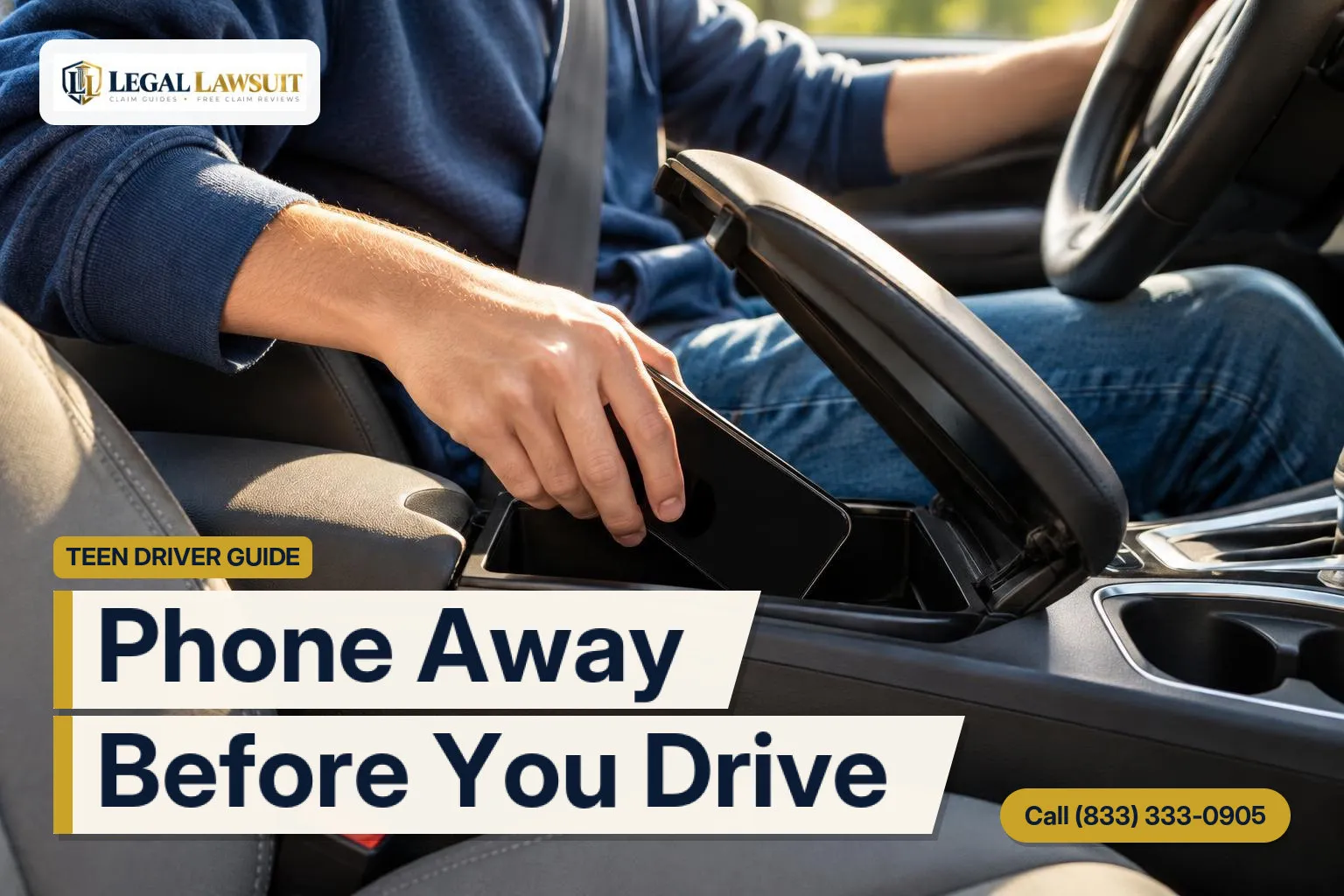
Make the family rule simple: before the car moves, turn the phone off and put it away. Agree that driving time means no calls and no texting—even for a quick reply to a parent.
This commitment should include adults, too. NHTSA’s teen driving guidance recommends keeping phones off while driving, modeling distraction-free driving as a parent, and not calling a teen when you know they are behind the wheel.
Turn that commitment into a repeatable departure routine:
- Finish the conversation. Before setting off, let anyone waiting for a reply know you will be unavailable while driving.
- Switch the phone off. Make this a regular step before starting the trip, rather than a decision to make when a notification arrives.
- Put it away. Choose a consistent storage spot, such as a zipped bag, instead of leaving it in your hand or lap.
Parents can use the same routine on every family drive. Agree beforehand that a delayed reply is expected when someone is driving—not a reason to keep calling or texting.
Remove distractions that have nothing to do with texting
A phone-free drive is a good start, but it is not the whole plan. Eating, grooming and changing the radio can also distract a teen driver. NHTSA’s guidance on nonphone distractions encourages teens to keep their attention on driving rather than on other activities behind the wheel.
Make “ready before rolling” a household routine. Before the car moves, ask your teen to:
- Finish food: Leave time to eat before departure instead of planning breakfast or a snack behind the wheel.
- Finish grooming: Brush hair, apply makeup and make other personal adjustments before starting the trip.
- Choose audio: Pick a station, playlist or podcast and set the volume before pulling away.
Keep the rule simple: driving time is for driving. If a song is annoying or a snack can wait, leave it alone until the car is safely parked.
Use the same routine yourself. Rather than making this another lecture, let your teen see you finish your coffee and choose your music before you leave. A shared family habit makes the expectation clear: everyone gets ready first, then drives.
Decide who can ride before friends ask for a lift
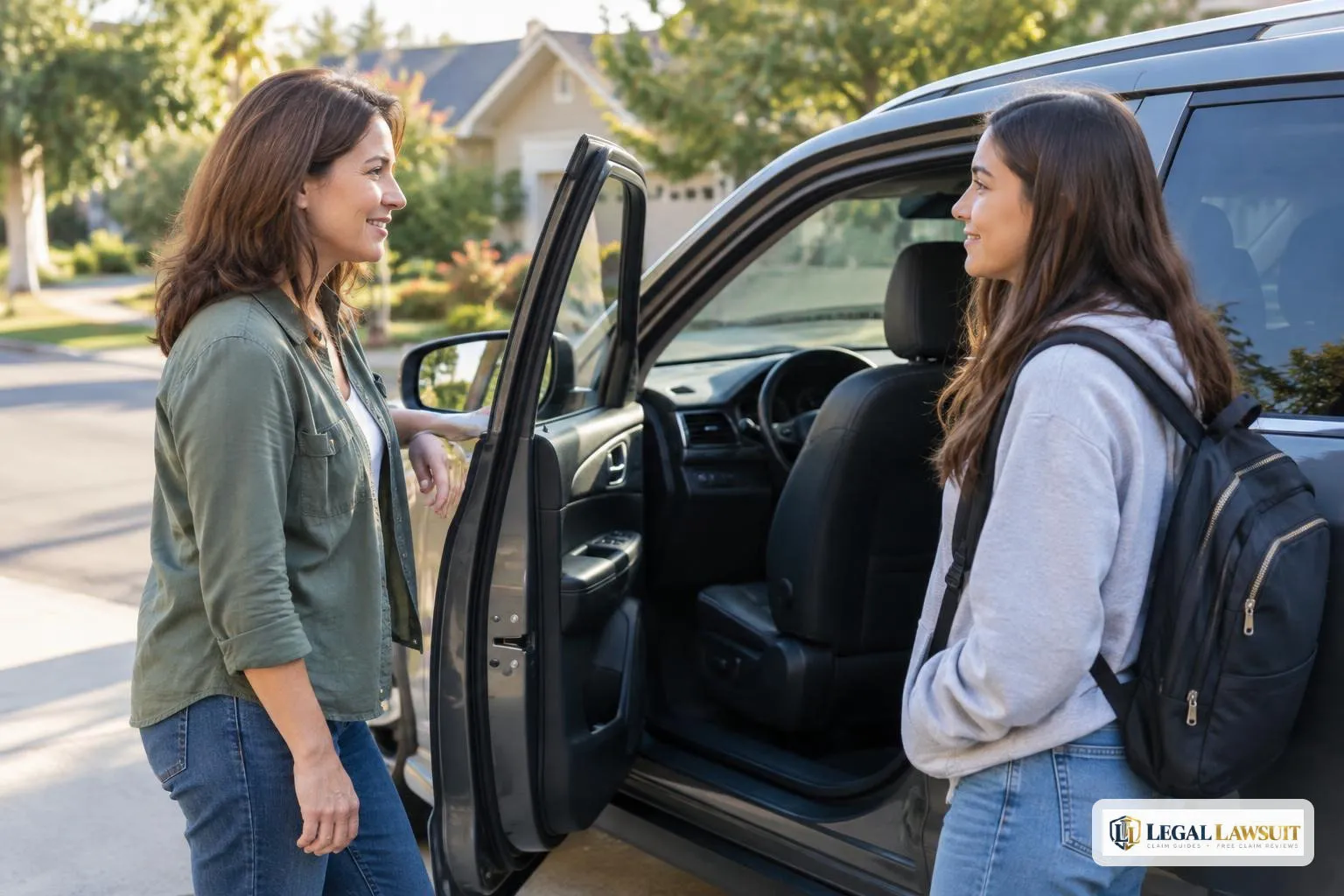
Agree on a passenger plan before your teen offers anyone a ride. Passengers can distract inexperienced drivers, and NHTSA recommends learning your state’s passenger restrictions and setting additional household limits. Make those decisions at home—not while friends are waiting beside the car.
Keep the plan specific enough that your teen knows what to say without calling to negotiate every trip. Discuss:
- Which rides you permit: Decide whether your teen may drive friends, younger siblings or other family members, within the applicable licensing restrictions.
- When permission is needed: Choose whether each ride needs advance approval or whether certain trips are already agreed upon.
- What passengers must do: Set expectations such as keeping noise down, leaving the driver’s controls alone and saving distracting conversations for after the trip.
- What to say when plans change: Practice a simple response: “I can’t give you a ride unless it fits our family’s passenger rules.”
Address younger siblings separately rather than assuming a family trip is automatically permitted. If the ride is allowed under both state restrictions and your household plan, use the child passenger seat safety guide to prepare for that trip. Decide before departure who will handle seating preparations and what your teen should do if a sibling needs attention along the way.
Put the family rules in a parent-teen agreement
Put your family’s driving expectations in writing so you and your teen can refer to the same plan. The CDC recommends parent-teen driving agreements and provides guidance on distractions, passengers and supervised practice. Use that guidance to turn individual safety tips into a shared routine.
Write the agreement together, using clear actions rather than a general promise to “drive safely.” Include:
- Phone use: Agree that the driver will not use a phone while driving, and decide where it will stay during the trip.
- Eating: Plan to eat before leaving or after parking, rather than behind the wheel.
- Radio adjustments: Choose music and set the volume before moving so the driver can leave the controls alone.
- Passengers: Write down who may ride and make clear that passengers should not distract the driver.
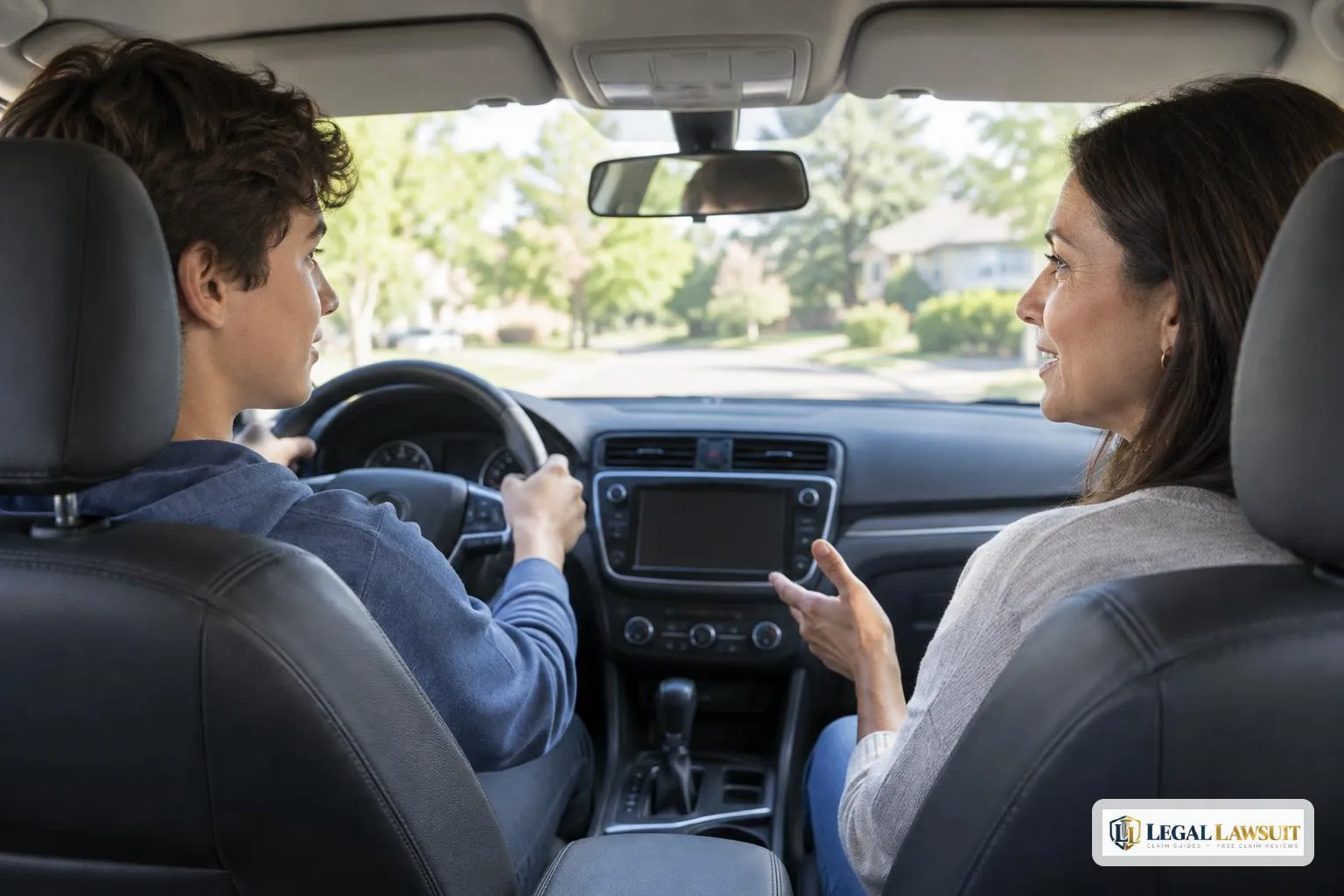
Then practice the agreement together. Following the CDC’s supervised-driving recommendations, give your teen experience on different roads and in varied traffic and weather conditions. Model the same distraction-free habits when you drive.
After practice, talk about what felt difficult and whether any expectation needs clearer wording. Keep the agreement somewhere you can both easily find it.
Keep household safety rules separate from state law
Keep two questions separate when setting expectations: “What does our family require?” and “What does the law require?” A phone-away routine is a household safety expectation—not a nationwide summary of driving law. Use your agreement to make the family’s expectations clear without presenting every rule as a legal requirement.
Before your teen drives, check the licensing agency’s guidance for their state and current license stage. Look for the requirements that apply to their permit or license rather than relying on another family’s experience. NHTSA directs parents to state licensing requirements and driver manuals, which can help you keep that legal check separate from your household agreement.
Texas example: TxDOT explains that reading, writing or sending texts while driving is prohibited in Texas. That is a Texas-specific legal example, not a statement of the rules in every state or a complete checklist of requirements for a teen driver.
For Texas families, our separate guide to teen driving rules and safety on Texas roads covers broader Texas-road rules. Here, keep the focus on distraction-prevention routines: what your teen will do before starting the car, how passengers can help, and which household expectations everyone will follow.
If a crash already happened, switch to claim guidance
If your teen has already been in a crash, focus on immediate safety and the claim rather than revisiting the family driving agreement. NAIC recommends calling emergency services if someone is injured and, for the insurance claim, collecting driver and witness information, scene photos and the responding officer’s report details. Keep those materials together so you can refer to them when discussing what happened with the insurer.
For the next stage, use Legal Lawsuit’s guide on how to file a car accident claim. It gives you a separate place to work through the filing process without mixing claim tasks into your household’s distracted-driving rules. Keep the prevention conversation separate from the practical work of organizing the claim.
If you need help locating the police report or investigating whether traffic-camera footage exists, turn to the separate guide to obtaining traffic camera footage and police reports. That is a more focused next step when missing records—not general driving advice—are your immediate concern.
If the insurer disputes the claim, ask for an explanation
Ask the adjuster for a written explanation of the decision so your family has a clear starting point for responding. Keep notes of your conversations, including whom you spoke with and what you discussed. If the disagreement remains unresolved, contact the consumer services staff at your state insurance department. These steps follow NAIC’s claim-handling guidance.
Keep the explanation and your conversation notes together. When you follow up, use them to focus on the specific issue rather than starting the whole story over. Questions you can ask include:
- What is the specific reason for this decision?
- What policy language or information did you rely on?
- Is there information you believe is missing, and how should I provide it?
If the claim has been denied, Legal Lawsuit’s guide to what to do when car insurance denies your claim offers a separate place to organize your next questions. Start with the insurer’s stated reason for the denial and identify what you still need explained.
Frequently asked questions
What should my teen do with their phone before driving?
Make putting the phone away part of the routine before the car moves. Choose a storage spot out of reach, silence notifications, and set navigation before starting. NHTSA’s teen-driving guidance recommends phone-free driving and asks parents to model safe behavior. Agree that if your teen needs to use the phone, they should first stop in a safe place.
What distractions should we discuss besides texting?
Talk about eating, adjusting music, using navigation, and getting caught up in conversations with passengers—not just texting. Make a simple departure checklist together: finish snacks, choose music, set the route, and put loose items away. Discuss what your teen should say if a friend becomes distracting, such as asking everyone to quiet down so they can focus on driving.
How can a parent-teen driving agreement address distractions?
Use the agreement to turn general expectations into clear habits: where the phone goes, when to set music and navigation, and how to handle distracting passengers. The CDC recommends a parent-teen driving agreement and highlights avoiding phone use, eating, and radio distractions. Write the expectations together, agree on how you will respond to a broken rule, and revisit the agreement as your teen gains experience.
Where do I check the driving restrictions for my teen’s license?
Start with your state’s official driver licensing agency website and look for its teen-driver or graduated-licensing guidance. Check the information for your teen’s exact license stage, including passenger limits, nighttime driving, and phone use. If anything is unclear, contact the agency directly. Keep those requirements in a separate section of your family agreement rather than treating your household rules as a summary of state law.
What can we ask the insurer if we disagree with a claim decision?
Ask for a written explanation of the decision, including the policy language the insurer relied on and whether additional documents could address the disagreement. The NAIC’s auto-claim guidance recommends requesting written explanations and keeping notes of insurance conversations. Record whom you spoke with and what was discussed. If the issue remains unresolved, consider asking your state insurance department for assistance.
Sources
- Teen Safe Driving: How Teens Can Be Safer Drivers · National Highway Traffic Safety Administration
- Eight Danger Zones · Centers for Disease Control and Prevention · 2025-08-05
- Talk. Text. Crash. · Texas Department of Transportation
- What You Should Know About Filing an Auto Claim · National Association of Insurance Commissioners · 2022-03-28
This article is general information, not legal advice. Laws and deadlines vary by state and change over time; check the linked sources or speak with a licensed attorney about your situation.
Related Posts

An adjuster sent you a medical release to sign after your crash. Here is what a broad authorization can unlock, how a release to your own insurer differs from one to the other driver's insurer, how to narrow it, and how to get your records yourself under HIPAA.
Who covers your rental after a crash depends on fault, the coverage you bought, and whether your car is repaired or totaled. This guide covers the three ways a rental gets paid for, what limits the rental, and what to do while the other insurer is still deciding fault.
La ley de moverse al lado de Florida ya no protege solo a policías y ambulancias. Aquí verás qué vehículos y situaciones cubre según el estatuto 316.126, qué debe hacer cada conductor y qué conviene saber si te chocaron mientras estabas detenido en el arcén.