

Short answer: This article explains the key facts, eligibility issues, settlement factors, deadlines, and source-backed updates related to this legal topic. Results vary by case facts, evidence, jurisdiction, and representation.
📋 Table of Contents
- Why Finding the Right Dangerous Drug Attorney Can Make or Break Your Case
- What Constitutes a Dangerous Drug and What Are Your Rights?
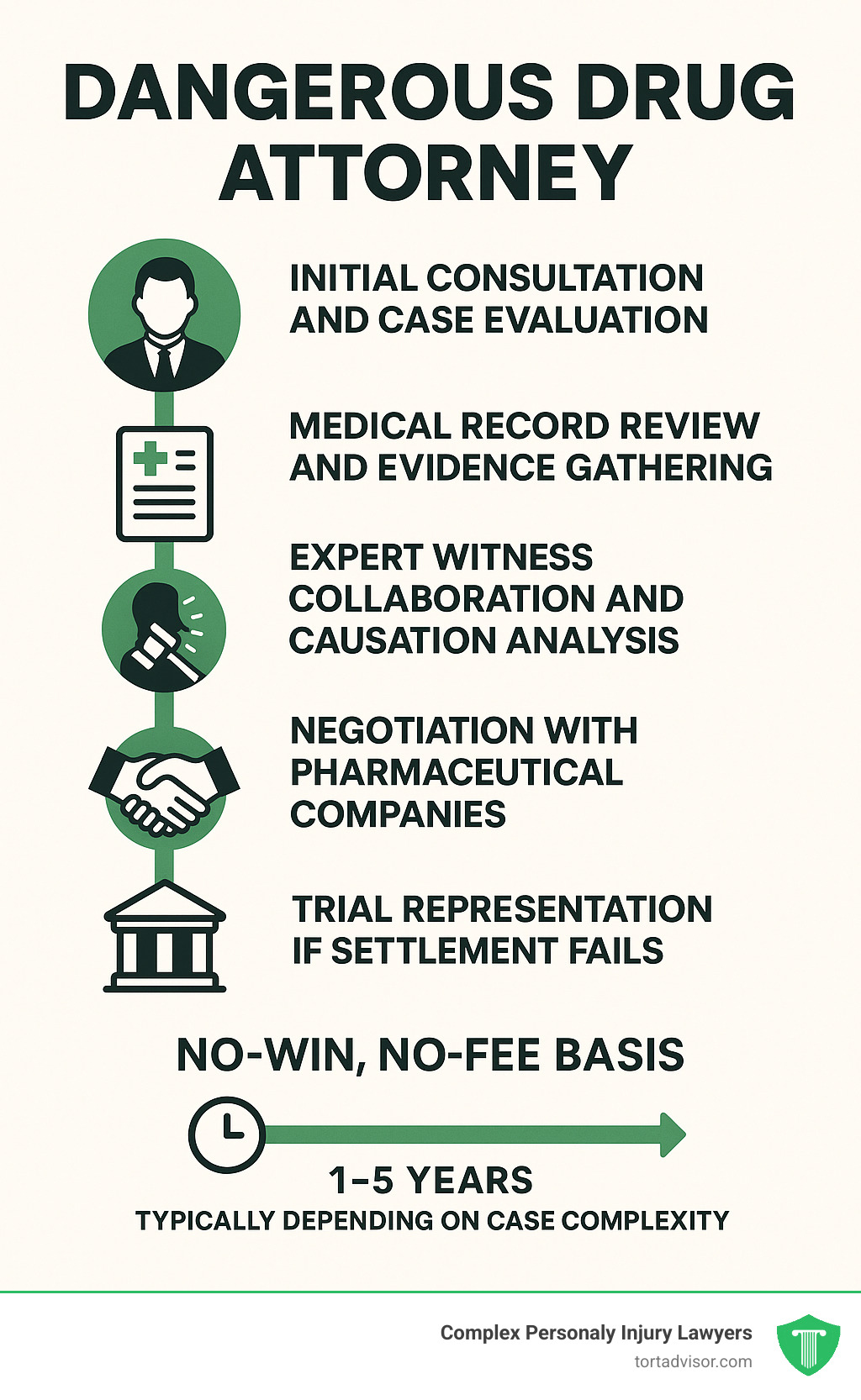
- The Role of a Dangerous Drug Attorney in Your Claim
- Securing Compensation and Justice: The Lawsuit Process
- Key Legal Problems in Dangerous Drug Cases
- Frequently Asked Questions about Dangerous Drug Claims
- Connect With a Top-Rated Dangerous Drug Attorney Today
Depo-Provera Claim Tools and Resources
Depo-Provera Settlement Calculator — Get a rough sense of how your injuries and a meningioma diagnosis may factor into a claim.
Depo-Provera Settlement Amounts — See what is known so far about Depo-Provera case values and the factors that drive them.
Drug Injury Claims: Why the Right Dangerous Drug Attorney Matters
Being seriously hurt by a medicine you relied on feels like a deep breach of trust. Drug injury claims have become more common as some drug makers put revenue ahead of patient safety. If a prescription or over-the-counter medication harmed you, learning your legal rights is where holding the manufacturer accountable begins.
How a Dangerous Drug Attorney Helps:
- Looks into whether the medication caused your injury
- Collects key evidence from your medical files and the company’s own records
- Shows that the drug was responsible for your particular injuries
- Deals with large drug makers and their insurers
- Takes the case to court when no fair settlement is offered
- Usually charges on contingency, so you owe nothing unless the case succeeds
The figures are troubling. By one widely cited estimate, more than 128,000 Americans die each year from prescribed medications, and over half of all drugs sold in the U.S. carry harmful effects even after FDA review. Numbers like these show why experienced legal help matters when manufacturers fail to warn people about serious dangers.
“When big pharmaceutical companies place profits above people’s safety, individuals suffer incredible injuries,” one legal commentator has observed. Drug makers may conceal side effects, cut corners on safety studies or hurry products onto shelves, and patients pay the price.
Any complicated system — technical or legal — calls for a specialist. You would hire an experienced architect to design a skyscraper; in the same way, people hurt by dangerous drugs need lawyers with real pharmaceutical litigation experience to take on major corporations.
When Is a Drug Legally “Dangerous,” and What Rights Do You Have?
A side effect alone does not make a medication legally dangerous. A drug is considered “defective” when it causes harm people were not adequately warned about, or when the maker did not make it reasonably safe. That line is what gives you the right to hold drug companies responsible.
Three Ways a Drug Can Be Legally Defective
Attorneys evaluating drug injury claims look for particular defects that create liability, generally in three groups.
Design defects make a drug unsafe by its very nature even when it is produced exactly as intended — typically when a safer option was available but not used.
Manufacturing defects arise during production: the formula is sound, but contamination or wrong dosing renders certain batches hazardous.
Failure to warn is the most frequent basis for these suits. Makers must tell doctors and patients about every known risk, and concealing side effects, minimizing dangers or not updating labels as new evidence surfaces can create liability.
Many people are surprised that FDA approval is no guarantee of safety. More than half of U.S. drugs have harmful effects despite regulation. The approval system has gaps, and trouble can surface when companies skew data or when problems emerge only after millions of people use a drug.
Strict liability frequently applies in these cases, meaning you generally need to show the defective product caused your injury rather than prove the company was careless — which helps balance the scales against big corporations.
For reliable medication information, a good place to start is Medline Plus.
Injuries Commonly Involved in Drug Injury Claims
Serious drug injuries can change a life permanently or end it. Lawsuits frequently involve:
- Organ damage: The liver and kidneys are especially at risk, sometimes to the point of failure.
- Heart and stroke events: Certain drugs have been tied to higher rates of heart attack and stroke.
- Blood clots: Some medicines may double the chance of clots that can reach the lungs or brain.
- Cancer: A number of drugs have been associated with greater risk of bladder, liver, pancreatic or stomach cancer.
- Birth defects: Drugs taken while pregnant can lead to serious congenital conditions.
- Mental health effects: Some medications may trigger severe depression, anxiety or suicidal thinking.
- Wrongful death: Avoidable drug injuries can be deadly; by one estimate, more than 128,000 Americans die from prescribed medications annually.
Medications Often at the Center of Lawsuits
Drug litigation shifts constantly. Medications that have recently drawn major lawsuits include:
- Weight-loss and diabetes drugs: Ozempic has been tied to serious digestive problems such as gastroparesis (stomach paralysis) and gallbladder disease.
- Opioid treatment drugs: Lawsuits claim the acidic film of Suboxone causes severe tooth decay and other dental damage.
- Contraceptive injections: Depo-Provera has been associated with bone density loss and a higher risk of brain tumors (meningioma).
- Infant formula: Enfamil and Similac have been connected to necrotizing enterocolitis (NEC), a dangerous intestinal illness in premature babies.
- Blood pressure drugs: Valsartan was recalled after production contaminated it with probable cancer-causing chemicals.
- Pain relievers: Plaintiffs allege that taking Tylenol (acetaminophen) while pregnant is linked to autism and ADHD in children.
What a Dangerous Drug Attorney Does in Your Case
Going up against a drug company and its large legal teams is hard. Their aim is to protect profits by downplaying your injuries or rejecting the claim outright. A dangerous drug attorney evens things out with legal skill, resources and the persistence to make the company answer for the harm.
On your own, it is easy to get buried. An experienced lawyer carries the fight when you are too unwell to, managing the legal work so you can concentrate on recovering.
How Attorneys Build Strong Drug Injury Claims
A case against a drug maker demands a step-by-step approach and solid understanding of both medicine and law.

- Investigation: The attorney reviews your medical history, how the drug was developed and whether others have reported similar injuries.
- Gathering Evidence: They assemble medical and pharmacy records and pursue internal company files or clinical trial data showing what the maker knew.
- Establishing Causation: A pivotal task is proving a scientific connection between the drug and your injuries, which often takes detailed analysis and expert testimony.
- Working With Medical Experts: Pharmacologists, toxicologists and other doctors help translate complicated science for a judge and jury, turning your story into persuasive proof.
- Valuing Your Losses: Economists help put numbers on medical bills, lost pay and reduced future earnings, along with the toll on your quality of life.
- Settlement Talks: Your lawyer guards against low offers so any settlement reflects what the claim is truly worth.
- Going to Trial: Without a fair offer, your attorney can present technical scientific evidence clearly and convincingly to a jury.
Why Pharmaceutical Litigation Is So Complex
Drug litigation is a specialized area with high stakes and determined opponents, and it calls for lawyers who know its particular legal and scientific terrain.
- Making Manufacturers Answer: Your attorney attacks the company’s defenses, focusing on what it knew and kept quiet.
- Pushing Back on Insurers: Seasoned lawyers recognize and counter the tactics insurers use to cut payouts.
- Interpreting the Science: Winning frequently depends on reading clinical trial results and drug mechanisms — expertise most general practitioners do not have.
- Tracking Deadlines: Statutes of limitations can permanently bar a claim, and a lawyer makes sure every deadline is met.
- Keeping You Informed: A good lawyer updates and supports you at every stage.
Because the field is so demanding, general practice lawyers often refer these cases to specialists — Depo-Provera injury lawyers are one example of that focused experience. Your dangerous drug attorney is more than counsel; they are your advocate in a system that frequently favors corporations.
The Lawsuit Process: Pursuing Compensation and Accountability
A lawsuit does two important things: it seeks the money you need to rebuild, and it holds careless drug makers responsible so others are not hurt. Medical bills, lost income and other costs of a drug injury can be crushing, and a successful claim gives you the stability to focus on healing.
Evidence That Strengthens a Drug Injury Claim
Taking on a drug company requires strong proof, and an experienced dangerous drug attorney knows what to gather and how to obtain it.
- Medical Records: They chart your health before and after the medication, including diagnosis, treatment and outlook.
- Prescription Records: Pharmacy and physician records confirm you took the drug as directed, with dose and duration.
- Treating Doctor Testimony: Your physicians can explain medically how the drug led to your injuries.
- Expert Reports: Pharmacologists and toxicologists supply scientific analysis tying the drug to your condition and can testify about whether the maker should have known the risks.
- Company Records: Internal emails, research findings or marketing plans can serve as a “smoking gun” showing corporate wrongdoing.
- FDA Actions: Agency warnings, recalls or letters lend strong support to a claim. Search for alerts on the FDA’s MedWatch site.
Damages You May Be Able to Recover
A well-built claim accounts for every way the injury has affected your life, and compensation can include several categories.

- Medical Costs: Past and future spending on treatment, surgery, medication and rehab.
- Lost Income and Earning Ability: Pay you have already lost and any lasting drop in what you can earn.
- Pain and Suffering: Recognition of physical pain, emotional distress and diminished quality of life.
- Loss of Consortium: A spouse whose relationship with you has suffered because of the injury may have a claim.
- Punitive Damages: Where conduct was especially reckless, these punish the company and discourage repeat behavior.
- Wrongful Death Damages: When a loved one dies, these help cover funeral costs, lost income and the loss of companionship.
Major Legal Hurdles in Drug Injury Claims
Drug lawsuits are unusually complicated, pitting individuals against huge companies under specialized rules. Two ideas can decide a claim: the filing deadline and how mass tort litigation is organized. Handling both correctly is essential.
Statute of Limitations: Why Timing Matters
There is a limit on how long you can wait to sue. Once the statute of limitations runs out, your right to compensation is gone for good.
- Deadlines Differ by State: Every state sets its own personal injury deadline. California, for instance, allows two years under Code of Civil Procedure Section 335.1, but your state may differ.
- The Discovery Rule: Some drug injuries show up years later. In many states the clock starts only when you learned, or reasonably should have learned, that the drug caused the harm — a rule that takes careful legal analysis to apply.
- Protecting Evidence: Speed also preserves proof. Medical files, pharmacy logs and corporate records can disappear over time, and starting early gives your dangerous drug attorney the best shot at securing key evidence.
- Talk to a Lawyer Early: Waiting too long is the most common mistake. An early consultation clarifies your options and deadlines while there is still time.
Class Actions vs. Multidistrict Litigation (MDL)
When one drug injures thousands of people, courts typically use one of two methods to handle the cases efficiently.
- Class Actions: One lawsuit is brought for a large group with similar injuries. The group is treated as a single plaintiff, and any recovery is split among members, often by formula. Joining a class usually means giving up the right to file your own suit.
- Multidistrict Litigation (MDL): MDLs are more typical in drug cases. Individual suits from around the country are sent to one judge for pretrial matters such as discovery and motions. The process is streamlined, yet each person keeps an individual case, which can return to its home court for trial if it does not settle.
Bellwether Trials Within an MDL
To test how juries respond to the evidence, the MDL judge picks a handful of representative cases to try first — the “bellwether” trials. Their verdicts do not bind other plaintiffs but strongly shape settlement talks for everyone else. The Valsartan MDL, for example, drew growing attention ahead of its first bellwether trial because early results could influence thousands of claims.
MDLs suit drug cases because injuries differ so much between people. The format allows individual results and tiered settlements based on severity, which is fairer than a class action’s uniform approach.
Drug Injury Claims: Frequently Asked Questions
A drug injury raises plenty of questions. Here are answers to the ones people ask most often.
What does a dangerous drug attorney cost?
Hiring an experienced dangerous drug attorney typically costs nothing upfront. On a contingency basis, the lawyer is paid only if you recover, taking a percentage of the settlement or verdict.
If the case is unsuccessful, you owe no attorney fees. This “no win, no fee” setup makes skilled representation available regardless of your finances and gives the lawyer every reason to pursue the best result.
Can I still sue if my side effect was listed on the label?
Possibly, yes. A warning label does not automatically shield a manufacturer. You may have a claim if the company:
- Understated the risk: It knew the side effect was more frequent or serious than the label indicated.
- Gave a weak warning: The warning was hidden in fine print or worded too vaguely to convey the real danger.
- Left out key instructions: It did not warn about dangerous interactions or identify patients at higher risk.
An experienced lawyer can assess whether the warning met the legal standard.
How long do drug injury claims take to resolve?
It depends. A simple individual case may wrap up in one to two years, but most drug cases are grouped into an MDL, which can last several years.
MDLs take time because of extensive discovery and a series of bellwether trials that help set settlement values for thousands of related claims. The wait can be frustrating, but the process is built to expose wrongdoing and often produces fairer results. Your legal team should keep you updated while you focus on your health.
Get Connected With an Experienced Dangerous Drug Attorney
If a medication hurt you or someone you love, you are not alone, and you have the right to pursue justice. Drug makers that put profits ahead of safety should be held to account.
An attorney focused on drug injury claims is your strongest ally, with the knowledge and resources to take on major corporations — usually on contingency, so there is no fee unless the case succeeds.
Legal Lawsuit is a legal-information site that helps injured people connect with carefully screened attorneys in our network who focus on pharmaceutical litigation. Our network reaches across the United States, so you can find a lawyer who knows your state’s laws, starting with a free, confidential case review.
Timing matters. Filing deadlines can shut the door on a claim if you wait too long, and evidence fades. Acting sooner makes for a stronger case.
Don’t let a drug maker’s negligence decide your future. Explore your options through our personal injury lawsuits resources and check whether your medication is part of current litigation in our guide to active lawsuits.
Taking the first step today puts you on the path toward accountability and fair compensation.
Related Posts
Quick Answer: The Boy Scouts of America (BSA) filed for Chapter 11 bankruptcy in 2020 after facing tens of thousands [...]
Quick Answer: Survivors of sexual abuse by Catholic priests, nuns, or other Church personnel may be able to file a [...]
Quick Answer: Clergy abuse settlements vary enormously based on the severity of the abuse, the strength of evidence that the [...]

