Dealing With an Insurance Adjuster: Statements, Releases, Offers
By Mason ArnaoPublished

By Mason ArnaoReviewed by Mason Arnao
When you’re dealing with an insurance adjuster after a car accident, expect them to gather facts: California’s Department of Insurance explains that your insurer will contact you, may take a written or recorded statement, and will have an adjuster or appraiser inspect your car and write a repair estimate. What you must give depends on whose insurer is asking. Your own policy sets out what you owe your insurer. By contrast, a consumer group’s claims checklist says you have no obligation to give the other driver’s insurer a recorded statement.
That difference matters because the other driver’s adjuster works for the other driver. Texas’s Office of Public Insurance Counsel notes that the other driver’s insurer is on its driver’s side and must agree its driver was at fault before it pays. The same guidance tells you to read everything you sign, including checks, because once you sign a release you won’t get more money for that injury. The consumer checklist comes from a nonprofit rather than a government agency, so confirm any point that affects your claim against your own policy and your state insurance department’s guidance.
This guide follows a claim from start to finish. It covers what happens after you report the accident and how inspections, estimates and supplemental repairs work. It explains when a recorded statement is usually required and when it isn’t, and what to say and avoid saying on the phone. It also covers how to handle medical authorizations, releases and early offers, and where to turn if a liability decision stalls.
Whose side is the adjuster on? Your insurer’s vs. the other driver’s
It depends on who employs the adjuster. That one fact shapes what you owe them, what you can expect from them, and how careful you need to be.
First-party claim: your own insurer
When you claim under your own policy, the adjuster works for the company you pay premiums to. Your relationship is set by a contract, which is your policy. That contract spells out what you agreed to do after an accident and what the company agreed to pay for. The duties section of your policy is the first place to look when you’re unsure what your insurer can ask of you.
Third-party claim: the other driver’s insurer
When you claim against the at-fault driver’s coverage, the adjuster works for a company you have no contract with. Texas’s Office of Public Insurance Counsel explains that the other driver’s insurer is on its own driver’s side and has to agree its driver was at fault before it pays you. OPIC also points out that the other driver may have no insurance or not enough of it. If that happens, your own policy may matter more, and our guide to filing an uninsured or underinsured motorist claim walks through that route.
Expect some quiet at first. The Consumer Federation of America, a nonprofit consumer group, notes that the other driver’s insurer usually says little about payment until its investigation is complete. Practices vary, so check your own policy and your state insurance department for the rules where you live.
Neither one is your enemy
Adjusters are not out to get you, but they are not your advocates either. Their duties run to their employer and, in a third-party claim, to the driver that company insures. Keep that in mind and the rest of this guide will make more sense: be courteous, be accurate, and know which conversation you’re in.
What happens after you report the claim
Once you report the accident, your insurer contacts you for details, asks for your account of what happened, and begins investigating. The steps below follow the California Department of Insurance (CDI) guide to what happens after an accident. Other states’ rules and timelines can differ, so check your policy and your own state’s insurance department.
- First contact. Your insurer reaches out to collect details about the accident. CDI says the insurer can take up to 15 days to contact you in some circumstances. That timeframe is California guidance, not a nationwide rule.
- Your statement. The insurer may take a written or recorded statement from you. Sometimes it may request an examination under oath, which is a more formal type of questioning. Recorded statements are covered in more detail below.
- Investigation. The insurer may also contact the other drivers involved and any witnesses.
- Proof of your loss. If you’re making a medical payments or uninsured motorist claim, CDI says you must document your loss. That includes your injuries, medical expenses and lost wages.
Keep your own record from day one
As soon as the claim is opened, write down the claim number and the adjuster’s name and phone number. After every call, note the date, who you spoke with, and what was said or promised. A simple log like this makes it easier to keep facts straight if something is disputed or the claim slows down later.
If you haven’t reported the accident yet, start with our guide on how to file a car accident claim, step by step. Then come back here for what to expect once the adjuster calls.
The inspection, the estimate, and supplements when the shop finds more
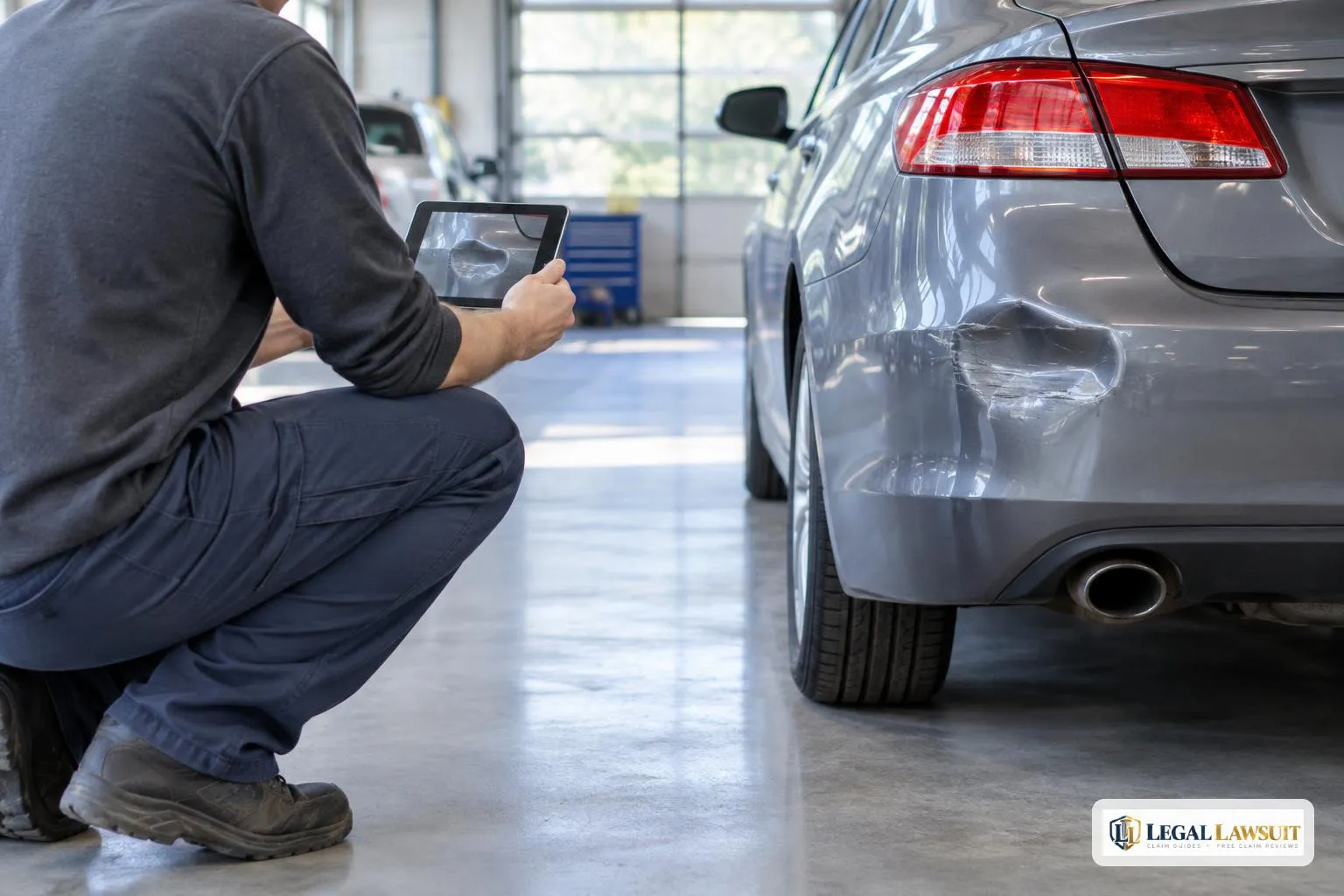
After the adjuster looks at your car, you’ll get an estimate. Treat it as a starting point. The number can go up once a repair shop takes a closer look. Here is how the figure gets set and why it can change.
The first look
The California Department of Insurance’s accident guide explains that a qualified adjuster or appraiser usually inspects the damage and writes an estimate from that initial inspection. For relatively minor damage, the company may skip the inspection and ask you to get competing repair estimates instead.
When the shop finds more damage
Some damage only shows up after a shop starts taking the car apart. When that happens, the department says the shop contacts the insurer for approval of the added cost. This extra request is often called a supplement. The insurer may send someone to re-inspect the car before approving it.
Who picks the shop and signs off on the work
- Choosing the shop: The Consumer Federation of America, a nonprofit consumer group, says in its auto claims checklist that you choose where your car is repaired, not the insurer. Your policy and your state insurance department can confirm how this works where you live.
- Authorizing the repair: The California department says it is your job to sign and authorize the repair once you’re satisfied with the final estimate and the shop.
The takeaway: Wait until a shop has seen the car before you treat the first figure as final. If the damage looks serious enough that the insurer may declare the car a loss rather than fix it, read our guide on how the property damage claim works if your car is totaled.
Recorded statements: when your policy requires one and when it usually doesn’t
Whether you should give a recorded statement depends mostly on who is asking. With your own insurer, it’s normally part of cooperating with your claim. With the other driver’s insurer, it’s usually your choice.
Your own insurer
After you report a claim, your insurer may take a written or recorded statement from you. In some cases it may ask for an examination under oath, according to the California Department of Insurance. That is a more formal, sworn interview.
Your policy almost always says you must cooperate with the company’s investigation. Refusing a reasonable request could cause problems with your own coverage. Look for the “duties after an accident or loss” or “cooperation” section of your policy so you know what you agreed to.
The other driver’s insurer
You don’t have a policy with the other driver’s company, so its cooperation terms don’t bind you. The Consumer Federation of America’s auto claims checklist says giving your own insurer a recorded statement is fine. It also says you have no obligation to give one to the other driver’s insurer. The CFA is a nonprofit consumer group, not a regulator, so confirm how this works in your situation with your state’s insurance department.
Declining to be recorded doesn’t mean refusing to help. You can still send the documents that support your claim, such as:
- The police report
- Photos of the scene, the vehicles and any injuries
- Repair estimates
- Medical and other bills
Whoever is asking
Before any statement, it’s reasonable to:
- Ask what it will cover. For example, is it about the accident itself, your injuries, or both?
- Schedule it for a time that works for you. Pick a time when you have your notes, photos and claim documents in front of you, rather than answering a surprise call.
If you do give a statement, stick to what you actually know. Be honest, and say “I don’t know” or “I’m not sure” when that’s the truth.
What not to say to an insurance claim adjuster, and what to say instead
Tell the adjuster what you know for certain. Say “I don’t know” when you don’t, and don’t sign anything about fault. You don’t need special wording. Plain, accurate facts serve you better than a rehearsed answer.
Facts you can share with confidence
- The date, time, and place of the accident
- The vehicles involved and who was driving them
- What you personally saw and heard
- That you are getting medical care, if you are
Where people get into trouble
| Avoid | A more accurate approach |
|---|---|
| Estimating speed or distances you didn’t measure | Describe what you noticed, and say plainly when you aren’t sure. |
| Saying who was at fault, or apologizing in a way that sounds like blame | Stick to what happened, in order, and let the investigation sort out fault. |
| Predicting your injuries (“I’m fine,” “it’s just a bruise”) | Say you’re being evaluated or treated and don’t know the full picture yet. |
| Agreeing to a damage amount before a shop has inspected the car | Wait for the inspection. As covered earlier, shops often find more damage once repairs begin. |
The California Department of Insurance’s guidance on what to do after an accident also lists things to avoid. Don’t sign statements about who was at fault. Don’t promise to pay the other parties’ damages. Don’t sign anything if the other party offers to pay your deductible.
Honesty still comes first. Avoiding guesses is about accuracy, not holding back. If your own policy requires you to answer questions or provide information, give it fully and truthfully. Careful answers and complete answers work together.
Medical authorizations, releases, and early settlement offers
You do not have to sign anything the moment it arrives. Some of the paperwork an adjuster sends can close your claim for good, so read every page before you sign.
Releases and medical settlement offers
According to Texas Department of Insurance guidance on auto claims, if another driver caused your injuries, that driver’s insurer will offer a medical settlement and ask you to sign a release promising you won’t make more claims for the accident. TDI suggests talking with your doctor about any future treatment you may need before you sign. That conversation can help you judge whether the offer is fair.
Texas’s Office of Public Insurance Counsel gives similar advice. Its guidance says to read everything you are given to sign, including checks, and explains that once you sign the release, you won’t get more money for the injury. Take your time.
Both of these sources are Texas guidance. Release terms and the rules around them vary by state. If you live elsewhere, check what applies where you are.
Medical records authorizations
An adjuster may also ask you to sign a form letting them collect your medical records. Before you sign, check what the form actually covers:
- Which doctors, hospitals or other providers it names
- What kinds of records it includes
- What dates it covers, and whether it reaches back to years before the accident
- How long the permission lasts
If anything is unclear or seems broader than your accident and injuries, ask the adjuster to explain it before you sign.
Before you answer an offer
You may want to lay out everything the accident has cost you before you respond to an early offer. Our guide to writing a demand letter that lists all of your losses shows how to put it in writing.

The liability decision, and where to turn if the claim stalls
The other driver’s insurer won’t pay for your damage until it accepts that its driver was at fault. Texas’s Office of Public Insurance Counsel explains that the other driver’s insurer must agree its driver caused the crash before it pays. While you wait for that decision, or if the answer is no, you have a few paths.
If the other insurer delays or denies fault
- Use your own collision coverage. If you carry collision, your insurer can pay for your repairs and then try to collect from the other driver’s insurer. You’ll probably pay your deductible up front, but OPIC notes it may be recovered and refunded to you later.
- Know the deductible difference. Going through your own policy usually means a deductible. Claiming directly against the at-fault driver’s insurer is different. The Texas Department of Insurance says you don’t pay a deductible on a claim against another driver’s insurer. That’s Texas guidance, so check how it works where you live.
If your own insurer goes quiet
California’s Department of Insurance says that if your insurer doesn’t respond, or you believe your settlement is being unreasonably delayed, you can contact the Department of Insurance. California isn’t unique in having one. Every state has an insurance regulator. Search for your state’s department of insurance to find out how it takes questions and complaints.
Getting help making sense of it
A denial letter, a lower-than-expected offer, or a release form can be hard to read when you’re already worn out. If you’d like help understanding what one of these documents means for you, Legal Lawsuit can walk you through your options at whatever pace works for you. Every claim turns on its own facts, and understanding the document in front of you helps you make the next decision with a clearer picture.
If the insurer denies the claim or the process drags, see what to do when a car insurance claim is denied and how long a car insurance claim takes.
Keep researching on Legal Lawsuit
Frequently asked questions
Do I have to give the other driver’s insurance adjuster a recorded statement?
Usually not. The Consumer Federation of America’s auto claims checklist says you have no obligation to give the other driver’s insurer a recorded statement. It also says a recorded statement to your own insurer is generally fine. You can politely decline the other company’s request and still answer basic questions about where your car is and how to reach you.
That checklist comes from a nonprofit consumer group, not a regulator. Your own policy may set out what you owe your insurer, and your state’s insurance department can confirm how the rules work where you live.
How soon should an insurance adjuster contact me after I report a crash?
In California, the Department of Insurance’s guide “So You’ve Had an Accident, What’s Next?” says an insurer can take up to 15 days to contact you in some circumstances. If the delay seems unreasonable beyond that, the same guide suggests contacting the Department of Insurance. Other states set their own timelines, so check with your state’s insurance regulator if you are outside California.
Can the repair estimate go up after the body shop starts work?
Yes. Once a car is taken apart, shops often find damage that wasn’t visible at the first inspection. The California Department of Insurance guide linked above explains that the shop asks the insurer to approve the added damage, and the insurer may send someone to re-inspect the vehicle before agreeing. You are the one who authorizes repairs, so ask the shop to keep you updated on any added work.
Should I sign a release before I finish medical treatment?
Take your time. The Texas Department of Insurance’s auto insurance guide explains that the other driver’s insurer may offer a medical settlement and ask you to sign a release promising not to make any more claims. Before you sign, the guide recommends talking with your doctor about any treatment you might still need. A release usually ends the injury claim, so it helps to know your likely medical costs first.
What if the other driver’s insurer won’t accept fault?
According to the Texas Office of Public Insurance Counsel’s guide to third-party auto claims, the other driver’s insurer is on its own driver’s side. It must agree its driver was at fault before it pays you. If you have collision coverage, your own insurer can pay for your repairs and then pursue the other company. You would pay your deductible, but it may be refunded if your insurer recovers from the other insurer.
The same guide notes that the other driver may not have enough insurance to cover everything. If the claim stalls, your state’s insurance department is a good place to ask about your options. If you have questions about your own situation, Legal Lawsuit’s guides can help you sort out next steps.
Sources
- So You’ve Had an Accident, What’s Next? · California Department of Insurance
- Auto insurance guide · Texas Department of Insurance
- Information on Third-Party Auto Claims · Texas Office of Public Insurance Counsel
- Guide to Navigating the Auto Claims’ Maze: Checklist · Consumer Federation of America · 2011-12-14
This article is general information, not legal advice. Laws and deadlines vary by state and change over time; check the linked sources or speak with a licensed attorney about your situation.
Related Posts

Florida's no-fault (PIP) law is still in effect in 2026, and the clock starts the day of the crash. This guide walks through each deadline in your own PIP claim, from the 14-day treatment window to the 30-day payment rule and what to do if payment stalls.
There's no single national deadline for a car insurance claim. Each state sets its own clocks. This guide goes stage by stage, from acknowledgment to payment, with the actual deadlines in Texas, California and New York, and covers what can slow each stage down.
A denial letter doesn't have to be the end of your claim. This guide pairs each common denial reason with a fix, lays out state response deadlines, and explains how to take it to your state insurance department.