Short answer: This article explains the key facts, eligibility issues, settlement factors, deadlines, and source-backed updates related to this legal topic. Results vary by case facts, evidence, jurisdiction, and representation.
California Wildfire Lawsuit Options: Know Your Rights
In This Guide
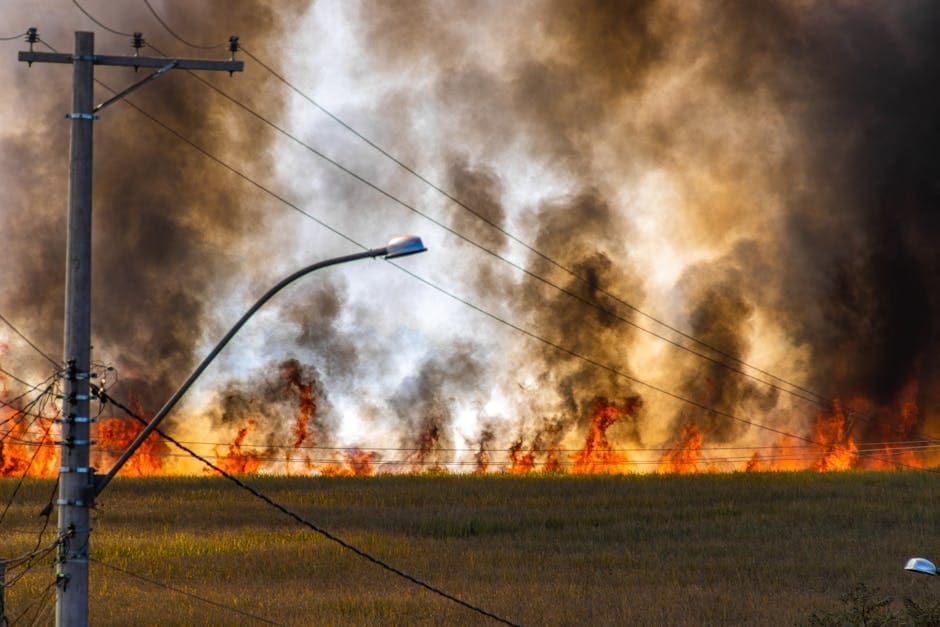
Your California wildfire lawsuit options may include claims against a utility whose negligence started the fire. If fires such as the Fairview or Dixie Fire destroyed or damaged your property, you may be able to recover more than your insurance pays.
Who May Bring a Claim:
- Homeowners and renters who lost property
- Business owners who lost income
- People hurt by flames or smoke
- Families of those who died
Common Defendants:
- Pacific Gas & Electric (PG&E)
- Southern California Edison (SCE)
Compensation Categories:
- Rebuilding and property damage
- Medical bills and missed wages
- Emotional distress and trauma
- Temporary housing and business losses
Utility-caused wildfires are a recurring problem in California. PG&E equipment ignited the 2018 Camp Fire, which killed 85 people, as well as the 2021 Dixie Fire, and the company paid $13.5 billion to resolve claims and faced criminal charges. Southern California Edison has paid hundreds of millions in settlements tied to the 2017 Thomas Fire and 2018 Woolsey Fire.
If you have suffered losses, feeling overwhelmed is natural. Insurance frequently falls short because of coverage gaps and low limits that leave families unable to rebuild; the California FAIR Plan, for instance, caps coverage at $3 million, which can be less than full replacement cost.
A legal claim can close that gap. Fire survivors can seek compensation directly from a negligent utility for rebuilding, replacement of belongings, lost income, medical costs and emotional harm.
I’m Mason Arnao. My background is in technology, and I have spent years researching complicated legal topics, including California wildfire lawsuit options. Connecting survivors with experienced attorneys who pursue full compensation makes a real difference, and understanding your rights is the place to begin.
Step 1: What to Do Right After a Wildfire
The days after a wildfire are chaotic, but a few practical steps now can preserve your rights for a later claim. Stay safe first and do not go back to your property until officials say it is safe. After that, what you do can strongly affect how much you recover.
Documenting What You Lost
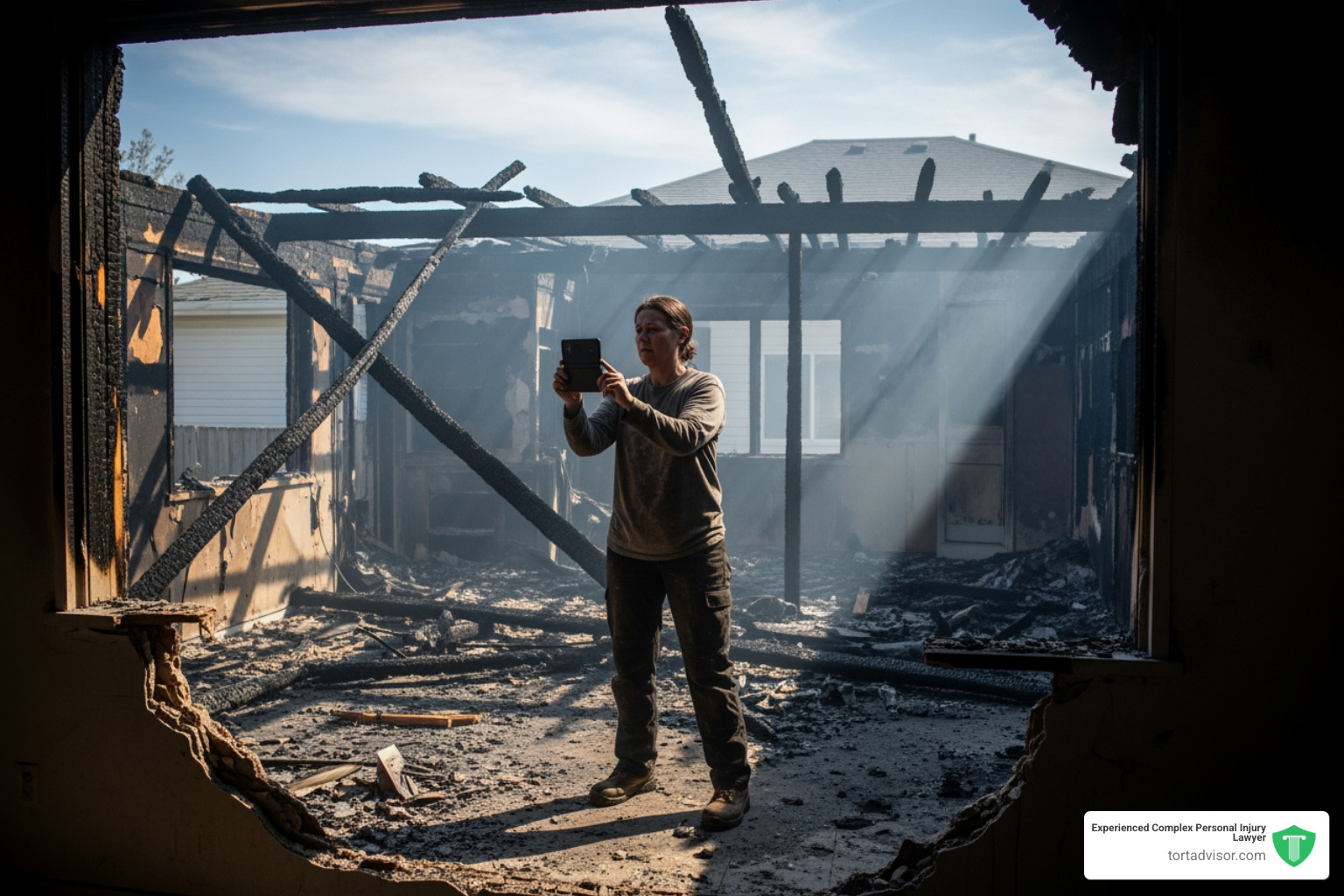
Documentation is the groundwork of your claim. Each photo, receipt and record helps tell the story of your losses. It can be painful, but this evidence is vital.
- Photos and Video: Capture wide views of the overall damage and close-ups of individual items, inside and outside your home, plus vehicles and land. Photograph everything, even items that seem totally destroyed.
- Ownership Records: Collect deeds, building plans and remodeling records to show ownership and value; recent appraisals are particularly useful.
- Item Inventory: List everything lost or damaged, from furniture to clothing and electronics. Old photos and credit card statements can help you remember and prove what you owned.
- Medical Documentation: Keep every bill and record for injuries, including burns, smoke inhalation and mental health effects such as PTSD or anxiety.
- Income Loss: Use pay stubs or business financials to show wages or revenue you lost.
- Rebuilding Bids: Get estimates from licensed contractors to establish what reconstruction will cost.
- Evacuation Costs: Save receipts for lodging, food, clothing and other expenses during evacuation.
For a fuller checklist, see our Wildfire Property Damage Claim Complete Guide.
Working With Your Insurer
Notify your insurer once it is safe and file promptly, since most policies set strict deadlines. Before filing, read your policy so you know your limits, deductible and any exclusions for wildfire, smoke damage and additional living expenses (ALE).
Insurers frequently underpay or deny legitimate claims, counting on desperate families to take low offers. Insurance seldom covers everything: it does not pay for emotional distress, and limits are often far below the true cost of rebuilding, particularly under the California FAIR Plan.
Do not settle for too little. An experienced attorney can contest a low offer, and a lawsuit against a negligent utility can recover damages beyond insurance, including harm from toxic smoke. Learn more in our guide to Wildfire Smoke Damage Claims.
Step 2: Who Can Be Held Liable for a California Wildfire
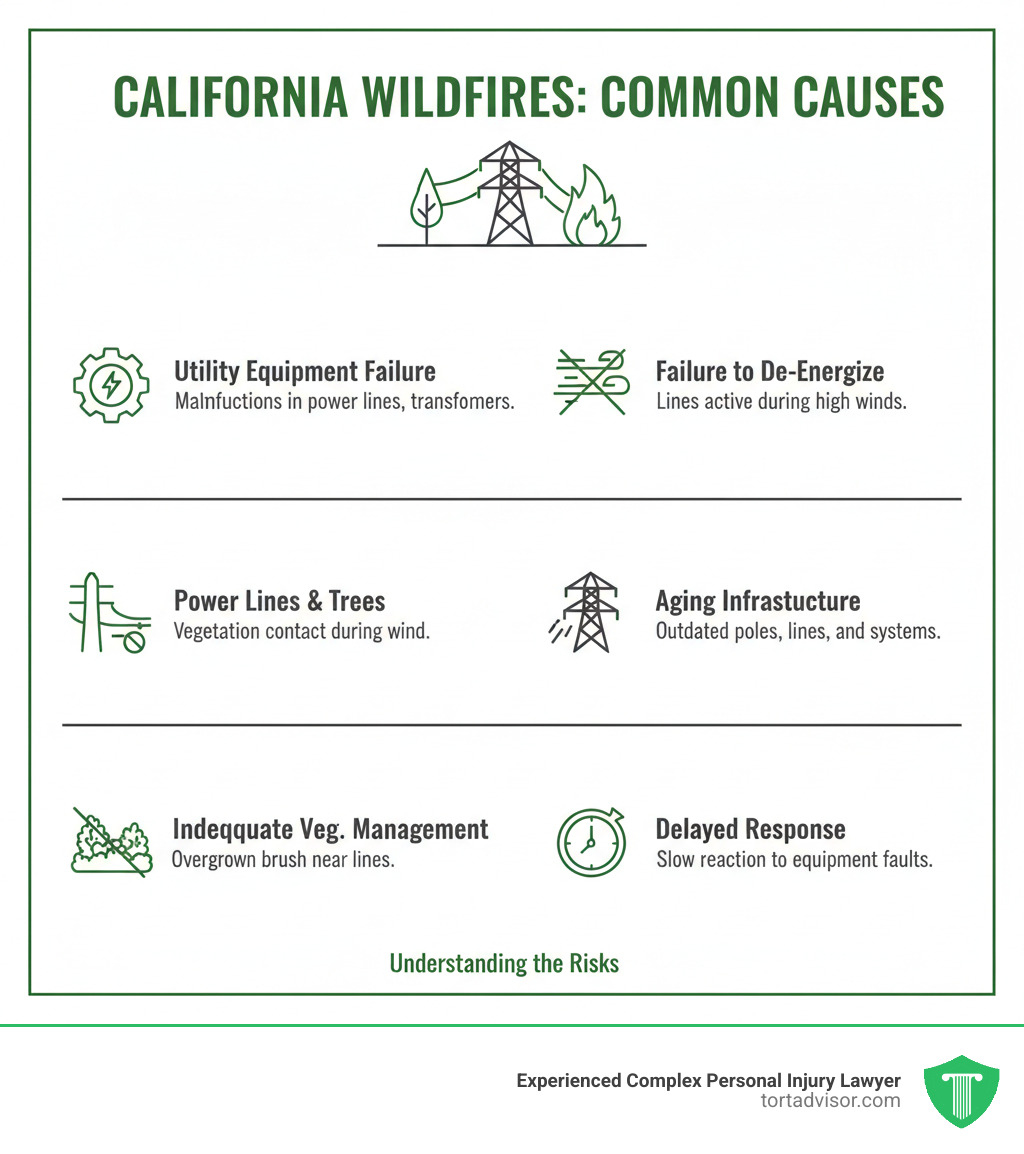
Survivors naturally want to know who is to blame. In California, the answer frequently involves large utilities that are legally required to maintain their equipment safely. Successful claims usually show that the utility’s negligence, such as defective equipment, inadequate maintenance or not shutting off power in high winds, started the fire.
California’s inverse condemnation doctrine adds another powerful option. It can make utilities pay for damage caused by their equipment without any showing of negligence, on the theory that infrastructure serving the public must compensate private owners it harms. See our California Wildfire Legal Claims page for more.
PG&E’s Wildfire Record (Camp and Dixie Fires)
Pacific Gas & Electric’s history shows the devastating cost of putting profits ahead of safety.
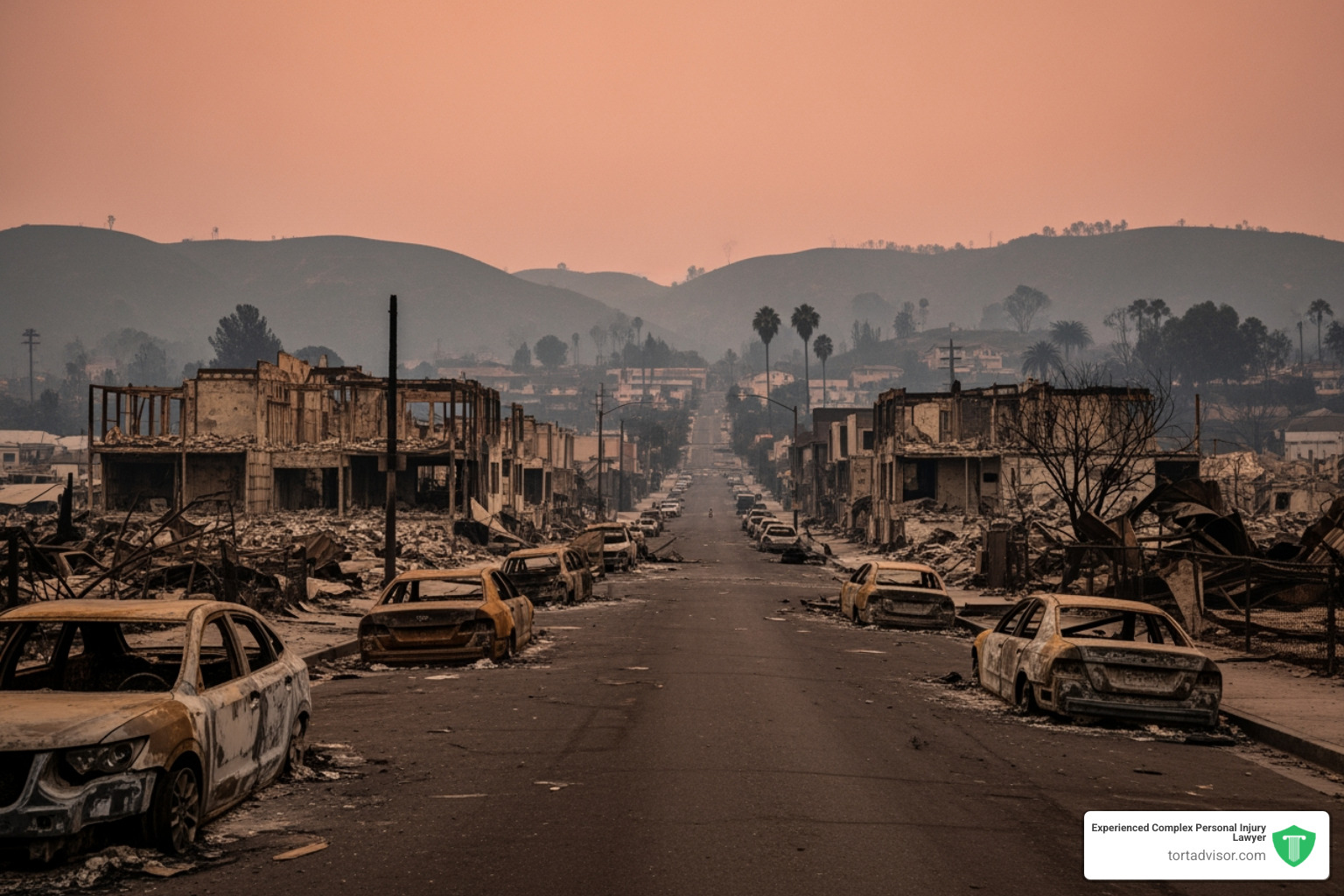
A worn PG&E transmission line caused the 2018 Camp Fire, which killed 85 people and leveled the town of Paradise. The fire pushed PG&E into bankruptcy and produced a $13.5 billion settlement for victims, and the company pleaded guilty to 84 counts of involuntary manslaughter.
The 2021 Dixie Fire, the second-largest single wildfire in California history, began when a tree fell onto a PG&E line. Cal Fire investigators concluded PG&E’s slow response was negligent. Timberland owners later sued for $225 million over destroyed timber and property, illustrating the economic damage to the region. Read the coverage: Lawsuit Filed Against PG&E for Damages From Dixie Fire.
Southern California Edison (SCE) and the Bobcat and Fairview Fires
Southern California Edison (SCE) faces similar allegations in Southern California, where the U.S. Department of Justice has sued the utility over the 2020 Bobcat Fire and the Fairview Fire.
The 2020 Bobcat Fire suit claims poorly maintained SCE equipment started a fire that burned close to 116,000 acres, and the federal government seeks at least $82.5 million for firefighting costs and damages.
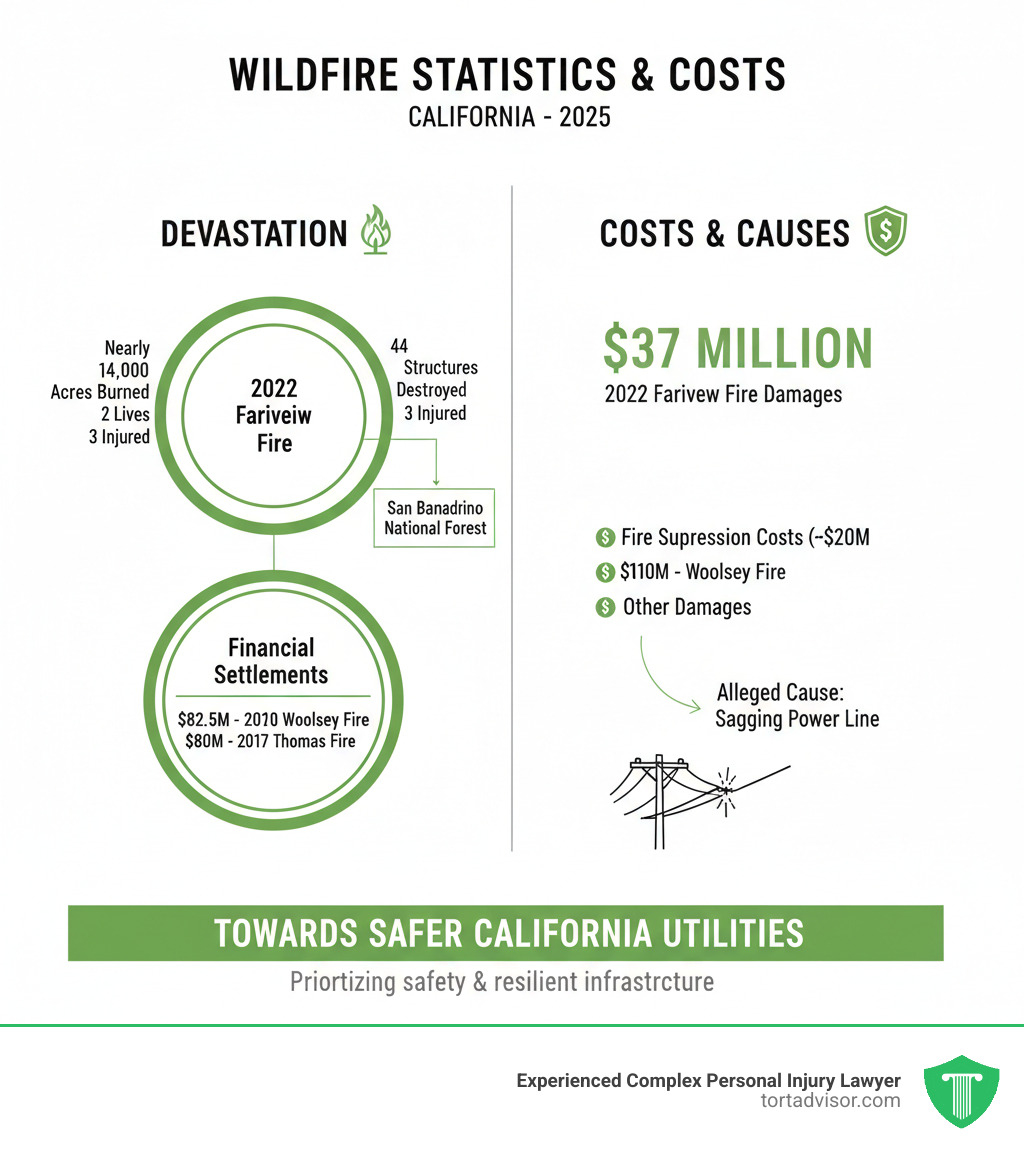
In the 2022 Fairview Fire, which killed two people, the government seeks $37 million. Investigators found that a sagging SCE line touched another cable and threw sparks, again pointing to maintenance failures.
The pattern is consistent. SCE has paid large settlements over other fires, including the 2018 Woolsey Fire ($210 million) and the 2017 Thomas Fire ($80 million). The Acting U.S. Attorney described the federal suits as an effort to force a “culture change” at the utility, and they reinforce individual survivors’ claims. Official details: United States Sues Southern California Edison Co., Seeking Tens of Millions of Dollars in Damages for Bobcat and Fairview Fires.
Step 3: What Compensation Can Cover
Knowing the full range of recoverable damages is key to rebuilding. A wildfire claim can recover much more than your home’s value, addressing every way the fire affected your life.
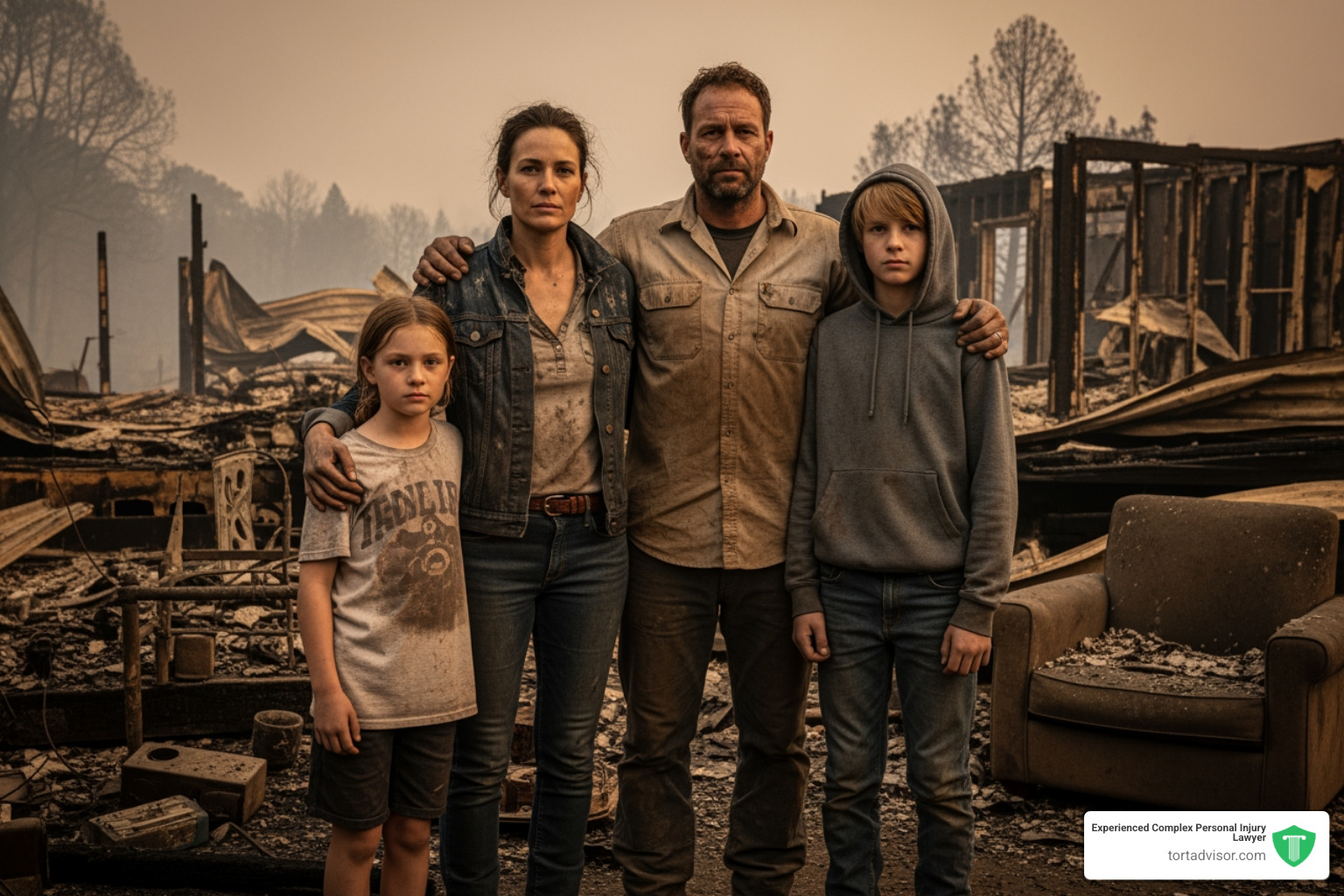
Recoverable losses may include:
- Property Damage: Rebuilding your home, replacing belongings and restoring land.
- Injuries: Medical costs for burns, smoke inhalation and lasting health effects.
- Wrongful Death: Funeral costs, lost financial support and loss of companionship.
- Lost Income & Business Losses: Missed wages and harm to business operations.
- Emotional Distress: Trauma, anxiety and PTSD.
- Evacuation Expenses: Temporary lodging, food and other emergency costs.
For a rough idea of what your claim could be worth, try our California Wildfire Settlement Calculator.
Economic vs. Non-Economic Damages in a California Wildfire Claim
Damages in these cases fall into two groups: economic and non-economic.
Economic damages are concrete financial losses backed by receipts and bills, such as medical costs, lost pay and repair expenses.
Non-economic damages address losses without a price tag, including pain and suffering, emotional trauma, PTSD and lost enjoyment of life. These unseen injuries are as real as physical ones.
Importantly, insurance usually covers only part of the economic damages and nothing for trauma, anxiety or grief. A lawsuit is how survivors pursue the non-economic losses insurers leave out.
| Damage Category | Description | Examples |
|---|---|---|
| Economic Damages | Concrete financial losses that can be documented | Medical costs, lost pay, repairs, lost business income, evacuation costs |
| Non-Economic Damages | Losses with no set dollar value that still deeply affect quality of life | Pain and suffering, PTSD, anxiety, lost enjoyment of life, emotional distress, loss of companionship |
How Fire Victim Trusts Work
When utility negligence causes massive harm and bankruptcy follows, a Fire Victim Trust may be set up to pay survivors. The PG&E Fire Victim Trust, created for claims from the 2015 Butte, 2017 North Bay and 2018 Camp Fires, is the best-known example.
By late 2024, the Trust had awarded $19.57 billion and paid $13.70 billion, and in October 2024 it raised its payment percentage to 70%, a significant step for survivors. Details: Fire Victim Trust to Increase Pro Rata Payments to California Wildfire Survivors to 70%.
These trusts offer an important path to payment, but because the fund is finite, survivors may not receive the full value of an approved claim. Such mass settlements are built to process thousands of claims efficiently; our page on Mass Tort Lawsuit Settlements explains how they work.
Step 4: How the Legal Process Works
A wildfire claim can seem complicated, but an experienced legal team makes the path manageable at each stage.
The statute of limitations is critical. California generally allows two years to file property damage and personal injury claims, though that can vary, and missing the deadline can forfeit your claim, so speak with an attorney early.
The process involves collecting evidence, exchanging information with the other side (discovery) and using experts to prove the utility was at fault. Your attorney will negotiate for a fair settlement throughout and be ready to go to trial if no fair offer comes. Many wildfire cases are combined into mass tort proceedings, explained on our Mass Tort Litigation Support page.
Starting a California Wildfire Claim
Getting started is simple.
- Free, Confidential Case Review: Begin with a no-obligation conversation about what happened and your options, where an attorney listens and answers your questions.
- Evaluation: The attorney examines your situation in detail, assessing liability and the full extent of your damages to build the strongest claim.
- Retaining Counsel: If you proceed, you hire the attorney on contingency, paying nothing up front. The fee is a share of what is recovered, and if nothing is recovered, you owe no fee.
From that point, your attorney handles the legal paperwork and communications so you can concentrate on rebuilding.
What to Expect in a California Wildfire Lawsuit
Wildfire cases can take a while, but knowing the stages helps ease the uncertainty.
- Investigation: Your legal team gathers evidence, interviews witnesses and works with fire experts to build a persuasive case.
- Discovery: Each side exchanges information through written questions and document requests, with your attorney guiding you.
- Depositions: Formal interviews under oath outside court; your attorney prepares you and attends with you.
- Settlement: Talks can happen at any stage, and many cases resolve before trial, but a good attorney will only recommend an offer that truly reflects your losses.
- Timeline: Reaching trial can take months or years, particularly in mass tort cases, and your attorney should keep you updated along the way.
See How Much Does Mass Tort Lawsuits Receive for more on compensation and timing.
California Wildfire Lawsuit FAQs
Survivors understandably have many questions. Here are answers to the ones we hear most.
Can I sue if I have homeowners insurance?
Yes. Exploring your California wildfire lawsuit options often makes sense even when you are insured, because insurance seldom covers everything. Policies have limits and deductibles, and they do not pay for non-economic harm such as pain and suffering, emotional trauma or PTSD.
A lawsuit lets you pursue every loss, including intangible ones. Many survivors use insurance money for urgent needs while their legal claim works toward full recovery.
What does a wildfire lawyer cost?
Nothing up front. Reputable wildfire attorneys work on contingency, taking a percentage of any settlement or award; if the case is not won, you generally owe no attorney fee.
That arrangement gives everyone access to strong representation regardless of finances, so you can take on a large utility without worrying about hourly bills while rebuilding your life.
How long does a wildfire lawsuit take?
A California wildfire claim can take anywhere from several months to a few years, depending on several factors.
- Complexity: Proving utility negligence calls for deep investigation, expert analysis and review of huge volumes of documents.
- Number of Claimants: Cases with thousands of survivors are often grouped into mass torts, which is efficient but can lengthen the timeline; the PG&E Fire Victim Trust is still processing claims years later.
- Settlement or Trial: Settlements are often quicker, but if the utility contests fault or offers too little, a trial may be needed and the case will take longer.
Waiting is hard, but accepting an inadequate offer to end things sooner is a mistake. A good attorney will pursue full compensation and keep you informed. Read more on How Much Does Mass Tort Lawsuits Receive.
Starting Your Recovery
Recovering from a wildfire is hard, and you do not have to do it alone. When utility negligence caused your loss, the courts offer a way to seek accountability and rebuild, and pursuing your California wildfire lawsuit options also pushes utilities to put safety first.
In the words of the U.S. Attorney’s office, “Hardworking Californians should not pick up the tab for Edison’s negligence.” Legal action makes clear that negligence carries consequences and helps protect other communities.
Experienced counsel matters because wildfire cases are technical and pit survivors against very large companies. Legal Lawsuit helps survivors connect with attorneys in our network who handle wildfire claims on contingency, so there is no up-front cost.
Rebuilding takes time. Acting now protects your rights and helps secure what you need to recover fully; deadlines are running and evidence must be preserved, so the sooner you start, the stronger your position.
The first step is a free, confidential case review: a straightforward conversation about your options.
To learn more and plan your next steps, read our California Wildfire Lawsuit Guide. Legal Lawsuit is here to help you pursue full compensation.
Related Posts
Quick Answer: The Boy Scouts of America (BSA) filed for Chapter 11 bankruptcy in 2020 after facing tens of thousands [...]
Quick Answer: Survivors of sexual abuse by Catholic priests, nuns, or other Church personnel may be able to file a [...]
Quick Answer: Clergy abuse settlements vary enormously based on the severity of the abuse, the strength of evidence that the [...]