Short answer: This article explains the key facts, eligibility issues, settlement factors, deadlines, and source-backed updates related to this legal topic. Results vary by case facts, evidence, jurisdiction, and representation.
📋 Table of Contents
- Why Filing Your Wildfire Property Damage Claim Correctly Matters
- Step 1: Immediate Actions and Safety Protocols
- Step 2: Understanding Your Insurance Policy and Coverage
- Step 3: Filing Your Wildfire Property Damage Claim: A Step-by-Step Guide
- Step 4: Accounting for All Losses Beyond the Structure
- Frequently Asked Questions about Wildfire Claims
- Conclusion: Rebuilding with Confidence
Why Getting Your Wildfire Property Damage Claim Right Pays Off
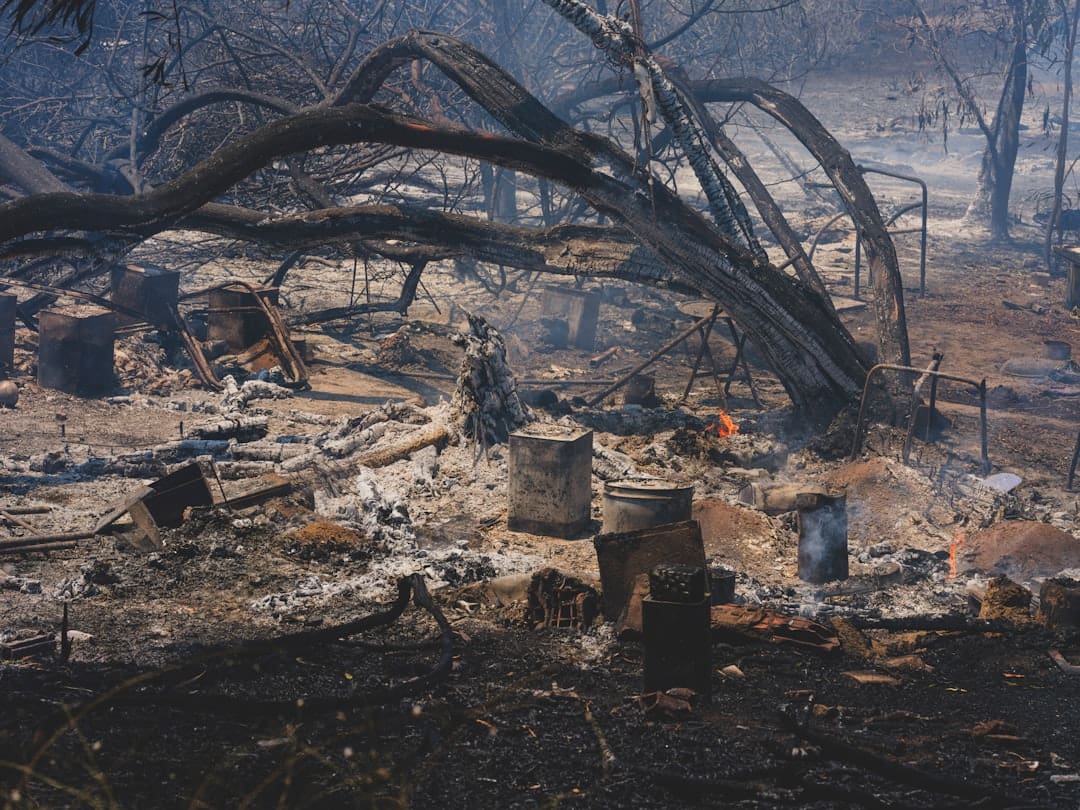
A wildfire property damage claim often lands on people already reeling from loss, as wildfires grow more frequent and leave emotional and financial wreckage behind. Canadian wildfires in 2023 produced $780 million in insured losses, and the 2016 Fort McMurray fire cost close to $6 billion. Navigating an insurance claim on top of that is exhausting. This guide explains how the process works, what rights you have, and how to pursue the full compensation you’re owed.
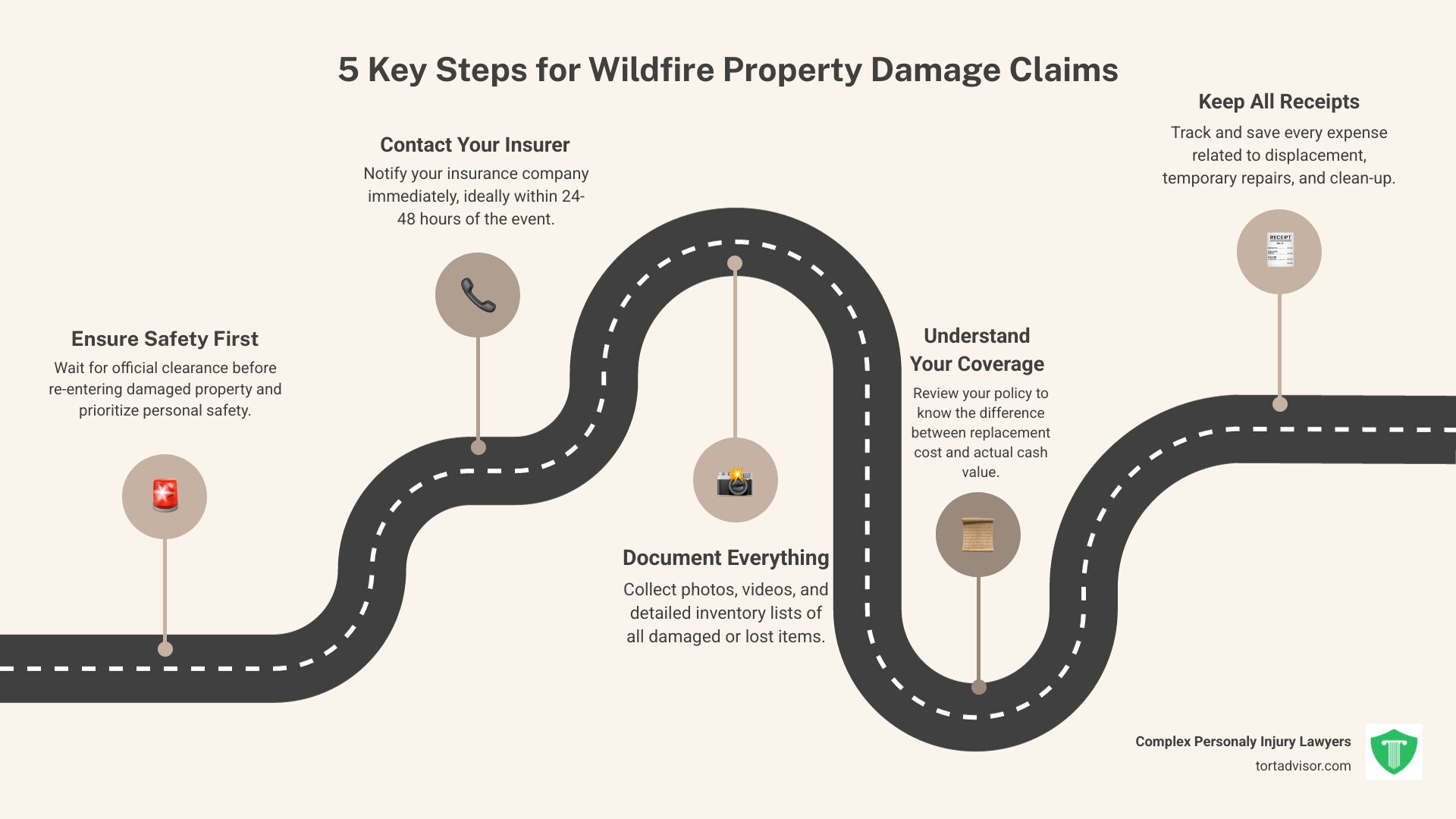
Essential Steps for a Wildfire Property Damage Claim:
- Put Safety First – Don’t go back onto the property until officials say it’s safe.
- Notify Your Insurer Promptly – Open the claim at the earliest opportunity.
- Record It All – Photos, video and a detailed inventory make or break a claim.
- Know What Your Policy Covers – Learn how replacement cost differs from actual cash value.
- Save Every Receipt – Log all costs tied to displacement and emergency repairs.
Wildfire losses can be overwhelming, and the true financial hit frequently exceeds what an insurance policy pays — a gap many survivors only discover partway through the claim.
Your insurer, adjusters, contractors and mortgage lender all play a part in the claim, and each has its own priorities. Knowing your rights from the start is the foundation of a fair settlement.
I’m Mason Arnao. Legal Lawsuit is a legal-information resource, not a law firm, and my work focuses on researching how insurers evaluate wildfire claims so survivors can understand the process and push for fair treatment.
To learn more about the wildfire property damage claim process, explore related topics such as California wildfire litigation and wrongful death claims.
Step 1: What to Do First — Safety and Immediate Actions
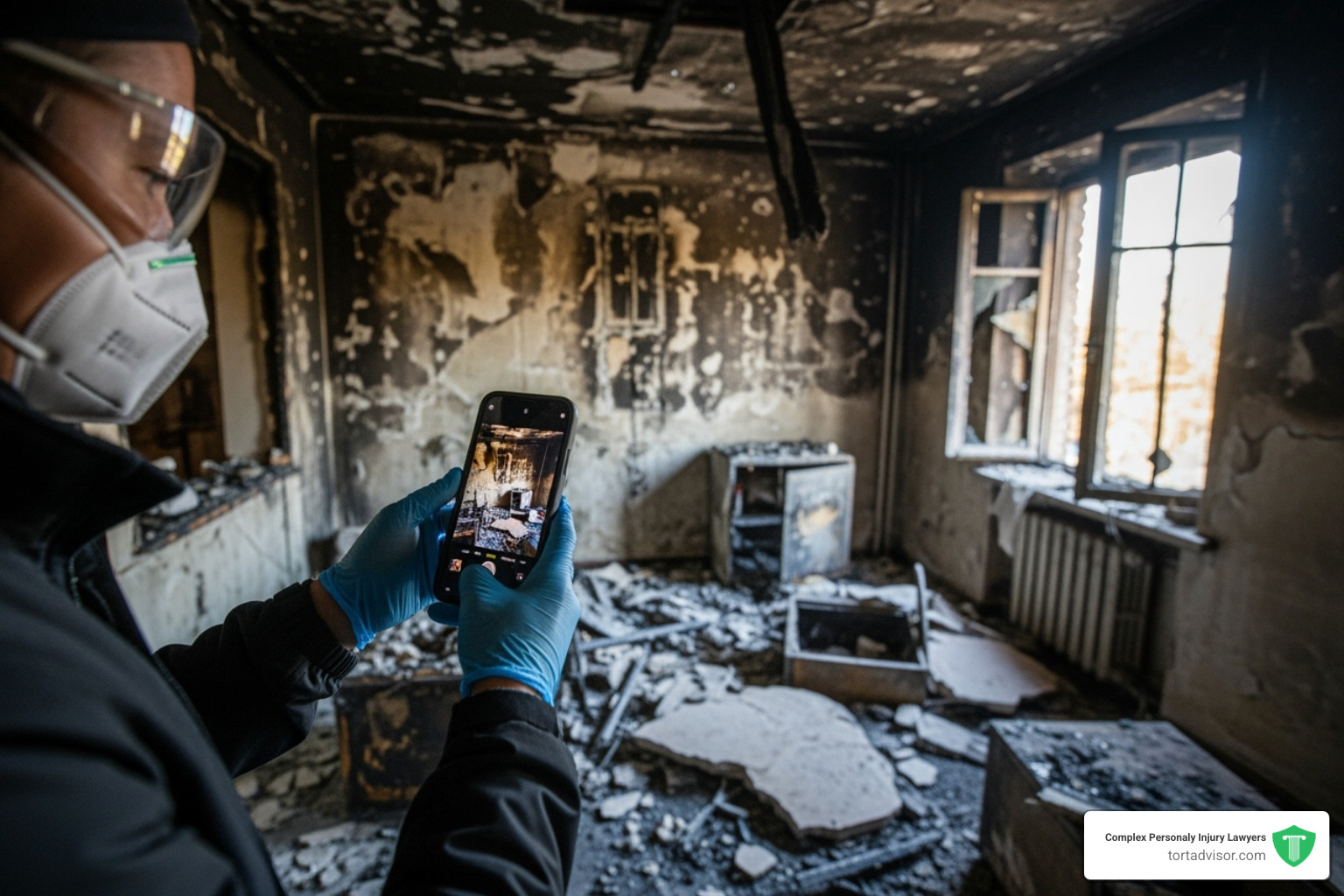
Once a wildfire has passed, nothing matters more than your safety. Stay off the property until officials confirm it’s safe. After that, you can start recording the damage and protecting the home from more harm.
Stay Safe and Protect the Property
Evacuation orders are issued to save lives. If you’re told to leave, go right away and take your emergency kit. Don’t rush back — even homes that look untouched can hide gas leaks or electrical dangers. Shut off utilities before you leave if you can.
When you’re allowed back, prevent further damage by covering broken windows with boards and putting tarps over damaged roofs. Most policies require you to limit additional loss, so save the receipts for this work.
If an official order forced you out, your insurer may pay for lodging and travel even when the house itself wasn’t damaged. Hold on to every receipt. The Insurance Information Institute also publishes useful advice on wildfire insurance claims.
Call Your Insurer and Open the Claim
Contact your insurance company the moment it’s safe. Reporting early is vital to a wildfire property damage claim, so don’t hold off waiting to collect every detail.
Keep your policy number handy and give a short summary of the damage. You can open a claim for Additional Living Expenses (ALE) even while still evacuated; most standard homeowner and renter policies provide this coverage starting with an official evacuation.
Bring up ALE during your first conversation. It pays for temporary housing, meals and other added costs while you’re displaced, and the earlier you ask, the earlier help arrives.
Start Documenting Damage for Your Wildfire Claim
Careful records are the backbone of any wildfire property damage claim. Your insurer will want proof of every loss, so collect evidence the way an investigator would.
Before you move a single item, capture photos and video of the damage inside and outside. Mix wide shots showing the full scope with close-ups of specific damage — this record is enormously valuable at settlement.
Build a room-by-room inventory. For every item, note what it is, the brand, when you bought it and what it cost, and attach receipts (paper or digital) where you have them. Hold on to damaged belongings until the adjuster has seen them or you’ve fully documented them.
Save all receipts starting the day of the fire. Hotels, meals, emergency clothes and supplies for temporary repairs usually count as ALE or mitigation costs that your insurer should repay.
Last, maintain a log of every contact with your insurer: date, time, who you spoke to and what was said, plus your claim number on each entry. That record is essential if a dispute comes up.
Step 2: Making Sense of Your Insurance Policy and Coverage

Your policy is a contract spelling out what the insurer will pay on your wildfire property damage claim. Understanding the basics lets you stand up for yourself.
Main Coverages in a Homeowner Policy
Typical homeowner and renter policies cover fire damage, wildfires included. The core coverages are:
- Dwelling coverage: Pays to rebuild the house itself — foundation, walls, roof and built-in appliances.
- Personal property coverage: Covers what’s inside, from furniture and electronics to clothing. You’ll need a thorough home inventory to prove what those items were worth.
- Additional Living Expenses (ALE): Sometimes called “loss of use,” it pays the added cost of living somewhere else while your home can’t be lived in — hotels, short-term rentals and meals. It’s worth learning exactly what additional living expenses include.
- Debris removal: Pays the often-steep cost of clearing ash, burned material and other fire debris.
- Landscaping coverage: Provides limited reimbursement for trees, shrubs and plants lost to fire.
- Fire retardant cleanup: Most policies pay to remove retardant that firefighters sprayed on the outside of your home.
Coverage Issues for Businesses and Farms
Commercial properties and farms usually have more at stake. Important coverages include:
- Commercial property insurance: Covers a business’s physical assets — buildings, equipment and inventory.
- Business Interruption (BI) coverage: Makes up for lost profits and keeps paying fixed costs like rent and payroll if fire damage forces a temporary shutdown.
- Contingent Business Interruption (CBI): Covers financial losses when a fire disrupts an essential supplier.
- Civil authority coverage: Applies when evacuation orders block access to a business that wasn’t damaged.
- Farm insurance: Covers barns, silos and other farm buildings, livestock and crops, and specialized machinery.
Replacement Cost Value vs. Actual Cash Value
Knowing how Replacement Cost Value (RCV) differs from Actual Cash Value (ACV) is essential, because your policy uses one of them to value what you lost.
- Replacement Cost Value (RCV): Pays for new items of comparable quality without subtracting depreciation, aiming to put you back where you were before the fire.
- Actual Cash Value (ACV): Pays replacement cost less depreciation for age and wear. A ten-year-old couch is valued at what it’s worth now, not the price of a new one. Read more about actual cash value.
- Guaranteed Replacement Cost (GRC): Offered by some insurers, GRC pays to rebuild even beyond your policy limits — a major advantage when building costs surge after a disaster.
Typical Exclusions and How Smoke Damage Is Handled
Even strong policies have boundaries. Knowing them keeps your expectations realistic as your wildfire property damage claim moves forward.
- Policy exclusions: Usually rule out intentional acts by the policyholder and sometimes damage from slow or repeated smoke exposure.
- Pollution exclusions: Some insurers claim smoke and ash are pollutants, yet courts frequently side with homeowners, treating wildfire smoke as sudden, accidental damage.
- Smoke from far-off fires: Homeowner coverage generally applies to smoke damage no matter where the fire started, provided it was sudden and accidental, and you file with your own insurer. Government agencies publish guidance on smoke and ash damage claims.
- Odor without visible damage: Certain policies won’t pay for smell alone. Still, a heavy odor usually means smoke particles have worked into materials, something professional testing can confirm.
Step 3: How to File a Wildfire Property Damage Claim, Step by Step
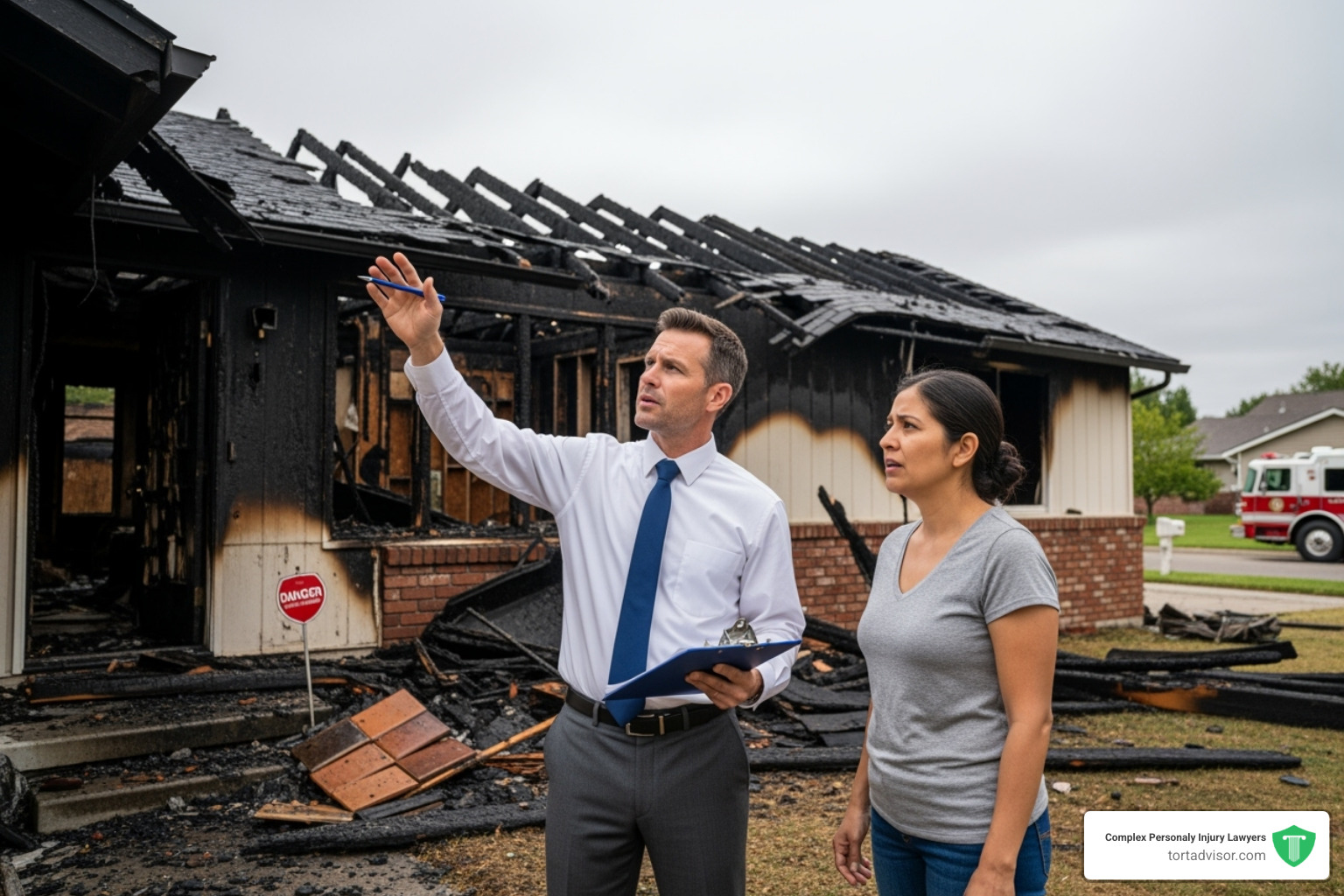
The formal claim involves detailed forms and negotiation. Staying organized and taking initiative is how you reach a fair settlement.
How the Formal Claims Process Works
Working through a wildfire property damage claim takes patience and precision. The insurer will give you a claim number and assign an adjuster as your main contact, whose role is to investigate the loss and estimate repair costs. Most adjusters act professionally, but they’re employed by the insurer, and their figures can come in low.
Expect to fill out a Proof of Loss form — a formal sworn statement laying out your claim. Make it accurate and attach your photos, inventory and receipts. Insurers commonly allow around 30 days to return it, and missing that deadline can put the claim at risk.
Track every deadline your insurer sets, add them to your calendar and set reminders. Consumer advocacy groups also publish guides on filing an insurance claim after a wildfire.
Managing Contractors and Your Mortgage Lender
Rebuilding means juggling contractors, your lender and your insurer. Here’s how to handle each relationship.
Picking the right contractor matters enormously. Choose licensed, insured firms experienced in fire damage repair, and check their references. You don’t have to hire the insurer’s “preferred vendors,” whose loyalty may lie with the insurance company rather than with you.
Collect two or three written estimates from separate contractors. They give you bargaining power if the insurer’s estimate is too low and help keep pricing fair.
With a mortgage, your lender is probably listed on the policy, so checks for structural damage will name both you and the lender. The lender typically deposits the money in an escrow account and releases it as work is finished. Keep your lender informed about the rebuilding schedule.
What Landlords and Tenants Are Responsible For
With rental property, each side’s obligations after a wildfire need to be clear.
- Landlords: Your policy covers the building, not your tenant’s possessions. You must repair structural damage within a “reasonable time” so the unit is livable again.
- Tenants: Renter’s insurance is what protects you. It covers your belongings and pays Additional Living Expenses (ALE) if the unit becomes unlivable. A long stretch of uninhabitability may end the lease, so review it and consider contacting a tenant rights group if your options are unclear.
Open, honest communication between landlord and tenant makes a hard period far easier to get through.
Step 4: Claiming Every Loss — Not Just the Building
Wildfires do damage well beyond walls and roofs. Compensation may also be available for injuries, financial setbacks and emotional trauma.
Claims for Injuries and Emotional Distress
The harm from a wildfire isn’t limited to property. Physical injuries and emotional suffering can be compensated too.
Physical harm such as burns or smoke inhalation causing breathing problems can support a claim for medical costs, missed pay and pain and suffering. See our information on personal injury lawsuits to learn more.
The mental toll is real as well. Many survivors struggle with anxiety, depression or post-traumatic stress disorder (PTSD). These are genuine medical conditions, and you may be able to recover the cost of therapy and other mental health care.
Financial and Environmental Losses
A complete wildfire property damage claim captures every financial impact, not only damage to the structure.
- Missed income and business interruption are among the largest losses. Earnings lost because of evacuation, injury or a damaged workplace can be recovered.
- Evacuation expenses such as travel and emergency boarding for pets add up quickly. Save every receipt.
- Spoiled food may be covered when a fire-related outage knocked out power. Photograph it before throwing it away.
- Environmental harm, including soil contamination from ash and retardant, can limit how land is used later, and wildfires can badly pollute water. Individual claims on these issues are hard, but they may become part of broader litigation, particularly when a utility company’s negligence is involved. In the most tragic situations, families can learn about California Wildfire Wrongful Death claims.
Steps to Protect Your Home Next Time
In fire-prone regions, planning ahead lowers your risk down the road.
- Build defensible space: Your first defense. Remove flammable material in zones around the house, especially within 10 meters, thin out vegetation and keep trees well apart.
- Choose fire-resistant materials: When rebuilding or remodeling, pick fire-resistant roofing, siding and decking.
- Keep up with maintenance: Clear gutters, pull dead plants and keep the yard neat so there’s less fuel.
- Plan for emergencies: Map out several evacuation routes and meeting spots with your family, and keep emergency kits stocked.
Programs focused on wildfire prevention explain how to become “FireSmart” in more depth.
Wildfire Property Damage Claim FAQs
What if I’d rather not rebuild in the same place?
Choosing not to rebuild on the same lot often means your policy pays Actual Cash Value (ACV) instead of Replacement Cost Value (RCV), so you’d receive the home’s depreciated value rather than the full cost of a new build.
The land remains yours to sell or use differently. If there’s a mortgage, though, the lender must be paid off from the insurance proceeds, and if the ACV payment falls short of the balance, you owe the rest. Talk with your insurer and a financial or legal professional before deciding.
Does filing a wildfire claim raise my insurance rates?
One wildfire property damage claim doesn’t automatically push your premium up; insurers weigh broader trends, especially with natural disasters. Large-scale fires can, however, prompt rate increases across high-risk regions, as rising risk, inflation and costlier rebuilding lift premiums for everyone in the area. Insurers may also grow pickier about which homes they’ll insure in fire-prone zones.
Can I buy a new policy when a wildfire is about to hit my area?
It’s very hard. When an area faces an imminent wildfire threat or an evacuation alert, insurers commonly pause new policies because the chance of loss is too high.
Existing policies usually renew normally during these pauses. If you’re buying in a high-risk area, make your offer contingent on obtaining insurance and start shopping early. And never drop coverage on a home you’re selling before closing, particularly in fire season.
Final Thoughts: Rebuilding With Confidence

A wildfire property damage claim is more marathon than sprint, and it tests your patience. Even so, you hold more leverage than you may think. The claimants who do best stay organized, document thoroughly, know their policy and keep pressing.
Insurers are businesses, and some adjusters may try to shrink or slow payments. That’s why knowing your rights matters — you’re not obligated to take a lowball first offer.
You don’t have to handle this by yourself. When a claim is complicated, unreasonably delayed or denied, bad faith practices may be at play, and that’s when expert guidance becomes essential.
An attorney experienced with wildfire claims can review your situation, identify the benefits you’re due and hold your insurer to its contractual and legal obligations — acting as your advocate, interpreter and strategist against insurer tactics.
Legal Lawsuit can connect you with attorneys in our network who focus on insurance disputes, bad faith claims and complex wildfire litigation.
If your wildfire property damage claim feels overwhelming or your insurer is fighting you at every turn, help is available. Getting legal advice isn’t giving up — it’s taking charge of your recovery.
Request a free, confidential case review about your wildfire claim and take the first step toward the fair settlement you’re owed. Your recovery matters, and you deserve advocates committed to protecting your rights.
Additional Resources
Related Posts
Quick Answer: The Boy Scouts of America (BSA) filed for Chapter 11 bankruptcy in 2020 after facing tens of thousands [...]
Quick Answer: Survivors of sexual abuse by Catholic priests, nuns, or other Church personnel may be able to file a [...]
Quick Answer: Clergy abuse settlements vary enormously based on the severity of the abuse, the strength of evidence that the [...]