
Short answer: This article explains the key facts, eligibility issues, settlement factors, deadlines, and source-backed updates related to this legal topic. Results vary by case facts, evidence, jurisdiction, and representation.
In This Guide
PFAS Settlements Per Person: What Injured People Should Know
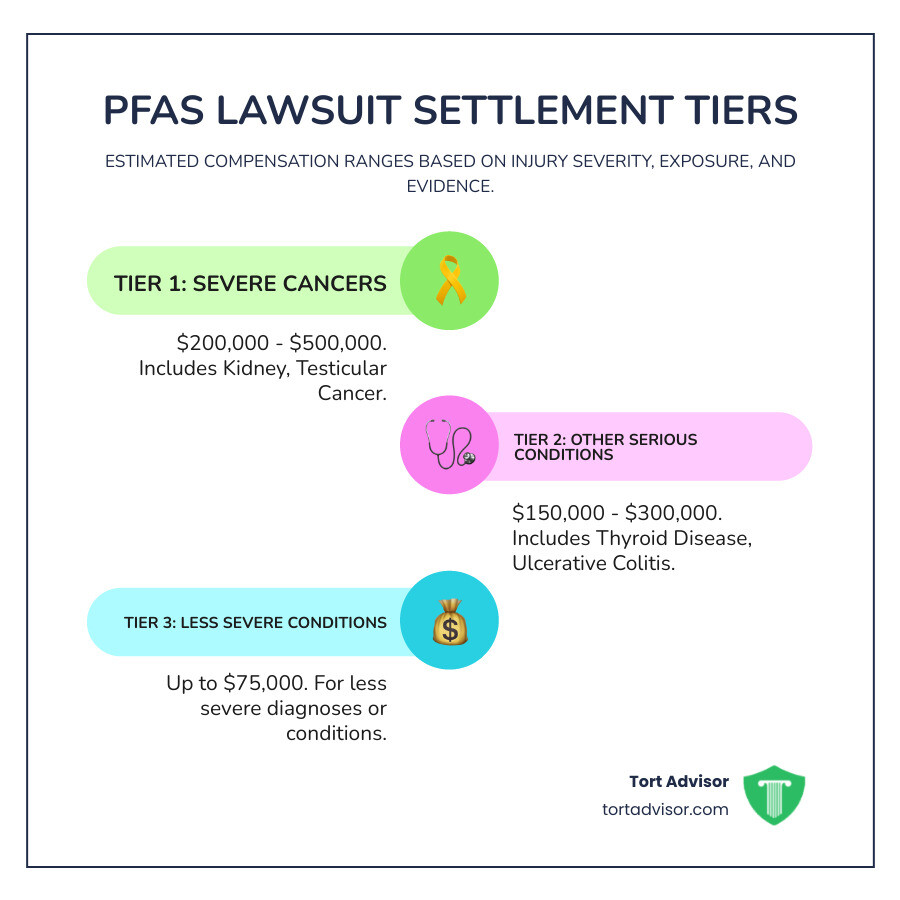
PFAS settlements per person depend on your diagnosis, your exposure history and the evidence connecting them. No global personal injury settlement has set fixed amounts, but claims are commonly grouped by severity: How claims are typically tiered:
- Highest tier: cancers with the strongest PFAS research links, such as kidney or testicular cancer
- Middle tier: other serious conditions, such as thyroid disease or ulcerative colitis
- Lower tier: less severe conditions or exposure with limited health effects
What moves the value of a PFAS claim:
- The diagnosis and how serious it is
- How long you were exposed
- The quality of your medical records
- Documented contamination where you lived or worked
If PFAS exposure contributed to a serious illness, you may be entitled to compensation. 3M and DuPont have already paid billions, mostly to water systems, and DuPont’s earlier C8 personal injury settlement averaged roughly $190,000 per claimant. Personal injury cases in the AFFF MDL continue to move forward. I’m Mason Arnao, and my work with data systems for complex legal matters has given me insight into how PFAS settlements per person tend to be structured.
Related PFAS settlement topics:
- pfas cancer lawsuit
- pfas exposure risks
- pfas exposure symptoms
What PFAS Are and Why They Raise Health Concerns
Per- and polyfluoroalkyl substances (PFAS) are synthetic chemicals used since the 1940s because they repel heat, water and grease. They show up in nonstick pans, water-resistant clothing, food packaging and cleaning products.

Because they barely break down, these “forever chemicals” build up in the environment and in people. Major sources include industrial plants and AFFF firefighting foam used at military bases and airports; groundwater at Dover Air Force Base, for example, tested far above federal limits. A 2023 U.S. Geological Survey study estimated that at least 45% of U.S. tap water contains one or more PFAS.
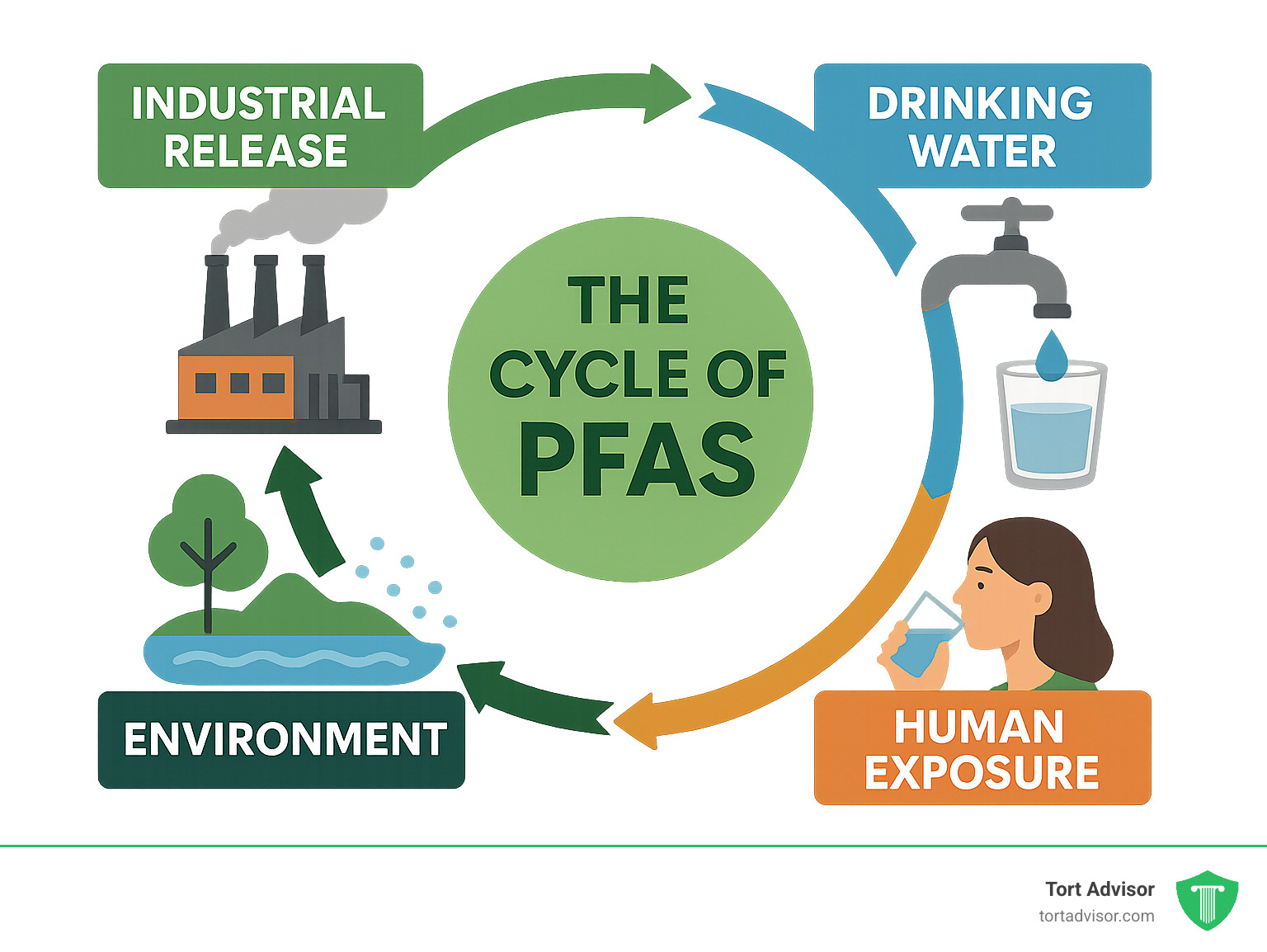
In 2024 the EPA adopted drinking water limits for PFOA and PFOS of four parts per trillion, though the agency has since announced plans to revisit parts of the rule. The wave of lawsuits reflects serious health problems linked to long-term exposure.
Illnesses Linked to PFAS Exposure
Research has connected PFAS exposure with several serious conditions, including:
- Kidney cancer: the C8 Science Panel found a “probable link” between PFOA and kidney cancer in an exposed community.
- Testicular cancer: another cancer the C8 panel linked to PFOA and a focus of earlier litigation.
- Thyroid disease: PFAS may interfere with thyroid hormones.
- Ulcerative colitis: this inflammatory bowel disease has also been associated with PFOA exposure.
- High cholesterol: studies tie PFAS to elevated cholesterol.
- Preeclampsia: pregnancy-induced hypertension has been linked to PFOA exposure.
- Developmental effects: exposure has been associated with effects in infants and children.
Researchers are also studying links to liver, prostate and other cancers, and understanding keeps evolving. See the American Cancer Society on PFOA or our guide to PFAS exposure risks, and talk with a doctor if you have PFAS exposure symptoms.
How PFAS Settlements Per Person Are Valued
When people ask about PFAS settlements per person, it helps to separate two kinds of settlements. The first involves public water systems, such as 3M’s roughly $10.3 billion agreement, which pays for treating contaminated water rather than compensating individuals. The second involves personal injury claims by people diagnosed with PFAS-linked illnesses, thousands of which are coordinated in MDL 2873.

Because no global personal injury settlement has published an award schedule, any dollar figure for an individual claim is an estimate. Value will depend on the specific condition, the strength of exposure evidence and the terms of any eventual settlement program.
How PFAS Claims Are Grouped by Severity
Mass tort settlements commonly sort claims into tiers based on injury and evidence. Top-tier claims usually involve cancers with the strongest research support, such as kidney, testicular or liver cancer, backed by clear exposure proof. Middle-tier claims include other serious conditions, such as severe ulcerative colitis or significant thyroid disease. Lower-tier claims cover less severe conditions, such as high cholesterol, or documented exposure without major illness. Actual tiers and amounts, if a program is created, will be set by its terms.
| Tier | Injury Severity | How Value Is Assessed |
|---|---|---|
| Tier 1 | Serious cancers (such as kidney, testicular, liver or pancreatic) with strong exposure and causation evidence. | $200,000 – $500,000 |
| Tier 2 | Other serious conditions (such as less aggressive cancers, severe ulcerative colitis or significant thyroid disease) with clear exposure. | $150,000 – $300,000 |
| Tier 3 | Less severe conditions (such as high cholesterol or mild thyroid dysfunction) or exposure without major health effects. | Up to $75,000 |
These categories are illustrative; real outcomes depend on the facts and any settlement terms.
What Past PFAS Settlements Suggest
Earlier cases offer useful context, even though no global personal injury settlement exists yet in the AFFF litigation. In 2017 DuPont and Chemours agreed to pay about $670.7 million to resolve roughly 3,500 personal injury claims from the Ohio Valley “C8” contamination, an average of around $190,000 per claim. In Hoosick Falls, New York, a class settlement compensated residents for contaminated water, with smaller payments for those without serious illness. Large water system settlements pay for cleanup rather than individual injuries, but they show manufacturers are resolving litigation at scale. The firefighting foam cancer lawsuit litigation is where most individual AFFF claims are now being pursued.
What Drives the Value of a PFAS Claim
Individual PFAS settlements per person depend on several factors, and careful valuation weighs all your losses alongside the strength of your evidence.

Illness Severity and Medical Costs
How serious your condition is matters most; kidney or testicular cancer will be valued far higher than a mild condition. Key considerations:
- Cancer type: cancers with strong PFAS research links, such as kidney, testicular or liver cancer, carry more weight.
- Chronic disease: conditions needing ongoing care, such as ulcerative colitis or significant thyroid disease, also count heavily.
- Medical expenses: past bills plus projected treatment, medication and long-term care.
- Effect on daily life: pain, emotional distress and loss of enjoyment of life, which grow with the impact on your routine. Knowing your PFAS exposure symptoms helps document this.
Exposure Evidence and Manufacturer Conduct
A documented connection between exposure and illness is central. Attorneys look at:
- How long you were exposed: years or decades of exposure usually strengthen a claim.
- Contamination levels: water test results or tools like the EWG PFAS contamination map can support exposure.
- Workplace exposure: firefighters, service members and industrial workers who handled AFFF often have strong exposure histories from foam and contaminated gear.
- What manufacturers knew: evidence that companies such as 3M and DuPont understood PFAS risks but did not warn the public can be a significant factor.
Economic and Non-Economic Losses in a PFAS Claim
Compensation also reflects the financial and personal toll of your illness:
- Lost income: pay already lost to illness and treatment.
- Reduced earning ability: the future effect on your capacity to work.
- Pain and suffering: physical discomfort and mental anguish.
- Emotional distress: the psychological burden of illness and toxic exposure.
- Representation: attorneys in our network typically work on contingency, so they are paid only if compensation is recovered.
Eligibility, Deadlines and Timing
The path to a PFAS recovery is manageable once you understand who qualifies, which deadlines apply and how payments are made.

Above all, deadlines are real, and acting promptly protects your right to pursue compensation.
Who Can File a PFAS Lawsuit?
Most PFAS claims require significant exposure plus a diagnosed condition that research links to PFAS.
- Firefighters exposed to AFFF often have the strongest claims, especially civilian and military firefighters who used foam regularly at airports or bases. Learn more in our AFFF firefighting foam lawsuit guide.
- Service members and veterans are also at risk, since the Defense Department has identified PFAS contamination at hundreds of installations.
- People living near contaminated industrial sites may qualify if a nearby facility polluted their drinking water, as seen in past settlements near DuPont and 3M plants.
In every case, you generally need a diagnosed condition that research connects to PFAS, such as kidney cancer, testicular cancer or thyroid disease.
How PFAS Settlement Payments Are Made
After a settlement, a claims administrator reviews claims and distributes funds, typically under a tiered structure that pays more for severe injuries with strong evidence. Payments may be a lump sum or installments, and in large programs it can take many months to a couple of years after final approval for payments to arrive because so many claims must be evaluated.
Filing Deadlines and Bellwether Trials
PFAS filing deadlines can be complicated. Many states apply the discovery rule, starting the clock when you knew or should have known about the link between your illness and PFAS, not when you first became sick. Bellwether trials are test cases that show how juries respond to the evidence, and their results often shape global settlement talks. Trial schedules in the AFFF MDL have shifted as the parties negotiate, so check current status with an attorney.
PFAS Settlement FAQs
Answers to common questions about PFAS settlements per person.
What does it cost to hire a PFAS lawyer?
Usually nothing upfront. PFAS attorneys typically work on contingency, taking a percentage of any recovery and charging no fee if the case does not succeed, which lets anyone take on large manufacturers.
How do class actions differ from individual PFAS lawsuits?
In a class action, a settlement is divided among class members, often in smaller amounts. Most PFAS injury claims are individual lawsuits coordinated in an MDL, where each case is valued on its own injuries and losses, which can produce compensation more closely tailored to each person.
Do I need a blood test to prove PFAS exposure?
Not necessarily. A blood test showing elevated PFAS can help but is not always required. Exposure can also be shown through contaminated water records, including tools like the EWG PFAS contamination map, or through work history, such as firefighting with AFFF or service at a contaminated base. An attorney can help assemble the evidence.
Protecting Your PFAS Claim
Timing matters for PFAS settlements per person. Deadlines vary by state and often run from when you discovered the link between your illness and PFAS, so act promptly. These cases involve scientific evidence, corporate records and medical testimony, so experienced counsel helps. Legal Lawsuit can connect you with independent attorneys nationwide who handle PFAS and AFFF cases.

Steps to take now:
- Collect your records. Gather every medical record about your diagnosis and treatment.
- Write down your exposure history. List where you lived and worked where PFAS may have been present.
- Get a legal review soon. Request a free, confidential consultation to learn your options.
Filing a claim also helps hold manufacturers accountable. Attorneys in our network typically work on contingency, so you pay nothing unless money is recovered. Start by exploring a PFAS cancer lawsuit and request your free review.
Related Posts
Quick Answer: The Boy Scouts of America (BSA) filed for Chapter 11 bankruptcy in 2020 after facing tens of thousands [...]
Quick Answer: Survivors of sexual abuse by Catholic priests, nuns, or other Church personnel may be able to file a [...]
Quick Answer: Clergy abuse settlements vary enormously based on the severity of the abuse, the strength of evidence that the [...]