Short answer: This article explains the key facts, eligibility issues, settlement factors, deadlines, and source-backed updates related to this legal topic. Results vary by case facts, evidence, jurisdiction, and representation.
In This Guide
PFAS Dangers Hiding in Everyday Life
PFAS dangers are an expanding public health problem that reaches millions of Americans through tainted drinking water, food, household products and certain jobs. These man-made chemicals have been tied to serious health conditions that everyone should know about.
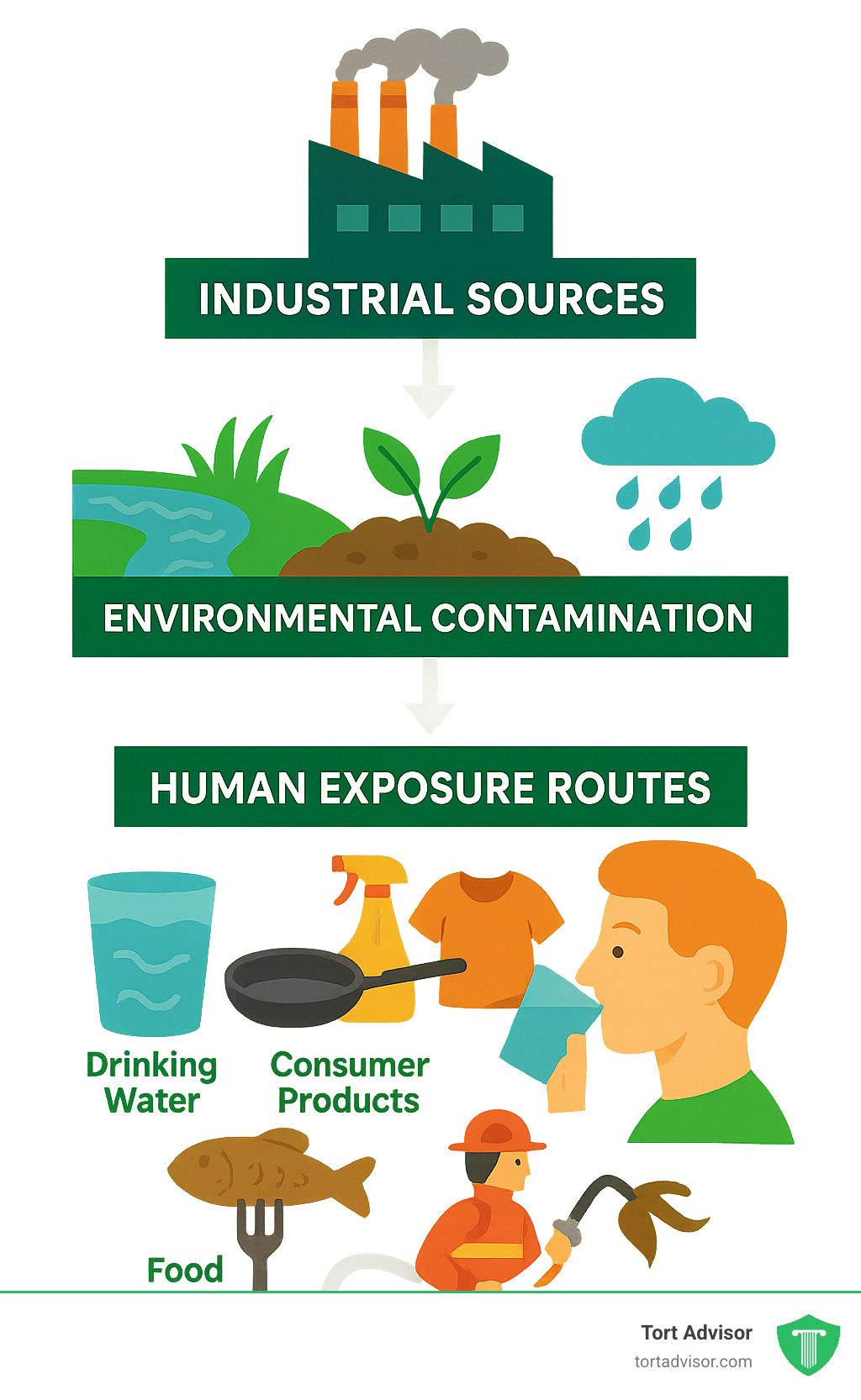
Main Ways People Are Exposed to PFAS:
- Contaminated tap water – among the most frequent sources of exposure
- Household goods such as nonstick pans, water-repellent clothing and food packaging
- Workplace exposure, especially for firefighters who use PFAS-based foam
- The food supply, via farm soil and fish caught in polluted water
Health effects tied to PFAS exposure include:
- Higher cholesterol
- Altered liver enzyme levels
- Weaker vaccine response in children
- Greater risk of kidney and testicular cancer
- Pregnancy problems such as preeclampsia
- Developmental delays in kids
PFAS, or per- and polyfluoroalkyl substances, are nicknamed “forever chemicals” and span more than 4,700 compounds that can remain in the environment and the human body for years or decades. Their extremely strong carbon-fluorine bonds keep them from breaking down, so they now show up in soil, water and even human blood.
The U.S. Environmental Protection Agency has set tighter drinking water limits for certain PFAS, acknowledging the serious public health threat. Even so, many people still do not realize they have been exposed or what the long-term health effects could be.
I’m Mason Arnao. My background is in technology and software development, but after contamination was found in my community’s water, I dug deeply into PFAS dangers, working with environmental scientists to understand these persistent chemicals and how they affect public health.
What Are PFAS? Defining the “Forever Chemicals”
Have you ever wondered why a rain jacket sheds water so well or why eggs slide right off a pan? PFAS are often the reason: a group of synthetic chemicals with impressive properties and worrying health effects.
PFAS are built from carbon chains attached to many fluorine atoms. The carbon-fluorine bond is one of the strongest in organic chemistry, and that is both what makes these chemicals useful to industry and what makes them so harmful to the environment and human health.
There are now more than 4,700 PFAS compounds in use around the world, and manufacturers keep creating new versions as older ones draw regulatory attention. Scientists generally sort them into two groups:
- Long-chain PFAS: These have 8-20 perfluorinated carbon atoms and include the well-known PFOA (perfluorooctanoic acid) and PFOS (perfluorooctane sulfonic acid). They tend to accumulate more in the body and are more strongly tied to health problems.
- Short-chain PFAS: Introduced as supposedly “safer” replacements with fewer carbon atoms, they still linger in the environment and may carry health risks scientists are still studying.
Because the evidence against them keeps growing, PFOA, PFOS and some other PFAS have been listed under the Stockholm Convention on Persistent Organic Pollutants, a global treaty aimed at protecting people and the environment from especially dangerous chemicals. Scientific research on PFAS chemistry offers more detail on how they are built and how they behave.
Why PFAS Are Known as “Forever Chemicals”
The “forever chemicals” label is not hype; it accurately describes how PFAS act once they are released:
They last indefinitely, because no natural process fully breaks them down. PFAS released decades ago are still in the environment.
They build up in people and animals, so levels climb as exposure continues.
They withstand normal breakdown from heat, water and microbes that would degrade most other pollutants.
That durability is why PFAS have been found far from any factory, from Arctic snow to deep ocean trenches, carried around the world by air and water currents.
Where PFAS Are Used
PFAS have proven useful to many industries, which is why they are so common in daily life:
Firefighting foam (AFFF) uses PFAS to put out fuel fires fast, especially at airports, military bases and fire training sites.
Fabrics and carpets are treated with PFAS to resist stains and water.
Food packaging, including fast-food wrappers, microwave popcorn bags and pizza boxes, uses PFAS to block grease and moisture.
Nonstick cookware depends on PFAS coatings for its slick surface.
Electronics production uses PFAS in making semiconductors and other parts.
Cosmetics and personal care items may include PFAS for water resistance and smooth application.
Medical devices may carry PFAS coatings that cut friction and improve function.
Such broad use is why CDC testing has detected PFAS in the blood of 97% of Americans sampled. In modern life these chemicals are close to unavoidable, forming an invisible web of exposure that touches nearly everyone.
Knowing where PFAS come from is the first step toward protecting yourself and your family, as the sections below explain.
How PFAS Reach the Environment and Your Body
When I started researching PFAS dangers, I was stunned by how thoroughly these chemicals work their way into daily life. They do not stay inside the products that contain them; they travel through the environment and eventually into people.
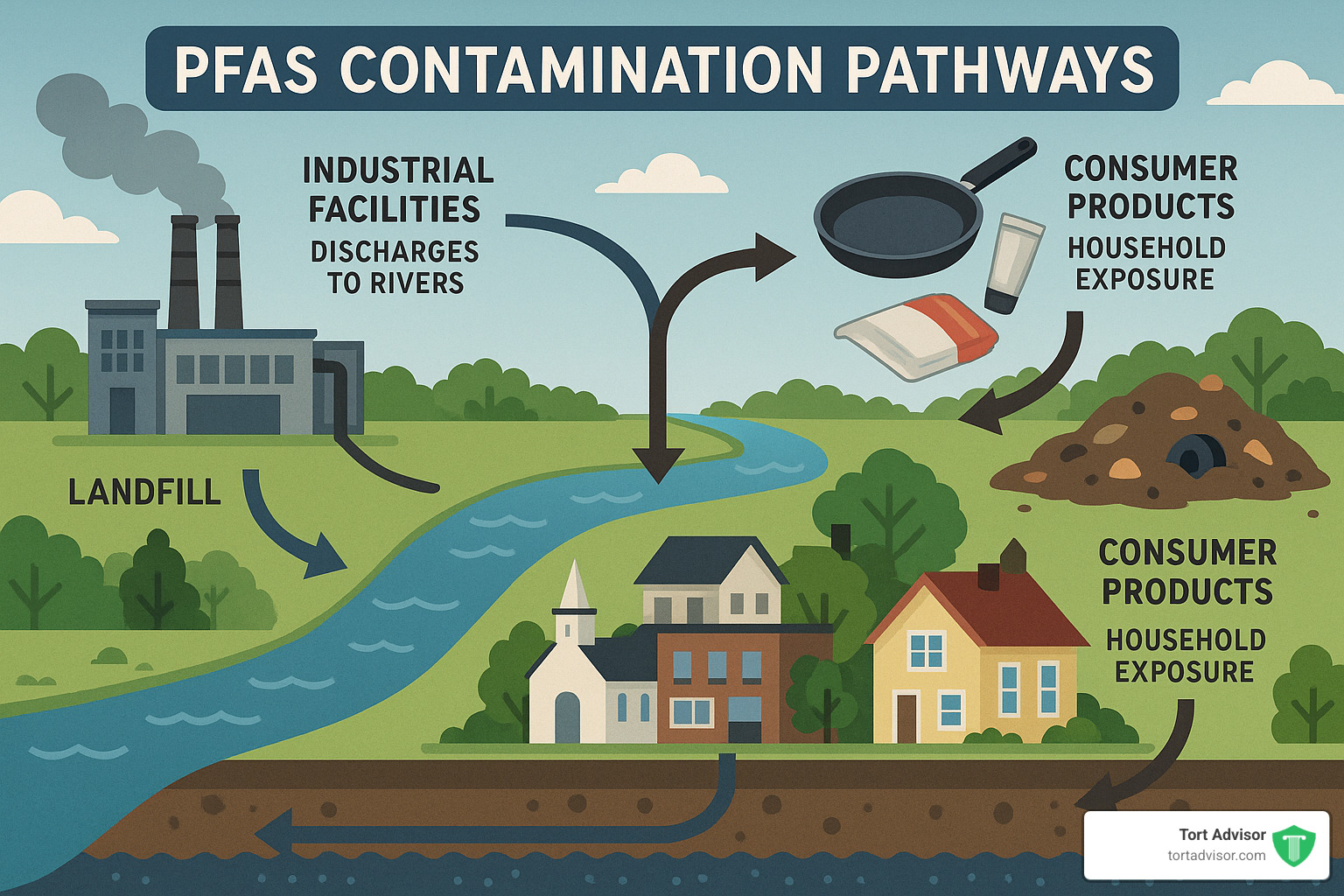
PFAS contamination has many points of entry. Factories release PFAS into the air and water during production. Fire training grounds at airports and bases soak the soil with AFFF foam over and over. Landfills collect PFAS from discarded pans, carpets and more. Wastewater plants can spread PFAS when their treated sludge is used on farmland. And at home, ordinary products slowly shed these chemicals through normal use.
How PFAS Spread and Persist
One reason PFAS are so concerning is how easily they move. Many pollutants stay close to where they were released, but PFAS travel far.
They dissolve easily in water and move through groundwater, creeks, rivers and finally the ocean. Research published in 2023 reported PFAS in surface waters on every continent, including remote areas with no nearby industry.
Some PFAS also become airborne and ride air currents for thousands of miles before falling back to earth. Soil does not hold them well either: instead of binding to soil particles like many pollutants, PFAS move downward and eventually reach groundwater.
Most troubling is how long they last. Even if every factory stopped making PFAS today, existing contamination would remain for generations, maybe centuries, because natural processes that break down other pollutants do not work on them.
The Main Ways People Are Exposed to PFAS
For most people, drinking water is the biggest source. The EPA estimates that around 100 million Americans drink water containing PFAS, with the highest levels near factories, military bases and airports. Each glass can add to the amount stored in your body.
Food is another major route. PFAS reach meals through contaminated farm soil and irrigation water, leach from packaging into takeout and microwave popcorn, build up in fish and seafood from polluted waters, and can appear in meat and dairy when animals eat or drink contaminated feed or water.
At home, household goods release PFAS into dust, which especially affects small children who touch floors and then put their hands in their mouths.
Some workers face higher exposure by breathing PFAS-laden dust or fumes, touching PFAS materials or swallowing small amounts during manufacturing. Firefighters who use AFFF foam face especially high exposure.
Most troubling of all, PFAS can pass through the placenta during pregnancy and into breast milk, which may affect the earliest and most sensitive stages of development.
These routes explain why PFAS can be measured in the blood of nearly every American no matter where or how they live. Addressing PFAS dangers takes both strong regulation and informed personal choices.
PFAS Dangers to Human Health
Learning how deeply PFAS can affect the body surprised me. These chemicals do not simply pass through; they remain, interacting with the body’s systems in ways that can disrupt normal function and contribute to serious illness.
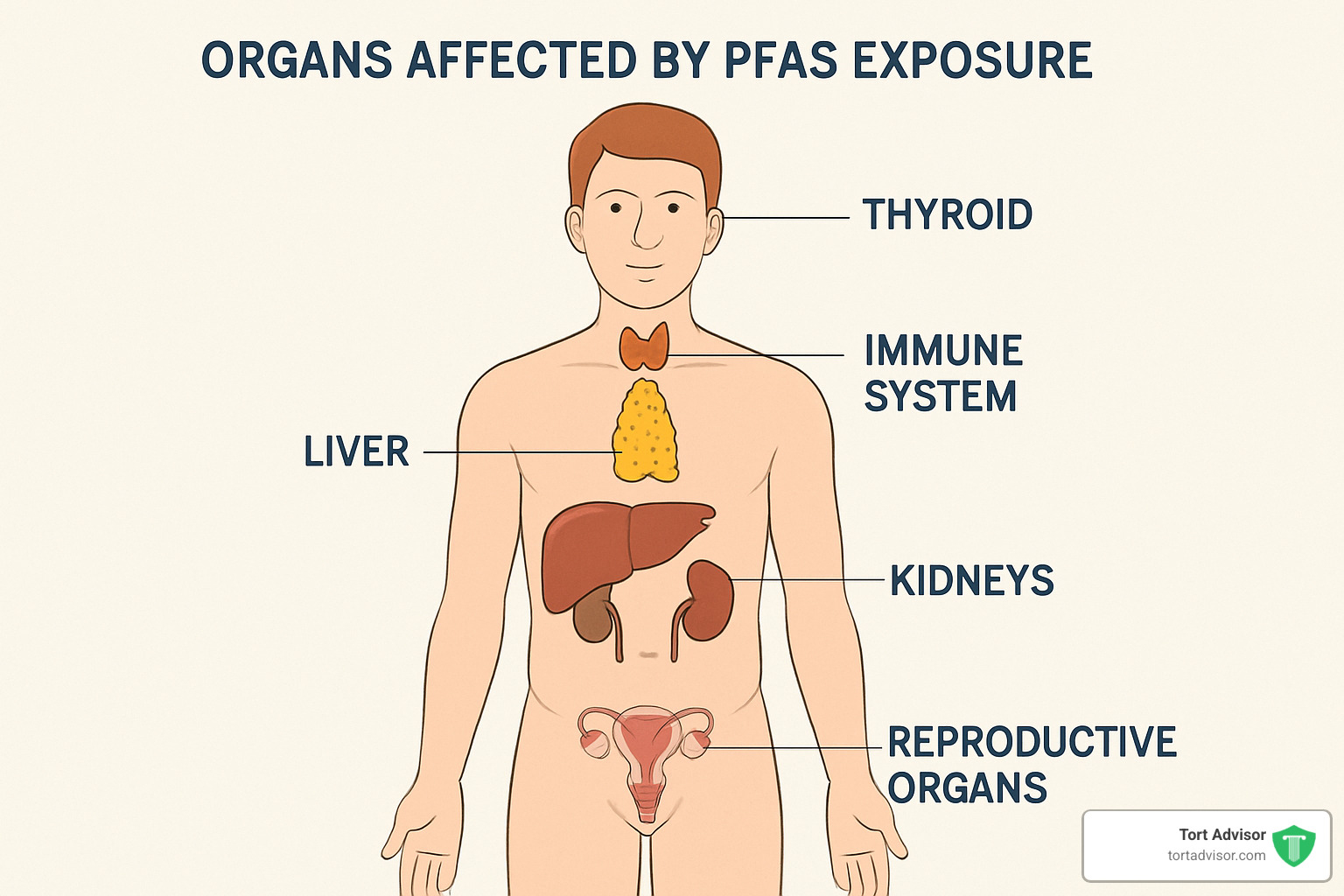
Research has made the health effects of PFAS increasingly clear. Even fairly low levels can raise cholesterol, which may increase heart disease risk, and studies have found altered liver enzymes and possible liver damage in people with higher exposure.
Effects on the immune system are especially worrying: studies show PFAS can blunt the antibody response to vaccines, possibly making people more prone to infection. Cancer is also a real concern. Epidemiological research links PFAS exposure to higher rates of kidney and testicular cancer, and in 2023 the International Agency for Research on Cancer classified PFOA, a common PFAS, as carcinogenic to humans.
For pregnant women, the findings are concerning. PFAS exposure has been tied to lower fertility, pregnancy-related high blood pressure, preeclampsia and small reductions in birth weight. PFAS can also interfere with the thyroid, which helps control metabolism and development, and some studies suggest a possible role in obesity and diabetes.
Short-Term vs. Long-Term Effects of PFAS
How quickly PFAS affect health varies. Short-term effects may include small shifts in liver enzymes, cholesterol or immune function that you would not notice day to day but that blood tests can reveal.
Long-term effects are more serious. Because PFAS build up over time, years or decades of exposure can contribute to chronic diseases that take a long time to appear. Cancer risk rises gradually, and organs may sustain cumulative harm. The long gap between exposure and illness makes cause and effect hard to prove, which is why many health experts favor a precautionary approach to regulating these chemicals.
What Affects Your Personal PFAS Risk
Exposure does not guarantee illness. Your individual risk depends on several factors:
The amount and duration of exposure matter most: higher levels over longer periods generally mean more risk. Age at exposure also matters, since fetuses, infants and young children are usually more susceptible.
Genetics play a part, because people differ in how they process and react to these chemicals. Combined exposure to several PFAS or to other pollutants may compound the harm, and lifestyle factors such as diet and exercise may also affect PFAS-related risk.
Who Faces the Greatest PFAS Dangers
Nearly everyone carries some PFAS, but certain groups face much greater PFAS dangers. Firefighters who regularly use AFFF foam have markedly elevated blood levels compared with the general public, and workers at plants that produce these chemicals have some of the highest exposure levels ever recorded.
Service members at bases where firefighting foam was used routinely often have higher exposure, particularly those who fought fires directly. People living near PFAS plants, military bases, airports or other heavy-use sites may also be exposed through contaminated water and air.
Babies and young children are especially vulnerable because their bodies are still developing, they drink more water for their size and they often put their hands in their mouths. Pregnancy brings added concern because PFAS can reach the fetus through the placenta during critical stages.
A notable study on serum PFAS levels and kidney cancer in the Multiethnic Cohort found that links between PFAS and cancer risk differed across racial and ethnic groups, a reminder that research needs diverse populations to capture how PFAS affect different communities.
These risks are not abstract. Understanding them is essential to protecting yourself and your family now that these chemicals are everywhere, and the more scientists learn, the stronger the case for caution becomes.
How PFAS Are Detected, Measured and Regulated
Spotting these invisible chemicals in water, food and people is hard work. Having followed the PFAS story closely, I can say scientists have made major strides in detection, though gaps remain.
Consider this: labs can now find substances at parts-per-trillion levels, roughly comparable to locating one drop spread across 20 Olympic swimming pools.
The most trusted technique is Liquid Chromatography-Mass Spectrometry (LC-MS/MS), the benchmark for identifying individual PFAS compounds. For a wider view, researchers use the Total Oxidizable Precursor (TOP) Assay, which converts precursor chemicals into end products that can be measured.
New tools are emerging as well. Optical and electrochemical sensors could deliver quicker, on-site testing that would change how communities track PFAS dangers, while biomonitoring, or measuring PFAS in blood, helps scientists see how the chemicals build up over time.
PFAS Standards in the U.S. and Abroad
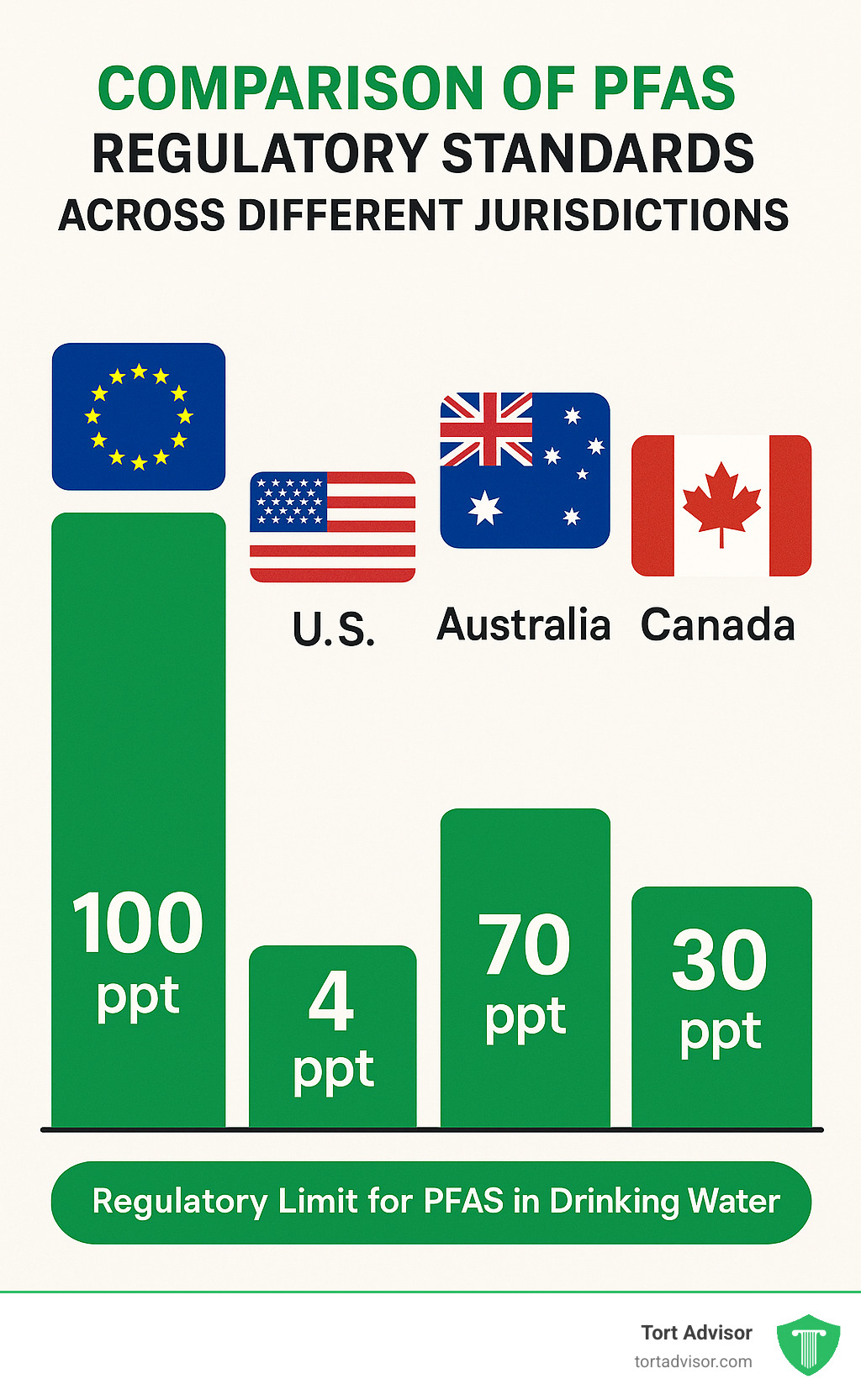
PFAS rules have changed a great deal in recent years as the science caught up. In 2024, the EPA finalized drinking water limits of 4 parts per trillion each for PFOA and PFOS, the two most studied PFAS, along with a mixture-based approach for several others, including PFNA, PFHxS and GenX. As of this update, parts of those rules have been subject to further federal review, so check the EPA for current status.
Some states moved before the federal government did. New Hampshire adopted limits of 12 ppt for PFOA, 15 ppt for PFOS, 18 ppt for PFHxS and 11 ppt for PFNA, and Michigan and California have their own standards, showing how differently PFAS dangers are being handled from state to state.
In Europe, the European Union has taken a cumulative approach, with a combined drinking water limit of 100 ppt for a group of 20 PFAS.
The EPA standards were hailed as a major public health win that could protect roughly 100 million Americans from the most harmful PFAS. They mark real progress, even though the patchwork of rules reflects the complicated science and politics around these chemicals.
Open Questions and Research Gaps
For all the progress, the PFAS story is far from finished. Researchers studying PFAS dangers still face several persistent obstacles.
PFOA and PFOS get most of the attention, but thousands of other PFAS have little or no toxicity data. It is a bit like studying two trees in a huge forest.
People are also rarely exposed to a single PFAS. Real-world exposure involves complex mixtures, yet rules usually treat chemicals one at a time, a gap between reality and regulation that still needs closing.
Long-term health research is another challenge. Researchers have noted that new PFAS are being found in the environment faster than their toxicity can be evaluated, particularly the newer replacement chemicals marketed as safer.
Current testing methods, however advanced, cannot detect every PFAS, so total exposure may be underestimated. People also seem to process these chemicals differently, and why some are more vulnerable than others remains an open research question.
These unknowns are why many scientists urge a precautionary approach. With chemicals that can last for generations, caution is simply common sense.
Lowering Your Exposure and Taking Community Action

Realistically, nobody can avoid PFAS completely today; they are simply too widespread. The good news is that there are many practical ways to reduce PFAS dangers without turning your life upside down.
Practical Steps at Home
Your home should protect you, not expose you. A reverse osmosis (RO) system is one of the best ways to safeguard drinking water and can remove up to 99% of PFAS. If that is not in the budget yet, two-stage activated carbon filters can also help a lot. Keep in mind that boiling water does not remove PFAS and can actually concentrate them.
Small changes at mealtime help too. Grease-resistant wrappers on fast food can be a source of PFAS, so choose minimally packaged food when you can. At home, consider swapping nonstick pans for stainless steel, cast iron or ceramic cookware; your meals will taste the same without the added chemicals.
PFAS turn up in a surprising range of products, from waterproof mascara to stain-resistant furniture. Reading labels carefully helps: look for “PFAS-free” and watch for ingredients with “perfluoro” or “polyfluoro” in the name. Many microwave popcorn brands now offer PFAS-free bags as well.
House dust may look harmless, but it is a real source of PFAS exposure, especially for kids who play on the floor and put their hands in their mouths. Vacuuming with a HEPA filter and dusting with a damp cloth can greatly reduce it, and the old rule of washing hands before meals turns out to be good PFAS protection too.
People with known heavy exposure may have medical options. Regular blood or plasma donation has shown promise in lowering PFAS levels; in an Australian study of firefighters, those who donated for more than a year had significantly lower blood PFAS. Some doctors also prescribe cholestyramine to speed PFAS elimination, which requires medical supervision.
Legal Options and Advocacy
Protecting your household matters, but PFAS dangers are ultimately a community problem. Ask your water utility for PFAS test results if it does not already publish them. What you learn may surprise you and inspire neighbors to push for stronger protections.
Organizing builds momentum. Working with others who share your concerns makes solutions easier to reach: share testing resources, split the cost of water analysis or arrange group purchases of filtration systems to make them more affordable.
The EPA routinely takes public comments on proposed rules, giving you a direct say in how these chemicals are regulated. A few minutes spent submitting a comment through the Federal Register or Regulations.gov can feel small, but comments do influence regulatory decisions.
Where contamination has caused serious harm, legal action may be appropriate. Legal Lawsuit connects affected people with attorneys in our network who handle PFAS litigation, including PFAS Cancer Lawsuits and AFFF Firefighting Foam Lawsuits. Lawsuits like these have recovered compensation for medical monitoring, property damage and personal injury in contaminated communities.
Policy change offers lasting protection. Pushing for tougher PFAS rules, labeling requirements and cleanup standards helps build a safer environment for future generations, and even small steps like calling your representatives or attending a council meeting can make a difference.
Pairing personal precautions with community advocacy protects you today and moves us toward a future where nobody has to test for forever chemicals. Clean water is not a luxury; it is a basic right.
PFAS Dangers: Frequently Asked Questions
Is having PFAS in my blood dangerous?
Learning that PFAS are in your blood can be unsettling, but you are far from alone; about 97% of Americans have detectable levels.
PFAS in your blood does not mean you will definitely get sick. It mainly shows you have been exposed to chemicals that are, unfortunately, all around us. Whether that exposure affects your health depends on several factors.
Concentration is important, since higher blood levels usually mean more exposure and possibly more risk. The specific PFAS matter as well; PFOA and PFOS have stronger evidence of harm than many others. Personal factors such as age, genetics and overall health shape how the chemicals affect you, and longer exposure may raise risk further.
If you are concerned, start by identifying likely sources of exposure in your everyday life and cutting back using the steps above. Talk with your doctor, who may suggest monitoring for PFAS-related conditions. For people with especially high levels, regular blood donation may gradually lower body levels.
There is currently no medical treatment made specifically to clear PFAS from the body. The body does eliminate some PFAS naturally, but for certain compounds it takes years, which is how they earned the “forever chemicals” name.
Will boiling water get rid of PFAS?
This is a common and important misconception: boiling does not remove PFAS. It can even make things worse, because water evaporates while the PFAS stay behind in higher concentration.
It is easy to assume boiling purifies water of everything. Boiling kills bacteria and viruses, but it does nothing against chemical contaminants such as PFAS, lead or arsenic; the heat cannot break them down or drive them off.
To deal with PFAS in drinking water, you need the right filter. Reverse osmosis (RO) systems are the most effective and can remove up to 99% of PFAS. Activated carbon filters also perform well, particularly for long-chain PFAS, and ion exchange and nanofiltration are other options, though results depend on which PFAS are present.
If PFAS in your water worries you, first have it tested specifically for these chemicals, since standard water tests usually skip them. Choose filtration based on the results, and in high-risk areas consider tested bottled water as a stopgap while you put a permanent fix in place.
Is breastfeeding safe if I am worried about PFAS?
This is a very personal question for many new parents. Research shows PFAS can pass from mother to baby through breast milk, and various PFAS compounds have been found in breast milk samples around the world.
Even so, health authorities including the CDC and WHO still recommend breastfeeding, based on a careful balance of benefits and risks. The immune, nutritional and developmental benefits of breastfeeding are well documented, while formula mixed with PFAS-contaminated water could lead to similar or higher exposure. Some evidence also suggests the developmental benefits of breastfeeding may help offset certain effects of PFAS exposure.
If you are breastfeeding and concerned, focus on reducing your own exposure, since that directly affects what reaches your milk. Test your home water and add filtration if needed, and talk through specific concerns with your pediatrician for advice tailored to your family.
Current scientific consensus is reassuring: based on available evidence, the benefits of breastfeeding appear to outweigh the potential risks of PFAS in breast milk. How long to breastfeed should depend on many factors, not PFAS alone.
Conclusion
PFAS dangers are among the biggest environmental health challenges of our era. These forever chemicals have quietly spread into our surroundings, our products and our bodies, with health effects that may last for generations.
As this guide shows, PFAS contamination is so widespread that nearly everyone has some exposure. The upside is that knowledge gives you power: understanding the risks lets you take real steps to protect yourself and the people you love.
Legal Lawsuit aims to give people both clear information and real options. For communities facing serious contamination, legal action can address personal health harms and wider environmental justice concerns. Through a free, confidential case review, Legal Lawsuit connects affected people with attorneys in our network who handle PFAS Cancer Lawsuits and other PFAS claims.
Looking back over what this guide covered, several key points stand out:
First, PFAS contamination is widespread but uneven. Communities near factories, military bases and airports often face far higher exposure, and if you live in one, testing and filtration matter even more.
Second, the health effects keep coming into focus. Evidence continues to strengthen links between PFAS and serious outcomes such as cancer, immune problems and metabolic changes, and real people in communities nationwide are affected.
Third, regulation is advancing but incomplete. The EPA’s 2024 drinking water standards were a big step, yet thousands of PFAS remain largely unregulated, which makes personal vigilance all the more important.
Fourth, your own actions count. The right water filter, informed shopping and awareness of local contamination can meaningfully lower your exposure, and small daily changes add up.
Last, community advocacy is powerful. Some of the biggest gains against PFAS contamination have come from neighbors organizing, applying public pressure and pursuing collective legal action when needed.
Progress depends on personal vigilance, community action, regulatory oversight and, where warranted, legal accountability for those who caused major contamination. Staying informed and involved lets you protect yourself while helping solve this lasting environmental health problem.
If you believe PFAS contamination has affected your health, Legal Lawsuit can help. Through a free, confidential case review, we can connect you with attorneys in our network who understand both the science and the law behind PFAS cases, so you do not have to face this alone.
Related Posts
Quick Answer: The Boy Scouts of America (BSA) filed for Chapter 11 bankruptcy in 2020 after facing tens of thousands [...]
Quick Answer: Survivors of sexual abuse by Catholic priests, nuns, or other Church personnel may be able to file a [...]
Quick Answer: Clergy abuse settlements vary enormously based on the severity of the abuse, the strength of evidence that the [...]