

Short answer: This article explains the key facts, eligibility issues, settlement factors, deadlines, and source-backed updates related to this legal topic. Results vary by case facts, evidence, jurisdiction, and representation.
PFAS Symptoms: Why Early Recognition Matters
PFAS symptoms tend to be quiet and slow to appear, sometimes taking years, which makes them hard to spot and even harder to trace back to a cause. Almost every person in the U.S. has come into contact with these “forever chemicals” by way of tainted tap water, food wrappers, and ordinary household goods.
Frequently reported PFAS exposure symptoms and effects:
- Elevated cholesterol (dyslipidemia)
- Reduced immune response after vaccination
- Thyroid problems and hormone disruption
- Abnormal liver enzymes and possible liver damage
- Kidney issues and higher cancer risk
- Reproductive concerns, including complications in pregnancy
- Slower development in children
- Higher risk of some cancers (testicular, kidney)
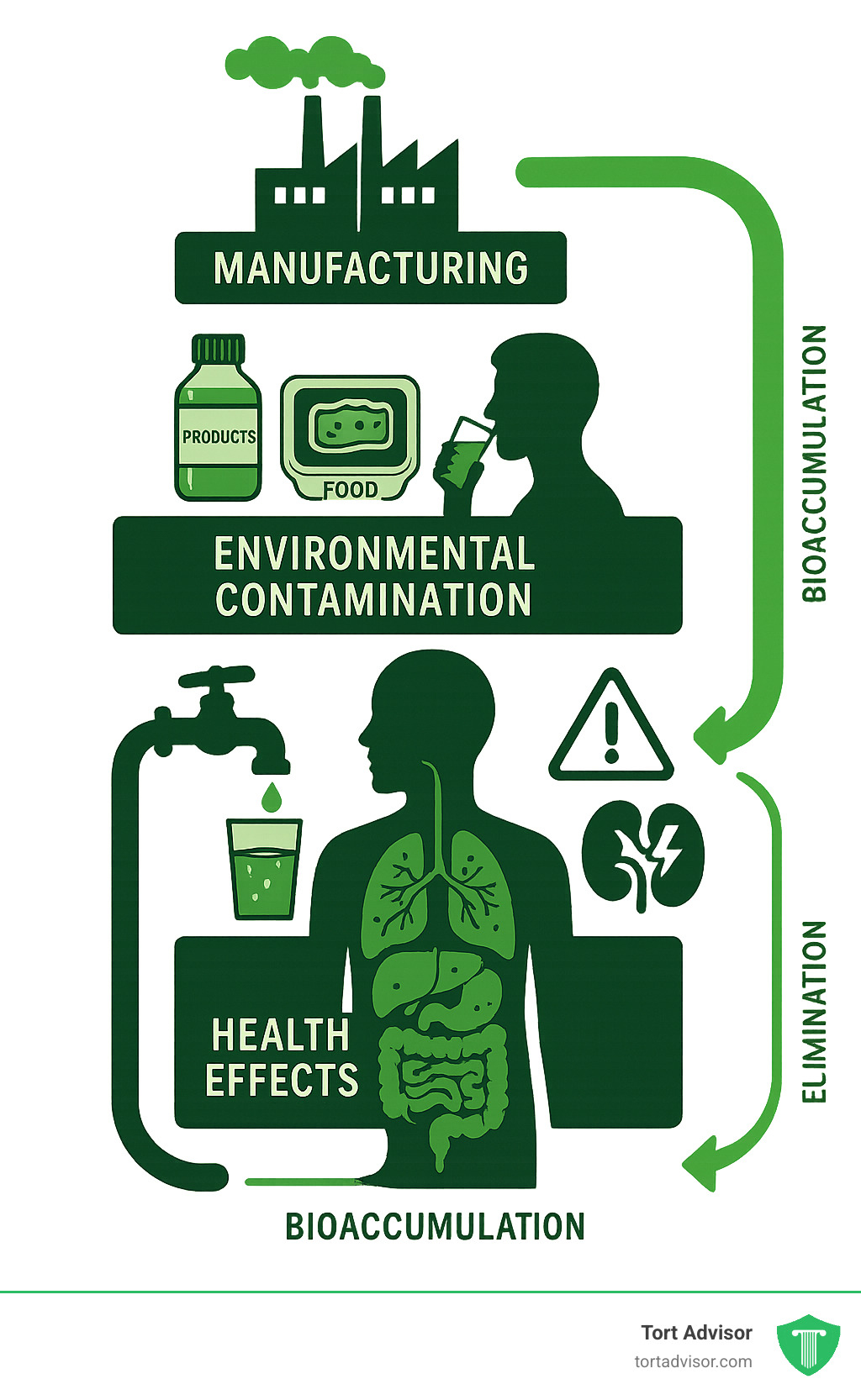
What makes PFAS so hard to deal with is that they pile up in the body over the years. The CDC reports that 97% of Americans have measurable PFAS in their blood. Even more troubling, these compounds resist breaking down, so they linger in the environment and in people for a long time.
A National Academies review found sufficient evidence tying PFAS to lower antibody response, elevated cholesterol, reduced infant growth, and a higher risk of kidney cancer. Research also points, with more limited evidence, to possible links with testicular cancer, breast cancer, thyroid disease, and ulcerative colitis.
Knowing these PFAS symptoms matters, because catching them early supports better health monitoring and, when exposure came from contaminated water or a workplace, may support a legal claim.
I’m Mason Arnao. My background in technology and data management has involved reviewing large health datasets that follow environmental exposures, including PFAS symptoms, across many populations.
Related PFAS symptoms topics:
– PFAS cancer lawsuit
– pfas exposure risks
PFAS Basics: What They Are and Where Exposure Comes From
PFAS is short for per- and polyfluoroalkyl substances, an enormous group of chemicals numbering in the thousands. They earned the nickname “forever chemicals” because they essentially never break down on their own, whether in nature or inside the human body.
Most people run into PFAS every day without realizing it. The leading source is tap water: EPA testing found these chemicals in close to half of U.S. drinking water. A simple glass from the faucet may be adding to your PFAS load each day.
Water is only part of the picture. Grease-proof pizza boxes, microwave popcorn bags, and fast-food wrappers can all expose you through food packaging, since the same coating that blocks grease can let PFAS leach into what you eat.
Some of the heaviest exposure falls on military members and firefighters who use AFFF (aqueous film-forming foam). The foam puts out fuel fires extremely well, but it is packed with PFAS, and veterans and firefighters frequently have much higher blood levels as a result.
Workers at airports, factories, and some military installations also face workplace dust exposure. These sites often carry elevated PFAS levels that employees may breathe in or swallow during a shift.
The worrying feature of PFAS is bioaccumulation: they collect in the body faster than it can clear them. Some, like PFBA, leave in roughly 3 days, while others, such as PFOA, can remain for more than 8 years.
The bottom line: practically every American has detectable PFAS in their blood. U.S. adults average about 4.25 ng/mL of PFOS, and 95% fall below 14.6 ng/mL. Those figures show how widespread exposure to the chemicals behind PFAS symptoms really is.
Federal research on PFAS basics makes clear how deeply these chemicals have worked into everyday life, which is why understanding their health effects matters so much now.
12 PFAS Symptoms and Warning Signs to Know

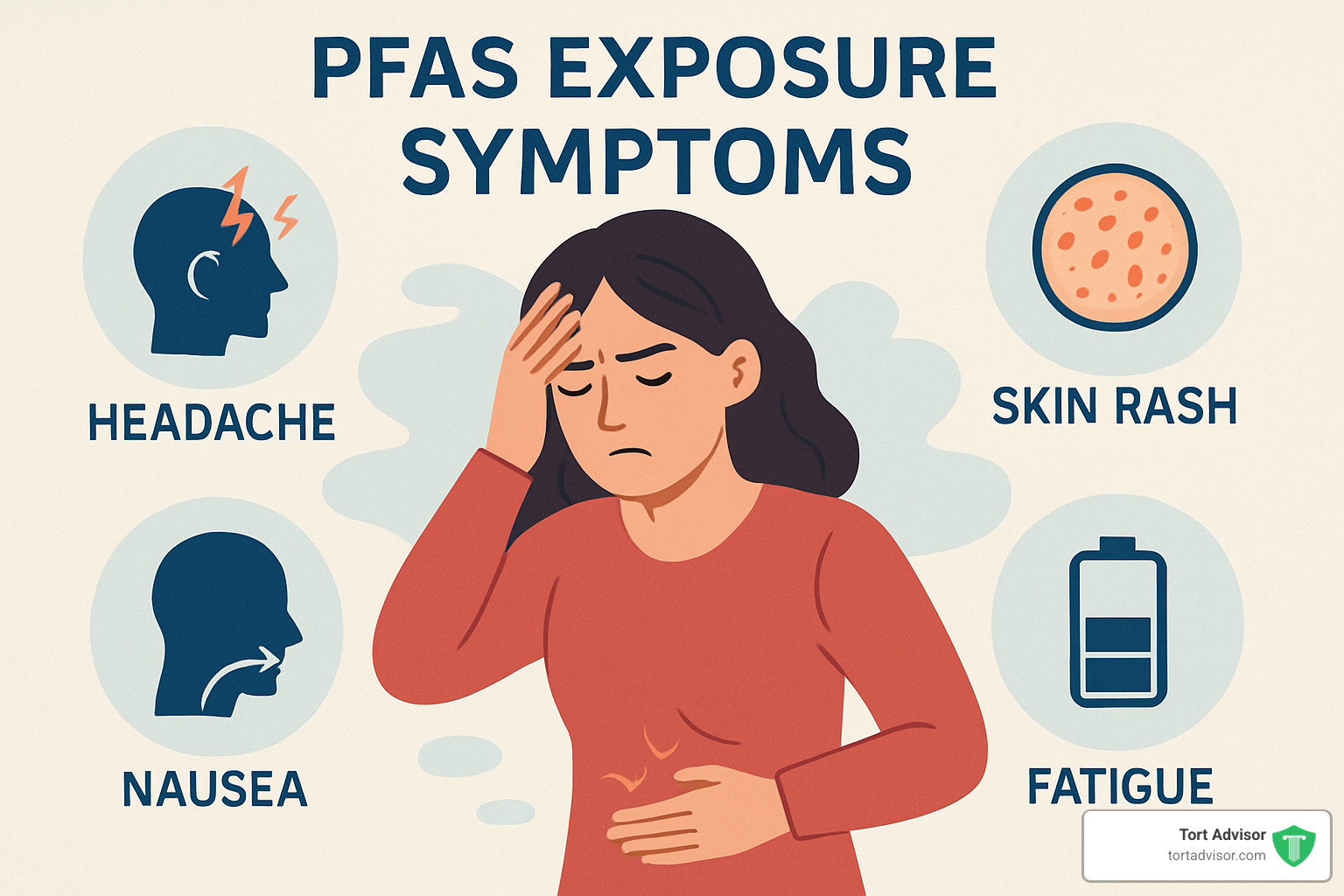
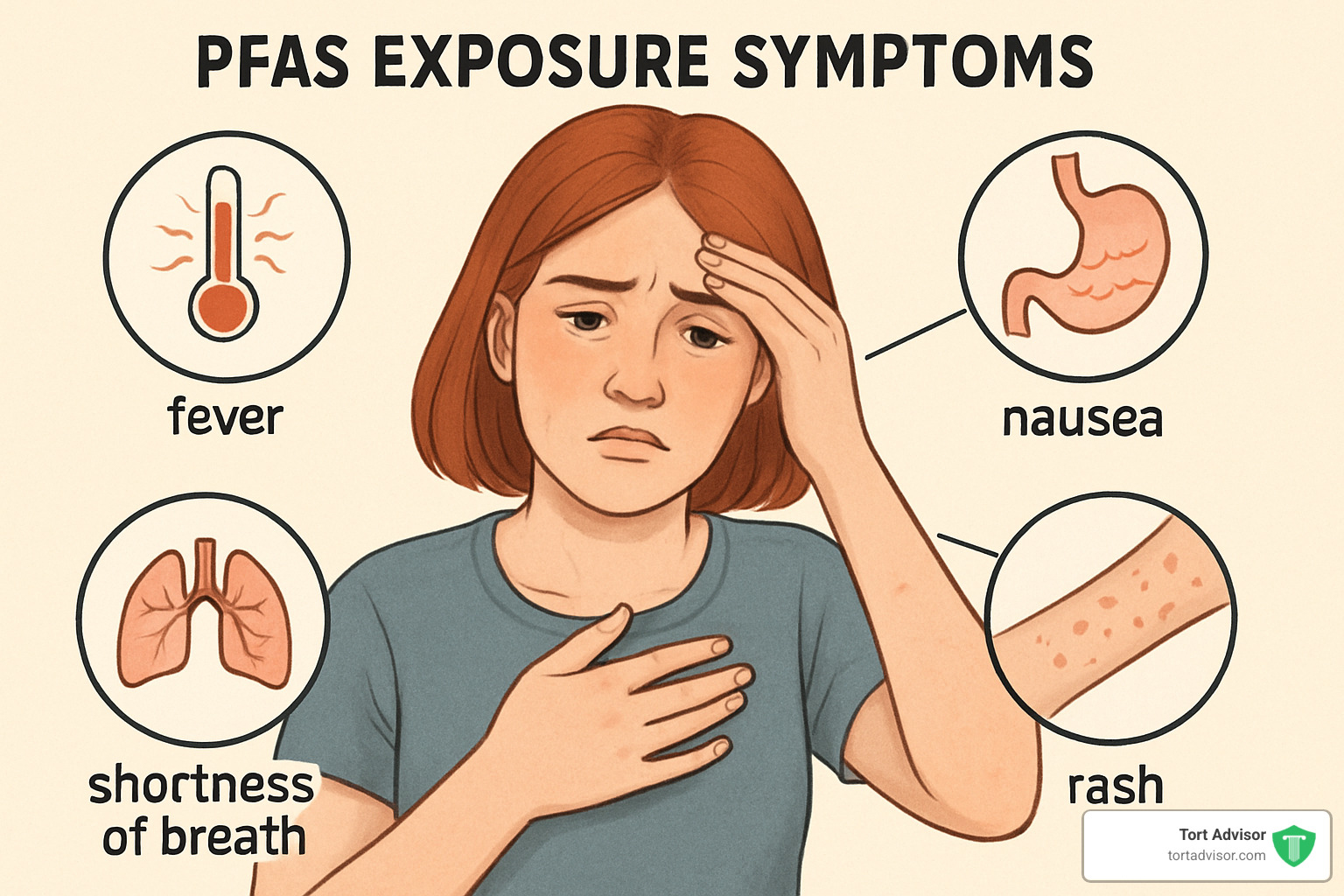
Health problems tied to PFAS often resemble ordinary complaints, so they are easy to miss. These are the PFAS symptoms reported most consistently. If more than one fits you, particularly if you live or work near a known contamination site, talk to your doctor.
Key warning signs
- High cholesterol that stays high despite exercise and diet changes
- Repeated infections or poor response to vaccines
- Thyroid problems (swings in energy, weight changes without explanation)
- Elevated liver enzymes or unusual tiredness after eating
- Kidney changes (protein in urine, back pain) and greater kidney-cancer risk
- Flare-ups of ulcerative colitis or other inflammatory bowel conditions
- Reproductive issues: fertility problems, irregular cycles, high blood pressure in pregnancy
- Low birth weight or developmental delays in children
- Ongoing chronic fatigue and lower bone density in teens
- Higher likelihood of testicular or kidney cancer
Adults
Adults usually notice metabolic changes first: LDL that won’t come down, newly found thyroid nodules, or low-grade but ongoing liver discomfort. Immune effects tend to come next, with frequent colds and slower recovery.
Children
Children take in more PFAS relative to body size, so their symptoms can be striking: ongoing asthma, repeated ear infections, slow growth, or trouble paying attention. A weak response to vaccines is another early sign pediatricians look for.
Reproductive health
Women often see irregular cycles first, followed by trouble getting pregnant or high blood pressure during pregnancy. Men may experience lower sperm quality. Because PFAS pass into breast milk, reducing a mother’s exposure helps protect her baby as well.
Diseases Linked to PFAS and How Strong the Evidence Is
Researchers studying PFAS symptoms ask two questions: does a health problem show up, and how solid is the science behind the link? Some findings are firmly established, while others point the same way but still need more study.
The National Academy of Sciences sorted through thousands of studies to group PFAS health effects by strength of evidence. Those groupings have practical weight, because they guide how a doctor should monitor someone who has been exposed.
Four conditions meet the highest bar, which scientists label “sufficient evidence.” The first is reduced antibody response, seen repeatedly in strong studies and meaning vaccines may be less effective. The second is dyslipidemia, or high cholesterol, found again and again in both children and adults. The third is reduced fetal and infant growth, with small but meaningful drops in birth weight. The fourth is higher kidney cancer risk, with notably greater odds among people with the heaviest PFOA exposure.
Several serious illnesses sit in the “limited or suggestive evidence” tier and are under close study. Testicular cancer turns up in a number of studies, though the exact relationship still needs clarifying. Breast cancer has newer evidence strong enough to watch but not yet confirmed. Thyroid disease shows clear associations, while researchers continue to work out how PFAS disrupt the thyroid.
Ulcerative colitis belongs here as well, with research reporting 1.6 times greater odds per unit of log PFOA (95% CI: 1.14-2.24). High blood pressure caused by pregnancy has also been tied to exposure above EPA advisory levels, a particular concern for expecting mothers.
| Evidence Level | Health Conditions | What It Tells You |
|---|---|---|
| Sufficient Evidence | Reduced antibodies, elevated cholesterol, lower infant growth, kidney cancer | Consistent, strong results across many studies |
| Limited Evidence | Testicular cancer, breast cancer, thyroid disease, ulcerative colitis, high blood pressure in pregnancy | Encouraging signals that still need more study |
| Insufficient Evidence | A range of other conditions | Too little data so far, which does not rule out an effect |
A rating of “insufficient evidence” does not mean a health effect is absent; it only means there isn’t yet enough data to say for sure. PFAS science is still fairly young, and new links between exposure and illness keep emerging.
This tiered approach explains why some PFAS symptoms draw more medical attention than others. Expect your doctor to concentrate on conditions backed by sufficient evidence while watching for signs in the limited-evidence group.
To read more on cancer links, see published research on the cancer connection and our guide to PFAS exposure risks.
PFAS Testing: How to Get Tested and Read Your Results

When you have possible PFAS symptoms, it’s natural to ask whether a test can settle things. The answer is mixed: labs can measure PFAS in blood, but translating those numbers into a health verdict is rarely simple.
A PFAS blood test, sometimes called biomonitoring, reports how much of certain PFAS compounds is circulating in your blood right now. It works like a snapshot of your body burden on the day of the draw, showing whether your levels run above average and letting you follow trends over time.
The test has real limits. It can’t forecast future illness or prove that PFAS caused the symptoms you have now. Nor can it point to a treatment, because no accepted medical protocol exists for “treating” PFAS exposure.
You usually can’t just request one from your primary care doctor. PFAS blood tests aren’t offered everywhere and aren’t included in routine checkups. VA medical centers don’t currently provide them, a notable gap considering how heavily veterans and firefighters are exposed.
Private labs run the test, but prices differ a lot and insurers cover it unevenly. Some people pay themselves for peace of mind; others put that money toward cutting their ongoing exposure.
Testing tends to be worthwhile for people with known heavy exposure, such as those who lived near a contaminated military base, handled AFFF foam, or draw from a private well with confirmed PFAS. It can also set a useful baseline if you are planning a pregnancy or have unexplained symptoms that match PFAS effects.
Making sense of your numbers depends on reference points. NASEM (the National Academies of Sciences, Engineering, and Medicine) has set thresholds that signal when medical follow-up may be appropriate, and the ATSDR clinician guide gives doctors a framework for interpreting different levels.
Some clinicians also lean on German HBM (Human Biomonitoring) values. Population percentiles add context, since knowing whether you sit near the 50th or the 95th percentile for Americans can shape choices about monitoring and reducing exposure.
For many households, testing the water is more useful than testing blood. If you use a private well, water results point you straight to filtration or another water source. New EPA drinking water standards cap six PFAS compounds at 4 parts per trillion.
The absence of routine screening mirrors where PFAS science stands: the harm is recognized, but medicine is still building monitoring and treatment protocols. That gap is narrowing as more providers learn about PFAS health effects.
For an in-depth look at testing choices and how to read results, see this guidance on PFAS blood testing, written for both patients and clinicians working through this developing area.
How to Cut PFAS Exposure and Protect Your Health
Past contamination can’t be undone, but new exposure can be reduced dramatically.
Start with your water. Use an NSF/ANSI-certified activated-carbon or reverse-osmosis filter and replace cartridges on time. Private well owners should test every year; fixing a well costs less than treating disease down the road.
Update your kitchen. Replace non-stick cookware with cast iron or stainless steel, and cut back on microwave popcorn and grease-proof fast-food packaging. Eating plenty of fiber and folate may soften some of the metabolic effects linked to PFAS.
Watch dust and fabrics. Vacuum frequently and wash your hands before eating. When it’s time to replace furniture or carpet, pass on “stain-resistant” treatments.
Protect yourself at work. Airport crews, firefighters, and chemical plant employees should wear complete PPE and shower and change clothes before going home.
Think about the whole family. Health agencies continue to recommend breastfeeding because its benefits outweigh the small amount of PFAS passed on. Focus instead on lower-PFAS baby products and on local fish consumption advisories.
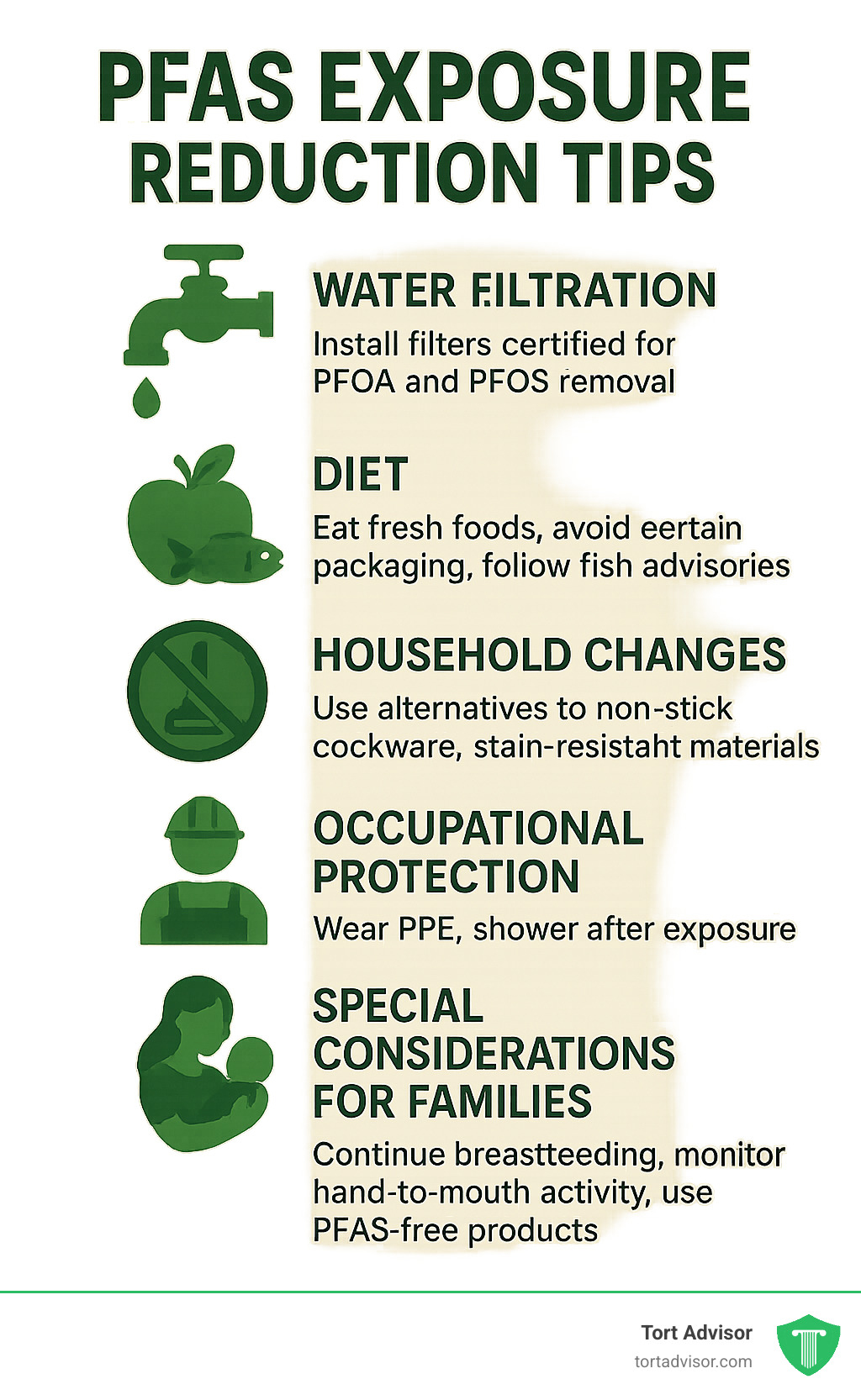
Small steps compound. Filtered water, better food choices, and less household dust together reduce your daily intake and, gradually, the amount stored in your body.
PFAS Symptoms: Frequently Asked Questions
Knowing the signs of PFAS symptoms matters even more for groups whose risk is far higher than average.
Who faces the greatest PFAS risk?
Firefighters lead the list because they routinely use AFFF (aqueous film-forming foam). Service members and veterans also carry elevated exposure, with more than 700 U.S. bases possibly contaminated. Industrial workers who handle PFAS, along with pregnant women and infants, face particular vulnerabilities.
Is PFAS exposure linked to particular cancers?
Kidney cancer has the strongest connection. Evidence for testicular cancer is limited but suggestive, and research is still exploring possible links to thyroid and breast cancers. Recent estimates suggest PFAS in drinking water may account for 4,600-6,800 U.S. cancer cases each year.
Is it worth asking for a PFAS blood test?
A test is reasonable if your exposure was clearly high, for example living near a contaminated site, drinking from a polluted well, or working with AFFF. The results set a baseline for monitoring but can’t predict illness or lead to a cure. If you do test, schedule regular liver and cholesterol checks and work on reducing further exposure.
Conclusion
Not knowing what PFAS symptoms mean for you can be unsettling, particularly when “forever chemicals” seem to be in everything. Keep this in mind: knowledge is your first protection, and you have more control than it may feel like.
The facts are hard: almost everyone in the U.S. carries PFAS in their blood, and the effects often build so slowly that people chalk them up to stress or getting older. Spotting the signs early can truly change your health outlook and opens the door to medical care and legal options alike.
What the research clearly shows is a strong link between PFAS and cholesterol problems, weaker immunity, kidney cancer, and developmental problems in children. That evidence keeps getting stronger, and doctors are treating these concerns more seriously than in the past.
If you have health problems no one can explain, such as cholesterol that stays high despite a healthy diet, constant infections, or reproductive trouble, push for your concerns to be heard. Blood tests have limits, yet they can still offer useful information, particularly when you know you were heavily exposed through water or work.
There are real steps you can take to protect your household. A proper water filter, stainless steel pans, and fresh food in place of packaged items can meaningfully reduce your PFAS load over time.
People who have suffered serious harm from PFAS, especially through contaminated drinking water or on-the-job exposure, have legal options, and cases are moving forward nationwide. Some community settlements have been very large, and as of this update the litigation continues to develop.
Legal Lawsuit knows how draining it is to manage health worries and legal questions at once. That is why we help people connect with attorneys in our network who focus on PFAS litigation and have handled complex environmental exposure cases. These lawyers understand what it takes to prove PFAS-related health harm and how to build a strong claim.
A free, confidential case review may make sense if you have been diagnosed with kidney or testicular cancer after known PFAS exposure, live in a heavily contaminated community where property values have suffered, developed health problems from workplace exposure, or drank contaminated water from an industrial or military source.
Timing matters. Reaching out early protects your rights and helps document both your exposure and your health effects, which are essential pieces of any legal claim.
To learn more about legal options and compensation, see our PFAS cancer lawsuit guide.
Catching PFAS symptoms early protects more than your health; it helps safeguard your family’s future and hold the responsible companies to account. Everyone deserves clean water, safe jobs, and truthful information about the products they use. When those basics are violated, the law offers ways to set things right.
Related Posts
Quick Answer: The Boy Scouts of America (BSA) filed for Chapter 11 bankruptcy in 2020 after facing tens of thousands [...]
Quick Answer: Survivors of sexual abuse by Catholic priests, nuns, or other Church personnel may be able to file a [...]
Quick Answer: Clergy abuse settlements vary enormously based on the severity of the abuse, the strength of evidence that the [...]

