Short answer: This article explains the key facts, eligibility issues, settlement factors, deadlines, and source-backed updates related to this legal topic. Results vary by case facts, evidence, jurisdiction, and representation.
Firefighting Foam Cancer Lawsuit: Why Claims Keep Growing
A firefighting foam cancer lawsuit seeks compensation from the makers of AFFF foam for firefighters, service members and others who developed cancer after PFAS exposure, and thousands of these claims are coordinated in federal court.
Firefighting Foam Lawsuit Basics:
- What it is: Claims against manufacturers such as 3M, DuPont/Chemours and Tyco over PFAS chemicals in AFFF foam
- Who may qualify: Firefighters, military personnel and airport crews diagnosed with cancer after AFFF exposure
- Where cases are: MDL 2873 in the District of South Carolina, with thousands of pending personal injury claims
- Settlements to date: Water-provider settlements including 3M (about $10.3 billion), DuPont entities (about $1.185 billion) and Tyco (about $750 million)
- Cancers at issue: Kidney, testicular, liver, thyroid and others under study
- Deadlines: Set by state law, often a few years from diagnosis or discovery
- Cost: Usually no upfront fee – attorneys typically work on contingency
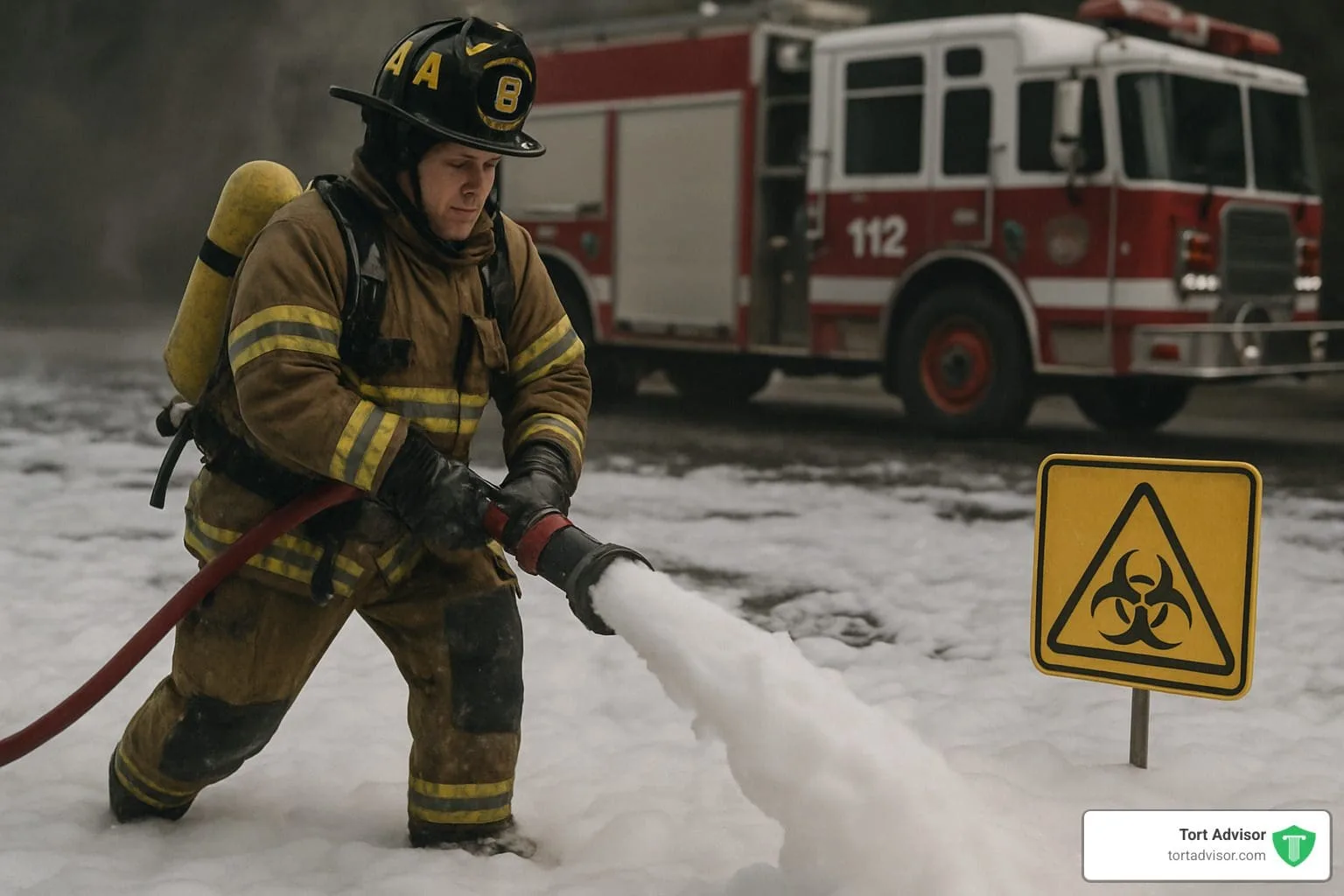
Aqueous film-forming foam (AFFF) became the standard for putting out jet fuel and petroleum fires decades ago. It also contains PFAS, nicknamed “forever chemicals” because they break down extremely slowly in the environment and the body.
Research has linked certain PFAS to higher risks of some cancers, and studies of firefighters have reported elevated rates of kidney, testicular and other cancers. Plaintiffs allege manufacturers such as 3M and DuPont knew about PFAS health concerns as early as the 1970s yet kept marketing AFFF as safe.
The litigation is among the largest mass torts in the country, with thousands of personal injury cases pending in MDL 2873 and new filings arriving regularly. Early bellwether proceedings have focused on kidney and testicular cancer claims.
Plaintiffs argue that safer alternatives were available but manufacturers kept selling PFAS foam. The Defense Department is phasing out PFAS foam and many states have restricted it, but those changes come too late for many firefighters already diagnosed.
AFFF and PFAS: What Firefighting Foam Contains
AFFF was developed by the U.S. Navy and 3M in the 1960s, and its effectiveness comes from chemistry that plaintiffs say exposed firefighters to harmful compounds for decades.
The foam relies on per- and polyfluoroalkyl substances (PFAS), synthetic chemicals built to resist heat, water and oil.
Legacy AFFF contains compounds such as PFOA (perfluorooctanoic acid) and PFOS (perfluorooctane sulfonic acid), which create the thin aqueous film that spreads over burning fuel and smothers the fire.
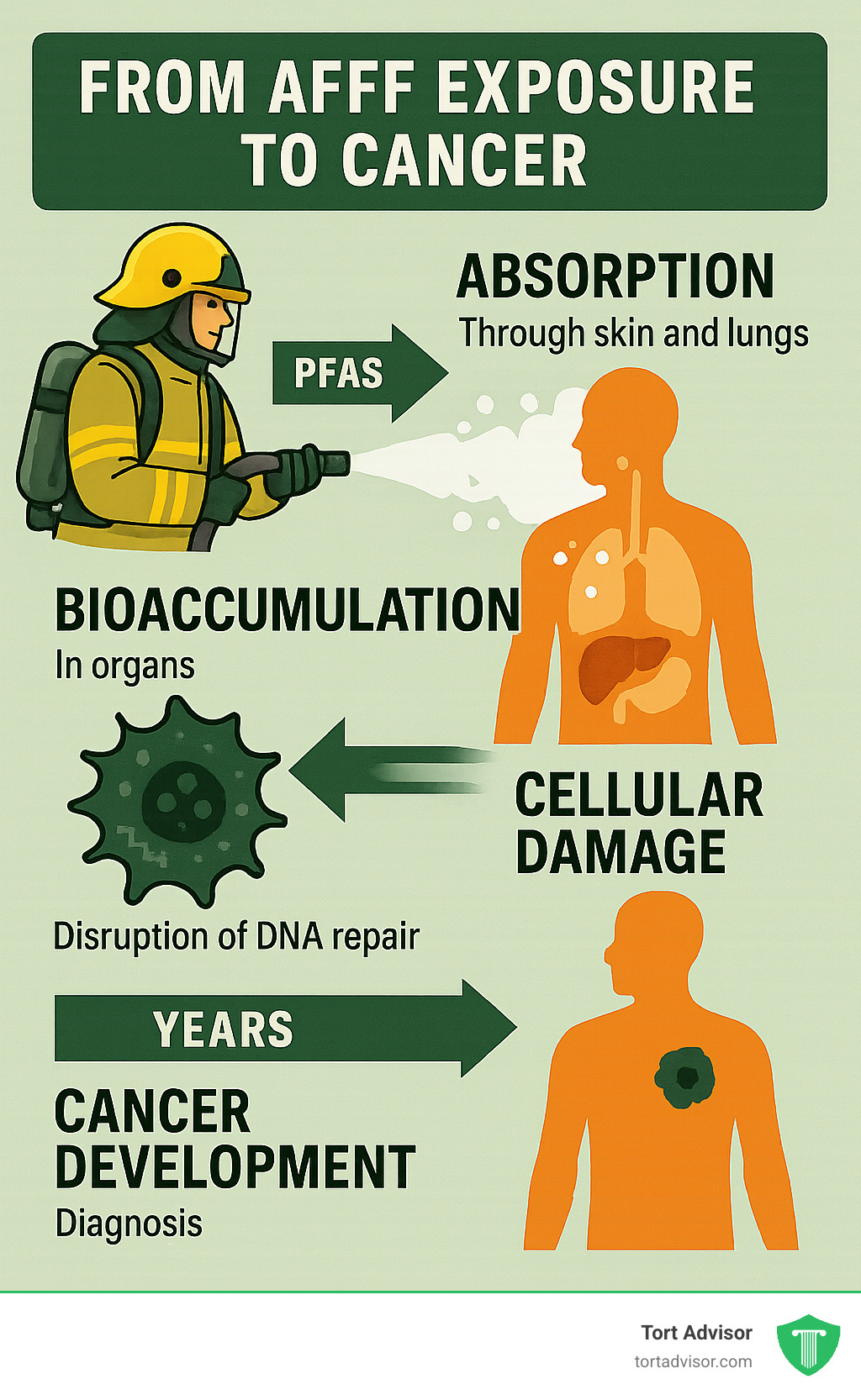
The problem is that the durability that makes AFFF effective also makes it persist in people and the environment. The EPA’s summary of PFAS health risks explains how these compounds resist natural breakdown.
Why PFAS Are Called Forever Chemicals
The label reflects real chemistry. PFAS contain carbon-fluorine bonds, among the strongest in organic chemistry, so while many chemicals degrade in days or months, PFAS can last for decades.
That creates lasting problems. Bioaccumulation lets PFAS build up in the body faster than they are eliminated, water contamination spreads exposure to communities, and soil persistence keeps PFAS at training and fire sites for years.
National testing has found PFAS in the blood of most Americans, and studies of firefighters have reported higher levels. These chemicals concentrate in organs such as the liver and kidneys.
Types of Firefighting Foam
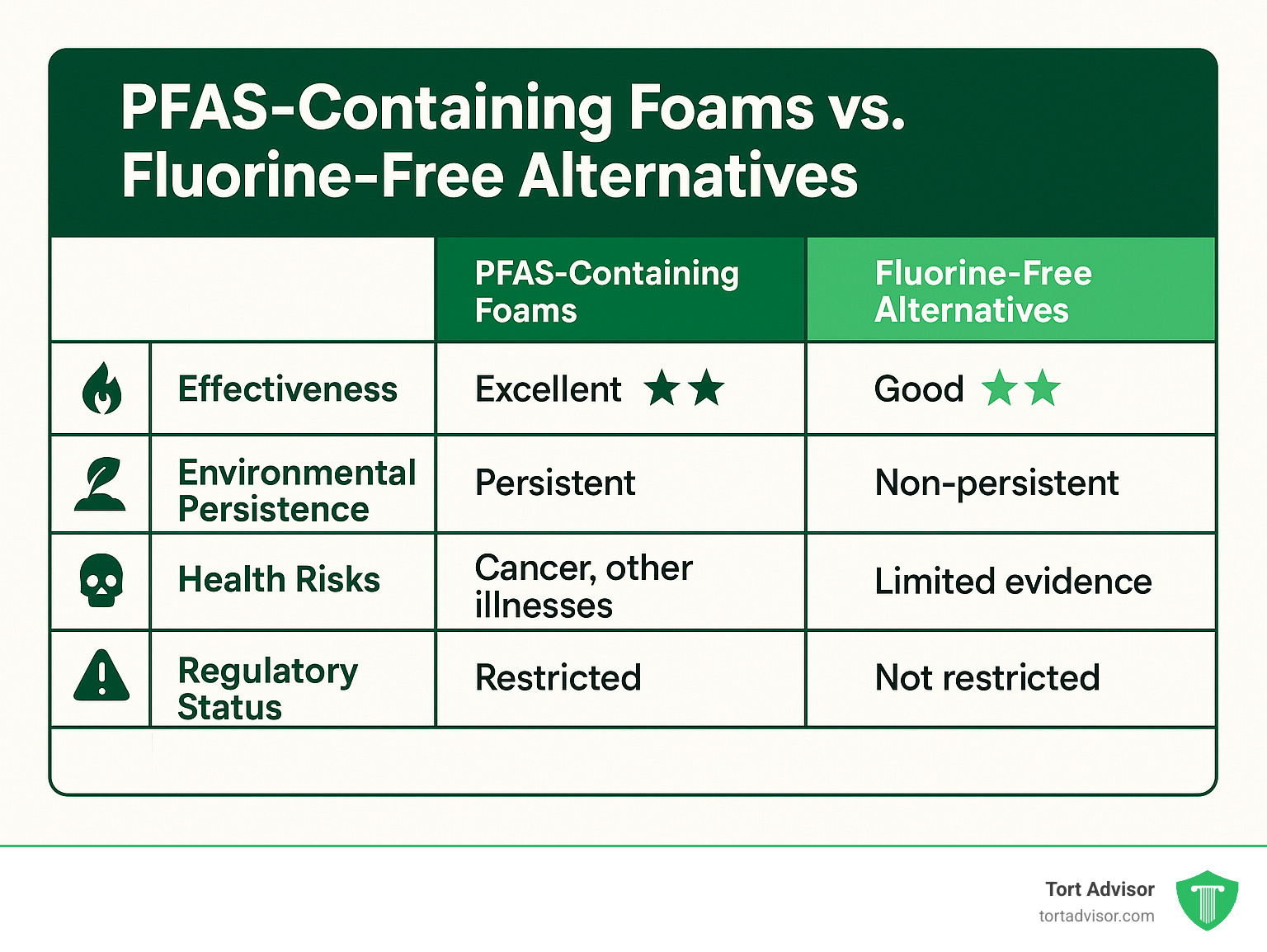
Class A foams are used on ordinary combustibles and generally do not contain PFAS. Class B foams are used on flammable liquids, and many traditional versions contain PFAS. Legacy PFOS-based AFFF, made until the early 2000s, contained some of the most concerning compounds. Fluorine-free foams are the PFAS-free alternatives now being adopted.
How AFFF Exposure Is Linked to Cancer and Other Illness
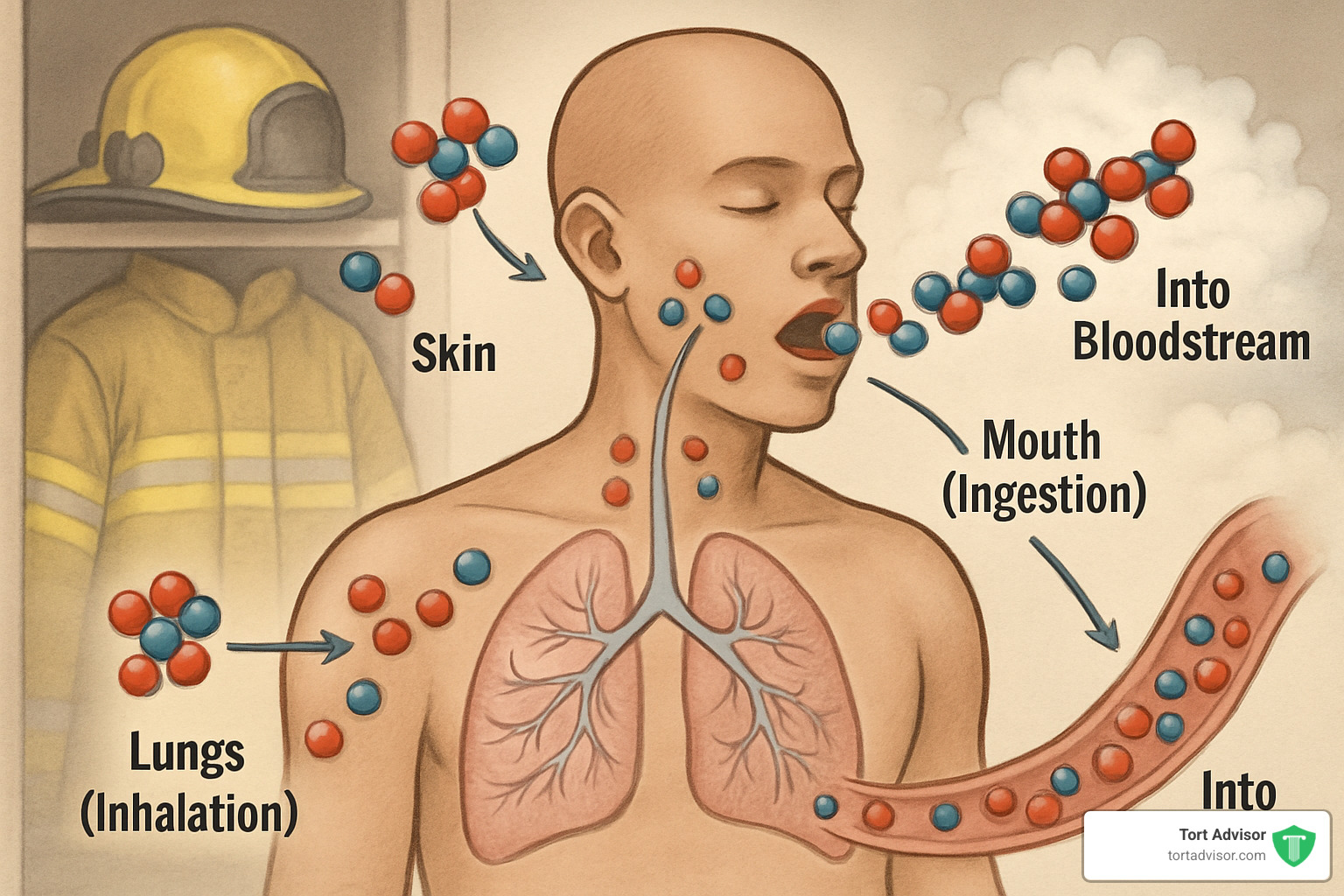
Researchers have studied how PFAS from AFFF enter and affect the body, and firefighters can be exposed through several routes.
Skin contact, inhalation of airborne foam and ingestion of contaminated water are the main pathways. Once absorbed, PFAS tend to accumulate in organs such as the kidneys, liver and thyroid.
Studies have associated PFAS exposure with increased risks of kidney cancer and testicular cancer, and researchers continue to examine links to liver, thyroid and other cancers. The strength of the evidence differs by cancer type.
What the Research Shows
Evidence continues to develop. National Cancer Institute research on testicular cancer has examined the association between PFAS exposure and this disease.
Proposed mechanisms include interference with normal cell processes, chronic inflammation and hormone disruption, and because the body clears PFAS slowly, exposure can accumulate over years.
Some studies have found higher PFAS blood levels associated with greater cancer risk, which researchers describe as dose-response evidence.
Other Health Effects Linked to PFAS
PFAS have also been associated with fertility and pregnancy issues, elevated cholesterol, immune effects and thyroid disease. Documented health effects can help show the scope of exposure-related harm.
Who Faces the Greatest Risk, and Evidence for a Claim
Career firefighters have among the highest occupational exposure, and cancer has become a leading cause of line-of-duty deaths reported by firefighter organizations. Military personnel, especially at bases with heavy AFFF use, are another major group. Airport rescue and firefighting crews were long required to use PFAS-based foam under FAA standards, and refinery and industrial workers may also have been exposed.
Learn more in our guide to PFAS exposure risks.
Building Your Evidence
A claim must connect your illness to AFFF exposure. Employment records show when and where you were exposed, medical records with pathology confirm the diagnosis, training and incident logs document foam use, EPA and site contamination data provide outside verification and coworker statements add support.
Gather evidence early, before records are lost and memories fade.
Inside the AFFF Litigation: MDL 2873
The firefighting foam cancer lawsuit litigation is coordinated before Judge Richard Gergel in the U.S. District Court for the District of South Carolina, where thousands of personal injury claims are pending.
New cases continue to be filed. Defendants include 3M, DuPont and Chemours, Tyco Fire Products, BASF and Chemguard, among others.

Current Status
Personal injury bellwether work has centered on conditions including kidney cancer, testicular cancer, thyroid disease, ulcerative colitis, liver cancer and thyroid cancer. Trial schedules have shifted as the parties negotiate, so check current status. See our AFFF firefighting foam lawsuit guide for updates.
Major Settlements
Major settlements so far have resolved public water system claims: 3M’s roughly $10.3 billion agreement, about $1.185 billion from DuPont entities and about $750 million from Tyco. Personal injury values have not been set by a global settlement, and individual outcomes will depend on diagnosis, exposure and evidence.
Defendants and Their Defenses
Dozens of companies have been named. Defendants have raised a government contractor defense for military-specification foam and other challenges, and the court has addressed these defenses in pretrial rulings. Plaintiffs cite internal documents they say show companies knew decades ago that PFAS accumulated in human blood, which they argue supports punitive damages.
Filing a Firefighting Foam Cancer Lawsuit
To pursue a claim, you generally need proof of AFFF exposure and a qualifying diagnosis. Kidney and testicular cancers have the strongest research support, and attorneys also evaluate liver, thyroid and certain other cancers, as well as ulcerative colitis and thyroid disease, depending on current case criteria.
Filing deadlines depend on state law and often run a few years from diagnosis or discovery. Veterans can usually pursue VA disability benefits and a firefighting foam cancer lawsuit at the same time. Wrongful death claims have their own, sometimes shorter, deadlines.
Attorneys typically work on contingency, so there is no fee unless money is recovered. See our PFAS cancer lawsuit resource for more.
Step-by-Step Process
The process starts with a free consultation, followed by investigation of work and medical records, filing into the federal MDL, and in most cases settlement negotiations. Mass tort cases often take several years.
Potential Compensation
Damages may include medical costs past and future, lost income and earning capacity, pain and suffering, future care and, in some cases, punitive damages.
Life After AFFF: Safer Foams and New Rules
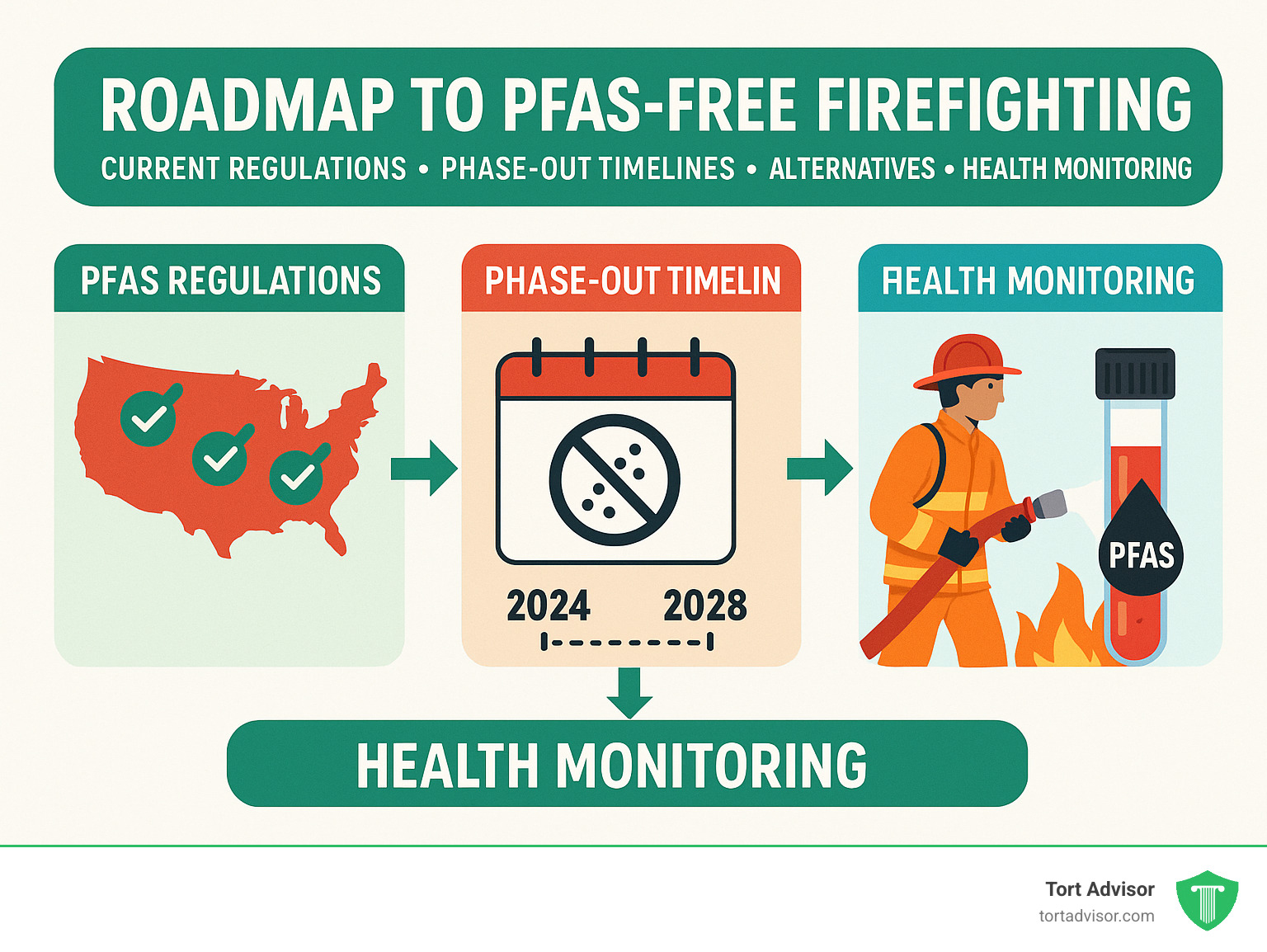
Regulation is shifting. The FAA now allows fluorine-free foam at airports, the Department of Defense is phasing out PFAS foam, and states including California, New York and Washington have adopted restrictions.
Fluorine-free foam use is growing, and departments still handling legacy foam can reduce risk with better protective gear and PFAS blood testing. These steps protect future firefighters, even though they cannot undo past exposure.
Firefighting Foam Lawsuit FAQs
Which cancers are included?
Attorneys focus on conditions with research links to PFAS. Kidney and testicular cancer are the strongest, with liver and thyroid cancer, thyroid disease and ulcerative colitis also commonly evaluated. Other cancers are reviewed case by case based on current criteria.
How long do I have to file?
It depends on your state, and the clock often starts at diagnosis or when you reasonably should have connected your illness to AFFF under the discovery rule. Do not wait, because missing the deadline usually ends the claim.
Can I file if I receive VA benefits?
Yes, generally. VA disability compensation and a lawsuit against manufacturers are separate, and many veterans pursue both. An attorney can confirm how any recovery interacts with your benefits.
Conclusion
The firefighting foam cancer lawsuit litigation raises serious questions about what manufacturers knew and when, according to plaintiffs who allege companies like 3M and DuPont kept selling PFAS foam despite health concerns.
Thousands of claims are pending, each representing a firefighter, service member or worker who protected others and later faced a serious diagnosis. PFAS persist in the body for years, which is why exposure history matters so much.
Billions have already been paid to resolve water contamination claims, and personal injury cases continue to move forward in the MDL.
If you developed cancer after AFFF exposure, act soon, because filing deadlines apply and evidence needs to be preserved.
Legal Lawsuit can connect you with independent attorneys experienced in PFAS litigation for a free, confidential review. They typically work on contingency, so there is no fee unless money is recovered.
Pursuing a claim is about accountability as well as compensation for people who put their health on the line to protect others.
For more on pursuing a claim, visit our AFFF firefighting foam lawsuits resource.
You protected others. Let us help you understand your options.
Related Posts
Quick Answer: The Boy Scouts of America (BSA) filed for Chapter 11 bankruptcy in 2020 after facing tens of thousands [...]
Quick Answer: Survivors of sexual abuse by Catholic priests, nuns, or other Church personnel may be able to file a [...]
Quick Answer: Clergy abuse settlements vary enormously based on the severity of the abuse, the strength of evidence that the [...]