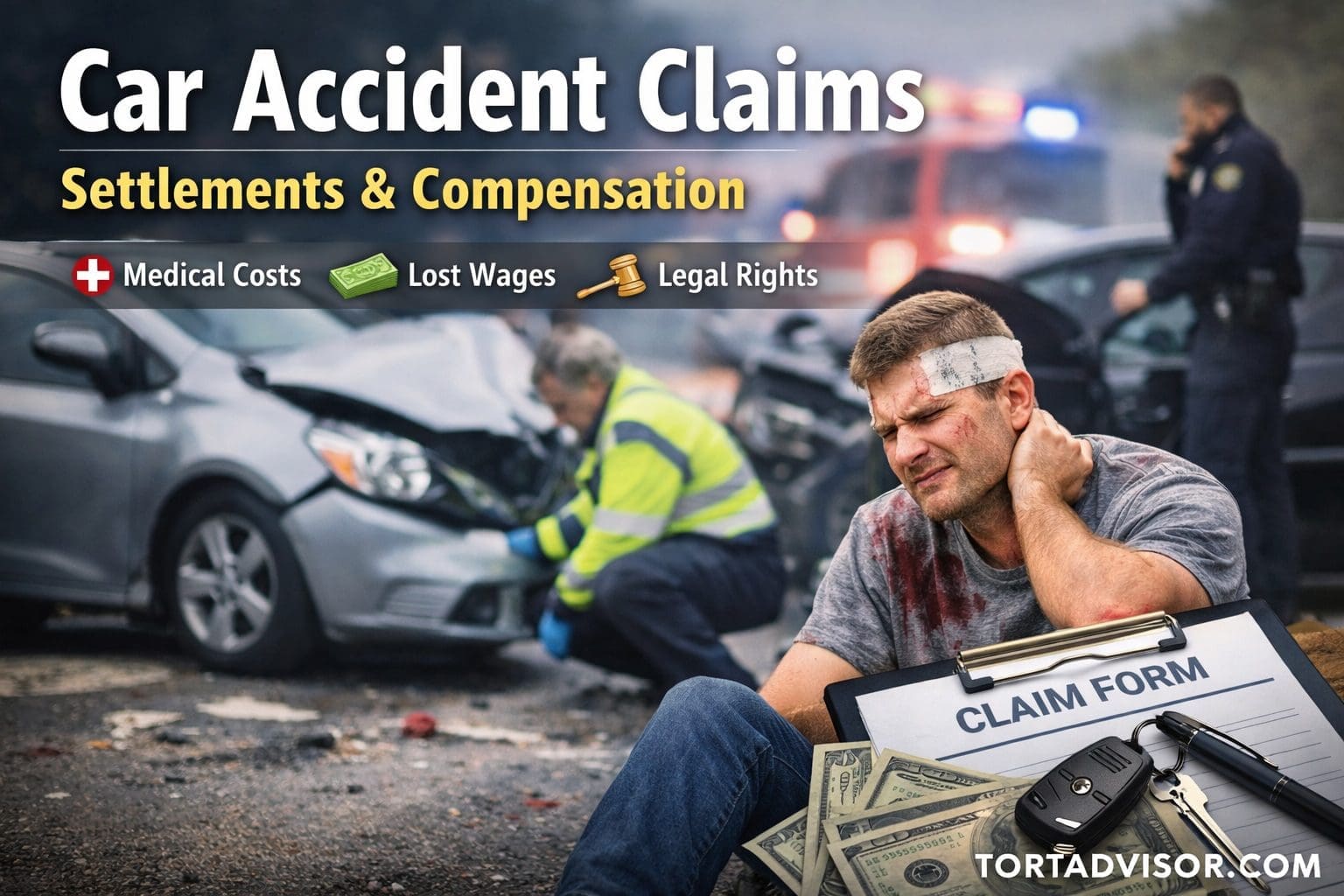
Car Accident Lawsuit Settlement Average: How Claims Work and What They Pay
A car accident lawsuit is a civil claim that asks a careless driver, and usually that driver’s insurance company, to pay for the harm a crash caused: medical care, lost income, pain and the other losses the law recognizes.
Federal crash data from the National Highway Traffic Safety Administration (NHTSA) shows that millions of people are hurt in traffic crashes across the U.S. each year. Each claim is handled individually, so the settlement depends on the injuries, the proof of fault and the insurance available.
Have These Details Handy
A few basic facts let the review team look at your crash faster.
Find Out If Your Car Accident Claim Could Qualify
Fill out this short form for a confidential look at the crash, your injuries, your treatment and the losses you may be able to recover.
How a Car Accident Lawsuit Works in 2026
A car accident lawsuit lets a person hurt by a negligent driver seek payment for medical bills, lost pay, pain and suffering and other losses. NHTSA figures show that crash injuries affect millions of Americans every year, from short-lived sprains to permanent, life-changing harm.
Most claims start with the at-fault driver’s insurer and only become a lawsuit if the insurer will not pay a fair amount. Legal Lawsuit helps injured people understand that process and, through a free review, connects them with personal injury lawyers who usually work on contingency, meaning no fee unless money is recovered. Early offers from adjusters are often low, so knowing your rights before you give a statement can change the result.
Can I Sue After a Car Accident?
You may have grounds for a claim if most of these statements describe your situation:
- You were hurt as a driver, passenger, cyclist or pedestrian in a crash that someone else caused or helped cause.
- You got medical care for crash injuries, or you still need treatment.
- The crash happened recently enough that your state’s statute of limitations has not run out.
- You have or can get a police report, medical records, photos or other proof.
- You have not signed a full and final release with the insurance company for this crash.
Proving Who Was at Fault
Most claims are paid through the at-fault driver’s auto policy. Responsibility can fall on one driver or be split among several parties: other drivers, the owner of the vehicle, an employer if the driver was on the job, a public agency that maintains the road, or a manufacturer when a defect played a role.
Many states use comparative negligence, which lowers what you can recover by your share of the blame instead of wiping it out. A car accident claim lawyer gathers the evidence that keeps your share as small as possible and finds every party who should contribute.
The rules change from state to state. Some apply pure comparative negligence, some use a modified version with a 50% or 51% cutoff, and a few still follow contributory negligence, where even a small share of fault can block recovery. Check your state in our car accident fault rules and statute of limitations by state guide.
What the Police Report Says
An officer’s notes, diagrams and any tickets issued often shape how insurers view fault.
Witness Statements
Neutral witnesses can confirm your version of events or challenge the other driver’s.
Physical and Digital Proof
Skid marks, crush patterns, dashcam clips and traffic camera footage can settle disputes about fault.
Car Accident Lawsuit Settlement Averages in 2026
There is no fixed car accident lawsuit payout, and any average you see online is an educational estimate rather than a promise. What a claim settles for usually turns on how serious the injury is, how strong the fault evidence is, the insurance limits involved, lost income, medical bills and the state where the case is filed.
| Injury Level (Educational) | Common Characteristics | What Usually Moves the Number |
|---|---|---|
| Severe injuries | Catastrophic harm such as spinal cord injury, traumatic brain injury, or a fatal crash. | Can reach the highest values, often limited by the insurance available and the cost of lifelong care. |
| Moderate injuries | Broken bones, surgery, or a long course of treatment and recovery. | Driven by medical costs, missed work and how long recovery takes. |
| Minor injuries | Soft-tissue injuries such as whiplash that heal in a shorter time. | Driven by documented treatment and any income you lost. |
To see how settlements and jury awards differ around the country, open our car accident settlement amounts by state database, built from reported cases using our published research method.
Talk to a car accident lawyer before you accept an insurer’s first offer. Opening offers are frequently low, and represented claimants are generally in a stronger position to recover the full value of documented losses.
Why Car Crashes Happen
Distracted Driving
Phones, texting and other distractions are among the top causes of crashes nationwide.
Driving Drunk or Impaired
Alcohol or drug impairment can strengthen a civil claim and, in some states, support punitive damages.
Speeding
High speed shortens reaction time and makes injuries worse.
Rear-End Collisions
Tailgating and sudden braking cause many rear-end collisions.
Weather and Road Hazards
Rain, ice, potholes and poor road maintenance can lead to loss of control.
Hit-and-Run and Uninsured Drivers
These claims often depend on your own uninsured or underinsured motorist coverage.
Evidence That Strengthens a Car Accident Claim
Police and Crash Reports
The official report records the scene, the people involved and any citations.
Medical Records
Steady medical records tie your injuries to the crash.
Photos, Dashcam Video and Witnesses
Pictures of the scene and the vehicles, dashcam footage and witness contact details back up your account.
What to Do After a Car Accident
- Call 911 so police can come to the scene and document the crash.
- Get checked by a doctor right away, even if you feel okay, because some injuries show up hours or days later.
- Take photos of the scene, the damage, your injuries and the road conditions.
- Get names, phone numbers and insurance details from the other drivers and any witnesses.
- Hold off on giving a recorded statement to any insurer until you have talked to a lawyer.
- Get legal advice before you accept any settlement.
What a Car Accident Lawyer Does for Your Claim
- A free, confidential review to see whether you have a valid claim.
- An investigation that collects police reports, medical records and scene evidence.
- Finding every party who may be liable and every policy that may pay.
- Adding up damages: medical costs, lost wages and pain and suffering.
- Negotiating with adjusters, who often open with a low number.
- Filing suit and going to trial if negotiation does not produce a fair settlement.
Deadlines to File a Car Accident Lawsuit
Every state sets a statute of limitations for injury claims. For car crashes it is usually between one and three years from the date of the accident, but the exact period varies, and claims against a city, county or state agency can require formal notice much sooner.
If the deadline passes, a court will usually dismiss the claim no matter how strong it is. Reaching out to a lawyer soon after the crash also helps preserve evidence that can disappear quickly.
Car Accident Claim Questions
How long do I have to sue after a car accident?
It depends on your state, but most give you one to three years from the crash. Claims involving a government vehicle or road usually have a much shorter notice deadline, so speak with a lawyer early.
Can I still recover if I was partly to blame?
In most states, yes. Comparative negligence rules reduce your award by your percentage of fault rather than barring it, although a few states still bar recovery if you share any blame.
What can I be paid for after a car crash?
Recoverable damages can include past and future medical bills, lost wages and earning capacity, pain and suffering, emotional distress, vehicle damage, loss of consortium and, against a drunk or reckless driver, punitive damages in some states.
Should I take the first offer from the insurance company?
Usually not. First offers often leave out future treatment, lost earning capacity or pain and suffering. Get your losses reviewed before you sign anything.
What happens if the other driver had no insurance or too little?
Your own uninsured or underinsured motorist coverage may pay, if your policy includes it. A lawyer can review your policy and any other coverage that might apply.
Are truck accident claims different from car accident claims?
Yes. Truck cases often involve federal FMCSA safety rules, a trucking company and other businesses as defendants, and much larger commercial insurance policies, which makes the investigation more complex. See our truck accident lawsuit settlements guide.
Sources and References
Each source supports the statement closest to it. Laws and procedures change and differ by state, so confirm details with the official agency before relying on them.
- National Highway Traffic Safety Administration (NHTSA): federal crash and traffic safety data.
- Insurance Institute for Highway Safety (IIHS): independent crash and vehicle safety research.
- U.S. Department of Justice: general information about civil litigation.
Ask for a Confidential Car Accident Case Review
Use the form above or call to go over the crash, your injuries and treatment, the evidence, your deadline and your options.