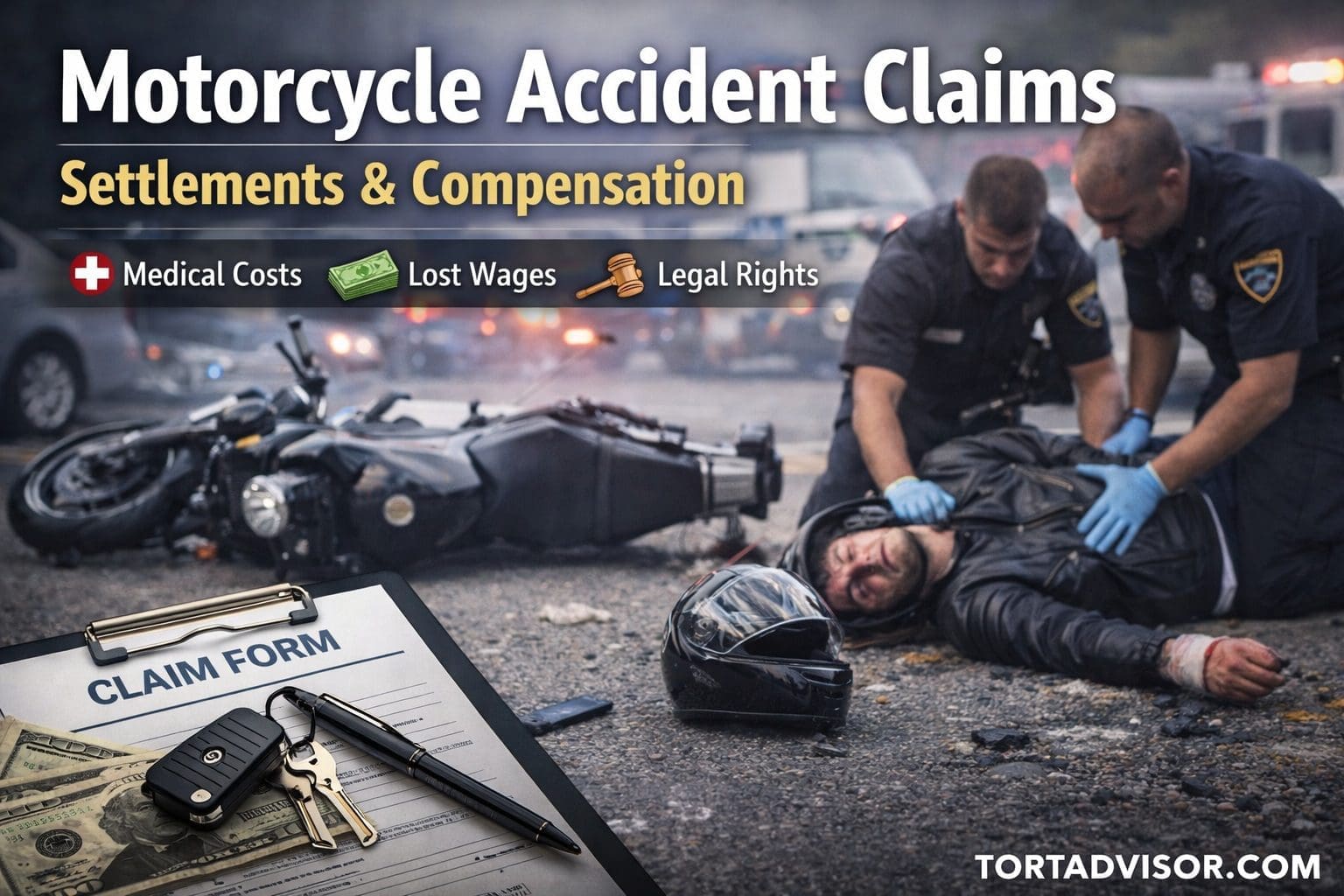
Motorcycle Accident Lawsuit Payout: What Injured Riders Can Recover
If a driver’s mistake put you on the pavement, a motorcycle accident claim can cover your medical treatment, missed income, pain and suffering and the cost of your bike and gear.
Data from the National Highway Traffic Safety Administration (NHTSA) shows that, mile for mile, motorcyclists are roughly 24 times more likely than passenger car occupants to die in a crash. Legal Lawsuit helps injured riders understand their options and connects them, through a free review, with injury lawyers who generally charge nothing unless they recover money.
Before You Send Your Details
These basics help the review team move faster on a motorcycle claim.
Find Out If Your Motorcycle Crash Claim Could Qualify
Send your crash details, injuries, treatment and losses through this short form for a confidential review.
How Motorcycle Accident Claims Work
A motorcycle accident claim lets an injured rider seek payment from the negligent driver for medical bills, lost wages, pain and suffering and other losses. With no steel frame or airbags around them, riders often suffer serious injuries in crashes that would leave a car driver with bruises.
Riders also face a quieter problem: insurers sometimes assume the motorcyclist was reckless. A free review through Legal Lawsuit can connect you with an injury lawyer who knows how to counter that bias, usually on a contingency basis with no fee unless there is a recovery.
Do You Have a Motorcycle Accident Claim?
A claim may be worth pursuing if these statements fit your situation:
- Another driver caused or helped cause the crash while you were riding.
- You were treated for crash injuries or still need care.
- Your state’s deadline for injury lawsuits has not passed.
- You have, or can get, a police report, medical records and photos of the scene and your gear.
- You have not signed a final settlement release with an insurer for this crash.
Who Is Liable for a Motorcycle Crash?
Most often it is the other driver. A vehicle or parts maker can share liability when a defect played a role, a government agency when a road hazard caused the crash, and an employer when the driver was on the job.
States handle shared fault differently under comparative or contributory negligence rules, and helmet laws can also affect how damages are argued. Strong evidence keeps any share of blame assigned to you as low as possible.
Left-Turn Collisions
Left-turning drivers who fail to see an oncoming bike cause some of the worst rider injuries.
Lane-Change Accidents
Drivers who change lanes without checking their mirrors and blind spots can sideswipe a rider.
Road Hazards
Potholes, gravel, uneven pavement and poor road design can throw a bike off balance.
What Motorcycle Accident Payouts Depend On
There is no set motorcycle accident lawsuit payout, and online averages are rough educational estimates rather than promises. Because riders tend to suffer more serious injuries, their claims often carry higher medical costs and longer recoveries than typical car crash claims, which can raise value when fault is clear and coverage is available.
| Injury Level (Educational) | Common Characteristics | What Usually Moves the Number |
|---|---|---|
| Catastrophic injuries | Brain injury, spinal cord damage or amputation. | Lifetime care costs and lost earning capacity drive value; insurance limits and clear right-of-way, distraction or impairment evidence matter most. |
| Serious injuries | Fractures, surgery or a long recovery. | Value follows medical bills, time off work and whether any limitations are permanent. |
| Less severe injuries | Road rash, sprains and minor fractures. | Value follows documented treatment, scarring and lost income. |
Get advice before you accept an insurer’s first offer. Early offers to riders often leave out future treatment, scarring and the full cost of the bike and gear.
Common Motorcycle Crash Claims
Left-Turn Collisions
A driver turns left across the path of an approaching motorcycle at an intersection.
Lane Changes and Lane Splitting
Crashes during lane changes, merges or, where legal, lane splitting.
Dooring Accidents
Someone in a parked car opens a door into a rider’s path.
Defective Bike Parts or Gear
A brake, tire, frame or other component fails and causes the crash.
Impaired or Distracted Drivers
Drunk, drugged or phone-distracted drivers hitting riders.
Hit-And-Run Accidents
The driver who caused the crash leaves the scene.
Evidence That Helps a Motorcycle Claim
Police Reports and Scene Photos
The official report and pictures of the scene show how the crash unfolded.
Medical Records and Damaged Gear
Treatment records plus the cracked helmet, torn jacket or boots show how hard the impact was.
Witnesses and Video
Bystander statements and dashcam or traffic camera footage can prove who was at fault.
What to Do After a Motorcycle Accident
- Get medical care right away, even if you think you are fine, since some injuries are not obvious at first.
- Call the police and ask for a copy of the crash report.
- Photograph the scene, your bike, your gear and every visible injury.
- Collect names, phone numbers and insurance details from drivers and witnesses.
- Do not give a recorded statement to the other driver’s insurer before getting legal advice.
- Save medical records, repair estimates and receipts for replacement gear.
What a Motorcycle Accident Lawyer Does
- A free, confidential look at whether you have a valid claim.
- Investigating the crash and collecting reports, medical records and gear evidence.
- Finding every party and insurance policy that may be responsible.
- Calculating damages, including medical costs, lost pay and pain and suffering.
- Negotiating with adjusters, who often start low with riders.
- Filing suit and going to trial if a fair settlement is not offered.
Deadlines for Motorcycle Accident Lawsuits
Most states give injured people one to three years from the crash to file, but the exact rule differs by state, and claims involving a government agency or road defect often require notice much sooner.
Talking to a lawyer early helps preserve evidence such as skid marks, gear damage and witness memories that fade quickly, and keeps you ahead of the filing deadline.
Motorcycle Accident Claim Questions
How long does a motorcycle accident lawsuit take?
Many claims settle within a year or two, but serious injuries or a trial can stretch that out. Separately, most states set a filing deadline of one to three years from the crash.
Who can be held responsible for a motorcycle crash?
The other driver most often, but also a manufacturer if a part failed, a government agency if a road defect caused it, or an employer if the driver was working.
What evidence helps most in a motorcycle claim?
The police report, scene photos and video, witness statements, medical records, the damaged helmet and gear, and any dashcam or traffic camera footage.
What can an injured rider recover?
Medical bills and future care, lost wages and earning capacity, pain and suffering, damage to the bike and gear and, in severe cases, compensation for permanent disability or disfigurement.
Can I still recover if I share some of the blame?
In most states, yes, although your award is reduced by your share of fault. A few states still bar recovery for any shared fault.
How are motorcycle claims different from car accident claims?
The legal rules are similar, but rider injuries are usually more severe and insurers may try to blame the rider. Compare the basics in our car accident lawsuit settlement average guide.
Sources and References
Each source supports the nearest statement. Laws change and vary by state, so confirm details with the official agency before relying on them.
- National Highway Traffic Safety Administration (NHTSA): federal motorcycle crash and safety data.
- Insurance Institute for Highway Safety (IIHS): independent motorcycle and crash safety research.
- U.S. Department of Justice: general civil litigation information.
Ask for a Confidential Motorcycle Claim Review
Use the form above or call to go over the crash, your injuries and treatment, the evidence, your deadline and your options.