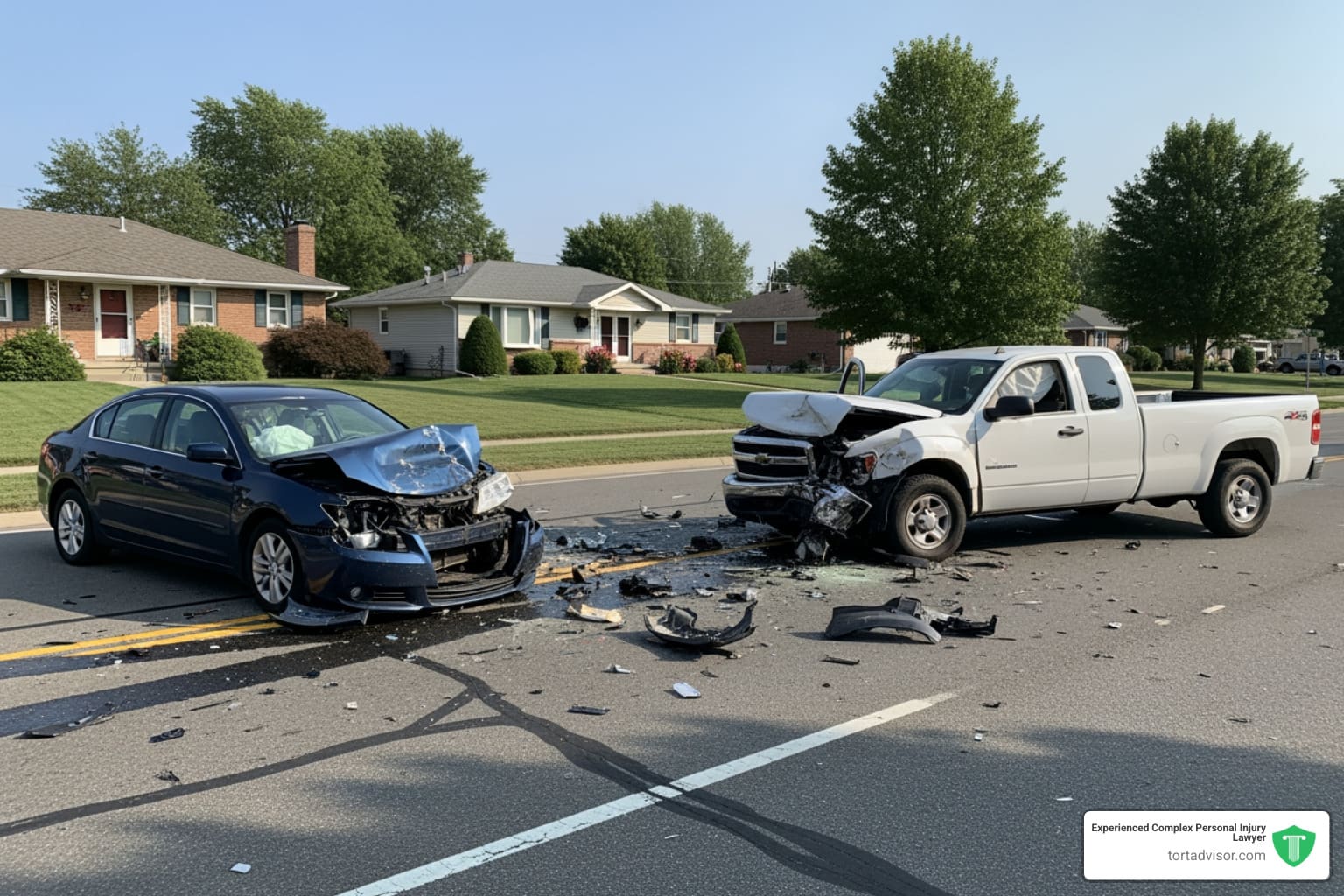
Short answer: This article explains the key facts, eligibility issues, settlement factors, deadlines, and source-backed updates related to this legal topic. Results vary by case facts, evidence, jurisdiction, and representation.
In This Guide
Car Crash Civil Suit Basics
A car crash civil suit (also called an auto accident civil suit) is a court case in which an injured person sues whoever caused the collision to recover losses that insurance has not fully paid. The essentials:
Quick Facts About Suing After a Car Accident:
- Goal: Recover money for injuries, missed income, pain and suffering and vehicle damage when insurance falls short.
- Possible Defendants: The negligent driver, the car’s owner, the driver’s employer, a manufacturer or a government body.
- Deadline: Usually 2 years after the crash to file, though it differs by state.
- How Most End: An estimated 95% settle without a trial.
- Fees: Personal injury attorneys usually work on contingency, charging nothing up front and taking roughly 33-40% of the recovery.
- When to Consider One: Serious injuries, a dispute over fault or an insurer that will not pay fairly.
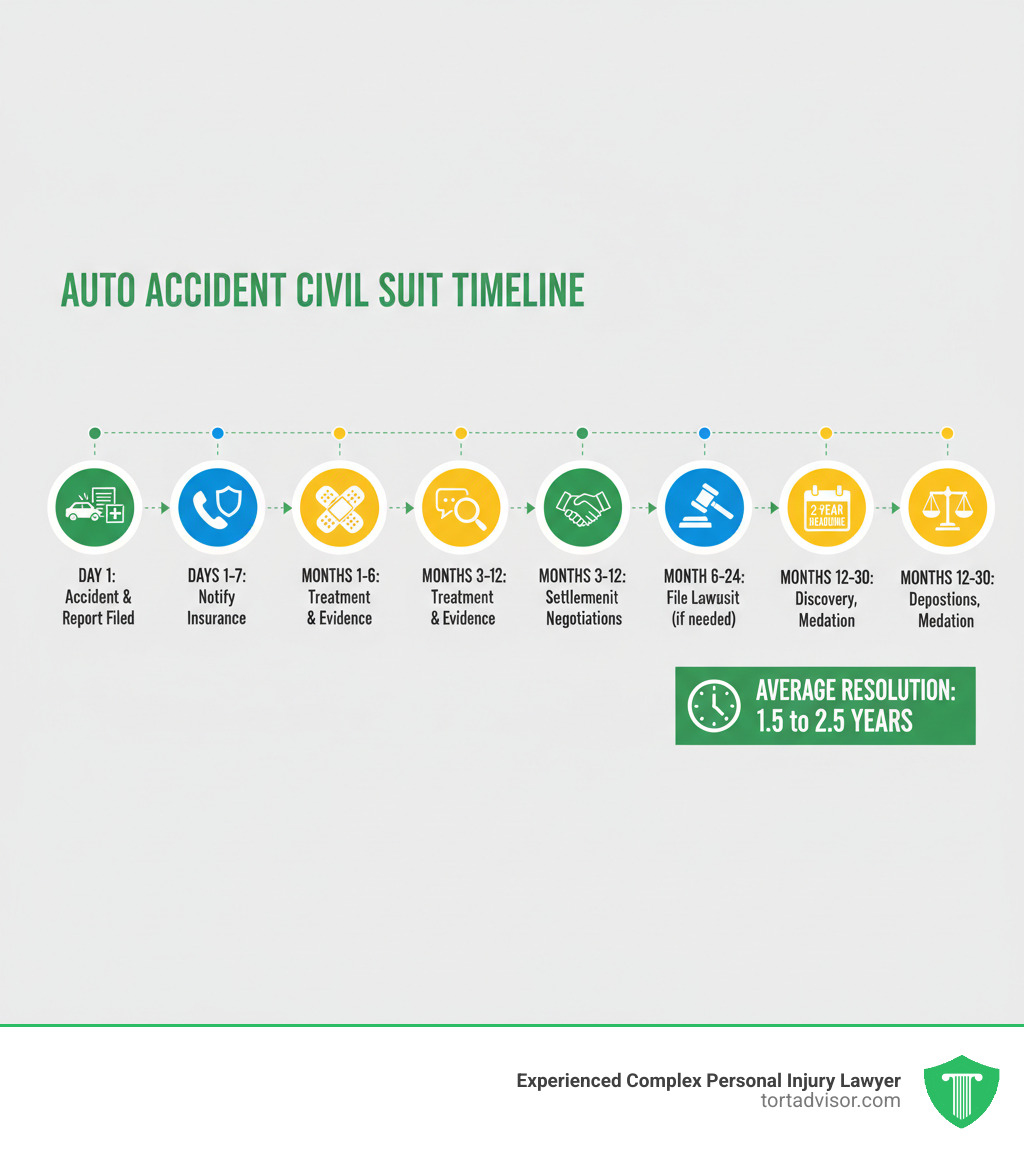
A typical case moves through these stages:
- The crash happens and evidence is collected.
- You open an insurance claim.
- If no fair deal is reached, a lawsuit is filed.
- Discovery, including evidence exchange and depositions.
- Mediation or settlement talks.
- A trial if the case does not settle.
An insurance claim is an informal back-and-forth with an adjuster, while a civil suit is formal court litigation governed by strict procedural rules. Suing becomes necessary when the insurer refuses to pay, offers too little or your losses exceed the policy limits. It is worth considering if your injuries are serious, your medical costs outrun the available coverage or the at-fault driver had little or no insurance.
First Steps After the Crash and Insurance Claims
Your actions in the first minutes after a collision can strongly affect a later car crash civil suit and how much you can ultimately recover.

Put safety first. Check everyone for injuries and dial 911 if anyone is hurt. Move your car out of traffic if you safely can. Most states legally require drivers to stop, help the injured and contact police, and leaving the scene can bring criminal charges.
When it is safe, trade information with the other driver, including name, phone number and insurer, and collect contact details from witnesses. Call the police, because their report is one of your most important pieces of evidence. Texas drivers, for instance, can buy a copy through the Texas Department of Transportation’s Crash Report Online Purchase system.
Tell your insurer quickly, ideally within a day. That opens the claim, and a late report can put your coverage at risk. For a step-by-step guide, see How to Report a Motor Vehicle Accident.
The claims process depends on whether your state uses a no-fault or at-fault system. In at-fault states, the negligent driver’s insurer pays. In no-fault states, your own policy handles early medical bills, but you can still bring a car crash civil suit if your injuries cross the state’s severity threshold.
Know What Your Insurance Covers
Reading your policy matters. When the other driver caused the crash, their liability coverage should pay for your losses, while your own collision coverage repairs your car no matter who was at fault. Driving without insurance creates serious exposure. Most states, Texas among them, mandate minimum liability coverage, as the Texas Department of Insurance explains. Causing a crash without it can mean fines, a suspended license and personal responsibility for every dollar of damage.
If you change insurers after a crash, the company that insured you on the day of the accident still handles that claim. Our Car Accident Lawyer Compensation Guide shows how attorneys push back when insurers try to pay as little as possible.
Proving Fault, Gathering Evidence and Deciding to Sue
Every car crash civil suit rests on liability, meaning legal responsibility for the collision. In practice, you must show that the other driver’s negligence caused your injuries and financial losses.

The police report is an essential starting point but rarely enough on its own. Collect photos and video of the scene and the vehicles, witness accounts, medical records showing your injuries and proof of lost income from your employer. Learn more in What evidence do I need to prove my case?
Sharing some blame does not always end your claim. Most states follow “comparative negligence,” which lowers your award by your share of fault. A handful of stricter “contributory negligence” states deny recovery entirely if you are even 1% responsible.
Who You Can Sue and Injury Thresholds That Apply
Naming every responsible party matters. Possible defendants include the negligent driver, the car’s owner, the driver’s employer if the driver was on the job, and in some cases a vehicle manufacturer or a government agency. Claims against government bodies carry especially short, strict deadlines.
Certain jurisdictions also impose “injury thresholds,” requiring a “serious” or “permanent” injury before you can recover for pain and suffering. Some states or provinces demand a “permanent serious impairment of an important physical, mental or psychological function” before a suit can proceed. Others, such as Quebec with its government-run SAAQ system, may block bodily injury lawsuits completely. Because these rules differ so much by place, knowing your own state’s law is essential.
See Common Motor Vehicle Accident Injuries for the kinds of injuries that frequently satisfy these legal thresholds.
How a Car Crash Civil Suit Unfolds
If talks with the insurer go nowhere, a car crash civil suit may be the only route to fair payment. Knowing what to expect takes much of the fear out of it.

The statute of limitations sets the last day you can sue, and missing it ends your claim no matter how strong it is. Many states, California and Texas included, allow two years to file an auto accident lawsuit. There are exceptions: under the “discovery rule,” the clock may start when an injury is found rather than when it happened; for minors it often does not start until age 18; and claims against government agencies usually have far shorter limits. Act promptly, and read How long do I have to file a lawsuit? for more.
Choosing an attorney is the biggest decision you will make. Look for someone who focuses on car accident cases and has real experience with them. Most work on contingency, so there is no up-front cost; they collect a share of the recovery, commonly 33-40%, only if the case succeeds. That arrangement lets you get strong representation without financial risk. Our guide to how much a personal injury lawyer costs explains fees in more depth.
Main Stages of a Car Accident Lawsuit
A case starts when you file a complaint (sometimes called a statement of claim) laying out your allegations. In California, that includes forms such as the Summons (form SUM-100). Once the defendant is served and answers, discovery begins: both sides trade evidence through written questions (interrogatories), requests for documents and depositions, which are sworn statements taken outside court.
The defense may also ask for an independent medical exam to evaluate your injuries. Settlement discussions continue the whole time and often lead to mediation with a neutral go-between. A case can take 1.5 to 2.5 years from start to finish, yet roughly 95% of car accident lawsuits resolve before trial.
Settlements, Verdicts and Damages
The point of a car crash civil suit is fair payment for what you have lost, reached either by negotiated settlement or by a verdict at trial.

An estimated 95% of personal injury cases end in settlement before trial. Filing suit often gives you the leverage needed to get an insurer negotiating in good faith. Be cautious about quick, low offers from adjusters, whose job is to keep payouts down, and never sign a settlement without an attorney reviewing it, since doing so can give up your right to more money later.
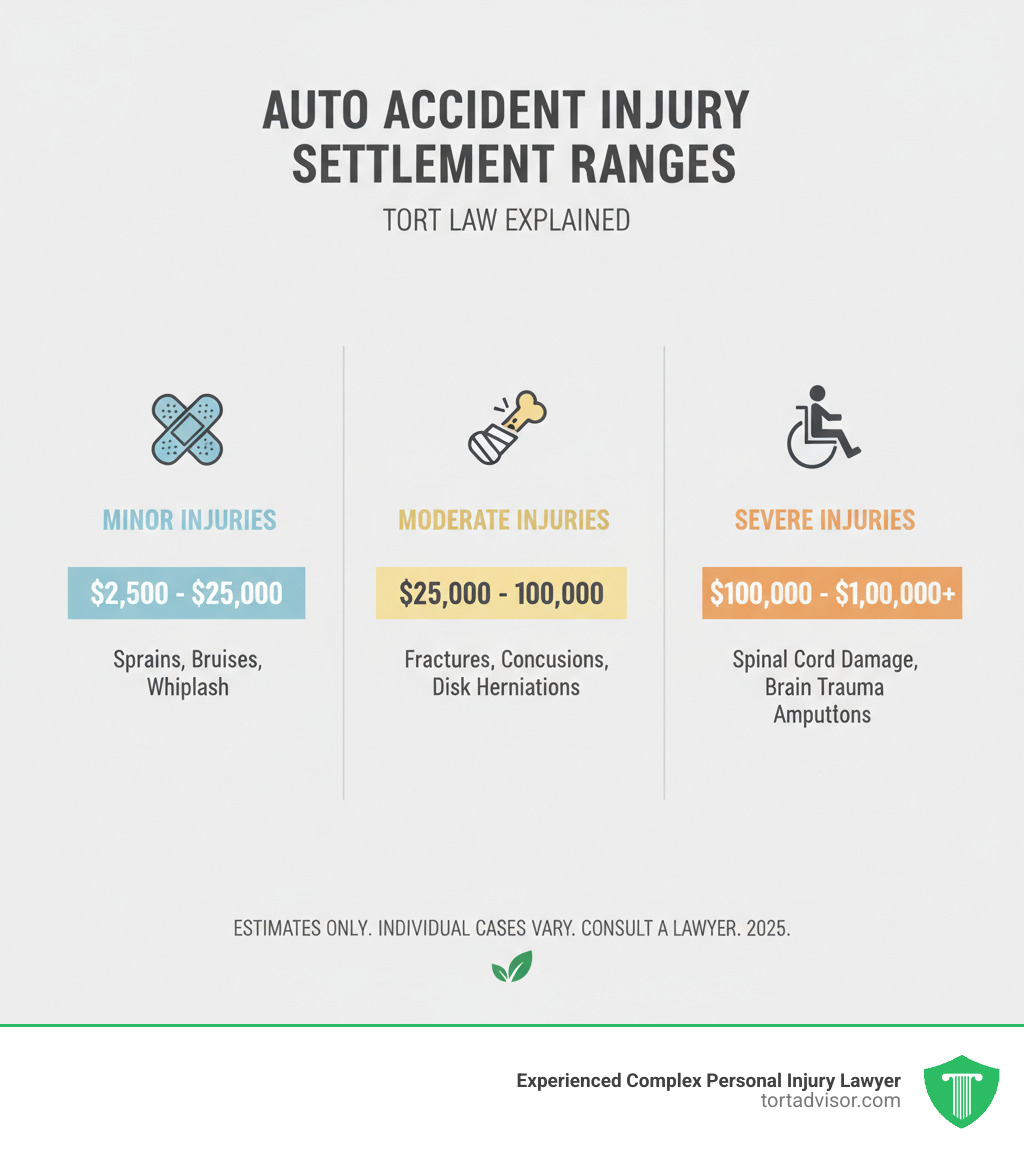
When negotiations stall, a neutral mediator can often help both sides find common ground. If mediation fails, the case heads to trial, where a judge or jury decides. Court rulings can be appealed for legal errors, but settlements are final and binding. From crash to resolution, cases commonly take 1.5 to 2.5 years. Our MVA Settlement Calculator gives a rough starting estimate, though every case is different.
Types of Damages in a Car Crash Civil Suit
“Damages” are the money awarded to make up for your losses, and they come in two kinds.
Economic damages cover measurable financial losses you can prove with records: medical costs now and in the future, missed pay, reduced future earning ability and property damage.
Non-economic damages, often called “pain and suffering,” address physical pain, emotional distress and lost enjoyment of life. These are harder to value because they depend on how serious the injury is and how much it has changed your life. Some places cap non-economic damages or require a high threshold such as a “permanent serious impairment,” and others subtract a statutory deductible from pain and suffering awards. Since these limits vary so widely, legal advice is important. For more, read what kind of compensation victims could receive.
Car Accident Lawsuit FAQs
Below are answers to questions people often ask about a car crash civil suit.
What is the deadline to file a car accident lawsuit?
The “statute of limitations” is the cutoff for filing suit, and missing it means losing the right to sue. In most states, including California and Texas, the standard deadline is two years after the crash.
Key exceptions exist. Under the “discovery rule,” when an injury is not apparent right away, the clock may start on the date it is discovered instead of the crash date. For children, the period often begins at age 18. Most importantly, claims against government bodies have far shorter deadlines, sometimes only months to file a notice of claim. Speak with an attorney early. More details are in How long do I have to file a lawsuit?.
If my insurer gives me a lawyer, do I still need my own?
If someone sues you, your insurer will appoint a defense lawyer, but that lawyer’s main duty runs to the insurance company. A conflict can develop when the claim against you is larger than your policy limits, because the insurer’s lawyer may aim to settle within the limit and leave you exposed for the rest.
When your personal assets are on the line, hiring an independent attorney who answers only to you is a smart move. Our article Do I need a personal injury lawyer? can help you decide.
What should I do if I’m personally sued after a crash?
Contact your insurer right away. Your policy requires quick notice, and the insurer must provide a defense attorney. Never ignore the suit: you have a limited time to respond, often 20-30 days, or the court may enter a “default judgment” against you automatically.
If you are found responsible, your insurer pays up to the policy limit and you owe anything beyond it. Without insurance, you are on the hook for everything from the first dollar. Some property may be shielded from collection, as resources like Automobile Accidents: Personal Injury Lawsuits explain, but an attorney can tell you how much risk you actually face.
Conclusion
A car crash civil suit involves many moving parts, from the scene of the collision to final resolution: firm filing deadlines, evidence gathering and tough negotiations with insurers. Most cases, around 95%, settle without trial, but being prepared to sue is what gives you real bargaining power for fair compensation.
Going it alone carries risk. A procedural mistake, a missed deadline or settling too soon can weaken your case and leave money unclaimed, which is why experienced legal guidance matters.
An experienced personal injury attorney knows your state’s laws, recognizes insurer tactics and works to secure the full value of your claim. Legal Lawsuit helps injured people connect with attorneys in our network who handle car accident cases on contingency, so there is no fee unless money is recovered. A free, confidential case review costs you nothing.
Put your energy into recovering, and let an experienced attorney take on the legal fight.
Get connected with an attorney for your Car Accident Lawsuit
Related Posts
Quick Answer: The Boy Scouts of America (BSA) filed for Chapter 11 bankruptcy in 2020 after facing tens of thousands [...]
Quick Answer: Survivors of sexual abuse by Catholic priests, nuns, or other Church personnel may be able to file a [...]
Quick Answer: Clergy abuse settlements vary enormously based on the severity of the abuse, the strength of evidence that the [...]