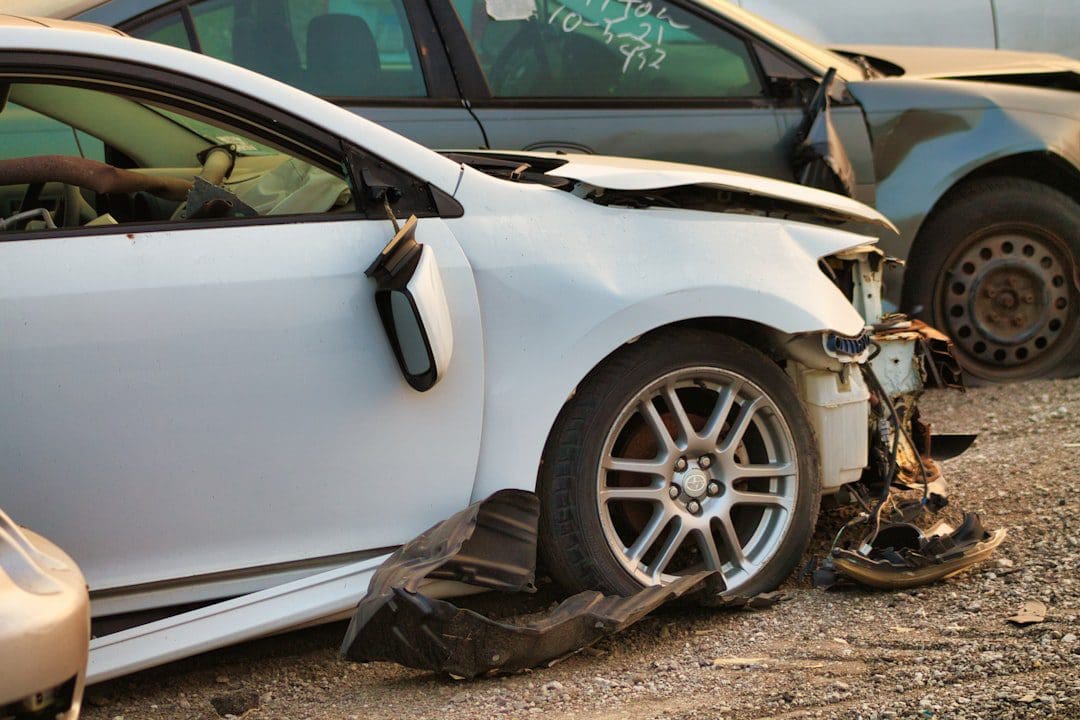
Short answer: This article explains the key facts, eligibility issues, settlement factors, deadlines, and source-backed updates related to this legal topic. Results vary by case facts, evidence, jurisdiction, and representation.
📋 Table of Contents
The Hidden Cost of Common Motor Vehicle Accident Injuries
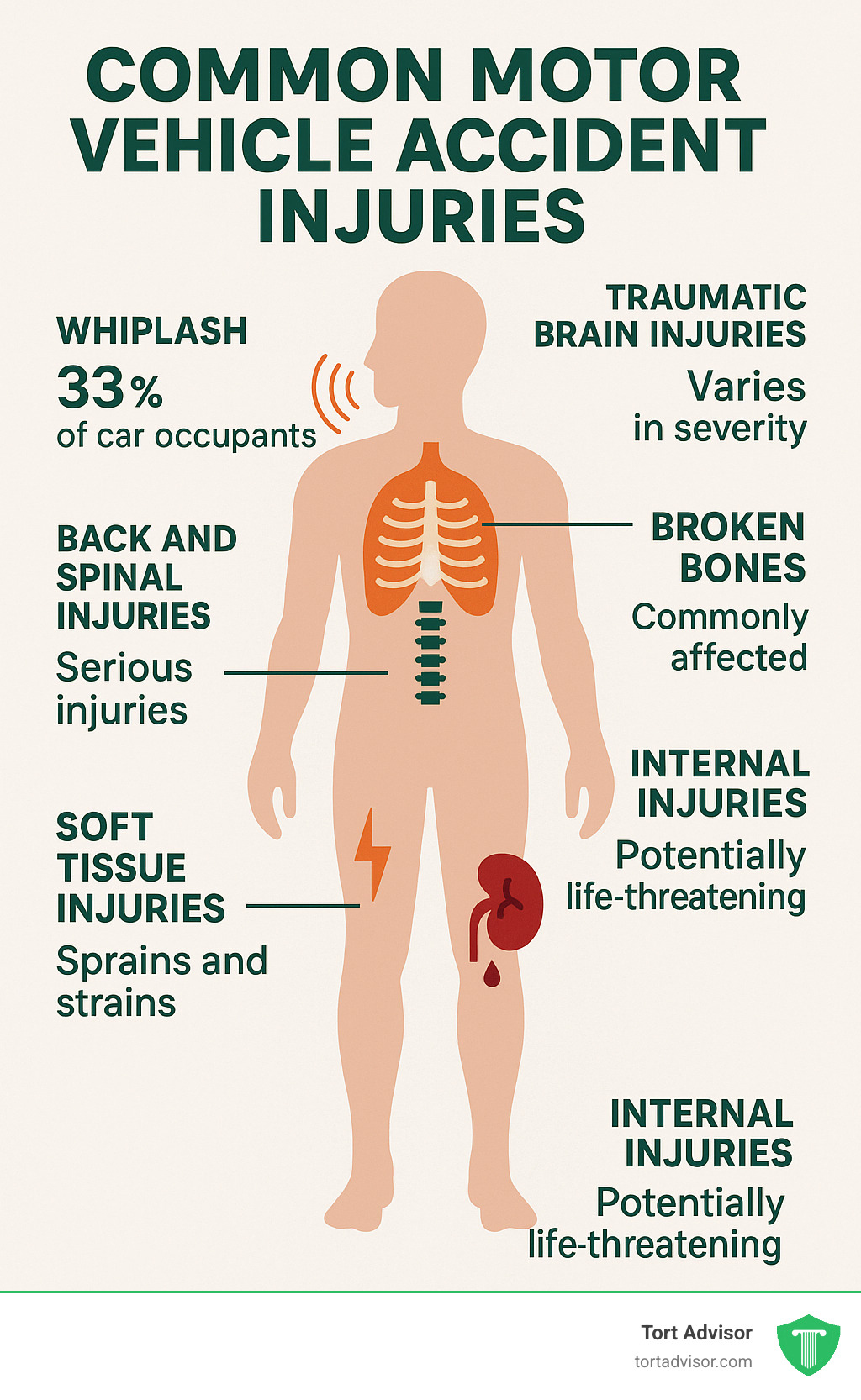
Common motor vehicle accident injuries run the gamut from whiplash and concussions to broken bones and internal organ damage. Here are the injuries crash victims suffer most often:
- Whiplash – neck strain from a sudden jolt (seen in 33% of vehicle occupants)
- Traumatic brain injuries – from concussions to more serious brain trauma
- Back and spine injuries – herniated discs, fractured vertebrae, and nerve damage
- Fractures – especially ribs, collarbones, arms, and legs
- Soft tissue damage – sprains, strains, and tears in muscles and ligaments
- Internal injuries – bleeding inside the body and organ damage
- Psychological harm – anxiety and PTSD after the crash
You’re driving down a calm street, and a second later there’s twisted metal, wailing sirens, and pain that wasn’t there before. That jarring moment is reality for more than 3 million Americans hurt in vehicle crashes every year. Part of what makes these injuries so hard is that many hide at first, with symptoms showing up hours or even days later.
The National Highway Traffic Safety Administration (NHTSA) reports that the head, neck, back, and legs are the body areas injured most often in crashes. Injuries range from small bruises to life-changing trauma, and treatment costs average $820 per person each year nationwide.
I’m Mason Arnao. In my years helping accident victims find their way through recovery, I’ve watched common motor vehicle accident injuries upend people’s health and finances, which is why knowing your rights after a crash is so important for getting proper care and compensation.
The 10 Most Common Motor Vehicle Accident Injuries, From Whiplash to Fractures
In a collision, the body absorbs forces it was never designed for. Legal Lawsuit helps many people connect with attorneys who handle these common motor vehicle accident injuries, and knowing what to expect can help you spot symptoms and get the right treatment.
Whiplash: The Most Frequent Crash Injury to the Neck
Whiplash occurs when the head whips backward and then forward like a cracking whip. That violent motion strains the soft tissue in the neck, a condition known as cervical acceleration-deceleration syndrome.
Whiplash is deceptive. You can leave the scene feeling okay and wake the next day hardly able to turn your head. Typical signs are neck pain and stiffness, headaches at the base of the skull, reduced range of motion, and sometimes dizziness.
It can occur at speeds as low as 15 mph. Roughly 33% of crash victims seen in emergency rooms are diagnosed with whiplash, making it the single most common car accident injury. Most people recover within a few weeks, but about a quarter go on to have neck pain that lingers for years.
Research on whiplash indicates that older people and those with a previous whiplash injury may recover more slowly.
Head and Brain Injuries (Concussions and TBIs)
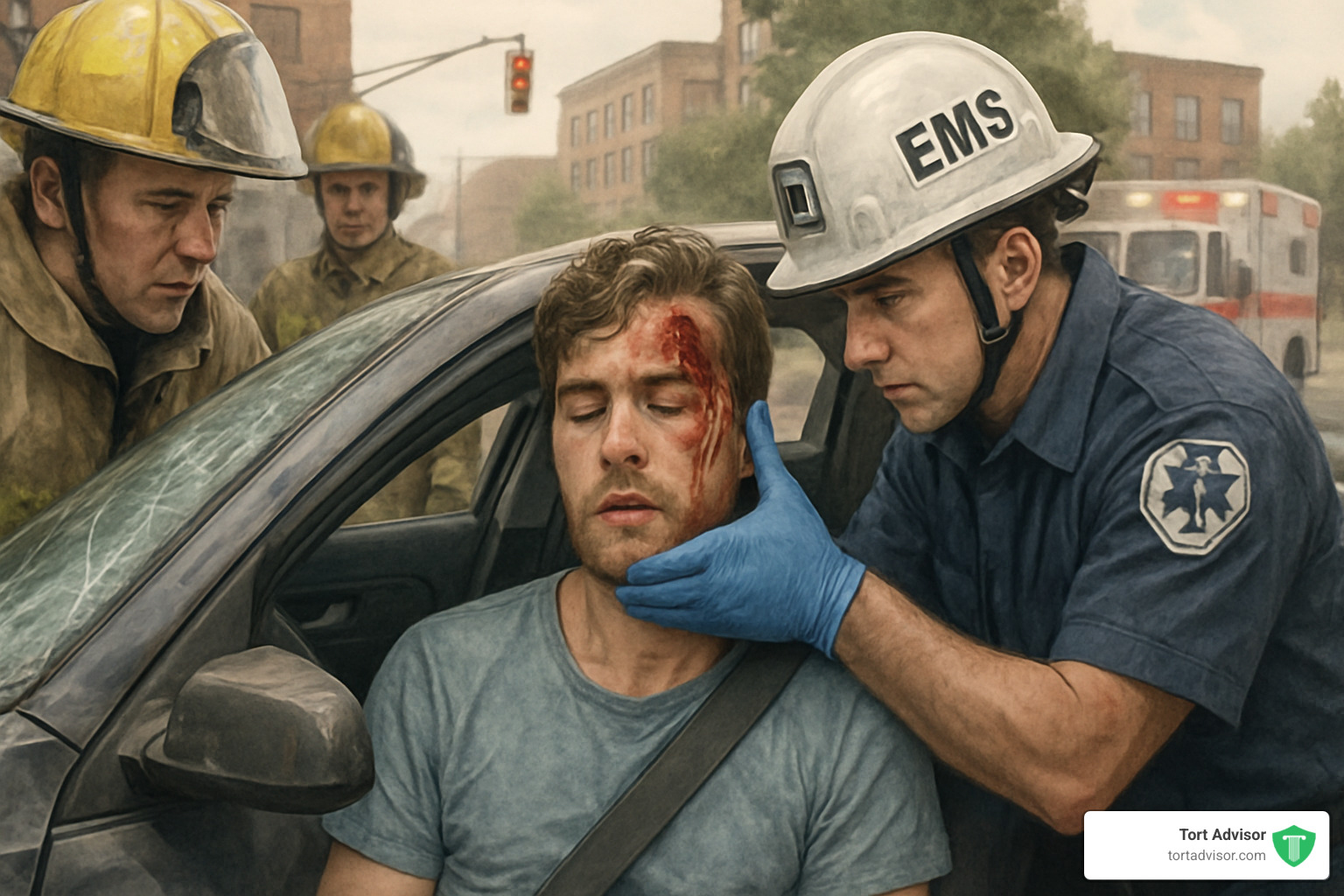
When the head strikes something or is shaken hard, the brain can hit the inside of the skull, leading to bruising, bleeding, or torn nerve fibers.
Traumatic brain injuries (TBIs) range from mild concussions to severe trauma. Around 50,000 Americans die of TBIs each year, and car crashes account for nearly a quarter of TBI hospital admissions.
Doctors gauge brain injury severity with the Glasgow Coma Scale. Brain injuries are especially dangerous because they can be invisible; someone can look completely normal while living with serious trauma.
Mild TBIs are sometimes missed in the ER because standard CT scans don’t always show them. After a crash, watch for ongoing headaches, confusion, memory trouble, and disrupted sleep.
Research on traumatic brain injury shows that even a so-called “mild” concussion can do lasting harm if it isn’t treated properly.
Back and Spinal Cord Injuries
The spine absorbs tremendous force in crashes, particularly rollovers. Back injuries span from muscle strains that heal in weeks to devastating spinal cord damage that causes permanent paralysis.
Frequent spine injuries include herniated discs (the cushion between vertebrae bulging out), spinal fractures (broken vertebrae), spinal cord injuries (damage to the nerve bundle), and facet joint injuries (harm to the small joints that stabilize the spine).
Research indicates the lower limbs (30%), upper limbs (19.4%), and neck (18.7%) are injured most often in car crashes, and about half of people with crash-related back injuries still have pain five years on.
Treatment depends heavily on severity, from rest and physical therapy for minor strains to major operations like spinal fusion for serious damage.
Broken Bones and Dislocations
Crash forces can break bones with frightening ease, and fractures are most common in high-speed and side-impact collisions.
The bones broken most often are ribs (frequently from seatbelt or airbag force), collarbones (exposed because of where they sit), arms and wrists (from bracing on instinct), and legs and ankles (especially in head-on crashes).
Plenty of arm and wrist fractures come from the reflex to brace before impact. Seatbelts can occasionally crack ribs in violent crashes, but that risk is small next to the lives they save.
Healing usually means immobilization and then physical therapy. A simple break may mend in weeks, while a complex one that needs surgical plates and screws can take months.
Soft Tissue Sprains, Strains, and Bruises
Damage to muscles, ligaments, and tendons can be very painful even though it often doesn’t show up on routine imaging.
This category covers sprains (stretched or torn ligaments), strains (injured muscles or tendons), and contusions (bruises from blunt impact).
Insurers frequently brush these off as “just sprains,” despite the real pain involved. Healing moves through three stages: acute inflammation (about the first 3 days), repair (days 3-21), and remodeling (21 days up to 12 months).
Care usually starts with RICE (Rest, Ice, Compression, Elevation) and moves on to physical therapy to rebuild strength.
Internal Injuries and Organ Damage
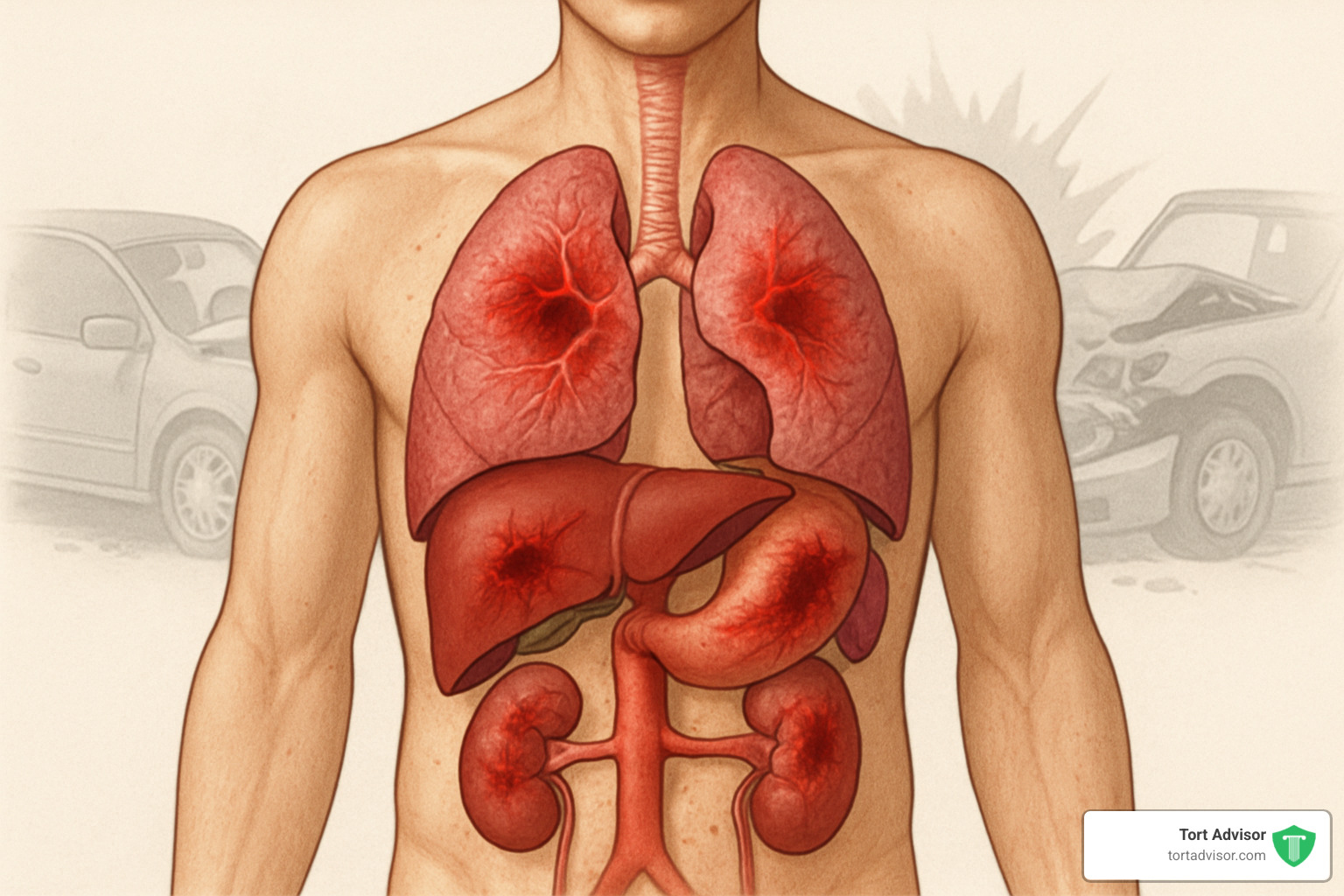
Some of the scariest common motor vehicle accident injuries are the ones nobody can see: internal injuries and damaged organs.
They include pneumothorax (a collapsed lung, often from broken ribs), a ruptured spleen (which bleeds heavily inside), liver lacerations (common in side impacts), and aortic rupture (a frequently fatal tear in the body’s main artery).
Internal bleeding is dangerous because it can worsen quickly with no outward sign. Watch for belly pain or swelling, dizziness, fainting, and unexplained bruising.
Around 3% of crash victims have an internal injury, and nearly all need immediate treatment, often emergency surgery.
Psychological Injuries: PTSD, Anxiety, and Depression
Many crash survivors develop post-traumatic stress disorder, with flashbacks to the collision, nightmares, avoiding driving, jumpiness, and constant anxiety. These symptoms usually emerge over roughly three months after the event.
Beyond PTSD, survivors can develop anxiety disorders, depression, or a fear of driving. These conditions can seriously affect daily life and the ability to work, yet insurers often wave them away as “not real injuries.”
Legal Lawsuit connects people with attorneys in our network who know how to document and value these invisible but genuine injuries.
How Crash Type and Safety Features Shape Injuries
Crashes aren’t pure chaos; they follow patterns that strongly influence which injuries occur. Working with crash victims over the years, I’ve seen how predictably injuries line up with whether a car was struck from behind, from the side, or head-on.
Common Motor Vehicle Accident Injuries by Type of Crash
In a head-on crash, the body lurches forward, so the head may hit the wheel or windshield, the chest strikes the wheel, and the knees slam the dashboard. Facial cuts, chest bruising, and broken kneecaps are typical results.
In a rear-end crash, the body snaps back and then forward, which is why whiplash shows up in more than 85% of these collisions. The neck takes most of the force, and many people also suffer a concussion when the head rebounds off the headrest.
Side-impact (T-bone) crashes are especially dangerous because there’s little structure to absorb the blow. Occupants on the struck side often suffer head injuries from the window, chest and abdominal trauma as the door caves in, and sometimes serious hip fractures.
Rollovers cause complex injuries as occupants are thrown against many surfaces, often producing spinal fractures, brain injuries from repeated head strikes, and crush injuries if the roof gives way.
The National Safety Council reports that T-bone crashes cause the most deaths, while rear-end crashes cause more than 40% of injuries. Safety features change these patterns considerably: a correctly positioned headrest can lower whiplash risk by 5-10%, and side airbags reduce severe chest injuries by about 25%.

How Seating Position, Age, and Road User Type Matter
Where you sit, and who you are, can greatly change your injury risk.
Drivers are injured differently from passengers, with more steering-wheel injuries such as chest bruises, broken ribs, and facial trauma when an airbag fails to deploy correctly.
Front passengers tend to have worse dashboard and windshield injuries because there’s no wheel to brace against.
Rear passengers face a greater risk of brain injury but a lower risk of chest injury, partly because back seats often have less sophisticated restraints.
Age has a major effect on how the body handles a crash. Kids under 12 face particular dangers and need the right car seat or booster. Older occupants (65+) are 2-3 times more likely to die than younger adults, largely because their bodies are more fragile.
Injury patterns also differ by road user. Motorcyclists make up 42% of injury cases while representing a small share of road users, and pedestrians account for 24%. For riders, wearing a helmet matters most, cutting the risk of death by 37% and of severe head injury by 69%.
Inside a vehicle, buckling up is still the most important choice you can make, reducing fatal injuries by 45-60%. The physics is simple: staying restrained beats being thrown around the cabin.
From the ER to Rehab: Diagnosing and Treating Crash Injuries
Getting from the crash scene to recovery is a medical process, but it’s also a deeply personal one, full of uncertainty and pain before healing comes. Knowing what’s ahead can make a real difference.
Once the chaos settles, doctors become your first line of support. Even if you feel fine, which adrenaline often makes people feel, an exam is essential because many common motor vehicle accident injuries don’t cause symptoms right away.
ER doctors rely on several tools. They begin with a physical exam to look for visible injuries and check your responses. CT scans are especially good at finding fractures, internal bleeding, and brain injuries; MRIs give a closer look at soft tissue and the spinal cord; and standard X-rays reveal bone injuries.
Certain symptoms mean go to the ER immediately: any loss of consciousness, a severe headache, vomiting, seizures, confusion, pupils of different sizes, weakness or numbness in the arms or legs, trouble breathing, visibly deformed limbs, or abdominal pain or swelling.
About 10-15% of seriously hurt crash victims need surgery, which may mean fixing fractures with plates and screws, stabilizing the spine, a craniotomy for brain injury, or repairing internal organs.
What Recovery Looks Like After Common Motor Vehicle Accident Injuries
Recovery is a long haul with stages that build on one another. Everyone’s path is different, but most follow a familiar sequence:
In the acute stage (roughly the first week), the priorities are rest and immobilization where needed, pain control, and building a treatment plan for your specific injuries.
In the sub-acute stage (weeks 1-6), you start moving gradually under medical supervision. Physical therapy usually begins here, along with follow-up imaging to track healing.
In the rehabilitation stage (weeks 6-12 and beyond), you build strength and conditioning, improve range of motion, and relearn the movements daily life requires.
How long recovery takes depends mostly on the injury:
- Mild whiplash usually clears up within 1-3 months
- Simple fractures generally mend in 6-12 weeks
- Mild TBIs tend to improve over 3 months to a year
- Moderate to severe TBIs may take 2+ years
- Spinal cord injuries often mean adapting for life
Physical Therapy and Rehab Technology
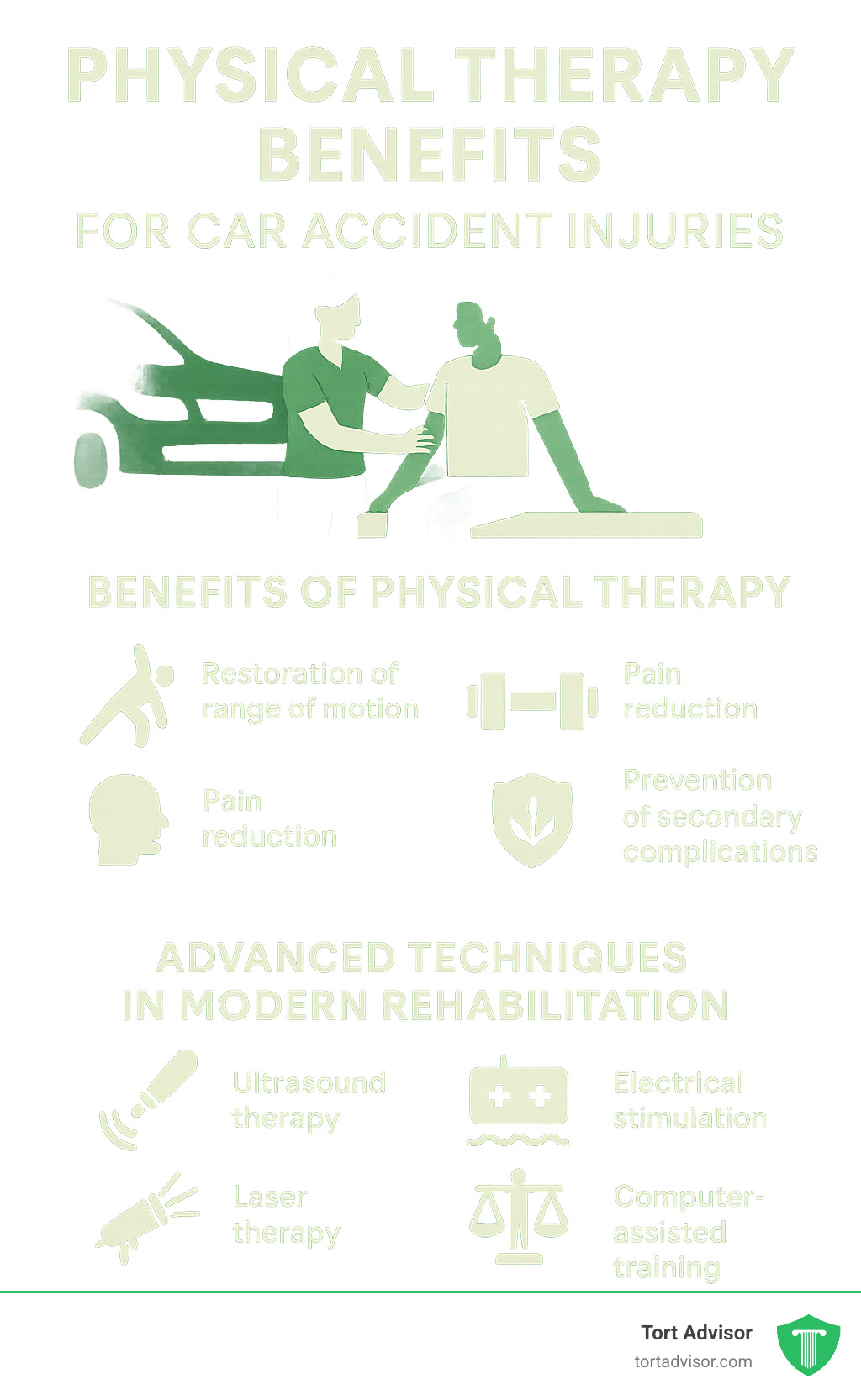
Physical therapy isn’t an optional extra; for many common motor vehicle accident injuries, it’s the foundation of recovery, and good rehab often leads to better results than patients expect.
Quality physical therapy restores range of motion and flexibility, strengthens injured and supporting muscles, eases pain by retraining movement, and helps prevent secondary complications.
Modern rehab pairs hands-on care with technology, such as therapeutic ultrasound for deep tissue healing, electrical stimulation to control pain and activate muscles, and specialized equipment for progressive strengthening.
Many people are surprised to learn that physical therapy can work as well as surgery for many car accident injuries, helping them avoid long-term opioid use while taking an active role in recovery.
Your Rights and Compensation After a Crash
With common motor vehicle accident injuries, knowing your legal rights is essential, not optional. Recovery is hard enough without money worries piling on, and fair compensation can make a huge difference.
Medical records tell the story of your injuries in terms insurers and courts recognize. Each appointment, treatment plan, and therapy session adds to a paper trail that backs up your experience and serves as strong evidence in your case.
Car accident compensation generally falls into two groups. Economic damages cover tangible costs: present and future medical bills, wages lost while you can’t work, vehicle damage, and other out-of-pocket expenses.
Non-economic damages address the human cost: pain that keeps you awake, emotional distress after trauma, activities you can no longer enjoy, and strain on your relationships, which the law calls “loss of consortium.”
When conduct was especially reckless or intentional, courts may also award punitive damages, which aim to punish outrageous behavior and deter others rather than to compensate you.
Many victims are caught off guard by how fast insurers make settlement offers, sometimes before the full scope of injuries is known. Those early offers can look helpful, but they’re usually meant to close the claim cheaply before all your damages surface.
Legal Lawsuit works with a network of attorneys who understand the medical and legal sides of crash cases. They know how to value your claim properly and pursue what you’re truly owed, not just what an insurer’s software spits out.
Learn about working with a motor vehicle accident attorney
Building a Strong Claim for Common Motor Vehicle Accident Injuries
Time cuts both ways after a crash. You need time to understand your injuries, but every state sets a strict filing deadline, the statute of limitations, usually 1-3 years after the accident, and missing it can end your right to compensation for good.
Strong claims rest on thorough records: photos of visible injuries, a daily pain and limitation journal, complete medical files, and employment records showing missed work all paint a convincing picture.
When valuing a claim, look past immediate bills. A fair settlement accounts for future treatment too. Will you need months of therapy? Could your career be limited? Might complications arise years from now?
Every case is different, and what a claim is worth depends on factors such as how severe and permanent the injury is, the medical treatment required now and in the future, lost income and earning capacity, the strength of the evidence on fault, available insurance coverage, and the law in your state. A mild soft tissue injury and a life-altering brain injury sit at very different ends of that range.
Many people underestimate how much the choice of attorney affects results. Insurers know which lawyers settle fast and which have the skill and willingness to go to trial. Legal Lawsuit connects people with attorneys in our network who have experience with specific injury types and know how to pursue full compensation.
Common Motor Vehicle Accident Injuries: Frequently Asked Questions
What if symptoms don’t show up until days after the crash?
That’s very common. People often feel fine right after a crash and then wake up a day or two later with a pounding headache or a neck they can barely move. During the crash, the body floods with adrenaline and endorphins that mask pain, and injuries like whiplash and concussion naturally take time to produce noticeable symptoms.
If you feel worse in the days after a crash, do the following:
See a doctor promptly and tell them about the accident, which creates an official record tying your symptoms to the crash. Keep your own notes too: when symptoms began, how they’ve changed, and how they affect daily life.
Tell your insurer about the delayed symptoms, and consider talking with an attorney, because insurers often argue that late-appearing symptoms aren’t related to the crash. That’s exactly why Legal Lawsuit always recommends getting examined right after any collision, even if you feel fine.
How long does whiplash take to heal?
“When will I feel like myself again?” is one of the most common questions about common motor vehicle accident injuries like whiplash, and the honest answer is that it varies.
Mild whiplash usually improves within 4-6 weeks of proper care. Moderate cases often need 2-3 months, while severe whiplash can take 6-12 months, and some people are left with chronic symptoms that never fully go away.
Your timeline depends on several things: age (healing slows as we get older), any earlier neck problems, how hard the impact was, and how soon treatment began.
Studies suggest about half of whiplash patients recover fully within three months, while roughly 25% have neck pain lasting six months or more and about 10% are left with permanent symptoms that significantly affect their quality of life.
Can I be compensated for emotional distress?
Yes. The emotional toll of a crash can be as damaging as physical injuries. A broken bone shows up on an X-ray, but psychological trauma is invisible, which makes these claims harder to prove though no less valid.
PTSD, anxiety, depression, and new phobias after a crash are recognized as compensable injuries in every state. Some people recover physically yet still can’t drive, or even ride in a car, without panic attacks, and that is real harm deserving real compensation.
Winning an emotional distress claim takes documentation, usually a diagnosis and treatment records from a mental health professional, detailed descriptions of how symptoms affect daily life, and sometimes statements from family or friends about changes they’ve noticed.
Expect pushback, since insurers often call psychological claims exaggerated or invented, and that’s where the right attorney matters. How much emotional distress adds to a claim depends on the diagnosis, how long symptoms last, the treatment involved, and how well everything is documented.
Conclusion
The days after a crash can feel overwhelming. One minute you’re driving, the next you’re dealing with injuries, medical bills, and insurance forms. This guide has covered the full range of common motor vehicle accident injuries, from short-lived whiplash to life-altering spinal cord damage.
What you do in the days and weeks after a crash can shape your recovery. People in your position often wonder the same things: should I see a doctor if I feel okay, how will I pay these bills, and is this settlement offer fair?
Many serious injuries don’t show symptoms right away. A headache that starts the next day may be more than stress; it could signal a concussion or whiplash. That’s why getting evaluated after any crash matters, even if you walked away feeling fine.
Records are your best friend here. Photograph visible injuries as they heal, keep a simple log of your pain and limitations, and save every medical record and bill; together they tell a powerful story that can strengthen your case.
Be especially wary of early settlement offers. Adjusters often call quickly, sometimes before you’ve seen a doctor, and their goal is to settle for as little as possible, not to protect your long-term health.
Think about the long run when weighing compensation. Will you need therapy months from now? Could you miss out on work? How has the crash changed your daily life and relationships? A fair settlement covers tomorrow’s needs as well as today’s bills.
Legal Lawsuit has helped many crash victims work through this complicated process, and attorneys in our network focus on specific injury types and know how to document and value them correctly.
Recovering from common motor vehicle accident injuries takes both physical healing and financial protection. While you focus on getting your health back, let us connect you with an attorney who can manage the legal side through a free, confidential case review.
Connect with an experienced motor vehicle accident attorney
Additional Resources
Related Posts
Quick Answer: The Boy Scouts of America (BSA) filed for Chapter 11 bankruptcy in 2020 after facing tens of thousands [...]
Quick Answer: Survivors of sexual abuse by Catholic priests, nuns, or other Church personnel may be able to file a [...]
Quick Answer: Clergy abuse settlements vary enormously based on the severity of the abuse, the strength of evidence that the [...]