Short answer: This article explains the key facts, eligibility issues, settlement factors, deadlines, and source-backed updates related to this legal topic. Results vary by case facts, evidence, jurisdiction, and representation.
📋 Table of Contents
- Why Reporting Vehicle Accidents Properly Protects Your Rights
- When Are You Legally Required to Report a Crash?
- How to Report a Motor Vehicle Accident: Step-by-Step
- Jurisdictional Nuances & Special Reporting Centres
- Consequences of Not Reporting & How to Get Your Report
- Frequently Asked Questions about Reporting Accidents
- Conclusion & Your Legal Options
Reporting a Crash the Right Way Protects Your Legal Rights
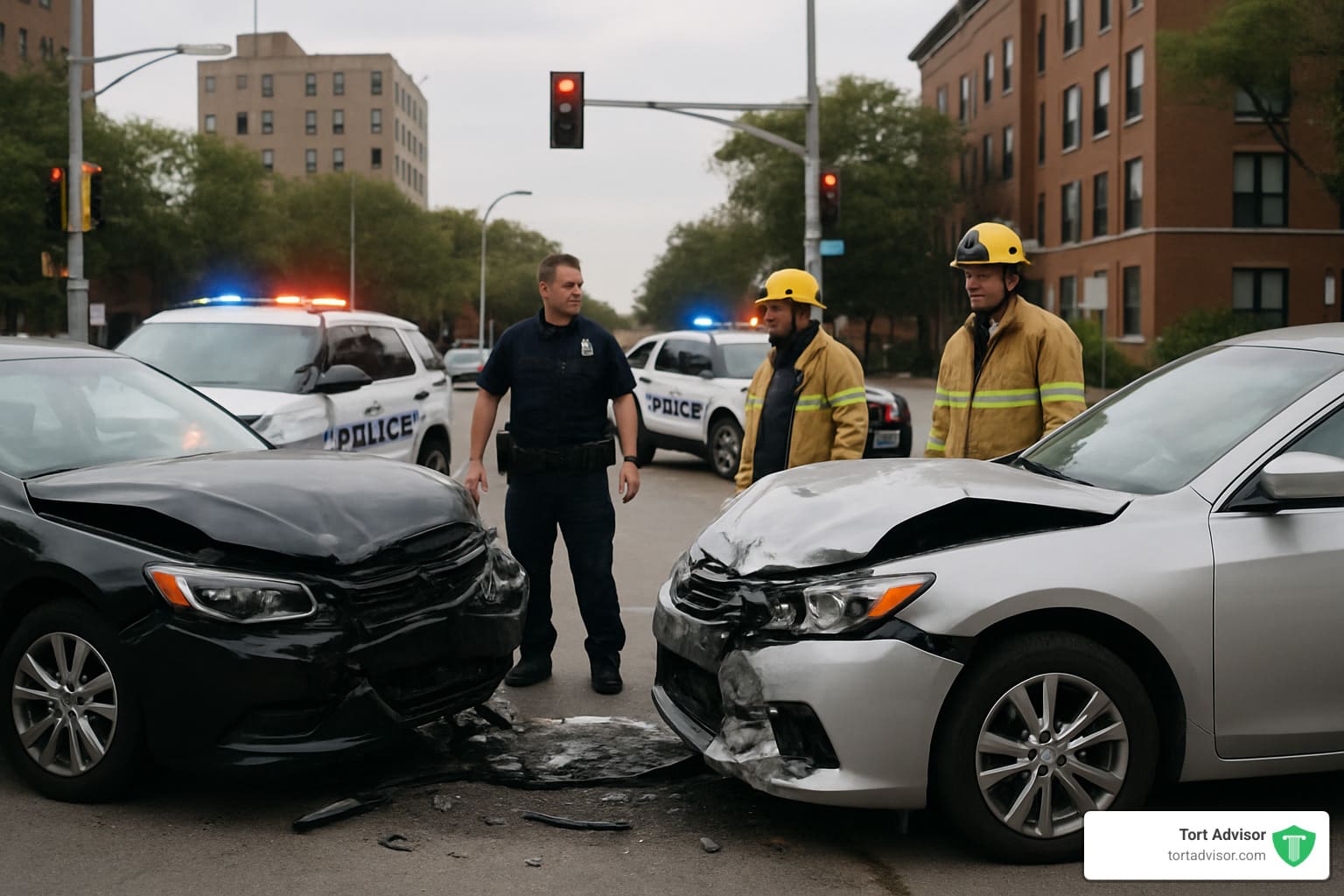
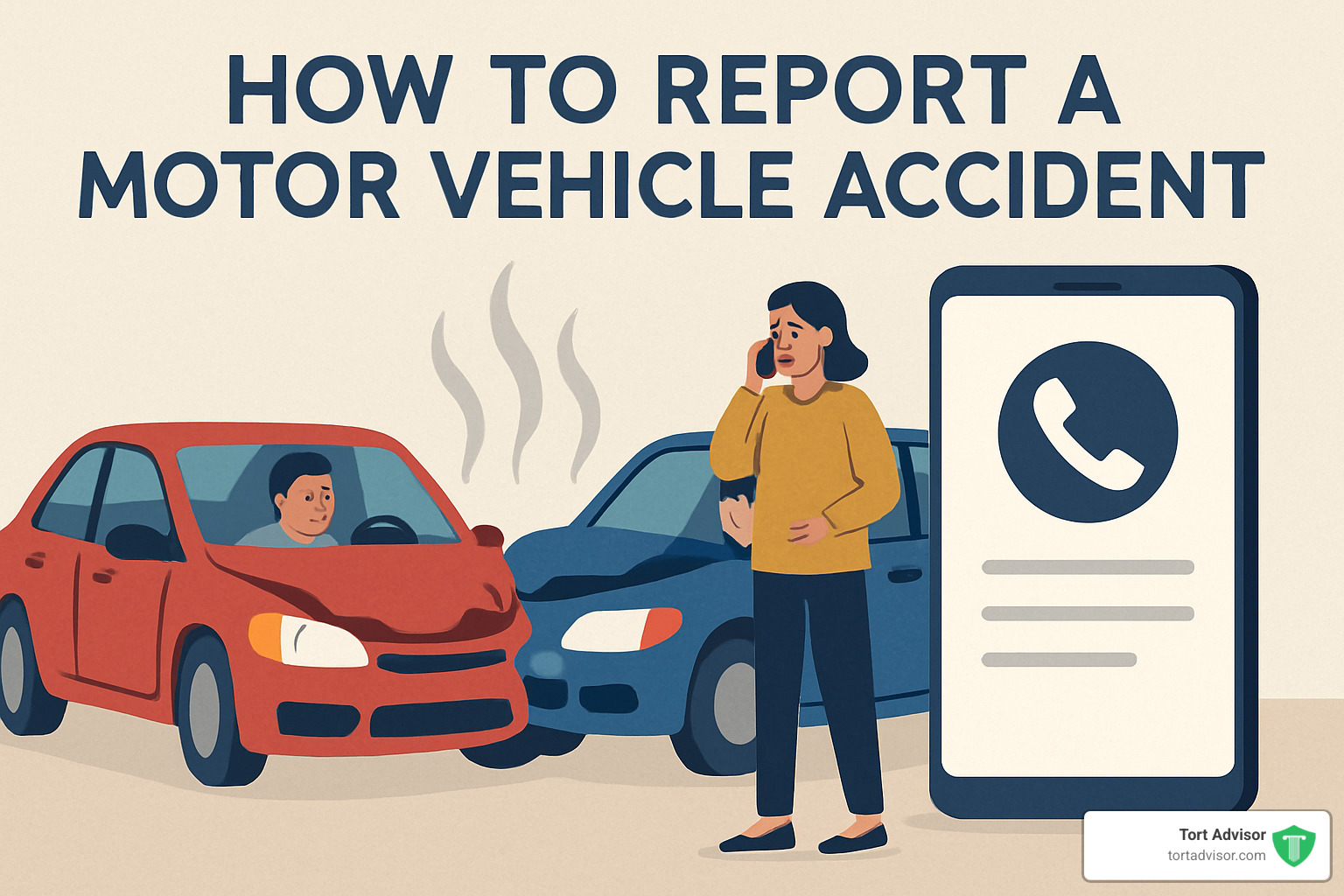
The process for how to report a motor vehicle accident changes a little from place to place, yet the core steps stay the same: dial 911 when someone is hurt, swap details with the other drivers, photograph the scene, and submit any required reports before your local deadline runs out.
At-a-Glance Reporting Checklist:
- Dial 911 right away when there are injuries, deaths, or vehicles obstructing traffic
- Trade details – license, insurance and registration information
- Record the scene – pictures of the damage, surroundings, plates, plus witness contact details
- Submit the official paperwork on time:
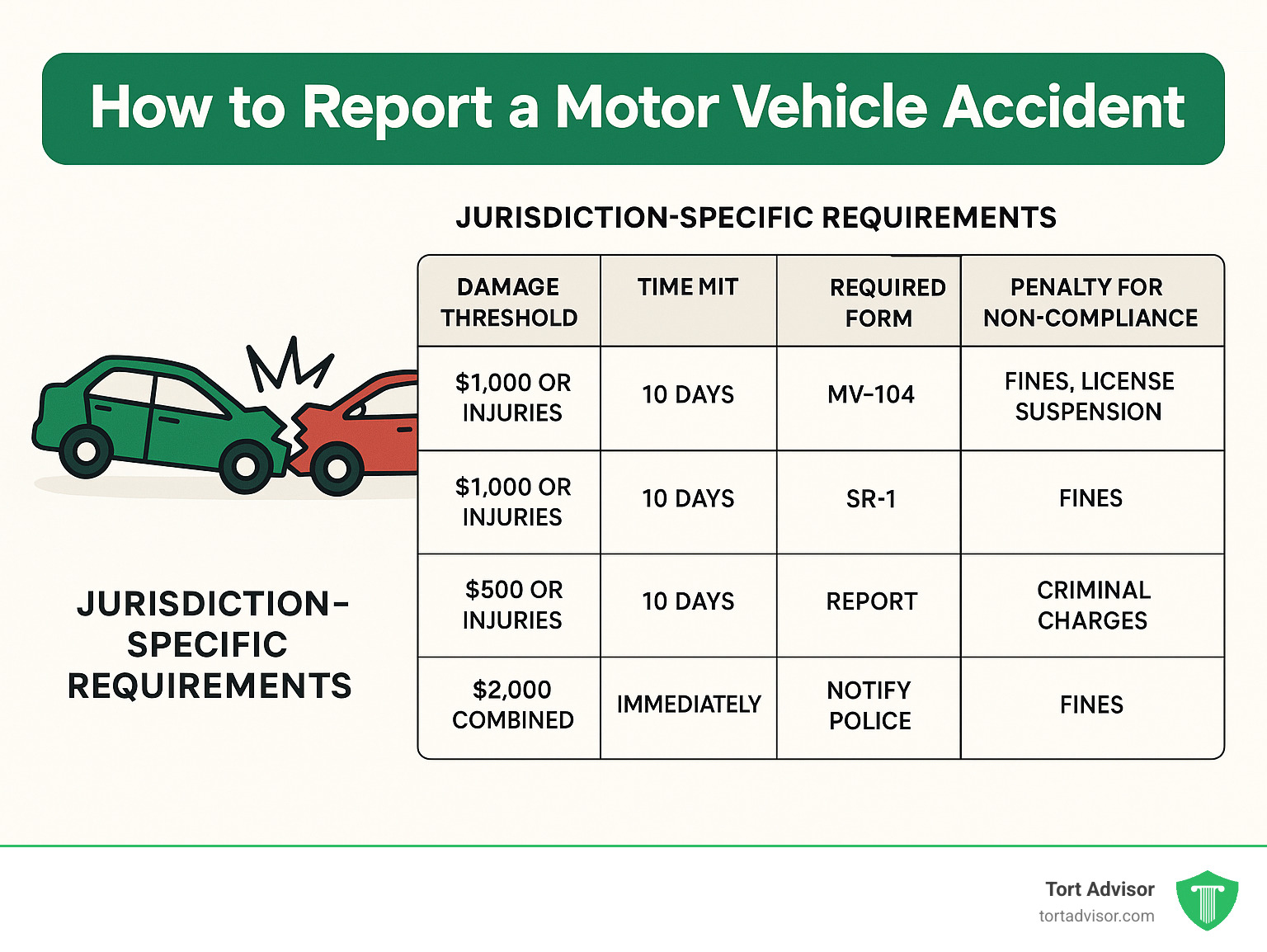
- New York: file the MV-104 within 10 days when there are injuries or damage of $1,000 or more
- California: file an SR-1 within 10 days when there are injuries or damage of $1,000 or more
- Florida: report within 10 days when there are injuries or damage of $500 or more
- Canada (Ontario): notify police when total damage is more than $2,000
More than 300,000 New Yorkers are affected by vehicle collisions every year, and reporting mistakes can lead to a suspended license, fines as high as $405, or even criminal charges. Stress after a crash makes it easy to blow a deadline or leave paperwork incomplete — errors that can mean a denied insurance claim or legal penalties costing thousands.
From a small fender-bender to a major wreck, knowing what you must report keeps you on the right side of the law and protects both your coverage and your rights. Damage thresholds, deadlines and filing methods differ by jurisdiction, ranging from web portals to dedicated Collision Reporting Centres.
The Value of Having a Plan
A step-by-step approach to reporting a crash does more than satisfy the law; it shields you from money and legal problems later. Knowing what comes next calms the chaos of the moment, helps your insurance claim move faster, and keeps you fully compliant.
Complete, on-time paperwork generally means fewer back-and-forth requests from adjusters and a smoother path to payment than late or patchy submissions. Just as important, you can rest easy knowing every required step to protect your interests has been handled.
Who Should Use This Guide
These instructions are written for anyone who is part of — or sees — a collision involving a motor vehicle, such as:
- Drivers of cars, motorcycles and commercial trucks or vans
- Passengers who may have to file for a driver who is hurt
- Cyclists and pedestrians struck by or involved with a vehicle
- Witnesses who saw the crash and want to give a statement
- Fleet managers responsible for company vehicle incidents
Whatever part you played in the crash, knowing the reporting steps keeps your documentation solid and your obligations met.
When Does the Law Require You to Report a Car Accident?
Knowing exactly when a report is mandatory can spare you real trouble later. The specifics shift a lot from one state or province to another, though a few triggers apply almost everywhere.
Any injury or death must be reported in every jurisdiction, even if the harm looks trivial. After that, the rules split according to how much property damage occurred, and those dollar limits often surprise drivers.
The damage thresholds are where states diverge. New York, California and Wisconsin set the line at $1,000 or more in combined damage. Vermont uses a higher $3,000 mark, and Ontario uses $2,000. Those figures count every vehicle and piece of property together — so $700 of damage to your car plus $400 to the other car equals $1,100, enough to require a report in most states.
A hit-and-run must always be reported, whatever the damage. The same applies to collisions with commercial vehicles, crashes where a driver seems impaired, and, in some states, accidents involving an uninsured motorist.
Skipping a required report can cost more than you’d expect. Alberta fines non-reporters $405, and other places threaten to suspend your license. Even Vermont’s small $30 fine can grow into a bigger problem if you’re in another incident later.
Reporting Deadlines in Different Jurisdictions
Deadlines for filing a crash report vary widely, and letting one slip can cause real headaches. What matters is telling apart the situations that need action immediately from those that allow a few days to pull information together.
Any injury calls for an immediate 911 report, even something as small as bruising. Florida is especially firm on this point — a single injury of any size requires prompt reporting. Deaths, blocked roads and hazards such as spilled dangerous materials fall in the same category.
Some deadlines are very short. Vermont requires a written crash report within 72 hours for accidents with $3,000 or more in damage. In Alberta, crashes with $5,000 or more in damage must be taken to a Collision Reporting Centre within 24 hours.
Longer windows still need tracking. In New York and California, you have 10 days to send the DMV a report for qualifying crashes, and Florida applies the same 10 days when damage reaches $500 or more.
Blown deadlines have real costs. A $30 fine in Vermont may feel minor; a $405 penalty in Alberta does not. Some places also suspend licenses for failing to comply, which can disrupt your work, raise your premiums and complicate everyday life.
Crashes Where Police Must Be Called
In certain crashes, calling the police is a requirement, not a choice, no matter how much damage was done. These situations call for an immediate 911 call and an official investigation.
Deaths or injuries serious enough for an ambulance always bring police to the scene. Officers investigate, gather evidence and prepare the official record that insurers and courts rely on.
Suspected drunk or drugged driving requires police involvement. Crashes with heavy commercial vehicles above set weight limits are often governed by federal rules that call for a police report. Hit-and-runs, where a driver tries to get away, raise criminal issues police must investigate.
If you aren’t sure whether police are needed, call anyway. An official police record gives you the firmest footing for an insurance claim or any lawsuit that may follow.
How to Report a Motor Vehicle Accident, One Step at a Time
The simplest way to learn how to report a motor vehicle accident is to think in three stages: get safe, collect proof, then file. Those actions are universal; only the filing method and deadline depend on where the crash happened.
1. What to Do in the First Minutes
- Switch on your hazards and, when it’s safe, pull the vehicles onto the shoulder or into a lot.
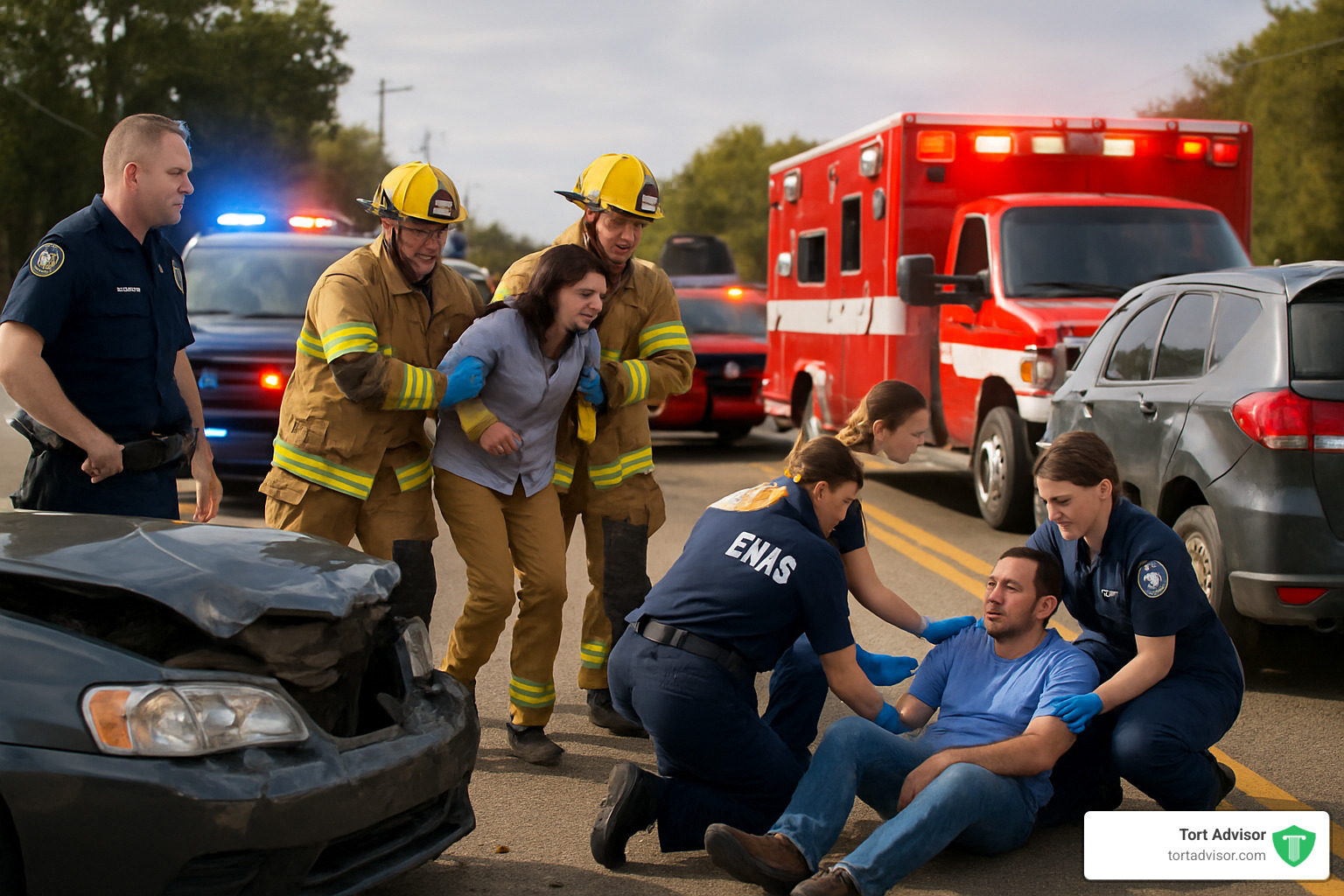
- See whether anyone is hurt. If you have any doubt, call 911 — calling early beats calling late.
- Make the area safe: set out reflective triangles or flares (no flares if you smell fuel) and turn every engine off.
- Dial the right number. On Florida highways, *347 (Star FHP) can reach help faster than standard 911.
2. Gather and Protect Your Evidence
- Swap details: full names, phone numbers, license information, insurers and policy numbers, VINs and plate numbers. Snap photos of each document so nothing gets copied down wrong.
- Photograph methodically — broad views of the scene, close shots of damage to each vehicle, plates, skid marks, signals, weather and road hazards. Detailed photos are widely seen as strengthening a claim.
- Talk to witnesses before they drive off. Get their contact details and a one-line summary of what they saw.
3. Pick the Right Way to File
- Officer at the scene – the police report usually meets the legal duty, though many states still expect a DMV form within 10 days.
- Web portals – Colorado, Wisconsin, New York and several Canadian provinces take self-reports around the clock. Keep uploads (PDF, JPG, PNG) below 25 MB and save frequently so the session doesn’t time out.
- Collision Reporting Centres (CRCs) – required for non-emergency crashes in Ontario ($2,000+ in damage) and Alberta ($5,000+). Book online where possible and bring the vehicle in within 24 hours.
- By phone – in British Columbia, ICBC takes claims at 604-520-8222 (Lower Mainland) or 1-800-910-4222.
4. Get Your Paperwork Ready First
Gather these items so you can finish the report in a single session:
- License, registration and proof of insurance (sharp photos are fine).
- Any incident number provided by the police or dispatcher.
- Pictures, witness details, medical records and repair quotes.
Approach the report the way you would a tax return: getting it accurate and complete now saves costly fixes later.
Local Differences and Collision Reporting Centres
How Collision Reporting Centres Work
Many Canadian cities use CRCs to handle non-emergency crashes efficiently:
- Toronto, ON – East and North CRCs, open 8 a.m. to midnight, mandatory when combined damage is $2,000 or more.
- Edmonton, AB – Run jointly by the Edmonton Police Service and Accident Support Services International (ASSI). Crashes with $5,000+ in damage must be reported within 24 hours or a $405 fine applies.
- Dedicated kiosks handle pedestrian and cyclist crashes, freeing officers for serious emergencies.
What a typical visit looks like:
- An optional online pre-report can shorten your wait.
- Staff photograph the damage and put a “Damage Reported to Police” sticker on the vehicle.
- You draw a diagram and write what happened; staff send the file to your insurer.
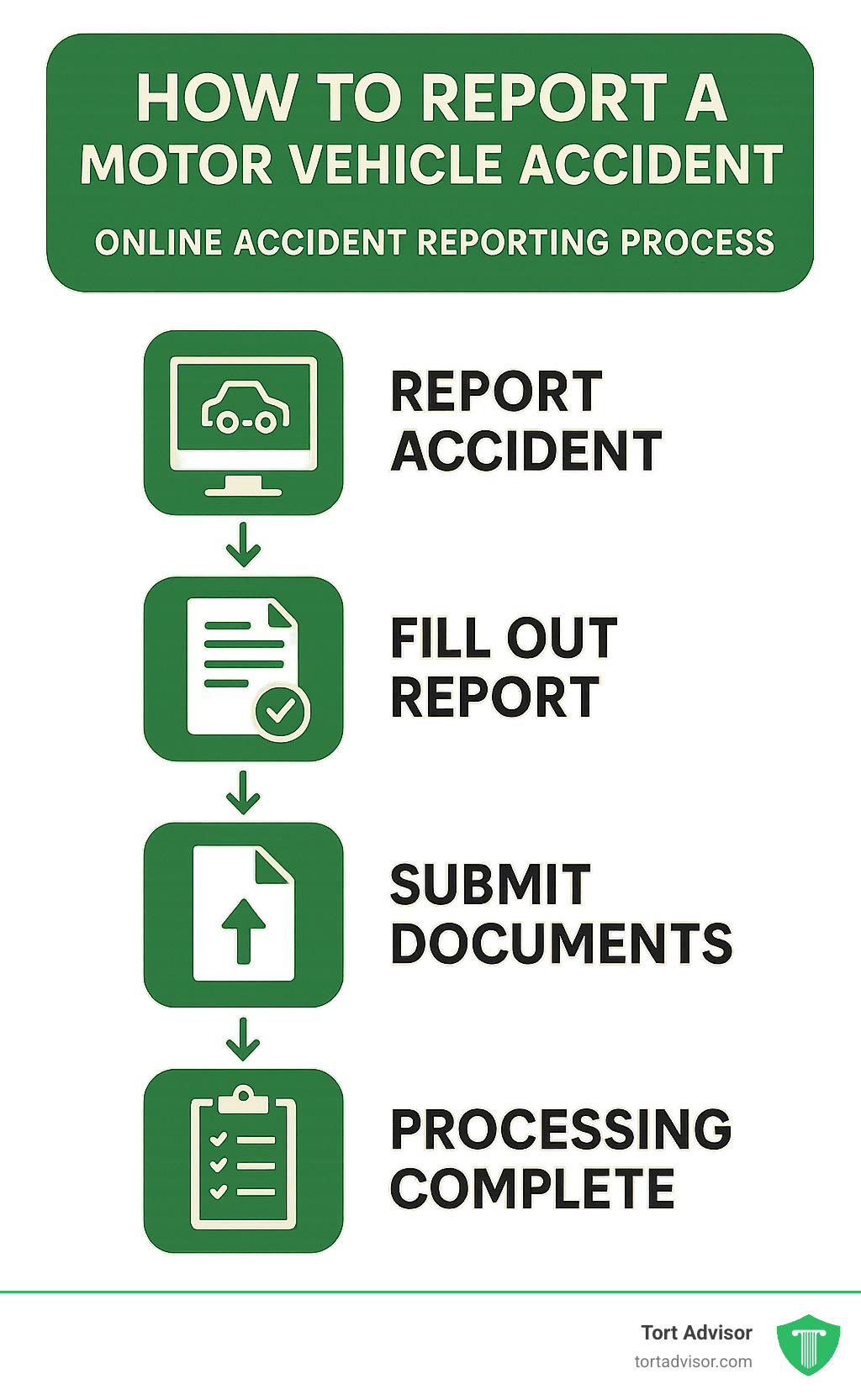
Self-Reporting Online or by Phone in the U.S.
- Colorado DMV – File online yourself if no officer came to the crash (kept for records only).
- Wisconsin “Start Now” – Sessions end after 30 minutes, so have your license, VIN and insurance info ready.
- New York MV-104 – Upload as a PDF or mail it within 10 days for any injury or $1,000+ in damage.
Tech notes: 25 MB limit per file, PDF/JPG/PNG formats, JavaScript turned on.
What Happens If You Don’t Report — and How to Get a Copy
Paperwork is the last thing anyone wants after a crash, yet ignoring reporting rules can turn a rough day into a serious legal mess. Depending on where you are and how bad the crash was, the fallout runs from irritating fines to criminal prosecution.
Criminal exposure is the worst risk. Leaving the scene of an injury crash without reporting can bring hit-and-run charges — a felony in most jurisdictions. Even when only property is damaged, New York classifies failing to file a required MV-104 as a misdemeanor that lands on your criminal record.
Your license can be suspended automatically in many states if you fail to report a qualifying crash. You stay off the road until every report is filed, and reinstatement usually means extra fees and red tape.
Civil fines sound minor but accumulate. Florida issues a $30 nonmoving violation for failing to report crashes over $500 in damage. Alberta goes further, with a $405 fine for not reporting $5,000+ crashes within 24 hours. Points and higher premiums often follow.
Insurers may refuse a claim outright when notice is late or incomplete, treating the delay as a sign the crash was minor or that something is being concealed. Even without a denial, you may face slower handling, smaller payments and a rate hike at renewal.
The real-world costs are just as painful. Evidence vanishes fast: witnesses forget, rain erases skid marks and surveillance video gets recorded over. Every day you wait makes the facts harder to prove.
Requesting Your Accident Report Later
Where you get a copy of your crash report depends on who filed it. Procedures differ, but knowing where to ask saves time when an insurer or lawyer needs the document.
Reports written by police are the ones most people need. Reach out to the agency that responded — city police, the county sheriff or state highway patrol, depending on location. Most have a records unit that processes these requests.
Expect a wait — complicated reports can take as long as 90 days to finalize, since officers must investigate, interview witnesses and write up their findings.
Copies usually cost $10 to $25 apiece, and agencies tend to accept only certain forms of payment. Phone first to check — some require money orders, some take cards, and a few still want exact cash.
Reports you filed with the DMV work differently. Florida’s FLHSMV charges $10 per copy, available only 60 days after your self-report. New York’s online “Get an accident report” tool provides web access that beats waiting on the mail.
In Colorado, you mail Form DR2489 and the fee to the Driver Control Section. It’s a paper process that works, but turnaround is slow.
Reports held by your insurer are typically simplest to get because you’re already a policyholder. ICBC automatically alerts insurers through secure systems when you use a Collision Reporting Centre, so your file should be complete. With private insurers, ask your claims adjuster — copies often arrive by email within hours.
Learning how to report a motor vehicle accident correctly from day one means you won’t be scrambling for documents when deadlines approach and insurers start asking questions.
Car Accident Reporting FAQs
After a crash, questions pile up fast. Below are answers to the ones people ask most often about how to report a motor vehicle accident in various situations.
Does a small parking-lot scrape have to be reported?
A light tap in a store parking lot can look harmless, but don’t assume “minor” means it can be ignored. Small scrapes can turn into big problems when handled carelessly.
Quick answer: It hinges on whether anyone was hurt and on your area’s damage threshold. Most lot fender-benders don’t need a police report unless total damage reaches the state limit — commonly $500 to $1,000.
Whatever the rules say, always do the following:
Swap names, phone numbers, insurance information and license numbers with the other driver. Photograph both cars, the area around them and all visible damage — even a small scratch can cost more to repair than it looks.
Notify your insurer within 24–48 hours, even if you won’t file a claim. Your carrier should know about every incident involving your car, and delay can create problems if the other driver later alleges more damage or an injury.
What should I do if the other driver has no insurance or drives off?
Both situations happen far too often and call for quick action to protect yourself.
With an uninsured driver, call the police first. Some states, such as Alabama, require a police report for any crash involving an uninsured motorist. Even where it isn’t mandatory, an official report becomes key to your insurance claim.
Be extra thorough when the other driver is uninsured. Take more photos, get witness statements and write down everything about the other car and driver. Your insurer will rely on these details to handle your uninsured motorist coverage.
A hit-and-run calls for fast action. Call 911 at once — don’t chase the other car or put yourself at risk. If you can do so safely, note the plate, make, model, color and the direction it went.
Search for clues left behind by the fleeing driver. Transferred paint, headlight fragments and other debris can help police track down the vehicle. Look for security cameras at nearby businesses or intersections that may have recorded the crash.
How do cyclists and pedestrians report a crash?
Pedestrians and cyclists hit by a vehicle follow much the same process, with a few key differences.
Call 911 whenever you’re hurt, however minor it feels. These injuries can be misleading — adrenaline hides pain, and some symptoms appear later. Even if you seem fine, get evaluated.
Record damage to your belongings as you would vehicle damage. A wrecked bike, torn clothes or a broken phone all count toward the reporting threshold. Many jurisdictions value bicycle damage the same way as car damage when deciding whether a report is required.
Photograph it all — the vehicle involved, any visible injuries, damaged gear and the scene. Note whether you had on a helmet or reflective clothing, since that often matters later for insurance and legal purposes.
Understanding how to report a motor vehicle accident protects everyone, whether you were driving, walking or riding. If you’re unsure, report and document thoroughly rather than cut corners you may regret.
Wrapping Up: Your Next Legal Steps
Getting how to report a motor vehicle accident right lays the groundwork, but it’s only the first move in protecting yourself after a collision. Good reporting works like insurance against future trouble — it builds the record you’ll need if things get messy.
Even a crash that looks simple can grow complicated. The other driver may seem fine, then claim injuries weeks later. Your insurer might question whether you followed the rules. Or damage you thought was minor could cost thousands to fix properly.
Legal Lawsuit has seen how fast a straightforward crash can become a legal headache when reporting goes wrong. That’s why we help people connect with attorneys in our network who understand both the reporting rules and the steps that follow. The network covers every state and major cities such as Chicago, Miami, Fort Lauderdale and Hollywood, with attorneys who know how local reporting rules shape your options.
Talking to an attorney makes sense if you face any of these:
Serious injuries needing continuing care – these claims usually mean complicated insurance negotiations and substantial sums. Fault disputes or coverage fights with insurers – attorneys know how to use your reports to strengthen your hand. Hit-and-runs, especially involving uninsured drivers – these need a specific legal approach. Crashes with commercial vehicles or several parties – the reporting duties by themselves can be overwhelming.
Many people miss this: the clock starts running the moment the crash happens. The deadline to sue is often measured in years, but insurers frequently expect notice within 24 to 48 hours. Miss it and you could lose coverage altogether. Some states also set unexpectedly short deadlines for particular claims.
Fortunately, you don’t have to sort it out by yourself. Whether you’re standing at the scene unsure which forms apply or realizing weeks later that something may have slipped, an attorney can walk you through it — including which requirements truly matter in your case and which are mere formalities.
Here’s the takeaway: reporting correctly protects your rights, but it can’t promise the best result on its own. An advocate who understands both the reporting rules and the wider legal picture gives you the strongest shot at a full recovery, physically and financially.
Don’t let uncertainty about reporting rules or worry about legal trouble stop you from getting help. The process is far easier when you know what’s coming and have guidance at hand.
To learn more about getting legal help after a collision, explore Legal Lawsuit’s car accident resources and request a free, confidential case review with an attorney near you. They can help with both the immediate reporting duties and any legal action that follows — and the peace of mind alone often makes the call worthwhile.
Additional Resources
Related Posts
Quick Answer: The Boy Scouts of America (BSA) filed for Chapter 11 bankruptcy in 2020 after facing tens of thousands [...]
Quick Answer: Survivors of sexual abuse by Catholic priests, nuns, or other Church personnel may be able to file a [...]
Quick Answer: Clergy abuse settlements vary enormously based on the severity of the abuse, the strength of evidence that the [...]