

Short answer: This article explains the key facts, eligibility issues, settlement factors, deadlines, and source-backed updates related to this legal topic. Results vary by case facts, evidence, jurisdiction, and representation.
📋 Table of Contents
- Why Finding the Right Accident Injury Claim Lawyer Matters After a Serious Injury
- What Is an Accident Injury Claim Lawyer and When Should You Hire One?
- The Key Benefits and Process of Filing an Accident Injury Claim
- Why Hiring an Accident Injury Claim Lawyer is Crucial for Your Case
- Navigating the Financials and Timeline of Your Claim
- Frequently Asked Questions about Accident Injury Claims
- Conclusion: Taking the Next Step Towards Justice
Why the Right Injury Claim Lawyer Matters After a Serious Accident
An injury claim lawyer focuses on helping people who’ve been hurt recover money from whoever caused the harm. Getting back on your feet financially after a serious injury can feel impossible — pain, piling medical bills and stress all hit at once, while you’re up against a complicated legal system and insurers intent on paying as little as possible.
An experienced attorney evens the odds. They take on the whole process: investigating the crash, collecting evidence, negotiating with insurance companies and going to court if it comes to that. Injured people with capable representation are generally in a much stronger position to reach a fair settlement, and the gap between going it alone and having a professional on your side can reshape your recovery.
Most injury attorneys take cases on contingency: nothing is due up front, and a fee is owed only if money is recovered. That “no win, no fee” setup removes cost as a barrier to quality legal help. Legal Lawsuit helps injured people connect with accident injury attorneys in our network when their financial recovery and future are at stake.
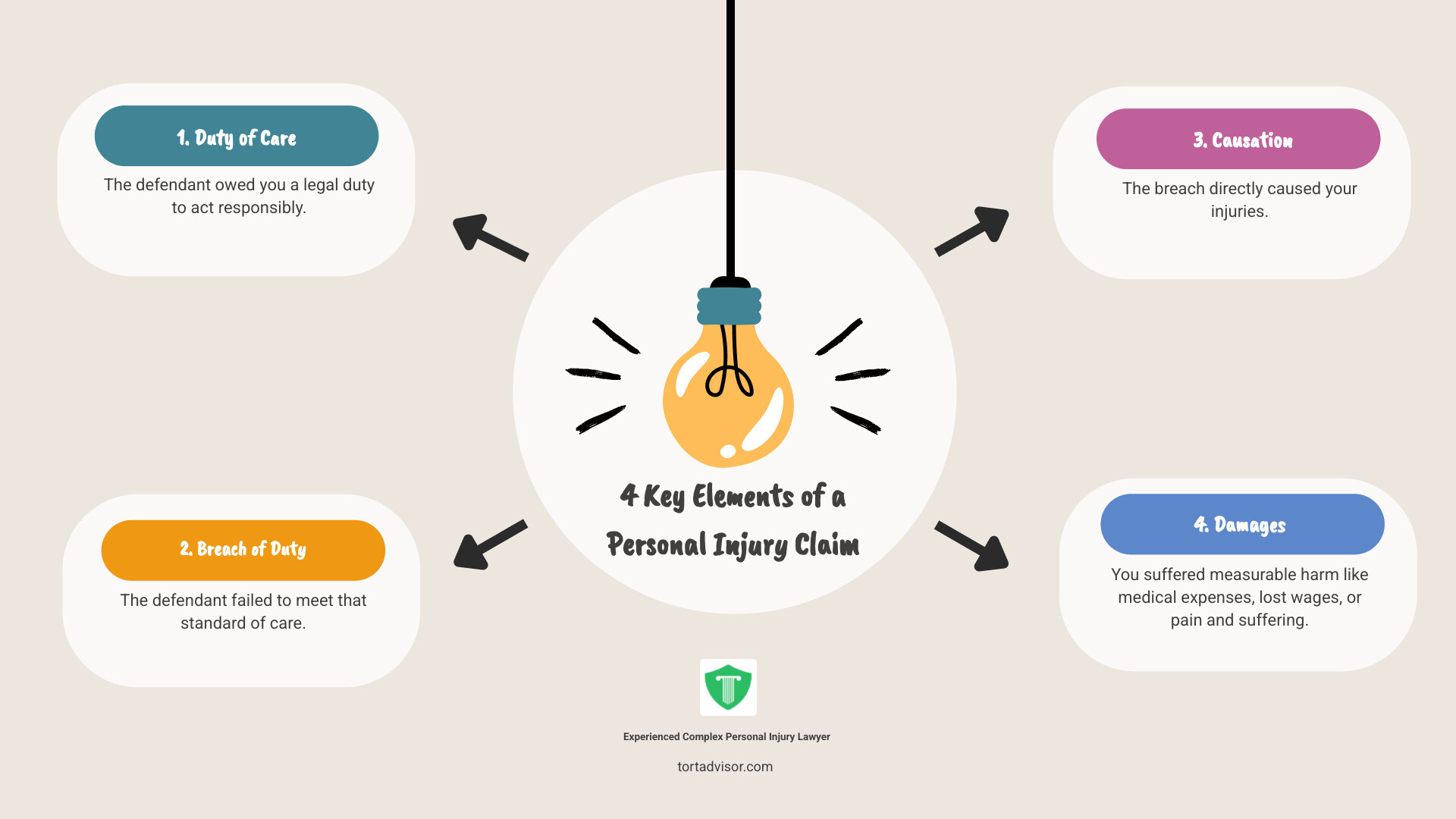
What Does an Accident Injury Claim Lawyer Do — and When Do You Need One?
An accident injury claim lawyer advocates for you under tort law, the area covering civil wrongs where someone’s carelessness injures another person. Their job is to protect your rights and pursue fair payment for everything you’ve lost.
A small fender-bender with no injuries may not call for an attorney, but some situations clearly do. Consider hiring one when:
- The injuries are serious, lasting or catastrophic. Think brain trauma, spinal cord injury, or anything requiring extensive treatment and long-term care.
- Fault is contested. When the other side denies responsibility or their insurer points the finger at you, a lawyer can build proof of what actually happened.
- Your claim is denied or the offer is insultingly low. Insurers run on profit, and an attorney can push back on unfair tactics and negotiate for full value.
- Several parties share blame. Multi-vehicle crashes, commercial trucks or defective products create overlapping liability that an experienced lawyer can untangle.
- A government agency is involved. Claims against public entities come with strict, short deadlines that are easy to blow without counsel.
- A family member was killed. In wrongful death cases, an attorney offers compassionate yet determined representation to pursue justice for your family.
Your attorney runs the case so you can concentrate on recovering. That means a detailed investigation, collecting key evidence and tallying every category of loss — medical costs, missed income and pain and suffering. They handle insurer negotiations and stand ready for trial if a fair offer never comes.
Not sure you need legal help? Most attorneys offer a free consultation to explain your options. Our guide Do I need a personal injury lawyer? can also help.

What You Gain From an Injury Claim Lawyer — and How the Process Works
Pursuing an accident claim is stressful, and an injury claim lawyer can transform the experience. The main advantages include:
- Getting Full Value: They know what your claim is really worth and push for every dollar you’re owed.
- Legal Know-How: They match the resources of insurers and their lawyers.
- Less Stress: They take on the legal work, paperwork and calls while you heal.
- Clear-Eyed Guidance: They offer level-headed advice at an emotional time so you can make sound choices.

How an Injury Claim Lawyer Deals With Insurers
Insurers protect their bottom line by paying out as little as they can. Your attorney protects you by:
- Taking over all contact: Becoming the only point of contact so adjusters can’t pressure you.
- Challenging denials: Answering a denial with solid evidence and legal argument.
- Negotiating a fair result: Turning down lowball offers and pressing for full compensation.
- Guarding your rights: Telling you what to share and what not to, so you don’t undermine your own claim.
Typical Stages of an Injury Claim
Each case differs, but most move through these stages:
- Free Consultation: An initial meeting to review your situation and options.
- Investigation: Gathering police reports, medical records and witness accounts.
- Demand and Negotiation: A demand letter goes to the insurer, kicking off settlement talks.
- Lawsuit: If talks stall, a suit is filed and formal discovery begins.
- Mediation: A neutral mediator often helps the sides try to settle before trial.
- Trial: Without a settlement, your attorney presents the case to a judge and jury.
The majority of cases settle without a trial, yet a lawyer ready to go to court gives you real leverage at the bargaining table.
Why an Injury Claim Lawyer Can Make or Break Your Case
An injury claim lawyer matters because insurance companies are built to limit what you collect. A seasoned attorney knows how to assemble a strong case, neutralize insurer tactics and accurately value your claim over the long term.
They move fast to lock down evidence that can vanish within hours — skid marks, security footage, witness recollections. In complex cases they bring in experts such as accident reconstructionists and medical specialists to prove fault and the full scope of your damages, resources that people without a lawyer rarely have. For more, see our guide to finding the best injury lawyer.

What Determines How Much Your Injury Claim Is Worth
Many elements shape a claim’s value, and an attorney makes sure none are left out:
- Medical Costs: Past, present and future care, including surgery, therapy and prescriptions.
- Lost Income and Earning Power: Pay missed while recovering and any drop in what you can earn going forward.
- Pain and Suffering: Physical pain, emotional distress and lost enjoyment of life.
- Property Damage: Repairing or replacing your vehicle and other belongings.
- Disability and Disfigurement: Permanent impairment, scarring or loss of function.
- Loss of Consortium: Harm to your relationship with your spouse.
- Punitive Damages: Occasionally awarded in cases of extreme recklessness to punish the wrongdoer.
Get a quick ballpark figure with our MVA settlement calculator.
Accidents and Injuries These Lawyers Commonly Handle
Accident injury attorneys take on claims arising from many kinds of incidents, such as:
- Vehicle Crashes: Wrecks involving cars, trucks, motorcycles and pedestrians. Car accident lawsuits.
- Premises Liability: Slips and falls caused by hazardous property conditions.
- Product Liability: Harm from dangerous or defective products.
- Animal Attacks: Dog bites and injuries from other domestic animals.
Injuries run from soft-tissue harm like whiplash and fractured bones to life-altering traumatic brain injuries and spinal cord damage.
Costs and Timelines: What to Expect From Your Claim
Money and time are two of the biggest worries after an accident. Knowing how fees and timelines work helps you move ahead with confidence.

How injury claim lawyers usually get paid
The typical injury attorney charges on a contingency fee basis. Under this “no win, no fee” approach:
- Nothing Up Front: Hiring the lawyer and opening your case costs you nothing.
- Paid Only on Recovery: The attorney earns a fee only if compensation is obtained.
- A Set Percentage: The fee is an agreed share of the final settlement or verdict.
This model opens quality representation to everyone and gives your lawyer a strong incentive to maximize your recovery. The terms are spelled out in a written agreement. Our guide how much a personal injury lawyer costs has the details.
How long does an injury claim take?
Resolution can take anywhere from a few months to several years, depending on:
- Your Medical Recovery: Settling before your injuries and future care needs are clear is a mistake.
- How Complex the Case Is: Clear-cut fault resolves faster than cases with many parties or disputed liability.
- The Insurer’s Attitude: A reasonable carrier speeds things along; an obstinate one slows them down.
- Whether You Sue: Court calendars can add considerable time once a lawsuit is filed.
Roughly 95% of cases are commonly said to settle out of court, but a strong lawyer still prepares every case as if it will go to trial — weighing speed against getting you full, fair compensation and never pressuring you into a weak settlement.
Injury Claim Lawyer FAQs
Questions are natural after an accident. Below are answers to some of the most frequent ones.
Which evidence matters most for an injury claim?
Strong claims rest on strong proof. Prioritize collecting:
- Police or incident reports
- Every medical record and bill tied to the injury
- Photos and video of the scene, the damage and your injuries
- Names and phone numbers of witnesses
- Documentation of lost pay (pay stubs, a letter from your employer)
- Receipts for out-of-pocket costs such as prescriptions and travel
Your injury claim lawyer will help you collect and protect this key evidence.
Should I speak with the other driver’s insurance adjuster?
No. That adjuster works for the other side, and the goal is to keep their company’s payout low. Adjusters are trained to steer conversations toward statements that weaken your claim and may push a fast, low settlement before you understand your injuries.
Courteously decline to give a statement and send them to your attorney, who will handle all insurer communication once hired. Read more about handling insurance companies.
Can I still recover if I was partly to blame?
Often, yes. Most states follow “comparative negligence,” which reduces your award by your share of fault. If you were 20% responsible for a crash with $100,000 in damages, for example, you could still collect $80,000.
Don’t admit fault at the scene — the full picture often emerges only after a careful investigation. An experienced accident injury claim lawyer can assess your case, explain how the law applies and work to keep any fault assigned to you as low as possible. Learn more about car accident lawsuits.
Final Thoughts: Your Next Step Toward Justice
Life after an accident is hard, but you don’t have to navigate it by yourself. A skilled injury claim lawyer serves as your advocate and guide, pursuing the compensation you’re owed while you recover.
From investigating and valuing your claim to negotiating with insurers and going to court, their role is essential. Legal Lawsuit helps you connect with capable attorneys in our network who focus on strong outcomes for injured people.
Don’t let money worries keep you from pursuing justice. Contingency fees mean no upfront cost. If you or someone close to you was hurt, now is the time to act — protect your rights and request a free, confidential case review.
Connect with an attorney about your car accident case
Related Posts
Quick Answer: The Boy Scouts of America (BSA) filed for Chapter 11 bankruptcy in 2020 after facing tens of thousands [...]
Quick Answer: Survivors of sexual abuse by Catholic priests, nuns, or other Church personnel may be able to file a [...]
Quick Answer: Clergy abuse settlements vary enormously based on the severity of the abuse, the strength of evidence that the [...]

