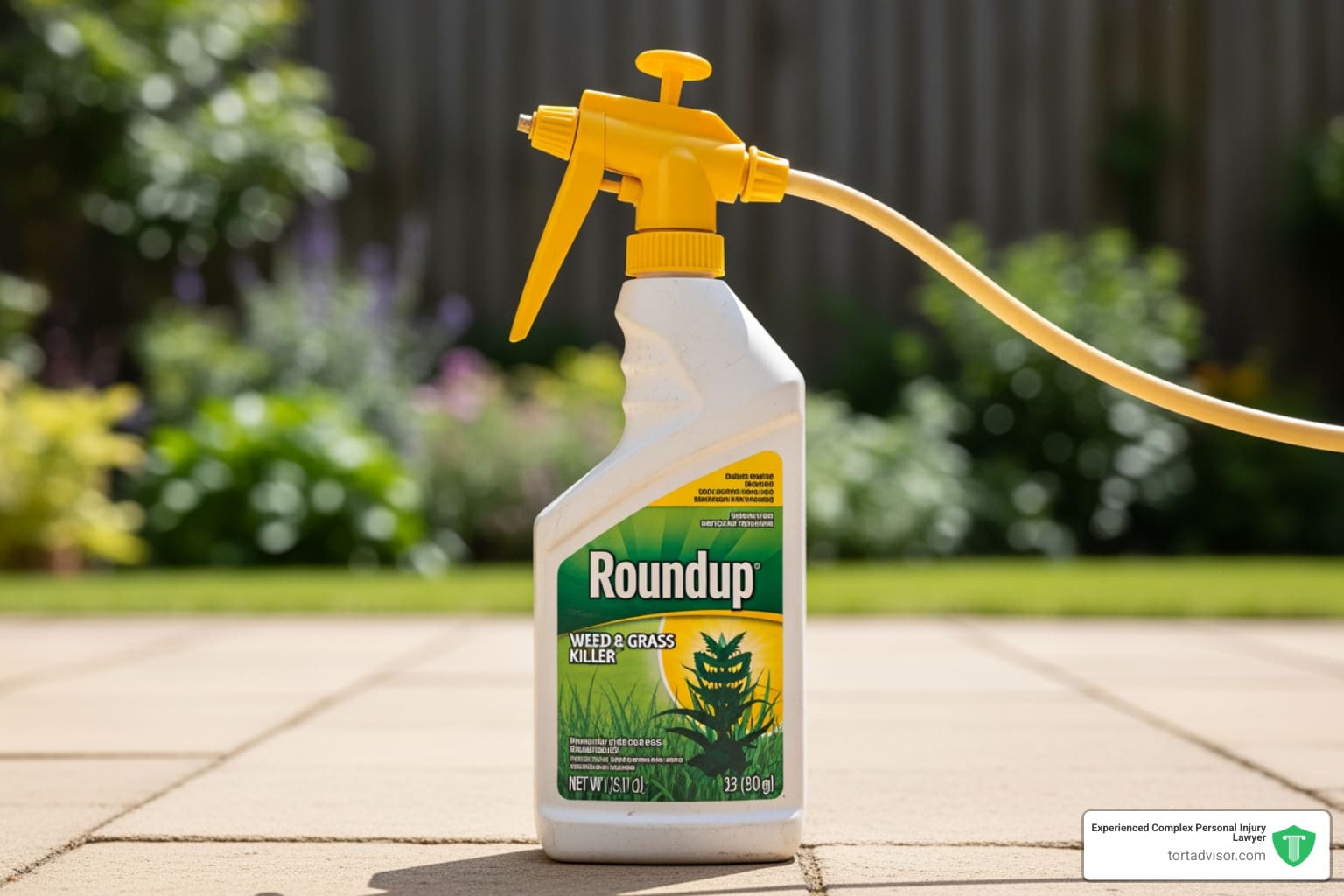
Short answer: This article explains the key facts, eligibility issues, settlement factors, deadlines, and source-backed updates related to this legal topic. Results vary by case facts, evidence, jurisdiction, and representation.
📋 Table of Contents
Why So Many People Are Suing Monsanto
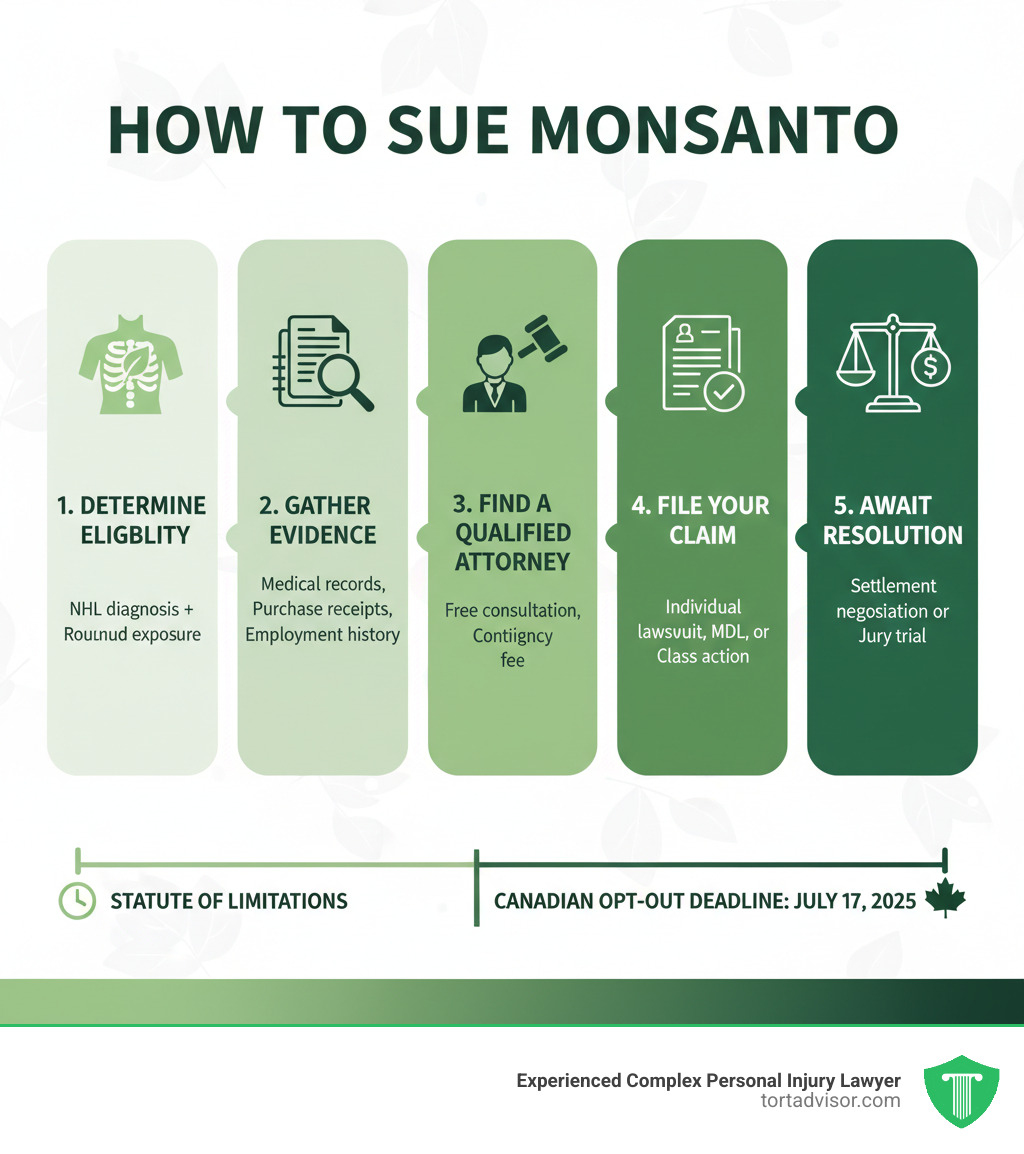
How to sue Monsanto comes down to a handful of steps for people diagnosed with Non-Hodgkin’s Lymphoma after using Roundup:
- Confirm you qualify: you’ll need a Non-Hodgkin’s Lymphoma (or related cancer) diagnosis following substantial Roundup exposure.
- Prove your exposure: collect evidence of Roundup use like receipts, work records, and photos.
- Pull your medical records: assemble everything tied to your cancer diagnosis and treatment.
- Talk to an experienced lawyer: get a free, confidential case review with a mass tort attorney; most work on contingency, so there’s no upfront cost.
- Beat the filing deadline: move quickly, because statutes of limitations differ from state to state.
- Join the existing litigation: your attorney will probably file in the federal Multidistrict Litigation (MDL) or in state court.
Roundup was once found in garages across America; now it sits at the heart of one of the largest product liability fights ever. Since Bayer bought Monsanto, tens of thousands of people have sued, claiming the weed killer caused their Non-Hodgkin’s Lymphoma. As of this update, Bayer has paid about $11 billion to resolve close to 100,000 claims, with roughly 61,000 lawsuits still pending.
The litigation took off after the International Agency for Research on Cancer labeled glyphosate, Roundup’s active ingredient, “probably carcinogenic to humans” in 2015. Juries have since returned huge verdicts, including a $2.25 billion award in the McKivison case, based on evidence that Monsanto knew about the cancer risk and didn’t warn people.
Farmers, landscapers, and home gardeners diagnosed with cancer after using Roundup may be owed meaningful compensation. This guide explains how to sue Monsanto, from checking eligibility to understanding what a claim may be worth.
Do You Qualify for a Roundup Lawsuit?
A Non-Hodgkin’s Lymphoma diagnosis after Roundup use may give you a valid claim. Eligibility rests on three things: your diagnosis, your exposure history, and filing before the deadline. Learning how to sue Monsanto starts with tying your illness to your use of the herbicide.
Who Can Sue Monsanto Over Roundup Exposure?
These cases reach well beyond farmers. Potential plaintiffs include:
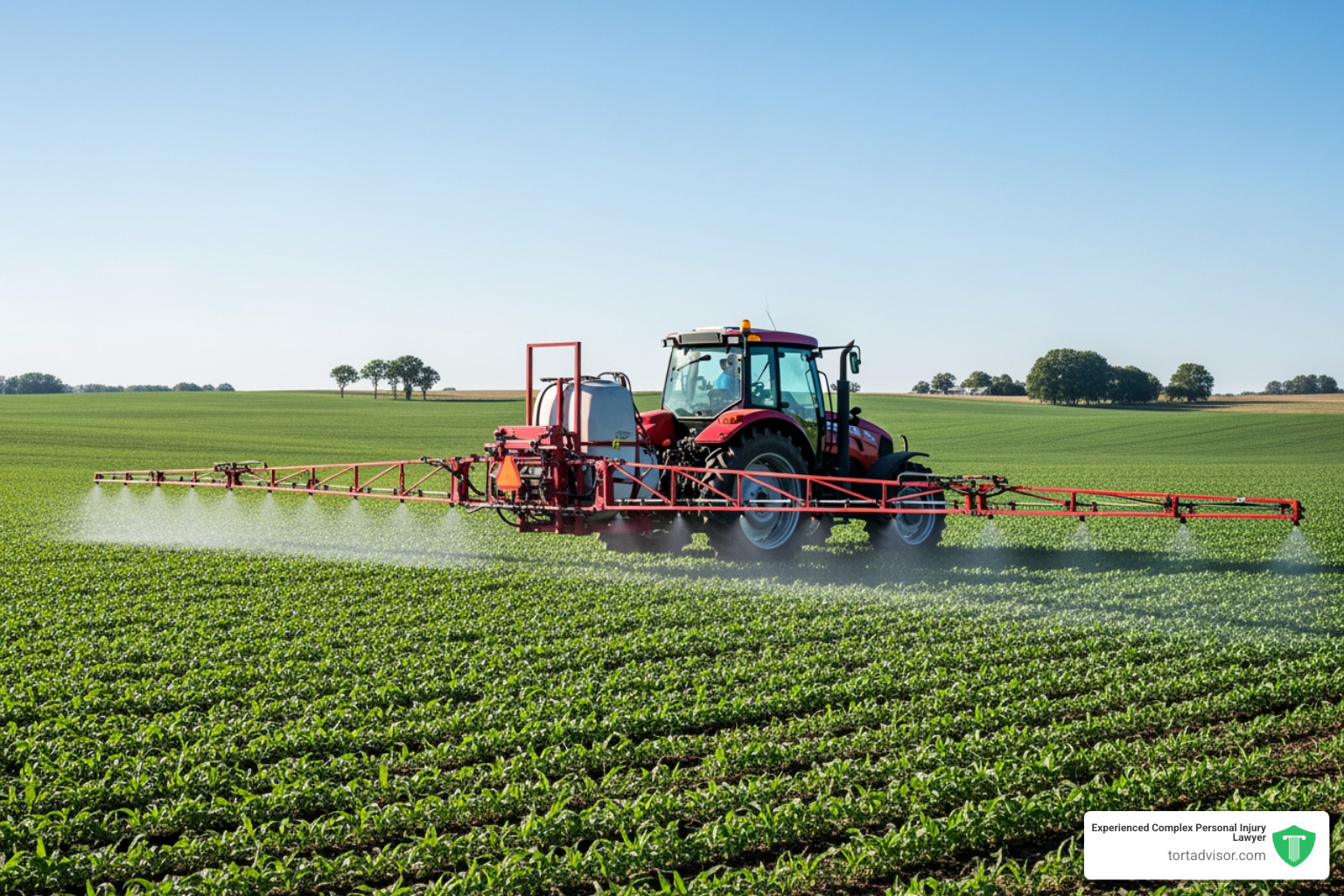
- Farmworkers who routinely sprayed Roundup on crops.
- Groundskeepers and landscapers who used it often to maintain properties.
- Greenhouse and nursery workers who worked around glyphosate-treated plants.
- Home gardeners who used Roundup regularly in their yards.
- Relatives who may bring a wrongful death claim if a loved one died of Non-Hodgkin’s Lymphoma tied to Roundup.
The core requirement is linking Roundup exposure directly to the cancer. Our guide to Monsanto Roundup Lawsuits has more detail.
How Roundup Is Linked to Non-Hodgkin’s Lymphoma
Non-Hodgkin’s Lymphoma is a cancer of the lymphocytes, white blood cells that defend against disease. The cases against Monsanto rest heavily on a 2015 International Agency for Research on Cancer (IARC) finding that glyphosate is “probably carcinogenic to humans,” a conclusion drawn from extensive research on glyphosate and cancer that lent scientific support to long-held suspicions.
Medical records are key evidence, documenting your diagnosis, treatment, and outlook and helping show Roundup likely caused your cancer. Lawsuits have tied several NHL subtypes to Roundup, including Diffuse Large B-Cell Lymphoma, Follicular Lymphoma, Mantle Cell Lymphoma, and Chronic Lymphocytic Leukemia.
What Counts as ‘Significant Exposure’?
Using Roundup once doesn’t make someone eligible. The standard is “significant exposure”: regular, extended contact over months or years.
- Workplace exposure is the most straightforward. If your job had you spraying Roundup regularly, you probably meet the bar, and work records and coworker statements can help prove it.
- Home use can qualify too when it was frequent and long-running. Spraying the lawn, garden, or fence line season after season for years can amount to significant exposure.
How often and how long you used it matters most. The Canadian class action offers a useful yardstick, defining it as using glyphosate more than twice a year and more than 10 times over a lifetime. Receipts, photos, and witness statements documenting your use can substantially strengthen a claim.
What Is Monsanto Accused Of?
The cases against Monsanto and its owner, Bayer, go beyond a hazardous product; they accuse the company of deceiving the public and putting profit ahead of health. Knowing these claims helps explain how to sue Monsanto and why juries have returned such large verdicts.
The Main Allegations Against Monsanto and Bayer
Plaintiffs claim Monsanto understood glyphosate’s cancer risks for decades and purposely concealed them. The key accusations:
- Misleading marketing: selling Roundup as safe even as internal records suggested concerns about its health effects.
- Ghostwritten research: internal “Monsanto Papers” indicate the company drafted favorable studies and published them under independent academics’ names to manufacture an appearance of safety.
- Attacking critics: campaigns to discredit independent scientists and bodies like the IARC whose findings questioned glyphosate’s safety.
- Profit over safety: guarding market share rather than warning users or changing the formula.
Bayer took on these liabilities when it paid $63 billion for Monsanto in 2018. For background on the company, see our page on the Roundup Weed Killer Manufacturer.
Science vs. Regulators: The Central Conflict
One confusing part of this litigation is that scientific agencies disagree. In 2015 the International Agency for Research on Cancer (IARC) called glyphosate “probably carcinogenic to humans,” citing evidence in people and lab animals; you can review the research on glyphosate and cancer behind that decision.
The U.S. Environmental Protection Agency (EPA), on the other hand, says glyphosate is “not likely to be carcinogenic.” Bayer leans on that view to argue federal preemption, the theory that federal label approval stops states from requiring a cancer warning. Courts have split, but many have rejected the argument and let negligence and failure-to-warn claims go to juries.
How to Sue Monsanto, Step by Step
Suing a company the size of Monsanto can seem intimidating, but with the right help the process is manageable. Legal Lawsuit has helped many people take the first step, and here’s what each stage looks like.

Step 1: Get a Free Case Review From a Mass Tort Attorney
Start with a free consultation with an experienced mass tort lawyer. These attorneys handle cases where one product injures many people and have the resources to take on major corporations. They’ll evaluate your claim and lay out your options.
Most mass tort lawyers work on contingency: no upfront fees, and they’re paid only if they recover money for you, which keeps justice within reach regardless of income.
Step 2: Collect Evidence for Your Claim
A strong claim needs solid proof. Your legal team will direct you, but you can begin pulling key documents together now.
- Evidence of Roundup use is a must: receipts, card statements, photos of you using it, or job records describing your duties.
- Medical records are the other essential piece: full documentation of your Non-Hodgkin’s Lymphoma diagnosis, including pathology reports, treatment plans, and bills.
- Statements from witnesses such as coworkers, friends, or family can back up your regular Roundup use.
The more thorough your records, the better positioned your lawyers are to negotiate a fair settlement or win at trial.
Step 3: How the Legal Process Works When You Sue Monsanto
Most U.S. Roundup cases are grouped into a Multidistrict Litigation (MDL) in the Northern District of California, which streamlines pretrial work like discovery. An MDL differs from a Class Action Lawsuit Against Roundup: you keep your own lawsuit and the chance of a settlement reflecting your individual damages.
Other cases are filed in state court, especially in California, Missouri, and Pennsylvania, which can offer strategic benefits, and a few go forward as standalone lawsuits. Your attorney will weigh your circumstances and recommend the best route to fair compensation. See our Monsanto Roundup Lawsuits page for more on the litigation.
Verdicts, Settlements, and Payouts: What to Expect
Anyone weighing how to sue Monsanto wants to know about compensation. Roundup litigation has produced remarkable results, from enormous jury verdicts to large settlement programs, and understanding them can help you think about your own claim.

Major Roundup Verdicts and Why They Matter
Juries have repeatedly sent Bayer a strong message, awarding billions in recent years and showing how seriously they take the alleged misconduct.
Notable verdicts include $2.25 billion for John McKivison (later cut to $400 million), $1.5 billion for three Missouri plaintiffs, and $175 million for Ernest Caranci. Such awards usually combine compensatory damages for real losses like medical costs and lost income with punitive damages to punish Monsanto for concealing risk. The steady stream of large verdicts shows juries holding Bayer to account. Our Roundup Lawsuit Verdict page has more.
How Roundup Settlement Amounts Are Set
Most cases settle without a trial, and Bayer has paid about $11 billion to resolve close to 100,000 lawsuits. Settlement values aren’t random; they come from a structured system built around the facts of each case.
Factors that drive compensation include:
- How old you were when diagnosed.
- How heavily and how long you were exposed to Roundup.
- How serious your cancer is and your prognosis.
- Documented money losses, such as medical costs and lost income.
Settlements generally come in well below headline trial verdicts, and individual amounts in settlement programs vary with the factors above, with the most severe cases receiving considerably more. For a rough estimate, try our Roundup Settlement Calculator.
When Will My Roundup Settlement Be Paid?
It’s a natural question, and the answer depends on how your case ends. With an individual settlement, payment often arrives within a few months once your attorney clears medical liens and takes out fees.
Large settlement programs with thousands of claimants take longer. An administrator reviews each claim, places it in a compensation tier, and calculates the payment, a slow process meant to keep distribution fair. Your attorney should keep you posted along the way. See When Roundup Settlements Will Be Paid for more on timing.
How to Sue Monsanto: Frequently Asked Questions
Taking on a huge company brings plenty of questions. Here are answers to the ones people ask most when learning how to sue Monsanto.
How long do I have to file a Roundup lawsuit?
The statute of limitations sets the filing deadline. It differs by state, often two or three years, and usually starts on the date of your Non-Hodgkin’s Lymphoma diagnosis or the date you reasonably discovered its connection to Roundup, known as the “discovery rule.” Move fast: miss the deadline and your right to sue is gone for good, however strong your case.
What’s happening with the Canadian Roundup class action?
A Canadian Roundup class action was certified in late 2023 for Canadians with “Significant Exposure” to Roundup who were later diagnosed with Non-Hodgkin’s Lymphoma. Its key date was July 17, 2025, the opt-out deadline, by which class members had to choose between staying in the class and opting out to sue individually; those who did nothing were included automatically and bound by the result. Official details are at www.glyphosateclassaction.ca.
Where is Roundup litigation headed?
The fight is far from finished, with about 61,000 lawsuits still pending in the U.S. as of this update. Bayer remains under heavy pressure and has set aside billions in litigation reserves to cover ongoing costs.
Bayer’s five-point plan includes fighting some cases at trial, exploring new settlement structures, and taking glyphosate out of U.S. residential Roundup. There has also been speculation about a possible Chapter 11 bankruptcy for the Monsanto subsidiary to contain its liabilities. With more trials ahead and juries still returning large verdicts, the situation keeps shifting, which makes now an important time for potential claimants to act.
Your Next Step
You now know the main steps for how to sue Monsanto. Facing a company like Bayer can feel daunting, but you don’t have to do it alone. Juries have awarded billions and close to 100,000 people have already settled, proof that individuals can prevail when companies put profit before safety.
A Non-Hodgkin’s Lymphoma diagnosis after Roundup exposure may entitle you to compensation for medical costs, lost income, and suffering, but strict state statutes of limitations mean you need to act before your window closes.
Legal Lawsuit connects people with experienced mass tort attorneys in our network who handle toxic exposure cases. They understand the science and the legal process and know how to build a strong claim, and because they work on contingency, you pay nothing upfront and owe fees only if you win.
A free, confidential case review costs nothing and can give you clarity on whether you have a claim, what it may be worth, and what to do next. We believe companies should answer for the harm their products cause.
Every path to justice begins with one step, and we can help you take it. Get legal help for Monsanto Roundup Lawsuits and connect with an experienced attorney who will pursue the compensation you deserve.
Related Posts
Quick Answer: The Boy Scouts of America (BSA) filed for Chapter 11 bankruptcy in 2020 after facing tens of thousands [...]
Quick Answer: Survivors of sexual abuse by Catholic priests, nuns, or other Church personnel may be able to file a [...]
Quick Answer: Clergy abuse settlements vary enormously based on the severity of the abuse, the strength of evidence that the [...]