Short answer: This article explains the key facts, eligibility issues, settlement factors, deadlines, and source-backed updates related to this legal topic. Results vary by case facts, evidence, jurisdiction, and representation.
📋 Table of Contents
Who Makes Roundup? Meet the Roundup Manufacturer
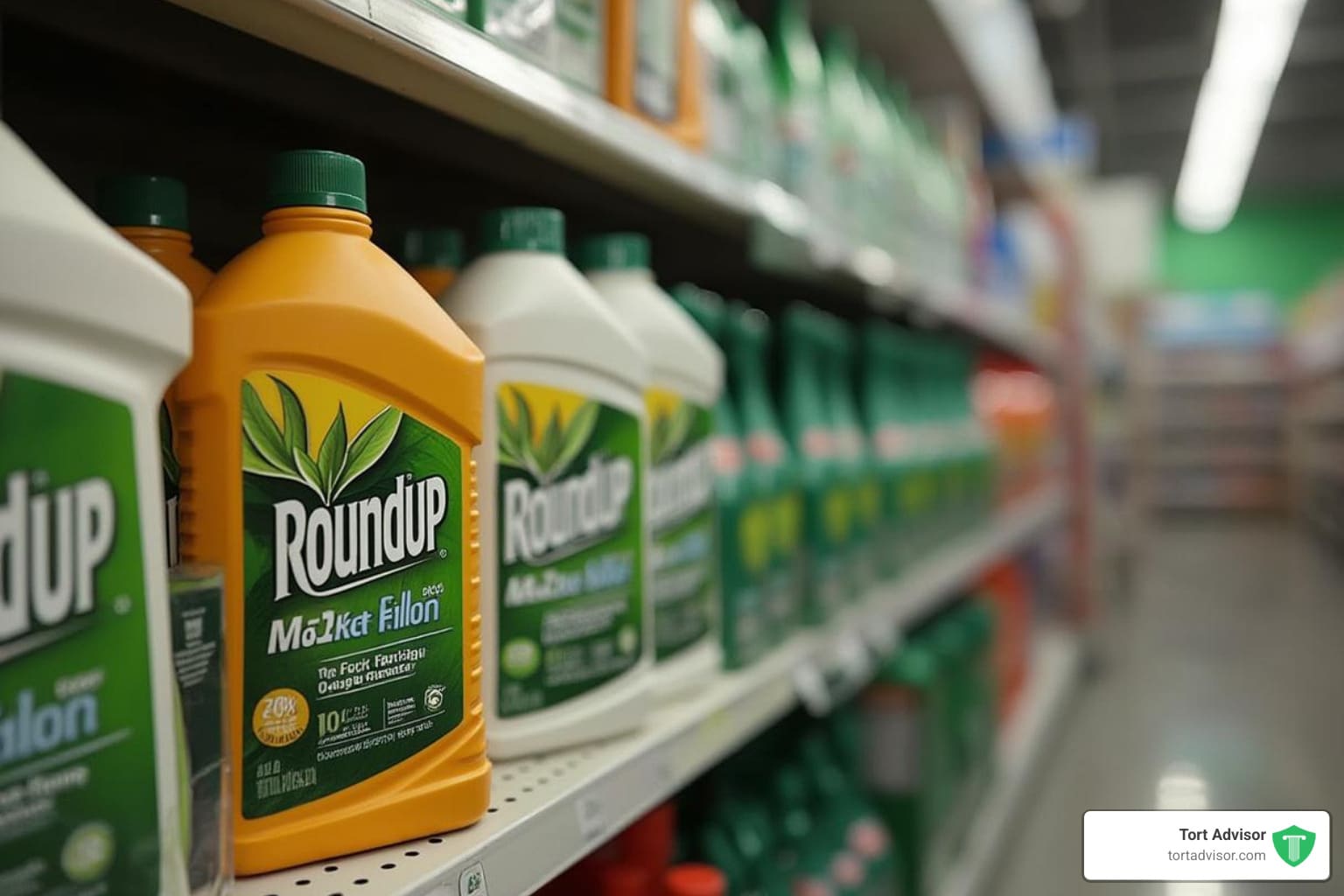
Ask most people to name the Roundup manufacturer and Bayer AG probably isn’t the first answer. Even so, the German life sciences and pharmaceutical group is the company now behind Roundup, the best-selling weedkiller on the planet. Monsanto created the product, and it became a fixture in garden sheds and on farms worldwide. That success has since been eclipsed by controversy and a flood of litigation. News coverage has reported that Bayer warned it might stop making the herbicide altogether unless courts give it protection from lawsuits alleging Roundup causes cancer, a sign of how squarely the company is caught between a lucrative product and an enormous legal liability.
The Roundup manufacturer at a glance:
- Created By: Monsanto Company
- Maker Today (since 2018): Bayer AG
Related reading on the Roundup manufacturer:
- average monsanto settlement
- roundup settlement payout
Who Manufactures Roundup Today?
So which company is the Roundup weed killer manufacturer now? It is Bayer AG, the German giant best known for aspirin and a wide range of prescription drugs. Bayer moved into the farming world in a big way in 2018, when it closed its enormous purchase of Monsanto and became one of the most powerful players in agriculture. Along with Monsanto’s assets, though, Bayer took on a growing stack of Roundup lawsuits.
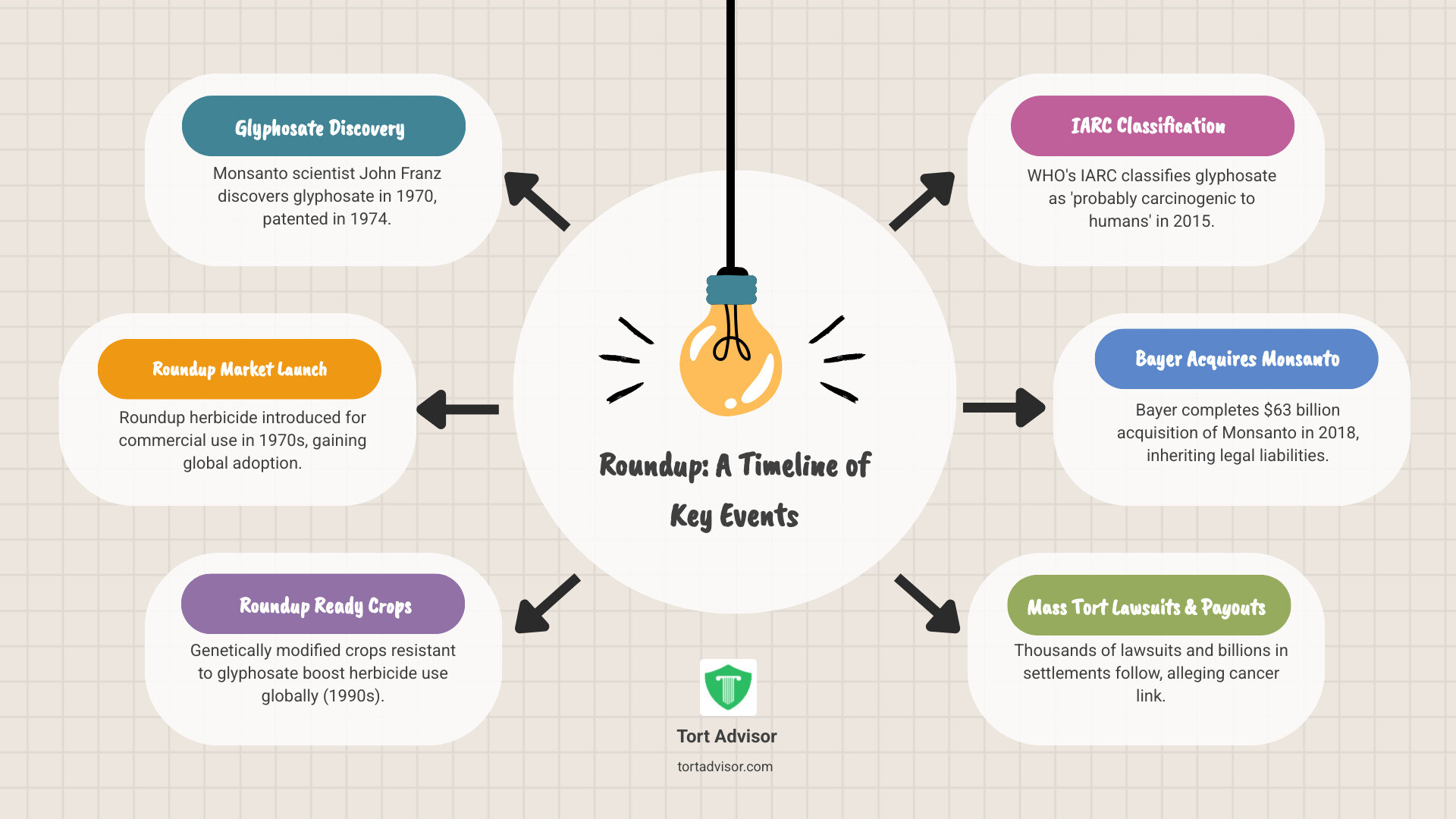
Roundup has an interesting backstory. Monsanto discovered its key ingredient, glyphosate, in 1970 and patented it in 1974. Growers adopted it fast because it killed weeds so well. The real turning point came with “Roundup Ready” genetically modified crops, engineered to survive glyphosate so farmers could spray whole fields and wipe out weeds without harming the crop. That pairing turned Roundup into a household name and a dominant force in farming.
Where It Started: Monsanto
Before Bayer, the original Roundup manufacturer was the Monsanto Company, an agricultural chemical firm founded in 1901 that grew into an industry heavyweight. Monsanto became known for pioneering pesticides and, later, genetically modified organisms (GMOs). It held the glyphosate patent and built a vast business around that one compound.
Its grip on the market was enormous. As of 2009, Roundup herbicides made up roughly 10% of Monsanto’s revenue, and the full Roundup line accounted for about half of its annual earnings. Monsanto’s history also carried plenty of controversy, from its past connection to Agent Orange to long-running fights over seed patents and farming practices, and that rocky record helped set up the legal storm that later hit its buyer.
To learn more about the litigation that followed the original maker, see More info about Monsanto Roundup Lawsuits.
Today’s Owner: Bayer’s Risky $63 Billion Bet
In 2018, Bayer AG drew worldwide attention by buying Monsanto for about $63 billion. The deal was meant to vault Bayer to the top of crop science and greatly enlarge its agricultural business, and on paper it looked like a shrewd strategy.
In practice, the purchase quickly became a costly gamble. Bayer acquired more than Monsanto’s assets; it also took on its largest liability, thousands of lawsuits alleging Roundup caused cancer. When you buy a company, you buy its problems too.
The financial hit came fast. Within ten months of the June 2018 closing, Bayer’s share price fell about 46%, driven largely by the mounting litigation. Handling that fallout has consumed enormous money and management attention. Not long after the deal, Bayer also retired the Monsanto name, a step many read as an effort to separate the business from its past controversies. You can read about that change here.

Roundup Lawsuits and the Financial Fallout for Bayer
Buying Monsanto meant Bayer also bought into one of the largest mass tort litigations in history. By 2023, roughly 165,000 claims had been filed against Bayer, most alleging that Roundup exposure caused non-Hodgkin’s lymphoma. The scale of these claims has created an unprecedented financial burden for the Roundup manufacturer.
The cost to Bayer has been massive, running to many billions of dollars in settlements and verdicts and reshaping the company’s finances and priorities.
Thousands of Claims and Billion-Dollar Verdicts
The figures are hard to absorb. As of this update, Bayer has paid around $10 billion to Roundup plaintiffs. And while glyphosate sales brought in $2.8 billion in a recent year, the company estimates Roundup litigation costs it $2 billion to $3 billion annually, a drain that eats into profits and limits its ability to invest and grow.
To deal with existing and future claims, Bayer set aside about $16 billion for settlements, a reserve that shows how seriously it takes the problem and how much it wants to put the litigation behind it.
Bayer has won its share: 10 of 15 Roundup cancer trials through December 2023 went its way. But its losses have been enormous. In January 2024, a Pennsylvania jury returned a $2.25 billion verdict against Monsanto and Bayer, including $2 billion in punitive damages, over one man’s cancer. Earlier, groundskeeper Dewayne Johnson won $289 million (later reduced), and a California couple’s $2 billion verdict was cut to $86 million. Bayer also settled false-advertising claims for $39.5 million in March 2020 and $6.9 million in June 2023. Together these numbers show the intense financial pressure on the Roundup manufacturer.
For the latest developments, see A look at recent Roundup case updates.
How Bayer Is Trying to Contain the Crisis
Under constant legal fire, Bayer has pursued a strategy on several fronts to manage the crisis and cap its future exposure.
First, it has been lobbying state legislatures. Bayer has pressed states such as Georgia and North Dakota to adopt pesticide-labeling laws that would make federal label rules the controlling standard, which could block failure-to-warn cancer lawsuits before they get started.
Second, it has taken its case to the U.S. Supreme Court, asking the justices to decide whether federal law, the Federal Insecticide, Fungicide, and Rodenticide Act (FIFRA), preempts state claims that Roundup lacked a cancer warning; on June 25, 2026, the Court ruled 7-2 in Monsanto v. Durnell that such label-based failure-to-warn claims are preempted. A win could sharply limit future suits, but the outcome is uncertain and legal experts disagree on whether it will happen.
Perhaps most significant, the Roundup manufacturer decided to stop selling glyphosate-based Roundup to U.S. residential customers by 2023. Farm use continues, but removing the home product is meant to reduce new claims from consumers and signals a push to limit future exposure.
Does Glyphosate Cause Cancer? The Science in Dispute
At the center of every Roundup lawsuit is one question: is glyphosate, the product’s active ingredient, actually linked to cancer? The answer is far from simple, because respected scientific bodies have reached different conclusions, and that disagreement is a big reason the litigation keeps going.

WHO’s Cancer Agency vs. Regulators Worldwide
The debate intensified in 2015, when the International Agency for Research on Cancer (IARC), part of the World Health Organization (WHO), reviewed glyphosate and classified it as “probably carcinogenic to humans” (Group 2A). That finding was a watershed, giving plaintiffs a scientific foundation for many of the lawsuits that followed.
Readers who want the detail can consult the IARC Monograph on Glyphosate.
Complicating matters, many other health and safety authorities, including the U.S. Environmental Protection Agency (EPA), reviewed the science and disagreed. The EPA has repeatedly concluded that glyphosate is “not likely to be carcinogenic to humans” when used according to the label, much like two physicians reading the same scan differently.
Other major regulators, including the European Food Safety Authority (EFSA), Canada’s Pest Management Regulatory Agency (PMRA), Germany’s Federal Institute for Risk Assessment and the Australian Pesticides and Veterinary Medicines Authority (APVMA), have likewise found glyphosate unlikely to pose a cancer risk to people when used properly.
Why the split? Largely because of method. IARC asks whether a substance can cause cancer under any circumstances (hazard identification), while agencies like the EPA ask whether it is likely to do so under actual conditions of use (risk assessment). The distinction is subtle but crucial. Here is how key bodies compare:
| Organization | Finding on Whether Glyphosate Causes Cancer | Methodology/Focus |
|---|---|---|
| IARC (WHO) | “Probably carcinogenic to humans” (Group 2A) | Hazard identification (whether it could cause cancer at any exposure level) |
| US EPA | “Not likely to be carcinogenic to humans” | Risk assessment (how likely it is to cause cancer at real-world exposure levels) |
| EFSA | No evidence supporting a carcinogen classification | Risk assessment |
The result is confusion for the public and a difficult position for the Roundup manufacturer, since this very disagreement among scientists sits at the core of the court fights.
More Than Glyphosate: The Other Ingredients
Glyphosate draws the attention, but Roundup also contains “other” or “inert” ingredients, including surfactants such as polyethoxylated tallow amine (POEA). They are there for a reason: to help the herbicide spread across and penetrate plant surfaces.
Research has found that some of these additives, POEA in particular, can be more toxic than glyphosate itself, especially to aquatic organisms. The finished Roundup formula may therefore carry a different, and sometimes greater, toxicity than glyphosate by itself.
That has created further problems for the Roundup manufacturer. Bayer has settled false-advertising suits alleging the product was promoted as “safe” despite questions about its full formulation and environmental impact. Those settlements, totaling millions of dollars, show that legal scrutiny reaches beyond glyphosate and cancer to the whole product and how it was marketed.
What Comes Next for Roundup and for Farming
Years of lawsuits and unresolved science have clouded Roundup’s future, with consequences that reach well beyond one product to an agricultural industry that depends heavily on it. Bayer, as the Roundup manufacturer, is in a genuine bind.
Bayer’s chief executive has warned bluntly that the company could stop producing Roundup within “months, not years” unless it secures meaningful legal protection from the ongoing lawsuits, a statement that underscores the financial and reputational strain the company is under.
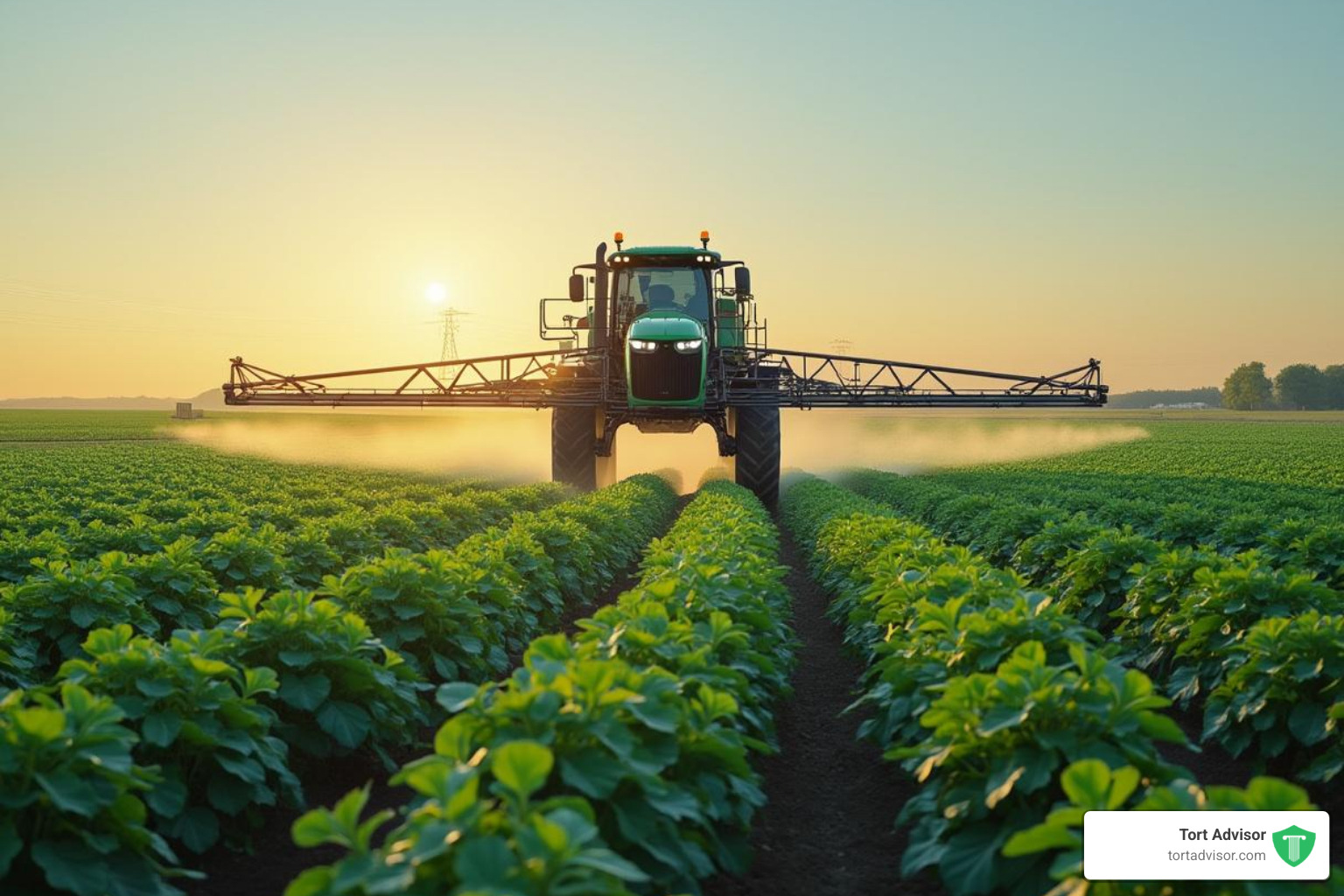
A halt in Roundup production would ripple through farms and the world’s food supply. For decades glyphosate has been a mainstay of modern agriculture, helping growers control weeds efficiently and produce higher yields. Many farmers’ livelihoods depend on it, and losing it abruptly could disrupt the whole system.
What If the Roundup Manufacturer Stopped Making It?
If Bayer, the current Roundup manufacturer, ended production entirely, the effects would be global. Bayer produces roughly 40% of the world’s glyphosate, and replacing that supply quickly would be an enormous challenge.
Farmers would feel it most. Glyphosate makes no-till farming practical, which cuts soil erosion and fuel use, and it controls a broad range of weeds so crops get the nutrients they need. Without it, weed control would get harder, yields could fall and operating costs could rise, and those costs could eventually show up as higher grocery prices.
Agriculture would need to find workable substitutes quickly, whether other chemical herbicides (each with its own safety questions), more labor-heavy approaches like mechanical weeding, or wholesale changes in farming practice. None of those transitions would be easy or cheap.
The Road Ahead for the Roundup Manufacturer
Bayer faces a difficult path. More trials and appeals are expected, and each new ruling may set precedent. The Supreme Court’s June 2026 preemption ruling in Monsanto v. Durnell has already reshaped Roundup litigation, while a proposed $7.25 billion class settlement awaited a final approval ruling after a September 14, 2026 hearing.
Outside the courtroom, the Roundup manufacturer is likely to keep adjusting its business and products to lower its risk, perhaps by investing in non-glyphosate herbicides or digital farming tools to diversify away from controversial products. Pulling residential glyphosate products from shelves already points to that broader shift.
Bayer must defend what it sells today while preparing for a very different future, and how well it manages the legal and financial pressure will shape its profits, research spending and overall direction. Legal Lawsuit continues to follow these developments closely because they matter to the industry and to anyone who may have been harmed by Roundup exposure.
To see where litigation stands now, visit our page on active lawsuits.
Conclusion
Roundup’s path from Monsanto’s labs to Bayer ownership runs through science, law and high-stakes corporate finance. A farm tool has become the focus of a huge legal battle that has cost a major company billions and left its future uncertain.
For consumers and the farmers who rely on these products, that raises real questions. Agencies like the EPA say glyphosate is safe when used as directed, yet the WHO cancer agency’s classification and numerous jury verdicts reflect genuine public concern, and that lack of consensus keeps the litigation alive.
Legal Lawsuit knows how confusing mass tort cases can be, and our aim is to help anyone affected by products like Roundup understand their options and find capable legal help. If Roundup exposure has affected you or someone you love, it is important to learn where you stand. A free, confidential case review can connect you with an attorney in our network who handles Roundup claims.
See whether you qualify for a Monsanto Roundup Lawsuit and talk with an experienced attorney today.
Related Posts
Quick Answer: The Boy Scouts of America (BSA) filed for Chapter 11 bankruptcy in 2020 after facing tens of thousands [...]
Quick Answer: Survivors of sexual abuse by Catholic priests, nuns, or other Church personnel may be able to file a [...]
Quick Answer: Clergy abuse settlements vary enormously based on the severity of the abuse, the strength of evidence that the [...]