Florida Open and Obvious Doctrine: What a Fall Claim Needs
By Mason ArnaoPublished

By Mason ArnaoReviewed by Mason Arnao
Yes—your Florida fall claim may still continue even if the insurer says the hazard was open and obvious. Under the Florida open and obvious doctrine, an obvious condition may affect the duty to warn without automatically resolving a separate claim that the property was not maintained safely, as the court explained in McWhorter v. Event Services America.
This guide explains what McWhorter decided, why seeing an object is not always the same as recognizing its danger, and how to organize evidence around what was visible before your fall. It also separates the obvious-hazard defense from comparative fault and offers questions to bring to your next discussion with an adjuster or attorney.
Does an obvious hazard automatically defeat your Florida claim?
No—not automatically. A hazard’s obviousness does not resolve every issue in a Florida fall claim. The duty to warn about a dangerous condition and the duty to maintain reasonably safe premises are separate. Even when a condition is obvious, whether the property owner should anticipate that it could still cause harm can remain relevant to the maintenance issue. That distinction is central to McWhorter’s explanation of the separate duties.
If an insurer says, “You should have seen it,” ask what specific issue it is disputing. That statement alone may not tell you the full reason for its position. Useful questions include:
- Visibility: Are you saying the object was visible, or that the danger it presented was obvious?
- Maintenance: Have you separately considered whether the area was maintained safely?
- Responsibility: Are you disputing who was responsible for the condition or the area where I fell?
- Your own actions: Are you relying on something I did, rather than—or in addition to—the condition itself?
Ask for the explanation in writing and keep it with your claim records. Identifying the actual disagreement can help you focus your next discussion on the photographs, witness accounts, and other evidence that address it.
What the court actually decided in McWhorter
The decision kept part of the patron’s claim alive; it did not award compensation. On January 14, 2026, Florida’s Second District Court of Appeal addressed a stadium patron’s fall over a battery case left in a walkway. The court upheld summary judgment on the failure-to-warn theory but reversed it on the negligent-maintenance theory. The McWhorter opinion and disposition separates those two duties rather than treating an obvious hazard as the end of the entire case.
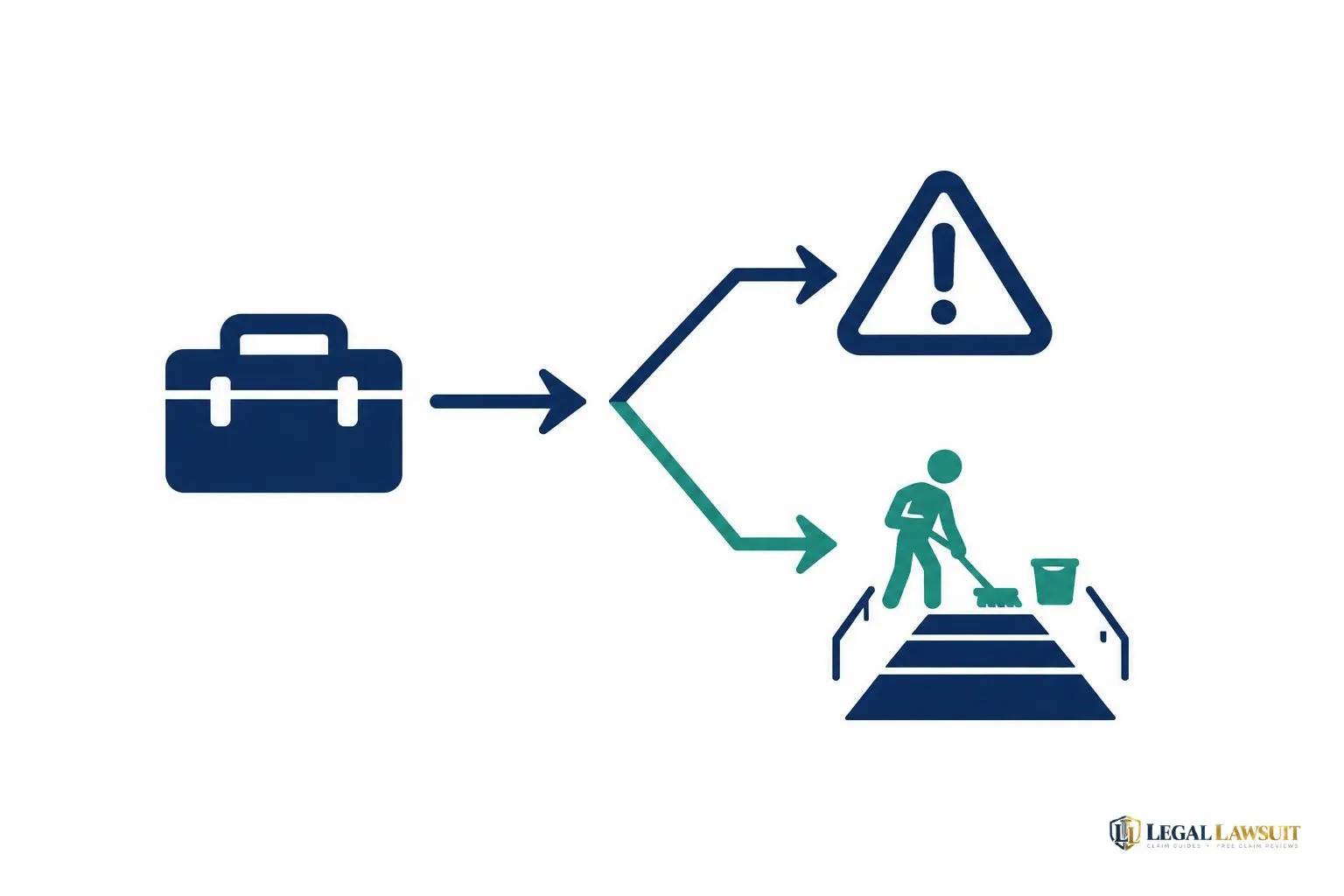
Follow the Issues Through the Appeal
Walkway fall
The case involved a battery case left in a stadium walkway.
Warning ruling
Judgment on the warning theory was upheld.
Maintenance ruling
The maintenance issue returned for further proceedings, without a damages award.
To understand the result, separate three questions:
- What caused the fall? McWhorter’s claim concerned a battery case left in a stadium walkway. The case’s visibility mattered, but it did not resolve every question about responsibility for the fall.
- Which theory ended? The appellate court upheld judgment against McWhorter on her failure-to-warn theory. That portion of the ruling remained in place.
- Which issue remained? The court reversed judgment on negligent maintenance. Its analysis addressed whether harm could remain foreseeable despite the condition’s obviousness, leaving that part of the claim for further proceedings.
A reversal is not a damages award. McWhorter obtained another opportunity to pursue the maintenance claim—not a final determination that the defendant owed her compensation. The practical distinction is between losing one theory and losing the entire claim.
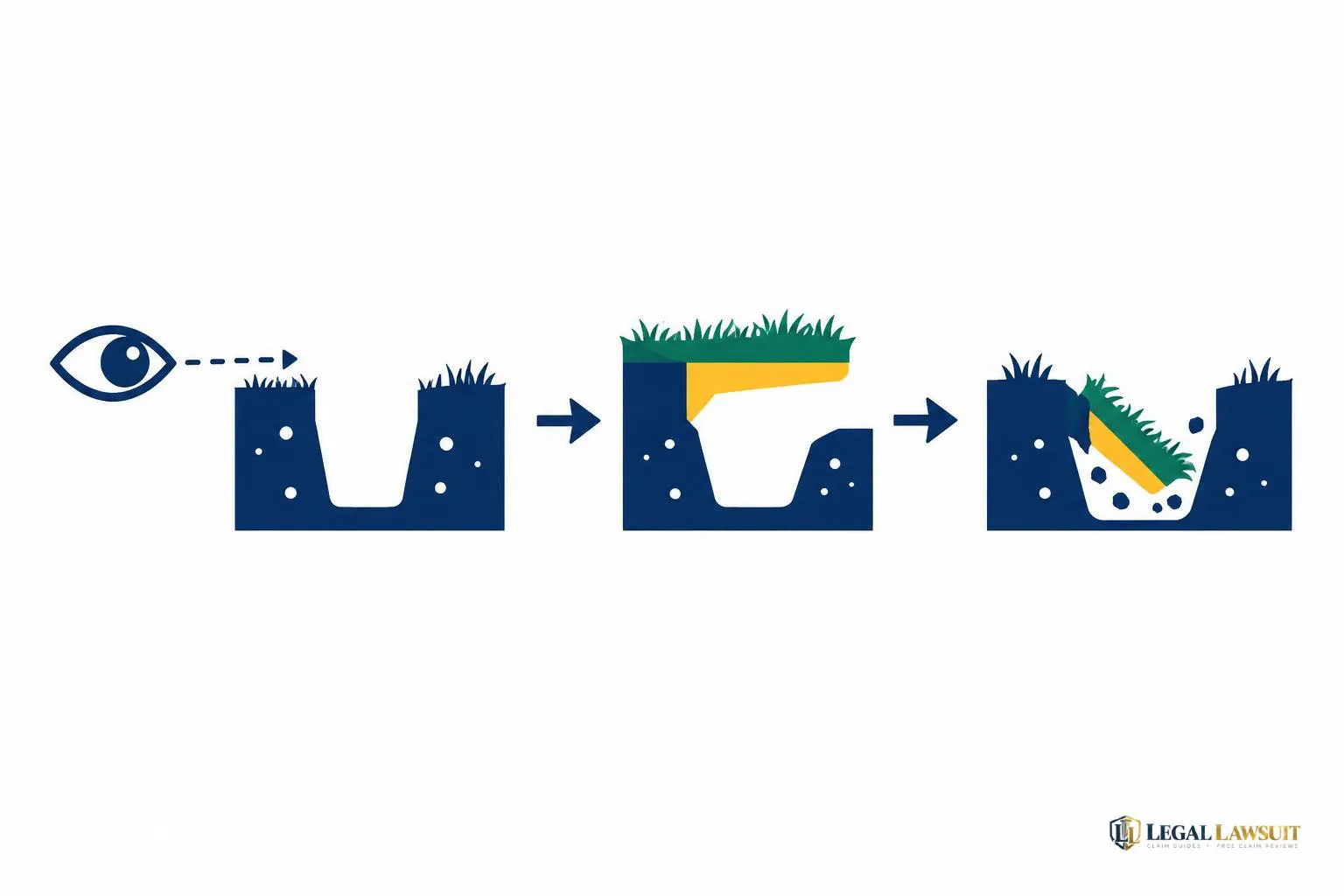
Seeing an object is not always seeing its danger
Being able to see an object does not necessarily mean you could see the condition that caused your fall. The important distinction is between what was visible and what actually gave way.
In Schramm v. Adams Homes of Northwest Florida, Inc., the claimant approached a visible hole, but his account was that the surrounding grass collapsed before he reached it. The Fifth District distinguished the hole itself from the potentially concealed instability of the surrounding ground. Because the dangerousness of that ground and the location of the fall remained disputed, the court reversed summary judgment and sent the case back for further proceedings. It did not decide who was ultimately liable. Schramm’s discussion of the actual dangerous condition and disputed facts shows why identifying the precise cause matters.
For your own account, separate these three details rather than describing the scene only as “a hole” or “an uneven area”:
- The object you could see: What did you notice as you approached, and from where?
- The condition that failed: Did your foot enter an opening, or did a surface that appeared solid collapse beneath you?
- The place where your movement changed: Where were you when your foot sank, slipped, caught, or lost support—not just where you landed?
Describe what you remember without filling in gaps. If you are unsure whether you reached the visible object, say so. That distinction helps keep the discussion focused on the condition involved in your fall rather than a broad label for the scene.
Organize evidence around what was visible
Focus your preparation on what the hazard looked like from your approach—not just how it appeared after the fall. In Greene v. Twistee Treat USA, LLC, testimony and a photograph described a pavement depression that blended into the surrounding asphalt. The court found a factual dispute over whether the condition was obvious and reversed the judgment. That was not a final determination of liability. See Greene’s visibility evidence and decision.
Prepare Your Account of Hazard Visibility
Approach view
Collect available photographs showing the route toward the condition.
Surface detail
Collect available close-ups showing the condition and surrounding surface.
Your account
Write down what you could see before falling, separately from later observations.
Use that factual discussion—not the decision’s historical summary-judgment standard—to organize what you have:
- Available approach-view photographs: Gather images showing the direction you were walking and the broader area around the hazard. Note whether each image was taken before, immediately after, or later than the fall.
- Close-up photographs: Collect images showing the condition’s edges, surface, color, and relationship to the surrounding pavement. Keep these alongside the wider views rather than relying on close-ups alone.
- Your account of visibility: Write down what you could see before falling, where you were looking, and when you first noticed the condition. If you do not remember something, say so rather than filling in the gap.
Keep your original files. In your notes, separate what you personally remember from details you learned afterward through photographs, witnesses, or later visits. This can make the visibility issue easier to discuss, but no single photograph or account necessarily resolves responsibility.
For help organizing the broader process beyond visibility evidence, Legal Lawsuit’s guide explains how to file a slip and fall claim.
How your own fault differs from an obvious-hazard defense
An argument about an obvious hazard and a question about your own fault address different issues. For your claim discussion, separate these questions: “What responsibility did the property owner have regarding this condition?” and “How much did my own conduct contribute to the fall?” That helps keep the discussion of the owner’s duty distinct from the discussion of fault allocation.
For negligence actions governed by the applicable provision, Florida law reduces damages proportionately for fault attributed to the claimant. It also bars recovery when the claimant is greater than 50 percent at fault for their own harm. The statute expressly excludes medical-negligence actions from that greater-than-50-percent bar. These rules appear in Florida’s comparative-fault provisions, including the medical-negligence exception.
Ask your lawyer which version of the law governs your case rather than assuming that an older court decision supplies your claim’s fault rules. Useful follow-up questions include: “Are we discussing the owner’s duty, my share of fault, or both?” and “What evidence matters to each issue?”
Questions to bring to your next claim discussion
Use your next discussion to identify what remains disputed—not just whether someone has called the hazard “obvious.” Start with these questions:
- Which exact condition caused my fall, and what evidence addresses whether I could recognize its danger? Be specific about the object or surface involved and what made it dangerous. In Schramm, the court distinguished a visible hole from potentially unstable surrounding ground; where the fall occurred was also disputed.
- Is the dispute about warning, maintenance, my actions, or several issues? Ask the attorney to separate those questions. McWhorter addressed warning and maintenance duties separately, so a discussion focused only on whether a warning was needed may miss another issue.
Bring the insurer’s explanation, if you have one, and your organized records to a discussion with a Florida attorney. Include available photographs, witness information, your account of the fall, and relevant correspondence. Point out what each item shows about visibility, the condition’s danger, and your movements. If you do not know something, mark it as a question rather than filling in the gap.
For broader preparation, use Legal Lawsuit’s guide to the personal injury claim process, proof, and deadlines to organize additional questions. Keep those questions separate from the central factual issue here: what caused your fall and what you could recognize about its danger.
Frequently asked questions
Can an open and obvious hazard defeat the warning theory but leave a maintenance theory unresolved?
Yes. In McWhorter’s battery-case fall appeal, the court treated the duty to warn separately from the duty to maintain reasonably safe premises. An obvious condition may defeat a warning theory without resolving whether the property should have been maintained differently because harm remained foreseeable. That distinction matters: whether someone needed a warning is not necessarily the same question as whether the condition should have remained there.
Did the McWhorter appeal award the injured patron compensation?
No. The McWhorter opinion discussed above partly affirmed and partly reversed summary judgment; it did not award the patron compensation. The warning ruling remained in place, while the maintenance theory was not finally resolved against her. Keeping a theory alive for further proceedings is different from proving liability or establishing damages, so the appeal should not be described as a compensation award.
What if I saw the object but could not see the condition that caused my fall?
Seeing an object does not necessarily mean seeing the danger that caused the fall. In Schramm’s appeal involving a visible hole and allegedly unstable surrounding ground, the court distinguished those conditions and addressed a dispute about where the fall occurred. It reversed and remanded rather than deciding final liability. For your claim discussion, explain separately what you noticed and what you believe actually gave way or caused you to fall.
What evidence can help explain whether a pavement defect was visible?
Photographs and testimony can help explain whether a depression stood out or blended into the pavement. In Greene’s pavement-depression appeal, the court considered both photographic and testimonial evidence about a depression blending into asphalt. For your discussion, organize available photos alongside what you and any witnesses remember seeing. Explain what each image shows rather than assuming a close-up captures how the pavement looked while approaching it.
How does Florida comparative fault affect a fall claim?
Under Florida’s comparative-fault statute, a claimant’s share of fault proportionally reduces damages. For negligence actions covered by the statute’s recovery bar, a party found more than 50 percent responsible for their own harm cannot recover damages. The statute expressly excludes medical-negligence actions from that bar. Comparative fault concerns your share of responsibility, so discuss that question separately from whether the hazard was obvious.
Sources
- Lisa McWhorter v. Event Services America, Inc., No. 2D2024-2401 · Florida Second District Court of Appeal · 2026-01-14
- Robert Schramm v. Adams Homes of Northwest Florida, Inc., No. 5D2024-0445 · Florida Fifth District Court of Appeal · 2025-06-20
- Tracy Greene and Joshua Greene v. Twistee Treat USA, LLC, No. 2D18-4064 · Florida Second District Court of Appeal · 2020-09-04
This article is general information, not legal advice. Laws and deadlines vary by state and change over time; check the linked sources or speak with a licensed attorney about your situation.
Related Posts

You saw an animal bite someone in Texas. This guide covers what to do first, who you must report to under state law, and how your account as a witness can be used afterward.
You have the right to say no to medical treatment, but in an injury, disability, or workers' comp claim that choice can lower or stop your benefits. Here is how each system treats a refusal, and which reasons the rules accept.
Ninguna calculadora en línea sabe cuánto recibirás de un acuerdo por filtración de datos. Esta guía explica cómo se reparte realmente el dinero y cómo calcular tus propias pérdidas documentadas antes de presentar tu reclamo.