
Witnessed an Animal Attack in Texas? What to Do Next
By Mason ArnaoPublished

By Mason ArnaoReviewed by Mason Arnao
If you witness an animal attack in Texas, your first job is to keep yourself safe and get the injured person help, which means calling 911 if the bleeding can’t be stopped. You also have a legal duty: Texas law requires a person who knows about an animal bite or scratch that could spread rabies to report it to the local rabies control authority, even if they only saw it happen.
That report matters more than it might seem. Officials use what witnesses tell them to find the animal and check it for rabies. State health officials ask people to stay away from sick or injured animals and to describe the animal’s kind, size and color, so details you notice now can help protect the person who was hurt.
This guide walks you through each step. It covers what to do in the first few minutes, how to make the report, and how to help officials identify the animal. It also explains how your account fits into a dangerous dog investigation, where animal control can rely on sworn statements from witnesses. Finally, it covers the sworn complaint any person can file after a serious attack and how your account can help the injured person later.
In the first few minutes: keep yourself safe and get help
Your first job as a witness is to stay safe and get help to the injured person. Don’t put yourself in the animal’s path. Focus on calling for help and supporting the person who was hurt.
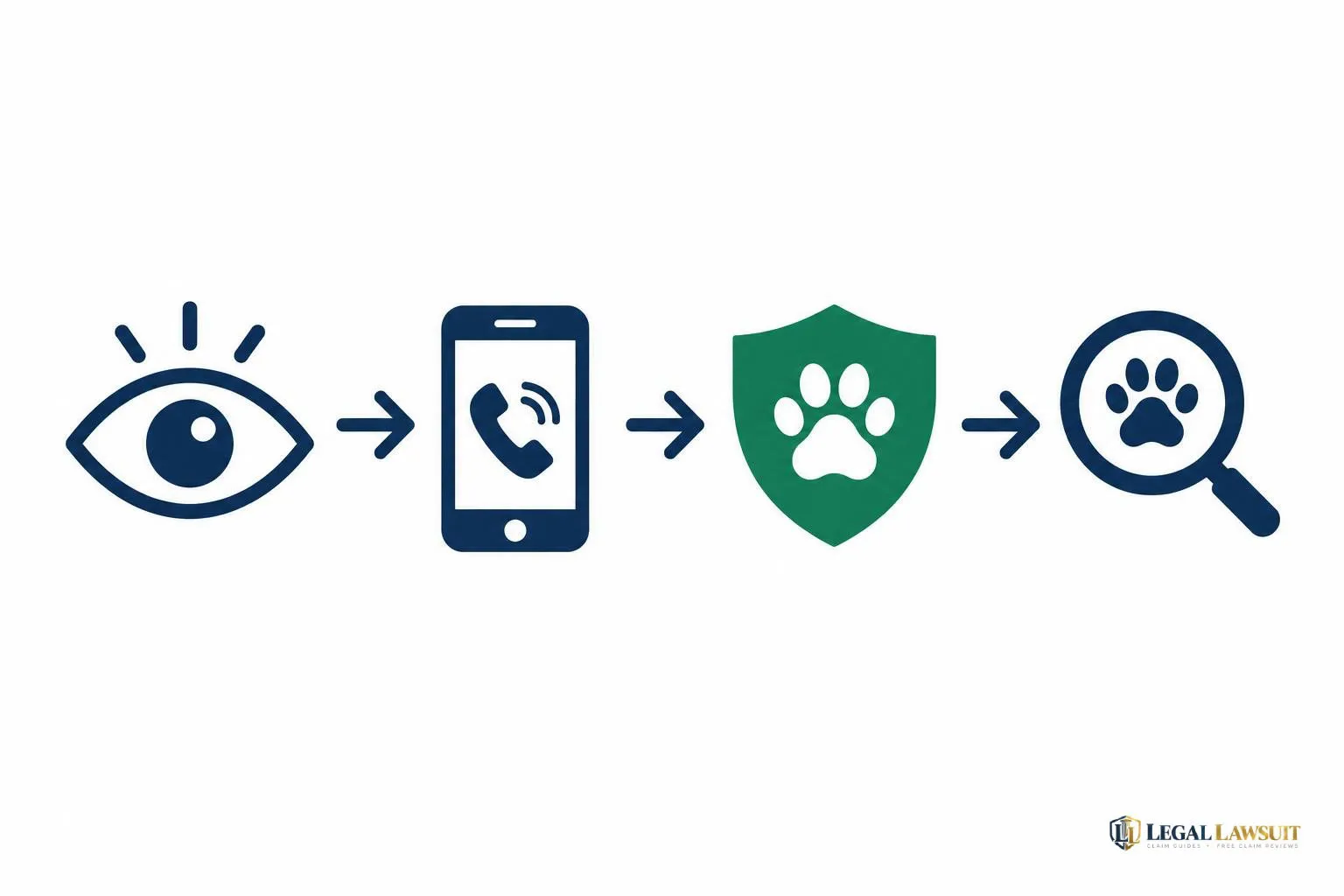
First Steps After Seeing an Attack
Stay back from the animal
Don't touch or handle it. Call animal control instead.
Call 911 if needed
Call right away if bleeding won't stop or the person feels faint or weak.
Basic wound care
Wash the bite well with soap and water, then cover it with a clean bandage.
Medical care
Encourage prompt medical care and tell the provider an animal caused the bite.
Leave the animal alone
It’s natural to want to pull an animal away or catch it so it can’t run off. Try not to. The Texas Department of State Health Services advises people not to touch sick or injured animals and to call animal control instead. Keep your distance, and let animal control handle the animal.
Call 911 when it’s an emergency
Call 911 or your local emergency number right away if the injured person:
- Is bleeding and the bleeding can’t be stopped
- Feels faint or weak
Basic first aid for a bite
If the injury isn’t an emergency, the CDC’s first-aid guidance for dog bites recommends these steps:
- Wash the wound well with soap and water.
- Cover it with a clean bandage.
- Get medical care right away, even if the wound looks minor.
If you’re helping clean the wound, use whatever soap and clean covering you have nearby. Don’t delay getting the person to care while you look for perfect supplies.
Encourage the person to mention the bite
When the injured person sees a doctor or other provider, encourage them to say clearly that an animal bit them. That detail matters for treatment. The provider may check with the health department about whether rabies treatment is needed.
If you can, stay nearby or leave your name and phone number with the injured person. What you saw in these first minutes can help with the steps that follow.
Texas law asks you to report the bite, even if you only saw it
Yes, as a witness you likely have a reporting duty of your own. Under Texas Health and Safety Code Section 826.041, a person who knows of an animal bite or scratch to someone that could reasonably transmit rabies must report it to the local rabies control authority. The duty is not limited to the injured person or the animal’s owner. Knowing about the bite is enough.
This can feel like a lot to take on when you were only passing by. But your report may be what gets the animal checked quickly, and that protects the person who was hurt.
Where your report can go
You have some flexibility. The law lets you report to the local rabies control authority for any of these places:
- Where you live
- Where the animal is located
- Where the exposure happened
If the attack happened away from home, you don’t need to figure out the perfect office before you act. Reporting to any one of these is allowed.
Who the “local rabies control authority” is
The name sounds official, but in practice it may be a familiar office. Depending on your city or county, it could be:
- A county or city health officer
- An animal control officer
- A peace officer
- Another entity your local government has named
If you’re not sure which one covers your area, contacting your city or county animal control office or the non-emergency police line is a sensible first step. They can direct your report to the right place.
What happens after you report
Your report is not just filed away. The local rabies control authority must investigate a report made under this section. When you call, share what you saw as clearly as you can: when and where it happened, and what the animal looked like.
Help officials find and identify the animal
The most useful thing you can give officials after an animal attack is a clear description of the animal and where it went. Your description can help officials find the animal so it can be observed or tested for rabies. The results can inform the injured person’s medical decisions.
How Texas Checks a Biting Animal
Dogs, cats, ferrets
They are tested for rabies or observed for ten days.
Healthy after ten days
If the animal is alive and normal after ten days, it was not infectious at the time of the bite.
Skunks, bats, foxes, coyotes, raccoons
These biting animals must be tested for rabies.
Other animals
The local rabies control authority decides whether testing or observation is needed.
What to note while it’s fresh
The Texas Department of State Health Services (DSHS) rabies guidance asks people to:
- Describe the animal: what kind of animal it was, its size and its color.
- Keep track of the animal: note where it went after the attack.
- Note where it lives, if you know: for example, a specific house, yard or property.
Small details help. A collar, a leash, an owner nearby or the direction the animal ran can all make it easier for officials to find the right animal.
What happens once the animal is found
What officials do next depends on the type of animal:
| Type of animal | What DSHS says happens |
|---|---|
| Dog, cat or domestic ferret | It must be tested for rabies or observed for ten days. If it is alive and normal after the ten days, it was not infectious when the bite happened. |
| Skunk, bat, fox, coyote or raccoon | It must be tested for rabies. |
| Any other animal | The local rabies control authority decides whether it needs testing or observation. |
For a dog, cat or domestic ferret, the ten-day observation is only possible if officials can locate that specific animal. That is why your description and any knowledge of where the animal lives matter so much. If the animal can’t be found, the injured person and their doctor have less information to work with.
Your witness statement and a dangerous dog investigation
As a witness, your sworn statement can be part of what officials rely on when deciding whether a dog is legally “dangerous.” Under Texas Health and Safety Code Chapter 822, Section 822.0421, when someone reports an incident that fits the state’s dangerous dog definition, the animal control authority may investigate. It makes its decision after receiving sworn statements from any witnesses. If it finds the dog is dangerous, it must notify the owner in writing.
Who handles the investigation
The same chapter defines the “animal control authority.” It is the city or county animal control office for the area where the dog is kept. Where there is no such office, it is the county sheriff. If you are contacted for a statement, it will most likely come from one of these offices.
Write down what you saw while it is fresh
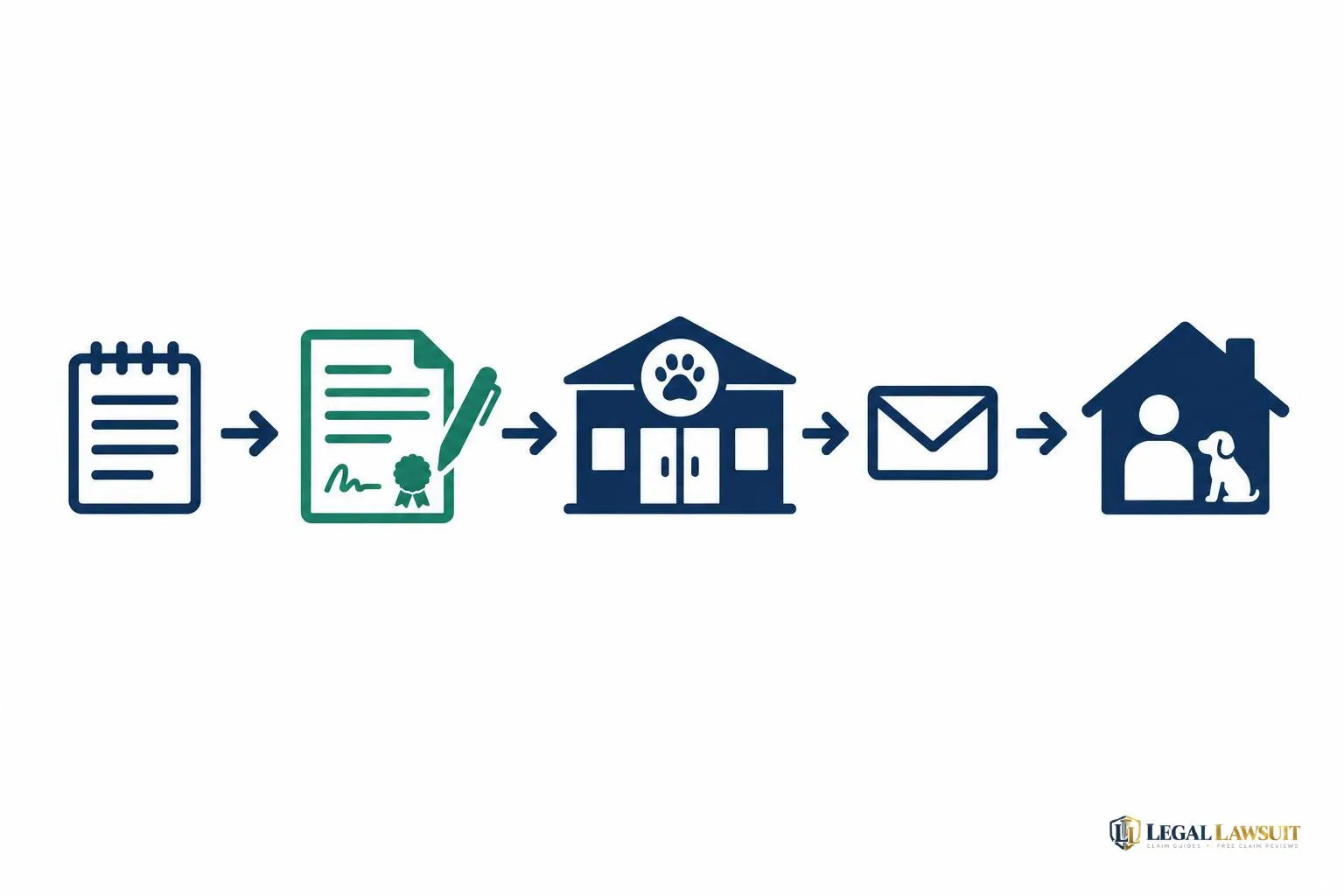
Memories fade quickly, especially after something upsetting. Your notes will help keep your account clear and accurate if you are asked for a sworn statement. Try to record:
- When and where: the date, the time, and the exact place, such as a street address, a park entrance or a landmark.
- The animal: its type, size, color and any collar, tag or markings you noticed.
- The owner: their name, address or description, if you know them.
- Whether the dog was loose: off leash, outside a fence or yard, or restrained.
- What happened before: what the dog and the people nearby were doing just before the attack.
- The attack itself: what you saw, in the order it happened.
- What happened after: where the dog went, who arrived to help, and anything the owner said or did.
Stick to what you personally saw and heard. Note anything you are unsure about rather than filling in gaps. Sign and date your notes, and keep a copy for yourself.
When the injuries are serious: the sworn complaint any person can file
If the attack you saw killed someone or caused serious bodily injury, Texas law gives you a formal way to bring it before a court. You do not have to be the victim, a relative or an official to start that process.
Who can file
Under Texas Health and Safety Code Chapter 822, Section 822.002 allows any person to file a sworn complaint that a dog caused a death or serious bodily injury by attacking, biting or mauling someone. That includes the county attorney, the city attorney or a peace officer, but the law does not limit it to them. A witness who saw what happened can file.
What the court does
The complaint goes to a justice, county or municipal court. When the court has the sworn complaint and also finds probable cause that the dog caused the death or serious injury, it must order the animal control authority to seize the dog.
When the owner can face criminal charges
Section 822.005 makes it a crime, in certain situations, for an owner whose dog makes an unprovoked attack that causes serious bodily injury or death. One example is when an owner with criminal negligence fails to secure the dog and the attack happens outside the owner’s property or enclosure.
What your role is, and what it is not
- Your part: report what you saw and give an honest, sworn account if you choose to file.
- Not your part: deciding whether anyone is charged or what happens to the dog. Prosecutors, judges and other officials make those decisions.
Filing a sworn complaint is a serious step because you swear the facts are true. Stick to what you personally saw and heard.
How your account can help the injured person later
Your account may matter after the immediate crisis is over. If the person who was hurt decides to pursue a claim, a clear record from someone who saw the attack, and who isn’t the victim or the animal’s owner, can help them explain what happened. You don’t have to take sides. Your job is simply to describe what you saw as accurately as you can.
While your memory is fresh, write down a few basics and keep the note somewhere safe:
- The date, time and exact location
- What happened just before, during and after the attack
- Who else was there, including anyone who seemed to be in charge of the animal
- Any photos or video you took, saved without editing
Timing matters for the injured person. In Texas, most personal injury lawsuits must be filed no later than two years after the day the cause of action accrues. That deadline belongs to the injured person, not to you. But it means they may need to reach you months after the attack, while there is still time for them to act.
Make yourself easy to find
If it feels safe and appropriate, give the injured person, or a family member helping them, your name and a phone number or email address. Let them know you’re willing to share what you saw if they need it. If you’d rather not hand out your details directly, you can ask the officials who responded to note your contact information with their report.
If the injured person asks what comes next, you can point them to Legal Lawsuit’s guide on how a dog bite claim is filed, step by step. It explains the process in plain language. Every situation is different, and no one can promise how a claim will turn out. Still, an honest witness account is one of the most useful things a bystander can offer.
Frequently asked questions
Am I legally required to report an animal bite I only witnessed in Texas?
Yes, in many cases. Texas law puts the reporting duty on any person who knows about a bite or scratch, not only the person who was hurt or the animal’s owner. Under Texas Health and Safety Code Section 826.041, that report goes to the local rabies control authority, which must then investigate. A witness who saw the bite happen counts as someone who knows about it.
Who do I call to report an animal attack in Texas?
If someone is badly hurt, call 911 first. The CDC advises calling 911 when bleeding can’t be stopped. Once everyone is safe, make your report to the local rabies control authority described above. Each city or county decides who fills that role, so it may be an animal control office, a health department or a police department. If you aren’t sure who handles it where the attack happened, your city or county offices can point you to the right place.
What if the animal was a raccoon, bat or other wild animal?
Don’t try to catch it or touch it. The Texas Department of State Health Services advises people not to touch sick or injured animals and to describe the animal’s kind, size and color. If you can do so safely, note where it went or where it seems to live.
That information matters. The same DSHS guidance says that skunks, bats, foxes, coyotes and raccoons involved in a bite must be tested, while dogs, cats and ferrets can be observed for 10 days instead.
Can a witness start a dangerous dog investigation?
Your account can play a real part in one. Under Texas Health and Safety Code Chapter 822, the local animal control authority can investigate an attack and gather sworn written statements from witnesses. The dog’s owner gets written notice of the investigation. The law also lets any person file a sworn complaint in court when a dog has caused serious injury, so a witness’s role is not limited to answering questions after someone else makes a report.
How long does the injured person have to file a lawsuit in Texas?
Generally, two years. Texas sets a two-year limitations period for personal injury suits, counted from the day the claim arises. If you’re in touch with the person who was hurt, it can help them to know your contact details and your account are available. They can learn how the deadline applies to their situation by talking with a licensed Texas attorney. Legal Lawsuit’s guides can also help them prepare for that conversation.
Sources
- Health and Safety Code Chapter 826. Rabies · Texas Legislature
- Health and Safety Code Chapter 822. Regulation of Animals · Texas Legislature
- Rabies · Texas Department of State Health Services
- Dogs (Healthy Pets) · Centers for Disease Control and Prevention
- Civil Practice and Remedies Code Section 16.003 · Texas Legislature
This article is general information, not legal advice. Laws and deadlines vary by state and change over time; check the linked sources or speak with a licensed attorney about your situation.
