Fell in a Parking Lot? Who to Contact About a Claim
By Mason ArnaoUpdated

By Mason ArnaoReviewed by Mason Arnao
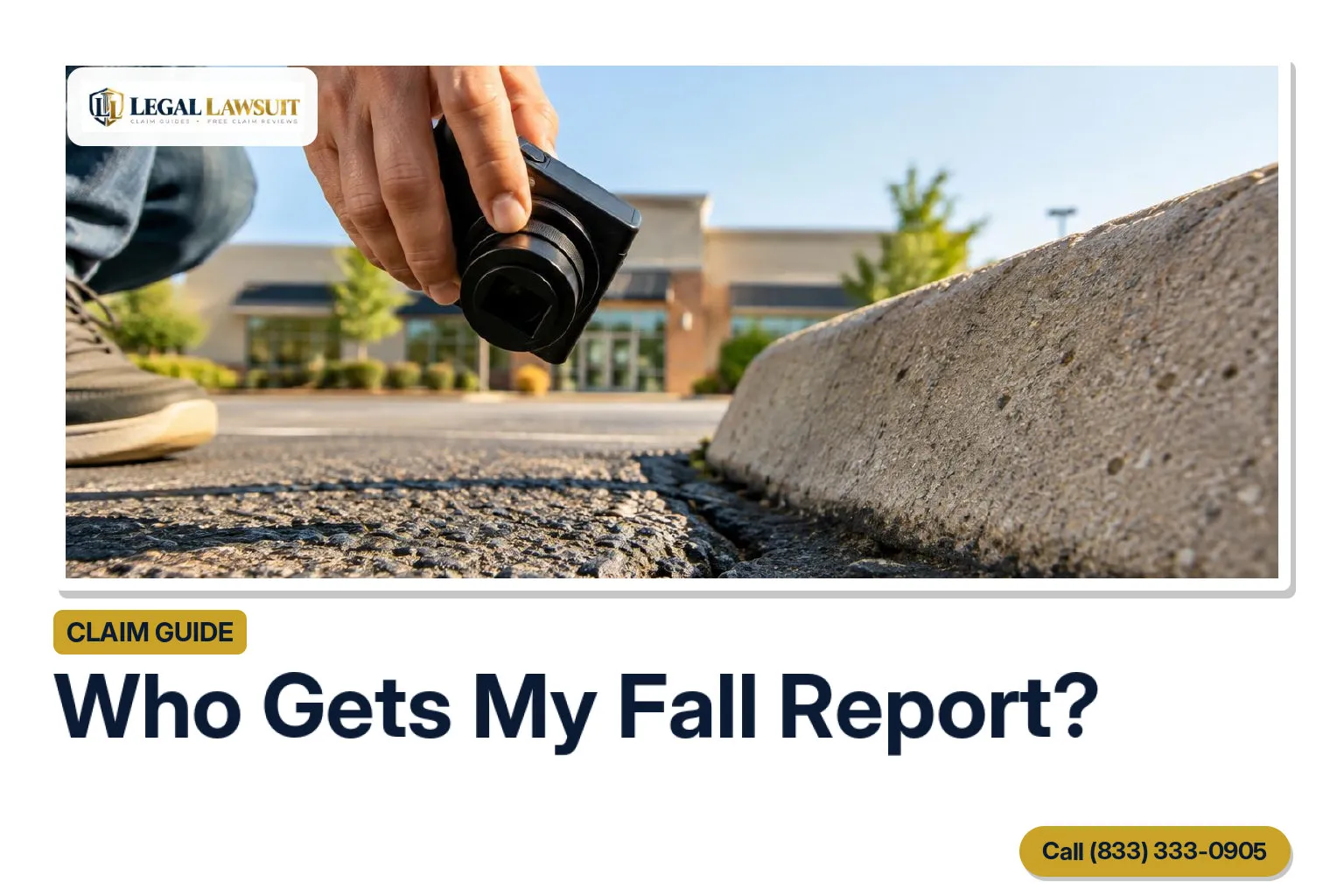
Fell in a Parking Lot? Report the fall to the business or property manager, ask who receives incident reports and handles injury claims, and start with a written account of the exact location and what you observed.
Keep supporting information together, including photographs, medical records, bills, and witness statements—evidence examples identified in the California Courts’ personal-injury guide. This article explains how to identify the right contact, document the fall, submit a clear report, and track the response. It also covers where to turn if you were working, why filing deadlines need a separate check, and what to do if you are redirected or your claim is disputed.
Fell in a parking lot? Start by identifying the right contact
Write down the exact location of your fall, then ask the business or parking operator who manages that part of the lot and receives injury reports. Be specific: note the nearest entrance, parking-space number, row, walkway, or other landmark. A useful opening question is: “Who should receive a report about an injury at this spot, and how can I contact them?”
Keep the reporting question separate from the question of legal responsibility. You are trying to find the right person to receive your information—not decide, at the scene, who must pay. If an employee directs you elsewhere, ask for the department or company name and a contact method so you can follow up.
California example: A federal court applying California law explained that a fall alone does not establish negligence; the claimant needs evidence connecting an unsafe condition to the fall. The court’s explanation of California premises-liability proof helps show why describing what you observed matters. This is a California-specific example, not a nationwide rule.
Also make clear whether you fell because of something you observed on the pavement or whether a moving vehicle was involved. Describe the sequence without guessing about causes you did not see. If a vehicle hit you, the guide to filing a pedestrian accident insurance claim if a vehicle hit you may be a more useful next step. For a pavement-related fall, start by identifying who receives reports for that exact area.
Record the exact spot and what you observed
Make your report specific enough that someone else can locate where you fell. Describe what you noticed without guessing about what caused the fall. These are practical reporting suggestions, not legal requirements:
- Location: Identify the entrance, parking row or space number, and a nearby landmark, such as a cart return or sign.
- Walking direction: Explain where you were coming from and where you were headed.
- Surface condition: Describe what you personally observed, such as loose gravel, standing water, or an uneven area. If you could not tell what was on the ground, say so.
- Warning markers: Note any cones, signs, tape, or barriers you saw and where they were positioned.
If you can do so safely, take a wider photograph showing the location and a closer photograph of the condition you observed. Do not return to an unsafe spot just to get pictures. Save the original images along with medical records, bills, and witness names and contact information. The California Courts evidence checklist identifies photographs, medical records, bills, and witness statements as examples of evidence for a personal injury case.
Keep firsthand observations separate from information someone else gives you. For example, write “I saw water near the entrance” separately from “A witness told me they had noticed water earlier.” Do not guess how long a condition existed or assume there were earlier complaints or inspections.
You can also ask the business or property manager whether cameras cover that area and request preservation of relevant footage. Include the date, approximate time, and exact location so your request is clear.
Ask who receives the report and handles the claim
Ask for the person or department that receives incident reports and handles injury claims for the exact section of the parking lot where you fell. If the store, lot operator, and property manager keep sending you elsewhere, try to get a specific contact rather than another general phone number.
Useful questions include:
- Who manages this section of the lot? Describe the location so the person knows which area you mean.
- Where should I send my report? Ask for the recipient’s name or department and a mailing or email address.
- Who handles injury claims? Ask whether there is a separate claims contact.
- Can you confirm the contact information and any reference number? If you are redirected, ask for the next contact’s details and note who provided them.
The claims contact may not be an insurance company. As the Washington insurance commissioner’s explanation of self-insured business claims describes, some businesses use their own funds to pay claims and have risk-management employees or a third-party administrator handle them. This is one example of why asking who handles claims can be more useful than asking only for an insurer’s name.
Keep the contact search separate from questions about responsibility. Do not assume the nearest storefront owns the lot, that a maintenance contractor is legally responsible, or that a claims administrator is the party responsible for your injury.
Once you have a reporting contact, Legal Lawsuit’s guide to how to file a slip and fall claim can help you prepare for the broader claim process.

Send a clear report and keep track of the response
Once you have a contact, send a short, factual report and save a copy. The outline below is an organizational aid, not a required legal form:
- Location: Identify the property and the exact spot in the parking lot.
- Incident date: Include the date and approximate time of the fall.
- Factual description: Describe what happened and what you observed. Separate what you know from anything you are unsure about.
- Contact details: Provide a reliable way to reach you.
- Available supporting records: List what you have, such as photographs, witness contact information, or treatment records. Note which items you are submitting with the report.
Ask whether the recipient will handle the claim directly or has forwarded it elsewhere. As the Washington insurance regulator explains, self-insured businesses may use their own risk-management employees or outside claims administrators. If someone else is handling your report, request that person’s or organization’s name and contact information.
Keep copies of submissions and a simple contact log showing the recipient, submission date, any reference number, and any promised follow-up. If no follow-up is offered, ask when and how you should check back rather than assuming a response date.
If the recipient requests additional information, ask for a specific list and clear submission instructions. Confirm where to send the materials, how to label them, and how you can verify receipt.

If the fall happened while you were working
If you fell while working, ask your employer which workplace injury-reporting process applies, alongside identifying who handles claims for the parking lot. Do not assume that the location alone determines workers’ compensation eligibility. Instead, ask the applicable program to explain how its rules apply to your situation.
The U.S. Department of Labor directs private-sector and state or local government workers to state workers’ compensation boards. It also identifies separate federal workers’ compensation programs for federal employees and other covered groups. That routing information does not establish whether your particular parking-lot fall qualifies.
When you contact your employer, consider asking:
- Who should receive my workplace injury report?
- Is there a separate workers’ compensation contact or claims administrator?
- Which program should I contact about eligibility, required forms, and reporting deadlines?
- Can you confirm where I should send the report and how I can keep a copy?
Keep the employer’s reporting instructions with your notes about the fall. If you are directed to another office or administrator, ask for that contact’s name and contact information rather than assuming the parking-lot incident report starts the workplace claim process.
If you are a federal employee, our guide to FECA filing steps for federal employees can help you prepare for that separate process. It is not a filing guide for private-sector or state and local government workers. Confirm eligibility and reporting deadlines with the program that applies to you.
Check filing deadlines separately from your incident report
Keep the incident-report process separate from checking legal filing deadlines. Ask a lawyer in the state where you fell which deadlines apply to your particular claim and the property owner involved. Do not use the pace of a store’s response as your guide for when to get that advice.
California example only: The California Courts guidance on injury-case deadlines describes a usual two-year deadline to file a personal-injury lawsuit and warns that shorter deadlines apply when a government agency is involved. Those are California rules, not a nationwide timetable for parking-lot claims.
When you speak with a lawyer, explain where the fall happened, when it happened, and what you know about who owns or operates the lot. Bring your incident report, reference number, and any messages from the business or claims handler. Ask specifically:
- Which court or government filings, if any, does my situation require?
- What is the deadline for each required filing?
- What information is still needed to identify the proper property owner or other party?
Do not assume that notifying a manager, getting a reference number, or exchanging messages with a claims handler completes a court or government filing requirement. Treat those records as documentation of your reporting efforts—not confirmation that every necessary legal step has been taken.
If you are redirected, disputed, or unsure what comes next
If someone declines your claim or sends you elsewhere, ask for the reason in writing. If they know who should receive it, ask for that person’s or organization’s name and contact details. Keep the reply with your report so you can explain what has already happened without starting over each time.
Before your next conversation, prepare a short summary of what remains unresolved:
- Location: Where exactly did you fall, and is there uncertainty about who manages that part of the parking lot?
- Contact: Who has received your report, and who has agreed to review it?
- Evidence: What photographs, witness details, or other records are still missing?
- Deadline: Which filing deadline still needs to be confirmed for your situation?
For Washington readers, the state insurance regulator says it cannot help resolve disputes with self-insured businesses. Its Washington-specific self-insurance complaint guidance suggests communicating with the business or seeking legal advice. That limitation is specific to Washington’s guidance, not a nationwide rule.
For help organizing your next steps, choose Legal Lawsuit’s slip and fall filing guide if your concern involves a property condition, or its pedestrian insurance guide if a vehicle was involved. Legal Lawsuit is an informational resource, not a law firm or claims representative.
Keep researching on Legal Lawsuit
Frequently asked questions
Does falling in a parking lot automatically prove the property owner was negligent?
No—not under the California premises-liability analysis explained in this federal court order applying California law. Proof that you fell does not, by itself, establish negligence; the analysis also requires evidence of an unsafe condition and its connection to your injury. When describing your fall, separate what you actually observed from what you suspect caused it.
What evidence should I keep after a parking lot fall?
Keep photographs of the exact location and anything you believe contributed to the fall, along with medical records, bills, and any witness statements. Save your incident report and follow-up messages together, too. In your notes, describe the spot precisely—for example, the parking space, entrance, or nearby landmark—and distinguish what you saw at the time from details you learned later.
Why did the business send my report to a third-party claims administrator?
That referral may reflect how the business handles claims. The Washington insurance regulator explains that self-insured businesses use their own funds to pay claims and may have a third-party administrator handle them instead of an internal risk-management employee. Ask for the administrator’s contact information, your claim number, and confirmation of where to send supporting documents.
Who should I contact if I fell in a parking lot while working?
Tell your employer about the fall and ask where to submit a workplace injury report. For guidance on the workers’ compensation process, the U.S. Department of Labor directs private-sector and state or local government workers to their state workers’ compensation board; it also identifies federal programs for certain workers. That routing guidance does not establish whether your particular parking lot fall is covered.
How should I check the deadline for a parking lot injury lawsuit?
Check the lawsuit deadline separately from sending an incident report. In California, the California Courts’ personal injury guide explains that the usual deadline is two years, while claims involving government agencies have shorter deadlines. Do not apply that California timeline to another state. Ask a lawyer to check the deadline for your location, the parties involved, and the circumstances of your fall.
Sources
- Nikolaychuk v. Costco Wholesale Corporation: Order Granting Defendant’s Motion for Summary Judgment · U.S. District Court for the Eastern District of California, hosted by GovInfo · 2025-03-04
- Personal injury cases · California Courts
- What you need to know about self-insured business claims · Washington State Office of the Insurance Commissioner
- Workers’ Compensation · U.S. Department of Labor
This article is general information, not legal advice. Laws and deadlines vary by state and change over time; check the linked sources or speak with a licensed attorney about your situation.
Related Posts

You have the right to say no to medical treatment, but in an injury, disability, or workers' comp claim that choice can lower or stop your benefits. Here is how each system treats a refusal, and which reasons the rules accept.
Ninguna calculadora en línea sabe cuánto recibirás de un acuerdo por filtración de datos. Esta guía explica cómo se reparte realmente el dinero y cómo calcular tus propias pérdidas documentadas antes de presentar tu reclamo.
Learn about burns, dental trauma, and other documented vaping explosion injuries, then organize product details and treatment records for reporting and a claim discussion.