Common Vaping Explosion Injuries: Care and Claim Records
By Mason ArnaoPublished

By Mason ArnaoReviewed by Mason Arnao
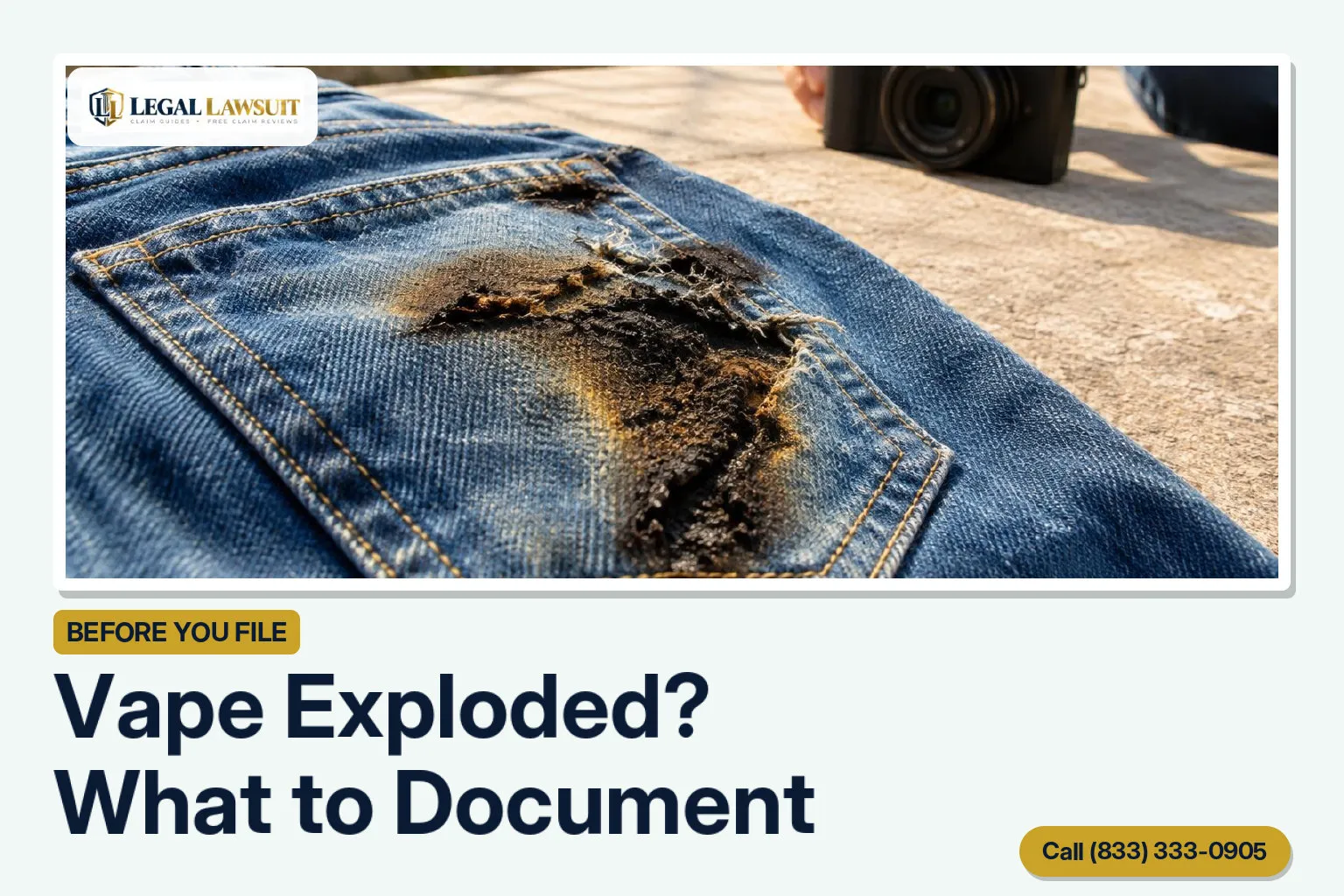
Common vaping explosion injuries include burns to the hands, thighs, groin, and face, as well as broken or lost teeth, facial wounds, and soft-tissue damage, as described in published clinical observations. After getting medical care, document the device and battery details, where you bought them, any modifications, your symptoms, treatment, and recovery, and keep medical records and photos—information the FDA requests for tobacco-product safety reports.
This guide explains the injury patterns, warning signs that burns need emergency attention, and how to record product details without testing the damaged battery. It also walks through reporting a vape explosion to the FDA and preparing questions and records for a personal injury claim discussion.
What injuries can a vaping explosion cause?
A vaping explosion can cause flame burns, chemical burns, and blast-related trauma. Documented injuries have affected the hands, thighs, groin, and face, and have included tooth loss and soft-tissue damage, according to a clinical report of e-cigarette explosion injuries.
These are documented injury patterns—not a nationwide ranking of which injuries happen most often. The report describes patients who received treatment; it does not establish the likelihood of injury for every person who uses a vape. An injury list also cannot diagnose your condition or predict how you will recover.
If you were hurt, focus first on getting appropriate medical care rather than trying to work out the full extent of the injury yourself. Then organize the information you already have:
- Record what happened. Write down what you remember about the explosion and the injuries you noticed.
- Collect available product information. Gather receipts, packaging, order confirmations, and existing photos without testing the damaged device or battery.
- Prepare questions about next steps. Keep questions about treatment, reporting the incident, and a possible personal injury claim together so you can address them in the appropriate discussion.
You do not need to resolve every product or claim question before seeking care. Start with your health, then build a clear record of the incident and its effects.
Burns to the hands, thighs, groin, and face
A vaping explosion can cause burns on the hands, thighs, groin, and face. Heat-related burns come from heat or flames; chemical skin burns result from contact with a damaging chemical substance. Both flame burns and chemical burns were documented in the e-cigarette explosion clinical report.
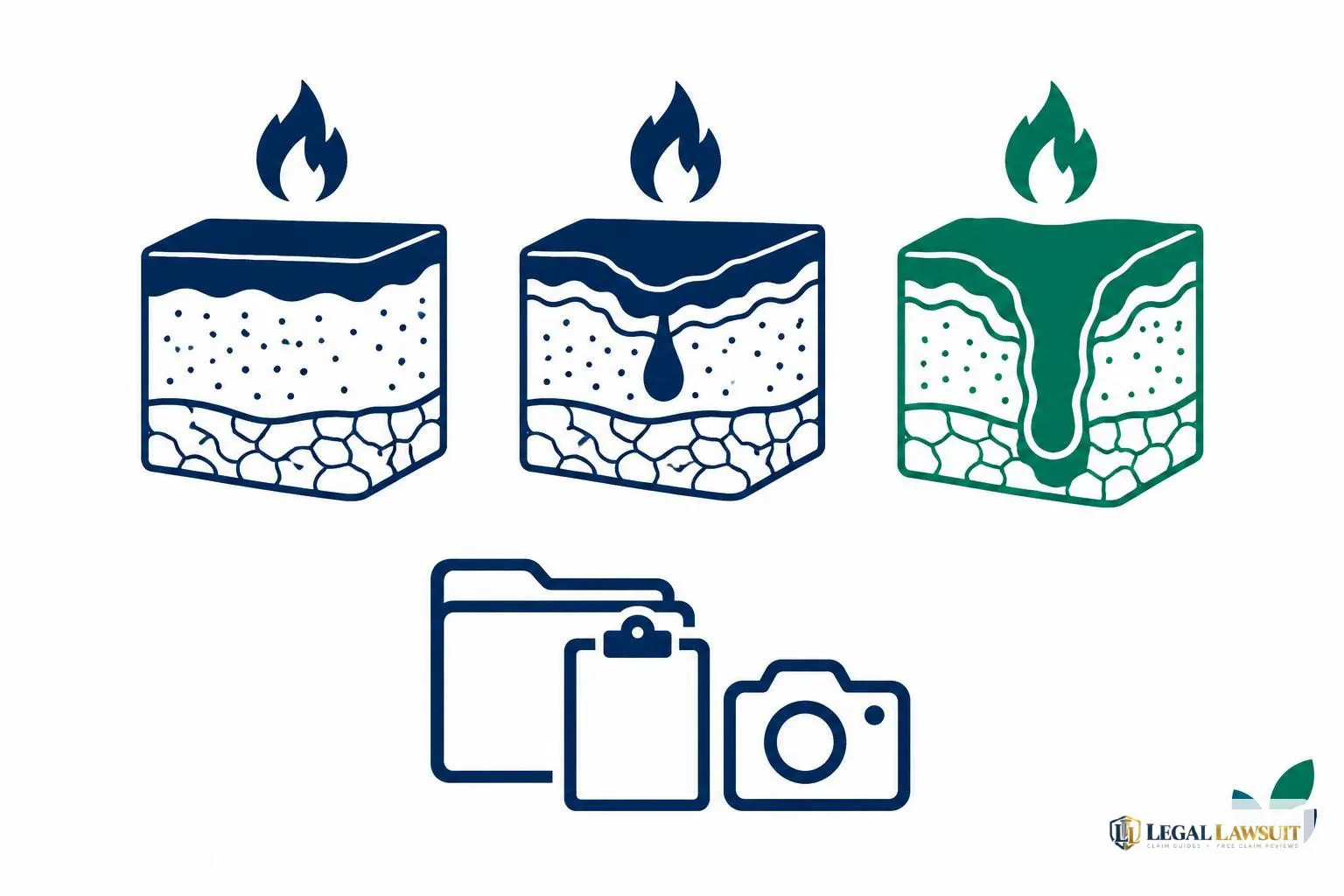
Clinicians describe burns by how deeply they damage the skin. MedlinePlus explains these burn classifications and cautions that pain alone does not show how serious a burn is—a very deep burn may cause little or no pain because nerves have been damaged:
- Superficial burns: Affect the skin’s outer layer, causing redness, pain, and swelling.
- Partial-thickness burns: Affect the outer layer and the layer beneath it. They can cause pain, redness, swelling, and blisters.
- Full-thickness burns: Damage the skin’s deeper layers. The skin may look white, brown, or black and feel numb.
For your care records and any later claim discussion, consider keeping these items together:
- The clinician’s diagnosis, including the recorded burn depth and affected body areas.
- Treatment instructions, including wound-care directions and prescribed medicines.
- Follow-up notes describing healing, symptoms, and any changes in treatment.
- Photographs you already have, labeled with the date and body area when known.
Use the clinician’s wording rather than trying to classify the burn yourself from its appearance or pain level.
Dental injuries, facial wounds, and soft-tissue damage
A vaping explosion can cause more than a skin burn. Blast trauma can cause tooth loss and soft-tissue damage, as documented in a clinical account of explosion-related facial injuries. If you receive care from several providers, keeping their records together can help you explain what happened and what treatment you received.
Create one folder, on paper or digitally, for records from your dentist, emergency department, and any other treating professionals. Consider including:
- Dental assessments: Keep examination findings and written treatment recommendations.
- Imaging already obtained: Save available images and reports, noting which provider holds the originals.
- Procedure notes: Keep records describing the care performed, rather than relying on your memory of a visit.
- Follow-up instructions: Gather discharge paperwork, dental care instructions, and recommended next appointments.
Keep photographs alongside these records, not in place of them. The written records can help you track each provider’s findings, treatment, and instructions in one place.
Also prepare a short symptom history in your own words. Describe what you experienced immediately after the explosion and how it changed afterward. Separate your observations from professional diagnoses: “I noticed a missing tooth after the explosion” is your account; a diagnosis belongs under the treating professional’s name and visit date. If you do not remember a detail or date, mark it as uncertain rather than guessing.
When burns need emergency medical attention
Get emergency help before trying to report the explosion or collect records. Severe burns, smoke inhalation, chemical burns, or uncertainty about how serious a burn is are reasons to call 911 or your local emergency number under MedlinePlus emergency guidance.
That guidance identifies difficulty breathing and a change in voice as possible signs of an airway burn. After a vaping explosion, these symptoms need immediate attention—not time spent photographing the device or finding purchase information.
MedlinePlus also cautions that pain alone does not tell you how serious a burn is: the most severe burns may be painless. Do not assume that a burn is minor simply because it does not hurt much.
While getting help, follow these precautions from the same guidance:
- Do not apply ice to a severe burn.
- Do not break blisters.
- Do not pull away clothing that is stuck to burned skin.
Documentation can wait while you receive care. You do not need to finish an incident report, organize receipts, or photograph your injuries before seeking emergency help.
Record product details without testing the damaged battery
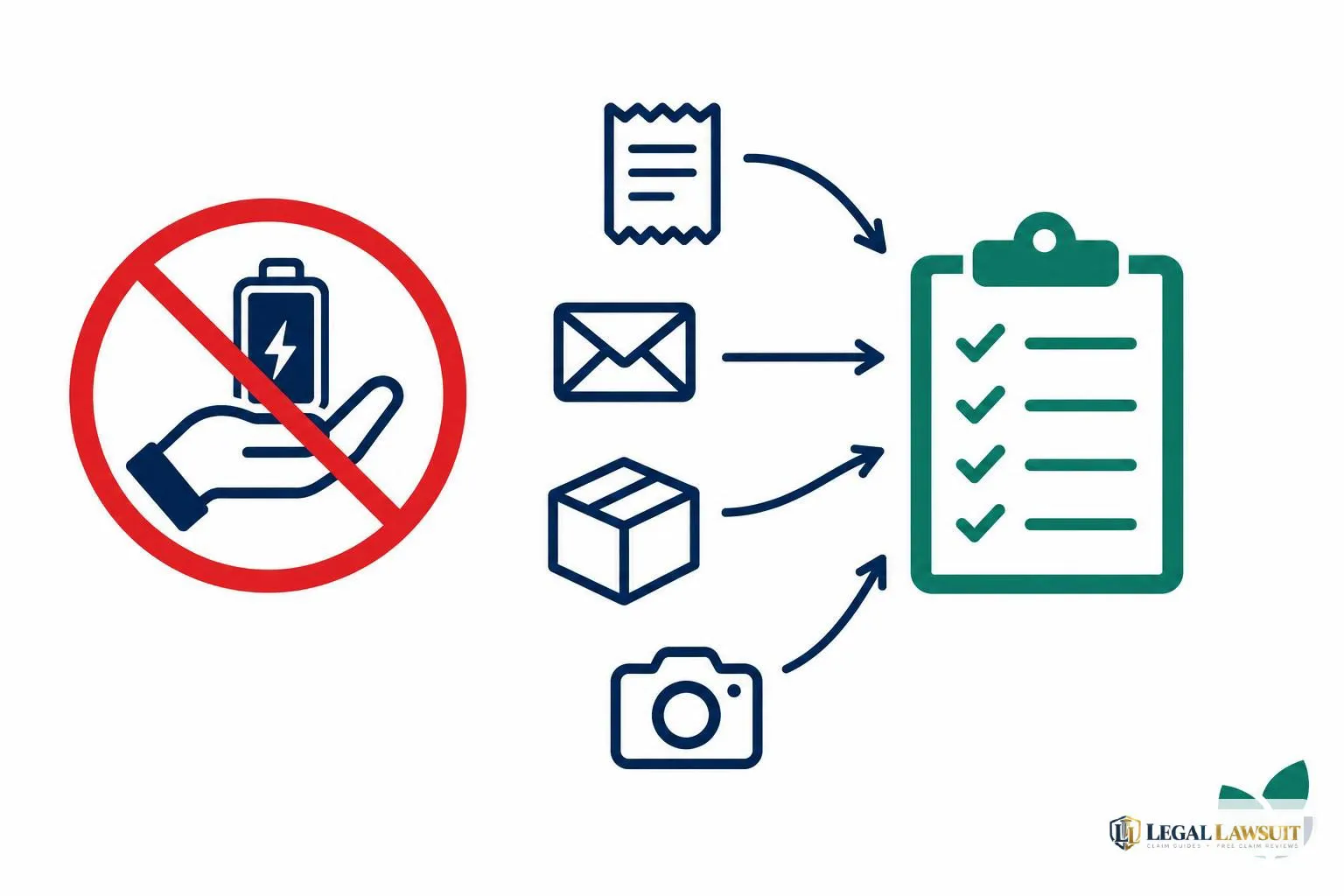
Start with information you can gather without touching the damaged device or battery. Do not turn it on, charge it, take it apart, or try to recreate what happened. Loose lithium-ion cells can short-circuit when they contact metal objects and forcibly expel burning contents. The CPSC warning about loose battery cells advises against using cells separated from battery packs.
Use FDA’s requested incident details to organize a written checklist:
- Product identity: Manufacturer, brand, model, and serial number, if available from records you already have.
- Purchase information: Where you bought the device or battery, including the store or website.
- Modifications: Any changes you know were made to the product. If you do not know, say so.
- Malfunction: What you remember the device doing before and during the incident.
- Symptoms: Any physical symptoms you noticed before the event, as well as injuries or symptoms afterward.
Look for purchase emails, order confirmations, receipts, existing packaging photographs, and other records already accessible without handling damaged components. Leave an item marked “unknown” rather than inspecting the wreckage to fill a gap.
Keep your description factual: write what you saw, heard, smelled, or felt, and the order in which it happened. Separate what you personally remember from information someone else supplied. You do not need to reproduce the failure or decide its technical cause to make a useful incident record.
How to report a vape explosion to FDA
You can report a vape that overheated, caught fire, exploded, or caused burns through FDA’s Safety Reporting Portal for tobacco products. FDA accepts reports from users and affected nonusers, so you can report an injury even if you were not the person using the device.
The portal asks for details about the product and what happened, including purchase information and any product modifications. For the health-related portion, be ready to describe:
- Affected body areas: Where you were injured and what symptoms you experienced.
- Symptom progression: How symptoms developed or changed after the incident.
- Testing and treatment: Any medical testing, care you received, and treatment decisions.
- Recovery: How you are doing and whether symptoms or injuries remain.
You can upload relevant medical records and photographs to support the report. FDA also allows follow-up information to supplement an initial report, which can help you document later treatment or changes in your recovery.
For your own files, keep a copy of the information you submit alongside your other incident records. This can help you keep your account consistent and identify details you may want to add later.
Prepare questions for a personal injury claim discussion
Start with a short account of what happened and the records you already have. You do not need to decide what caused the explosion before asking an attorney what needs investigation.
Keep your preparation list simple:
- Incident summary: When and where it happened, what you were doing, and what you noticed before and after the explosion. Separate what you remember from what you are unsure about.
- Product identifiers: Available brand names, model numbers, battery markings, packaging, and details about any changes to the device.
- Treatment records: Available medical and dental records, discharge instructions, bills, and notes about ongoing symptoms.
- Purchase records: Receipts, order confirmations, and seller information.
- Existing photographs: Images of injuries, the device, packaging, and the incident location that you already have.
- Correspondence: Messages received from the seller, manufacturer, insurer, or anyone requesting information or the device.
Several of these details also overlap with the product, purchase, injury, and treatment information FDA requests in tobacco-product safety reports.
Use your records to ask focused questions:
- Which product or component needs investigation?
- What additional records would help?
- Which deadlines apply to my circumstances?
- How should I respond to a request for the damaged device?
If you want an overview before that conversation, Legal Lawsuit’s guide to how to file a personal injury claim explains the broader process.
Bring your organized records and unanswered questions to a licensed attorney for a discussion specific to your injuries and circumstances.
Frequently asked questions
Can a vaping explosion cause both burns and dental injuries?
Yes. A vaping explosion can cause more than one type of injury. Clinical observations published in the New England Journal of Medicine documented flame burns, chemical burns, and blast injuries, including tooth loss and soft-tissue damage. These observations describe possible injury patterns; they do not predict the injuries or recovery of any individual person.
Does less pain mean a vape explosion burn is minor?
No. Pain alone cannot tell you how serious a burn is. MedlinePlus explains that the most serious burns may be painless because nerve endings have been damaged. Deep burns may look white, brown, black, or leathery. Do not use low pain as reassurance that an explosion burn is minor.
When should I seek emergency help after a vape battery burn?
Call emergency services if you have trouble breathing or signs of shock, such as faintness, weakness, or decreased alertness. MedlinePlus also advises emergency help for burns involving the face or genitals, burns about the size of your palm or larger, and burns whose severity is uncertain. Do not put ice on a burn, break blisters, or remove clothing stuck to burned skin.
What product details does FDA ask for after a vape explosion?
The FDA’s tobacco product reporting guidance asks for identifying details about the product, where it was purchased, and any modifications. Include what happened, your symptoms, treatment, and recovery information. Photos and medical records can also help document the event. Gather details from records you already have rather than testing the damaged device.
Can I report an explosion if I was nearby but was not vaping?
Yes. FDA accepts tobacco product problem reports from people who use the products and people who do not, including people affected while nearby. In your report, distinguish what you personally saw or experienced from details someone else told you. FDA also allows follow-up reports if you later have additional information about the incident or your recovery.
Sources
- Explosion Injuries from E-Cigarettes · New England Journal of Medicine · 2016-10-06
- Burns · MedlinePlus, U.S. National Library of Medicine · 2026-04-09
- Safety Reporting Portal for Tobacco Products · U.S. Food and Drug Administration
- CPSC Issues Consumer Safety Warning: Serious Injury or Death Can Occur if Lithium-Ion Battery Cells Are Separated from Battery Packs and Used to Power Devices · U.S. Consumer Product Safety Commission · 2021-01-08
This article is general information, not legal advice. Laws and deadlines vary by state and change over time; check the linked sources or speak with a licensed attorney about your situation.
Related Posts

You have the right to say no to medical treatment, but in an injury, disability, or workers' comp claim that choice can lower or stop your benefits. Here is how each system treats a refusal, and which reasons the rules accept.
Ninguna calculadora en línea sabe cuánto recibirás de un acuerdo por filtración de datos. Esta guía explica cómo se reparte realmente el dinero y cómo calcular tus propias pérdidas documentadas antes de presentar tu reclamo.
MRS BPO, LLC is a debt collection and accounts receivable firm based in Cherry Hill, New Jersey. This guide covers what its letter has to tell you, how to dispute the debt in writing, and how to control contact while you check it.