
Short answer: This article explains the key facts, eligibility issues, settlement factors, deadlines, and source-backed updates related to this legal topic. Results vary by case facts, evidence, jurisdiction, and representation.
What This Guide Covers
- Why Disability Benefits Fraud Matters to Everyone
- What is Disability Benefits Fraud and What Does It Look Like?
- How to Report Suspected Disability Benefits Fraud
- The Fight Against Fraud: Agencies, Penalties, and Prevention
- Frequently Asked Questions about Disability Fraud
- Protecting the System and Your Rights
Why Disability Benefits Fraud Affects All of Us
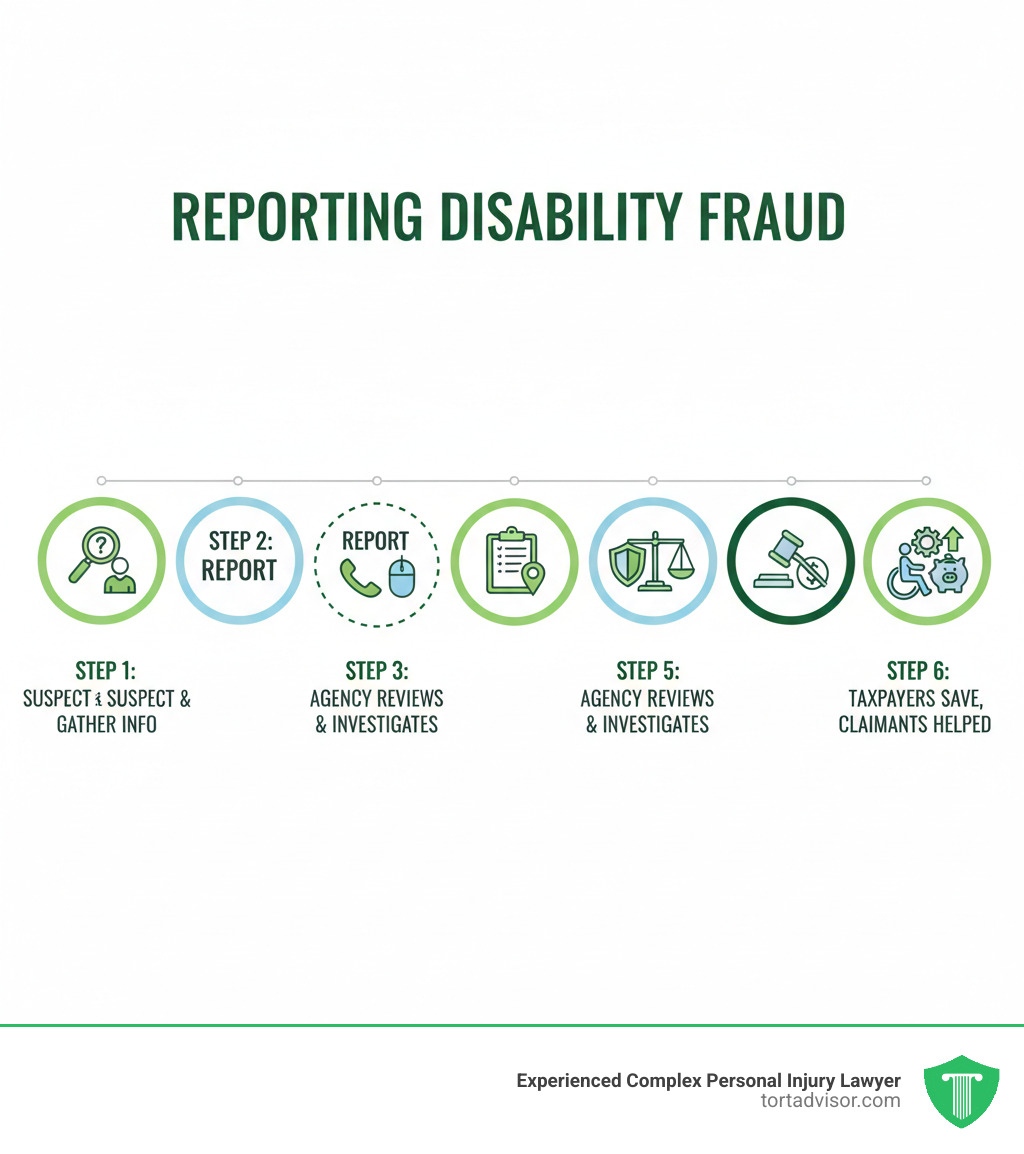
Disability benefits fraud means collecting payments illegally by giving false information or hiding facts that affect eligibility. It pulls billions of dollars out of programs such as Social Security Disability Insurance (SSDI) and Supplemental Security Income (SSI), costing taxpayers and slowing help for people who truly cannot work. How to report suspected disability benefits fraud:
- United States: Contact the SSA Fraud Hotline at 1-800-269-0271 or file a report online at oig.ssa.gov.
- Canada: Reach Service Canada at 1-800-206-7218 for EI fraud or 1-800-277-9914 for CPP/OAS fraud.
- Reports can be made anonymously.
- Include the person’s name, address, and the specific reasons you are suspicious.
Fraud takes money away from people living with serious medical conditions. In fiscal year 2022, the Cooperative Disability Investigations (CDI) program by itself saved more than $33 million for SSA disability programs and $46 million for connected programs such as Medicare. Schemes range from a single person working while collecting checks to organized groups that cheat insurers out of hundreds of thousands of dollars. The result is higher premiums, depleted public funds, and longer waits for honest applicants. Penalties in reported cases have included prison terms of 12 to 27 months, restitution of $200,000 to more than $500,000, and a lifetime bar from future benefits. Reporting suspected fraud helps protect these safety nets. I’m Mason Arnao, and my background in data management and secure systems has shown me how agencies use technology to find and investigate false claims, keeping these programs sound for everyone.
Related reading on disability benefits fraud:
- Denied disability claim
- Disability claim assistance
- how to claim social security disability insurance Arkansas
Disability Benefits Fraud Defined: What It Looks Like in Practice
Disability benefits fraud is intentionally lying or withholding information to collect payments a person has no right to. It touches government programs like SSDI and SSI, private disability insurance, and Canadian programs. An honest mistake is not fraud; fraud is a planned deception that damages public confidence and makes it harder for people with real disabilities to get help. It often involves altering medical evidence and hiding physical abilities over a long period. If you think your benefits were unfairly denied, our page with More info about SSDI Lawsuits explains your legal options.

How People Commit Disability Benefits Fraud
Every fraud scheme depends on deliberate deception. Frequent methods include:
- Overstating a condition: Making a genuine medical problem sound worse than it is in order to qualify.
- Inventing an injury or illness: Claiming a condition that does not exist, sometimes backed by forged medical records.
- Hiding work: Earning money “off the books” while claiming a total inability to work.
- Concealing income or assets: Not reporting money or property in order to qualify for needs-based programs such as SSI.
- Misusing a representative payee role: A person appointed to manage someone’s benefits spends the money on themselves.
- Collecting a deceased person’s benefits: Continuing to cash payments after the beneficiary has died.
- Lying about marital status: Claiming to be unmarried to hide a spouse’s earnings, which can change SSI eligibility.
Investigators are trained to recognize these familiar patterns. Agencies publish guidance on how they identify disability fraud.
What Fraud Costs Taxpayers
Disability benefits fraud costs the public enormous sums every year. The Cooperative Disability Investigations (CDI) program, one of the main anti-fraud efforts, has saved taxpayers $7.9 billion in total since it began. States face the problem too: in a single fiscal year, California flagged suspected fraud claims with potential losses above $109 million. In one case, suspects set up sham companies and took more than $450,000 from insurers plus $60,000 in COVID-19 relief money, according to this California Department of Insurance release on the arraignment of a dozen suspects in a disability fraud scheme. Each dollar lost is a dollar that cannot reach honest claimants or public services.
How to Report Suspected Disability Benefits Fraud
Reporting suspected disability benefits fraud helps safeguard a system people depend on. Agencies offer confidential reporting, you can stay anonymous, and whistleblower laws protect against retaliation. Detailed reports are the most useful, so try to include:
- Who you suspect (name and address)
- What they are doing that looks fraudulent (for example, holding a particular job or hiding income)
- When and where you saw it happen
- How you came to know about it
You do not have to investigate yourself; even incomplete information can prompt trained investigators to open a case.

Where to Report Fraud in the U.S.
Fraud involving SSDI and SSI is handled by the Social Security Administration’s Office of the Inspector General (SSA OIG).
- By phone: The SSA Fraud Hotline is 1-800-269-0271 (Monday–Friday, 10 a.m. to 4 p.m. ET). TTY: 1-866-501-2101.
- Online: Complete the form at Report Fraud to the SSA OIG.
- By mail: Social Security Administration Fraud Hotline, OIG, P.O. Box 17785, Baltimore, MD 21235.
For state-run programs, look up “report welfare fraud” on your state government’s official website to find the right office.
Where to Report Fraud in Canada
Canada runs disability benefits at both the federal and provincial levels.
- Federal benefits: Report Canada Pension Plan (CPP) fraud to Service Canada at 1-800-277-9914, and Employment Insurance (EI) fraud at 1-800-206-7218.
- Tax credit fraud: Concerns about disability tax credits go to the Canada Revenue Agency (CRA) through its Leads Program.
- Provincial benefits: Every province has its own process. In Ontario, for example, ODSP fraud can be reported through the provincial welfare fraud hotline or the online form to report suspected welfare fraud in Ontario.
Privacy laws protect your identity, and your report helps make sure public money reaches the people who actually need it.
Fighting Fraud: Investigators, Penalties, and Prevention
Combating disability benefits fraud takes coordinated work by government agencies, strong legal penalties, and safeguards that keep programs sound.

The Agencies and Programs That Investigate
In the U.S., the SSA OIG takes the lead, mainly through its Cooperative Disability Investigations (CDI) program. CDI units pair federal, state, and local law enforcement to look into questionable claims before any money is paid, using surveillance, interviews, and records review to stop fraud early. The results speak for themselves: CDI investigations have produced roughly $7.9 billion in projected taxpayer savings since the program started, according to the Cooperative Disability Investigations Program report. Private insurers contribute as well, running their own fraud units, using AI to flag suspicious patterns, and joining forces on investigations.
Penalties for Disability Benefits Fraud
Because the offense is serious, the punishment for disability benefits fraud is too. A conviction can bring:
- Felony Convictions: A lasting criminal record that can affect jobs and housing.
- Prison Time: Reported sentences often fall between 12 and 27 months.
- Restitution: Courts require repayment of everything taken, which in reported cases has ranged from $200,000 to more than $500,000.
- Loss of Future Benefits: A conviction can permanently bar someone from disability benefits, even if they later develop a genuine claim.
Canada prosecutes fraud under statutes such as the Criminal Code of Canada. In the U.S., lawmakers have proposed tougher measures, including the Disability FRAUD Prevention Act, which would add stiffer penalties, required restitution, and new felony charges for professionals who abuse positions of trust. Being accused of fraud carries very high stakes. For help with denied claims or legal disputes, see More info on Denied Disability Claims.
Disability Fraud Questions People Ask
Disability benefits fraud can be hard to make sense of. These answers address the questions we hear most often.
How is disability fraud different from an honest mistake?
It comes down to intent. Fraud means knowingly giving false information to collect benefits, like faking an illness or concealing a job. A mistake is unintentional, such as forgetting to report a small gift or mistyping something on a form. Investigators look for a pattern of deliberate deception before bringing charges. If you discover an error, notify the agency right away to fix it.
Why is fraud harder to detect with ‘invisible’ disabilities?
Invisible disabilities — chronic pain, fibromyalgia, and serious mental health conditions, for example — cannot be seen. Someone may look fine on a “good day,” so surveillance alone says little about whether they can work overall. Investigators must review medical records, treatment history, and expert opinions in full to judge a claim. That complexity is why thorough medical documentation matters so much for honest applicants.
What if I am falsely accused of disability benefits fraud?
A false accusation is serious and stressful. Act right away:
- Respond to every notice. Answer official letters and calls promptly.
- Collect your records. Pull together the medical, financial, and work documents that support you.
- Know the allegation. Read the notice closely so you understand exactly what is being claimed.
- Get legal advice now. An experienced disability attorney can protect your rights and walk you through the process.
To find qualified help, visit More info on Disability Claim Assistance and connect with attorneys in our network who handle these complex cases.
Safeguarding the System While Protecting Your Rights
Disability benefits fraud has real victims: it takes resources from people with genuine disabilities, adds to taxpayers’ burden, and makes the process harder for applicants who urgently need help. Reporting suspected fraud is a meaningful public service that keeps this safety net intact, and you can do it anonymously. If you truly need benefits, don’t let a demanding process discourage you — be honest and complete on your application, and remember you can appeal a denial. Disability Claim Assistance resources can help. If you are wrongly accused of disability benefits fraud, getting skilled legal help is essential, because a false accusation can be devastating and fighting it while living with a disability is exhausting. Legal Lawsuit is a legal-information site that helps people facing these challenges, including SSDI Lawsuits, understand their options and connect with experienced disability attorneys in our network through a free, confidential case review. Whether you are appealing a denial or answering a false accusation, the stakes are too high to handle alone. Protecting these programs means both opposing fraud and defending the people who rely on them — a balance that keeps this support available for future generations.
Related Posts
Quick Answer: The Boy Scouts of America (BSA) filed for Chapter 11 bankruptcy in 2020 after facing tens of thousands [...]
Quick Answer: Survivors of sexual abuse by Catholic priests, nuns, or other Church personnel may be able to file a [...]
Quick Answer: Clergy abuse settlements vary enormously based on the severity of the abuse, the strength of evidence that the [...]