Short answer: This article explains the key facts, eligibility issues, settlement factors, deadlines, and source-backed updates related to this legal topic. Results vary by case facts, evidence, jurisdiction, and representation.
📋 Table of Contents
- Understanding Your Rights After California’s Devastating Wildfires
- First Steps After a Wildfire: Protecting Your Rights and Claim
- Navigating Your Insurance Policy and Rights
- Pursuing California Wildfire Legal Claims Against Liable Parties
- Building Your Case: Evidence, Deadlines, and Legal Help
- Frequently Asked Questions about California Wildfire Claims
- Conclusion
California Wildfire Legal Help: Know Your Rights After a Fire
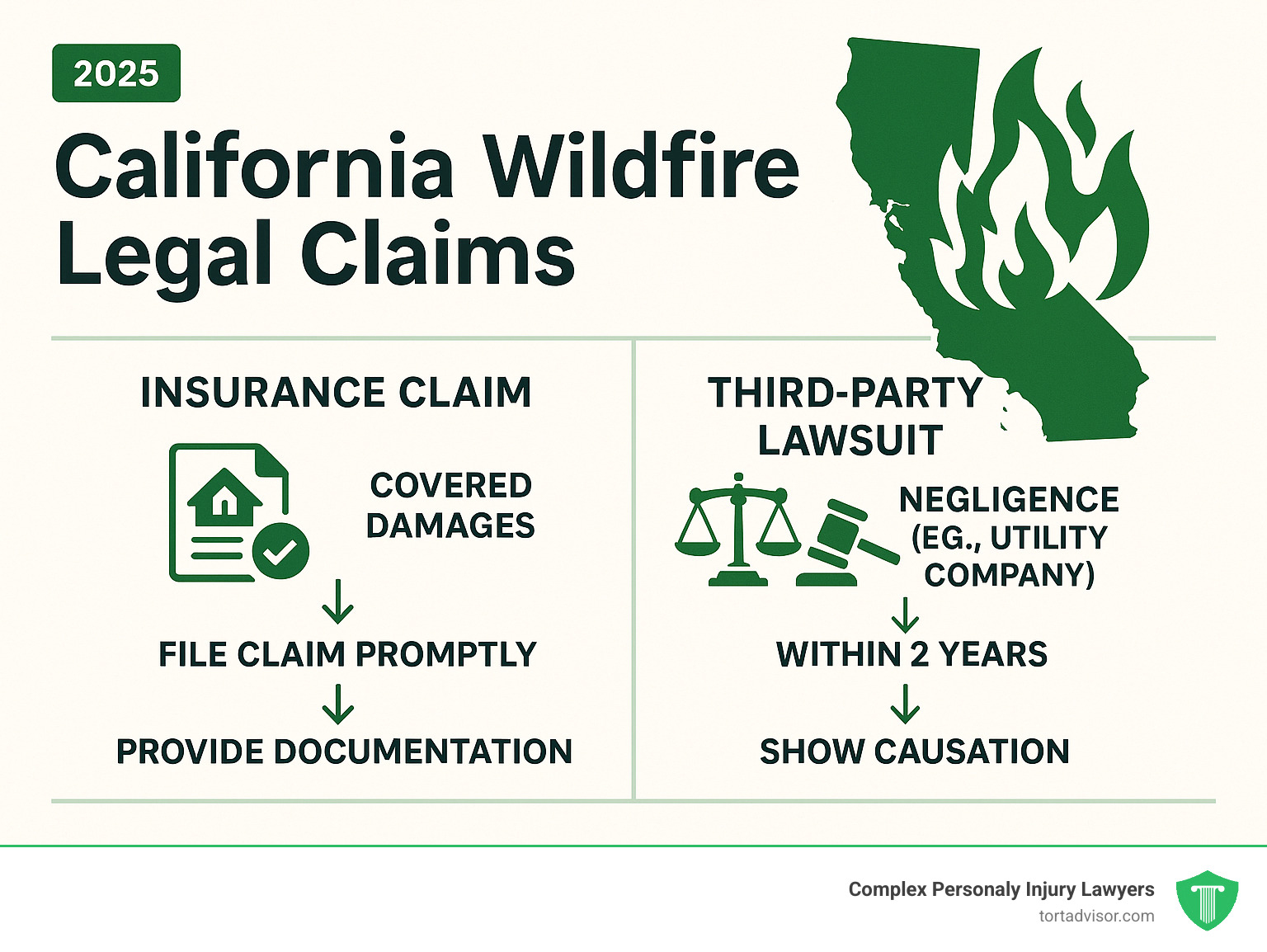
California wildfire legal help starts with knowing that fire survivors usually have several routes to compensation. After a wildfire destroys a home or business, you may be able to pursue:
- Insurance claims for covered property losses and living costs
- Lawsuits against third parties such as utilities or other careless parties
- Bad faith claims when an insurer wrongly denies or shortchanges a valid claim
- Government aid programs that provide extra support
California has endured some of the deadliest and most destructive wildfires on record. The Camp Fire killed at least 81 people and destroyed more than 17,000 homes and other structures, and in 2020 Pacific Gas & Electric agreed to pay $13.5 billion to victims of fires its equipment sparked in 2017 and 2018.
Navigating the law here is complicated. Insurers may refuse claims or offer far less than the real loss, utilities frequently contest responsibility even when evidence points to their equipment, and many families discover their coverage won’t pay to rebuild.
The good news is that California gives wildfire survivors strong legal protections. You are entitled to fair treatment from your insurer and can sue whoever negligently caused the fire, and experienced attorneys can guide you through it without upfront fees.
Key terms for California wildfire legal claims:
- California wildfire litigation lawyer (https://legallawsuit.com/california-wildfire-litigation-lawyer/)
- California wildfire wrongful death (https://legallawsuit.com/california-wildfire-wrongful-death/)
What to Do First After a Wildfire to Protect Your Claim
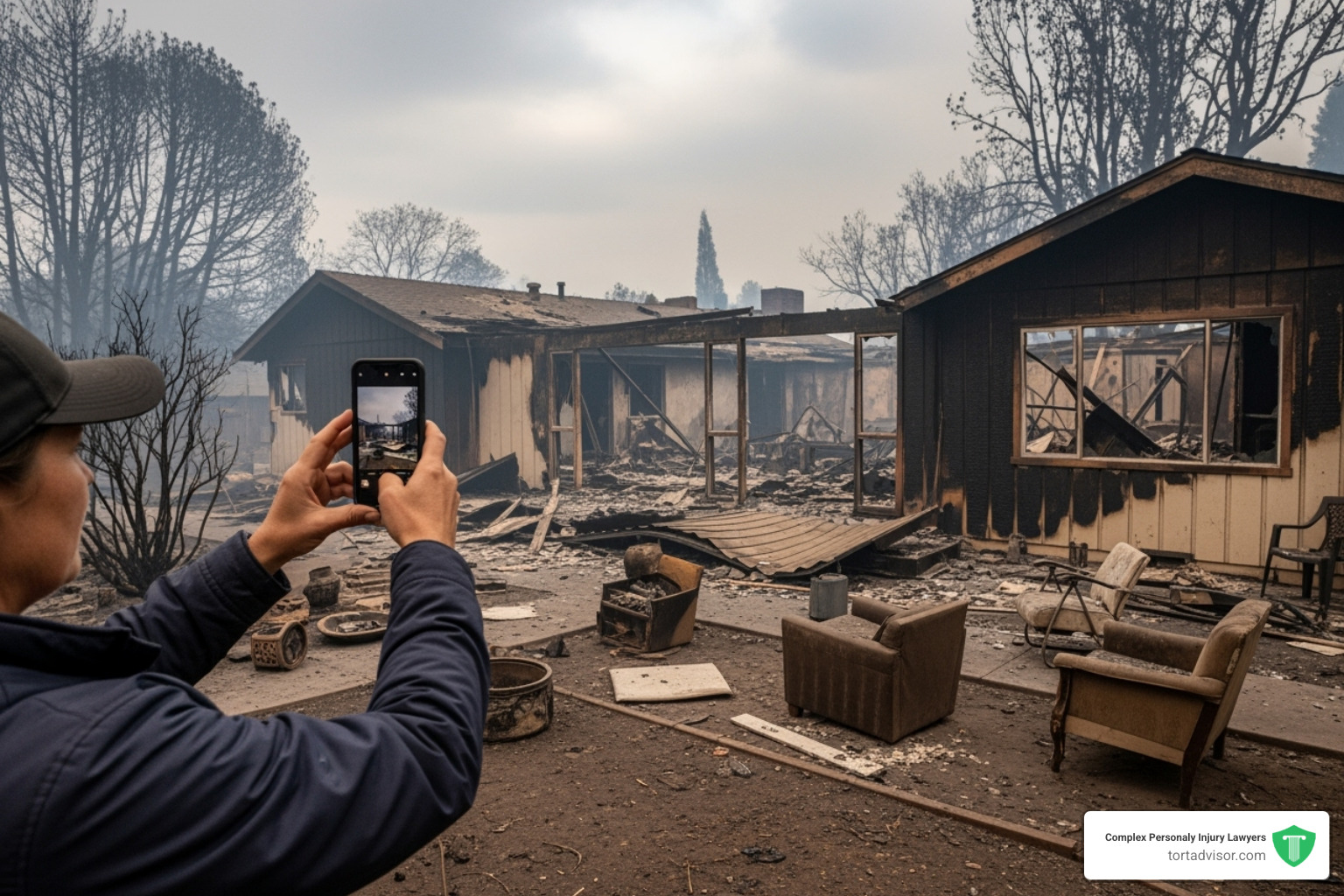
What you do in the hours and days after a fire can strengthen or weaken your California wildfire legal claims. Start with these steps:
- Call your insurance company right away to open a claim. Policies often require prompt notice, and reporting early can speed up help.
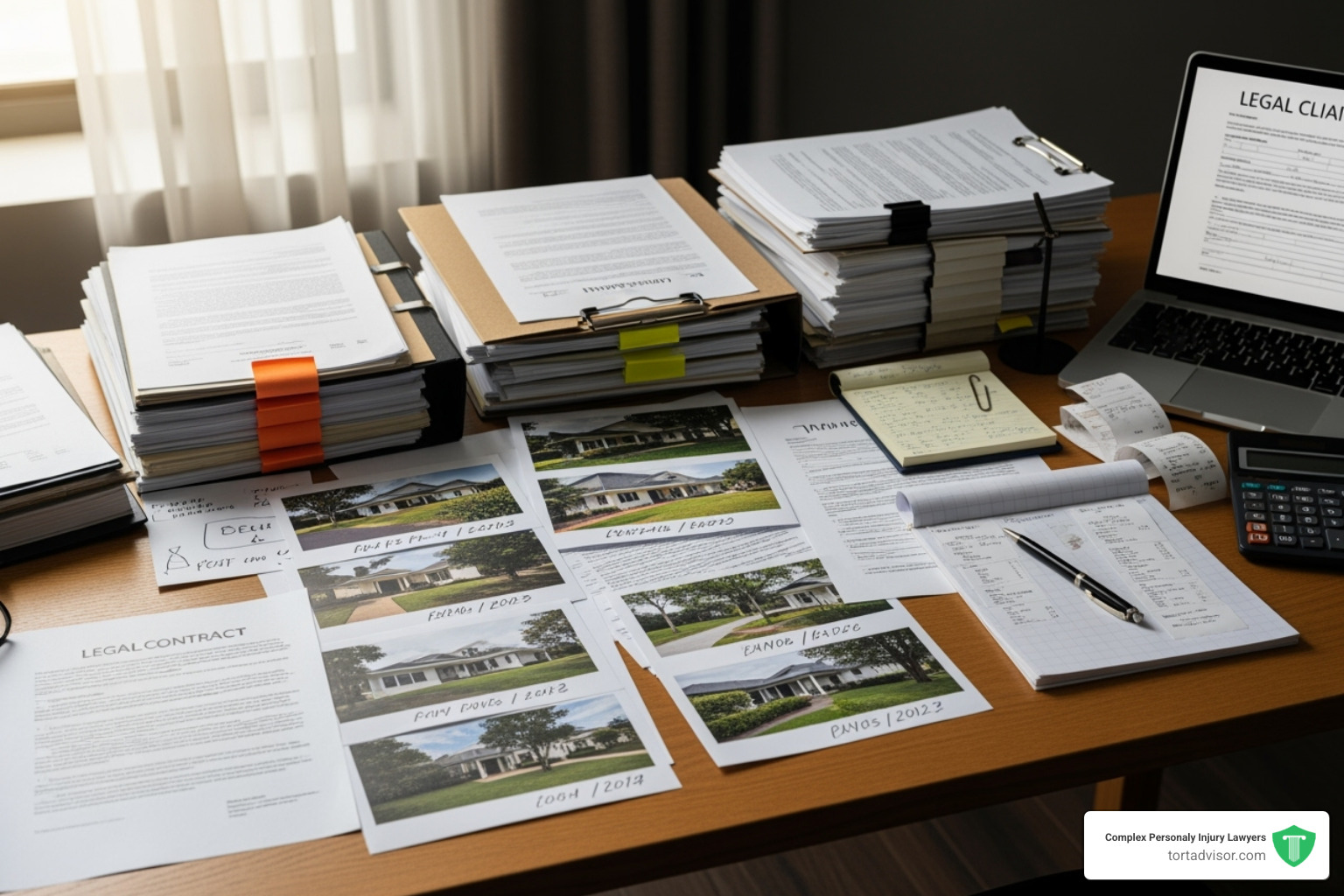
- Photograph everything before you clean. Shoot plenty of photos and video of all the damage, including subtle signs like soot, heat discoloration or warped siding, since intense heat can quietly damage foundations, HVAC systems and structural framing.
- Save every receipt. Costs for temporary lodging, clothing and securing your property may be covered under Additional Living Expenses, but only with proof of payment.
- Build a thorough inventory of what you lost. List everything you can recall, from furniture and electronics to personal items, with descriptions and rough values; old photos can help you remember.
- Protect the property from further harm. When it is safe, board up windows or tarp a damaged roof, because insurers expect reasonable steps to prevent more loss.
The California Department of Insurance publishes a useful residential property claims guide to help move your claim along. If you are weighing legal action, read more about wildfire lawsuits to understand your choices.
Options for Renters and Uninsured Fire Victims
Not owning your home or lacking insurance doesn’t leave you without rights or ways to recover.
Renters who carry renter’s insurance can claim the loss of their belongings. The landlord’s policy covers the structure, but yours covers your possessions, so document losses carefully and file quickly.
People without insurance can still sue whoever started the fire. California allows every wildfire victim to seek compensation from a negligent utility or other responsible party.
Federal and state aid programs, including FEMA and the Small Business Administration, offer grants and low-interest loans to disaster survivors whether or not they are insured, which can tide you over while you pursue other compensation.
Your Insurance Policy and Your Rights
Working with an insurer after a wildfire can be frustrating, but California law gives policyholders meaningful protections.
California requires insurers to act in good faith, so they are legally obligated to handle your claim promptly, investigate it fully and offer a fair settlement. Fair, timely treatment is your right.
Additional Living Expenses (ALE) coverage is one of the most important parts of your policy, paying the added cost of things like temporary housing and meals while your home is unlivable. California law guarantees ALE for at least 24 months, extendable to as long as 36 months when rebuilding is delayed by factors outside your control, a vital safeguard when reconstruction drags on. Read about these protections in the state’s fair claims settlement regulations, and see the Department’s residential property claim page for ALE details.
Why Wildfire Claims Get Denied or Underpaid
Even with good-faith rules in place, insurers sometimes reject or underpay California wildfire legal claims. Knowing the usual tactics helps you push back:
- Underinsurance: Many owners learn their limits are too low for today’s construction costs.
- Exclusions: Policies frequently cap or exclude items like landscaping, sometimes proposing to swap mature trees for saplings.
- Thin Documentation: Insurers may seize on gaps in your records to challenge what your loss is worth.
- Fights Over Repair Costs: Insurers often submit low estimates or quarrel about the quality of replacement materials.
Read about exclusions and related rules in the California Insurance Code provisions.
What Counts as Insurance ‘Bad Faith’?
An insurer that does not treat you fairly may be acting in “bad faith,” a serious legal breach. Warning signs include:
- Needless Delays: Stretching out the process on purpose to wear you down into a lower settlement.
- Shallow Investigation: Doing a cursory review that ignores important evidence.
- Misstating Your Coverage: Knowingly misleading you about your policy to justify a denial.
- Lowball Offers: Proposing a plainly unreasonable amount that doesn’t reflect your actual loss.
Spotting these signs matters because a bad faith claim can recover more than your policy limits. For related information, see our guide to personal injury lawsuits.
Deadlines Insurers Must Meet in California
California backs up its good-faith rule with firm deadlines for handling California wildfire legal claims:
- Acknowledgment: The insurer must confirm receipt of your claim within 15 calendar days.
- Decision: It has 40 calendar days after receiving proof of loss to accept or deny the claim.
- Payment: Once you agree on a settlement, payment is due within 30 calendar days.
Missing these deadlines without good reason can be evidence of bad faith. For details, see the Department of Insurance’s guide for adjusting property claims after a major disaster.
Suing the Parties Responsible for a California Wildfire
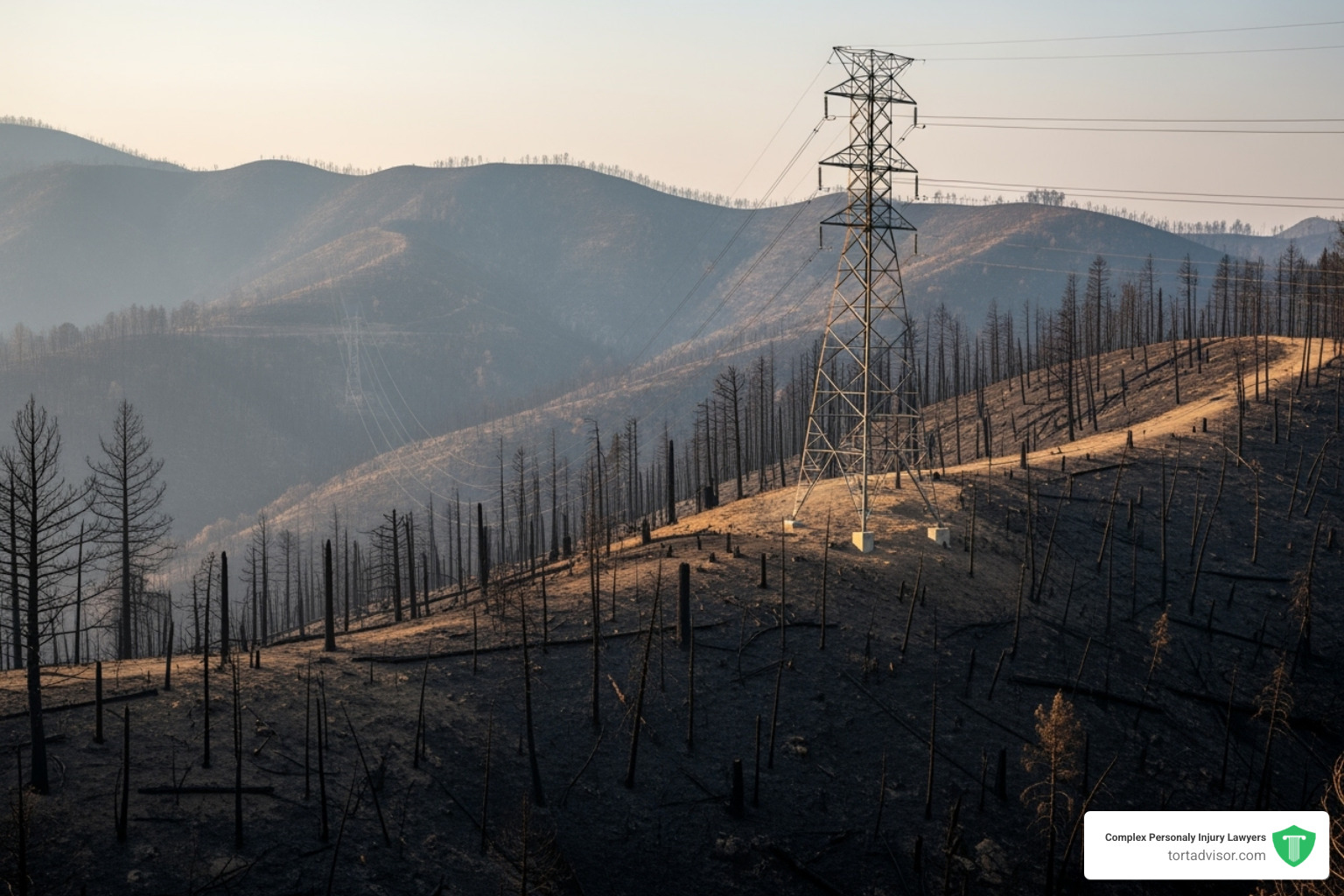
If insurance leaves you short, you can bring California wildfire legal claims against the negligent parties behind the fire, seeking payment for your full losses while holding those companies to account.
Utilities are often the defendants. Power equipment owned by companies such as Pacific Gas & Electric (PG&E) and Southern California Edison (SCE) has sparked many of the state’s worst fires, often because of poorly maintained equipment or failure to shut off lines in dangerous conditions. PG&E’s $13.5 billion settlement over the 2017 and 2018 fires shows how large utility liability can be.
Public agencies can be liable too when their negligence helped a fire spread, such as water system failures during firefighting. Homeowners, renters, business owners and anyone injured or emotionally harmed by a fire may have a claim.
Explore the different kinds of wildfire lawsuits here.
Damages Available in California Wildfire Lawsuits
A lawsuit tries to make you “whole,” often covering far more than insurance pays:
- Property Damage: The full cost of rebuilding or repairing your home and other structures, along with any loss in property value.
- Belongings: What it costs to replace everything destroyed, from furnishings to heirlooms.
- Financial Losses: Missed wages, lost business income and evacuation costs like lodging and food.
- General Damages: Payment for non-financial harm such as emotional distress, pain and suffering and lost enjoyment of life.
- Landscaping Losses: The genuine replacement value of mature trees, which depends on species, size, age and the arborist’s appraisal, plus erosion-control work.
- Wrongful Death: Families who lost someone can recover funeral costs, lost financial support and compensation for their grief. Read more about California wildfire wrongful death claims.
Strict Liability, Inverse Condemnation and the CPUC
California law gives wildfire victims a strong tool known as strict liability. When a utility’s equipment starts a fire, the utility can be held responsible even without proof of negligence; you generally need to show only that its equipment caused the fire and that you were harmed.
The California Public Utilities Commission (CPUC), which oversees utilities, matters here as well. Its investigations into fire causes often produce key evidence, and findings of safety violations can bolster victims’ claims. Learn about the CPUC’s work on the CPUC website.
Building Your Wildfire Case: Evidence, Deadlines and Legal Help
When should you get legal help after a wildfire? Reach out to an attorney early if your losses are significant, your claim was denied or the process feels overwhelming. Getting guidance early protects your rights from day one.
Legal Lawsuit connects you with attorneys in our network who handle California wildfire legal claims. They generally work on contingency, so you pay no attorney fee unless they recover money for you, which removes cost as a barrier to experienced help. An attorney can review your coverage, investigate utility negligence and pursue bad faith claims against your insurer.
Evidence That Proves a Wildfire Claim
Good evidence underpins every claim, and the more you document, the stronger your case.
- Photos and Video: Record all damage before cleanup, with wide shots for scale and close-ups for detail, to show the true extent of what you lost.
- Financial Records: Hold on to receipts for repairs, lodging, meals and every other displacement expense, plus all communications with your insurer, including emails and notes from calls.
- Expert Reports: Assessments from structural engineers, arborists or public adjusters offer independent opinions that can rebut low offers, and medical records are essential if you were physically hurt.
Deadlines for Filing California Wildfire Legal Claims
Statutes of limitations are firm, and missing one can end your right to compensation. For California wildfire legal claims, the limits differ by claim type:
- Personal Injury and Wrongful Death: Two years from the date of the incident.
- Property Damage: Three years from when the damage happened.
- Claims Against Public Agencies: Far shorter, frequently six months.
These rules can get complicated, since the clock may start when damage is discovered rather than when the fire occurred, and a missed deadline can forfeit your right to sue. An experienced attorney will make sure everything is filed in time. For more, see the California courts’ page on the statute of limitations.
California Wildfire Legal Help: Common Questions
Wildfire survivors usually have plenty of questions. Here are answers to the ones we hear most often.
Can I sue my insurer for bad faith after a wildfire?
Yes. If your insurer unreasonably denies, delays or lowballs your California wildfire legal claims, you can take it to court with a breach of contract claim for failing to honor the policy and a bad faith tort claim for breaking its duty to deal fairly. A successful bad faith case can recover more than your policy limits, including emotional distress damages and, sometimes, punitive damages.
How much does a wildfire attorney cost?
Attorneys in the Legal Lawsuit network generally work on contingency. You pay nothing upfront, and the fee is a percentage of whatever settlement or verdict they obtain. If there is no recovery, you owe no attorney fee. That arrangement gives your lawyer every reason to pursue the largest recovery possible.
What state resources can wildfire survivors use?
California offers several important resources for fire survivors.
- The California Department of Insurance (CDI) runs a wildfire resource center explaining how to file claims and what your rights are, and its consumer hotline can help with insurer disputes. Visit the CDI wildfire resources page.
- The California Governor’s Office of Emergency Services (CalOES) offers guidance on debris removal, financial help and other recovery support, making its site a good place to find state and federal aid. See the CalOES wildfire recovery site.
These agencies can help whether you are battling an insurer, looking for financial aid or figuring out your next step.
Conclusion
Rebuilding after a California wildfire is exhausting, with tangled legal and insurance hurdles at every turn. Through it all, remember that you have substantial legal rights. California law protects fire survivors, whether you are pressing an insurer for a fair payout or holding a negligent utility responsible.
Documenting your losses, meeting deadlines and getting professional help are the keys to recovering what you need to rebuild, and you shouldn’t have to do it alone. California wildfire legal claims are complicated, and the companies on the other side employ teams of lawyers to keep payouts low.
Legal Lawsuit connects you with attorneys in our network who are experienced in pursuing compensation for wildfire victims. They understand this area of law and generally work on contingency, so there is no fee unless your case recovers money and no upfront cost to getting strong representation.
With the right legal team behind you, you can concentrate on rebuilding your life while they fight for the resources you are owed.
Get California wildfire legal help today: request a free, confidential wildfire case review
Related Posts
Quick Answer: The Boy Scouts of America (BSA) filed for Chapter 11 bankruptcy in 2020 after facing tens of thousands [...]
Quick Answer: Survivors of sexual abuse by Catholic priests, nuns, or other Church personnel may be able to file a [...]
Quick Answer: Clergy abuse settlements vary enormously based on the severity of the abuse, the strength of evidence that the [...]