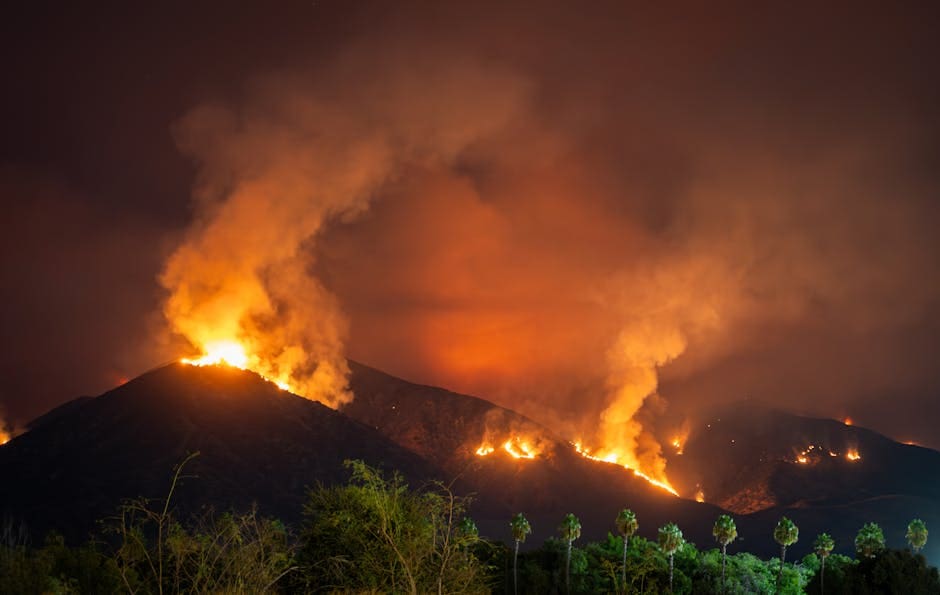
Short answer: This article explains the key facts, eligibility issues, settlement factors, deadlines, and source-backed updates related to this legal topic. Results vary by case facts, evidence, jurisdiction, and representation.
📋 Table of Contents
California Wildfire Wrongful Death: Your Legal Rights After a Deadly Fire
A California wildfire wrongful death claim arises when someone dies in a fire that negligence helped start, spread, or made deadlier through a failed emergency response. These claims let surviving relatives pursue compensation and accountability from utilities, public agencies, and other responsible parties.
California Wildfire Wrongful Death Claims: The Basics
- Who may file: a surviving spouse, children, parents, or the estate’s representative
- Frequent causes: failing power lines, late evacuation orders, insufficient water for firefighting
- Usual defendants: utilities (PG&E, SCE), government agencies, and property owners
- Recoverable losses: medical bills, funeral costs, lost income, and emotional harm
- Deadlines: 2 years for personal injury claims, 6 months for claims against government
- Notable cases: Camp Fire ($13.5B settlement), Eaton Fire (litigation ongoing as of this update)
Two of the ten deadliest fires in California history struck in 2025: the Eaton Fire killed 18 people and the Palisades Fire took 12 lives. The 2018 Camp Fire, with 85 deaths, is still the deadliest.
Many of those deaths were not simply the result of nature. Utility negligence, broken infrastructure, and poor emergency response frequently played a role.
I’m Mason Arnao. In my technology and data management work, I’ve helped legal teams sort through complex wildfire cases and spot the patterns that drive California wildfire wrongful death litigation.
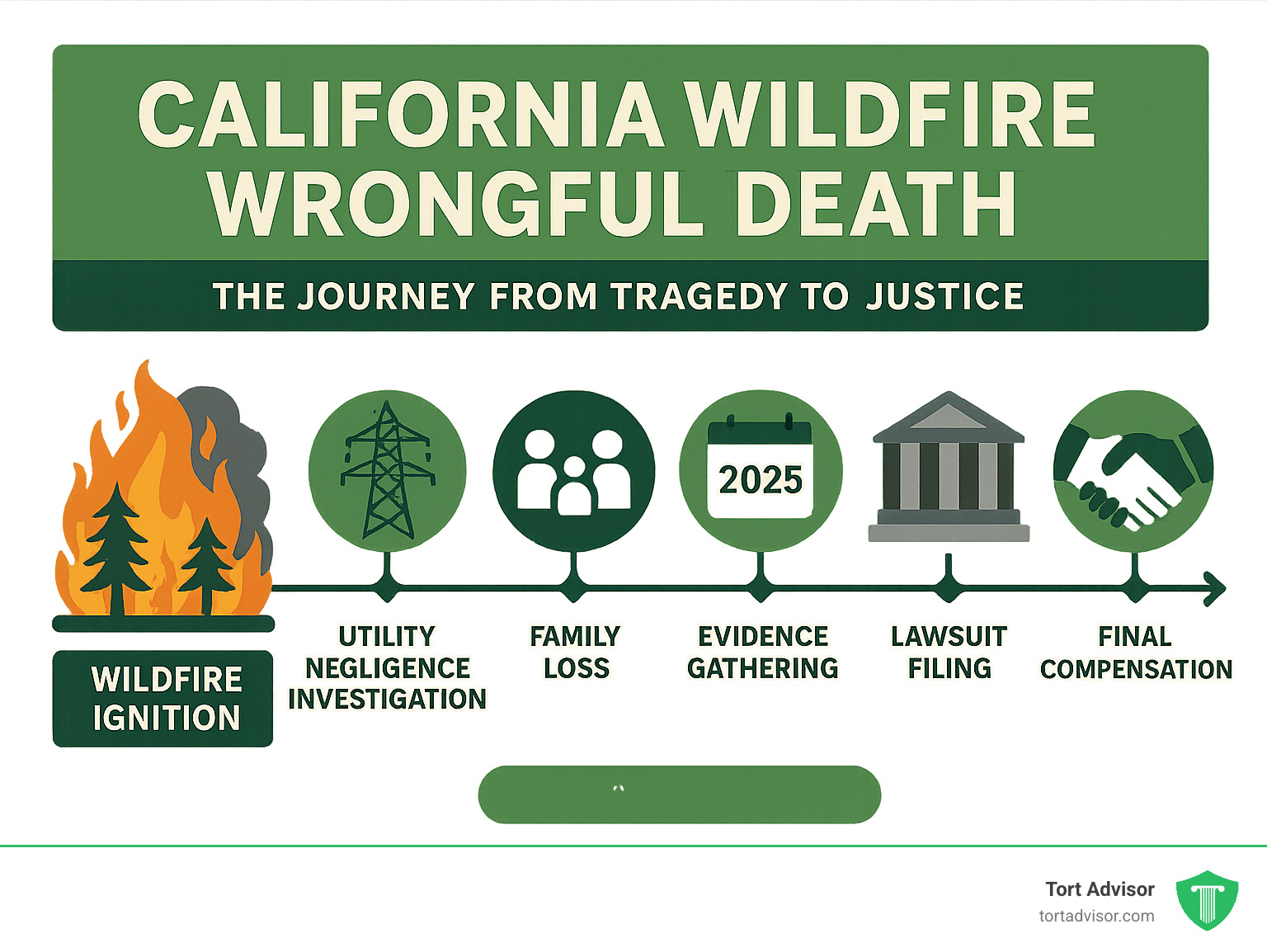
Who This Guide Is For
Families who lose someone in a California wildfire are often swamped by grief and money worries at the same time. This guide explains their legal rights, how to find qualified attorneys, and how to work through the complicated road to justice and compensation.
It also speaks to the wider community, showing how legal accountability can push lasting change in utility maintenance, emergency response, and wildfire prevention.
What Qualifies as a California Wildfire Wrongful Death?
California Code of Civil Procedure § 377.60 defines a California wildfire wrongful death as a death caused by another party’s “wrongful act or neglect.”
That wording matters. A death in a wildfire isn’t automatically a wrongful death; the law requires proof that someone’s negligence or misconduct caused or contributed to it.
California recognizes two distinct claims. A wrongful death claim belongs to surviving relatives and covers their own losses. A survival action carries forward the claim the person who died could have brought had they lived.
What Typically Causes a California Wildfire Wrongful Death
Most of California’s deadliest wildfires trace back to human failures, not acts of nature, which makes them preventable.
Power line failures lead the causes behind wrongful death cases. Old equipment throws sparks in high winds, utilities neglect vegetation near lines, and maintenance falls behind.
Southern California Edison faces more than 40 lawsuits over the Eaton Fire, with evidence suggesting its equipment may have sparked the blaze. PG&E’s negligence in the 2018 Camp Fire led to 85 deaths and eventually a $13.5 billion settlement.
Late evacuation orders are another tragic form of negligence. When agencies don’t warn people in time or emergency alerts fail, lives that could have been saved are lost. Many Eaton Fire victims never got an evacuation warning, even as crosswinds hit 100 mph.
Not enough water for firefighters has become a recurring problem. Part of the Palisades Fire litigation centers on the Santa Ynez Reservoir sitting offline to save money, which hampered crews when every minute mattered.
How Recent Fires Have Shaped Wrongful Death Cases
California’s ten deadliest fires trace how California wildfire wrongful death litigation has developed.
The 2018 Camp Fire was a turning point. Its 85 deaths and $16.5 billion in damages set key precedents, and PG&E pleaded guilty to 84 counts of involuntary manslaughter, the first time a utility was held criminally liable for wildfire deaths.
The 2025 Eaton Fire shows those precedents at work today. The fire killed 18 people, and numerous wrongful death suits target Southern California Edison over equipment failures and poor maintenance.
Together, these cases show that California wildfire wrongful death litigation has become an effective way to hold utilities and government agencies to account.
Who Can File, and Who Can Be Sued
California law spells out who may bring a California wildfire wrongful death claim, setting an order of priority that helps avoid disputes among relatives.
Priority Order for California Wildfire Wrongful Death Claimants
California Code of Civil Procedure § 377.60 lays out a clear ranking of who may file.
A surviving spouse or domestic partner ranks first and can file for their own losses as well as on behalf of minor children.
Children are next, including stepchildren who depended financially on the person who died. Adult children may file on their own, while minors are usually represented by the surviving parent.
Parents may file when there is no surviving spouse or child, though they must show financial or emotional dependence on their adult child.
Other dependent relatives may also have rights, lower in priority, such as siblings, grandparents, or others who relied on the deceased for support.
Last, an estate representative named by the probate court can file if no eligible relatives remain.
Who May Be Liable in a California Wildfire Wrongful Death
Who to sue depends on what started the fire and what led to the death. Recent California fires show that blame is often shared by several parties.
Utilities are often the main defendants. Pacific Gas & Electric (PG&E), which serves Northern California, has faced enormous liability for fires like the Camp Fire. Southern California Edison (SCE) faces more than 40 Eaton Fire lawsuits. The Los Angeles Department of Water and Power (LADWP) and San Diego Gas & Electric (SDG&E) have also been sued over wildfires.
Government agencies can be held accountable too. Cal Fire, local fire departments, and emergency management offices may be liable for slow response, poor evacuation orders, or infrastructure breakdowns.
Property owners and developers may share fault for neglecting vegetation near power lines or building in high-risk zones without adequate safeguards.
Equipment makers can also be defendants, including manufacturers of power lines, transformers, or emergency alert systems that fail when lives are at stake.
Families working through these cases can read our wildfire lawsuit guide to see how wrongful death claims fit within personal injury law more broadly.
Proving Fault and Preserving Evidence
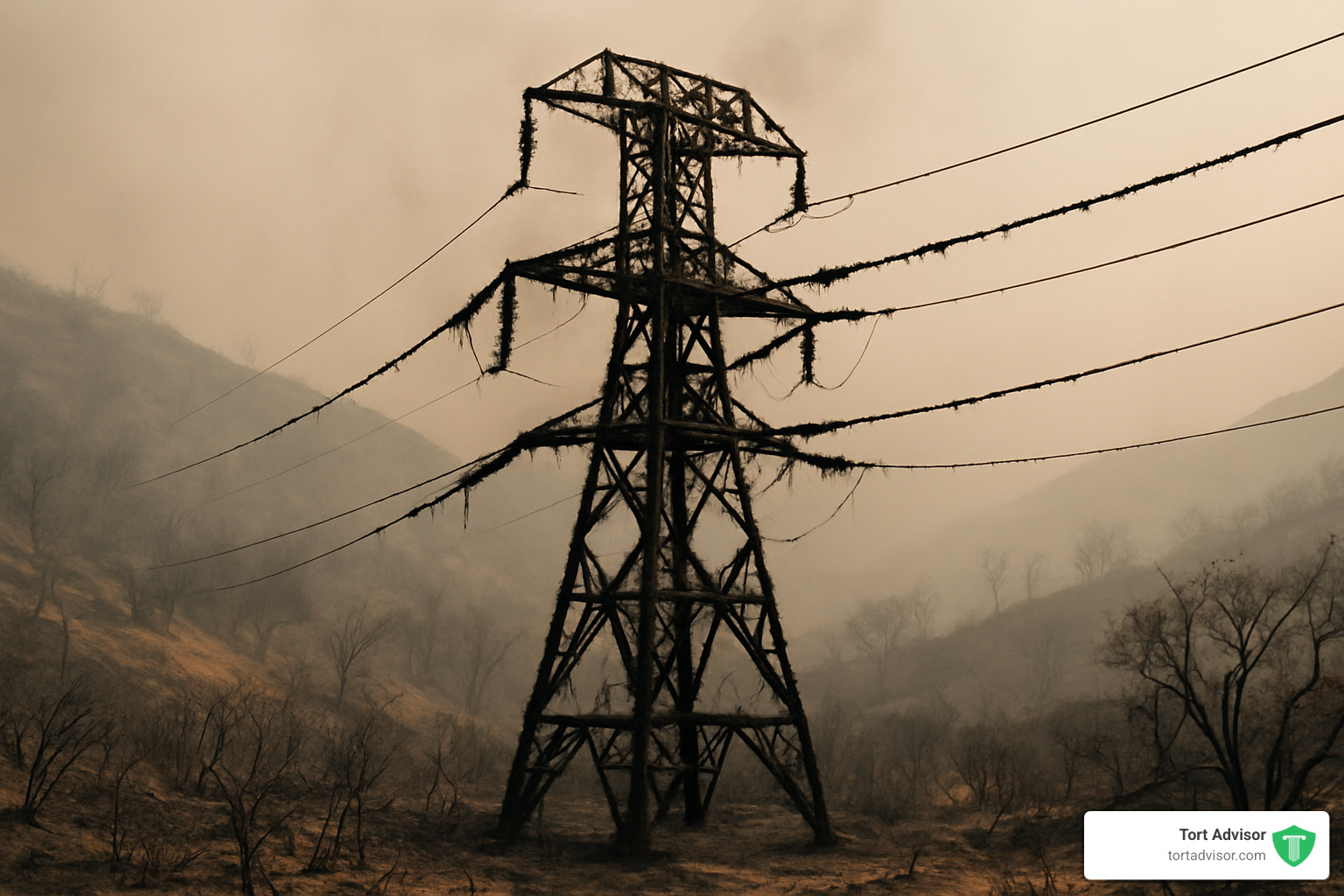
Families in California wildfire wrongful death cases must prove that negligence or wrongdoing caused or contributed to the death. Fire scenes change fast, so preserving evidence quickly is essential.
Evidence Checklist for a California Wildfire Wrongful Death Claim
A strong case draws evidence from many sources.
Origin and cause investigations are the backbone of most cases, with fire officials and independent experts reading burn patterns to pinpoint where and how the fire began.
Utility maintenance records often hold the key evidence in power line fires, showing whether inspections were done on schedule and equipment was kept in good repair.
Weather and wind data from the time of ignition can show whether a utility should have cut power during dangerous conditions.
Emergency response records include 911 recordings, evacuation timelines, and how agencies coordinated.
Autopsy and medical records establish the cause of death and tie it directly to the fire.
Drone footage and phone videos taken during the fire offer compelling visual proof of conditions and the response.
Expert witnesses, such as fire investigators, electrical engineers, and emergency management specialists, connect the evidence into a coherent case.
Our Wildfire Lawsuits section offers focused guidance on collecting and protecting key evidence.
Insurance Claims vs. Wrongful Death Lawsuits
Insurance claims pay faster but recover less. They usually wrap up within months to a couple of years, and payment is capped by what the policy covers.
Wrongful death lawsuits take longer, often 2-5 years or more, but can recover the full range of damages and hold wrongdoers responsible.
What you can recover differs sharply. Insurance is bound by policy terms, while a wrongful death suit can reach funeral costs, lost income, loss of companionship, and even punitive damages.
The Camp Fire shows how the two can work side by side: many families collected insurance first while pursuing the larger $13.5 billion PG&E settlement.
Compensation, Deadlines, and Key Milestones
California wildfire wrongful death claims can involve significant compensation because they so often stem from corporate negligence rather than pure natural disaster, as the $13.5 billion Camp Fire settlement illustrates.
What Determines the Value of a California Wildfire Wrongful Death Claim
Economic losses anchor most claims, starting with the income and benefits your loved one would have earned over their expected lifetime, a figure that tends to be larger for younger victims with many working years ahead.
Funeral and burial costs are usually the first bills families face, and they vary with the services chosen and local prices.
Families are often surprised by the value of household services. Courts recognize the worth of childcare, home upkeep, and financial management the deceased provided.
Non-economic damages address losses no one can replace, with loss of companionship covering the love, guidance, and emotional support the person gave.
Punitive damages may be awarded when a defendant acted with malice or gross negligence, to punish the conduct and discourage it in the future.
How Class Actions and Settlement Trusts Work
The Camp Fire settlement trust is the clearest example. PG&E’s $13.5 billion settlement used a points-based allocation that gave death claims more points than property or injury claims.
Group litigation offers shared costs, simpler procedures, and more leverage against big defendants, while families keep opt-out rights to file individually if they believe their case is worth more.
Filing Deadlines You Can’t Miss
Personal injury claims must be filed within 2 years of the date of death.
Claims against government carry a much shorter clock: 6 months from the incident. That covers Cal Fire, local fire departments, and city water departments.
Property damage claims have a 3-year statute of limitations, often running separately from the wrongful death claim.
Tolling rules can extend deadlines in narrow situations, for example for minor children until they turn 18.
The 6-month deadline for government claims surprises many families, which is why talking to a lawyer early matters.
For the newest developments affecting these deadlines, see our California Wildfire 2025 Update.
The Legal Process, Step by Step
Knowing what lies ahead can bring some reassurance during an extremely hard time. Every case differs, but most follow a familiar sequence.
First Consultation and Case Review
Your first meeting with a wildfire lawyer should feel like a conversation, not a cross-examination. In this free consultation, the attorney reviews what happened and helps you understand whether you have a viable claim.
Most seasoned wildfire attorneys work on contingency (commonly 33-40% of any recovery), so you pay no attorney fee unless they win compensation for your family.
Filing the Case and Discovery
If you go forward, your lawyer files a formal complaint. During discovery, your legal team collects every piece of supporting evidence, including maintenance records, emergency logs, and internal company communications.
Experts are central to California wildfire wrongful death cases: fire investigators reconstruct the ignition, electrical engineers examine equipment failures, and medical experts explain the cause of death.
Mediation and Settlement Talks
Most wildfire cases settle before trial, frequently through court-ordered mediation, where a neutral mediator brings the parties together to work toward an agreement.
Negotiating a settlement takes strategy. Your lawyer weighs comparable outcomes, the strength of your evidence, and how much the defendants can pay.
Choosing an Experienced Wildfire Attorney
The right lawyer matters enormously in these cases. Look for one with real investigative resources, including fire experts and electrical engineers; strong firms invest heavily in experts and investigation because they know what these cases demand.
Beyond legal skill, the best wildfire attorneys offer family liaison support, keeping you updated and shielding your family from unwanted media attention.
For more resources and case updates, visit our Wildfires section.
California Wildfire Wrongful Death: Frequently Asked Questions
How long do I have to file a California wildfire wrongful death lawsuit?
Generally, California wildfire wrongful death cases must be filed within 2 years of the death, but several exceptions apply:
Government claims: claims against public agencies (Cal Fire, local fire departments, emergency management) require an administrative claim within 6 months of the incident before any lawsuit.
Discovery rule: the deadline may be extended when the cause of death or the responsible party wasn’t clear right away, such as when an investigation uncovers utility negligence months later.
Minor children: when the deceased left minor children, the deadline may be paused until they turn 18 so they can bring their own claims.
Defendant leaves the state: if a responsible party leaves California, the clock may be paused while they are gone.
Property damage: a separate 3-year limit applies to property claims, which can be filed alongside the wrongful death case.
Blowing a deadline can end a claim for good, so speak with an experienced attorney early.
Can several family members file their own claims?
California uses a priority system to avoid competing wrongful death suits:
One lawsuit: eligible relatives usually must join a single wrongful death action rather than filing separately.
Order of priority: a spouse or domestic partner comes first, then children, then parents, then other dependents.
Dividing the recovery: compensation is generally split among eligible relatives according to their relationship and degree of dependence.
Estate representative: a personal representative can file for everyone, which helps when relatives disagree on strategy.
Survival actions are separate: the estate can bring a “survival action” for the deceased’s own losses, like pre-death pain and medical bills, apart from the family’s wrongful death claim.
Why joining helps: one combined lawsuit cuts costs, avoids clashing strategies, and presents a united front.
Are government agencies immune from wildfire wrongful death claims?
Agencies have some protections, but they are not fully immune from California wildfire wrongful death liability:
Discretionary immunity: agencies are generally shielded for policy choices such as resource allocation or planning.
Ministerial liability: they can be liable for not following set procedures or not maintaining infrastructure.
Inverse condemnation: California law can make agencies strictly liable for property damage caused by their infrastructure, without proof of negligence.
Emergency response immunity: limited protection applies to split-second decisions made in dangerous conditions.
Where government is often found liable:
- Not maintaining water supply systems
- Late or inadequate evacuation orders
- Poorly maintained firefighting equipment
- Weak emergency alert systems
- Ignoring established emergency procedures
6-month claim rule: families must file an administrative claim within 6 months before suing an agency, so early legal advice is vital.
Recent cases show agencies facing liability for infrastructure failures, such as the Santa Ynez Reservoir being offline during the Palisades Fire and hampering firefighting.
Next Steps for Families
Seeking justice after a California wildfire wrongful death is never easy, but knowing your rights can help bring accountability and financial stability for your family.
Moving Forward
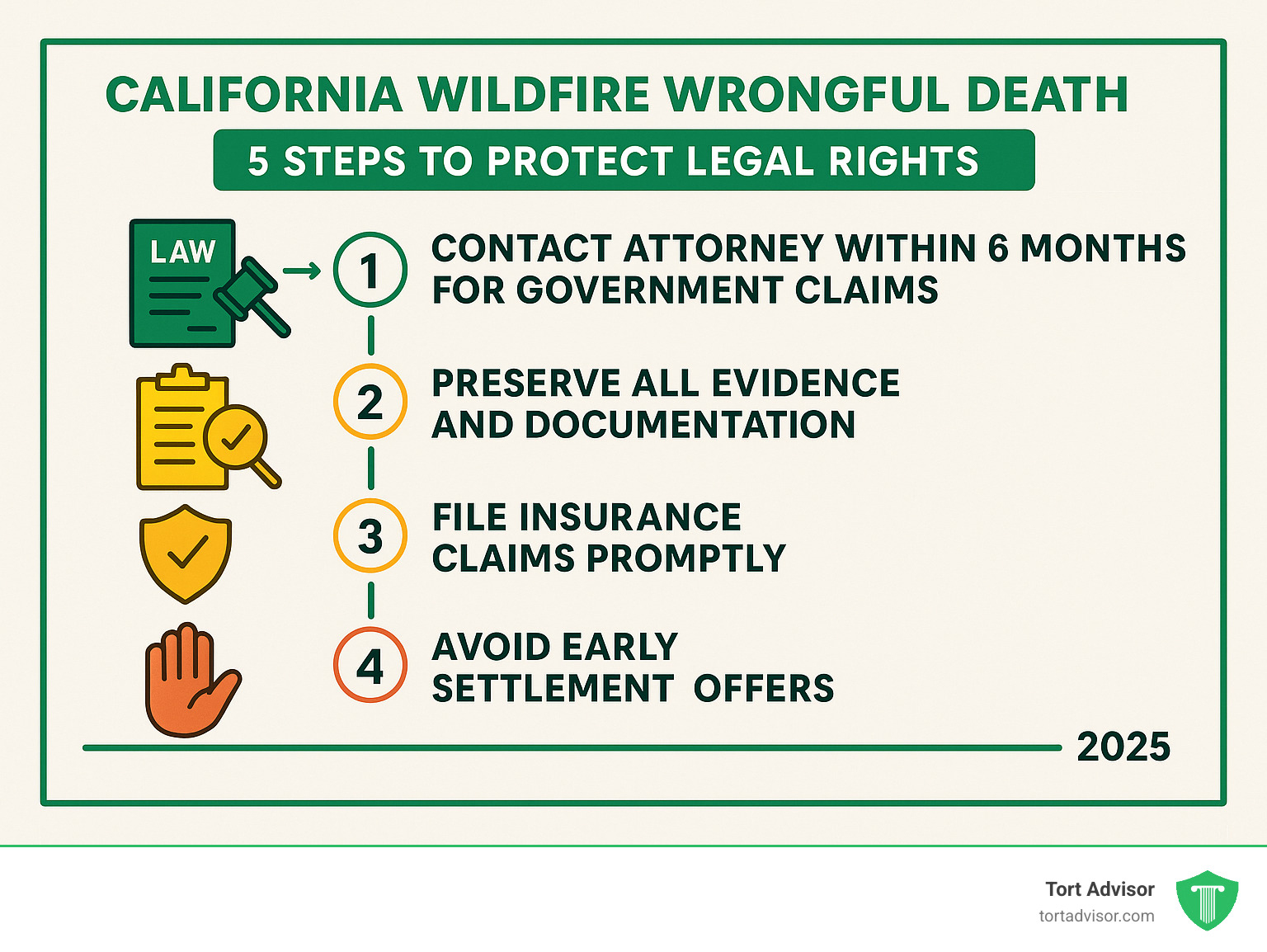
Immediate Actions
- Request a free, confidential case review with an experienced wildfire attorney
- Keep all evidence related to the fire and your loved one’s death
- Record every expense and loss tied to the fire
- File insurance claims without delay
- Don’t sign any settlement without a lawyer reviewing it
Long-Term Considerations
- Expect litigation to take 2-5 years or longer
- Prepare for the emotional strain the process can bring
- Follow ongoing investigations and related cases
Justice and Healing
Money can never replace a loved one, but a successful wrongful death case accomplishes important things:
Accountability: holding negligent parties responsible can prevent future tragedies and spur safety reforms.
Financial stability: compensation can fund children’s education, replace lost income, and cover continuing costs.
Answers: the process can reveal what happened and why, helping families grieve.
How Legal Lawsuit Can Help
Legal Lawsuit knows that families facing wildfire wrongful death cases need compassionate advocates who grasp how complicated these cases are.
Attorneys in our network handle California wildfire wrongful death litigation and have experience with:
- Major utility negligence cases
- Government liability and inverse condemnation
- Complex litigation with multiple parties
- Insurance bad faith and coverage fights
- Class action and mass tort coordination
We connect families with experienced wildfire attorneys in our network so they get the specialized knowledge these difficult cases require.
Act Now
If a California wildfire took someone you love, time matters. With 6-month deadlines for government claims and 2-year deadlines for wrongful death suits, acting early protects your family’s rights.
You don’t have to face this alone. Request a free, confidential case review with an experienced wildfire attorney in our network to talk through your case and options.
For ongoing updates and resources, see our wildfire lawsuit page for case news and legal developments.
Your loved one’s life mattered, and their legacy can help make California safer. The road to justice can be hard, but with the right legal team, families can get the answers they need and the compensation to rebuild.
Related Posts
Quick Answer: The Boy Scouts of America (BSA) filed for Chapter 11 bankruptcy in 2020 after facing tens of thousands [...]
Quick Answer: Survivors of sexual abuse by Catholic priests, nuns, or other Church personnel may be able to file a [...]
Quick Answer: Clergy abuse settlements vary enormously based on the severity of the abuse, the strength of evidence that the [...]