Short answer: This article explains the key facts, eligibility issues, settlement factors, deadlines, and source-backed updates related to this legal topic. Results vary by case facts, evidence, jurisdiction, and representation.
📋 Table of Contents
- Why Understanding Your Social Security Benefits Matters
- The Four Pillars of Social Security
- A Deep Dive into Disability: SSDI vs. SSI
- A Closer Look at Your Social Security Benefits and How to Secure Them
- Planning and Management: Taking Control of Your Benefits
- Debunking Common Social Security Myths
- Frequently Asked Questions about Social Security
- Conclusion
Why Knowing Every Social Security Benefit Type Matters

There are four main Social Security benefits types, each paying monthly support to eligible Americans: Retirement (workers 62 and older with at least 10 years of work), Disability (SSDI for workers with a qualifying condition, SSI for people with low income), Survivor (relatives of a worker who has died) and Family (dependents of people already receiving benefits). As of June 2025, more than 69.8 million people collected these benefits, with average monthly checks running from $967 for SSI to $2,005 for retired workers.
The Main Types of Social Security Benefits:
- Retirement Benefits: Monthly checks available at 62 (reduced) or at Full Retirement Age, 66 to 67 (full amount)
- SSDI (Social Security Disability Insurance): For workers a disability keeps from working, averaging $1,582 a month
- SSI (Supplemental Security Income): A needs-based program capped at $967 a month for an individual in 2025
- Survivor Benefits: Paid to the spouse, children and parents of a worker who died
- Family Benefits: Paid to dependents of retirement or disability recipients, up to 50% of the worker’s benefit
Plenty of people assume Social Security only means retirement checks. It doesn’t.
If a serious injury or illness keeps you from working, you may be eligible for disability benefits today. Roughly 8.2 million disabled workers and their families collect them now. The hard part: most first-time disability applications are turned down.
The rules are tangled and interact in ways few people expect. Workers’ comp can shrink your Social Security disability check. You may be eligible for more than one benefit at the same time. And a misstep on your application can delay payments for months or get your claim denied outright.
That’s why it pays to know exactly what you can claim, how the programs fit together, and how to file correctly from the start.
I’m Mason Arnao. I come from a technology and SaaS background, and much of my work has involved complex data systems and legal-process automation built to help people manage Social Security claims. Working with legal technology platforms showed me how much accurate information and sound guidance matter when someone is trying to secure these benefits.

Key Social Security benefits terms:
The Four Types of Social Security Benefits
Say “Social Security” and most people picture retirement. In reality, the Social Security Administration (SSA) operates four separate programs that can pay Social Security benefits today, whatever your age. If you are hurt, have lost the family’s main earner, or support a dependent, one of them may help.

Each paycheck you earn includes payroll taxes that build “work credits.” Most benefits require 40 credits, about a decade of work, though a few follow other rules. Here is how each program works.
Retirement Benefits
Retirement is the program everyone knows. Once you have about 10 years of work, you can draw monthly payments tied to what you earned over your career. Collecting is possible at 62, but the check is reduced for life. Wait until Full Retirement Age (FRA), which is 66 or 67 depending on the year you were born, and you get the full amount; hold off until 70 and the monthly payment grows further. Even someone who never worked may qualify for spousal benefits worth as much as 50% of a partner’s full retirement amount.
Disability Benefits: SSDI and SSI
When a health condition keeps you from working, Social Security has two disability programs:
- Social Security Disability Insurance (SSDI) covers people who worked and paid Social Security taxes. You qualify if a medical condition expected to last at least a year, or to end in death, prevents you from performing Substantial Gainful Activity (SGA). The SSA’s Social Security Disability Insurance (SSDI) page has the details.
- Supplemental Security Income (SSI) is based on financial need rather than work history. People who are disabled, blind or 65 and older and fall under the income and asset limits may be eligible. The SSA website explains Supplemental Security Income (SSI) in more depth.
It is possible to collect SSDI and SSI together when a short work record produces a small SSDI check and the person also meets SSI’s financial-need rules.
Survivor Benefits
If a worker who paid into Social Security passes away, relatives may be able to collect survivor benefits based on that person’s earnings. Those eligible include widows and widowers (from age 60, or 50 if disabled), minor children, adult children who became disabled before 22 and dependent parents. For a grieving family, these payments can be a vital source of stability.
Family Benefits
While you are living and collecting retirement or disability benefits, Social Security can also pay your dependents. A spouse who is 62 or older, or who is caring for your child under 16, and unmarried children under 18 can receive checks. A former spouse may qualify too if you were married at least 10 years. Each eligible relative can get up to half of your full benefit, within a family maximum.
SSDI vs. SSI: How the Two Disability Programs Differ
Few things confuse people more about Social Security benefits than how SSDI differs from SSI. Both serve people with disabilities, yet they work in fundamentally different ways, and figuring out which one fits you is essential.
| Criteria | Social Security Disability Insurance (SSDI) | Supplemental Security Income (SSI) |
|---|---|---|
| Work History Req. | Yes, enough work credits from paying Social Security taxes. | No, work history is not a factor. |
| Financial Need | No, it is not needs-based. Payments depend on your earnings record. | Yes, for people with limited income and assets. |
| Benefit Calc. | Calculated from Average Indexed Monthly Earnings (AIME) and the Primary Insurance Amount (PIA). | A federal monthly maximum, lowered by other countable income. |
| Health Insurance | Medicare (once a 24-month waiting period passes). | Medicaid (usually, in most states). |
SSDI vs. SSI: What Sets Them Apart?
SSDI works like insurance you paid for through payroll taxes. Whether you qualify for Social Security Disability Insurance (SSDI), and how much you receive, depends on your work and earnings record rather than what you own today.
SSI, short for Supplemental Security Income (SSI), is based on need. It serves people who are disabled, blind or older and have very little income or assets, no matter their work history.
You can receive “concurrent benefits,” meaning SSDI and SSI at once, when your SSDI check is small and you also fall within SSI’s tight financial limits. SSI then tops up the SSDI payment.
How Is an SSDI Payment Calculated?
Calculating SSDI is complicated. The SSA takes your career earnings, indexes them for inflation and averages your top 35 years to arrive at your Average Indexed Monthly Earnings (AIME). That figure runs through a formula to produce your Primary Insurance Amount (PIA), your base benefit. Because the formula is progressive, lower earners get a larger share of their income replaced. For an estimate based on your own numbers, try the SSDI Benefit Calculator.
Can Other Income Lower Your Benefits?
Some income can cut your Social Security benefits, disability checks in particular. The most frequent culprit is the workers’ compensation offset: if you get workers’ comp, the total of workers’ comp plus SSDI usually cannot be more than 80% of your average pre-disability earnings, and SSDI is trimmed if it is. Public disability payments from state or local governments can trigger an offset as well. Private pensions, veterans’ benefits and SSI, on the other hand, do not lower SSDI. Because the math gets complicated, expert help is valuable when a case has several moving parts.
How to Get Approved for Social Security Benefits
Winning approval for Social Security benefits, disability most of all, is hard. A large share of first applications are denied, frequently because forms or medical records are incomplete. Knowing how the application and appeal stages work gives you a much better shot.
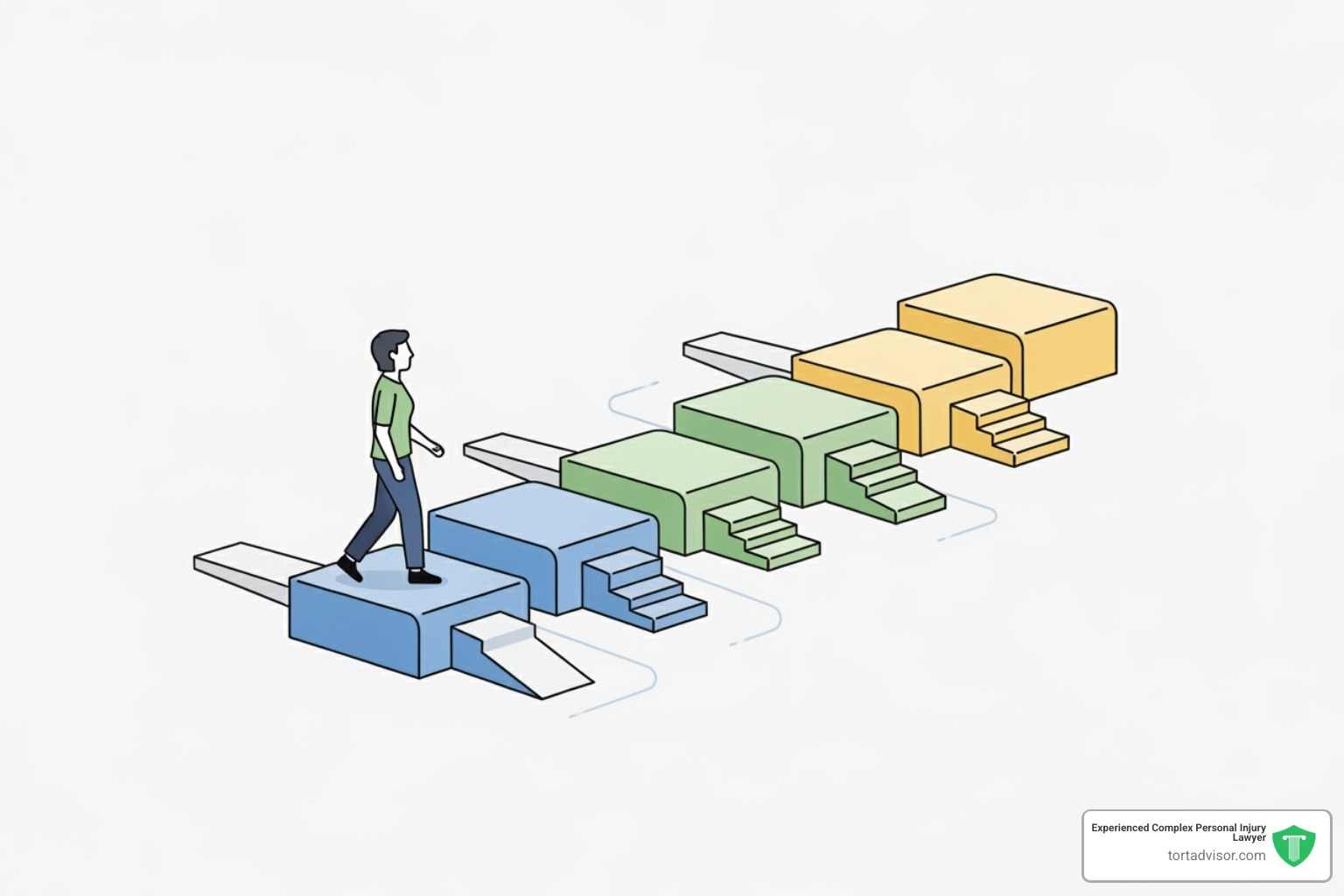
How to Apply for Disability Benefits, Step by Step
Disability applications can be filed online, over the phone or at an SSA office. No matter which you pick, be thorough: the SSA wants specifics on your condition, treatment, medications and jobs. Collect your medical records, test results and earnings statements before you begin. A complete, accurate application is the strongest first move you can make.
Steps to Take After a Disability Denial
The majority of first disability applications are rejected. That is frustrating, but a denial is not final. You get 60 days from the date printed on the denial letter to appeal, and that deadline is firm.
Appeals move through several stages:
- Reconsideration: A different examiner looks at your file, and you can add new medical evidence.
- Administrative Law Judge (ALJ) Hearing: Many claims succeed here. You make your case to a judge face to face, can call witnesses and can have a representative.
- Appeals Council: If the judge rules against you, you can request a review by the Appeals Council.
- Federal Court: The last option is a lawsuit in federal court.
Keep going: a first denial is not the end. Our guide on handling a Denied Disability Claim walks through what to do next.
Getting Help With a Disability Claim
Social Security benefits rules are intricate and the forms can feel endless. The SSA does publish resources and answers general questions, but a strong claim usually benefits from specialized help.
A seasoned disability attorney knows what the SSA is looking for. They can help you collect the right medical proof, argue your case well at a hearing and sort out tricky issues such as offsets. Most Social Security Disability attorneys are paid on contingency, collecting a fee only if you win. For full Disability Claim Assistance, Legal Lawsuit can connect you with experienced disability attorneys in our network through a free, confidential case review.
Managing Your Benefits Once They Start
After your Social Security benefits begin, staying involved helps make sure you receive everything you are owed. The SSA’s online tools make that simpler than it used to be.

Getting the Most From Your ‘my Social Security’ Account
A “my Social Security” account is a free, secure online portal for your benefits. If you have not set one up, you can Create an Account in a few minutes. From the dashboard you can:
- Track where your application stands.
- Download a benefit verification letter immediately.
- View your Social Security Statement, with your complete earnings history and projected benefits.
- Add or update direct deposit details.
- Update your mailing address or phone number.
- Retrieve your yearly SSA-1099 tax forms.
The portal keeps you in charge of your records and helps keep them accurate.
What Day Are Benefits Paid?
Social Security benefits arrive on a set monthly schedule tied to your date of birth.
- Birthday on the 1st to 10th: Paid the second Wednesday of each month.
- Birthday on the 11th to 20th: Paid the third Wednesday.
- Birthday on the 21st to 31st: Paid the fourth Wednesday.
Anyone who began collecting before May 1997, or who gets both Social Security and SSI, is paid on the 3rd of the month. The SSA encourages direct deposit for safe, dependable payments. See the official calendar here: Find out when you will get paid.
Social Security Myths, Corrected
Mistaken beliefs about Social Security benefits can be expensive. Here are the most common ones, and the facts.
- “It’s only for retirees.” Wrong. Millions of Americans younger than 65 get disability or survivor benefits. The program protects disabled workers, children who have lost a parent and other dependents.
- “My taxes sit in a personal account.” They don’t. Social Security is “pay-as-you-go”: current workers’ taxes fund current beneficiaries. You earn credits toward future benefits, but no account exists in your name.
- “Claim the moment you turn 62.” That can be an expensive move. Starting at 62 lowers your monthly check for life by as much as 30%, while waiting past Full Retirement Age, up to 70, raises it. The best timing depends on your health, money and expected lifespan.
- “No work history means no Social Security.” Not always. Someone who never worked may still collect spousal benefits through a partner’s record.
- “Benefits are based on my last few working years.” In fact, the SSA uses your 35 highest-earning years across your whole career, adjusted for wage growth.
- “Most disability claims are approved the first time.” It’s the reverse. Many first applications are denied, often over paperwork, and many deserving applicants win on appeal.
- “You can’t work at all on SSDI.” SSA work incentives, such as the Trial Work Period, let you test working for up to nine months without losing benefits.
- “SSDI replaces my whole paycheck.” It doesn’t. SSDI is a safety net that usually replaces only about 40-50% of prior earnings.
Knowing the facts leads to smarter choices about your Social Security benefits.
Social Security Benefits: Frequently Asked Questions
Here are answers to questions people ask most often about Social Security benefits.
Is it possible to work while collecting disability?
Yes, you can hold a job while receiving disability Social Security benefits, within strict limits. The SSA applies an earnings threshold called “Substantial Gainful Activity” (SGA). In 2025 that threshold is $1,620 a month for people who are not blind. Earning above it on a regular basis can lead the SSA to decide you are no longer disabled.
The SSA also runs “Work Incentive Programs” to ease a return to work. During the “Trial Work Period” (TWP) you can earn any amount for up to nine months and keep your benefits. After that, a 36-month “Extended Period of Eligibility” pays benefits in any month your earnings fall below SGA. Report every job and paycheck to the SSA right away to avoid penalties.
How does the SSA figure retirement benefits?
The SSA starts by indexing your lifetime wages for inflation, then averages your 35 best-paid years to get your “Average Indexed Monthly Earnings” (AIME). A formula converts the AIME into your “Primary Insurance Amount” (PIA), the full benefit payable at Full Retirement Age (FRA), which falls between 66 and 67.
Starting at 62 locks in a smaller payment for good, while delaying past FRA up to age 70 earns “delayed retirement credits” that boost your monthly check. The right moment to claim depends on your own situation.
Do you pay taxes on Social Security benefits?
They can be taxed. Whether federal income tax applies to your Social Security benefits depends on your “combined income,” which is your adjusted gross income plus any tax-exempt interest plus half of your benefits.
- Single filers: Up to 50% of benefits can be taxable with combined income of $25,000-$34,000, and up to 85% above $34,000.
- Married filing jointly: Up to 50% can be taxable at $32,000-$44,000, and up to 85% above $44,000.
Those percentages are the share of benefits counted as taxable income, not the share you lose. Some states tax benefits too, so check your state’s rules.
Conclusion
Social Security can feel overwhelming. Far from being only a retirement program, it is an essential safety net for millions of Americans dealing with disability, the death of a loved one and other hardships.
Getting approved, though, is seldom easy. The rules are complicated, and many first disability claims fail because of small mistakes or missing paperwork. Your earnings record, your medical evidence and appeal deadlines can decide the outcome. Your “my Social Security” account is a key tool for keeping your information correct and catching problems early.
The SSA’s own resources work well for simple questions. When you are facing a denial, a complicated appeal or confusing offsets, experienced legal help is worth having. Legal Lawsuit can connect you with disability attorneys in our network who know the system well, including how to prepare for the all-important Administrative Law Judge hearing.
You paid into Social Security throughout your working life, and these benefits are yours. Don’t let red tape stand between you and the financial security you have earned. Start with a free, confidential case review.
Additional Resources
Related Posts
Quick Answer: The Boy Scouts of America (BSA) filed for Chapter 11 bankruptcy in 2020 after facing tens of thousands [...]
Quick Answer: Survivors of sexual abuse by Catholic priests, nuns, or other Church personnel may be able to file a [...]
Quick Answer: Clergy abuse settlements vary enormously based on the severity of the abuse, the strength of evidence that the [...]