Short answer: This article explains the key facts, eligibility issues, settlement factors, deadlines, and source-backed updates related to this legal topic. Results vary by case facts, evidence, jurisdiction, and representation.
Which Cancers Are Linked to Firefighting Foam — and Are You at Risk?
📋 Table of Contents
- What Is Aqueous Film Foam Cancer — and Should You Be Worried?
- Understanding AFFF and the Role of PFAS Chemicals
- Aqueous Film Foam Cancer: Identifying the Primary Health Risks
- High-Risk Groups and Exposure Pathways
- Regulatory Actions and Compensation for Affected Individuals
- Frequently Asked Questions about AFFF Exposure
- Seeking Justice for Aqueous Film Foam Cancer
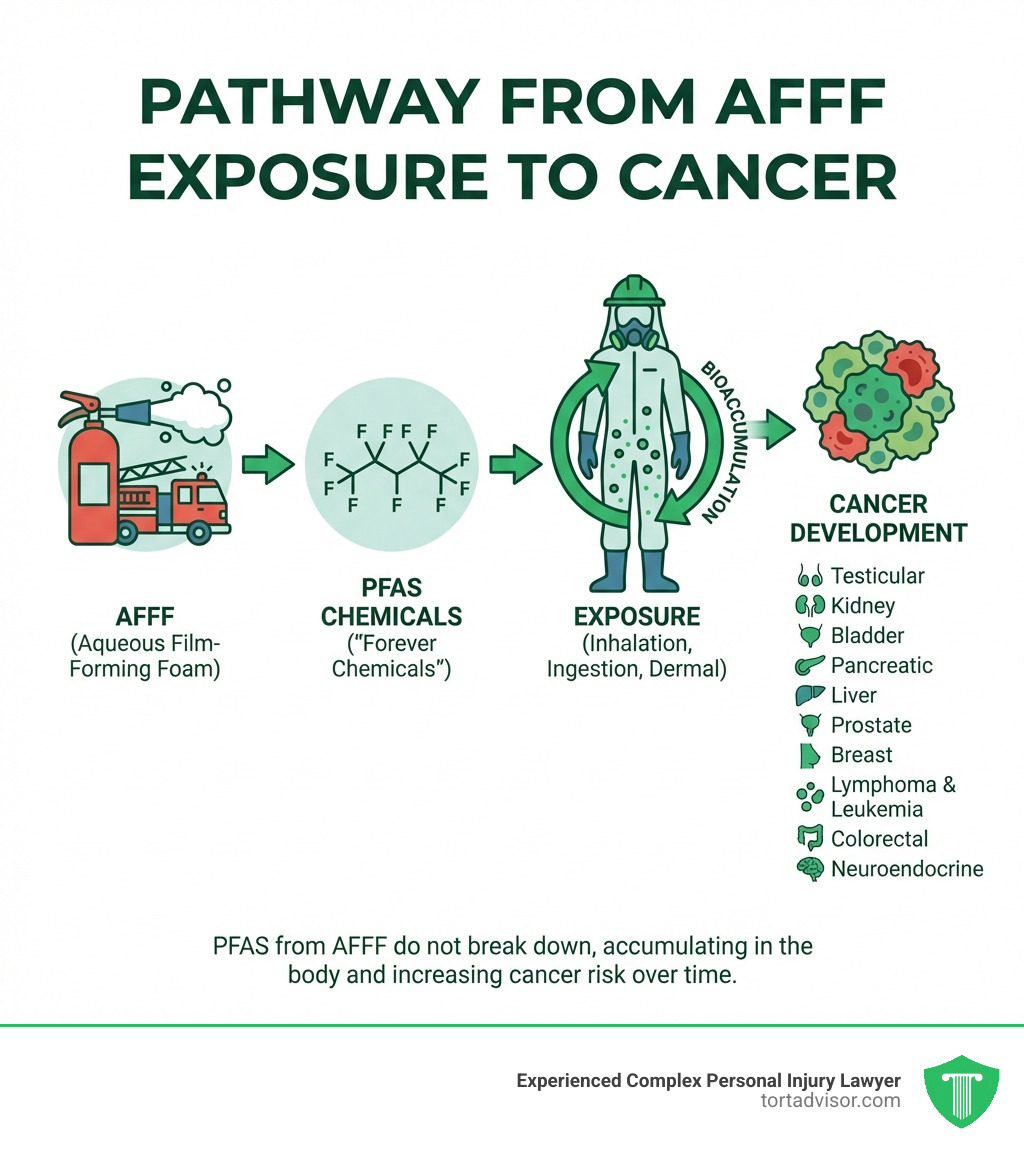
The list of cancers linked to firefighting foam keeps growing, making AFFF (Aqueous Film-Forming Foam) a serious public health issue for thousands of service members, firefighters and civilians. This chemical fire suppressant has been tied to several forms of cancer, sometimes called aqueous film foam cancer.
Cancers associated with AFFF exposure:
| Cancer Type | Groups Facing the Highest Risk |
|---|---|
| Testicular cancer | Air Force personnel and military airmen |
| Kidney cancer | Military members and firefighters |
| Bladder cancer | Industrial workers and firefighters |
| Pancreatic cancer | Civilian and military firefighters |
| Liver cancer | Residents near polluted water supplies |
| Prostate cancer | Military members and male firefighters |
| Breast cancer | Female firefighters |
| Lymphoma & leukemia | Airport employees and firefighters |
| Colorectal cancer | Workers with long-term AFFF exposure |
| Neuroendocrine cancer | Industrial and military workers |
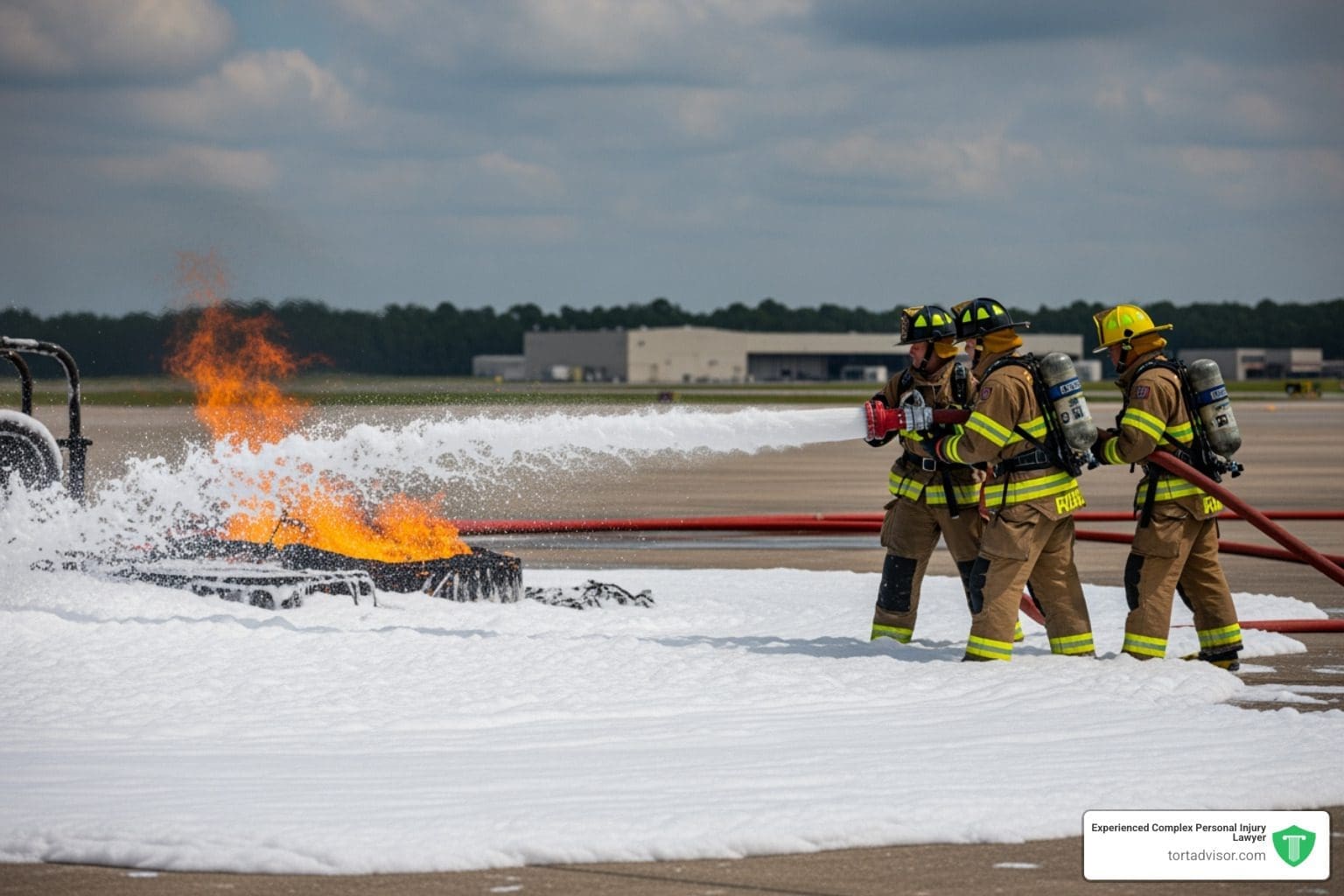
Since the 1960s, the U.S. military, airports and fire departments have relied on AFFF to put out flammable liquid fires. It smothers flames under a chemical film that starves them of oxygen — highly effective, but at a steep price.
The foam contains PFAS (per- and polyfluoroalkyl substances), synthetic chemicals that resist breaking down in the environment or the body. That persistence earned them the label “forever chemicals.” They build up over time, and studies have connected them to cancer in people exposed on the job or through tainted drinking water.
The Department of Defense has flagged 723 military installations where PFAS from AFFF may have been used or released. Almost every American has measurable PFAS in their blood, but firefighters and military members can carry levels two to three times those of the general public.
If you or a loved one handled firefighting foam and later received a cancer diagnosis, you’re far from alone — and legal options may be available.
I’m Mason Arnao. My background is in technology, data systems and digital research, and I’ve applied it to in-depth research on topics like aqueous film foam cancer so people can find clear, accurate information when it matters most. This guide aims to clear up the confusion with a plain look at the risks, the science and your options.
What AFFF Is and Why PFAS Make It Dangerous
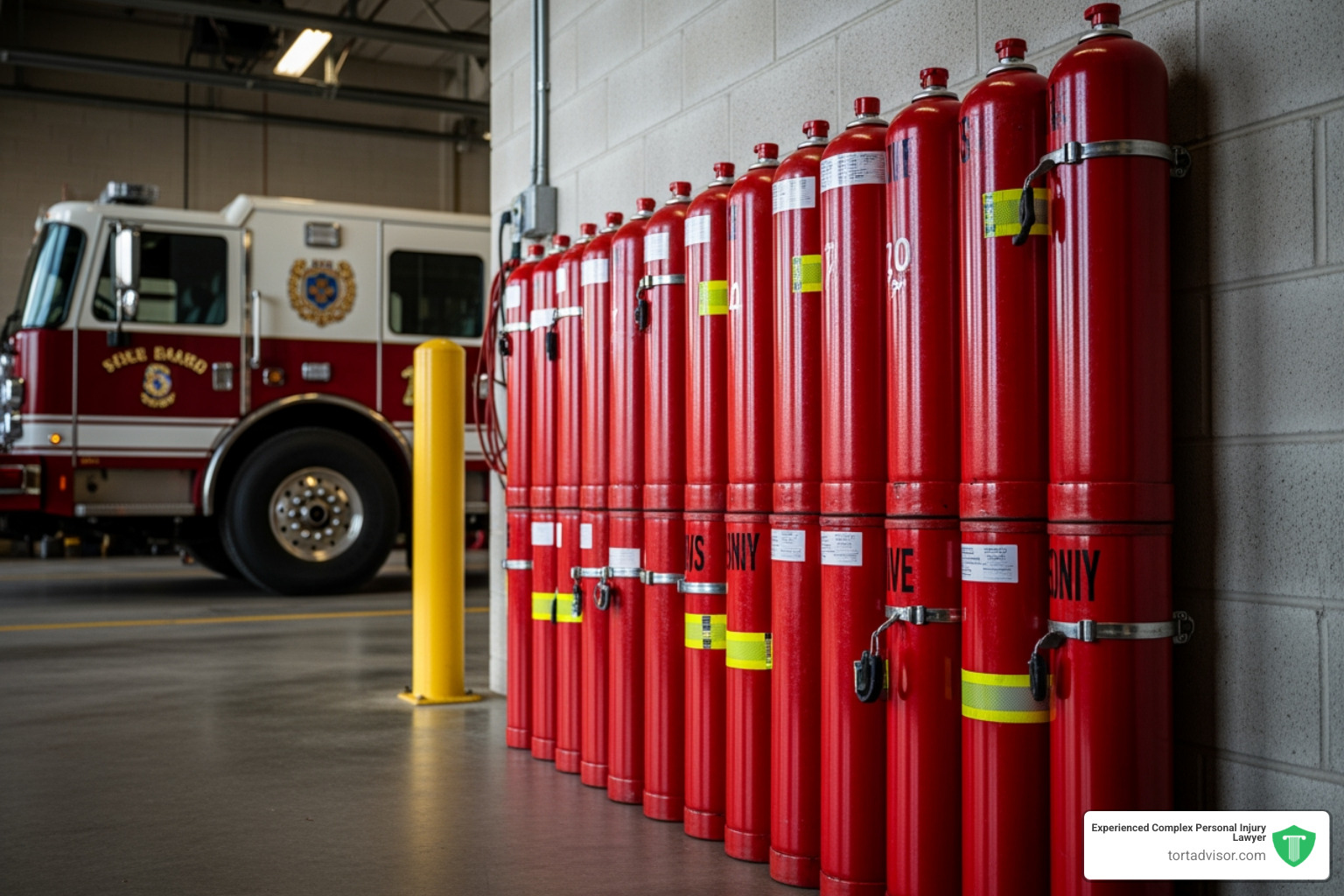
Understanding how firefighting foam may lead to cancer starts with the chemistry inside those heavy red canisters. AFFF is built for “Class B” fires — blazes fed by petroleum, jet fuel or solvents. Water fails against these fires because it sinks beneath the burning fuel. AFFF instead forms a thin, slick film that spreads over the fuel, blocking oxygen and cooling the liquid.
What makes that film possible is a family of chemicals called PFAS (per- and polyfluoroalkyl substances). For decades, the AFFF in use relied mainly on two of them:
- PFOS (Perfluorooctane sulfonate)
- PFOA (Perfluorooctanoic acid)
Their defining feature is the carbon-fluorine bond, among the strongest in chemistry — so strong that bacteria, sunlight and time can’t break it. Hence the name “forever chemicals.” Once they reach your bloodstream or the groundwater around a military base, they linger for years.
Defense Department PFAS work has lately turned to cleaning up contamination left by decades of required training drills. Because the chemicals dissolve readily and spread fast, they don’t stay put on training grounds; they soak into soil and travel into nearby communities’ drinking water.
Washington has finally responded. EPA action on drinking water limits hit a milestone in April 2024 with the first national, legally enforceable limits on several PFAS. The aim is to curb the chemical persistence behind a rise in firefighting foam cancer cases nationwide.
Cancers Linked to Firefighting Foam: The Main Health Risks
Firefighting foam isn’t linked to a single disease. Because PFAS can disrupt hormones and interfere with how cells signal, they’ve been associated with a broad range of cancers.
The International Agency for Research on Cancer (IARC) classifies PFOA as “carcinogenic to humans” and PFOS as “possibly carcinogenic to humans.” For firefighters and service members, the danger is concrete: research into firefighter cancer risk finds these workers develop several specific cancers at notably higher rates than the general population.
Leading Cancers Tied to AFFF:
- Kidney Cancer: Among the strongest associations. The kidneys filter PFAS, which can damage cells and cause mutations there.
- Pancreatic Cancer: Studies indicate heavy PFAS exposure may raise the risk of this aggressive disease.
- Prostate Cancer: Male firefighters show elevated rates, frequently at younger ages than usual.
- Liver Cancer: Recent research on human liver cells (hepatocytes) shows AFFF exposure activates pathways tied to liver injury and tumor growth.
- Breast Cancer: Mounting evidence, including studies of women firefighters in cities such as San Francisco, links PFAS to reproductive cancers.
Testicular Germ Cell Tumors and Firefighting Foam
Testicular cancer is the cancer diagnosed most often among active-duty U.S. servicemen, and for years the reason was unclear. A landmark scientific study of testicular cancer in service members finally offered strong evidence.
Researchers compared blood samples from 530 airmen who developed testicular cancer with samples from 530 service members without cancer. Those with the disease had markedly higher blood levels of PFOS.
More than 98% of U.S. men with testicular cancer have testicular germ cell tumors. The close association between these tumors and PFOS — a key component of legacy AFFF — is a big reason so many veterans are now pursuing claims.
Additional Cancers Associated With AFFF
Beyond the strongest links, other serious cancers have also been tied to firefighting foam:
- Bladder Cancer: Frequently associated with breathing in chemical vapors while fighting fires.
- Lymphoma and Leukemia: Blood cancers seen at higher rates among airport firefighters and people stationed at busy training sites.
- Colorectal Cancer: Associated with long-term PFAS exposure through polluted water or workplace contact.
- Neuroendocrine Cancer: A less common cancer that has turned up among AFFF-exposed workers.
The Department of Veterans Affairs is watching closely. A VA review of the kidney cancer evidence is in progress as a formal step toward possible “presumptive service-connection” under the PACT Act, which would make benefits for PFAS-related illness far easier for veterans to obtain.
Who Faces the Greatest Risk — and How Exposure Happens
Who is most vulnerable to cancers linked to firefighting foam? Those who handled the foam directly or lived near the sites where it was used face the highest risk.
Air Force Personnel and Military Firefighters
Air Force members often bore the brunt of PFAS exposure. Jet fuel fires burn extremely hot, so for decades the Air Force required AFFF. Fire protection specialists sprayed it in weekly drills, frequently without meaningful respiratory protection or skin coverage.
Civilian Firefighters
City and county firefighters are at high risk as well. From warehouse blazes to tanker spills on the highway, AFFF was the go-to tool. Even firefighters’ protective “turnout gear” has been found to contain PFAS, adding yet another source of ongoing exposure.
How PFAS Get Into the Body
- Breathing It In: Inhaling the mist or steam produced when AFFF hits a fire.
- Through the Skin: PFAS can be absorbed through skin, particularly when firefighters are sweating.
- Drinking Water: The leading route for civilians. PFAS from AFFF dissolve in water and reach local wells. ATSDR’s work on PFAS-contaminated water is tracking these contamination “plumes” around military bases nationwide.
NIOSH research on workplace PFAS exposure found firefighters’ geometric mean levels of certain PFAS, such as PFHxS, were 2.22 times higher than office workers’ — not a minor bump but a major occupational health gap.
Regulation and Compensation for People Harmed by AFFF
Momentum is finally shifting against the makers of these toxic foams. For decades, companies such as 3M and DuPont allegedly understood the health risks yet kept selling AFFF without proper warnings.
The Military’s AFFF Phase-Out
The Defense Department has been undergoing a sweeping changeover, with a requirement to phase out PFAS-containing AFFF in favor of fluorine-free alternatives by October 2025. That protects future service members, but it does nothing for people already diagnosed with AFFF-related cancer.
Veterans’ Benefits Under the PACT Act
The PACT Act (Promise to Address Comprehensive Toxics Act) is the biggest expansion of veterans’ benefits in decades. PFAS exposure isn’t yet a “presumptive condition” — where the VA automatically accepts that service caused the cancer — but the VA is actively studying the science.
Veterans don’t need to wait for a presumption; you can File a claim online today. The VA currently decides PFAS claims individually, so solid medical evidence and a documented history of AFFF exposure are essential.
Paths to Compensation for Veterans and Firefighters:
- VA Disability Compensation: Tax-free monthly payments for service-connected illness.
- AFFF Lawsuits (MDL-2873): Thousands of individual suits are consolidated in a Multidistrict Litigation (MDL) in South Carolina, aimed at the foam manufacturers rather than the government.
- Workers’ Compensation: Civilian firefighters may qualify for state benefits.
- Settlement Funds: Major chemical companies have already committed billions to resolve water contamination claims, and personal injury settlements are expected to come next.
If you’re weighing a lawsuit, AFFF lawsuit settlement amounts will turn on factors such as the type and severity of your cancer, how long and how heavily you were exposed, the strength of your medical and exposure records, and your age and lost income. For a sense of what your own case might be worth, try the AFFF settlement calculator.
Firefighting Foam Cancer FAQs
Does PFAS cause health problems besides cancer?
Cancer is the gravest outcome, but PFAS exposure is also tied to other chronic illnesses, including thyroid disease, immune system harm (which can weaken vaccine response), ulcerative colitis and liver damage. Some research also points to reproductive effects such as reduced fertility and pregnancy-induced high blood pressure.
What can firefighters do to reduce PFAS exposure?
Firefighters are urged to follow rigorous decontamination routines: showering soon after every call (“Shower within the Hour”), thoroughly cleaning PPE, and wearing self-contained breathing apparatus (SCBA) even during a fire’s “overhaul” stage. Research on PFAS in firefighters’ blood shows these habits help, though eliminating the chemical source is the most effective fix.
Where does the switch away from AFFF stand?
The industry is shifting to fluorine-free foams (F3), which contain no PFAS yet still satisfy demanding “MIL-SPEC” standards for fuel fires. Most large airports and military bases are flushing their systems and swapping out the old foam for these safer products.
Pursuing Justice for Firefighting Foam Cancer
Coping with cancer is hard enough without having to decode complex chemical litigation. If your illness stems from a product its makers knew was dangerous, you deserve help.
Legal Lawsuit helps people connect with attorneys in our network who handle AFFF firefighting foam lawsuits. Veteran, retired firefighter or civilian living near a contaminated base — we can help you understand your rights.
Legal Lawsuit is a legal-information resource, not a law firm, focused on pointing injured people toward capable attorneys and clear answers. For more, browse our AFFF resource category or read about filing a firefighting foam cancer lawsuit.
Act before deadlines pass. The legal picture for cancers linked to firefighting foam is shifting quickly, and claims are subject to strict filing deadlines.
- Connect With a Firefighting Foam Cancer Lawyer
- Estimate Your Potential Settlement
- Read More About AFFF Health Risks
Request a free, confidential case review and get connected with legal help to hold these chemical makers accountable and pursue the compensation you and your family deserve.
Related Posts
Quick Answer: The Boy Scouts of America (BSA) filed for Chapter 11 bankruptcy in 2020 after facing tens of thousands [...]
Quick Answer: Survivors of sexual abuse by Catholic priests, nuns, or other Church personnel may be able to file a [...]
Quick Answer: Clergy abuse settlements vary enormously based on the severity of the abuse, the strength of evidence that the [...]