
West Palm Beach Scooter Laws: License, Insurance & Claims
By Mason ArnaoPublished

By Mason ArnaoReviewed by Mason Arnao
Under West Palm Beach scooter laws, the answer depends on your vehicle: Florida exempts qualifying motorized scooters from driver-license, registration and specified motor-vehicle insurance requirements, but those exemptions do not apply to every vehicle sold as a “scooter.” If you have already crashed, ask the insurer how it classifies your scooter, which policy applies and what coverage may pay for your injuries or damage—Florida’s insurance toolkit explains why motorcycle coverage and auto coverage are not interchangeable.
This guide helps you identify your scooter type, check licensing and registration rules, and separate required insurance from actual crash coverage. It also explains West Palm Beach’s local riding restrictions and the policy questions and claim records to focus on when choosing your next step.
First, identify which kind of scooter you have
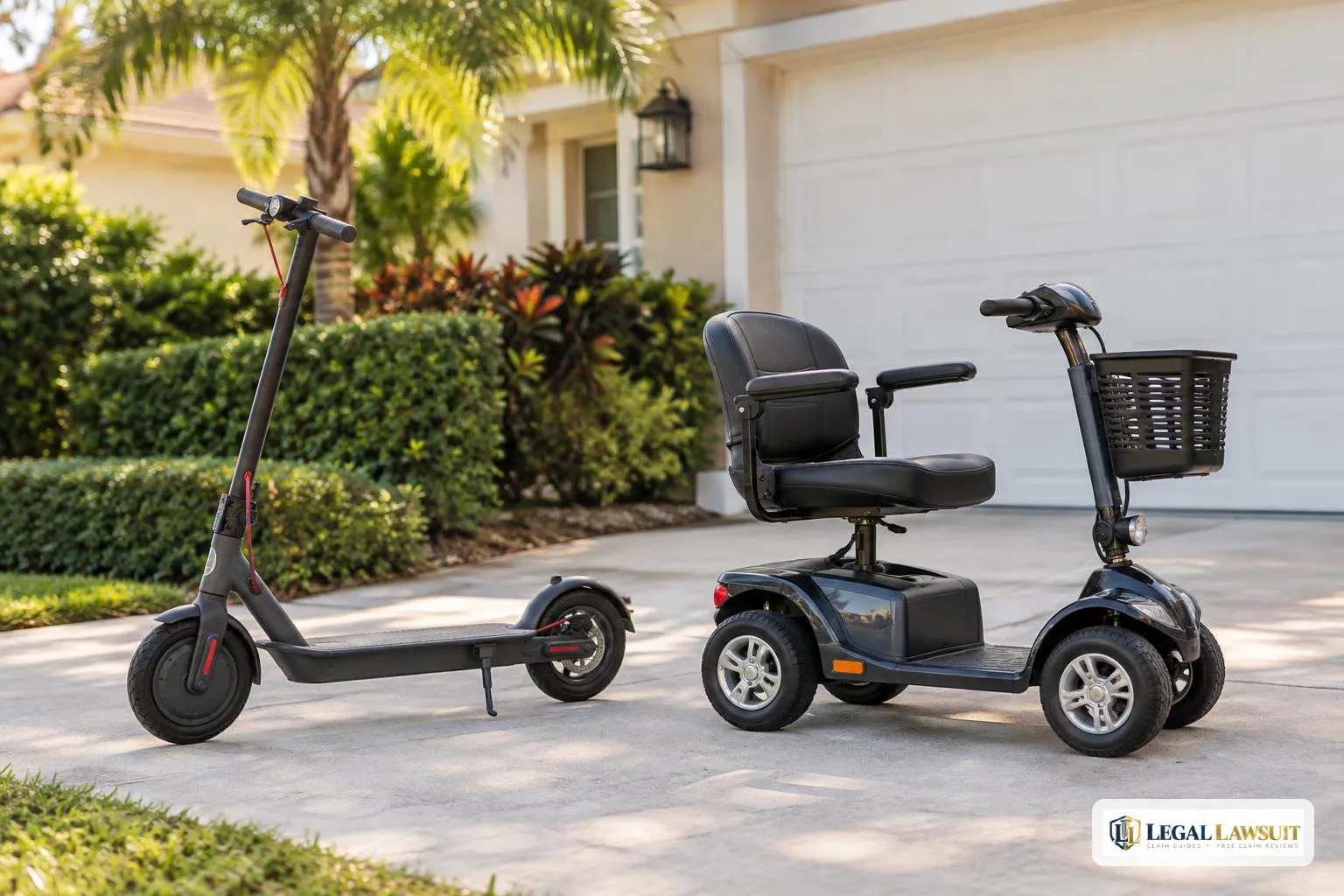
Start with the vehicle’s specifications, not the name on its sales listing. A product marketed as a “scooter” may fit a different legal category depending on its speed, wheels, pedals, seat, and motor. The Florida statutory definitions of motorized scooters, mopeds, and motorcycles distinguish these categories:
- Motorized scooter: A motor-powered device with or without a seat, designed to travel on no more than three wheels, and incapable of exceeding 20 mph on level ground. Electric bicycles are excluded from this definition.
- Moped: A vehicle with pedals that allow propulsion by human power, a seat or saddle, and no more than three wheels. Its motor cannot exceed 2 brake horsepower or propel it faster than 30 mph on level ground. It must have an automatic drive system that does not require clutching or shifting after engagement; an internal-combustion engine cannot exceed 50 cubic centimeters. A small engine alone does not make a vehicle a moped.
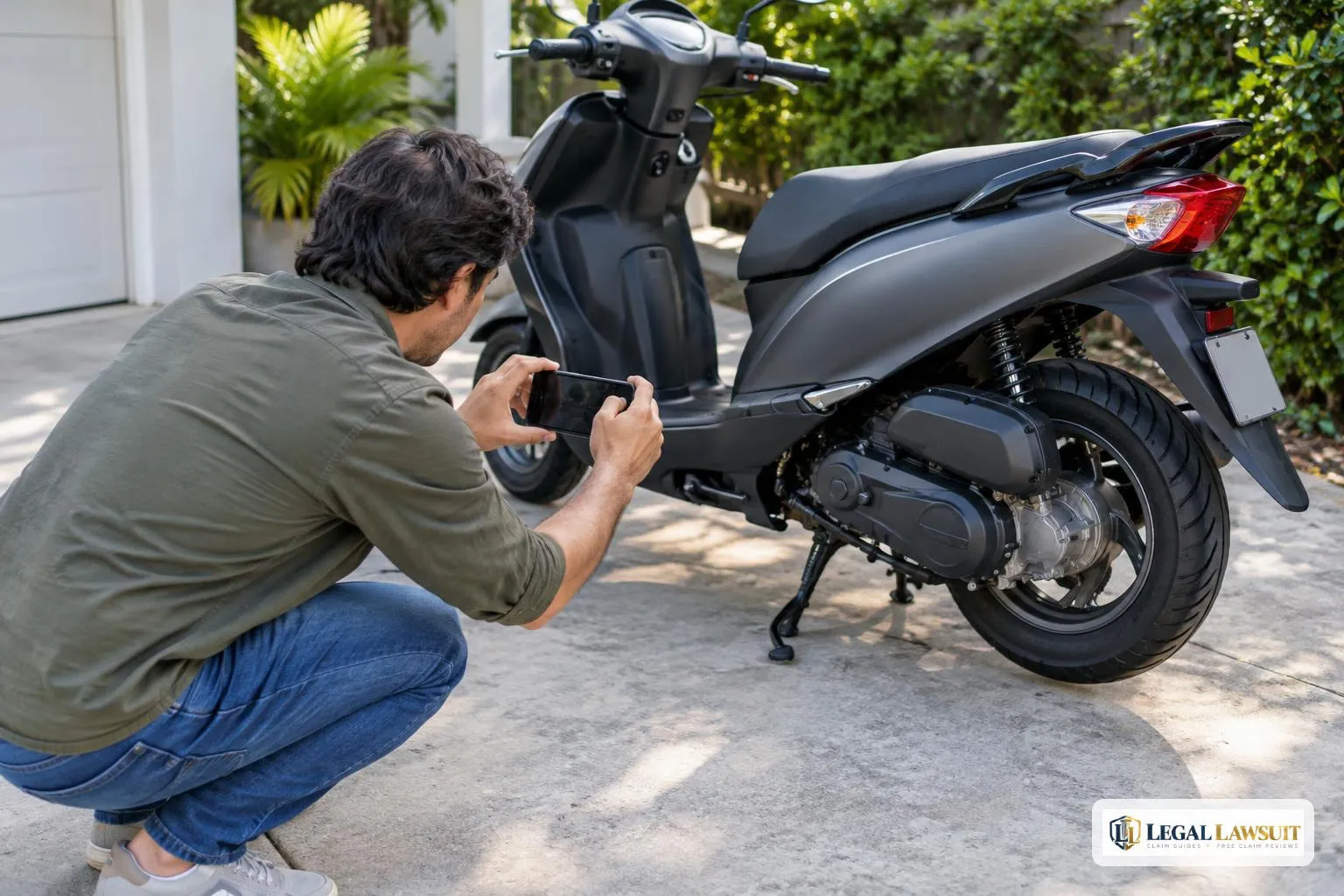
Before asking an insurer or licensing office which category applies, gather the manufacturer’s model specifications, maximum designed speed, engine or motor information, and photographs showing the vehicle’s seat, pedals, and wheels. Provide those details rather than simply calling it a scooter. That gives the person reviewing your question a clearer starting point for identifying the applicable vehicle category.
Do you need a driver license or registration?
It depends on the scooter’s legal classification—not simply whether the seller calls it a scooter. The motorized-scooter exemption does not automatically apply to mopeds or scooters subject to motorcycle licensing rules.
Motorized scooters
If your device meets Florida’s statutory definition of a motorized scooter, you do not need a driver license to operate it. It is also exempt from the vehicle registration and insurance requirements identified in section 316.2128. That is a classification-specific exemption, not a blanket rule for every scooter.
Mopeds and scooters treated as motorcycles
The Florida driver handbook’s moped and motorcycle requirements distinguish these vehicles:
- Mopeds: Operators need a Class E driver license, but not a motorcycle endorsement. Mopeds must be registered annually and display the proper tag.
- Scooters subject to motorcycle rules: The handbook separately describes motorcycle endorsements, Motorcycle Only licensing, and approved motorcycle safety-course requirements. Use that guidance rather than assuming a seated scooter qualifies for the motorized-scooter exemption.
If you are still unsure which category applies, ask the licensing office about your exact make and model. Have the vehicle’s specifications available rather than describing it only as a “scooter.”
Separate insurance requirements from actual crash coverage
An exemption from an insurance requirement does not tell you which policy will pay after a crash. For a vehicle that meets Florida’s motorized-scooter definition, the statutory exemption addresses specified registration and insurance requirements—not a promise that an injured rider’s bills are covered. Read the scope of Florida’s scooter exemption before treating it as an answer to a coverage question.
Florida’s driver handbook also says motorcycles and mopeds do not have to carry personal injury protection, or PIP, insurance. That is a separate point from whether you have coverage for your injuries. See the handbook’s motorcycle and moped PIP distinction.
If your scooter is classified as a motorcycle, the Florida Department of Financial Services explains that motorcycle insurance is separate from an auto policy and that auto PIP does not cover you while riding a motorcycle. Its toolkit also explains liability, medical payments, collision, and uninsured-motorist coverage, which serve different purposes. Review the state’s motorcycle coverage explanation and insurance coverage guide.
For your claim, ask for a policy-specific answer. Ask the insurer which vehicle definition it is applying and whether any liability, medical payments, collision, or uninsured-motorist coverage applies. Request a written explanation of any exclusions it relies on, including the relevant policy language. Keep that response with your claim records rather than relying only on a general statement that “scooters don’t need insurance.”
West Palm Beach has separate local riding restrictions
A license exemption does not mean you can ride your scooter anywhere. Florida allows local governments to regulate motorized-scooter operation on streets, sidewalks, and other areas under their jurisdiction. That makes the location of your ride a separate question from whether your device requires a license or registration. See Florida’s local-regulation provision.
West Palm Beach restricts scooter riding on specified public surfaces within defined downtown and waterfront boundaries, unless riding is posted and permitted by appropriate signs. This is not simply a citywide sidewalk rule. The ordinance also expressly refers to nonmotorized devices when describing permission to ride elsewhere; that wording is not blanket permission for electric scooters. Read the city’s downtown, waterfront, and nonmotorized-device provisions to distinguish the restricted areas from the permission described for nonmotorized devices.
If your claim involves a dispute about where you were riding, preserve details that help identify the location:
- Photograph nearby signs, including any signs permitting or restricting riding.
- Record the precise street address, intersection, or waterfront landmark.
- Keep photographs showing whether you were on a street, sidewalk, or another public surface.
These details can help you explain the location clearly when discussing the claim, rather than relying on a general description such as “downtown” or “along the waterfront.”
Already in a claim? Ask which policy and vehicle definition apply
If your scooter’s classification is creating uncertainty about coverage, ask the adjuster to explain exactly how the policy treats your vehicle—not just whether “scooters” are covered.
Use these questions to focus the conversation:
- What vehicle classification are you using for my scooter, and what information supports that classification?
- Which policy provision supports your coverage decision? If you are applying an exclusion, which exclusion is it?
- Does any uninsured or underinsured motorist coverage apply to this particular vehicle and crash? If not, what policy language explains why?
Request the explanation in writing and keep it with your claim correspondence. The Florida Department of Financial Services’ toolkit provides claim-handling and dispute guidance, along with UM coverage and policy distinctions. Its coverage descriptions do not establish automatic coverage for every scooter.
Keep your scooter’s model specifications, scene photographs, repair information, and insurer correspondence together. That gives you a clear set of records to reference when explaining why you disagree with the classification or asking what additional information the adjuster needs.
If uninsured or underinsured coverage becomes part of the discussion, Legal Lawsuit’s guide to filing an uninsured or underinsured motorist claim can help you organize your next steps. If you need records of the crash itself, see the guide to obtaining traffic camera footage and police reports.
Choose the next step that matches your scooter claim
Start by clarifying how the insurer is treating your scooter and which coverage you are asking it to apply. You do not need to treat every scooter claim as a motorcycle claim.
Before your next insurer conversation, write down:
- The scooter: its make, model, and any identifying documents you have.
- The classification: what vehicle category the insurer is using and why.
- The coverage requested: which policy and coverage you want reviewed.
- Any denial: the reason given and the policy language the insurer says supports it.
Keep your notes alongside claim correspondence and ask for clarification when an explanation is unclear. Florida’s Automobile Insurance Toolkit provides guidance on insurer communications, claim records, and disputes.
If your scooter is being handled as a motorcycle, Legal Lawsuit’s guide on how to file a motorcycle accident insurance claim can help you organize the filing process. Use it as a preparation tool, not as confirmation that the classification is correct.
If an adjuster requests a recording, review these questions to consider before giving a recorded insurance statement. Prepare questions about who is requesting it, its purpose, and any policy provision involved rather than assuming the same answer applies to every insurer.
If you cannot resolve a disputed classification or coverage denial, consider individualized advice from a Florida attorney. Legal Lawsuit provides general information, not legal representation.
Frequently asked questions
Do I need a driver license for an electric scooter in West Palm Beach?
Not if your device qualifies as a “motorized scooter” under Florida law. Section 316.2128 exempts motorized-scooter operators from driver-license requirements and exempts those devices from registration requirements. Before relying on that exemption, check your scooter’s specifications against the statutory definition rather than relying only on its product name or the seller’s description.
Is a small gas scooter automatically a moped under Florida law?
No—do not assume that a small engine makes your scooter a moped. Check the vehicle’s specifications and classification first. The Florida Driver License Handbook explains that mopeds require annual registration and tags, and that a Class E license permits moped operation without a motorcycle endorsement. Ask which classification applies to your particular vehicle before choosing a licensing or registration path.
Does my car’s PIP insurance cover a scooter classified as a motorcycle?
No. The Florida Automobile Insurance Toolkit states that auto PIP does not cover you while riding a motorcycle and explains that motorcycle insurance is separate from auto insurance. If your scooter is classified as a motorcycle, ask the insurer to identify any other coverage it is evaluating and the policy language behind its answer.
Can I ride a scooter on downtown West Palm Beach sidewalks?
Do not assume downtown sidewalks are open to scooter riding. West Palm Beach Ordinance No. 5094-24 restricts scooter riding within specified downtown and waterfront boundaries, except where posted permission applies; its riding permission elsewhere expressly refers to nonmotorized devices. Check the ordinance’s boundaries and the signs along your intended route rather than treating every sidewalk alike.
What should I ask if an insurer disputes my scooter’s classification?
Ask: “Which vehicle definition are you using, which policy provision applies, and what specifications support your decision?” Request the explanation in writing. Offer the model information, manufacturer specifications, purchase documents, and photographs for review. Also ask whether the disagreement concerns the scooter’s legal classification, the policy’s definition, or both, and what additional information would help resolve it.
Sources
- The Official Florida Driver License Handbook · Florida Department of Highway Safety and Motor Vehicles
- West Palm Beach Ordinance No. 5094-24 · City of West Palm Beach
- Automobile Insurance Toolkit · Florida Department of Financial Services
This article is general information, not legal advice. Laws and deadlines vary by state and change over time; check the linked sources or speak with a licensed attorney about your situation.
