Short answer: This article explains the key facts, eligibility issues, settlement factors, deadlines, and source-backed updates related to this legal topic. Results vary by case facts, evidence, jurisdiction, and representation.
Filing an 18 wheeler accident lawsuit starts with knowing how federal trucking rules and shared liability shape what you can recover after a semi-truck crash.
Injured in a crash with a semi or 18-wheeler?
Big-rig crashes bring in federal safety regulations and commercial insurance policies that ordinary car accidents never touch. A free, confidential case review can clarify where you stand.
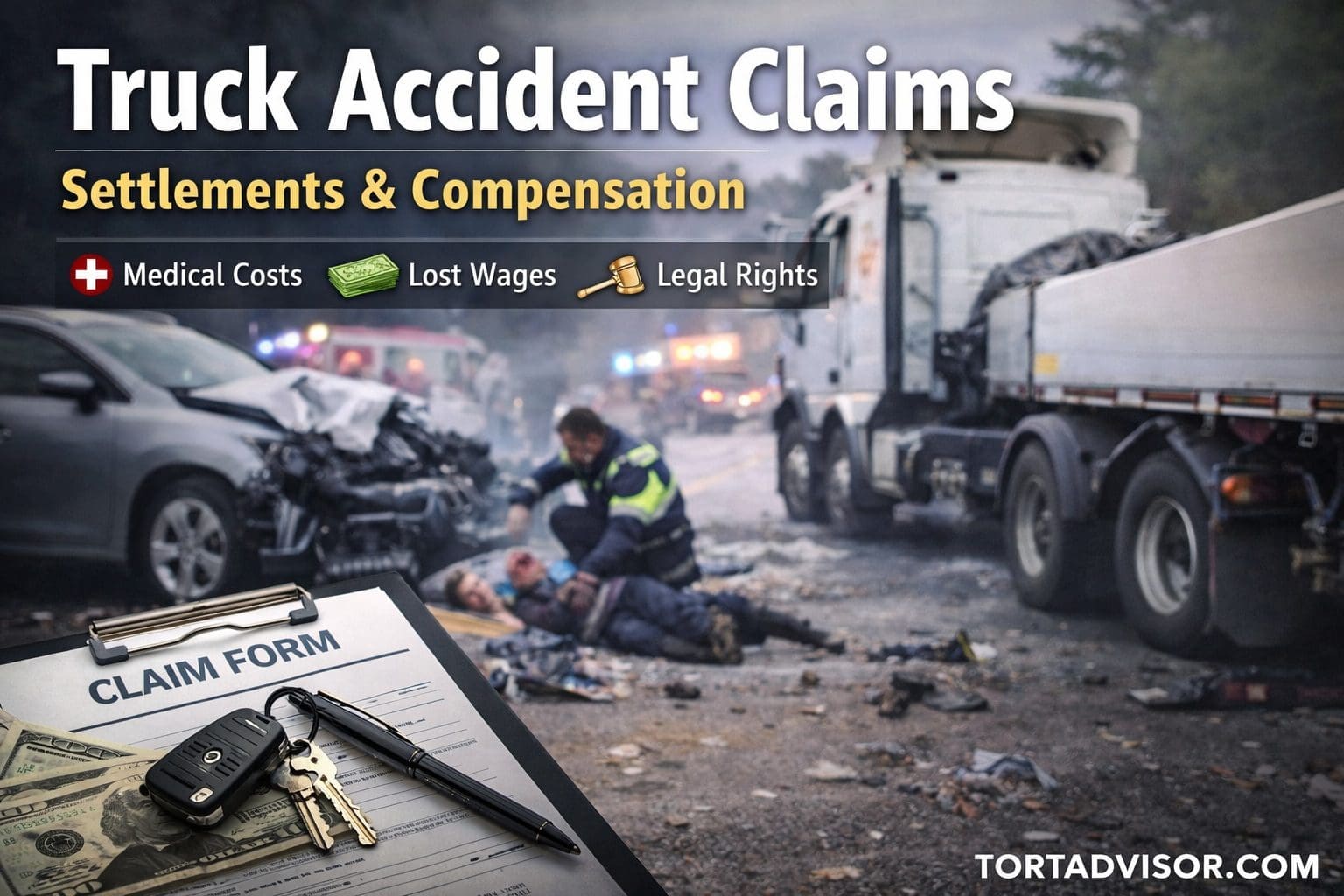
An 18 wheeler accident lawsuit is usually more involved than an ordinary car crash claim. Federal safety rules govern commercial trucking, and blame can extend past the driver to the motor carrier, whoever loaded the cargo or even the company that built the truck. Commercial coverage typically far exceeds personal auto limits, so these cases tend to involve more defendants, more evidence and higher stakes. Below, we explain how liability is assigned, what sets truck cases apart and what drives a realistic settlement.
Jump to a section
Who can be held liable in an 18-wheeler crash?
A crash between two cars usually has one or two defendants; a truck case can have several. Depending on what happened, the driver may be responsible for careless driving; the motor carrier for negligent hiring or for pushing drivers past hours-of-service limits; a maintenance shop for bad repairs; a shipper for poorly loaded freight; or a parts maker if a defective component caused or worsened the crash. Federal rules require commercial carriers to carry much more liability insurance than private drivers, often from $750,000 to $5 million or more depending on cargo and vehicle type, so carriers and their insurers typically move fast after a crash to limit what they pay. That is a big reason preserving evidence early, such as ELD data and inspection records, is so important.
Key FMCSA trucking rules
The Federal Motor Carrier Safety Administration (FMCSA) oversees commercial trucking, and breaking its rules is frequently at the heart of proving fault. The most important regulations cover hours-of-service limits on how long drivers can work before resting, required drug and alcohol testing, inspection and maintenance standards, and rules for securing cargo. When a driver or carrier broke one of these federal rules before the crash, the negligence case often gets stronger, because the violation can itself show the carrier did not meet its legal duty of care.
Curious what your truck crash claim might be worth?
Use our free tool to get a quick estimate of your claim’s value based on your injuries, medical bills and fault.
What drives 18 wheeler accident lawsuit settlements
A loaded semi can outweigh a passenger car many times over, so injuries in these collisions are often more serious, and settlements tend to reflect that. There is no standard figure. Cases involving catastrophic harm, lasting disability or a death generally resolve for more than similar car crashes, partly because commercial policies are larger. Value still hinges on documented medical care, lost income, how clear fault is and whether a federal safety violation is involved. For more on how injury claims are valued in general, read our car accident settlement guide.
Steps to take after a semi-truck crash
- See a doctor right away and keep up with every recommended treatment, since gaps in care are a common way insurers challenge injury claims.
- Contact police so an official report is made that lists both drivers.
- Take photos of everything: the carrier’s name on the truck, license plate and DOT number, skid marks and any visible cargo.
- Move fast to protect evidence. Carriers are not always obligated to keep electronic logs and dashcam video forever, so an early preservation letter from an attorney can make a real difference.
- Hold off on quick settlement offers from the carrier’s insurer until you know the full extent of your injuries.
Who can file an 18 wheeler accident lawsuit
You may have a claim if a commercial truck, tractor-trailer, delivery van or bus injured you because of driver error, a carrier’s safety violation, poor maintenance or a defective part. Like other injury cases, truck crash claims must be filed within your state’s statute of limitations, commonly two to four years after the crash, though the precise deadline depends on the state and the claim type. Since a missed deadline can end a claim for good, have an attorney confirm your exact cutoff rather than relying on a general range. You can also browse other open claims on our Active Lawsuits hub.
Common questions
How does a truck crash case differ from a car accident claim? Carriers have larger insurance limits, must follow federal safety rules and often share fault with other parties, which makes these cases more complicated but potentially worth more. What if the driver was an independent contractor? The carrier may still be responsible depending on how much it controlled the driver and the load, so it takes a case-by-case look. Does a federal violation guarantee a win? No, but a documented hours-of-service or maintenance violation can be powerful proof of negligence. For official rules and safety data, see the FMCSA Hours of Service regulations and the agency’s Large Truck and Bus Crash Facts.
See whether you have an 18-wheeler claim
Free, confidential case review. No fee unless money is recovered.
This page offers general information, not legal advice. Rules, filing deadlines and claim values differ by state and change over time, so speak with a licensed attorney about your own situation.
Related Reading
- Which U.S. City Has the Most Car Accidents? (2026 Data)
- Car Accident Lawsuit 2026: Essential Guide to Maximum Recovery After Injury
- Rideshare Accident Lawsuit 2026: Who’s Liable When an Uber or Lyft Crashes
In an 18 wheeler accident lawsuit, an experienced attorney collects the crash report, medical records and witness accounts and handles negotiations with the insurance adjusters so you do not have to.
If you or someone close to you was hurt by a big rig, a free, confidential case review can explain your legal options and what to do next.
Attorneys in our network who handle truck crash claims know how to request ELD data, inspection logs and driver files before they disappear, and they take on the carrier’s insurer directly.
Questions about a semi-truck crash claim? Request a free review today and learn where you stand, with no obligation.
Related Posts
Quick Answer: The Boy Scouts of America (BSA) filed for Chapter 11 bankruptcy in 2020 after facing tens of thousands [...]
Quick Answer: Survivors of sexual abuse by Catholic priests, nuns, or other Church personnel may be able to file a [...]
Quick Answer: Clergy abuse settlements vary enormously based on the severity of the abuse, the strength of evidence that the [...]