
Short answer: This article explains the key facts, eligibility issues, settlement factors, deadlines, and source-backed updates related to this legal topic. Results vary by case facts, evidence, jurisdiction, and representation.
📋 Table of Contents
- Why Finding the Right Injury Defense Lawyer Matters
- Understanding Personal Injury Defense Law
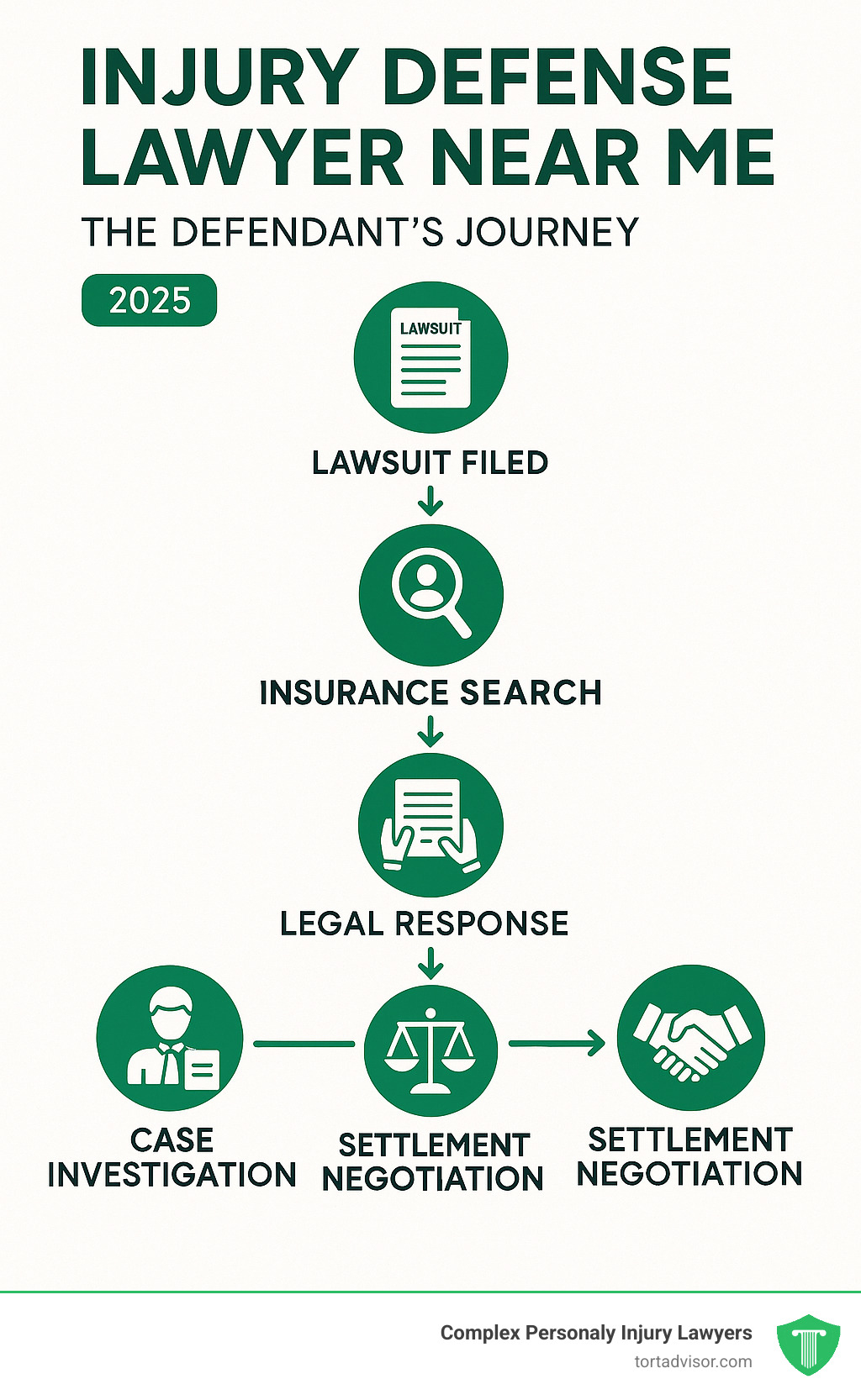
- The Lawsuit Process: A Defendant’s Roadmap
- Why You Need an Injury Defense Lawyer Near You
- Finding and Choosing Your Legal Advocate
- Frequently Asked Questions about Personal Injury Defense
- Your Next Step: Securing Expert Legal Protection
Why the Right Injury Defense Lawyer Makes the Difference
If someone has sued you for causing an injury, hiring an injury defense lawyer quickly is one of the most important things you can do. Verdicts in these cases can climb into the millions, putting your savings and your reputation on the line. Many defendants hurt their own cases by trying to go it alone or by waiting too long. Insurers and plaintiff’s attorneys have deep resources, and you need skilled defense counsel to protect yourself.
Take these steps right away:
- Notify your insurer: Your policy may supply and pay for a defense lawyer.
- Check attorney directories: Look for qualified defense counsel near you.
- Look for the right focus: Choose lawyers who concentrate on personal injury defense.
- Book consultations: Talk with more than one attorney before you decide.
- Move fast: In many courts you have only about 30 days to answer a lawsuit.
Every day counts. The moment civil court papers arrive, a deadline begins running, and a seasoned injury defense attorney stands between you and a potentially crushing judgment.
I’m Mason Arnao with Legal Lawsuit. Helping people find qualified legal help has taught me that choosing the right attorney is what most often leads to a good result and keeps a lawsuit from turning into a financial catastrophe for anyone searching for an injury defense lawyer near me.
Key terms for anyone seeking an injury defense lawyer:
- accident attorneys near me
- catastrophic injury lawyer near me
- construction injury lawyer near me
What Personal Injury Defense Law Covers
If you are accused of hurting someone, personal injury defense law is what protects you. It exists to shield people and businesses on the receiving end of injury claims, guarding their money, their good name and their peace of mind.
![A gavel and law books, symbolizing legal defense and justice.]
What Does an Injury Defense Lawyer Do?
Personal injury defense means representing the accused in tort cases, the legal term for a civil wrong that causes harm. Plaintiff’s lawyers chase compensation for the injured person; defense lawyers work to keep you from being held liable. Legal Lawsuit can connect you with experienced defense attorneys in our network who aim to limit your exposure, protect your assets and make sure you are treated fairly. The objective is the strongest defense possible, whether that leads to a reasonable settlement or a trial.
Defenses Commonly Used in Injury Lawsuits
Seasoned defense lawyers rely on a handful of tested strategies:
- Statute of limitations: Each state imposes a firm filing deadline, and a case brought too late can be thrown out. Texas, for instance, generally allows two years after a car accident to sue.
- Assumption of risk: If the injured person knowingly took part in something dangerous, such as a contact sport, they may have accepted its built-in risks.
- Disputing causation: A central tactic is showing that what you did was not the direct cause of the injury, which may trace to an earlier condition or an unrelated event.
- Failure to mitigate damages: When a plaintiff put off treatment or ignored medical advice, the defense can argue they failed to limit their own losses, which may lower any award.
- Pre-existing conditions: Lawyers review medical histories to separate genuinely new injuries from older health problems the plaintiff may be pinning on the incident.
A capable injury defense lawyer near me will know which of these defenses fit your facts.
When Both Sides Share Blame: Comparative vs. Contributory Negligence
If both parties were partly at fault, the rule your state follows can change the outcome dramatically.
Most states follow comparative negligence, cutting the plaintiff’s award by their share of the blame. Under modified comparative negligence, a plaintiff who is 50% or more at fault often gets nothing, while pure comparative negligence lets a plaintiff recover even when mostly responsible.
A handful of jurisdictions (Alabama, Maryland, North Carolina, Virginia and Washington D.C.) apply the harsher contributory negligence rule, under which a plaintiff found even 1% at fault recovers nothing.
| Comparative Negligence | Contributory Negligence |
|---|---|
| Award cut by the plaintiff’s share of fault | No recovery if the plaintiff is even 1% at fault |
Filing Deadlines Differ by State
The statute of limitations can stop a lawsuit cold. Deadlines differ greatly by state and type of claim, and some states even stop the clock when a defendant moves away after an accident. That complexity is why you want an injury defense lawyer who knows local rules and can use them in your favor.
A Defendant’s Guide to the Lawsuit Process
Getting served is unsettling, but knowing what comes next puts you back in control. Here is what to expect so you and your lawyer can make smart choices.
![A flowchart illustrating the defendant’s journey through a lawsuit.]
First Steps After You Are Sued
What you do right after receiving lawsuit papers can shape your whole defense:
- Respond on time: You usually have about 30 days to file a formal answer. Miss it and the court may enter a default judgment, meaning you lose automatically.
- Never admit fault: Talk about the incident only with your lawyer and insurer. Even a casual “sorry” can be used as an admission.
- Save the evidence: Collect photos, video, messages, police reports and witness names, and keep any physical evidence safe.
- Call your insurer: If an auto, homeowner’s or business policy covers the incident, the insurer may owe you a “duty to defend” and assign you a lawyer.
- Hire defense counsel: A seasoned injury defense lawyer near me will review the complaint, explain your rights and map out your defense.
Main Stages of an Injury Lawsuit
Your lawyer will take you through these typical phases:
- Answering the complaint: Your attorney files a formal answer that denies the allegations and raises any available defenses.
- Discovery period: Each side investigates by trading information through written questions (interrogatories), document requests and depositions.
- Depositions: Sworn testimony taken outside the courtroom. Your lawyer prepares you for questions from the plaintiff’s counsel and questions the plaintiff and witnesses in turn.
- Settlement talks: Most cases wrap up before trial. Your injury defense lawyer will push for a fair resolution, often with a neutral mediator, to spare you the expense and risk of trial.
- Trial: If no settlement is reached, your legal team gets ready for court, organizing exhibits, preparing witnesses and presenting a persuasive defense to the judge or jury.
Why a Local Injury Defense Lawyer Is Worth It
Defending a lawsuit on your own is a big gamble. The process is complicated, and the other side has professionals trying to get as much money from you as they can. When awards can reach the millions, real legal protection is what keeps your home, savings and future secure.
Ways a Defense Attorney Strengthens Your Case
An injury defense lawyer serves as your protector, investigator and strategist by:
- Breaking down the claim: Picking apart the plaintiff’s case for weak spots, contradictions and faulty legal theories.
- Building the evidence: Interviewing witnesses, retaining experts and obtaining medical records, sometimes showing the injuries predate the incident or are unrelated.
- Negotiating effectively: Pushing back on unreasonable demands and reaching fair settlements so you avoid expensive errors.
- Limiting what you pay: Contesting inflated medical charges and doubtful damage claims.
- Filing smart motions: A timely motion to dismiss or for summary judgment can end a case early and save time, stress and money.
- Bringing trial skill: If the case goes to court, their experience presenting evidence, cross-examining witnesses and arguing to juries is invaluable.
- Guarding your interests: Handling every communication so you are shielded from pressure tactics and don’t say anything that hurts your case.
Expensive Mistakes Defendants Often Make
Steer clear of these errors that can sink a defense:
- Waiting too long: Blowing the roughly 30-day response deadline can mean a default judgment against you.
- Talking to the other side’s lawyer: Your words can be spun into an admission. Let your attorney do the talking.
- Accepting blame: Legal fault is nuanced. Even if you feel at fault, other factors may lessen or erase your liability.
- Losing evidence: Deleting texts, photos or other proof can weaken your position.
- Ignoring the suit: Hoping it disappears all but guarantees a loss, possibly with a much bigger judgment.
- Settling without counsel: A plaintiff’s lawyer may pitch a “reasonable” figure that is well above what you actually owe. Talk to your attorney first.
An experienced injury defense lawyer near me keeps you clear of these traps and steers you safely through the case.
How to Choose Your Defense Attorney
Picking the right lawyer may be the most important decision you make. Your finances and peace of mind depend on a skilled professional who understands injury defense and the local courts handling your case.
![A person confidently shaking hands with a lawyer in an office.]
How to Find a Qualified Injury Defense Lawyer Near You
Approach your search methodically. These methods work well:
- Use trusted attorney directories: Filter for personal injury defense lawyers in your area. Legal Lawsuit can also help by connecting you with attorneys in our network who have relevant experience.
- Reach out to your state or local bar: Bar associations run referral services and list lawyers in good standing.
- Review credentials and feedback: Peer ratings and client reviews reveal an attorney’s reputation and how well they communicate.
- Meet with candidates: Most lawyers offer a first consultation. Ask questions and choose someone who makes you feel heard and confident.
Legal Lawsuit makes this simpler: with a free, confidential case review, your details can be shared with attorneys in our network who serve your area, so you can compare backgrounds and fee arrangements and pick the best fit.
Qualities to Look for in an Injury Defense Lawyer
As you evaluate an injury defense lawyer near me, focus on:
- Injury defense experience: Essential. You want someone who regularly defends these cases and knows how plaintiff’s lawyers operate.
- A solid record: Look for past success in similar matters, whether dismissals, favorable settlements or wins at trial.
- Negotiation strength: With most cases settling out of court, a strong negotiator is key to a sensible result.
- Willingness to try the case: A lawyer ready for trial carries more weight at the bargaining table and often secures better terms.
- Plain-spoken communication: Your attorney should explain things clearly and keep you updated.
- Familiarity with local courts: Knowing how local judges and court staff operate is a real strategic edge.
Where to Look for an Injury Defense Lawyer
Good places to begin your search:
- LegalLawsuit.com: A free, confidential case review is a straightforward way to reach attorneys in our network who handle personal injury defense.
- Local bar associations: Their referral programs point you to qualified local lawyers.
- Lawyer referral services: They match you with attorneys based on your needs and location.
Injury Defense Lawyer FAQs
Being sued raises plenty of questions. Here are straightforward answers to the most frequent ones.
How does a plaintiff’s lawyer differ from a defense lawyer?
A plaintiff’s attorney works for the injured person bringing the suit, trying to prove you are responsible and win money for their client.
A personal injury defense lawyer works for you, the accused. Their job is to contest the claim, shrink your liability or get the case dismissed, protecting you from financial loss.
Does my insurance company supply a lawyer?
In many cases, yes. When your auto, homeowner’s or business liability policy covers the incident, it likely contains a “duty to defend” provision, meaning the insurer hires and pays a defense lawyer for you. That benefit typically covers attorney fees, court costs and other litigation expenses. Call your insurer as soon as possible after an incident to learn what your policy covers.
What does an injury defense lawyer cost?
It depends on your circumstances:
- When your insurer provides counsel: You usually pay nothing directly, since the policy covers the legal fees.
- When you hire your own lawyer: Defense attorneys typically bill by the hour, with rates depending on experience and location, and some ask for a retainer up front.
Attorneys in our network are expected to be upfront about fees and will walk you through likely costs at the first consultation so you can decide with full information. Worry about cost should not keep you from getting protection.
Your Next Step: Getting Strong Legal Protection
Being sued for personal injury is serious and can threaten your finances and peace of mind. Demands for medical costs, lost income and pain and suffering can be enormous, but you do not have to handle it by yourself.
Choosing the right injury defense lawyer can be the difference between a manageable outcome and financial ruin. Your attorney is a strategic partner who contests the claims, negotiates and protects your assets. The legal system is complicated, yet with a skilled advocate its rules, such as the statute of limitations or comparative negligence, can work for you.
That is where Legal Lawsuit helps. We connect people with experienced attorneys in our network who handle personal injury defense, professionals with experience protecting clients in situations like yours who can investigate claims, challenge evidence and stand up to aggressive plaintiff’s counsel.
Going without a lawyer carries too much financial risk. A skilled advocate evens the odds, and the sooner you have one, the better your chances.
Your future deserves a strong defense. Explore our page on personal injury lawsuits to learn more, and request a free, confidential case review to get connected with the legal protection you need.
Related Posts
Quick Answer: The Boy Scouts of America (BSA) filed for Chapter 11 bankruptcy in 2020 after facing tens of thousands [...]
Quick Answer: Survivors of sexual abuse by Catholic priests, nuns, or other Church personnel may be able to file a [...]
Quick Answer: Clergy abuse settlements vary enormously based on the severity of the abuse, the strength of evidence that the [...]