Short answer: This article explains the key facts, eligibility issues, settlement factors, deadlines, and source-backed updates related to this legal topic. Results vary by case facts, evidence, jurisdiction, and representation.
📋 Table of Contents
- Understanding the Bair Hugger Medical Device
- What is the Bair Hugger System and How Does It Work?
- The History and Widespread Adoption of Bair Hugger
- What is a Bear Hugger in Medical Terms? The Benefits vs. The Risks
- Understanding the Scientific Debate and Alternative Options
- Understanding the Bair Hugger Medical Device
- What is the Bair Hugger System and How Does It Work?
- The History and Widespread Adoption of Bair Hugger
What Is a Bair Hugger? The Device Explained
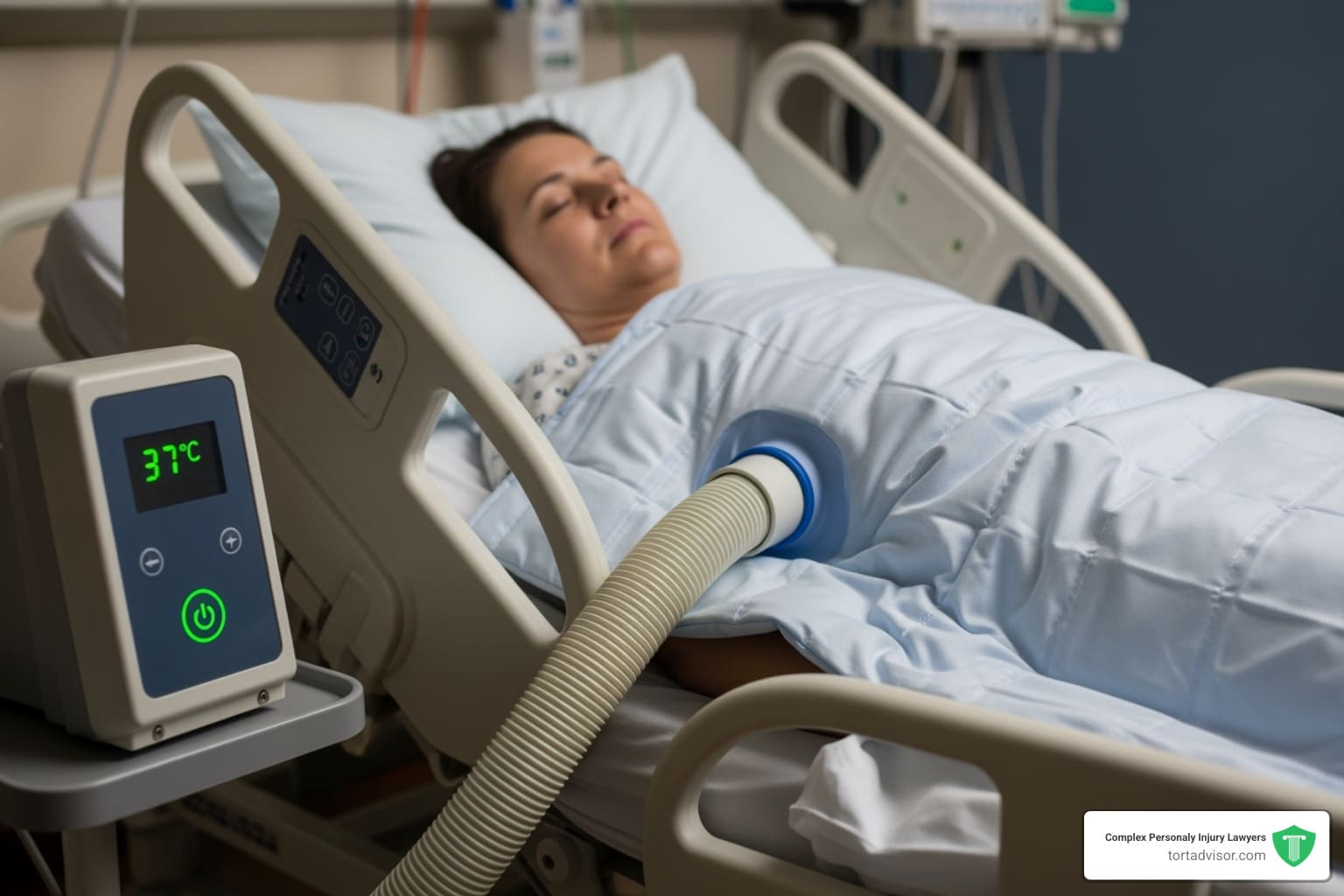
What is a Bair Hugger? Often misspelled “bear hugger,” it is a forced-air warming (FAW) system hospitals use to keep surgical patients from becoming hypothermic. A warming unit pushes heated, filtered air into disposable blankets draped over the patient. Key Facts at a Glance:
- Main Purpose: Keeps the patient at a normal body temperature so perioperative hypothermia does not set in.
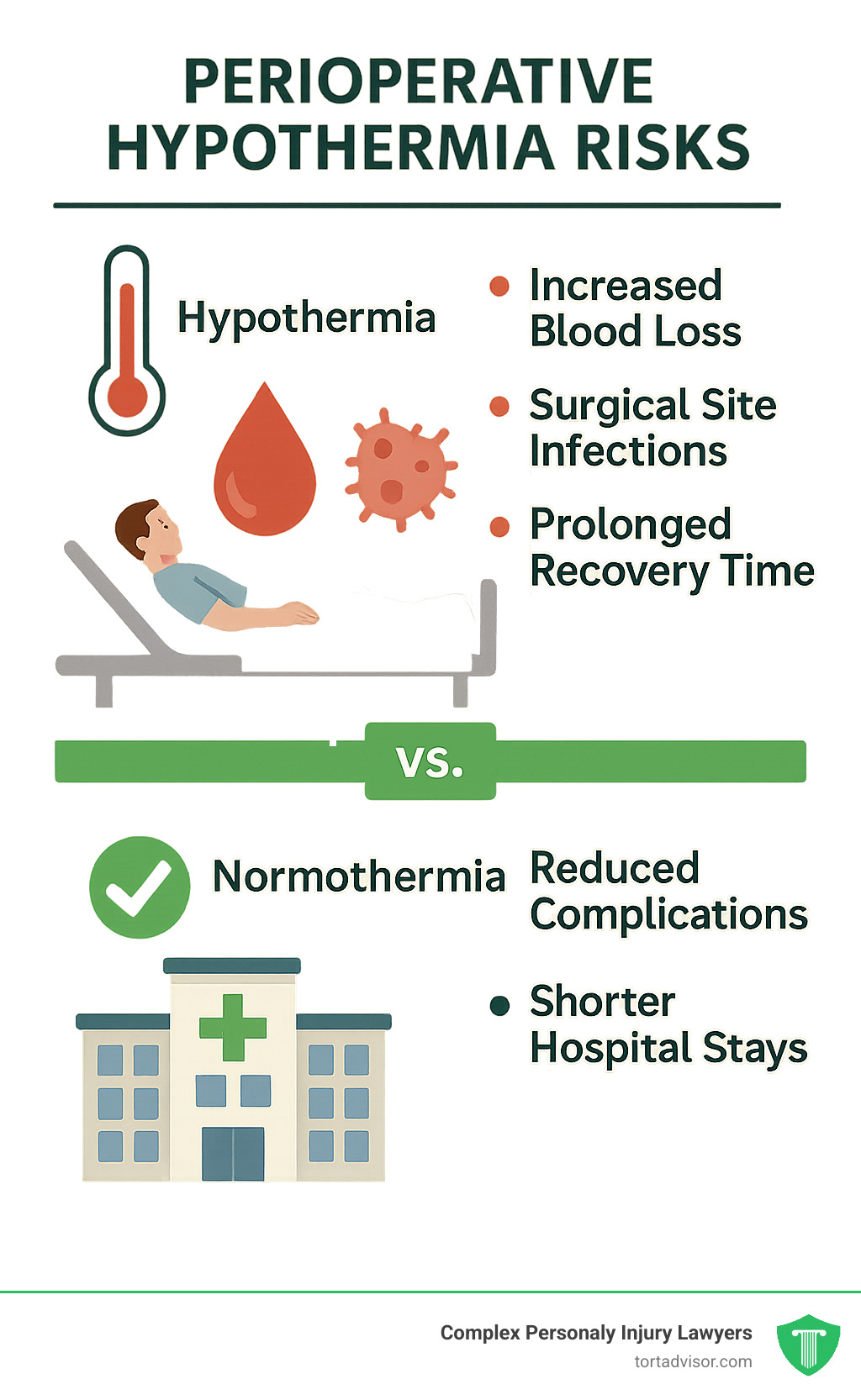
- Parts: A reusable heater-blower unit, a flexible hose and disposable, single-use blankets.
- Reach: Found in more than 80% of U.S. hospitals and used on over 300 million patients since it was introduced in 1987.
- Maker: 3M Company.
Although it is routine operating-room equipment, the Bair Hugger now faces thousands of lawsuits claiming it raises the chance of infection during surgery, particularly hip and knee replacements. Keeping patients warm genuinely helps avoid problems such as heavier bleeding and more infections. Still, some people who suffered serious infections after joint surgery say the warming system played a role in what happened to them.
How Does the Bair Hugger Warming System Work?
Anyone asking “what is a bear hugger in medical terms” is really asking about convective warming: a forced-air warming (FAW) method that protects patients in surgery by actively countering perioperative hypothermia, the risky fall in body temperature that can happen on the operating table.
Its Main Job: Stopping Hypothermia During Surgery
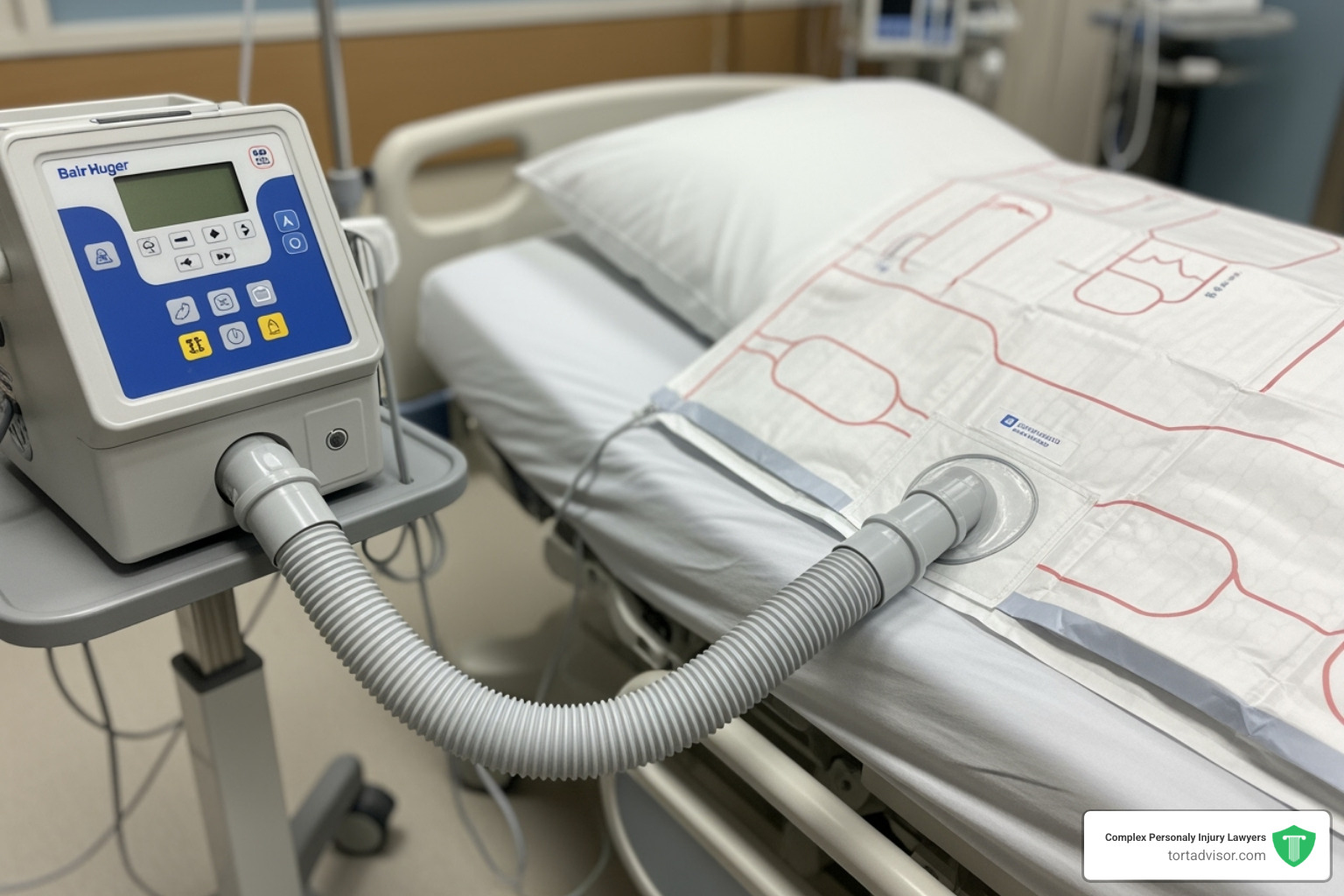
Perioperative hypothermia happens when a patient’s core body temperature sinks below the normal range during an operation. Anesthesia disrupts the body’s ability to regulate heat, and chilly operating rooms make the drop worse. The effects can be serious:
- Heavier bleeding, sometimes enough to need a transfusion.
- Greater surgical site infection risk.
- Slower healing and more days in the hospital.
Holding the patient at normothermia, or normal body temperature, helps head off these problems, and that is exactly what the Bair Hugger was built to do.
The Parts and How They Work Together
Bair Hugger forced-air warming (FAW) relies on three pieces:
- Reusable warming unit: Pulls in air from the room, passes it through a HEPA filter and warms it to a set temperature.
- Flexible hose: Carries the warmed air from the unit to the blanket.
- Single-use disposable blankets: Each has thousands of small micro-perforations on the side facing the patient.
Heated, filtered air travels down the hose, fills the blanket and seeps out through those tiny holes, wrapping the patient in a cushion of warmth. This heat transfer, called convective warming, keeps core temperature steady for the length of the operation.
How the Bair Hugger Became a Hospital Standard
The device went from one doctor’s idea to equipment found in most operating rooms, which shows how much it changed surgical care.
From a Single Invention to Everyday Use
Anesthesiologist Dr. Scott Augustine created the Bair Hugger in 1987 to tackle the frequent problem of patients getting cold during operations. He launched Augustine Medical, which later became Arizant Inc., to sell it. Hospitals embraced it quickly because it worked well and was simple to use. Its reach today speaks for itself:
- It is in use at more than 80% of U.S. hospitals.
- It has warmed over 300 million patients around the world.
3M Company bought Arizant Inc. in 2010 and folded the Bair Hugger into its broad line of medical products, a turning point in the device’s history.
FDA Clearance and the 2018 Recall
The FDA first cleared the Bair Hugger in 1987 using the 510(k) clearance process. That route lets a device reach the market when it is “substantially equivalent” to one already lawfully sold, speeding up access for patients. The 1987 clearance record can be viewed publicly. In 2018, there was a recall of 165,000 Bair Hugger warming blankets, but it had nothing to do with infections. It targeted a design defect that kept some blankets from inflating fully, which could make them warm less effectively. That problem is distinct from the infection claims driving the litigation.
What Is a Bair Hugger Worth to Patients? Benefits Weighed Against Risks
To understand what is a bear hugger in medical terms, you have to look at both sides of a real medical dispute: a large body of research backing its benefits on one hand, and rising concern over possible risks, now the subject of thousands of lawsuits, on the other.
Why Doctors Keep Surgical Patients Warm
Evidence that warming patients during surgery helps them is strong. Keeping body temperature normal brings clear advantages:
- Fewer Infections: Research on normothermia reducing surgical wound infections found that warm patients had markedly lower surgical site infection rates.
- Lower Blood Loss: Clotting works more normally in warm patients, so fewer need transfusions.
- Quicker Recovery: Patients often bounce back sooner and leave the hospital earlier.
According to 3M, more than 170 studies back the Bair Hugger’s safety and effectiveness.
The Dispute: Claims That It Raises Infection Risk
Even with those benefits, thousands of patients say the Bair Hugger led to their surgical infections, most often after hip and knee replacement. Their concern centers on the forced-air warming system itself. Critics say its air currents can stir up bacteria from the floor and carry them toward the open wound, undermining the sterile field. Today’s operating rooms rely on laminar flow ventilation that moves clean air downward and away from the patient, and the worry is that heat rising from the Bair Hugger works against that protection. The stakes are highest in joint replacement surgeries, where even a few bacteria such as MRSA can cause a deep joint infection that may require more operations or, in some cases, amputation.
What is a Bair Hugger lawsuit, and who is filing?
Thousands of people have brought product liability lawsuits against 3M, saying the Bair Hugger caused their infections after surgery. Most claim 3M did not warn surgeons and patients about a design flaw it knew about. Because of the volume, many cases were grouped into multidistrict litigation (MDL). Notably, the device’s own inventor, Dr. Scott Augustine, has publicly spoken out against using it in orthopedic procedures. If a serious infection followed your joint replacement, it is worth learning your options. See our Bair Hugger Lawsuit update for the latest, and use Bair Hugger Infections Joint Replacement Lawsuits to start a free, confidential case review with an attorney in our network.
The Research Debate and Other Warming Options
Mixed scientific findings, along with the existence of other ways to warm patients, keep the Bair Hugger debate alive and underline why informed consent and patient advocacy matter.
Studies Disagree on Bacterial Contamination
Researchers have not reached agreement on whether the device raises infection risk.
- Research Backing Safety: 3M cites more than 170 studies and many clinical trials showing the device is safe. One study that found no added infection risk even reported fewer airborne bacteria near the patient with the Bair Hugger in use, hinting it could help keep the surgical field clean.
- Research Raising Red Flags: Other work indicates the unit’s waste heat can upset sterile airflow in the operating room. Scientists have also questioned whether the inside of the warming unit can harbor bacteria that end up blown onto the patient.
Because the findings point in different directions, doctors and patients have a hard time judging the actual risk.
How does a Bair Hugger compare with other warming methods?
Forced air is only one way to warm a patient. The main alternatives are:
- Conductive Warming Systems: Products such as the HotDog Patient Warming System rely on resistive heating pads that touch the patient’s skin directly. Because no air is blown, there is no concern about disturbing sterile airflow.
- Circulating Water Systems: Warm water is pumped through special pads or blankets. As with conductive systems, heat moves by direct contact and no air currents are created.
Every option involves trade-offs between how well it warms and what risks it may carry. Forced air warms very effectively but is the target of infection claims, while conductive and water-based systems sidestep airflow concerns and may warm patients differently. With the debate unresolved, many hospitals are reviewing these options, particularly for high-risk operations like joint replacement.
Bair Hugger Basics: A Quick Recap
In plain terms, what is a bear hugger in medical terms? It is the Bair Hugger system, a forced-air warming device that keeps surgical patients from getting dangerously cold. A heater unit sends warm, filtered air into disposable blankets used before, during and after the operation. Short Answer:
- Type of Device: A forced-air warming (FAW) system for managing patient temperature
- What It Does: Holds body temperature in the normal range to prevent perioperative hypothermia
- What It Includes: A reusable warming unit, a flexible hose and disposable single-use blankets
- How Common: In over 80% of U.S. hospitals, used on more than 300 million patients since 1987
- Who Makes It: 3M Company, which acquired it from the business founded by inventor Dr. Scott Augustine
It is routine in operating rooms, yet it also sits at the center of thousands of claims that it raises infection risk in some surgeries, joint replacements above all.
The Bair Hugger Mechanism in Brief
Put simply, the Bair Hugger uses convective, forced-air warming (FAW) to keep a patient’s temperature stable through surgery.
Why Surgical Warming Matters
Under anesthesia and in a cold operating room, a patient’s core temperature can drop unintentionally. This perioperative hypothermia is associated with:
- More bleeding and a greater need for transfusions
- A higher chance of surgical site infection
- Longer recoveries and hospital stays
Keeping the patient at normothermia for the whole procedure helps cut these risks.
How the Three Parts Function
- Reusable warming unit: Takes in room air, filters it (frequently with a HEPA filter) and warms it to a controlled setting.
- Flexible hose: Links the unit and the blanket.
- Single-use disposable blankets: Built with micro-perforations so warm air spreads out evenly.
Air from the unit moves through the hose, inflates the blanket and escapes through the perforations, laying a soft blanket of heat over the body. This convective transfer keeps core temperature stable while the surgery goes on.
Bair Hugger Timeline in Short
How It Spread So Widely
Dr. Scott Augustine, an anesthesiologist, brought forced-air warming to market in 1987 to fight perioperative hypothermia, and hospitals took it up fast because it was effective and easy. More than 80% of U.S. hospitals now rely on it, and it has been used on over 300 million patients globally. 3M bought manufacturer Arizant Inc. in 2010 and added the Bair Hugger to its medical lineup.
Regulatory History in Short
The FDA cleared the device in 1987 under the 510(k) pathway, which covers products substantially equivalent to ones already on the market, and that original clearance is a public record. A 2018 recall of 165,000 blankets addressed a design flaw that could stop them from inflating completely and warming as intended. That recall is separate from the infection claims now in litigation.
Weighing the Upside and the Concerns
Anyone asking what is a bear hugger in medical terms should balance the proven value of keeping patients warm against the claims that have sparked large-scale litigation.
Proven Benefits of Normothermia
Patients kept at normal temperature during surgery tend to do better:
- Lower infection rates: Warmth is linked to fewer surgical site infections.
- Reduced bleeding and fewer transfusions
- Quicker healing and earlier discharge
3M points to more than 170 studies in support of the device’s safety and performance.
What Critics Allege
Opponents contend that blown air can upset sterile airflow or spread contaminants, possibly raising infection risk during operations like joint replacements. Their focus is on disruption of laminar flow and the chance that warming units themselves become contaminated.
Bair Hugger lawsuit claims in brief
Thousands of product liability suits claim a defective design and a failure to warn about infection risk. Many have been combined in multidistrict litigation (MDL), and Dr. Scott Augustine, who invented the device, has publicly urged caution about using it in some orthopedic operations. If you suffered a serious infection after a joint replacement, read our Bair Hugger Lawsuit coverage and request a free, confidential case review through Bair Hugger Infections Joint Replacement Lawsuits.
Mixed Evidence and Alternatives in Brief
Because studies on forced-air warming and infection disagree, some providers choose other warming methods for certain operations.
What the Contamination Studies Show
- Evidence for safety: 3M cites a wide range of research, randomized trials included. One study that found no added infection risk reported lower airborne bacteria counts and sterile wound samples when FAW was used in lengthy operations.
- Evidence for concern: Other studies suggest FAW can interfere with laminar airflow, or that contaminants may build up inside the units, which could raise risk in ultra-clean operating rooms.
Differences in operating room layout, testing methods and types of surgery probably explain much of the disagreement.
Bair Hugger alternatives at a glance
Options other than FAW include:
- Conductive (resistive) warming systems: such as the HotDog Patient Warming System, where pads warm the patient through direct contact and no air moves.
- Circulating water systems: Heated water runs through pads or blankets for steady, contact-based warmth without airflow.
- Resistive warming blankets: Heating elements built into the fabric spread warmth evenly.
Each method trades off warming performance, convenience and infection control differently. Talk through the choices with your surgical team, particularly before a high-risk operation such as a joint replacement.
Related Posts
Quick Answer: The Boy Scouts of America (BSA) filed for Chapter 11 bankruptcy in 2020 after facing tens of thousands [...]
Quick Answer: Survivors of sexual abuse by Catholic priests, nuns, or other Church personnel may be able to file a [...]
Quick Answer: Clergy abuse settlements vary enormously based on the severity of the abuse, the strength of evidence that the [...]