Short answer: This article explains the key facts, eligibility issues, settlement factors, deadlines, and source-backed updates related to this legal topic. Results vary by case facts, evidence, jurisdiction, and representation.
Video Game Makers Face Their First Real Courtroom Test
Is the video game addiction lawsuit legit? The question is coming up more and more as families across the country sue major game publishers. The essentials:
📋 Table of Contents
- The Gaming Industry Faces Its First Major Legal Reckoning
- The Lawsuits in Context: Public-Health Crisis or Legal Cash Grab?
- Are Video Game Addiction Lawsuits Legit?
- Potential Damages, Settlements & What We Still Don’t Know
- How to Move Forward If You Think You Have a Claim
- FAQs: Video Game Addiction Lawsuit Legit & More
- Conclusion
Short Answer: Yes — these are genuine lawsuits
- Numerous law firms have filed individual cases in both state and federal court
- Big names such as Epic Games, Microsoft and Roblox are defending active suits
- The claims rest on well-established theories: failure to warn and defective design
- In 2018 the World Health Organization classified gaming disorder as a mental health condition
- There is no class action so far — each case proceeds on its own
Video games brought in more than $176 billion in 2024, yet dozens of families now allege that hit titles such as Fortnite, Roblox and Call of Duty were engineered to be addictive. Parents describe kids gaming as much as 20 hours a day, missing meals and showing withdrawal when play is limited.
These claims aren’t frivolous. Medical research estimates that 1.2% to 10% of adolescents in Western countries are affected by gaming disorder. The lawsuits zero in on particular mechanics — loot boxes, microtransactions and variable rewards — that plaintiffs say borrow directly from gambling psychology.
The catch: there’s no legal precedent yet. These cases are charting new territory, so results are very hard to predict, and any talk of settlement values is speculation until real outcomes arrive.
I’m Mason Arnao. Through my technology company’s work on data management and SaaS platforms, I’ve seen how engagement algorithms are built to maximize how long users stay — insight that bears directly on whether a video game addiction lawsuit has merit. My background in internet marketing and systems architecture also helps me understand the technical evidence these cases will need.
Real Public-Health Problem or Lawyer-Driven Cash Grab?
Critics initially dismissed these suits as easy-money plays, but the evidence keeps mounting. The World Health Organization added gaming disorder to the ICD-11 in 2018 after years of study, and the American Psychiatric Association included Internet Gaming Disorder in the DSM-5 as a condition warranting further research. All the while, the industry pulls in $176 billion a year, and research finds 1.2%–10% of adolescents meet clinical criteria for addiction.
Judges are paying attention. In California, JCCP No. 5363 already coordinates more than 100 individual claims — a sign courts see legal substance even without a class action.
How the Lawsuits Came About
Games such as Fortnite and Roblox follow a “live service” model built never to end. Core mechanics include:
- Loot boxes with odds resembling slot machines (some prizes under 0.1%). Epic Games has already paid $2.75 million in Canada over related purchases.
- Variable reward schedules — the intermittent reinforcement casinos rely on to keep people gambling.
- FOMO events and limited-time cosmetic items that push players to log in every day.
Job postings show publishers recruiting behavioral scientists to fine-tune these hooks, which plaintiffs say demonstrates intent.
Medical Evidence or Moral Panic?
Peer-reviewed research supports the health concerns: Kuss & Griffiths (2012) reported reward-pathway changes resembling substance addiction; a 2021 APA study tied heavy gaming to depression and anxiety; and Dworak (2007) documented disrupted sleep and memory. Physical effects — repetitive strain injuries, eye problems, posture issues — add to the harm.
With brain imaging, hospital records and a growing research base, the issue now looks less like an old-style “moral panic” and more like a real public-health problem.
So, Is the Video Game Addiction Lawsuit Legit?
In short, video game addiction lawsuits are not legal fishing trips. They’re genuine cases on solid legal footing, supported by medical science and advancing through the courts today.
They draw on legal theories that have succeeded against other industries for decades — tobacco, pharmaceuticals and, more recently, social media platforms. The roadmap already exists, and attorneys are applying it to gaming.
Failure to warn is the central claim. Plaintiffs allege game companies knew their products could hook children but never told parents — much like selling a medication with addictive properties and omitting that from the label. Epic Games, Microsoft and other major studios employed behavioral psychologists to make games as engaging as possible, which critics call making them addictive.
Negligent design claims target features that exist mainly to keep players spending time and money: slot-machine-style loot boxes, dark patterns that nudge kids into purchases, and reward systems built around what designers call “compulsion loops.”
Courts are treating these claims seriously, as the lawsuits against top developers in the news show. These are not small-claims disputes; they’re serious litigation with experienced legal teams on both sides.
The Evidence That Decides These Cases

Not every child who plays a lot of Fortnite has a viable claim. Successful cases need strong evidence that traces a clear path from ordinary play to genuine addiction.
A medical diagnosis is the foundation. A licensed clinician — typically a psychiatrist or psychologist — must document Internet Gaming Disorder under DSM-5 criteria, meaning at least five symptoms over 12 months, such as withdrawal when play stops, lying about time spent gaming and continuing despite clear problems.
Play history data is extremely valuable. Most platforms record hours played, session times, purchases and spending. That data can chart the shift from casual player to someone gaming 12 or more hours a day — objective proof that’s hard to dispute.
Spending records matter as well, particularly where kids made unauthorized purchases. Some parents discover thousands of dollars spent on in-game items without permission, showing both financial harm and how games steer young players toward spending.
Expert witnesses can make or break a case. Attorneys need behavioral psychologists to explain how loot boxes exploit the same brain circuitry as gambling, addiction specialists to describe withdrawal and compulsive behavior, and former game designers to explain how these systems were built to be habit-forming.
Treatment costs help prove damages. Receipts for counseling, residential programs or medical care tied to gaming addiction become part of the claim.
Who Qualifies for a Video Game Addiction Lawsuit?
Eligibility is fairly narrow. Most viable cases involve people who were 24 or younger when the addiction took hold; research shows developing brains are more susceptible, and the law often gives minors extra time to file.
You’ll need proof of heavy, sustained gaming — generally two or more hours a day over long periods, not just weekend binges. Courts look for patterns of truly excessive play that disrupted school, work or relationships.
Documented harm is essential — a steep drop in grades, medical treatment for gaming addiction, physical health problems from marathon sessions, or a mental health crisis requiring hospitalization.
Most attorneys take these cases on contingency, so you pay nothing unless compensation is recovered. That also means they’re selective and want strong evidence before investing the time and money these cases demand.
Filing deadlines differ by state, typically one to six years. For minors, the clock often doesn’t start until age 18, which can lengthen the window considerably.
Video Game Addiction Lawsuits: Myths and Facts
Here’s what’s true and what isn’t.
Myth #1: these suits are just cash grabs by opportunistic lawyers. In fact, the World Health Organization formally recognizes gaming disorder as a mental health condition, and these cases demand costly experts, thorough medical records and months of investigation. No attorney takes them on casually.
Myth #2: there’s one big class action anyone can join. Not so. The federal panel that oversees multidistrict litigation turned down consolidation. California coordinates some cases (JCCP 5363) for efficiency, but every plaintiff must still prove their own case.
Myth #3: any parent whose child plays video games can sue. Far from it. You need medical diagnoses, expert testimony and clear evidence of harm — a genuinely high bar.
Myth #4: game companies will settle quickly to avoid bad publicity. These companies have deep pockets and seasoned lawyers, and some rely on arbitration clauses to keep disputes out of open court altogether.
Bottom line on whether a video game addiction lawsuit is legit: these are real cases built on real evidence, but they’re also uncharted, so even strong claims face uncertain outcomes.
Damages, Settlements and the Big Unknowns
No video game addiction lawsuit has gone before a jury yet, so everyone is reasoning by analogy to tobacco, opioid and social media litigation.
- Economic damages: treatment programs, therapy, tutoring and lost tuition — residential treatment in particular can be very expensive.
- Non-economic damages: emotional distress and family upheaval — harder to put a number on, but often the biggest component.
- Punitive damages: could exceed everything else if evidence shows companies knowingly pushed addictive features.
What will likely shape the value of an individual claim:
- Severity of harm: hospitalization or extreme social withdrawal generally points to the highest value
- Treatment and life impact: professional care and clear disruption to school, work or family strengthen a claim
- Documentation: a diagnosis with limited lasting harm and thin records usually means a more modest claim

What the Defense Is Doing So Far
Publishers are inserting arbitration clauses and rolling out new parental controls — steps plaintiffs’ attorneys view as damage control. The JPML’s decision not to centralize the cases keeps each family’s story individual, though it also drives up the cost of litigating.
Until a bellwether case reaches a verdict or a major settlement becomes public, every projection is an educated guess. One thing is certain: the earliest outcomes will become the benchmark for all the cases that follow.
What to Do If You Think You Have a Gaming Addiction Claim
Pursuing a possible video game addiction lawsuit can feel overwhelming when your family is already strained by the addiction itself. Fortunately, there’s a clear path, and you don’t have to walk it alone.
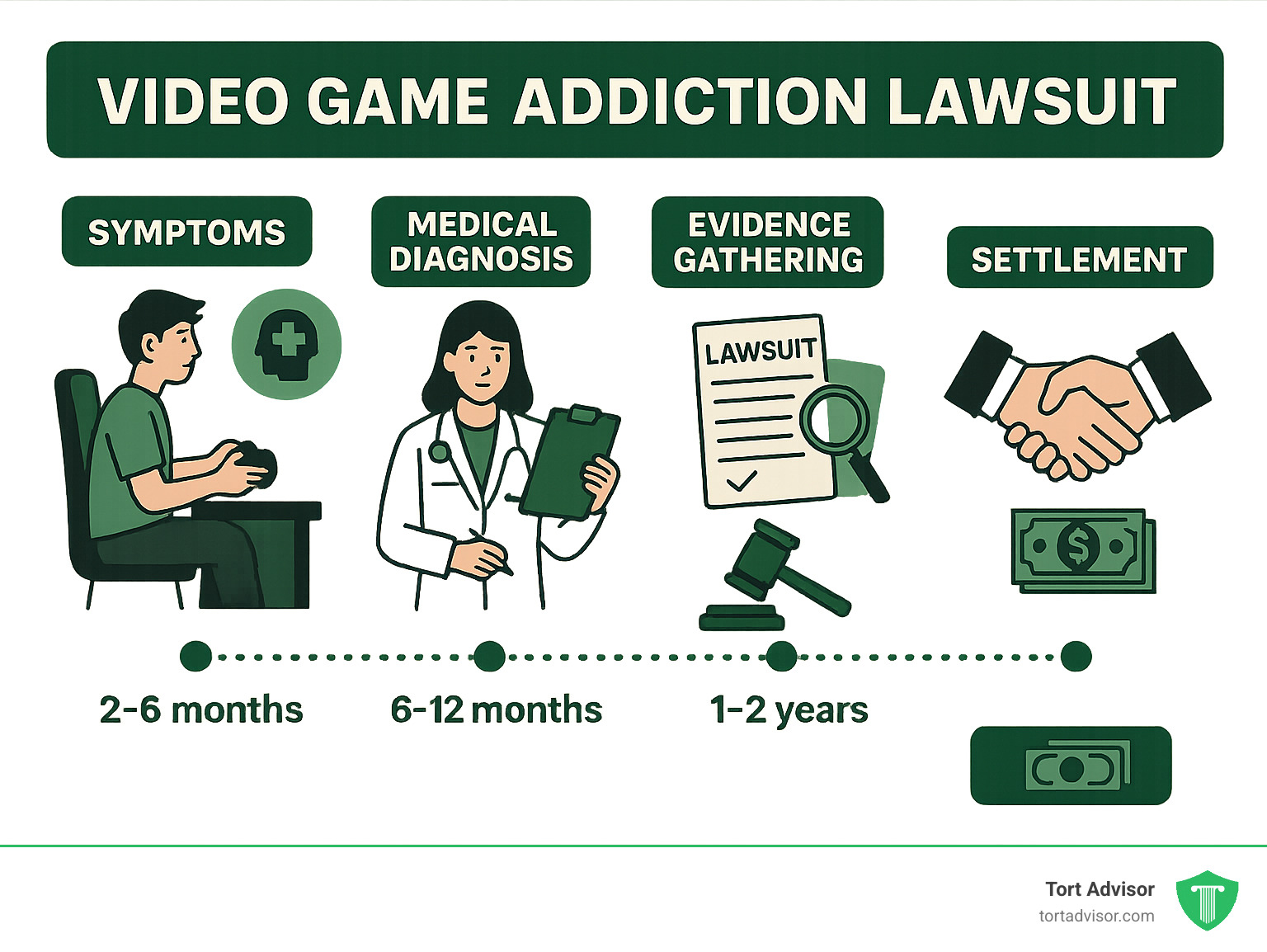
Step one isn’t a lawyer — it’s medical care. Gaming addiction is a genuine condition that needs professional treatment whether or not you sue. Reach out to your doctor or a behavioral addiction specialist familiar with Internet Gaming Disorder, who can provide both the care your family needs and the medical records that support a claim.
During treatment, document everything you can. Medical records are key, but so is the digital trail. Most platforms keep detailed usage reports — hours, spending, session length — and families are often stunned by how much gaming those records reveal.
Collect statements showing in-game purchases, especially unauthorized ones. Report cards, job reviews and even family photos showing physical changes can become evidence too. Save screenshots of gaming stats right away, since some platforms purge older data.
The legal side calls for specific experience. Many injury lawyers don’t understand gaming addiction cases or the technical evidence involved. Look for attorneys experienced in product liability, mass torts or technology litigation, who know how to show that particular game mechanics caused harm.
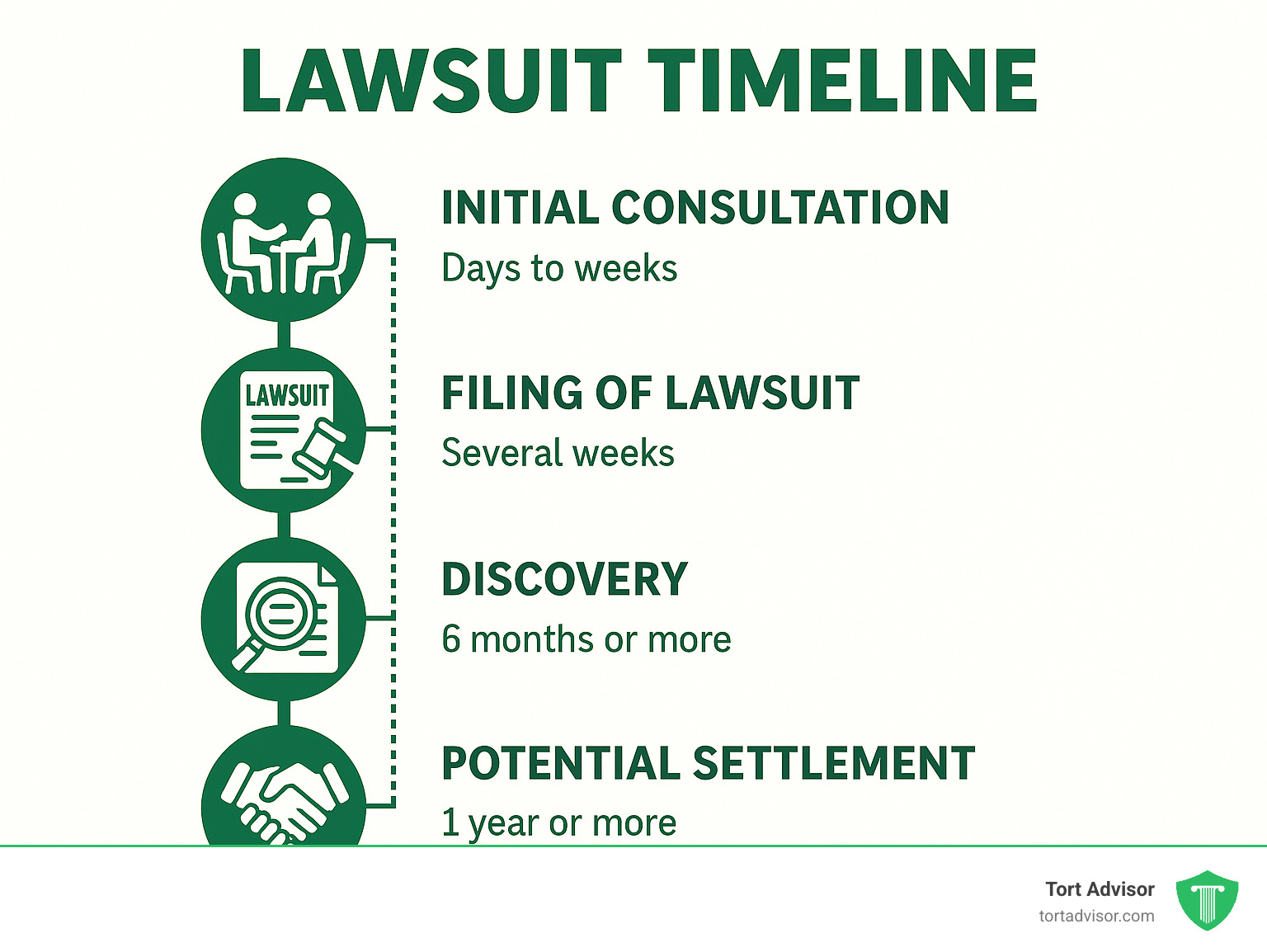
Timing matters. These cases may take years to resolve as attorneys gather evidence, line up experts and work through a complex legal landscape. Yet filing deadlines are real, and waiting too long can forfeit your right to sue, so an early consultation keeps your options open.
Cost is usually less of a barrier than families fear. Most attorneys handling these claims work on contingency, so there’s nothing to pay up front. Stay realistic, though: these are first-of-their-kind cases with no settled precedent, so results are uncertain.
If your family is ready to look at options, our in-depth video game addiction lawsuit resource page explains how to gather evidence, find qualified attorneys and what to expect from the legal process.
A lawsuit doesn’t have to define your family’s recovery. Many families find that simply understanding their options brings a sense of control in a hard time. Whether you file a claim or focus entirely on treatment and healing, accurate information helps you choose what’s right for you.
Video Game Addiction Lawsuit FAQs
These are the questions families ask most when deciding whether a video game addiction lawsuit is worth pursuing, with direct answers based on what’s actually happening in court.
Is there a nationwide class action?
Perhaps surprisingly, no — and that may actually help plaintiffs. In 2024 the Judicial Panel on Multidistrict Litigation declined to consolidate the cases, which disappointed some families who expected a class action to be simpler.
Experienced attorneys see an advantage, though. Individual cases let each family present its own story rather than becoming one faceless name in a class where everyone receives the same small check regardless of harm.
California coordinates some cases under JCCP No. 5363 for efficiency, but every plaintiff must still prove individual harm — so a child who was hospitalized isn’t grouped with someone who simply gamed too much on weekends.
The trade-off: individual cases take more work and documentation, but families with severe harm can potentially recover more than a uniform class settlement would provide.
What could a plaintiff realistically recover?
That’s the big question. Because no video game addiction lawsuit has gone to trial, nobody can responsibly put a dollar figure on these claims yet.
Milder cases — a documented addiction with some counseling but little lasting disruption — would likely be valued at the lower end, driven mostly by treatment costs.
Moderate cases involving professional treatment and measurable effects on school, work or relationships, such as months of therapy or a change of schools, would generally be worth more.
Severe cases with hospitalization, total social withdrawal or serious physical health problems — situations where families effectively lost their child to gaming for months or years — would carry the greatest value.
The wild card is punitive damages. If plaintiffs show companies deliberately built addictive features knowing they hurt kids, punitive awards could far exceed compensatory damages — tobacco companies paid billions once internal documents exposed their conduct.
How much does a gaming addiction lawyer cost?
Most attorneys charge on contingency, so families pay nothing up front, and attorney fees are owed only if the case settles or wins.
These cases are expensive to bring, however. Attorneys usually retain behavioral psychologists, addiction specialists and game design experts, and medical evaluations plus technical analysis of play data can run tens of thousands of dollars per case.
Typically, attorneys front those costs and recoup them from any settlement or verdict. With no recovery, families generally owe no attorney fees, though some agreements require repayment of certain expenses, such as expert fees.
That’s why attorneys are choosy: they’re investing heavily up front and need strong evidence of both addiction and a realistic recovery.
Not every heavy gamer has a case, but families facing genuine addiction shouldn’t let cost fears keep them from a review. Consultations are usually free, and you’ll learn quickly whether you have a viable claim.
Conclusion
So is the video game addiction lawsuit legit? Yes. This isn’t a passing legal fad — it’s the predictable clash between a $176 billion industry and real families living with the consequences of games designed to be hard to put down.
These suits are about more than individual damages. They force a question the industry has dodged for years: What do companies owe the people harmed by their products?
The similarities to tobacco litigation stand out. Both industries used sophisticated research into how their products affect the brain, both put profit ahead of users’ well-being, and both brushed off health concerns as moral panic. The difference is that gaming addiction mostly affects children and teens, raising the ethical stakes even higher.
Still, expectations should be realistic. Showing that specific game features caused one person’s addiction will be very difficult. Game companies have deep pockets and experienced lawyers, and they’ll blame personal responsibility, parental supervision and pre-existing mental health conditions.
The industry is already shifting, adding parental controls, spending caps and time limits — signs that companies see legal exposure. Whether that reflects real concern or legal damage control is still an open question.
For families dealing with gaming addiction now, the first priority is medical, not legal. Get professional help, document everything, and then decide whether a lawsuit fits your situation.
Legal Lawsuit has watched emerging areas like this create both opportunity and confusion. Few attorneys understand the overlap of behavioral psychology, technology design and product liability law these cases demand, which is why we focus on connecting families with attorneys in our network who handle complex product liability litigation.
The legitimacy debate is over: these lawsuits are real, grounded in established legal principles and advancing in courts nationwide. Whether they drive real change in the industry depends on how well attorneys can prove what many families already believe — that these games were built to be irresistible, especially to young people.
If you think you have a claim, don’t wait. Evidence disappears, memories fade and filing deadlines are firm. Explore our detailed video game addiction lawsuit resource to understand your options and request a free, confidential case review.
The reckoning for the gaming industry isn’t on the horizon — it has arrived. The question is no longer whether these companies will be held accountable, but whether accountability will come in time to protect the next generation of players.
Related Posts
Quick Answer: The Boy Scouts of America (BSA) filed for Chapter 11 bankruptcy in 2020 after facing tens of thousands [...]
Quick Answer: Survivors of sexual abuse by Catholic priests, nuns, or other Church personnel may be able to file a [...]
Quick Answer: Clergy abuse settlements vary enormously based on the severity of the abuse, the strength of evidence that the [...]